
How AI-Assisted Software Development Is Changing the Way We Build
Software dev AI assisted workflows are transforming how developers write, test, and ship code — and fast.
Here’s a quick answer if you’re short on time:
What is AI-assisted software development?
- It uses AI tools (like GitHub Copilot, Claude Code, and Amazon Q) to help developers write, complete, test, debug, and review code
- AI handles repetitive, boilerplate tasks so developers can focus on architecture and problem-solving
- It spans the full development lifecycle — from planning and code generation to testing and documentation
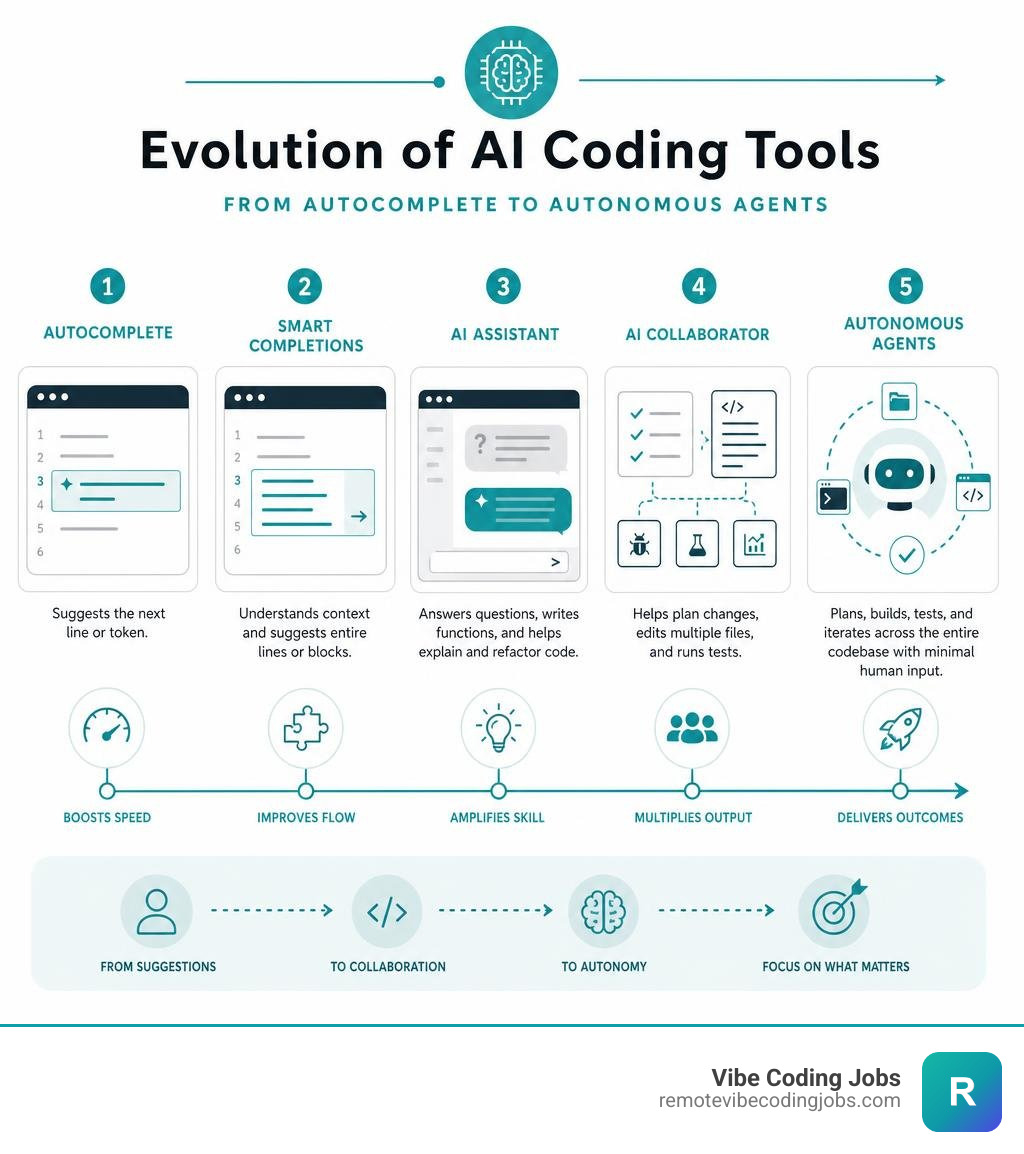
- Tools range from inline autocomplete to fully autonomous AI agents that can refactor entire codebases
- 70% of developers say AI coding tools give them a measurable advantage at work
This isn’t a distant trend. As of June 2026, 31% of organizations already consider AI-assisted development a core part of how they build software — and that number keeps climbing.
The shift started gradually, with tools that suggested the next line of code. Now AI agents can read an entire codebase, plan changes across multiple files, run tests, and iterate on failures — often with minimal human input. In February 2025, computer scientist Andrej Karpathy coined the term “vibe coding” to describe a new extreme of this: describing what you want in plain language and letting the AI build it. The term caught on so fast that Collins English Dictionary named it their Word of the Year for 2025.
Whether you’re a senior engineer looking to multiply your output or a developer exploring AI-first roles, understanding this shift is no longer optional — it’s the new baseline.
We’re RVCJ Editorial, the team behind Remote Vibe Coding Jobs. We cover AI-assisted development, vibe coding workflows, and remote hiring trends for engineers building with tools like Cursor, Claude, Copilot, and Windsurf — the exact intersection of software dev AI assisted practices and the modern remote job market. In this guide, we break down everything you need to know, from core technologies to career paths.
Simple guide to software dev ai assisted terms:
What is Software Dev AI Assisted Workflows vs. Traditional Coding?
Traditional software development has always been a highly manual, syntax-heavy endeavor. Developers spend decades mastering the precise grammar of programming languages, configuration files, and framework-specific APIs. A significant portion of a traditional developer’s day is consumed by writing boilerplate code, looking up documentation, and wrestling with obscure compiler errors or dependency conflicts.
With software dev AI assisted workflows, this dynamic shifts. Instead of writing every line of code from scratch, developers act as directors, editors, and architects. They leverage machine learning models to handle the repetitive, predictable elements of software creation. This transformation represents a move up the abstraction ladder. Just as assembly language gave way to high-level languages like C and Python, manual syntax writing is now giving way to natural language orchestration.
In an AI-assisted workflow, the developer describes the desired behavior, system constraints, and business logic. The AI assistant then synthesizes the source code, drafts configuration files, and even suggests architectural patterns. The developer’s role transitions from “writer” to “editor and validator.”
To understand how these two paradigms differ across key development dimensions, let’s look at the comparison table below.
| Dimension | Traditional Development | AI-Assisted Development |
|---|---|---|
| Primary Activity | Manual syntax writing, debugging, API reference hunting | Prompting, architectural design, code review, validation |
| Boilerplate Handling | Copy-pasting, manually writing setup and configuration code | Instant generation based on context and natural language |
| Knowledge Retrieval | Searching Stack Overflow, reading extensive documentation | Contextualized inline answers, direct explanation of APIs |
| Error Resolution | Manual stack trace analysis, trial-and-error debugging | Automated root-cause analysis, instant fix suggestions |
| Testing & Quality | Manually writing unit tests, late-stage QA cycles | Automated test generation, real-time vulnerability scanning |
This evolution is thoroughly documented in resources like the AI-assisted software development – Wikipedia page, which highlights how machine learning algorithms have revolutionized modern software engineering by automating complex tasks across the software development lifecycle (SDLC).
Core Technologies Powering Software Dev AI Assisted Environments
The magic behind modern AI-assisted development environments isn’t magic at all — it’s a sophisticated stack of machine learning models and developer tools. At the foundation are Large Language Models (LLMs) trained on vast corpuses of natural language text and public source code. These models excel at predicting the most likely sequence of code tokens based on the surrounding context.
These foundation models are integrated into the developer’s daily workflow through several key mechanisms:
- Intelligent Code Editors & Plugins: Modern IDE extensions interface directly with LLMs to provide real-time, inline code suggestions. Tools like GitHub Copilot · Your AI pair programmer · GitHub analyze the developer’s workspace, current file, open tabs, and comments to generate highly relevant code snippets, functions, or entire classes on the fly.
- Context Engines: To make suggestions useful, tools must understand the broader codebase. Modern AI assistants use advanced retrieval systems to feed relevant project context — such as local database schemas, helper functions, and style guides — directly into the LLM’s prompt window.
- Model Choice Flexibility: Developers are no longer locked into a single AI model. Modern environments allow engineers to switch between different models depending on the task at hand. For instance, a developer might use a faster, lighter model for quick autocomplete suggestions, and switch to a highly analytical reasoning model for complex architectural planning.
How AI Agents Shift the Paradigm Beyond Autocomplete
While early AI tools focused entirely on autocomplete — predicting the next few characters or lines of code as you type — the latest generation of tools relies on autonomous AI agents. This is where software dev AI assisted workflows truly break away from traditional coding.
An AI agent doesn’t just wait for you to type. It acts toward a specific goal with a high degree of autonomy. When you give an agentic system a task, it reads your codebase, creates an execution plan, modifies multiple files simultaneously, runs tests to verify its work, and iterates on any failures it encounters.
A prime example of this agentic shift is Claude Code | Anthropic’s agentic coding system Anthropic , which operates as a command-line tool capable of navigating unfamiliar repositories, executing terminal commands, and managing complex multi-file refactoring tasks. Instead of suggesting a single line of code, these agents can migrate a 10,000-line codebase from one language to another, execute migrations, and fix broken builds entirely on their own, keeping the human developer in a strategic orchestration role.
AI Across the Software Development Lifecycle
AI assistance is no longer confined to the coding phase of a project. Modern engineering teams leverage artificial intelligence across every single stage of the Software Development Lifecycle (SDLC). From the initial planning and design phases to testing, debugging, code review, deployment, and documentation, AI acts as a virtual force multiplier.
By integrating AI throughout the SDLC, teams can maintain a high development velocity without sacrificing software quality. Let’s look closer at how this works in practice.
Streamlining Code Generation and Intelligent Completion
The most immediate impact of AI is felt during the active writing of code. Writing boilerplate code — such as setting up API endpoints, configuring database connections, or writing standard data transfer objects — is historically time-consuming. AI assistants eliminate this friction almost entirely.
When a developer initializes a new project, they can provide a high-level project knowledge base containing the tech stack, coding standards, and architectural constraints. As detailed in AI-Assisted Software Development: A Comprehensive Guide with … , setting up this context before writing code pays massive dividends.
Instead of jumping straight into code requests, developers can prompt the AI to break down the project into manageable components, establish a step-by-step roadmap, and generate clean, well-structured boilerplate that adheres precisely to the team’s style guide.
Automated Testing, Debugging, and Code Review
Testing and debugging have historically been the bottleneck of rapid product delivery. AI-assisted workflows turn this bottleneck into a streamlined, automated pipeline.
- Automated Test Generation: AI tools can analyze existing functions and instantly generate comprehensive test suites, including unit tests, integration tests, and edge-case validations. This makes adopting Test-Driven Development (TDD) significantly easier and faster.
- Root-Cause Analysis: When a build fails or a bug is reported, AI assistants can perform systematic, multi-phase investigations. By analyzing stack traces, log files, and git histories, the AI can pinpoint the exact line of code causing the failure and propose a validated fix.
- Automated Code Reviews: Before a developer submits a pull request, AI agents can scan the modified code for performance bottlenecks, duplicated logic, and security vulnerabilities. This pre-review gate catches issues early, reducing the burden on human reviewers.
For developers looking to supercharge their debugging workflows, exploring specialized tools is highly beneficial. You can read more about these workflows in our guide on AI Assisted Debugging Tools for JavaScript Supercharge Your Code.
The Vibe Coding Revolution: A New Era of Software Creation
In early 2025, computer scientist Andrej Karpathy introduced a concept that would redefine the relationship between humans and computers: vibe coding.
Vibe coding is a development paradigm where the human developer does not write code. Instead, they describe their vision, feature requests, and system requirements in plain, natural language prompts. The underlying AI models handle 100% of the code generation, file creation, compilation, and execution. The developer “vibes” with the application, testing the running prototype, providing feedback, and guiding the AI through iterative prompts.

This approach represents a radical shift in software creation. It allows founders, product managers, designers, and even hobbyists to build functional, full-stack applications without formal software engineering training. For experienced developers, vibe coding is the ultimate prototyping tool, allowing them to turn a raw idea into a working MVP in minutes rather than weeks.
To explore how to build applications using this approach, check out our comprehensive guide on How to Vibe Code a Full Stack App A Developer’s Guide.
The Shift from Syntax to Architecture and System Design
Vibe coding does not mean the end of software engineering; rather, it elevates the engineer’s responsibilities. When syntax is fully automated, the developer’s primary value lies in system design, data modeling, security architecture, and logical orchestration.
An AI tool can generate thousands of lines of code in seconds, but it doesn’t inherently understand the long-term business goals, complex system integrations, or subtle performance trade-offs of an enterprise application. Developers must shift their focus toward:
- System Architecture: Designing robust APIs, choosing the right database models (such as leveraging NoSQL schema flexibility for rapid prototyping), and structuring microservices.
- Advanced Prompt Engineering: Formulating precise, contextual instructions that guide the AI to generate secure, maintainable, and highly optimized code.
- Integration Orchestration: Managing how various AI-generated components interact with external APIs, cloud infrastructure, and legacy systems.
As this shift accelerates, developers who master these high-level architectural skills will be highly sought after. You can dive deeper into this trend in our article on AI Coding Tools Vibe Coders.
Balancing Vibe Coding with Human Oversight and Validation
While vibe coding is incredibly powerful, relying blindly on AI-generated code is a recipe for disaster. AI models are probabilistic engines; they do not “think” in the human sense. They are prone to hallucinations, logical inconsistencies, and generating code that works in isolation but breaks when integrated into a larger codebase.
Maintaining a strict “human-in-the-loop” philosophy is essential. Every piece of AI-generated code must be validated through:
- Automated Testing: Running robust test suites to ensure business logic remains intact.
- Static Analysis: Utilizing IDE-native inspections and compiler checks to catch syntax and semantic errors.
- Manual Code Audits: Reviewing critical code paths, especially those involving security, authentication, and data privacy, to ensure compliance with industry standards.
To build safely, developers must assemble a reliable stack of validation tools. Learn more about the essential toolkit in our breakdown of Must Have AI Tools Vibe Coding.
Benefits, Risks, and Governance in AI-Driven Teams
The widespread adoption of software dev AI assisted practices brings massive opportunities, but it also introduces unique organizational risks. For engineering leaders and business stakeholders, maximizing the benefits of AI requires a balanced approach that combines rapid adoption with rigorous governance.
Key Benefits and Productivity Gains
The productivity gains from AI-assisted development are no longer theoretical. Organizations across the globe are reporting staggering improvements in velocity, quality, and developer satisfaction:
- Staggering Velocity Improvements: Teams using agentic coding systems have completed massive code migrations (such as converting 10,000 lines of Scala to Java, or 50,000 lines of Python to Go) in a matter of days rather than the months required for manual rewrites.
- Higher Job Satisfaction: By offloading repetitive boilerplate and tedious debugging tasks to AI, developers can spend their time on creative problem-solving and system design. Surveys show that up to 75% of developers report higher job satisfaction when using AI coding assistants.
- Accelerated Time-to-Market: Features that previously took weeks to design, code, test, and deploy are now shipped in days, allowing companies to respond to market demands with unprecedented speed.
For remote-first teams, these productivity gains translate directly into better async collaboration and streamlined workflows. You can read more about these dynamics in our article on Remote Developer Jobs AI Tools Productivity.
Limitations, Risks, and Governance Best Practices
Despite the clear benefits, AI-assisted development introduces several critical challenges that organizations must actively manage:
- Security Vulnerabilities: AI models are trained on public code repositories, which occasionally contain security flaws or outdated libraries. If left unchecked, AI assistants can inadvertently introduce vulnerabilities into production codebases.
- Intellectual Property and Licensing: Developers must ensure that code suggestions do not violate open-source licenses. Utilizing built-in code referencing filters is crucial to detect and block matching public code.
- Codebase Maintainability: Because AI can generate massive volumes of code instantly, there is a risk of “code bloat” — building overly complex systems that are difficult for human engineers to maintain over time.
To mitigate these risks, organizations should implement the following AI governance best practices:
- Establish clear internal policies regarding which AI tools are approved for use and how company data is handled.
- Ensure that AI tools are configured to opt out of using proprietary codebase data for model training.
- Require mandatory human code reviews and automated security scanning for all AI-generated code before it is merged into production branches.
- Train developers to treat AI as a highly capable assistant whose output must always be verified and validated.
The Future of Software Careers and Evolving Developer Roles
The rise of software dev AI assisted workflows is fundamentally reshaping the tech job market. Rather than shrinking the industry, AI is expanding it by creating entirely new categories of jobs and shifting the skills required for traditional software engineering roles.
According to long-term projections, overall employment in computer and information technology occupations is projected to grow much faster than average, with about 317,700 openings projected each year through 2034. However, the nature of these roles is shifting rapidly. Gartner projects that through 2027, generative AI will require 80% of the engineering workforce to upskill as new roles emerge.
To stay competitive, developers must embrace AI literacy as a core competency. You can explore how these changes are impacting career trajectories in our guide on AI-Assisted Development Career Growth Roles.
How to Transition Your Career to Software Dev AI Assisted Roles
Transitioning to an AI-first development career requires a shift in both mindset and daily habits. If you want to future-proof your career, consider the following actionable steps:
- Adopt a Collaborator Mindset: Stop viewing AI as a threat or a magic code generator. Instead, treat it as an incredibly fast, highly knowledgeable junior engineer or collaborator. Your job is to guide it, review its work, and provide clear architectural direction.
- Master Prompt Engineering: Learn how to write highly specific prompts, provide clear context, show examples, and utilize “think step-by-step” prompting techniques to get the best possible output from LLMs.
- Focus on System Fundamentals: Double down on system design, database modeling, security protocols, and software architecture. These high-level skills are precisely where human judgment remains irreplaceable.
As companies actively seek out developers who can leverage AI to build faster and smarter, those who make this transition early will enjoy a massive advantage. Read more about these emerging opportunities in our analysis of AI-Assisted Development Career Opportunities Growth Trends.
Emerging Career Paths in the AI Era
The AI revolution is giving rise to several highly specialized, high-paying career paths that didn’t exist a few years ago:
- AI Systems Architect: Specialists who design the infrastructure, data pipelines, and orchestration layers required to integrate AI models into enterprise software systems.
- Product Engineer: Developers who combine full-stack engineering skills with product design thinking, utilizing AI tools to rapidly prototype, iterate, and deliver user-centric applications.
- Creative Technologist: Professionals who bridge the gap between design and code, using natural language interfaces and AI tools to build highly interactive, visual digital experiences.
For remote developers, these roles offer incredible flexibility and career growth. To explore the latest remote opportunities in this space, check out our guide on AI-Assisted Development Career Growth Remote Roles.
Frequently Asked Questions about AI-Assisted Development
What is the difference between AI-assisted development and traditional coding?
AI-assisted development moves the developer up the abstraction level. In traditional coding, developers manually write every line of syntax, manage imports, and debug errors step-by-step. In AI-assisted development, developers use natural language prompts to orchestrate AI models and agents, shifting their focus from manual syntax writing to high-level system architecture, prompt engineering, and code validation.
Will AI-assisted development replace human software engineers?
No, AI will not replace human software engineers, but developers who use AI will replace those who do not. While AI is incredibly efficient at generating code and automating routine tasks, human judgment, architectural oversight, security validation, and business context alignment remain absolutely essential. AI tools lack genuine reasoning and accountability; humans must always remain in the loop to verify code correctness and take responsibility for production systems.
What are the best tools to start vibe coding in 2026?
As of 2026, the premier tools for vibe coding and agentic development include Cursor (the AI-first code editor), Claude Code (Anthropic’s command-line agentic coding system), and Junie (the intelligent coding agent by JetBrains). These tools go far beyond simple autocomplete, allowing developers to describe features in plain language and let the AI plan, execute, and validate changes across entire codebases. To find the perfect tool for your workflow, check out our curated list of the Best AI Coding Tools 2026.
Conclusion
The era of software dev AI assisted workflows is here, and it is fundamentally redefining what it means to be a software engineer. By automating the repetitive, syntax-heavy aspects of programming, AI tools and autonomous agents are freeing developers to focus on what truly matters: system design, creative problem-solving, and building incredible products.
At Remote Vibe Coding Jobs, we believe the future of software engineering belongs to AI-fluent professionals who know how to collaborate with these powerful tools. We aggregate remote vibe coding and AI-assisted engineering roles at forward-thinking, async-first companies that value velocity, autonomy, and modern development practices.
If you are ready to take the next step in your career and find a remote role that embraces the AI revolution, we are here to help.
Find remote vibe coding jobs on Vibe Coding Jobs and join the community of developers building the future of tech, one vibe at a time.