
A Practical Guide to the Bolt Engineering Manager Role
A Bolt Engineering Manager role is a fit for technical leaders who can grow strong teams while shipping reliable systems at global scale. To prepare, focus on three things: show clear people leadership, explain system-design trade-offs in plain language, and connect engineering decisions to product results such as faster delivery, safer payments, or smoother driver experiences.
Bolt engineering teams work on mobility, delivery, payments, rentals, and related platforms that affect more than 200 million users worldwide. That scale means managers are not only responsible for planning and coaching. They also help their teams make practical choices around availability, real-time data, architecture, experimentation, security, and technical debt.
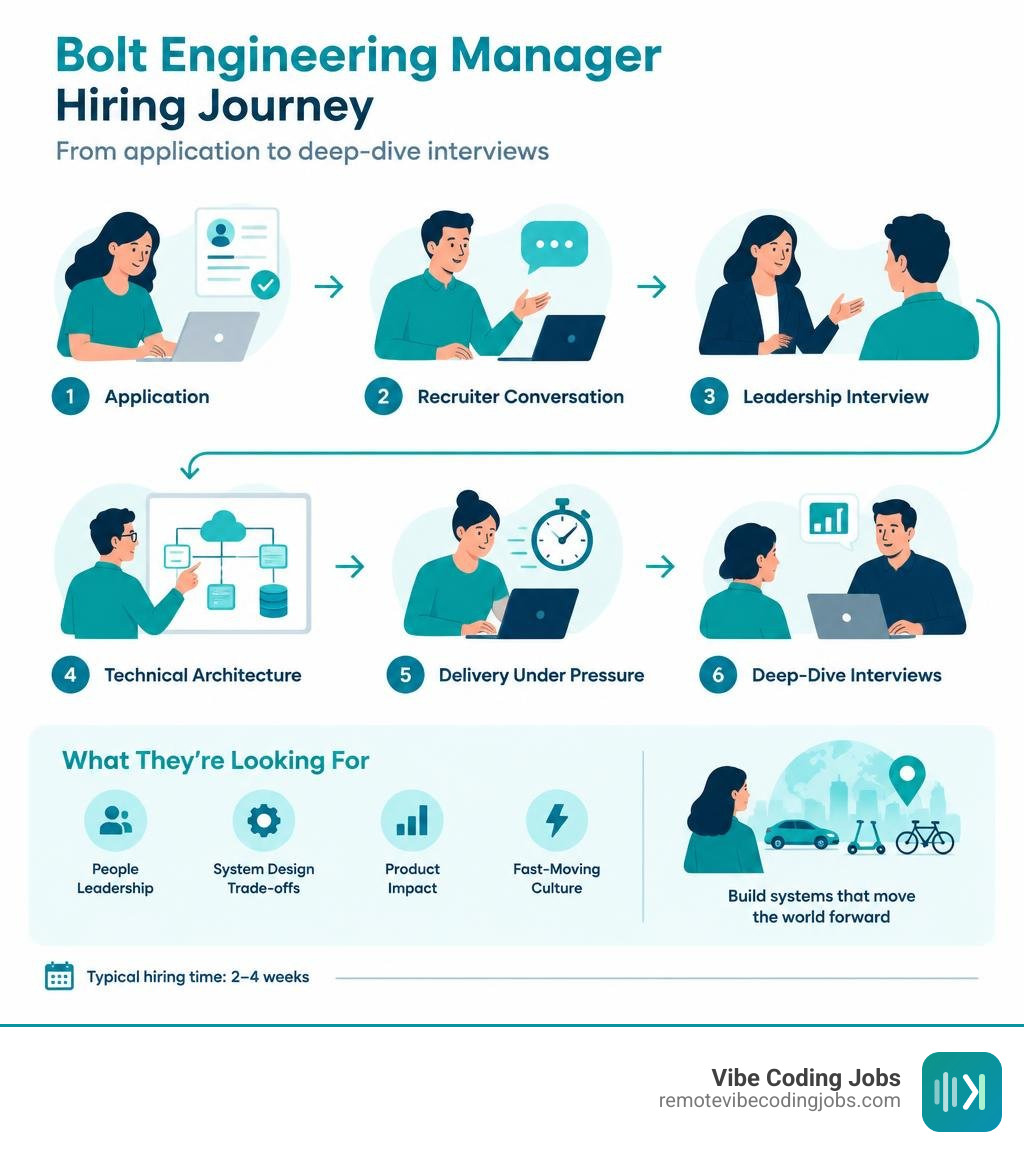
The hiring path is usually fast, often taking two to four weeks. Candidates can expect an initial recruiter conversation followed by deeper interviews that test leadership judgment, technical architecture, delivery under pressure, and alignment with Bolt’s fast-moving, data-led culture. This guide breaks down the job, interview loop, skills, compensation benchmarks, global hubs, and the realities of leading engineering in a high-growth environment.
I am Dominic Zijlstra, a technologist and entrepreneur with experience in data infrastructure, DevOps, automated systems, and engineering work at companies including iwoca and Airbus. That background shapes this guide to the Bolt Engineering Manager path: practical leadership, scalable systems, and clear evidence of impact.
Quick bolt engineering manager terms:
The Core Role: What Does a Bolt Engineering Manager Do?
Leading an engineering squad at Bolt requires a delicate balance of deep technical stewardship and empathetic people management. You are not an armchair coordinator handing out tickets; you act as an owner accountable for business outcomes, system availability, and team development.
With over 4,000 to 5,000 employees globally and a steady 20% year-over-year growth rate, Bolt maintains a environment where teams stay lean and autonomous. Engineering managers operate at the center of cross-functional units, translating company targets into technical roadmaps while keeping individual engineers motivated and supported.

Key Responsibilities of a Bolt Engineering Manager
On any given day, an engineering manager at Bolt oversees agile ceremonies, handles technical roadblocks, and ensures the engineering team meets product deadlines without burning out. Core focus areas include:
- People Development and Coaching: Conducting consistent 1-on-1 meetings, setting objective performance goals, identifying skill gaps, and mapping out clear internal promotion paths.
- Sprint Execution and Prioritization: Managing backlogs, balancing immediate commercial priorities with maintenance, and running blameless retrospectives to improve velocity.
- Product and Domain Alignment: Collaborating with product managers, UX designers, and data scientists to build user-centric solutions. For instance, leaders like Catalin Constantin Usurelu lead critical domains such as Delivery Timing, Supply/Demand Balancing, and Pricing platforms, optimizing algorithmic accuracy alongside service health.
- Cross-Functional Stewardship: Guiding engineers through architectural trade-offs to launch multi-million-dollar features, a journey exemplified by senior leaders like Boris Vnukov who have balanced technical complexity with business milestones across high-load microservices.
Technical Architecture and Operational Challenges
Managing systems serving hundreds of millions of users across 50+ international markets introduces distinct infrastructure hurdles:
- High-Throughput GPS Metadata Ingestion: Processing millions of location updates per minute requires resilient streaming pipelines built on Kafka, Redis, and cloud-native databases.
- Fraud Prevention and Trust & Safety: Real-time detection systems monitor user behavior anomalies, detect duplicate accounts, and secure transactions across millions of mobility partners. Leaders like Pavel K. have spearheaded trust and safety initiatives that significantly reduce malicious activity by defining measurable north-star consumer impact metrics.
- High-Availability Infrastructure: Containerized systems require robust orchestration and alerting to prevent regional outages. Engineering leaders such as Chris Willmore bring extensive experience orchestrating container migrations and ensuring multi-region high availability. In high-traffic microservice environments, teams often look to modern paradigms found in backend architecture for alerting systems to ensure actionable observability without notification fatigue.
The End-to-End Interview Process and Preparation Strategy
The hiring process for engineering leadership at Bolt is known for being direct and efficient, typically taking between two to four weeks.

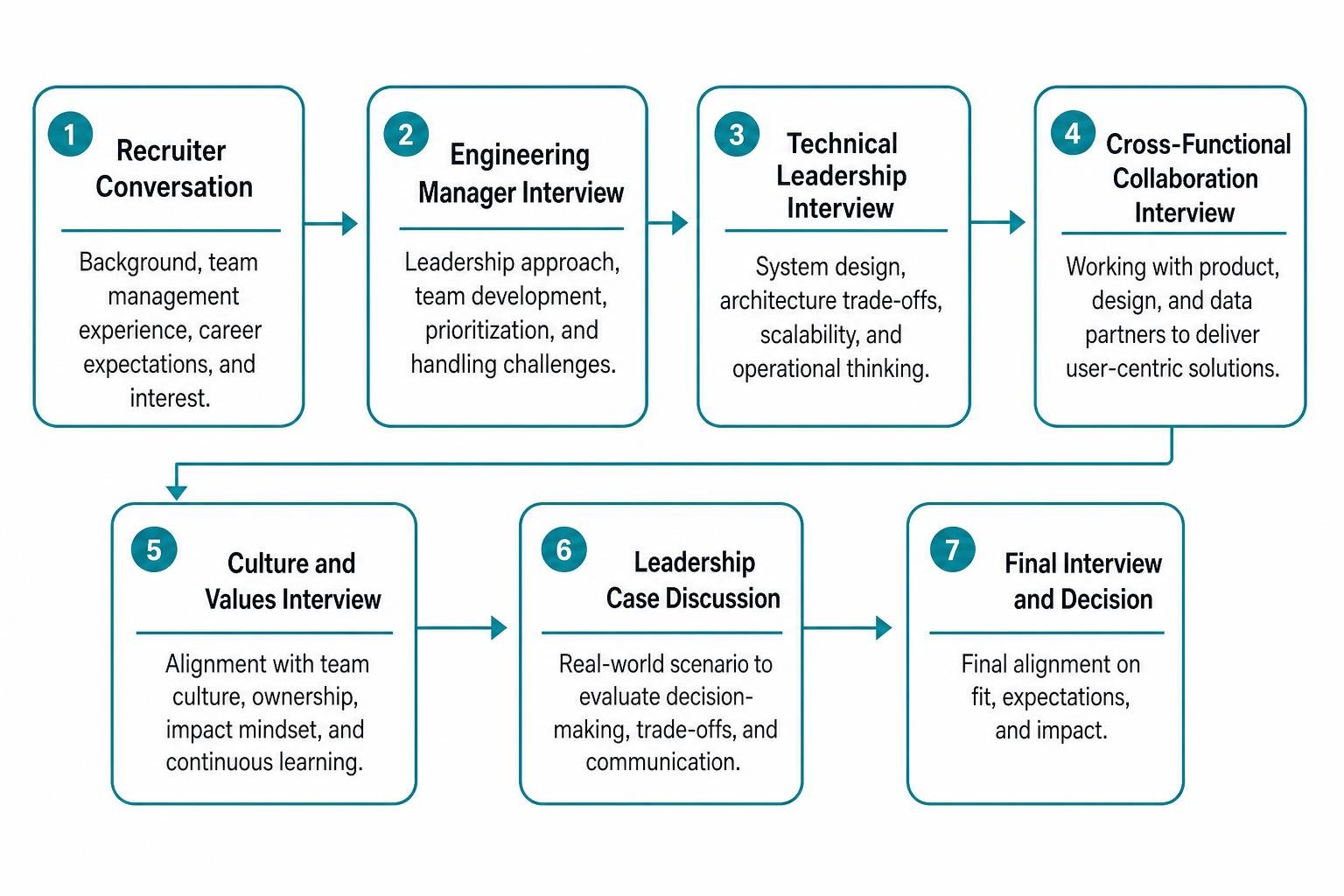
Recruiter Screen and Deep-Dive Stages
The evaluation loop focuses on practical experience, cultural alignment, and architectural fundamentals:
- Recruiter Conversation (30–45 mins): A preliminary discussion exploring your background, team management experience, career expectations, and interest in Bolt.
- Hiring Manager Alignment (45–60 mins): A conversation with an engineering director or peer manager covering your leadership philosophy, conflict resolution frameworks, and how you manage underperformance.
- System Design and Architecture Deep-Dive (60 mins): A collaborative whiteboard session tackling a real-world mobility or distributed-system scenario (such as designing an automated ride-matching engine or a dynamic pricing platform).
- Leadership & People Operations Round (60 mins): A deep evaluation of how you build psychological safety, mentor junior and senior talent, conduct performance reviews, and communicate business priorities.
- Executive Chat (30–45 mins): A final discussion with senior leadership (often a VP of Engineering or CTO) to evaluate high-level strategic alignment and ownership mindset.
To explore current openings and teams, you can review listings directly on the Bolt Engineering team – Careers page.
Leadership and System Design Interview Questions
When preparing for deep-dive rounds, structure your behavioral answers using the STAR format (Situation, Task, Action, Result) with an emphasis on personal accountability:
- “How do you handle a consistently underperforming senior engineer?” Focus on identifying root causes early, setting measurable 30-60-90 day performance goals, maintaining honest communication, and taking decisive action if expectations are not met.
- “Describe a time you had to push back on a product feature deadline.” Explain how you used data, capacity modeling, and technical risk assessments to negotiate scope rather than forcing unsustainable team overtime.
- “How do you prioritize technical debt against business-critical product features?” Detail how you allocate a fixed percentage of sprint capacity to engineering maintenance, and how you quantify technical debt in terms of latency, developer velocity, or infrastructure costs. Similar principles apply when managing scale in enterprise backend architecture, where maintainability directly drives enterprise reliability.
Qualifications, Culture, and Leadership Expectations
Bolt looks for leaders who can bridge the gap between technical nuance and fast execution.
Essential Skills for a Bolt Engineering Manager Candidate
To stand out during evaluations, candidates should demonstrate:
- Proven Technical Foundation: Significant prior experience as an individual contributor working with languages such as Node.js, TypeScript, Go, Java, or Kotlin.
- Distributed Systems Expertise: Experience with microservices architectures, data streaming (Kafka), real-time caching (Redis), and AWS infrastructure.
- Modern People Management: A track record of mentoring engineers across various seniority levels, running effective retrospectives, and building high-trust team environments. Leaders like Christian Klock illustrate how a strong technical foundation as a senior engineer creates the bedrock for managing distributed teams across international borders.
- Commercial Alignment: The ability to partner effectively with product, operations, and finance teams. Experienced directors like Meenakshi Sundaram Rajadurai show how technical execution must align directly with commercial e-commerce objectives and organizational growth.
Engineering Culture and AI-Driven Innovation
Bolt fosters an engineering culture centered around “Extreme Ownership,” “Bias for Momentum,” and data-led decision-making. Engineers are empowered to question assumptions, experiment rapidly, and leverage modern tooling to remove development bottlenecks.
A clear example of this philosophy is Bolt’s adoption of AI-native engineering workflows. Across front-end and platform squads, the integration of AI coding assistants and modern environments has streamlined routine work. By leveraging a comprehensive design system containing over 110 UI components alongside AI agents, routine component delivery times have decreased significantly—often turning a week-long manual development cycle into an hour of focused iteration.
Engineers interested in this shift toward AI-assisted development and modern WebContainer-powered workspaces can explore roles such as the Engineering Manager – Front-End (UI/UX) or check company values directly on Careers at Bolt.
Compensation, Career Growth, and Global Hubs
Engineering managers at Bolt are compensated competitively with packages reflecting both technical breadth and market impact.
| Level / Metric | Base Salary (USD / EUR) | Stock / Equity (Annual) | Total Package (Annual) | Vesting Schedule |
|---|---|---|---|---|
| L6 Engineering Manager (US Benchmark) | $270,000 | $217,000 | ~$487,000 | 4 years (25% per year) |
| Senior Engineering Manager (EU Hubs) | €110,000 – €145,000 | €40,000 – €75,000 (options) | €150,000 – €220,000 | 4 years (25% per year) |
| Director of Engineering | Competitive Base | Significant Equity Grant | Custom / High Tier | 4 years (custom grants) |
Salary Benchmarks and Equity Vesting
At the L6 level in the United States, total compensation averages $487,000 per year, consisting of a $270,000 base salary alongside $217,000 in equity. In European hubs, while base cash reflects local cost-of-living benchmarks, total packages remain among the top tiers in the region. Equity typically follows a standard four-year schedule with 25% vesting annually after a one-year cliff.
Global Engineering Hubs and Relocation Assistance
Bolt operates with primary engineering hubs in:
- Tallinn & Tartu, Estonia: The foundational engineering home base housing core infrastructure, ride-matching, and driver platforms.
- Warsaw, Poland: A high-growth hub driving front-end, platform tooling, and product domains.
- Berlin, Germany: A central hub focusing heavily on fintech, payments processing, and partner integrations.
Bolt provides comprehensive relocation assistance for engineering leadership roles, including complete visa sponsorship, flight booking, temporary corporate housing, and relocation stipends to make the transition smooth for candidates and their families.
Frequently Asked Questions About Bolt Engineering Roles
How long does the Bolt engineering management interview loop take?
The full interview process typically wraps up in two to four weeks. Bolt prioritizes fast, transparent communication, ensuring candidates receive feedback quickly after each evaluation round.
What is the average total compensation for an L6 manager at Bolt?
For US-benchmarked roles, an L6 Engineering Manager commands an average total compensation of $487K per year, combining a $270K base with $217K in equity grants. European hub compensation is adjusted to regional standards while maintaining highly competitive total-reward structures.
Does Bolt provide relocation support for engineering leadership positions?
Yes. Bolt provides dedicated relocation packages for managers relocating to major hubs like Tallinn, Warsaw, or Berlin. Support includes work-permit paperwork, flights, initial temporary accommodations, and moving allowances.
Conclusion and Next Steps
Thriving as an engineering manager at Bolt means combining technical depth with human-centered leadership. By demonstrating clear ownership, structured problem-solving, and a focus on mentoring, you can position yourself for success throughout the hiring journey.
If you are eager to lead modern engineering squads utilizing AI tools and async workflows, explore AI-native engineering manager jobs on RemoteVibeCodingJobs to find roles that match your leadership style and technical ambition.