
What to Expect From a Bolt Business Development Manager Career
A Bolt Business Development Manager is a full-cycle B2B sales role. You find and qualify prospects, run discovery calls and product demos, negotiate commercial terms, close deals, and help new clients get started with Bolt’s business mobility services.
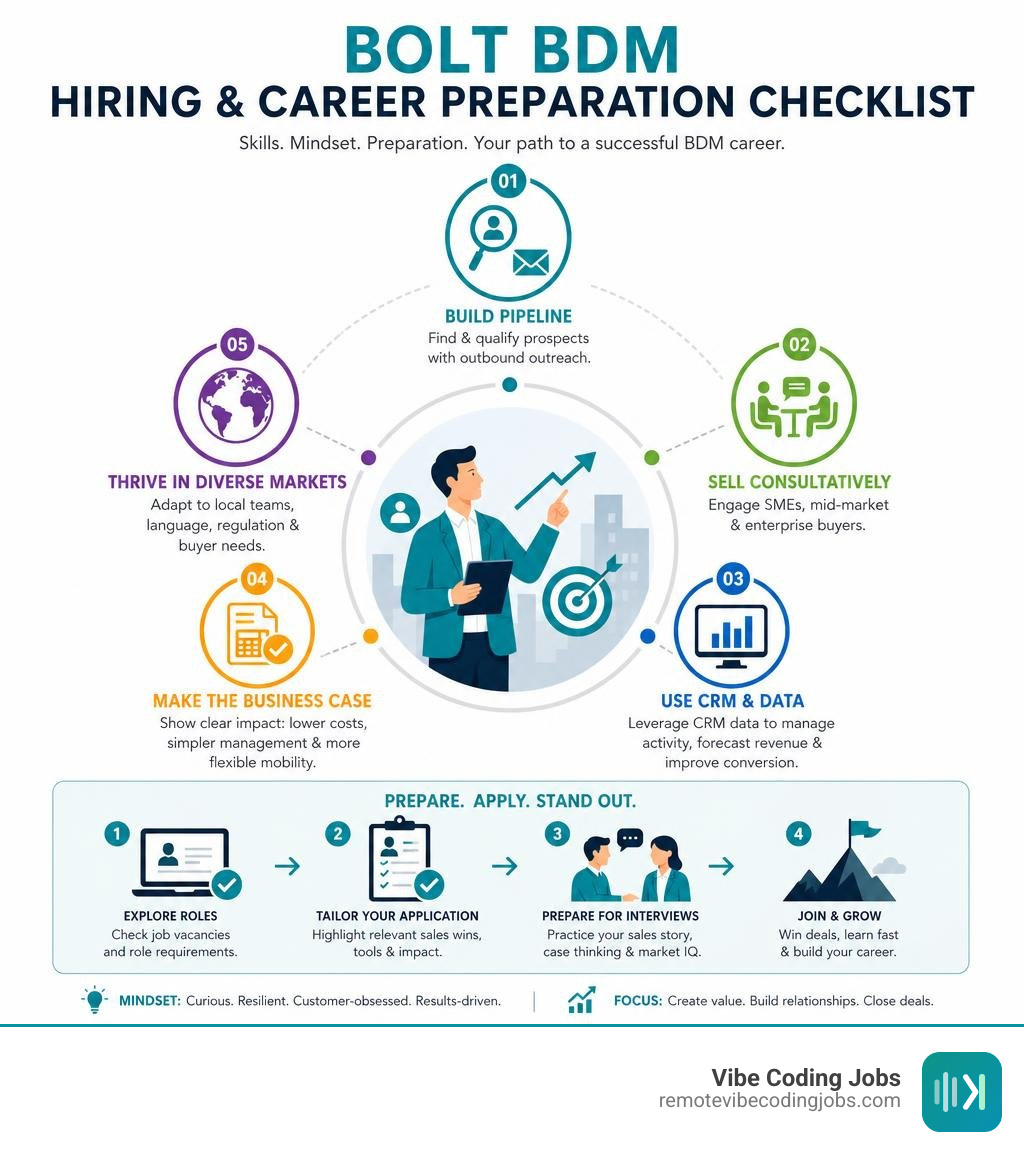
To be a strong candidate, show evidence that you can:
- Build pipeline through outbound prospecting and cold outreach.
- Sell consultatively to SMEs, mid-market firms, and larger enterprise buyers.
- Use CRM data, including Salesforce, to manage activity, forecast revenue, and improve conversion.
- Explain a clear business case, such as lower travel costs, simpler employee transport management, or more flexible mobility options.
- Work with local teams in a fast-moving market where language, regulation, and buyer needs vary.
Bolt operates at meaningful scale, with more than 200 million users across 600+ cities and markets in Europe and Africa. That scale creates opportunity, but it also raises the bar: hiring teams are likely to look for salespeople who can own a territory, learn quickly, and turn market feedback into better go-to-market decisions.
This guide breaks down the role, regional differences, compensation signals, and the likely interview stages, so you can prepare a credible sales story rather than relying on generic interview answers.
I’m Di Su, a software engineer and growth-focused builder with 10+ years across web development, conversion optimization, e-commerce, and product launches. While I have not held a Bolt Business Development Manager role, my experience building high-traffic funnels and scaling revenue helps me assess the data, customer journey, and commercial skills behind modern growth jobs.
Must-know bolt business development manager terms:
The Bolt Business Development Manager Role and Core Responsibilities
At its core, landing and excelling in a business development position at a high-velocity scale-up requires a disciplined approach to full-cycle revenue generation. Bolt operates in over 40 countries with a global workforce of 4,000 to 5,000 employees. Backed by $2.3 billion in total funding across 18 investment rounds and generating an estimated €500M to €600M in annual revenue, the company has diversified well beyond consumer ride-hailing.
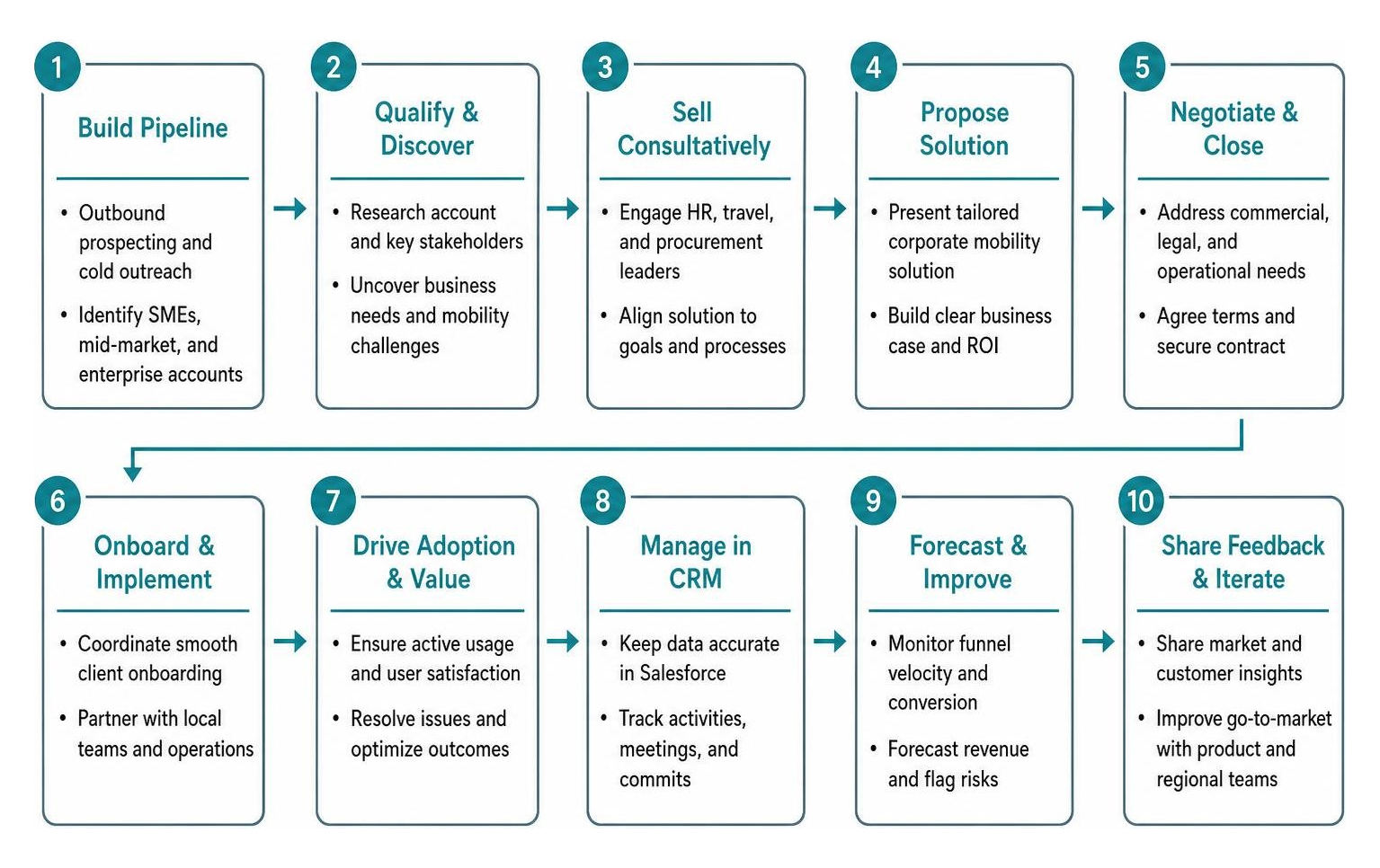
Corporate sales representatives take complete ownership of the B2B pipeline. This includes cold outreach, lead qualification, solution demonstrations, contract negotiation, and smooth post-sale client onboarding. Maintaining rigorous CRM hygiene across platforms like Salesforce is central to daily operations. Sales professionals must track funnel velocity, monitor conversion drop-offs, and relay structured customer feedback directly back to regional product and operations teams.
Industry leaders like Gerhard Spitsak have demonstrated how applying lean principles and structured B2B strategies can scale a mobility SaaS arm to capture dominant regional market positions, including driving €30M+ in revenue and securing up to a 75% B2B mobility market share.
Day-to-Day Operations of a Bolt Business Development Manager
A typical day balances structured prospecting with active negotiation. Mornings often center around pipeline hygiene, reviewing outbound engagement metrics, and qualifying top-of-funnel accounts. Midday blocks are reserved for discovery calls and commercial proposals with HR managers, travel coordinators, and procurement directors.
Sales managers also collaborate closely with merchant onboarding teams and regional operations leads to resolve administrative bottlenecks. As modern commercial teams increasingly integrate automation and AI-driven workflows to streamline account research, exploring the broader Vibe Coding Career Path highlights how data automation and modern software tools empower go-to-market operators to move significantly faster.
Target Client Segments: SMEs, Mid-Market, and Enterprise Accounts
BDMs segment outreach across three primary commercial tiers:
- Small and Medium Enterprises (SMEs): Fast sales cycles focused on self-serve onboarding, streamlined expense tracking, and eliminating paper taxi receipts for small teams.
- Mid-Market Companies: Organizations with 100 to 1,000 employees requiring custom reporting, centralized billing accounts, and automated travel policy compliance.
- Tier 1 Enterprise & Public Sector: High-value corporate accounts and governmental procurement tenders requiring complex security reviews, custom SLA negotiations, and integrated multi-product deployments spanning ride-hailing, micromobility, and corporate meal programs.
Key Qualifications, Regional Differences, and Compensation Breakdown
To secure an interview, candidates typically need at least 5 years of B2B sales experience, with a proven history of quota overachievement and consultative selling expertise. Commercial teams require candidates who combine data analytics with exceptional interpersonal communication to handle objection-heavy enterprise procurement cycles.
| Region / Hub | Target Customer Focus | Key Language & Operational Requirements | Primary Value Proposition |
|---|---|---|---|
| Berlin (DACH) | Mid-Market & Enterprise | Fluent German & English; Salesforce expertise; hybrid office model | Centralized corporate travel expense compliance |
| Lisbon (Southern Europe) | Hospitality, Corporate & Events | Fluent Portuguese & English; consultative SaaS pitching | Fleet management & peak-season business mobility |
| Stockholm (Nordics) | Sustainability-focused Mid-Market | Fluent Swedish & English; green fleet reporting proficiency | Shared micromobility & lower corporate carbon footprint |
| Nairobi (East Africa) | SMB & Mid-Market Merchants | Fluent English & regional business acumen; GTM committee leadership | Revenue expansion via food delivery & merchant GMV |
Regional Market Variations: From Berlin and Lisbon to Nairobi
The day-to-day focus of a commercial development manager shifts depending on regional infrastructure and local mobility policies. In Berlin, sales professionals navigate stringent DACH enterprise compliance and corporate travel policies, requiring fluent German and deep Salesforce reporting skills.
In Southern European hubs like Lisbon, professionals such as Manuel Lima drive corporate adoption by tailoring B2B offerings to hospitality groups, corporate entities, and event logistics coordinators. Meanwhile, in emerging markets like Nairobi, professionals like Millicent N. have demonstrated how aggressive merchant acquisition and data-led pipeline management in food and retail verticals can activate 400+ mid-market accounts and deliver over €500k+ in Gross Merchandise Value (GMV).
Uncapped Commission, Base Pay, and Equity Incentives
Compensation packages at high-growth European tech scale-ups are structured to reward high performers:
- Competitive Base Salary: Tiered according to regional market benchmarks (e.g., DACH, Nordics, Western Europe).
- Uncapped Commission: Direct revenue share on closed enterprise contracts and activated merchant GMV, with escalating accelerator tiers for exceeding 100% of quota.
- Stock Options & Equity: Scale-up equity grants aligning employee incentives with long-term company valuation.
- Benefits: Comprehensive health coverage, wellness stipends, team offsites, and internal mobility programs.
Inside the Bolt BDM Interview Stages and Hiring Evaluation
The hiring process for a commercial sales manager is rigorous, assessing analytical ability, negotiation grit, and cultural fit across four key stages:

- Recruiter Screening (30 mins): High-level review of your sales history, quota attainment percentages, CRM proficiency, and alignment with hybrid office expectations.
- Hiring Manager Deep-Dive (45–60 mins): Detailed walk-through of your past deals, outbound prospecting strategies, lead-qualification methodologies, and local market knowledge.
- Practical Case Study Presentation (60 mins): Candidates receive a hypothetical expansion scenario (e.g., launching a new B2B tier in a competitive urban market). You present an end-to-end go-to-market plan, complete with ICP definitions, outreach sequences, and financial projections.
- Executive & Cultural Panel (45 mins): Evaluation by regional sales directors focusing on cross-functional collaboration, long-term leadership potential, and operational resilience.
How to Stand Out as a Bolt Business Development Manager Candidate
Standing out requires demonstrating real commercial impact rather than speaking in vague generalities. Highlight specific metrics: Gross Merchandise Value generated, conversion rate improvements, and your exact outbound acquisition frameworks.
Leaders like Carol Randlepp illustrate the value of versatile commercial execution when expanding platforms into strategic verticals like grocery and retail partnerships. Similarly, candidates with entrepreneurial backgrounds—such as Elias N. —stand out by demonstrating how cross-functional agility, startup ownership, and disciplined deal execution drive enterprise pipeline growth. For additional tactical interview preparation, check out our guide on How to Get a Vibe Coding Job: Skills, Portfolio, Networking to see how technical literacy elevates commercial conversations.
Mastering the Case Study and the ‘Act Like an Owner’ Mindset
The case study presentation is the deciding factor in the evaluation process. Interviewers look for an “Act Like an Owner” mentality. Instead of simply listing standard sales email templates, successful candidates:
- Calculate concrete ROI models comparing legacy corporate transport spend against on-demand mobility portals.
- Anticipate procurement friction, such as data privacy standards and enterprise travel integration requirements.
- Demonstrate lean operational thinking by showing how cross-functional alignment between sales, legal, and onboarding teams prevents post-sale churn.
Career Progression, Modern Sales Tech, and Growth Verticals
Commercial careers within hyper-growth scale-ups follow a transparent advancement track. Top performers frequently transition from mid-market sales specialists into Tier 1 enterprise managers, regional team leads, or Country Sales Managers holding full P&L responsibility.

Advancement Paths from Sales Specialist to Country Sales Manager
The career roadmap rewards consistent revenue delivery and cross-functional leadership:
- Sales Specialist / BDR: Focused on top-of-funnel generation, outbound cadence execution, and qualifying SME leads.
- Business Development Manager: Full-cycle ownership of mid-market and Tier 2 accounts, contract negotiations, and localized territory planning.
- Senior BDM / Enterprise Lead: Strategic acquisition of Tier 1 corporate accounts, national public procurements, and multi-product bundling.
- Country Sales Manager: Total revenue operations, regional GTM strategy design, hiring, and direct P&L management.
Expanding into Grocery, Retail, and AI-Driven Sales Workflows
As platform ecosystems expand into dark stores, instant grocery delivery, and merchant retail integrations, the scope of business development continues to evolve. Modern sales leaders leverage automated CRM enrichment, predictive lead scoring, and agentic research workflows to analyze market density before launching outbound campaigns.
Applying data intelligence to sales operations ensures that account executives spend less time on manual administrative tasks and more time conducting high-impact consultative meetings.
Frequently Asked Questions About Bolt BDMs
What qualifications are required for a Bolt BDM position?
Candidates typically need at least 5 years of proven B2B sales experience in SaaS, logistics, or platform scale-ups. Requirements include demonstrated quota attainment, expertise with CRM tools like Salesforce, strong negotiation skills, and bilingual fluency in English and the relevant local market language.
How does Bolt’s uncapped sales commission structure work?
The compensation model combines a competitive base salary with a variable commission tier tied to generated revenue, onboarded merchant GMV, and closed enterprise contracts. Commission plans feature transparent accelerators that increase payout percentages once annual quotas are surpassed.
What are the main challenges when selling Bolt for Business mobility solutions?
The primary challenges include navigating lengthy enterprise procurement timelines, displacing legacy taxi vendor contracts, integrating custom expense APIs into established corporate travel systems, and adapting commercial pitches to local urban transportation regulations.
Conclusion
Succeeding as a commercial development manager at a top-tier mobility scale-up requires a blend of outbound sales discipline, consultative problem-solving, and analytical pipeline execution. By understanding the multi-tiered client base, preparing a data-backed case study, and embodying an owner’s mindset, you can navigate the hiring process with confidence.
Explore curated commercial and tech roles across fast-moving companies on our Remote Vibe Coding Tools Hub and accelerate your tech career today.