
Why Remote Cursor Developer Roles Are Dominating the Job Market
If you want to ship production-ready code at lightning speed from anywhere in the world, remote cursor developer roles are the most exciting career path in tech today.
Quick Summary: The Remote Cursor Developer Job Market at a Glance
- Average Salary Range: $110,000 to $134,000 per year (Senior roles can easily exceed $150,000 to $250,000+).
- Top Companies Hiring: Tech leaders like Amazon Devices, Experis, Trafilea, and fast-growing startups.
- Key Skills Needed: Mastery of the Cursor IDE, prompt engineering, multi-file reasoning, TypeScript, and Python.
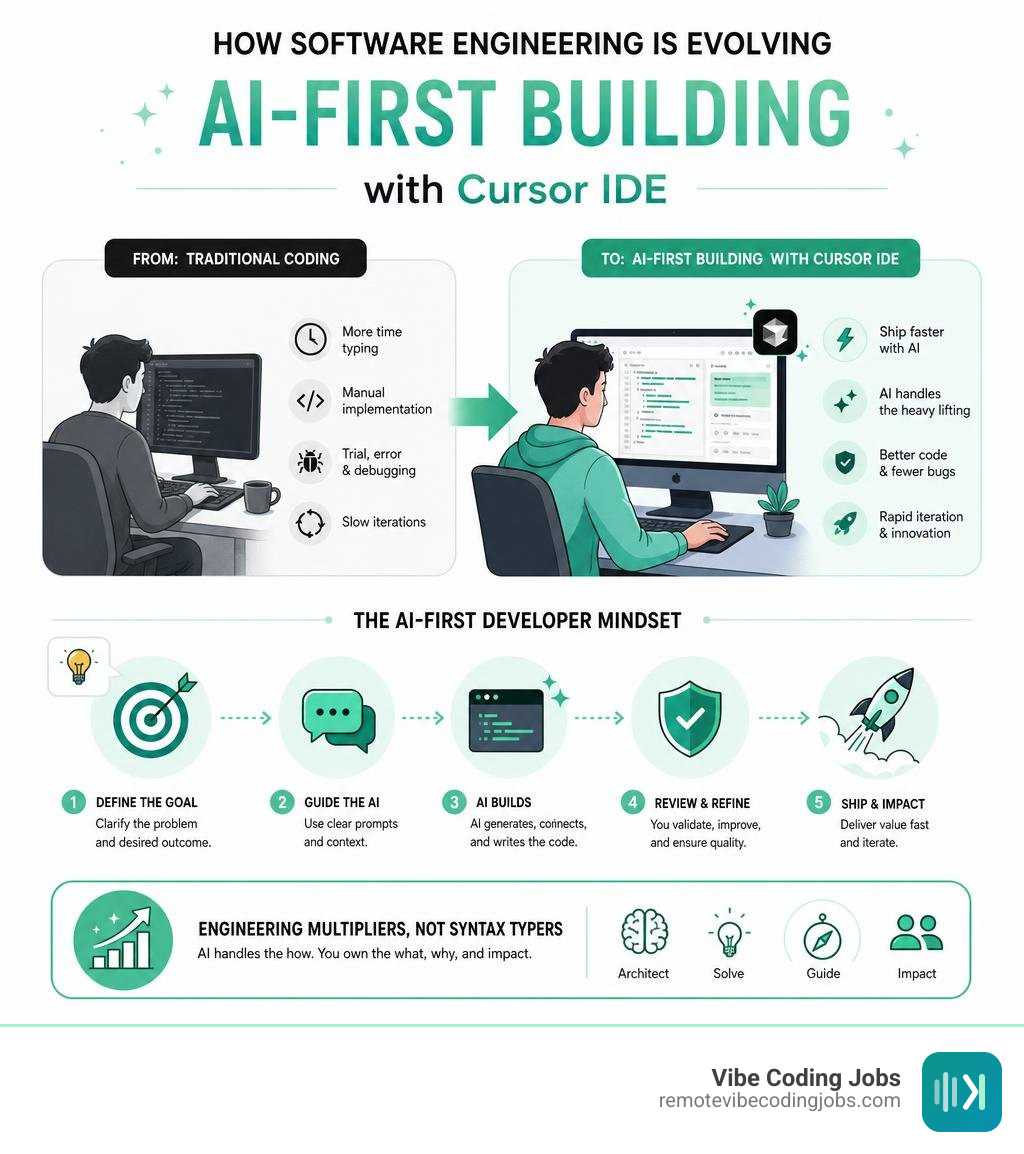
- The Big Shift: Employers are no longer looking for manual syntax typers. They want “engineering multipliers” who can guide AI to build solid software.
We are living through a massive shift in the software industry. It is the era of “vibe coding.”
Top-tier software engineering is no longer about memorizing brackets and loops. Instead, it is about system architecture, creative problem-solving, and knowing how to direct AI tools to build secure systems.
Cursor has quickly become the tool of choice for elite developers. Because of this, companies are now actively hiring developers who specifically know how to get the most out of AI-assisted workflows.
I’m Di Su, a software engineer with over 10 years of experience building scalable systems and optimizing web workflows. Having transitioned my own development environments to AI-native tools, I now help builders navigate the landscape of remote cursor developer roles to find high-paying, async-first jobs.
Related content about remote cursor developer roles:
What is a Cursor Developer and Is It a Legitimate Job Title?
As we navigate through July 2026, many traditional software engineers are asking themselves: Is “Cursor Developer” actually a real job title, or is it just a temporary buzzword?
The short answer is: yes, it is absolutely a legitimate, highly sought-after job title.
Historically, developers used standard text editors or traditional Integrated Development Environments (IDEs) to manually type every line of code, look up syntax, and debug errors. A Cursor developer, however, is a software engineer who uses the AI-native Cursor IDE as their primary workstation. By leveraging advanced features like codebase indexing, inline AI prompts, and multi-file reasoning, they can build, test, and ship software at a fraction of the time it takes using traditional setups.
To understand why this role has become so distinct, we have to look at how Cursor fundamentally changes the development workflow:
- Codebase Indexing: Instead of looking at a single file, Cursor indexes your entire repository. This allows the built-in AI models to understand the context of your entire project, including how different modules, databases, and APIs interact with one another.
- Multi-File Reasoning: Traditional autocomplete tools only suggest the next few words in a single file. Cursor can write and edit code across multiple files simultaneously, making complex refactoring tasks incredibly easy.
- Strategic Prompt Engineering: Instead of writing boilerplate code, Cursor developers write precise, context-rich prompts to generate whole features, allowing them to focus on high-level design.
This combination of skills is why recruiting agencies and enterprise employers are posting dedicated listings for Cursor Copilot Developer Jobs. For instance, global workforce solutions leader Experis has published formal job postings like the Cursor Developer job – Experis USA – 398226 , signaling that mainstream corporate America has fully embraced AI-assisted engineering as a distinct specialty.
The Rise of Remote Cursor Developer Roles in 2026
The software development landscape in July 2026 looks radically different than it did just a couple of years ago. The rise of “vibe coding”—a term that describes using natural language to orchestrate AI models to write, debug, and run software—has graduated from a fun weekend hobby to an enterprise-grade standard.
Today, companies are realizing that a single engineer who has mastered AI-native workflows can match the output of an entire traditional junior developer team. This massive productivity boost has triggered an explosion in remote cursor developer roles.
Instead of requiring engineers to sit in physical offices, forward-thinking companies are hiring remote “AI-First Software Builders” and “Agentic Coders.” These remote roles allow developers to work asynchronously from anywhere in the world, focusing on system orchestration rather than manual typing.

Key Responsibilities in Remote Cursor Developer Roles
If you land a remote role focused on Cursor development, your day-to-day work will look quite different from a traditional programming job. Rather than spending hours hunting down missing semicolons or writing repetitive boilerplate, you will act as an editor, architect, and orchestrator.
Some of the primary responsibilities include:
- Accelerated Code Generation: Using natural language prompts to rapidly scaffold microservices, build frontend components, and integrate third-party APIs.
- AI-Driven Code Reviews: Auditing AI-generated outputs to ensure they adhere to strict security, performance, and compliance standards.
- Automated Test Case Generation: Directing Cursor to write comprehensive unit, integration, and end-to-end tests to maintain high code quality.
- Prompt Library and Context Management: Designing and maintaining custom
.cursorrulesfiles and standardized prompt templates to ensure the AI has the exact context it needs to generate production-ready code. - Developer Mentoring: Teaching other team members how to set up their custom configurations, leverage multi-file reasoning, and avoid common AI-generation pitfalls.
To get a better idea of what employers expect, you can explore the Cursor Copilot Developer Jobs Remote Requirements page. Companies like Trafilea are actively hiring for these exact skill sets, as seen in their Trafilea – Cursor Developer / AI-Driven Development Specialist job listing, where they seek specialists who can transform AI from a simple assistant into a massive engineering multiplier.
Essential Skills for Remote Cursor Developer Roles
While Cursor makes writing code much faster, it does not replace the need for strong foundational engineering skills. In fact, because AI can generate code so rapidly, having a deep understanding of software design is more important than ever.
To excel in these roles, you need a balanced mix of traditional and AI-specific skills:
- Core Languages: Proficiency in modern, highly structured languages like TypeScript, Python, and Go. These languages are highly readable and are perfectly suited for LLM-based generation and validation.
- System Design and Architecture: The ability to plan how databases, servers, and client applications connect. Since the AI handles the syntax, your job is to design the blueprint.
- Advanced Debugging and Verification: AI models frequently make subtle logical mistakes or introduce security vulnerabilities. A great Cursor developer must be an expert debugger who can quickly find and fix these errors.
- Prompt Engineering for Developers: Knowing how to write concise, context-rich prompts that reference specific files, docs, and libraries.
If you want to dive deeper into the exact experience level employers look for, check out our guide on Cursor Copilot Developer Jobs Remote Experience Skills. Additionally, academic institutions are recognizing this shift; for example, the Cursor Engineer – Career Center | Calvin University portal highlights the growing academic and professional demand for engineers who combine core computer science principles with hands-on AI-native workflows.
Top Companies Hiring for Remote Cursor Developers
The demand for AI-fluent developers has spread across every corner of the tech sector, from global retail giants to agile startups. Here are some of the top companies currently hiring for remote cursor developer roles:
- Amazon Devices: Amazon has fully transitioned to an “AI-first” development approach. They are actively hiring for “AI First Software Builder” roles that require at least one year of experience using AI-native IDEs like Cursor or Claude Code. These fully remote positions pay between $143,700 and $194,400 per year.
- Experis (ManpowerGroup): As one of the world’s largest staffing and recruiting firms, Experis regularly recruits remote Cursor developers for major enterprise clients, with average salaries hovering around $122,000 per year.
- Trafilea: This global e-commerce powerhouse builds and scales direct-to-consumer brands. They are hiring remote AI-Driven Development Specialists who can use Cursor to rapidly deploy full-stack features.
- Pebble Mobility: A startup in the smart vehicle space, Pebble Mobility requires their web developers to leverage tools like Cursor, Claude, and GitHub Copilot as core parts of their daily development workflow to accelerate product shipping.
- Cursor (Anysphere): The creators of the Cursor IDE themselves are constantly hiring remote talent! They look for engineers to build the next generation of AI agents, platform infrastructure, and security features.
If you are ready to start applying, you can search active listings on the Cursor developer jobs page on Indeed. For senior-level professionals, check out roles like the Senior Full-Stack Developer (AI-Assisted Development) – Remote | Hireza listing, which specifically targets engineers who use Cursor to build complex applications end-to-end.
Other excellent resources for finding active remote roles include:
- Remote Cursor Developer job at Experis | Lensa
- Forward Deployed Engineer at Cursor – RemoteTips
- Cursor Developer – ManpowerGroup | BeBee
- Careers
Salary Guide and Market Outlook for Cursor Developers
Because AI-fluent developers are so much more productive than traditional coders, employers are willing to pay top dollar for their expertise. The market outlook for these roles is incredibly strong, with demand far outstripping the supply of truly skilled prompt engineers.
Below is a breakdown of typical annual salaries for remote Cursor developers across different regions and experience levels in 2026:
| Experience Level | United States (USD) | Europe (EUR) | Global Remote (USD) |
|---|---|---|---|
| Junior (0-2 Years) | $85,000 – $110,000 | €35,000 – €45,000 | $50,000 – $80,000 |
| Mid-Level (2-5 Years) | $110,000 – $145,000 | €50,000 – €70,000 | $80,000 – $120,000 |
| Senior (5+ Years) | $145,000 – $220,000+ | €75,000 – €100,000+ | $120,000 – $180,000+ |
Freelance Cursor developers also command impressive rates, typically charging anywhere from $75 to $150 per hour for mid-level work, while highly specialized AI systems architects can easily charge $100 to $300 per hour.
To understand how these salary figures are calculated and what benefits are typically included, review our detailed Cursor Copilot Developer Jobs Salary Remote Description. If you are planning your long-term career goals, our guide on the Cursor Copilot Developer Jobs Remote Market Career Path will help you position yourself for maximum earnings.
Frequently Asked Questions about Cursor Developer Jobs
What is the difference between a Cursor developer and a traditional software engineer?
The main difference lies in how they spend their time and energy. A traditional software engineer spends a significant amount of time writing manual syntax, looking up API documentation, and debugging minor typos.
A Cursor developer, on the other hand, focuses almost entirely on high-level system architecture, database design, security, and prompt orchestration. They use the AI to write the actual code, acting as an editor who reviews, refines, and hardens the output.
To see a direct comparison of how these workflows stack up, check out our guide to Compare Cursor vs Copilot.
How do employers evaluate candidates for remote Cursor developer roles?
Evaluating an AI-assisted developer requires a different approach than traditional whiteboard interviews. Forward-thinking companies use several modern techniques to test candidates:
- Live AI Coding Tests: Instead of banning AI, employers will ask you to share your screen and build a feature live using Cursor. They want to see how quickly and accurately you can prompt the model.
- AI Bug-Catching Exercises: You will be given a block of AI-generated code that contains subtle logical bugs or security issues to see if you can identify and correct them.
- Configuration Audits: Interviewers might ask about your custom
.cursorrulesconfigurations or how you structure your codebase index to see if you are a true power user. - Mentorship Scenarios: You may be asked how you would train junior developers or non-technical team members to safely use AI tools.
What are the best alternatives to Cursor IDE for remote developers?
While Cursor is currently the market leader, the AI development space is growing rapidly. If you want to expand your toolset, some of the best alternatives include:
- Windsurf: An AI-native IDE that features an incredibly collaborative flow between the developer and the AI agent.
- Claude Code: Anthropic’s terminal-based AI agent that excels at running terminal commands and editing files directly from your command line.
- GitHub Copilot Workspace: GitHub’s environment designed to take a developer from an issue description to a completed pull request using AI.
For a comprehensive comparison of these tools, read our guide on the Best Cursor Alternatives for Remote Developers in 2026 and our breakdown to Compare Cursor vs Windsurf.
Conclusion
The software development industry has permanently evolved. The combination of natural language prompting and powerful AI-native IDEs like Cursor has unlocked a new era of software engineering—one where creativity, architecture, and “vibe coding” are valued far more than manual syntax typing.

At Vibe Coding Jobs, we believe that the best remote jobs should offer true location freedom and async-first cultures. We aggregate and curate the best remote “vibe coding” jobs daily, filtering them by tech stack, cultural fit, and AI tools so you can apply quickly and skip the endless job board scroll.
If you are ready to take control of your career and land a high-paying, flexible role, check out our curated listings today and read more about the async-first remote developer jobs benefits to find your perfect fit!