
Find Remote Vibe Coding Jobs That Match How You Build
Vibe coding remote jobs are available across full-stack engineering, product design, AI automation, developer advocacy, data workflows, and rapid MVP building. To find a strong match, prioritize roles that name the AI tools you use, such as Cursor, Claude Code, GitHub Copilot, or Windsurf, then check for timezone rules, employment type, and an async-first culture.
As of August 2026, job boards list more than 2,053 remote AI-assisted development roles from 290+ hiring companies. The best openings do not ask you to blindly accept AI output. They want builders who can turn a rough idea into a working product quickly, inspect the generated code, solve edge cases, and communicate clearly without constant meetings.
Vibe coding changes the workflow, not the need for engineering judgment. Instead of hand-writing every piece of boilerplate, you direct AI tools, make architecture choices, test the result, and own what ships. That is why employers still look for skills in areas like TypeScript, Python, React, APIs, debugging, security, and product thinking.
I am Dominic Zijlstra, a technologist and entrepreneur with experience in data science, DevOps, automated systems, and AI-powered products. In this guide to vibe coding remote jobs, I will help you separate real AI-native opportunities from vague buzzword listings and understand what modern distributed teams expect.
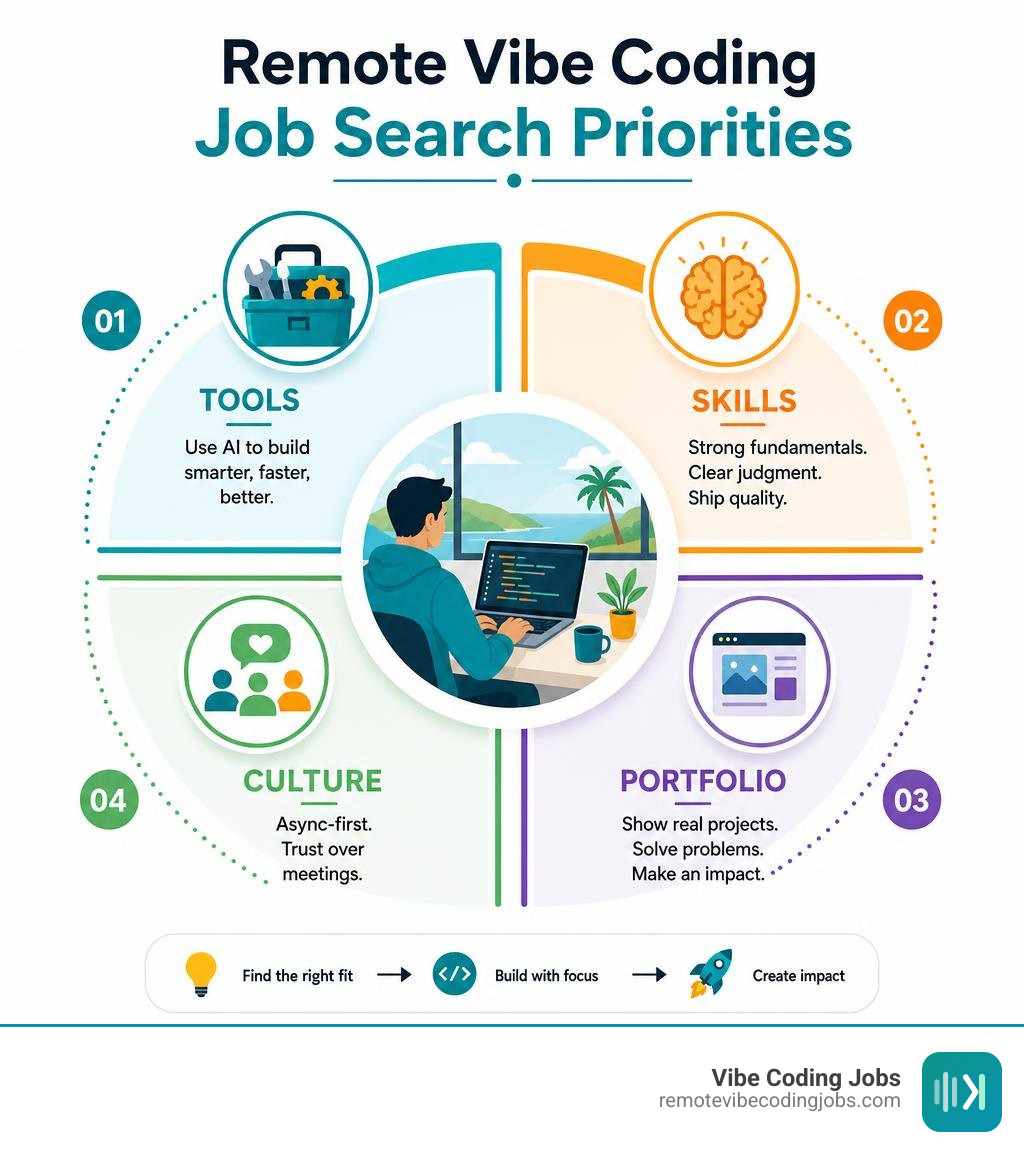
Quick vibe coding remote jobs definitions:
1. Deconstructing the Vibe Coder Profile: How Development Shifted in 2026
The software industry has undergone a permanent structural transition. When people ask what are vibe coding jobs, they are often surprised to learn it is not about letting an algorithm generate random scripts while you take a nap. In 2026, vibe coding represents a high-leverage engineering discipline where natural language, prompt architecture, and agent orchestration replace manual syntax entry.
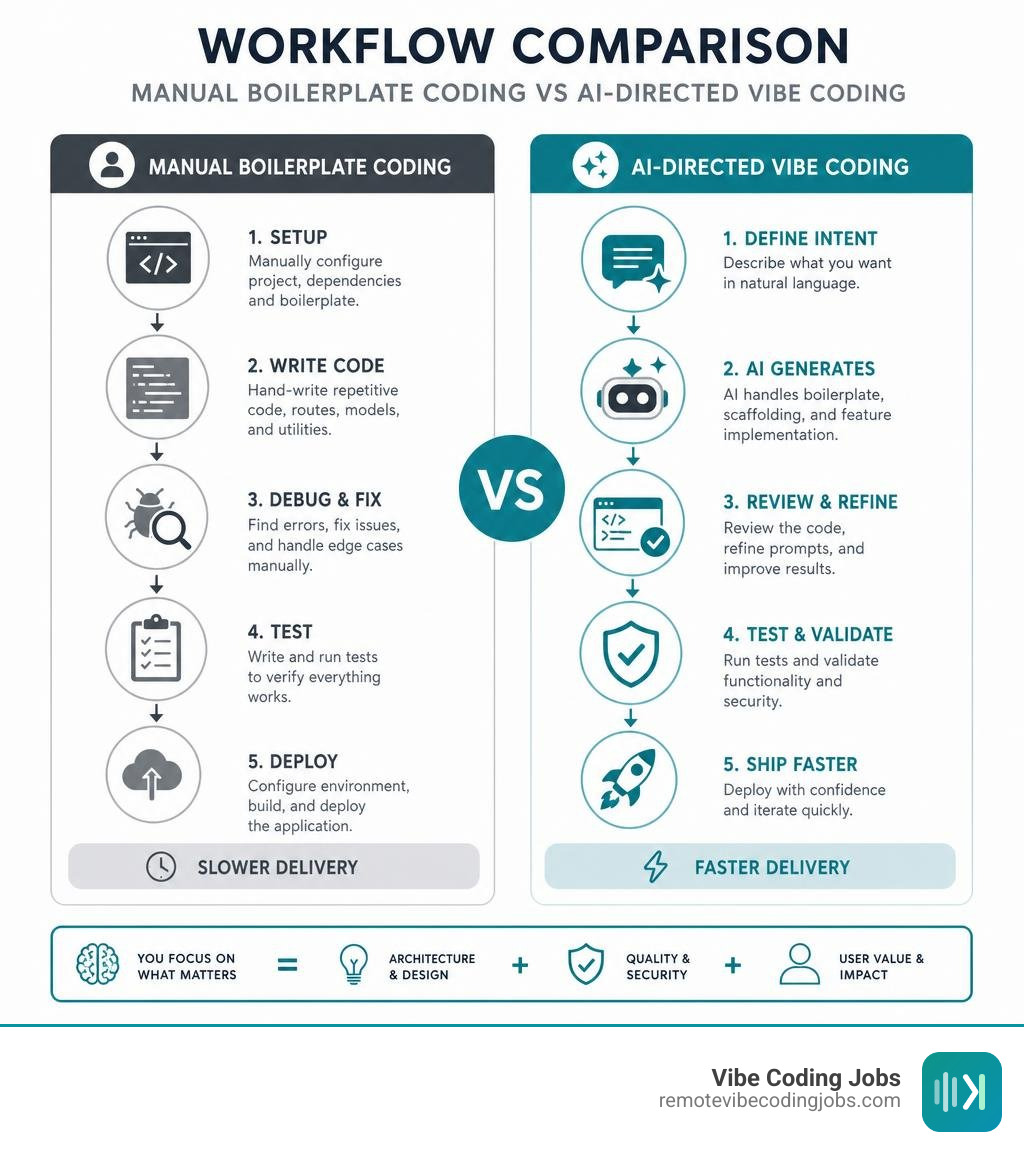
This shift allows autonomous builders to compress the timeline from “idea to URL” from several weeks down to a matter of hours. The cognitive load has shifted away from memorizing language-specific syntax quirks and toward system design, code validation, security posture, and user experience.
Moving Beyond Line-by-Line Syntax to Agentic Orchestration
Traditional software engineering spent roughly 70% of its working hours on boilerplate configuration, CRUD routing, API plumbing, and syntax corrections. In modern agentic loops, GitHub Copilot writes an average of 46% of code in files where it is enabled, while dedicated agentic editors handle complete feature scaffolding autonomously.
Vibe coders act as the pilot and orchestrator. You define the high-level intent, configure context parameters, and review the agent’s work iteratively. When an AI generates an entire full-stack feature—from the database schema to the reactive UI component—the engineer’s job is to apply rigorous judgment:
- Auditing generated logic against real-world edge cases.
- Ensuring state management remains deterministic across complex UI interactions.
- Intercepting security vulnerabilities, broken auth patterns, and unnecessary computational overhead.
- Keeping the feedback loop tight, delivering functional software 3x to 10x faster than legacy teams.
Technical Foundations Required Beneath the AI Layer
A major misconception in 2026 is that you do not need any coding background to secure a top-tier remote engineering role. Real-world engineering listings tell a very different story. Employers hiring for positions like a Vibe – coder | WorkLitho explicitly mandate 2.5+ years of core engineering experience alongside AI code generation skills.
To succeed, you must possess foundational fluency in core languages and runtimes, including TypeScript, JavaScript, Python, React, Next.js, and SQL. Without foundational software literacy, you cannot debug subtle runtime issues, spot AI hallucinations, or refactor messy abstractions. Modern distributed teams look for builders who combine rapid prompt iteration with deep code quality awareness, ensuring that speed never comes at the expense of stability.
2. The Evolution of Vibe Coding Remote Jobs in 2026
Market demand for AI-assisted development has skyrocketed over 300% year-over-year. Remote engineering teams have reorganized around asynchronous communication, high-trust autonomy, and deep work blocks with minimal scheduled meetings.

Companies realize that small, agile pods of AI-native builders can outpace traditional 20-person engineering departments. As a result, hiring metrics have shifted from tracking hours logged or tickets closed to evaluating pure shipping velocity and live product outcomes.
Industry Verticals Actively Hiring AI-Native Builders
The demand for vibe coders spans far beyond early-stage AI startups. Distributed organizations across virtually every major industry vertical are aggressively recruiting talent:
- Enterprise SaaS & CRM: Companies like Aesthetix CRM hire Directors of Technical Operations ($80,000–$100,000/year) to build internal automation pipelines and customer-facing interfaces.
- Healthcare & Biotech: Health-tech startups are deploying AI-native engineers to rapidly spin up patient-facing portals, clinical workflow integrations, and HIPAA-compliant data dashboards.
- AI Gaming & Interactive Media: Studios like Timedrift Collective recruit Game Developer Vibe Coders at salaries around $120,000/year to build mechanics and generative narratives using natural language development tools.
- Digital Marketing & SEO: Specialized agencies hire roles like the Vibe Coder – Adaptify SEO Careers to construct high-velocity web tooling, content engines, and programmatic landing page pipelines.
- EdTech & Learning Platforms: Organizations like Imagine Learning hire AI Product Managers ($110,862–$160,000 base) to oversee rapid prototyping of interactive educational software.
- Venture Studios: Incubators like Suncoast Venture Studio hire Applied AI & Rapid MVP Builders ($75,000–$95,000/year) to take dozens of concepts from blank canvases to production apps annually.
Emerging Role Archetypes Across Distributed Engineering Teams
As you browse companies hiring vibe coders, you will notice that job titles are becoming increasingly specialized. Four core archetypes dominate the current landscape:
Organizations like Joblume actively search for a Vibe-Coding Talent / AI-Native Product Builder (m/w/d) | Joblume who can operate across UI/UX, product design, and full-stack execution without getting bogged down by traditional handoff friction.
3. Toolchains and Protocols Powering High-Velocity Teams
High-performing vibe coders do not rely on standard web chat interfaces to build applications. They use tightly integrated developer environments with direct file-tree access, multi-file editing capabilities, and real-time terminal execution.
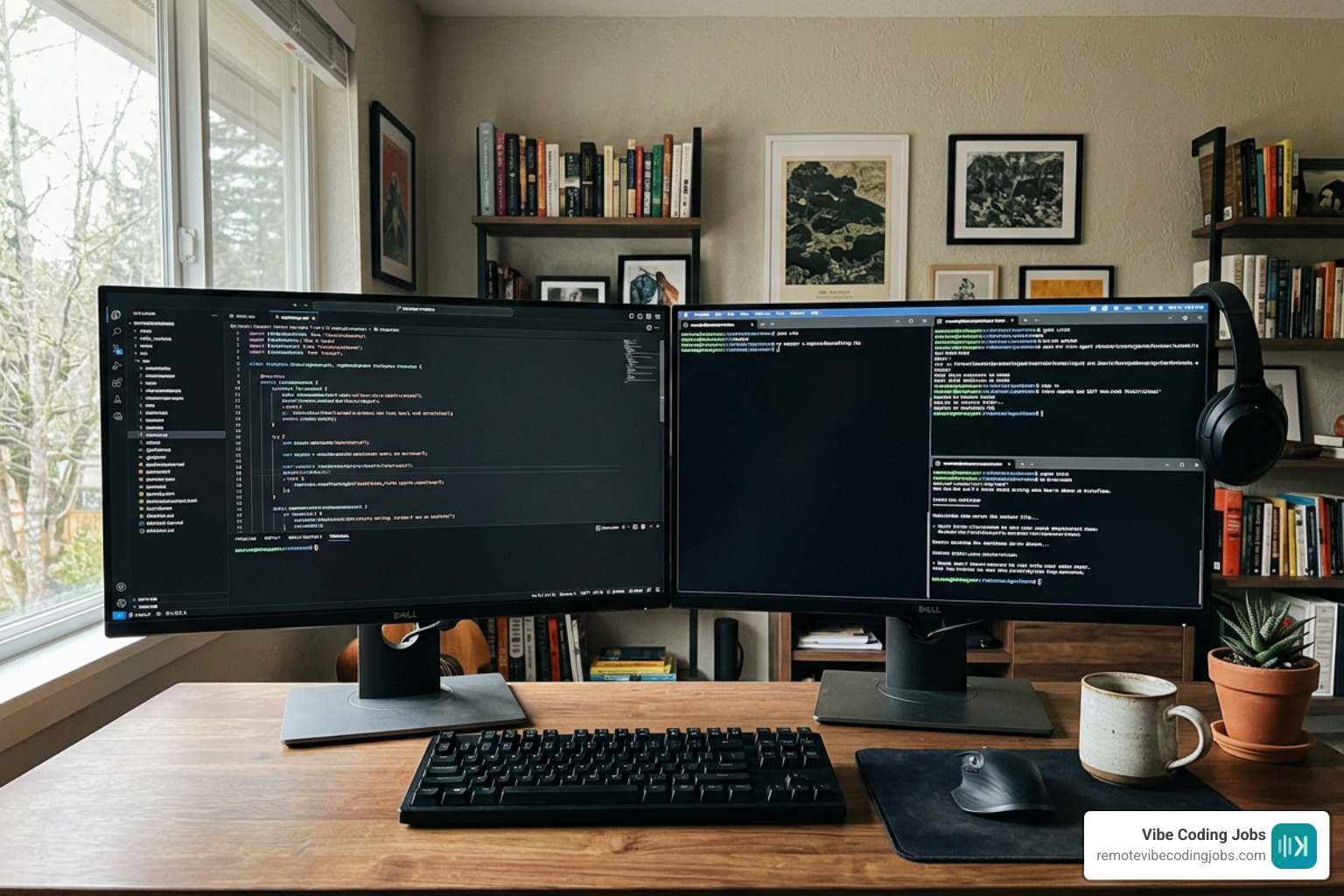
Tech Stacks Powering Vibe Coding Remote Jobs
When analyzing Cursor vs Windsurf in 2026, modern teams look for specific toolchain proficiencies tailored to their development speed. The essential AI tools for vibe coding include:
- Cursor & Windsurf: Dedicated AI-native IDEs that index local repositories, track semantic codebases, and execute multi-file edits simultaneously.
- Claude Code & Agent SDKs: Terminal-based autonomous agents capable of navigating directories, running tests, resolving Git conflicts, and fixing errors across complex repositories.
- v0, Lovable, and Bolt.new: Rapid visual prototyping platforms that generate full-stack React, Tailwind, and Supabase apps directly from UI wireframes and natural language descriptions.
- GitHub Copilot & OpenAI Codex: In-line code completion and inline refactoring engines that eliminate boilerplate syntax in real-time.
Structuring Agent Context with MCP and Machine-Readable Docs
The difference between a mediocre AI coder and a staff-level vibe coder is how they manage agent context. In 2026, leading teams standardize project knowledge through machine-readable architecture files:
- Model Context Protocol (MCP): An open standard enabling local coding assistants to securely query external databases, GitHub issues, staging environments, and internal APIs.
ARCHITECTURE.md: A root-level repository document outlining system constraints, state patterns, routing rules, and package dependencies so AI agents never make false architectural assumptions.SKILL.md: Modular documentation defining specific prompt chains, coding conventions, and operational playbooks for testing, linting, and deployment.
By managing context windows effectively, builders minimize token waste, eliminate hallucinations, and produce clean, deterministic codebases.
4. Remote Compensation Tiers and Employment Structures
Compensation for AI-assisted engineering talent has outpaced traditional development benchmarks, with remote senior engineers at AI-forward organizations earning 15% to 25% above the market median.
Global Salary Bands from Junior Builders to Staff Specialists
According to our comprehensive vibe coding salary guide, compensation varies based on experience level, architectural mastery, and geographical focus:
| Experience Tier | Typical Remote Base Salary Range | Key Responsibilities & Capabilities | Common Role Titles |
|---|---|---|---|
| Junior / Associate | $60,000 – $100,000 / year | AI-assisted feature development, bug triage, UI styling, component generation | Junior Agentic Engineer, AI Specialist, Junior Vibe Coder |
| Mid-Level Builder | $100,000 – $180,000 / year | End-to-end feature ownership, full-stack MVP deployment, API integrations, context file curation | Full-Stack Vibe Coder, AI Product Engineer, Game Developer |
| Senior / Lead | $175,000 – $235,000 / year | Architecture design, security auditing, complex system integration, agentic workflow automation | Senior AI-Native Engineer, Staff Developer Advocacy Engineer |
| Staff / Principal | $230,000 – $485,000+ / year | Enterprise AI platform infrastructure, Custom Agent SDK development, LLMOps, organizational AI productivity | Staff Engineer – AI Productivity, Agent SDK Engineer |
High-tier roles at major tech organizations showcase this compensation growth: Anthropic offers $320,000–$485,000/year for Software Engineers working on Agent SDKs, TikTok lists Product Designers (Design+Code / Vibe Coding) at $103,680–$230,280/year, and Grafana Labs provides $174,986–$209,983/year for Developer Advocacy Engineers alongside dedicated frontier AI tool stipends.
Full-Time, Contractor, and High-Upside Freelance Engagements
Vibe coding roles are split across several flexible remote employment formats:
- W2 Full-Time Remote: Offers standard enterprise benefits, comprehensive healthcare, paid time off (often 28+ days), and dedicated AI tooling stipends covering subscriptions to frontier models like Claude Opus and GPT-Codex.
- 1099 Contractor Engagements: Focused on rapid delivery milestones, such as building production MVPs ($75,000–$95,000 contracts) or cloud system operations ($65,000–$80,000/year).
- Freelance Hourly Work: Specialized roles such as freelance web scraping or data pipeline engineering, with market rates ranging from $20 to $35+ per hour.
- High-Upside Profit Sharing: Early-stage AI product studios often provide base contractor pay coupled with uncapped revenue-share arrangements for products shipped directly to production.
5. Transition Strategies and Modern Evaluation Standards
Transitioning to a high-velocity AI development workflow is achievable in 2 to 4 weeks of deliberate practice. If you are planning your remote vibe coding career path, you must tailor your application materials to match how modern distributed companies evaluate talent.
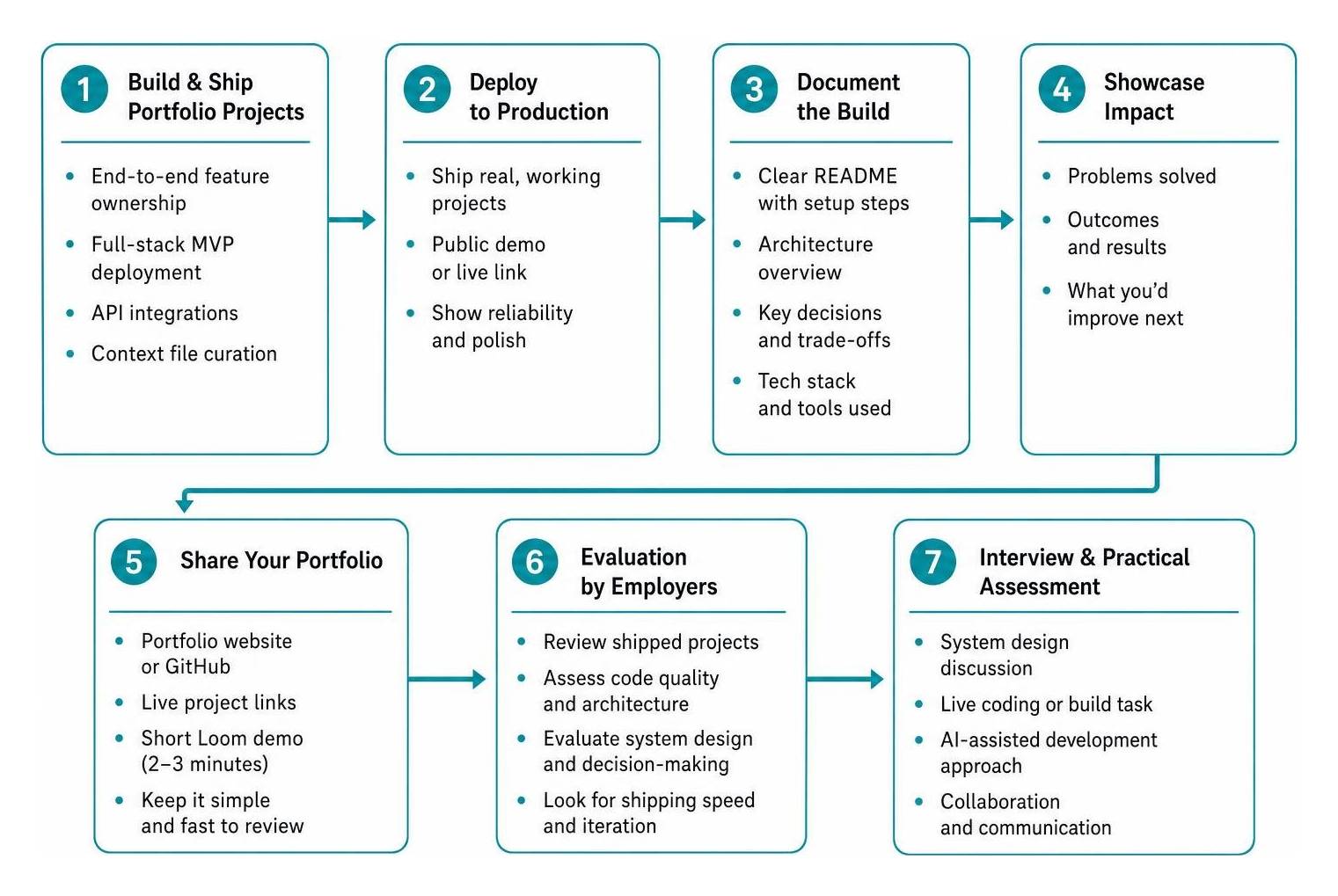
Application Strategies for Vibe Coding Remote Jobs
To understand how to land a remote vibe coding job, you must abandon traditional text-only resumes. Modern hiring managers care about demonstrated shipping speed.
Follow these portfolio deployment best practices:
- Ship Live, Clickable Applications: Host live web applications on Vercel, Netlify, or Fly.io. A live URL demonstrating clean state management and responsive UI is infinitely more convincing than a static GitHub repository.
- Record Async Loom Walkthroughs: Create 3-minute video recordings showing how you orchestrated AI tools, structured prompt contexts, and resolved non-trivial engineering blockers.
- Open-Source Your Context Architectures: Include public repositories containing well-structured
ARCHITECTURE.mdandSKILL.mdfiles alongside your codebase. - Demonstrate End-to-End Ownership: Showcase projects where you independently handled the frontend, backend database schemas, third-party authentication, and deployment automation.
How Modern Remote Teams Evaluate AI-Native Engineering Talent
The tech industry’s reliance on LeetCode algorithmic puzzles and whiteboard whiteboard tests has plummeted in vibe coding interviews. Distributed teams evaluate candidates using practical, realistic workflows:
- Live Vibe-Pairing Sessions: You will share your screen and use your daily AI environment (Cursor, Claude Code, or Windsurf) to build a functional micro-service or interactive UI component within 45 minutes.
- Prompt & Hallucination Defense: Interviewers will intentionally introduce edge cases or flawed AI responses to test your ability to spot hallucinations and manually refactor broken logic.
- Asynchronous Take-Home Builds: You will receive a product prompt and have 24 hours to ship a deployed, fully tested prototype accompanied by a short video walkthrough.
- Written Communication & Async Collaboration: Because these roles operate in high-autonomy remote environments, your written documentation, PR summaries, and clarity of thought are evaluated throughout the process.
Frequently Asked Questions About Remote Vibe Coding
How much do remote vibe coding jobs pay in 2026?
Remote vibe coding roles offer broad salary bands depending on seniority, region, and stack complexity. Junior roles generally range from $60,000 to $100,000 per year, mid-level product engineers command between $100,000 and $180,000, and senior or staff-level builders earn anywhere from $180,000 to $320,000+. At leading AI infrastructure firms, specialized agent engineers command upwards of $485,000 annually.
Do vibe coders still need a background in computer science or programming?
Yes. While you do not need a formal computer science degree, you must understand core software engineering principles. Vibe coding eliminates manual syntax generation, but you still need to understand data structures, REST/GraphQL APIs, relational database relationships, authentication lifecycles, and security practices to validate and debug AI-generated code.
How does the remote hiring process for vibe coders differ from traditional tech interviews?
Vibe coding interviews skip abstract algorithmic puzzles in favor of real-world development challenges. Candidates are evaluated on prompt clarity, velocity, AI orchestration, edge-case debugging, live portfolio walkthroughs, and written asynchronous communication.
Conclusion
The shift toward AI-native development has unlocked unprecedented leverage for autonomous developers. If you are ready to build software at record speed, explore curated listings, culture-matched teams, and specialized remote Swift developer roles on RemoteVibeCodingJobs today.