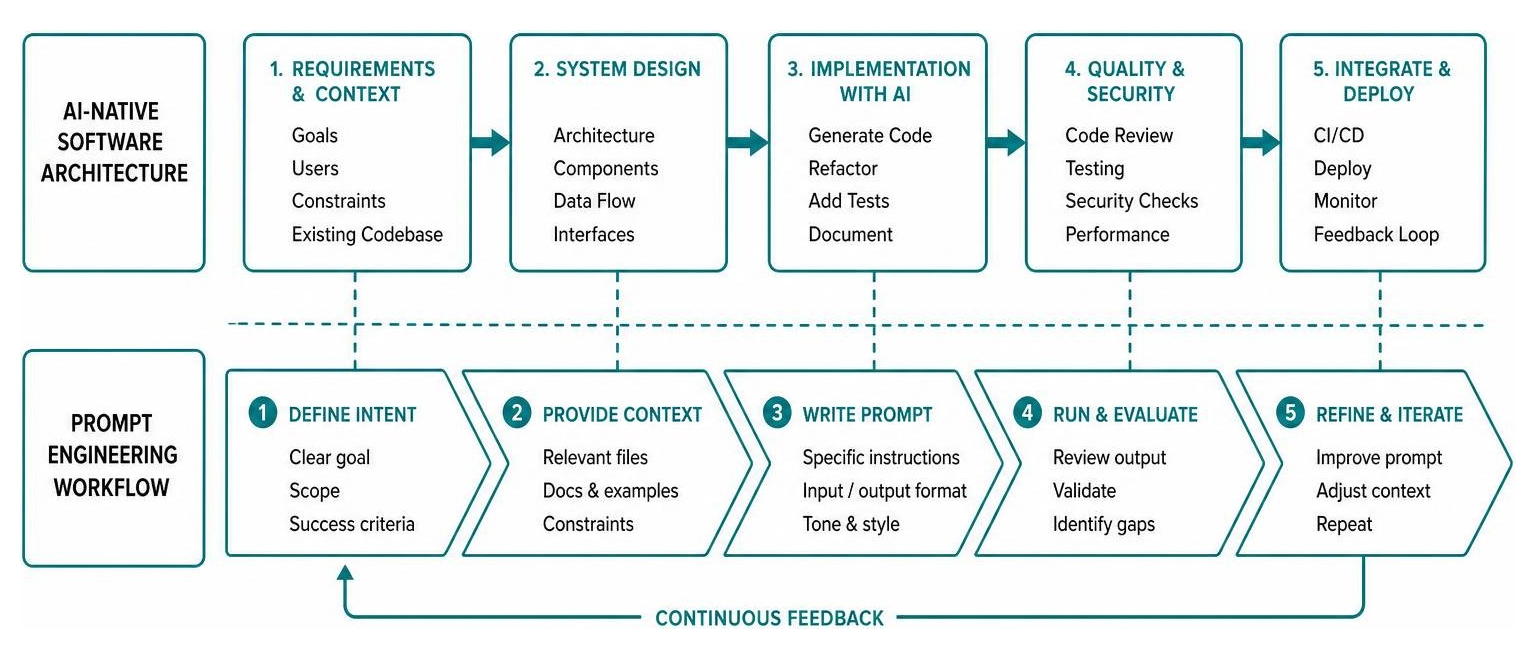
Top Technical Skills Needed for Cursor Claude Remote Roles
Landing high-paying cursor claude remote roles in 2026 requires more than basic coding knowledge or familiarity with code completion extensions. As software engineering transitions toward AI-native paradigms, companies are hiring developers who act as true engineering multipliers–professionals who construct complex software systems faster while enforcing rigorous architectural consistency, compliance, and security standards through AI-driven workflows.
To thrive in high-autonomy, remote-first environments, candidates must demonstrate an understanding of both classical software design and emerging AI control mechanisms. Modern remote engineering teams look for developers who know when to allow AI tools to handle rapid implementation and when to step in as primary system architects.
Core Engineering Skills Required for Cursor Claude Remote Roles
To stand out for modern AI-assisted engineering roles, you must combine core full-stack proficiency with sophisticated context management and system orchestration skills:
- SwiftUI and Modern Architecture: Building reactive, responsive user interfaces demands deep knowledge of state management, clean component architecture, declarative patterns, and modular UI design. In remote Swift roles, engineering leads expect clean separation of concerns using pattern implementations like MVVM or Composable Architecture alongside AI code generators.
- Model Context Protocol (MCP): Integrating custom MCP servers lets AI agents communicate securely with external databases, enterprise APIs, internal documentation hubs, and developer toolchains. Understanding MCP server setup enables developers to extend Claude and Cursor beyond simple file editing into fully integrated context engines.
- Context Engineering: Mastering context windows, system prompts, rule files (such as .cursorrules), and structured output design ensures AI agents return precise, deterministic code without hallucinating outdated APIs or invalid dependencies.
- Full-Stack Ecosystems: Most remote listings demand fluency in TypeScript, Python, Go, or Node.js alongside specialized frameworks. Understanding modern API standards, GraphQL, and microservices ensures you can guide AI models across entire multi-repo landscapes.
To learn more about positioning your background for these high-growth paths, review our guide on AI Assisted Development Career Growth.
Best Practices for Landing Cursor Claude Remote Roles in 2026
When applying for remote positions, proof of practical execution matters far more than theoretical knowledge or certifications. Hiring managers look for verifiable evidence that you can manage AI-driven workflows systematically:
- Build a Public AI-Native Portfolio: Share repositories that feature well-documented prompt recipes, custom MCP tool integrations, custom prompt templates, and clear architectural specs demonstrating how you guided an AI agent from concept to production code.
- Demonstrate CI/CD Integration: Showcase how you integrate AI checks, automated linting, test-driven development (TDD) validation loops, and unit test generators directly into continuous delivery pipelines.
- Highlight Code Review Standards: Prove that you audit AI-generated code for memory leaks, performance bottlenecks, concurrency race conditions, and security vulnerabilities before opening pull requests.
For actionable strategies on progressing through technical career tiers, see our Remote Developer Career Path Junior to Senior Guide 2026.
Comparing AI Architectures: Local-First vs Cloud Execution
Choosing the right tool for a given engineering task requires understanding how local-first environments compare to cloud-based multi-agent engines. High-velocity remote development teams frequently leverage a hybrid approach, using local tools for high-privacy codebase modifications and cloud agent clusters for large-scale background execution.
| Architecture Feature | Local-First Execution (e.g., Claude Code) | Cloud Agent Execution (e.g., Cursor Cloud) |
|---|---|---|
| Code Execution Location | Local Workstation Terminal | Scalable Cloud Virtual Machines |
| Data Privacy & Security | Source code never leaves local machine | Code processed in secure cloud sandbox |
| Parallelization | Focused single-thread agent execution | 10-20+ background parallel cloud agents |
| Remote Management | TLS mobile browser control via URL/QR code | Cloud dashboard / Web IDE access |
| Primary Enterprise Use Case | Strict data residency & proprietary repos | Mass automated refactoring & batch tasks |
Terminal Remote Control and Data Security
Claude Code Remote Control represents a major shift toward local-first AI development. Initiated via terminal commands like claude remote-control or /rc, it opens an outbound HTTPS connection to Anthropic’s API using TLS encryption without requiring inbound open ports on your local firewall.
This setup generates a secure QR code or pairing URL, allowing developers to steer, monitor, and approve terminal actions directly from a mobile browser or secondary device while away from their primary desk. Crucially, your source code, local tools, build environment, and sensitive environment variables stay on your hardware, meeting strict corporate governance policies. Learn more about this security architecture in the official breakdown on Claude Code Remote Control Keeps Your Agent Local and Puts it in Your Pocket.
Multi-Agent Parallel Cloud Execution
In contrast, cloud-based architectures run isolated cloud virtual machines to execute multi-agent workloads at scale. Instead of locking up your local terminal CPU or filling disk space with temporary build artifacts, cloud agents execute dozens of tasks in parallel across high-performance remote instances:
- Running test suites across fragmented microservices simultaneously to identify breaking changes across complex dependency trees.
- Performing background refactoring across large, multi-file codebases, updating deprecated framework calls in minutes rather than days.
- Automatically drafting, testing, and opening pull requests for routine bug fixes, dependency updates, and documentation syncs.
Remote Job Market Outlook and Compensation Metrics

The global market demand for specialized AI developers has driven salaries up across all engineering levels. As companies recognize the immense productivity gains unlocked by developer-level AI adoption, compensation structures reflect the specialized skill sets required to deploy and maintain these tools responsibly.
Salary Expectations and Global Hiring Opportunities
Enterprise salary data indicates robust compensation packages for developers skilled in AI-assisted workflows:
- Average Salary Benchmark: $122,000 per year across mid-level global remote roles.
- Standard Base Range: $110,000 to $134,000 per year for dedicated full-stack and iOS/SwiftUI roles leveraging AI tooling.
- Senior & Specialist Tier: Highly experienced Applied AI Engineers and Forward Deployed Engineers often command total compensation well above $150,000 annually, with elite roles pushing past $180,000.
Many international startups and venture-backed tech scale-ups offer competitive USD-denominated contracts for global talent, removing geographical pay barriers for elite engineers regardless of physical location. Check out our comprehensive Vibe Coding Salary Guide Data Market Research for deeper market breakdowns and compensation insights.
Emerging Titles: From AI Specialist to Forward Deployed Engineer
Job titles are rapidly changing across job boards and recruitment channels to reflect new engineering responsibilities in the AI era:
- Cursor Developer / AI-Driven Dev Specialist: Focuses on standardizing prompt libraries, configuring project context files (.cursorrules), maintaining AI code quality, and integrating assistants into internal CI/CD pipelines.
- Forward Deployed Engineer: Embeds directly with customer engineering teams to analyze development bottlenecks, build custom spec-to-implementation pipelines, and optimize real-world workflows using state-of-the-art coding agents.
- Applied AI Engineer: Operates across product stacks to refactor legacy codebases into modern AI-native architectures using tools like Cursor, Claude, and custom MCP integrations.
Workflows and Best Practices for Remote Swift and AI Developers

High-performing remote teams prioritize asynchronous communication, maintainable code structures, structured prompt engineering, and automated AI pipelines to maintain rapid development velocity across time zones.
Integrating AI Agents into CI/CD and Production
To maximize productivity without compromising code reliability, modern development teams embed AI agents directly into continuous integration and automated release workflows:
- Spec-to-Implementation Pipelines: Converting project specs, architectural decisions, and user stories into initial code scaffolding automatically with standardized prompt templates and constraint checks.
- Incident-to-Fix Automation: Pairing error-logging monitoring systems with AI agents to analyze stack traces and draft preliminary hotfixes for production bugs for engineer review.
- Automated PR Review Loops: Running automated AI checks to review pull requests for formatting, security compliance, performance regression, and code maintainability before human engineers conduct final sign-offs.
For step-by-step guidance on setting up these systems in your engineering stack, review our complete Vibe Coding Workflow Guide.
Deciding Between AI Tools Across Projects
Selecting the right tool comes down to project scope, enterprise compliance, security boundaries, and infrastructure requirements:
- Use Local-First Tools (e.g., Claude Code): When working under strict compliance policies (such as HIPAA or SOC 2), handling sensitive financial/health data, or steering terminal scripts on the go via mobile interfaces.
- Use Cloud AI IDEs (e.g., Cursor): When designing complex full-stack features from scratch, conducting large multi-file refactoring, or leveraging parallel cloud agents to accelerate development cycles across extensive repository networks.
Frequently Asked Questions About Swift UI and Cursor Claude Roles
What is the main difference between local-first and cloud-based AI tools?
Local-first tools run execution logic and terminal commands directly on your physical hardware, routing minimal necessary session data externally. This guarantees strict data privacy, offline capabilities, and compliance with data residency rules. Cloud-based tools, by contrast, execute agent environments on remote virtual machines, enabling massive parallel processing across large codebases without draining local workstation hardware resources.
How is AI changing software developer roles in 2026?
AI is shifting software developers from manual line-by-line syntax writers into high-level system architects, prompt engineers, and code auditors. Instead of spending hours writing boilerplate code or searching documentation, developers direct autonomous AI agents, design context frameworks, manage system architecture, and enforce rigorous security and performance standards.
What salaries can remote developers expect for AI tool expertise?
Remote roles specializing in AI tools typically pay between $110,000 and $134,000 per year on average for standard positions. Senior specialists, Applied AI Engineers, and Forward Deployed Engineers frequently command total compensation packages between $150,000 and $180,000+, often paired with USD compensation structures and flexible global contract options.
Conclusion
The rapid rise of AI-driven development has created unprecedented career opportunities for proactive remote engineers. Whether you specialize in building sleek SwiftUI interfaces for Apple platforms or architecting complex full-stack cloud systems, mastering tools like Cursor, Claude Code, and Model Context Protocol makes you an exceptionally high-value candidate in today’s competitive job market.
By blending core software engineering fundamentals with modern AI orchestration and context engineering best practices, you can multiply your daily output while delivering rock-solid code.
Ready to take the next step in your engineering career? Browse curated, remote opportunities on RemoteVibeCodingJobs and Find Remote Swift Developer Jobs today!