
Yes, You Can Get a Remote Job as a Vibe Coder — Here’s What You Need to Know
Vibe programming remote work is a real and fast-growing job category — and companies are actively hiring right now.
If you want a quick answer before diving in:
- 787+ vibe coding jobs are currently listed across major job boards
- Roles range from junior ($70K–$100K) to senior ($150K–$400K+) and freelance ($75–$300/hr)
- Top tools required: Cursor, Claude Code, GitHub Copilot, Windsurf, Bolt.new
- No CS degree required — a strong portfolio and AI tool proficiency are what employers care about
- Companies hiring include startups, Fortune 500s, and fully async-first teams across every time zone
The shift happening right now is hard to overstate. Developers who know how to use AI tools to ship faster are getting hired over traditional coders — even at senior levels. As Andrej Karpathy (who coined the term “vibe coding”) and other top engineers have publicly argued, AI-assisted development isn’t a shortcut for beginners. It’s a multiplier for anyone who knows what they’re doing.
The demand is real. The salaries are competitive. And the remote opportunities span everything from full-stack engineering to product management, UX design, and even structural engineering.
I’m part of the RVCJ Editorial team at Remote Vibe Coding Jobs — we cover AI-assisted development, remote hiring trends, and vibe programming remote work for developers building with tools like Cursor, Claude, and Copilot. In this guide, we’ll walk you through exactly what roles exist, what they pay, and how to land one.
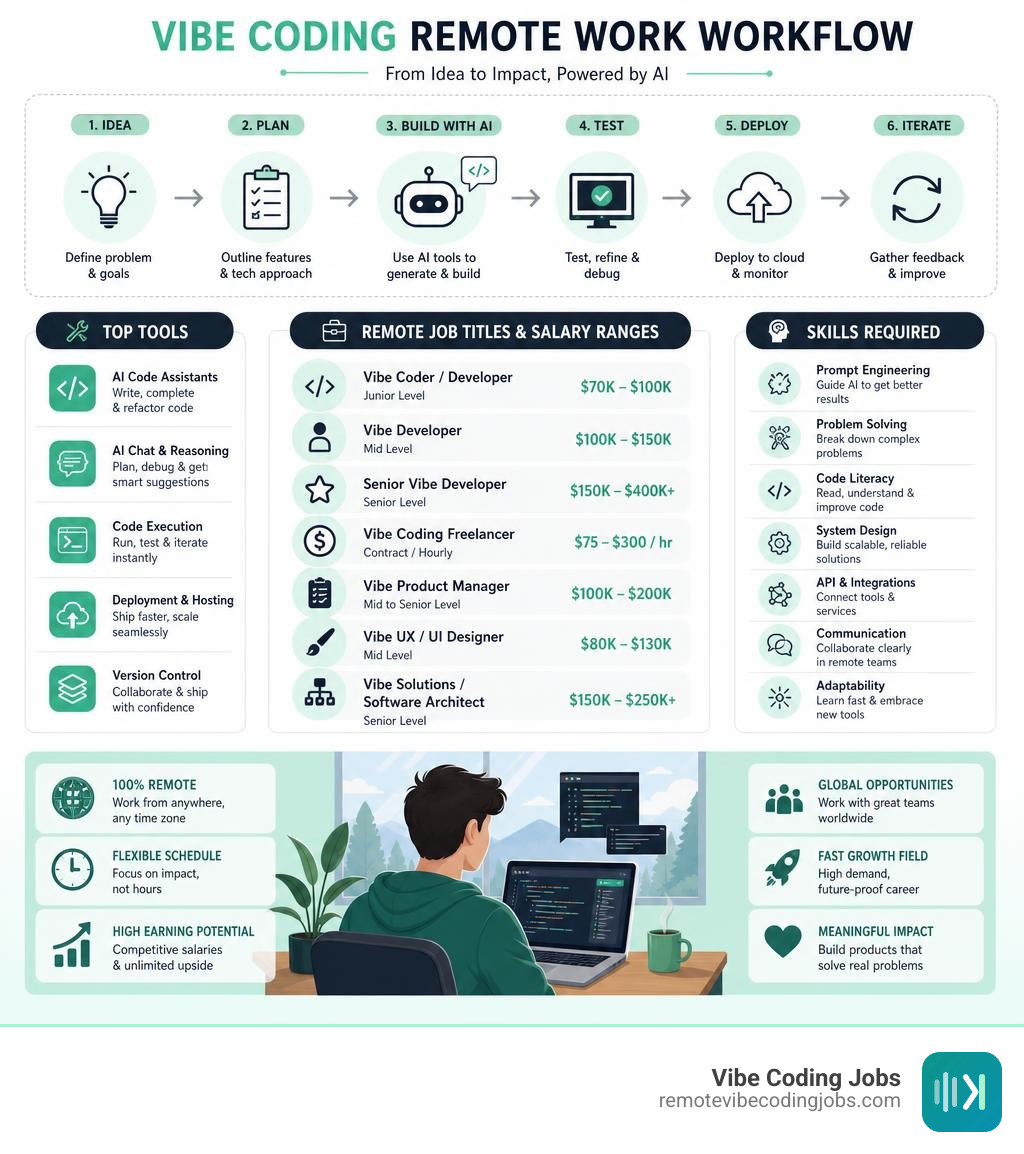
Essential vibe programming remote work terms:
What is Vibe Coding vs. Traditional Software Development?
To understand how to get hired in this space, we first have to demystify the concept. What exactly is vibe coding, and why is it taking over remote software development?
At its core, vibe coding is a development approach where you use AI tools to generate code from natural language descriptions. Instead of manually typing out every bracket, variable, and semicolon, you describe the “vibe” of what you want, and the AI builds it.
To learn more about the foundations of this paradigm shift, check out our guide on What is Vibe Coding.
In a traditional development setup, an engineer spends up to 80% of their time writing syntax, debugging typos, and dealing with boilerplate configuration. In a vibe programming workflow, the developer’s role shifts from a “code typist” to a software architect and product strategist. You focus on high-level system architecture, user experience, and prompt engineering, while the AI handles the routine, repetitive coding tasks.
Here is how the two approaches compare side-by-side:
| Feature | Traditional Software Development | Vibe Coding / AI-Assisted Development |
|---|---|---|
| Primary Input | Manual syntax typing (languages like JS, Python, C++) | Natural language prompts, UI mockups, and architectural blueprints |
| Developer Role | Writing, refactoring, and debugging line-by-line code | System architecture, prompt engineering, and quality assurance |
| Velocity | Linear speed; constrained by typing and manual debugging | Exponential speed; 2x to 5x faster prototyping and shipping |
| Prerequisites | Deep computer science theory and years of syntax mastery | Strong logic, system design thinking, and AI tool proficiency |
| Debugging | Manual stack trace analysis and step-by-step testing | Automated debug loops and iterative AI-driven error correction |
This doesn’t mean vibe coding is “easy” or only for beginners. In fact, experienced developers benefit the most from these tools because their deep technical knowledge acts as a multiplier. When you understand system design, you can write better prompts, catch edge cases, and guide the AI to build highly secure, scalable applications.
The Rise of Vibe Programming Remote Work in 2026
As we navigate through July 2026, the job market has fundamentally shifted. Companies are no longer asking if they should use AI; they are actively filtering for developers who have integrated AI into their daily workflows. The market for remote vibe programmers is booming because startups and enterprise companies alike realize that an AI-fluent developer can do the work of a small team in a fraction of the time.
For a deeper look into this evolving landscape, explore our analysis of the Vibe Coding Remote Career and Job Market.
This productivity boom has had a fascinating impact on compensation. Because vibe coders deliver working software much faster than traditional developers, employers are willing to pay a premium for their speed and agility. To understand the financial landscape of this new career path, you can read our comprehensive breakdown of Vibe Coding Salary and Remote AI Potential.
Job Titles and Salaries in the Vibe Coding Space
Let’s talk numbers. Because vibe coding spans multiple industries, the salary ranges are highly competitive, matching or even exceeding traditional software engineering rates.
- Internships: Even at the entry level, vibe coding interns and student workers command $40–$50/hour when working with AI security and rapid prototyping.
- Junior Roles (1-2 years experience): Entry-level vibe coders with a strong portfolio of AI-assisted projects typically earn $70,000–$100,000 annually.
- Mid-Level Developers: Mid-level developers with proven AI proficiency and system design skills earn between $100,000–$150,000 (or $90K–$130K depending on the region and company size).
- Senior AI-First Developers & Product Engineers: Senior-level professionals and master prompters earn anywhere from $150,000–$250,000+, with top-tier companies offering $400,000+ for elite talent who can architect high-performance systems using AI.
- Freelance Vibe Coders: Independent contractors and freelance vibe coders typically charge $75–$150/hour, with high-end specialists charging $100–$300/hour due to their ability to deliver completed MVPs in days rather than weeks.
Emerging Career Paths for AI-Assisted Developers
The transition to AI-assisted workflows is giving birth to entirely new job titles that didn’t exist a few years ago. If you are looking for vibe programming remote work, keep an eye out for these emerging roles:
- AI-First Developer: A software engineer who designs applications with the assumption that AI will write, test, and maintain the codebase.
- Creative Technologist: A hybrid role combining UX/UI design, rapid prototyping, and AI-assisted development to bring experimental features to life.
- Product Engineer: A developer who owns the full lifecycle of a product, using AI to rapidly bridge the gap between user feedback and deployed code.
- AI Systems Architect: A senior professional who designs the high-level workflows, database structures, and model pipelines that AI agents use to build and scale software.
Essential AI Tools and Tech Stacks for Modern Developers
To land a remote vibe coding job, you must master the tools of the trade. Employers aren’t just looking for general coding skills; they want to see that you can wield specific AI IDEs and agents to maximize your output.
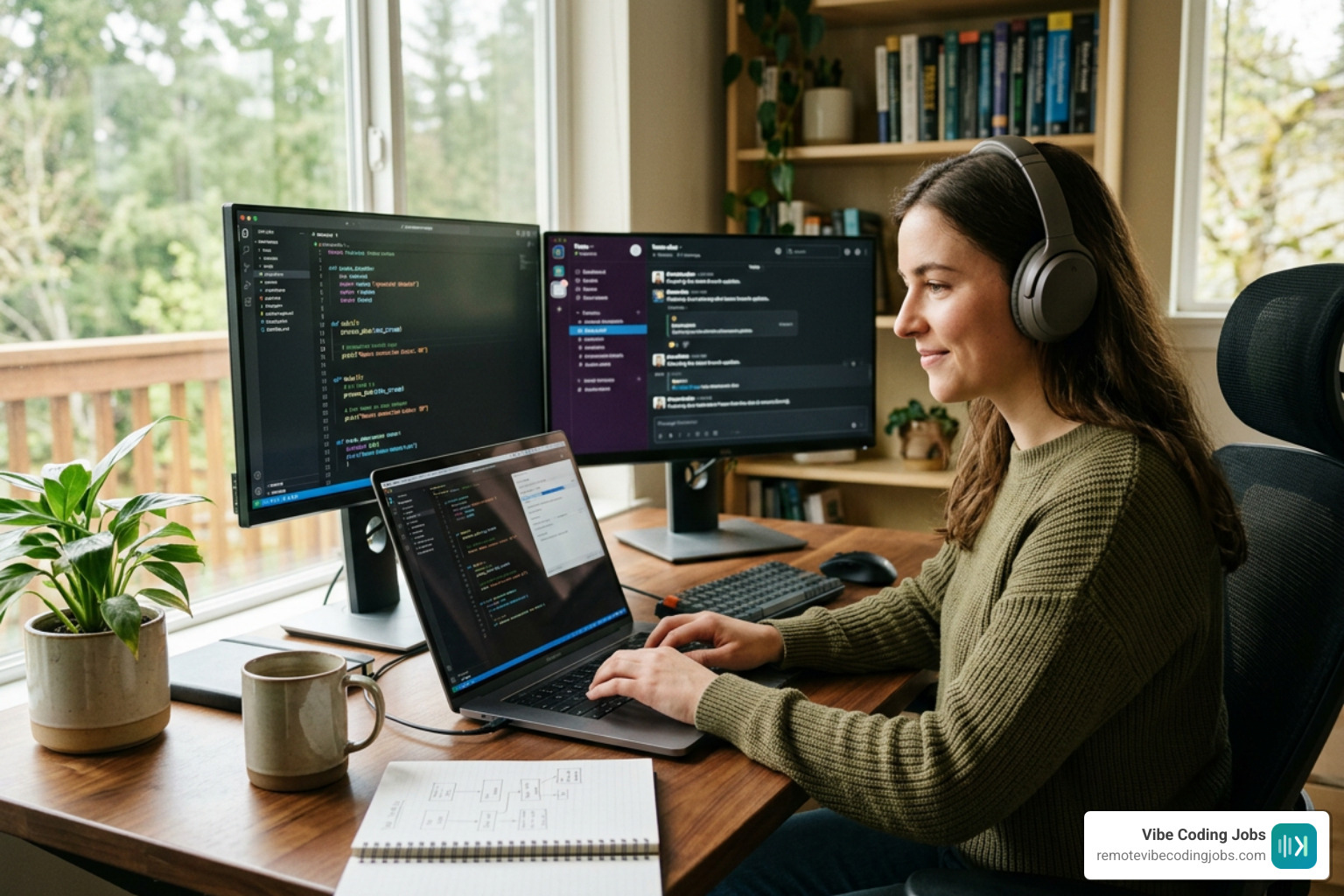
The most in-demand AI tools for vibe programming include:
- Cursor: The current gold standard for AI-assisted development, offering deep codebase context, inline edits, and powerful chat features.
- Claude Code: Anthropic’s official terminal-based CLI tool that allows developers to run agentic workflows directly from their command line.
- GitHub Copilot & Windsurf: Powerful code completion and collaborative agent tools that integrate seamlessly into existing IDEs.
- Bolt.new & Lovable: Web-based prototyping tools that allow you to generate, run, and deploy full-stack web applications from a single natural language prompt.
- v0 & Replit Agent: Excellent tools for rapid frontend generation and instant cloud deployment.
In-Demand Tech Stacks for Vibe Programming Remote Work
While AI can write almost any language, the most lucrative remote vibe coding roles focus heavily on modern web and data stacks. If you want to maximize your hireability, focus on these languages and frameworks:
- Frontend: TypeScript, JavaScript, React, Next.js, and Tailwind CSS.
- Backend & APIs: Python, FastAPI, Node.js, and Express.
- Databases & Auth: Firebase, PostgreSQL, and Supabase.
- AI Integration: Prompt engineering, Retrieval-Augmented Generation (RAG) systems, and Model Context Protocol (MCP) servers.
Remote Vibe Coding Platforms and Isolated Workstations
As remote development matures, teams are moving away from local setups toward cloud-based and containerized environments. This ensures that remote vibe coders can work securely without polluting their local machines.
For example, Vibe — The AI IDE Built for Vibe Coders, Where Developers Feel at Home is an IDE built from scratch specifically for this workflow. Unlike traditional editors, it features visual rollback timelines, shadow checkpoints for isolated git snapshots, and built-in remote SSH support with SFTP browsing.
For developers who want to take their remote setups to the next level, open-source tools like avibe-bot/avibe provide a local-first “Agent OS.” This tool keeps your code and keys secure on your machine while allowing you to control your AI coding agents via a secure browser tunnel from anywhere — even your phone.
Additionally, projects like jjdenhertog/vibe-remote allow teams to deploy isolated, per-project workstations via Docker. These containers come pre-configured with Claude Code, Claude-Flow, and Vibe-Kanban task management, enabling fully autonomous coding workflows that can automatically create and merge pull requests on GitHub.
How Async-First Companies Structure AI-Native Teams
The companies hiring for vibe programming remote work are often highly progressive, async-first organizations. They have thrown out the old, process-heavy playbook of daily standups, endless Slack syncs, and rigid ticketing systems.
To see which organizations are leading this charge, check out our curated list of Companies Hiring Vibe Coders.
Companies like Adaptify (which builds AI-powered SEO automation tools) and Gruve structure their teams around absolute ownership, deep focus, and high-velocity shipping. In these environments, there are no “BS” meetings. Instead, developers are given the freedom to experiment with cutting-edge AI capabilities and turn wild ideas into working code asynchronously.
Collaboration Benefits of Vibe Programming Remote Work
When remote teams embrace AI-assisted workflows, their collaboration dynamics change for the better. The productivity and communication benefits are massive:
- 2-5x Velocity: Small, agile teams can ship features in days that used to take traditional development teams weeks or months.
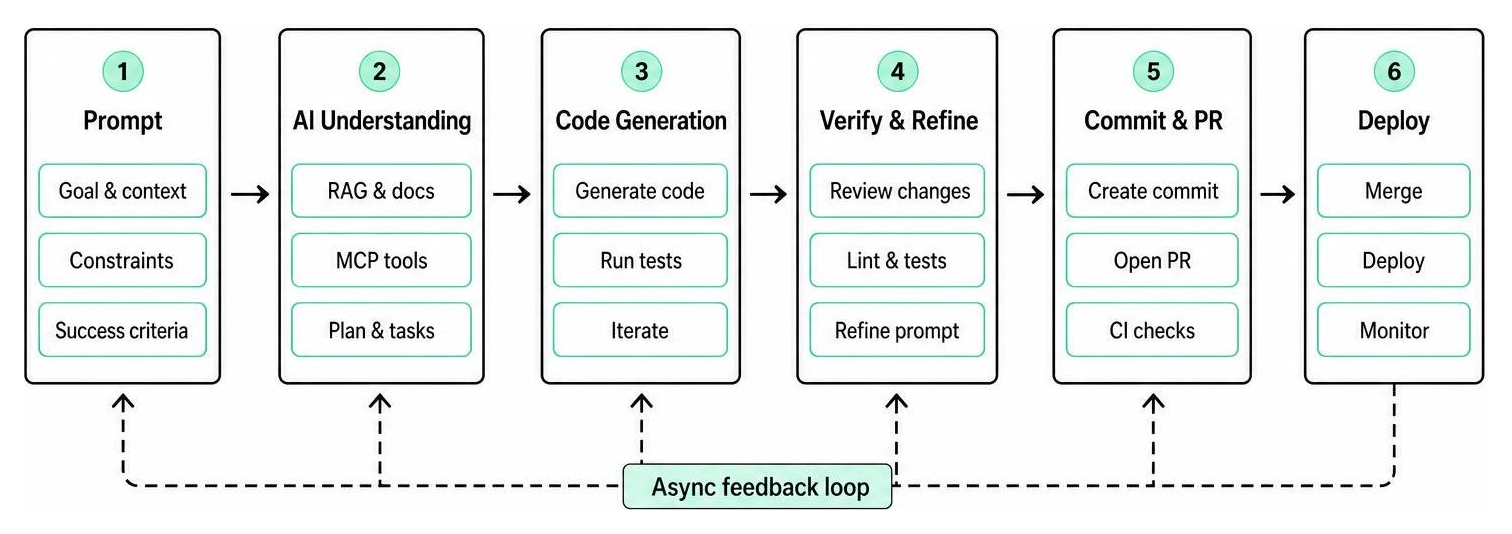
- Automated PR Creation & Auto-Merging: AI agents can watch a repository, pick up a task from a Kanban board, write the code, run the tests, and submit a fully documented pull request automatically.
- Self-Documenting Codebases: AI tools can maintain a “memory bank” (such as architectural documents and progress logs) that keeps the entire distributed team aligned without needing synchronous meetings.
Skills and Experience Needed to Land a Remote Vibe Coding Job
If you want to land one of these highly coveted remote roles, you need to understand what employers are actually looking for. Hint: It’s not a computer science degree from an Ivy League university.
For a detailed roadmap on how to prepare, read our guide on How to Get a Vibe Coding Job: Skills, Courses, and Advice.
To succeed as a remote vibe coder, you need to master a specific blend of prompt engineering, system design, and strict planning discipline. As detailed in the README.md at main · EnzeD/vibe-coding repository, successful vibe coding requires a highly structured methodology. You cannot simply let the AI plan autonomously, or your codebase will quickly turn into an unmanageable mess.
Here are the key best practices you should show off in your portfolio and interviews:
- Maintain a Memory Bank: Keep a dedicated folder in your workspace containing files like
architecture.md,progress.md, andimplementation-plan.md. This preserves context across AI chat sessions. - Follow a Strict Workflow: Start every new feature with a planning phase. Use “Ask” or “Plan” mode to have the AI review your plans and ask clarifying questions before writing a single line of code.
- Commit and Clear Context Frequently: Once a step is successfully completed and validated, commit the changes to Git and clear or compact your AI’s context window to keep its performance sharp.
- Build a Strong Portfolio: Because many vibe coding positions value practical skills over formal education, having a GitHub profile full of 100% vibe-coded games, web apps, or automation scripts is the single best way to prove your capabilities.
Frequently Asked Questions about Vibe Coding
Can I get a vibe coding job with no CS degree?
Yes, absolutely. The vibe coding job market is incredibly friendly to non-traditional backgrounds. Employers care about your ability to solve real-world problems and ship working software quickly. If you have a strong portfolio of AI-assisted projects, excellent prompt engineering skills, and a solid understanding of software fundamentals (like databases, APIs, and basic logic), you can easily land a high-paying remote role.
What is the average salary for a remote vibe coder?
Remote vibe coding salaries are highly competitive. Entry-level roles start around $70,000–$100,000, mid-level positions range from $100,000–$150,000, and senior AI-first developers or product engineers can earn $150,000–$250,000+ (with elite roles reaching $400,000+). Freelance vibe coders typically charge between $75–$300/hour depending on their expertise and speed.
How do companies test vibe coding skills in interviews?
Instead of traditional, dry whiteboard algorithms, vibe coding interviews are highly practical. You will often be asked to complete a live pair-programming challenge where you are encouraged to use your favorite AI tools (like Cursor or Claude). The interviewers will evaluate how you write prompts, how you debug AI-generated errors, how you structure your system architecture, and your overall product-minded thinking.
Conclusion
The era of manual, line-by-line coding as the only path to a software engineering career is drawing to a close. Vibe programming remote work represents the future of software development — a future where your creativity, logic, and architectural thinking matter far more than your typing speed.
Whether you are an experienced engineer looking to multiply your productivity or a self-taught builder ready to break into the tech industry, there has never been a better time to embrace AI-assisted development.
Ready to take the next step in your career? At RemoteVibeCodingJobs, we aggregate the best remote vibe coding opportunities at forward-thinking, async-first companies. We curate daily listings filtered by tech stack, culture, and AI tool requirements, and we provide a free playbook to help you apply and get hired fast.
Find your dream remote role today at https://remotevibecodingjobs.com and start building the future of software, one vibe at a time.