Vibe Programming Is Changing How Software Gets Built — Here’s What You Need to Know
What is vibe programming (also called vibe coding) is a software development practice where you describe what you want in plain English, and an AI tool writes the code for you. Instead of typing syntax line by line, you guide an AI agent conversationally — and it builds the application.
Here’s the short version:
| Vibe Programming | |
|---|---|
| What it is | Using AI to generate code from natural language prompts |
| Who coined it | Andrej Karpathy, co-founder of OpenAI, in February 2025 |
| Who uses it | Developers, founders, designers, and non-coders |
| Popular tools | Cursor, Replit Agent, Claude, Windsurf, GitHub Copilot |
| Best for | Prototyping, MVPs, rapid iteration |
| Main risks | Security gaps, technical debt, unmaintainable code |
The term went viral after Karpathy described his own workflow: “fully give in to the vibes, embrace exponentials, and forget that the code even exists.” That phrase captured something real — a feeling many developers already had but couldn’t name.
Since then, the idea has moved fast. By early 2026, 25% of startups in Y Combinator’s Winter 2025 batch reported that 95% of their codebase was AI-generated. Vibe programming isn’t a fringe experiment anymore. It’s reshaping how software teams work, what skills matter, and who gets to build.
This guide covers everything: what vibe programming actually means, how the workflow operates, which tools to use, the real risks, and what the career landscape looks like right now.
At RVCJ Editorial, our team tracks the vibe coding space daily — from AI-assisted development trends to remote hiring patterns for teams using tools like Cursor, Claude, and Replit — which gives us a grounded perspective on what is vibe programming and where it’s heading. Read on for the full breakdown.
What is Vibe Programming? Defining the AI-Native Paradigm
At its core, what is vibe programming represents a shift from “how” to “what.” In traditional coding, you spend 90% of your time worrying about semicolons, brackets, and library versions. In vibe programming, you spend that time worrying about the user experience, the business logic, and the overall “feel” of the application.

This isn’t just a fancy way of saying “I use ChatGPT to help me write functions.” It is a fundamental change in the relationship between humans and computers. Instead of being a manual laborer who lays every brick (line of code), you become an architect who describes the building to an automated construction crew. As outlined by IBM, it prioritizes a “code first, refine later” mindset.
To get started, you don’t necessarily need a computer science degree; you need a clear vision and the ability to communicate it. You can learn more about the initial steps in our guide on Getting Started with Vibe Coding.
Understanding What is Vibe Programming in a Professional Context
In a professional setting, vibe programming is turning traditional software engineers into “product engineers.” We are seeing a move toward high-level abstraction where conversational guidance replaces technical specifications.
Instead of writing a 20-page PRD (Product Requirement Document) for a developer to implement over three months, a product engineer might spend an afternoon “vibing” with an AI agent to produce a working prototype. This shift is explored deeply in our analysis of Vibe Coding vs Traditional Development. It’s not about being lazy; it’s about removing the friction between an idea and its execution.
Why Everyone is Asking: What is Vibe Programming?
The surge in interest isn’t just hype—it’s driven by necessity. Currently, 82% of businesses report a shortage of developer talent. Vibe programming offers a solution through “citizen development,” where non-technical staff can build the tools they need.
The numbers are hard to ignore. Organizations embracing this style of development see up to 5.8x faster application development times. When you can ship an MVP in 48 hours instead of four months, the “vibe” becomes a competitive advantage. This is why many are calling it the new way developers build software in 2026.
The Origin Story: From Andrej Karpathy to the 2026 Tech Landscape
The term “vibe coding” was officially sparked in February 2025 by Andrej Karpathy, a founding member of OpenAI and the former Director of AI at Tesla. Karpathy is a legendary figure in the AI world, and when he says the “hottest new programming language is English,” people listen.
His original description of vibe coding involved a workflow where he would simply “see things and say things” to the AI. If a button looked wrong, he’d tell the AI to fix the vibe. If a feature was missing, he’d describe the intent. He argued that we should embrace the vibes and stop obsessing over the underlying syntax.
This led to a massive debate: Is Vibe Coding Cheating?. Critics argued it was reckless, while proponents saw it as the natural evolution of programming—much like moving from assembly language to Python.
The Psychological Shift in Software Engineering
The real revolution here is psychological. For decades, being a “good coder” meant having high precision and deep knowledge of syntax. Vibe coding asks us to forget the code and focus on exponential growth.
According to The Definitive Guide to AI-Powered Development, the most valuable skill in 2026 is no longer memorizing API calls; it is the ability to communicate complex problems precisely to an AI. It’s a move from being the person who swings the hammer to the person who directs the entire project.
Vibe Coding Workflow: How to Build Software in 2026
Building software today feels more like an iterative conversation than a solitary writing task. We use tools that don’t just autocomplete our lines but actually understand the context of the entire project.

Popular Tools and Platforms for Vibe Coders
If you want to start vibing, you need the right stack. By 2026, the market has consolidated around a few powerhouses. You can find a full breakdown in our Vibe Coding Tools directory, but here are the highlights:
- Cursor: Currently the most popular dedicated vibe coding IDE. It allows for “Composer” mode, where you can describe changes across multiple files simultaneously.
- Replit Agent: A browser-native environment that takes you from a prompt to a deployed URL in minutes. It handles the “boring” stuff like setting up servers and databases automatically.
- Windsurf: An agentic IDE that focuses on “flow,” allowing the AI to act as a pair programmer that can autonomously execute terminal commands.
- Google AI Studio: A powerful sandbox for testing the latest Gemini models against your codebase.
For many, the choice between Copilot and Cursor is the first major decision in their vibe coding journey.
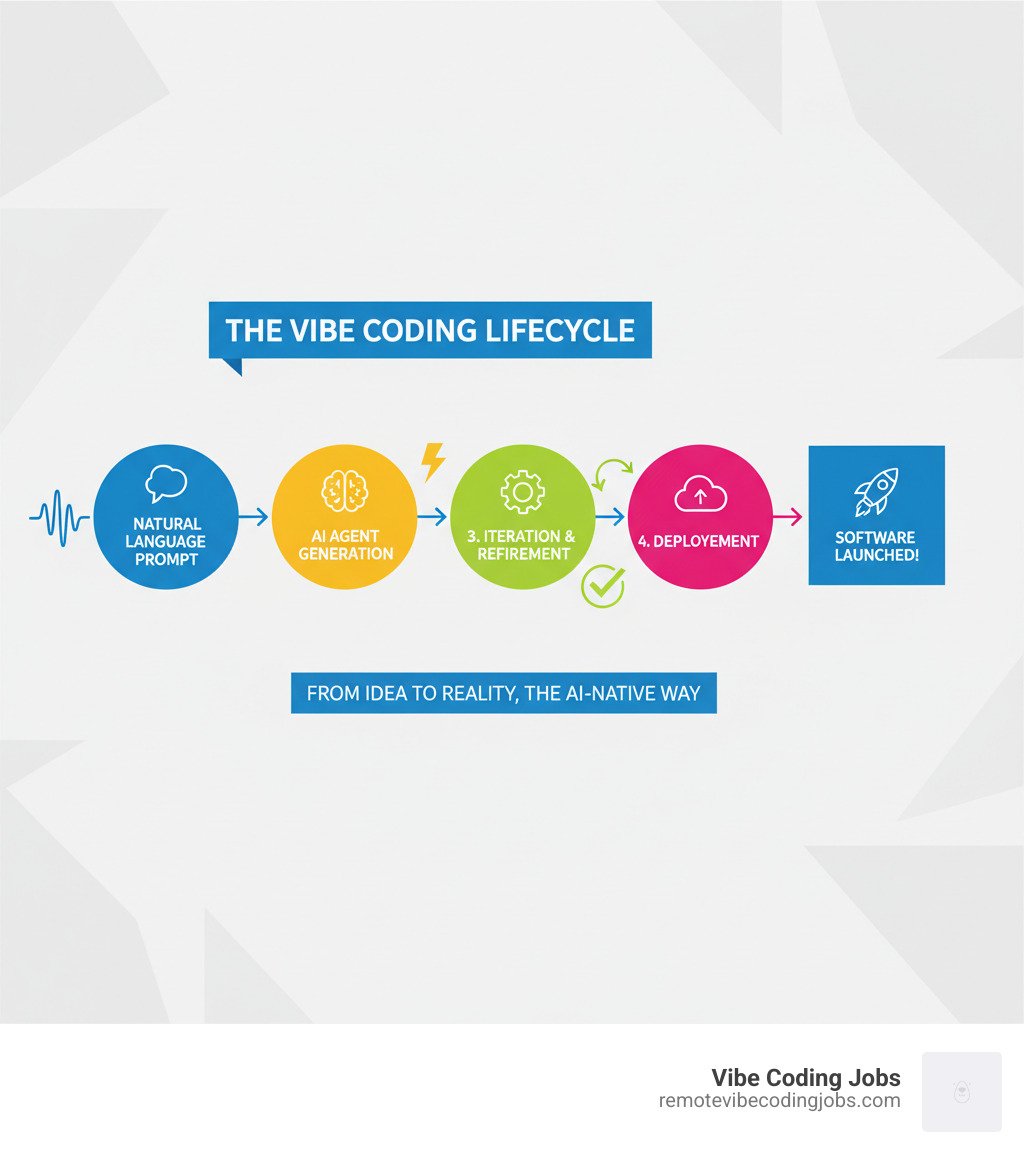
The 4-Step Vibe Coding Implementation
While it feels fluid, effective vibe coding follows a structured loop. We recommend this workflow, which we detail in our Vibe Coding with Cursor Tutorial:
- Define Vision: Describe the high-level goal. “I want a personal finance dashboard that looks like a retro-futuristic terminal and tracks my crypto and bank accounts.”
- AI Generation: The agent generates the file structure, boilerplate, and core logic. You “Accept All” to maintain the momentum.
- Test Behavior: Instead of reading every line of code, you run the app. Does it work? Is the “vibe” right?
- Iterative Refinement & Deploy: You provide feedback: “The chart is too bright, make it more moody.” Once satisfied, you use one-click deployment to push it live.
| Feature | Traditional Coding | Vibe Programming |
|---|---|---|
| Primary Input | Manual Syntax | Natural Language Prompts |
| Feedback Loop | Compile -> Error -> Debug | Run -> Observe -> Prompt |
| Speed | Linear | Exponential |
| Focus | Implementation (The “How”) | Intent (The “What”) |
The Benefits and Risks of Vibe Programming
As with any paradigm shift, there are massive wins and significant warnings. The data from 2025 and 2026 shows a complex picture.
Advantages: Speed, Accessibility, and Prototyping
The biggest “pro” is pure velocity. We’ve seen productivity gains of 30-70% for common development tasks. Startups are shipping MVPs in days rather than months, and the barrier to entry has never been lower. This democratization allows founders to validate ideas without spending $50k on an initial build. For more on how this translates to your paycheck, check our Vibe Coding Salary Guide 2026.
Limitations: Security, Technical Debt, and the “Vibe Hangover”
Now for the reality check. Research published on arXiv and discussed on Reddit highlights some scary trends:
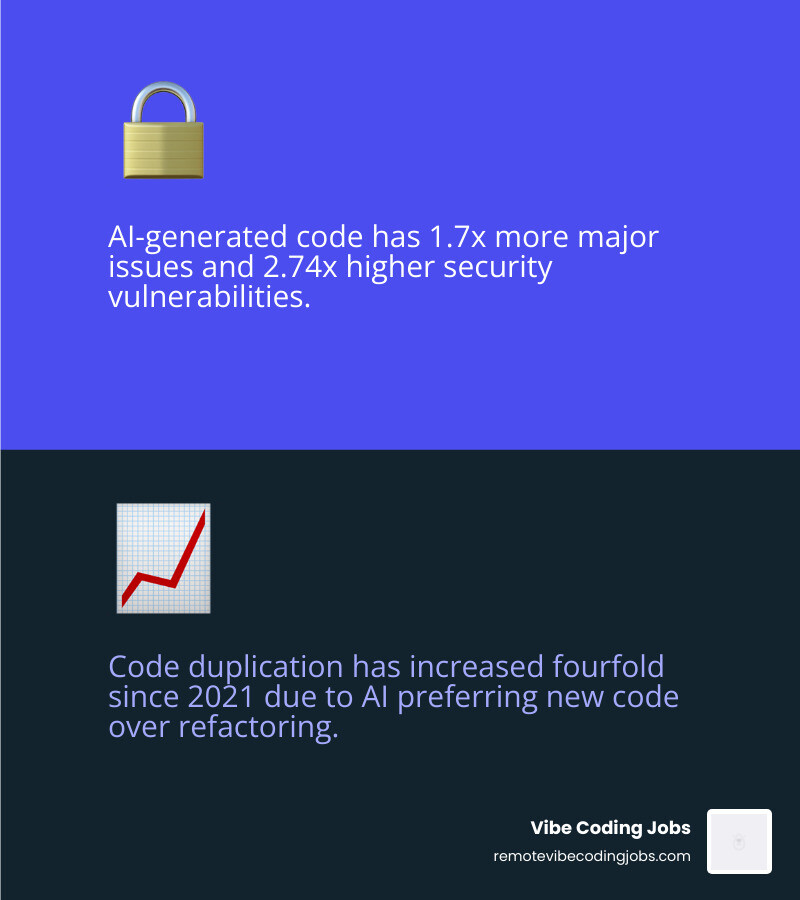
- Security Gaps: AI-co-authored code contains approximately 1.7 times more “major” issues and 2.74x higher rates of security vulnerabilities.
- The Vibe Hangover: This happens when a developer “vibes” a 10,000-line codebase but doesn’t understand how any of it works. When a complex bug appears, they enter “development hell” because they can’t manually debug what they didn’t write.
- Code Bloat: Code duplication has increased fourfold since 2021, as AI often prefers to write new code rather than refactor existing logic.
Future Outlook: VibeOps and Multimodal Programming
As we look toward the end of 2026 and beyond, vibe programming is evolving into “VibeOps.” This is the automation of the entire lifecycle—from a voice prompt to a self-scaling cloud infrastructure—all managed by AI agents.
We are moving toward multimodal programming. You won’t just type prompts; you’ll show the AI a sketch on a napkin, or talk to it while you’re driving, and the AI will update the repo in real-time. You can stay ahead of these trends by following our State of Vibe Coding 2026 report.
The Rise of the Vibe Coder Career Path
Is the software engineer dead? Absolutely not. But the job description is changing. We are seeing the rise of new roles like:
- Vibe Coder: Specialists in rapid prototyping and intent-orchestration.
- AI Architect: Seniors who design the systems that AI agents then build.
- Systems Engineer: Experts who step in when the “vibe” breaks and deep technical knowledge is required to fix the core infrastructure.
This new landscape is perfect for remote work. You can learn more in our Guide to the Future of Remote Work.
Frequently Asked Questions about Vibe Programming
Is vibe coding suitable for production-grade software?
Yes, but only with human oversight. We recommend a “hybrid” approach where the AI handles the bulk of the work, but a human expert reviews the security, architecture, and critical logic. Many companies hiring vibe coders look for people who can balance speed with rigor.
Do I need to know how to code to start vibe coding?
You can build simple apps with zero coding knowledge. However, to build anything complex or professional, you still need to understand programming fundamentals. You need to know what a database is, how an API works, and how to spot logic errors. We’ve compiled the best skills and courses to help you bridge that gap.
How does vibe coding affect open-source development?
It’s a double-edged sword. While it’s easier to contribute to projects, there is a risk of “code churn”—a flood of low-quality AI PRDs that overwhelm maintainers. This is a major topic in the Vibe Coding Careers outlook.
Conclusion
What is vibe programming? It is the liberation of creativity from the constraints of syntax. It is a world where your ability to think clearly and communicate effectively is more important than your ability to remember where a bracket goes.
While the risks of security and technical debt are real, the productivity gains are too large for the industry to ignore. The “vibe” is here to stay, and it’s opening up software development to millions of new creators.
At Remote Vibe Coding Jobs, we believe the future of work is AI-native. Whether you are a senior dev looking to 10x your output or a founder building your first app, the tools are ready. It’s time to stop just coding and start vibing.