
Find Better Remote Front End Developer Jobs Faster
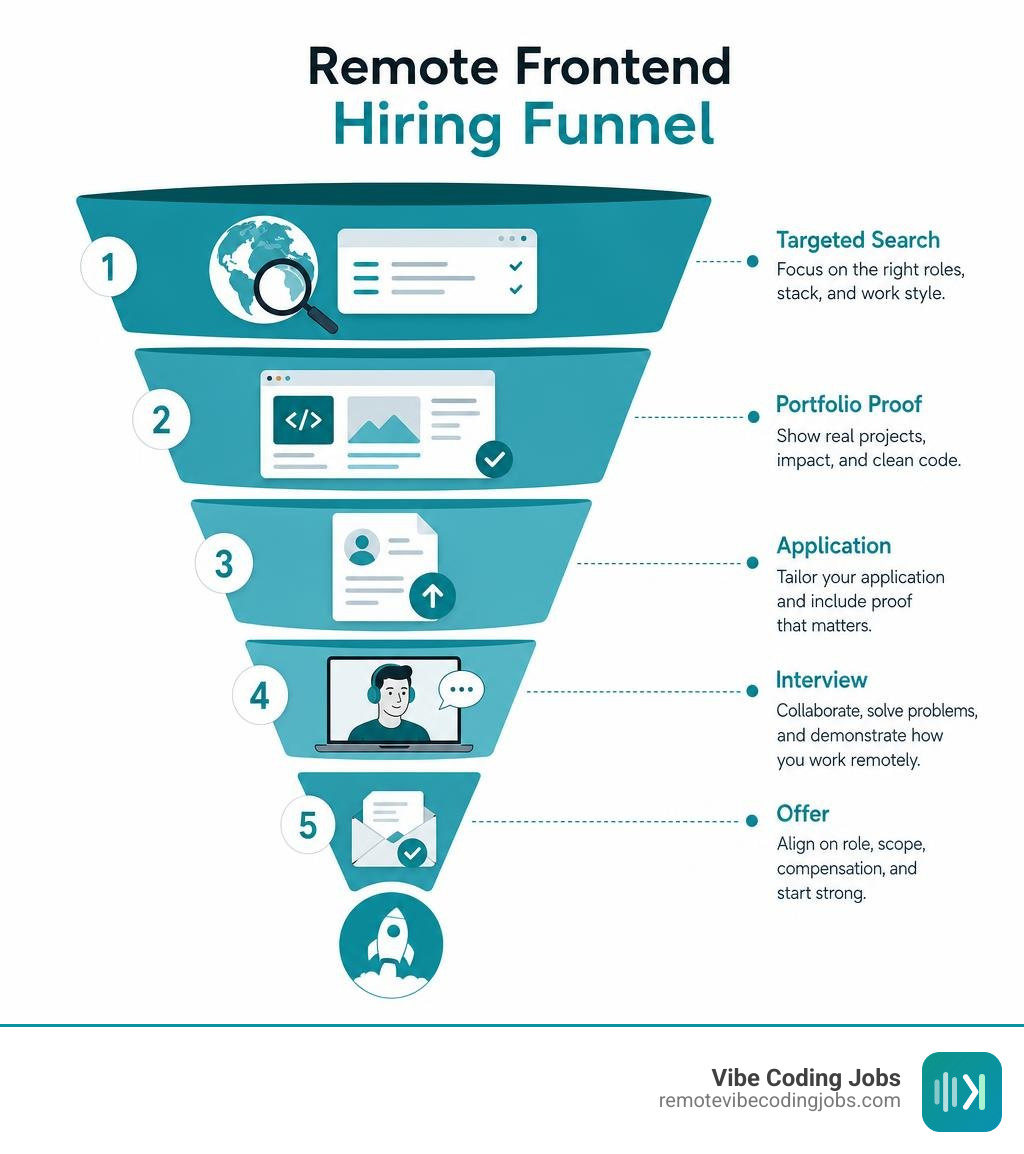
The fastest way to find remote front end developer jobs in 2026 is to focus on tech-specific job boards, set targeted alerts for your stack, and apply with proof that you can deliver independently. Prioritize roles that match your experience with TypeScript, React or Vue, modern testing, accessibility, and async collaboration.
Look for job posts that clearly state:
- The required framework and product stack
- Location, work-authorisation, and time-zone rules
- Salary range or contract rate
- Whether the company supports AI-assisted workflows
- The application process and expected portfolio materials
There are still more than 1,000 remote frontend openings listed in the United States on major professional networks, spanning SaaS, fintech, healthcare, agencies, and AI-native products. But “remote” does not always mean work from anywhere. Many roles require country-based eligibility or overlap with a specific time zone.
The strongest candidates combine solid frontend fundamentals with practical AI skills. Teams increasingly expect developers to use tools such as Cursor, Claude Code, or GitHub Copilot to speed up prototyping, testing, debugging, and documentation – while still owning code quality, performance, and accessibility.
I’m Di Su, a software engineer with more than 10 years of web, growth, and e-commerce experience, including building scalable user-facing products with Svelte and Python. In this guide, I’ll show you how to target remote front end developer jobs that fit both your technical stack and the async-first way you want to work.
Remote front end developer jobs further reading:
Top Platforms to Find Remote Front End Developer Jobs in 2026
Landing a high-impact engineering role starts with cutting through the noise of outdated aggregators. Generalist job boards frequently leave ghost listings active for months, inflating applicant numbers without generating interviews. The most efficient hiring cycles happen on curated platforms and specialized developer networks that filter explicitly for async culture, transparent compensation, and AI-first engineering expectations.
When reviewing open positions, evaluate the application method. Job posts that clearly detail requirements through a structured Remote Developer Jobs AI Tools Description Qualifications Application process allow you to tailor your resume directly to the team’s automated screening tools and hiring manager criteria.
| Platform Type | Best For | Typical Hiring Speed | AI-Assisted Role Focus |
|---|---|---|---|
| Curated Vibe Coding & AI Boards | AI-native startups, async-first product teams | Fast (1–2 weeks) | Very High (Cursor, Claude, Copilot native) |
| Niche Remote Tech Portals | Scale-ups, distributed SaaS companies | Moderate (2–3 weeks) | Moderate to High |
| Enterprise Professional Networks | Large public tech firms, healthcare, fintech | Slower (3–6 weeks) | Growing / Department-dependent |
| Digital Agency Aggregators | Contract, client-facing, and multi-brand roles | Fast to Moderate | Moderate |
To maximize your pipeline, set real-time notifications for roles tagged under your core framework. When a role appears with fewer than 25 applicants, submitting a tailored portfolio within the first 48 hours significantly improves your visibility with engineering leads.
In-Demand Tech Stacks and Modern Workflows

The front-end tech stack has matured into an ecosystem centered around server-driven architectures, strict typing, and uncompromising user experience standards. In 2026, engineering teams look beyond surface-level component creation. They demand deep familiarity with full-stack execution models within front-end frameworks.
React remains the dominant ecosystem across enterprise and venture-backed SaaS. Teams expect proficiency with React 19, React Server Components (RSC), and the Next.js App Router. Discovering the right role means targeting specific architectural needs, as outlined in our breakdown of Remote React Developer Jobs 2026 Trends Opportunities. At the same time, companies building reactive, lightweight web applications frequently recruit specialized talent through Remote Jobs Vue Developer boards, where Vue 3 and Nuxt take center stage.
Underpinning all modern teams is strict typing. Exploring Remote Jobs TypeScript Developer opportunities shows that pure JavaScript listings have largely vanished from senior compensation tiers. Writing maintainable, type-safe code that models complex domain data is now non-negotiable.
Beyond raw syntax, web performance benchmarks dictate hiring decisions. Teams require candidates who optimize Core Web Vitals—specifically Interaction to Next Paint (INP), Largest Contentful Paint (LCP), and Cumulative Layout Shift (CLS). Furthermore, global accessibility compliance standards such as WCAG 2.2 AA are enforced across fintech, healthcare, and e-commerce platforms.
Essential Skills for Remote Front End Developer Jobs
Technical breadth is vital when operating across distributed time zones without immediate peer oversight. To future-proof your career and stay competitive, review the core capabilities detailed in Remote Developer Skills in Demand 2026 Future-Proof Your Career.
- Robust Data Layers: Architecting resilient client-side caching and mutations using REST, GraphQL, and tools like TanStack Query.
- Modern Styling Systems: Building scalable design systems using Tailwind CSS, CSS Modules, or headless UI primitives.
- Comprehensive Automated Testing: Implementing end-to-end and integration suites with Playwright, Cypress, and Vitest within CI/CD deployment pipelines.
- Headless CMS Integration: Managing structured schemas and preview environments with headless content platforms such as Sanity and Contentful.
The Rise of Vibe Coding and AI Tools in Frontend Engineering
The front-end workflow has undergone a fundamental transformation with the rise of “vibe coding”—the practice of orchestrating LLM-powered development environments to build and iterate rapidly. Leading distributed teams now treat AI fluency as a core competency rather than an afterthought.
Engineers leverage environments like Cursor, Claude Code, and GitHub Copilot to eliminate boilerplate, generate test suites, and accelerate design-to-code conversions. Understanding the Best AI Coding Tools Vibe Coders 2026 allows developers to ship features up to three times faster while focusing their mental energy on system design, state logic, and accessibility auditing.
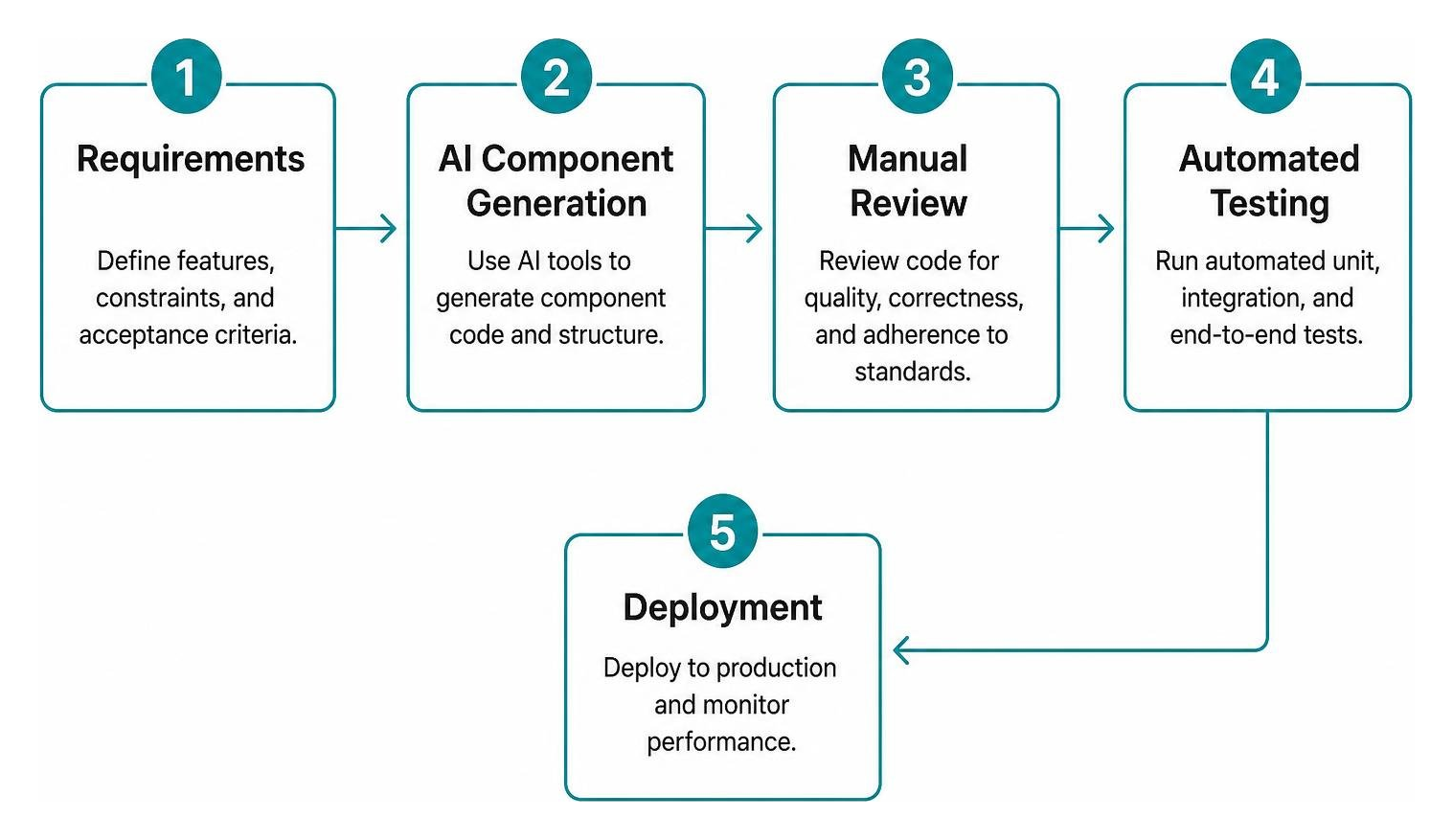
When comparing Vibe Coding vs Traditional Development, the difference lies in execution velocity and verification. Modern remote developers do not spend hours writing repetitive CRUD components; they write precise prompts, guide AI agents to generate structured code, and apply rigorous code review to ensure architectural integrity.
Compensation Ranges and Benefits Across Company Types

Compensation for remote front-end engineers varies widely depending on company maturity, capital structure, and business model. For an in-depth look at global pay trends, refer to the Vibe Coding Salary Guide Compensation Trends Benefits.
- Early-Stage Startups (Seed to Series A): Typically offer base salaries between $100,000 and $150,000, supplemented by significant equity packages (0.25% to 1.5%). These roles prioritize rapid delivery and product autonomy.
- Digital & Creative Agencies: Offer competitive hourly rates ($55 to $85/hr) or base salaries ranging from $85,000 to $130,000. They focus on multi-client deliverables, design-system precision, and marketing integrations.
- Scale-ups and Large Enterprises: Provide comprehensive total compensation packages between $160,000 and $270,000+, featuring base pay, performance bonuses, 401(k) matching, premium health coverage, and generous annual equipment stipends ($2,000–$4,000).
When evaluating an offer, understanding how to structure your ask is crucial. Review our Remote Developer Salary Negotiation Tips Get Paid What You’re Worth to maximize your total package.
Compensation Benchmarks by Experience Level
Salary benchmarks in the current market reflect both technical expertise and autonomous problem-solving capabilities:
- Junior Frontend Engineer (0–2 years): $65,000 – $85,000 USD. Emphasizes foundational HTML/CSS, modern JavaScript, and component building under senior guidance.
- Mid-Level Frontend Engineer (3–5 years): $90,000 – $140,000 USD. Focuses on independent feature delivery, Next.js or Vue architectures, automated testing, and API integration.
- Senior & Staff Frontend Engineer (6+ years): $150,000 – $270,000+ USD. Directs front-end architecture, enforces performance and security standards, mentors teams, and drives AI-assisted developer workflows.
How to Stand Out and Secure Offers
In a global talent pool, technical capability alone is not enough to secure top remote offers. Hiring managers evaluate how effectively you collaborate asynchronously. Distributed organizations prioritize candidates who write clear technical documentation, manage their own time, and communicate complex concepts without requiring synchronous meetings.
Your resume must reflect these remote-ready attributes. Follow the strategies in our Developer Resume for AI Native Companies The Ultimate Guide to structure your achievements around measurable business impact. Emphasize your ability to work inside Async First Remote Developer Jobs Productivity Benefits workflows by highlighting clear pull request descriptions, thorough code reviews, and self-directed project execution.
How to Prepare Your Portfolio for Remote Front End Developer Jobs
Generic clones of popular apps no longer impress engineering leads. To prove your value, your portfolio must showcase real-world utility, high performance, and clean codebases. Explore our guide on Remote Coding Jobs No Leetcode Practical Skills Projects to see which project types resonate most with hiring managers.
When preparing your showcase:
- Deploy Production-Ready Apps: Host live applications with responsive layouts, accessible UI components, and sub-second load times.
- Showcase Lighthouse Scores: Ensure your web applications achieve 95+ scores across Performance, Accessibility, Best Practices, and SEO.
- Demonstrate Architectural Thought: Provide clear README documentation explaining your architectural decisions, state management trade-offs, and data layer structures. You can evaluate your project architecture using our Tools Tech Stack Analyzer.
- Record Async Walkthroughs: Include a brief 2-minute Loom video walking through a complex piece of UI logic or an AI-assisted refactoring session.
Frequently Asked Questions About Remote Frontend Roles
Are remote frontend developer jobs still hiring without LeetCode interviews?
Yes. An increasing number of modern, remote-first companies are abandoning abstract algorithmic puzzles in favor of practical evaluations. As detailed in our guide on Remote Coding Jobs No Leetcode No Tests Easy Hiring, hiring teams increasingly evaluate candidates via take-home architecture challenges, paid trial days, or structured walkthroughs of their existing production code and open-source contributions.
How important is AI tooling experience for landing frontend roles in 2026?
AI fluency has shifted from an optional bonus to a core hiring expectation. Forward-thinking companies expect engineers to leverage tools like Cursor, Claude, and GitHub Copilot to accelerate prototyping, generate tests, and automate documentation. Check our AI Assisted Development Career Guide to learn how integrating AI into your daily development routine makes you a significantly more productive and attractive candidate.
What is the biggest challenge for remote frontend developers and how do you solve it?
The primary hurdles are isolation and boundary blurring across different time zones. Successful remote developers establish strict working boundaries, use asynchronous updates rather than waiting for live meetings, and maintain physical workspaces that support deep focus. To safeguard your well-being, explore our resources on Remote Work Mental Health Developers and actionable Remote Work Loneliness Solutions.
Conclusion
The remote frontend landscape offers unprecedented flexibility and earning potential for engineers who blend solid foundations with modern, AI-assisted development practices. By targeting async-first companies, mastering TypeScript and modern framework architectures, and building a portfolio that demonstrates real product impact, you position yourself at the forefront of the distributed engineering market.
Ready to take the next step in your career? Visit RemoteVibeCodingJobs to explore curated remote frontend positions, access our free developer playbook, and apply to top AI-first tech teams today.