
The Fastest Way to Quick Hire Vibe Coders in 2026
If you need to quick hire vibe coders, here’s the short answer:
- Define your project scope — MVP, SaaS, internal tool, or prototype
- Choose a hiring model — freelancer (£25–£80/hr), agency (£8,000–£50,000/project), or dedicated in-house hire (£3,500–£9,000/month)
- Post on specialist platforms — job boards like Vibe Coding Jobs list pre-vetted, AI-fluent developers ready to start fast
- Evaluate with a pilot sprint — skip LeetCode; give candidates a small real project instead
- Sign an NDA and set agile milestones — then build
The way software gets built has fundamentally changed. The demand to quick hire vibe coders — developers who use AI tools like Cursor, Claude, and GitHub Copilot to ship code in days rather than months — has exploded almost overnight. In Y Combinator’s Winter 2025 batch alone, 25% of startups had codebases that were 95% AI-generated. And 73% of tech startups have now adopted vibe coding techniques in some form.
This isn’t a passing trend. It’s a structural shift in how products get built, teams get staffed, and competitive advantages get won.
Think about it: a traditional MVP takes 4–6 months and a full engineering team. A vibe coder can deliver the same thing in 3–8 weeks — often at a fraction of the cost. Organizations using AI-assisted development report 5.8x faster application development times compared to traditional methods.
But speed without quality is a liability. Not every developer who calls themselves a vibe coder can actually deliver production-ready, secure, scalable code. Knowing who to hire, where to find them, and how to evaluate them quickly is exactly what this guide covers.
I’m Di Su, a software engineer with over 10 years of experience in web development and conversion optimization, with a track record of building scalable products and landing pages that have driven millions of visits — the same principles that matter when you quick hire vibe coders for fast-moving projects. That blend of technical depth and growth-focused thinking shapes everything in this guide.
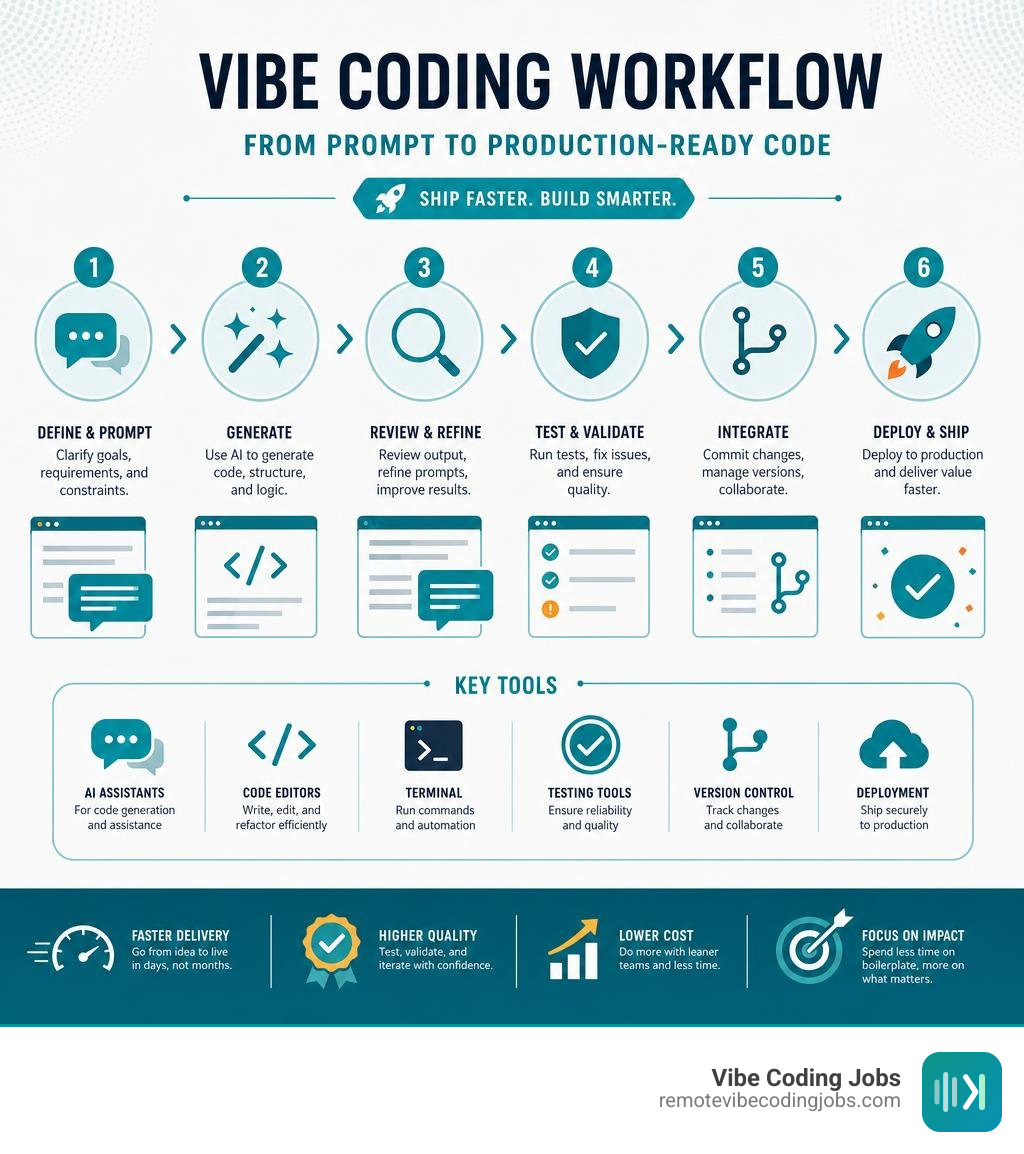
Know your quick hire vibe coders terms:
What is a Vibe Coder and Why Should You Hire Them?
To understand how to quick hire vibe coders, we first have to understand what they actually do. A vibe coder is a modern software developer who uses advanced AI tools to generate, refactor, and optimize code, shifting their focus from manual syntax writing to high-level orchestration, product architecture, and user experience.
Instead of spending hours wrestling with boilerplate code or debugging obscure syntax errors, they “vibe” with AI coding assistants. They describe what they want in plain English, and tools like Cursor, Claude, or GitHub Copilot generate the raw code. The developer’s primary job is to direct the flow, review the output, and ensure everything fits together perfectly.
This approach has completely democratized software development. With the global vibe coding market projected to reach $325 billion by 2040, organizations are realizing that execution speed and product intuition are becoming far more valuable than the ability to memorize complex algorithm structures.
Traditional Developers vs. Vibe Coders
How do vibe coders stack up against traditional software engineers? The core difference lies in how they spend their time.
Traditional developers spend up to 70% of their working hours writing syntax line-by-line, configuring local environments, and manually writing boilerplate code. Vibe coders, on the other hand, act as conductors of an AI orchestra. They spend their time on system design, prompt engineering, and rapid prototyping.
To see a detailed breakdown of these differences, check out our guide to Compare Vibe Coding vs Traditional.
While a traditional developer might take a week to build a secure user authentication system from scratch, a vibe coder can prompt Claude or Cursor to generate it in minutes. They then spend their saved time refining the user flow, testing edge cases, and ensuring the application actually solves the business problem. In short, vibe coders trade manual labor for strategic orchestration, unlocking unprecedented execution speed.
The Business Case to Quick Hire Vibe Coders in 2026
If you are running a business in 2026, time-to-market is your most critical metric. Startups and digital agencies can no longer afford to spend half a year building a product that might fail upon launch. This is the primary business driver behind the urge to quick hire vibe coders.
By leveraging AI-assisted development, businesses achieve:
- Massive cost reduction: You can build a functional MVP with a single vibe coder instead of hiring a full-stack team of five.
- Unprecedented agility: If a feature isn’t working or user feedback suggests a pivot, a vibe coder can rewrite entire modules in hours rather than weeks.
- Higher user engagement: Because vibe coders iterate quickly, they can push continuous updates. In fact, companies using vibe coding report 47% higher user engagement and 32% better retention rates.
- Accelerated ROI: Shorter development cycles mean you start acquiring customers and validating your business model much faster.
Whether you decide to hire vibe coders for a short-term contract or build a dedicated squad, the financial and operational benefits of this model are impossible to ignore.
Best Projects and Industries for AI-Assisted Development
While vibe coding is incredibly powerful, it is not a silver bullet for every single software engineering problem. It is highly optimized for projects that require rapid iteration, visual feedback, and fast deployment.
Understanding where vibe coding shines — and where it doesn’t — will help you get the maximum possible return on your investment when you bring an AI-assisted developer on board.
Rapid MVP and SaaS Prototyping Timelines
The absolute best use case for vibe coding is building Minimum Viable Products (MVPs) and SaaS prototypes. If you have an idea for a subscription platform, a mobile app, or a web-based tool, a vibe coder can turn that concept into a working, clickable product in record time.
While traditional software engineering processes typically require 4 to 6 months to take an MVP from ideation to launch, vibe coders can deliver a fully functional, production-ready version in just 3 to 8 weeks. For simpler SaaS platforms, simple integrations, or internal automation tools, some experienced vibe coding teams can even ship a working product in 5 to 10 days. This rapid feedback loop allows non-technical founders to put real software in front of users and investors before their competitors even finish writing their technical specifications.
Key Industries Benefiting from Vibe Coding
Several fast-moving industries are rapidly shifting their hiring strategies to target vibe coders:
- E-commerce: Building custom Shopify integrations, automated inventory syncs, and personalized recommendation engines can be done in days. To scale your digital presence rapidly, you can hire vibe coders to build custom frontends and headless commerce solutions.
- Fintech: Vibe coders are excellent at building rapid prototypes of dashboards, carbon credit calculators, and automated billing workflows.
- Healthcare: For clinic scheduling apps, patient portals, and internal tracking systems, vibe coders can quickly assemble secure, user-friendly interfaces.
- Internal Business Tools: Custom CRM integrations, database dashboards, and automated lead enrichment funnels can be built quickly to streamline internal operations.
If you are looking to build a specialized product in any of these spaces, working with an established agency or a dedicated team can help you bypass traditional development bottlenecks entirely.
How to Quick Hire Vibe Coders: Skills, Tools, and Hiring Models
Hiring in the AI era requires a completely different approach than traditional tech recruiting. If you try to screen vibe coders using standard computer science exams or algorithmic LeetCode tests, you will likely filter out the most productive candidates.
Instead, you need to evaluate their AI fluency, their product intuition, and their ability to guide complex systems.
Essential Skills to Look For When You Quick Hire Vibe Coders
When evaluating candidates, look for these core competencies:
- Prompt Engineering and AI Orchestration: The developer should have deep familiarity with modern AI environments. They must know how to construct clear context, manage token limits, and write effective prompt chains.
- Tool Mastery: Look for hands-on experience with tools like Cursor, Claude Code, GitHub Copilot, and Windsurf. To understand how developers use these tools, read our Vibe Coding with Cursor Tutorial Unleash Your AI Coding Potential.
- Strong Debugging Skills: AI models frequently hallucinate or produce code with subtle bugs. A great vibe coder must have strong foundational engineering knowledge to spot these errors, read the generated code critically, and guide the AI to fix them.
- Full-Stack Instincts: They should understand database design, API integrations, and basic cloud deployment to ensure the AI-generated frontend connects seamlessly to a secure backend.
Evaluating Hiring Models and Cost Structures
Depending on your budget, timeline, and project complexity, you have several options when looking to bring on vibe coding talent.
| Hiring Model | Average Cost Range | Best Suited For | Key Advantage |
|---|---|---|---|
| Freelancer | £25 – £80 / hour | Short-term tasks, small MVPs, web scraping | High flexibility, low overhead |
| Agency / Squad | £8,000 – £50,000+ / project | Complete product launches, legacy migrations | End-to-end management, QA included |
| In-House / Dedicated | £3,500 – £9,000 / month | Continuous feature development, core SaaS | Deep cultural alignment, long-term focus |
To understand standard compensation packages and market rates for these roles, you can explore our comprehensive Vibe Coding Salary Pay Range guide.
Ensuring Quality, Security, and Effective Remote Management
One of the biggest concerns businesses have when they quick hire vibe coders is code quality. If an AI is generating thousands of lines of code in seconds, how do you ensure that the application is secure, maintainable, and free of critical vulnerabilities?
The key is to combine AI-assisted speed with traditional engineering discipline.
Code Quality Gates and Security Best Practices
To prevent your codebase from turning into an unmaintainable “black box” of AI-generated code, you must establish strict quality gates:
- Human-in-the-Loop Reviews: Never allow AI-generated code to be pushed directly to production without being reviewed by an experienced developer.
- Automated Testing: Require comprehensive unit, integration, and end-to-end test suites. If the AI changes a feature, the automated tests must pass before the code is merged.
- Security Validations: Run automated static analysis tools to scan for common security vulnerabilities, ensuring compliance with OWASP Top 10 guidance and data protection standards.
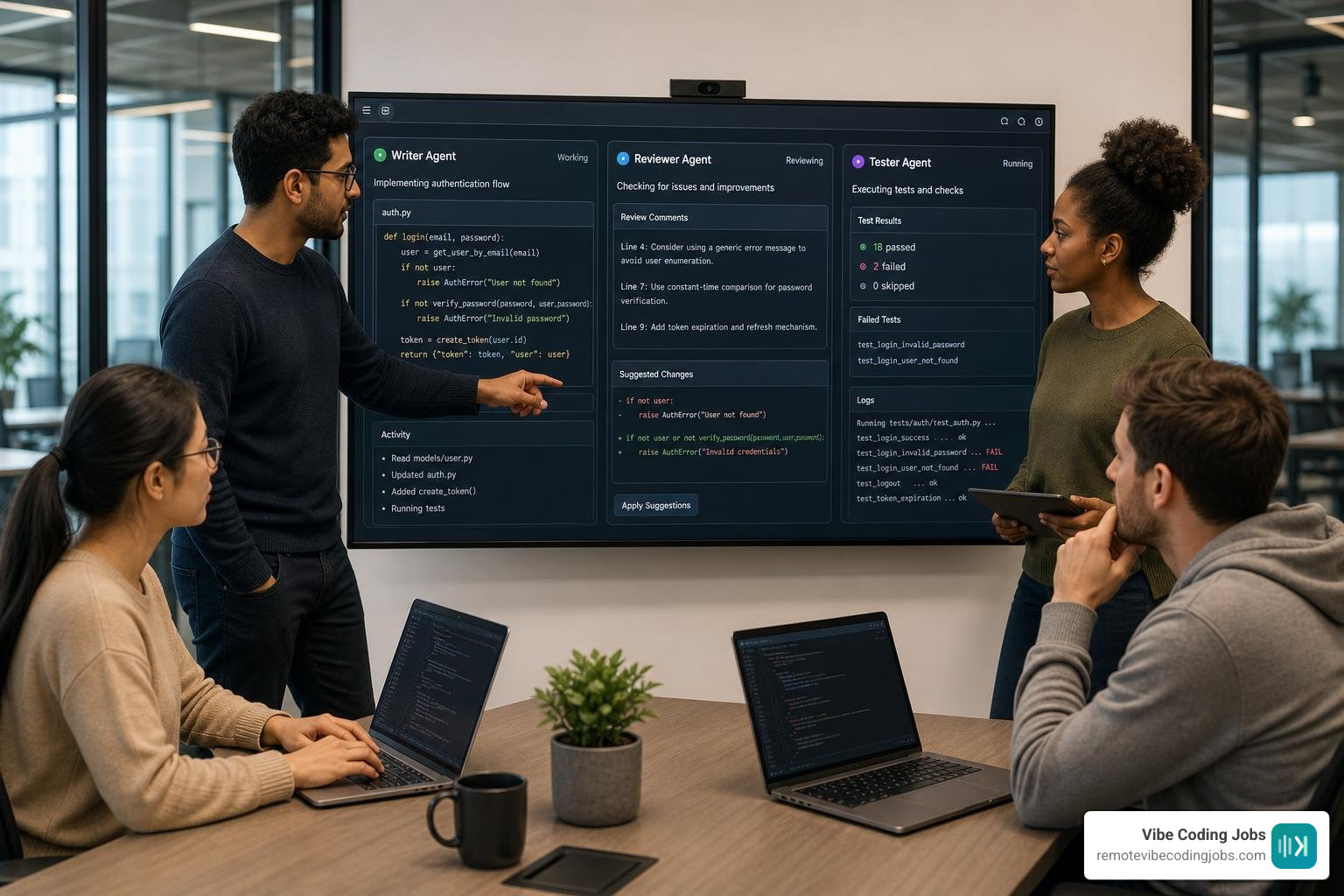
- Agentic Workflows: Top-tier teams are now using multi-agent setups where one AI agent writes the code, another reviews it, and a third runs tests. Learn more about this in our article on Multi Agent Workflows How Top Engineers Orchestrate AI Coding Agents.
Managing Remote Vibe Coders and Avoiding Red Flags
Managing a vibe coder requires a shift toward asynchronous, results-oriented communication. Because vibe coders work in highly focused “flow states,” constant meetings and status updates can severely disrupt their productivity.
Instead, embrace an async-first workflow. Set clear, documented requirements and let your developers build in uninterrupted blocks. For a deeper look at managing these workflows, read about Async First Remote Developer Jobs Workflow Productivity.
Red Flags to Watch Out For:
- Over-reliance on AI: If a developer cannot explain how their code works or struggles to debug a simple issue without querying an LLM, they lack the necessary engineering fundamentals.
- Poor Documentation: AI can generate code quickly, but it often neglects documentation. Ensure your developers use AI to document the architecture, APIs, and setup instructions.
- No Git History: A lack of structured commits in version control is a major red flag. Developers should commit code in small, logical steps so that any AI errors can be easily rolled back.
Frequently Asked Questions about Vibe Coding
What is the typical cost to hire a vibe coder?
Freelance vibe coders generally charge between £25 and £80 per hour, depending on their experience and the complexity of the project. If you are hiring a dedicated full-time developer, monthly costs typically range from £3,500 to £9,000. Complete project-based builds handled by specialized agencies usually cost between £8,000 and £50,000.
Is AI-generated code secure and production-ready?
AI-generated code can absolutely be secure and production-ready, but only when it is overseen by an experienced software engineer. Without human reviews, automated testing, and security scanning, AI-generated code can accumulate technical debt and security vulnerabilities. The magic formula is AI speed combined with human architectural oversight.
How do you test a vibe coder’s skills without LeetCode?
The best way to evaluate a vibe coder is to skip theoretical LeetCode tests and look at their practical portfolio. Give them a small, paid pilot project — such as building a simple API integration or a basic dashboard — and observe how they prompt, how quickly they deliver, and how they handle debugging and feedback. To find out how to hire without traditional tests, read our guide on Remote Coding Jobs No Leetcode Practical Portfolio.
Conclusion
The era of manual boilerplate coding is giving way to a more efficient, creative, and development paradigm. When you quick hire vibe coders, you aren’t just hiring someone to type syntax; you are bringing on a high-velocity product builder who can leverage the world’s most powerful AI systems to turn your business ideas into reality in record time.
At RemoteVibeCodingJobs, we make it easy to find and hire these AI-fluent professionals. We aggregate remote vibe coding jobs and connect forward-thinking, async-first companies with pre-vetted developers who understand how to balance AI-assisted speed with professional engineering discipline.
Ready to build your next product 10x faster? Explore our platform, check out our daily listings, and start your journey into the future of software development today by visiting our guide on Vibe Coding Remote Career.