
How AI tools are rewriting the developer job description
How AI Tools Are Rewriting the Developer Job Description in 2026
AI assisted developer positions are one of the fastest-growing job categories in tech right now. Here’s what you need to know at a glance:
Quick answers:
- There are 9,000+ AI programmer jobs listed in the US alone
- Salaries range from $70,000 (entry-level) to $250,000+ (senior)
- Top tools employers want: AI-native editors, coding agents, and fast prototyping platforms
- You don’t need a CS degree – but you do need to show shipped work
- Top hiring platforms: Niche boards like Remote Vibe Coding Jobs
The developer job market looks different than it did two years ago. AI coding tools have moved from “nice to have” to a core job requirement at companies of all sizes – from lean startups shipping MVPs to enterprise teams building internal platforms and AI products.
Hiring managers are no longer just asking “Can you write code?” They’re asking “How fast can you ship with AI?”
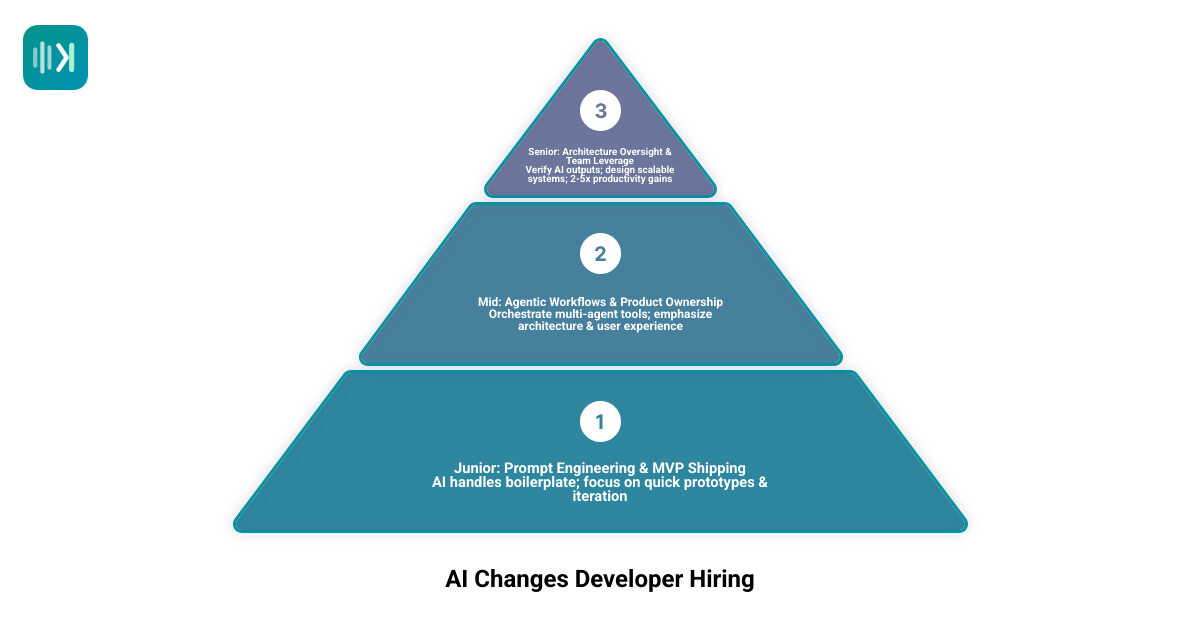
Developers who’ve adopted prompt-first, agent-driven workflows are reporting 2-5x productivity gains within just the first month of consistent practice. That kind of leverage is reshaping what teams expect from a single engineer – and what they’re willing to pay.
New role titles are emerging alongside the tooling: AI-first developer, product engineer, AI automation engineer, creative technologist. These aren’t just rebrands. They reflect a genuine shift in how software gets built and who gets hired to build it.
I’m RVCJ Editorial, the team behind Remote Vibe Coding Jobs – we cover AI-assisted development, remote hiring trends, and practical career advice for developers building with modern agentic tools, with a specific focus on helping engineers find and land AI assisted developer positions that match their stack and work style. In the sections below, we break down exactly where to find these roles, what they pay, and how to stand out as a candidate in 2026.
What “vibe coding” means and why AI assisted developer positions are growing
By May 2026, the term “vibe coding” has transitioned from a viral meme to a legitimate technical methodology. At its core, vibe coding is a prompt-first, high-level approach to building software. Instead of spending hours manually typing out boilerplate syntax, a developer focuses on the “vibe” – the architectural intent, the user experience, and the logic flow – while AI agents handle the heavy lifting of code generation.
This shift has led to a massive surge in AI assisted developer positions. Companies have realized that an engineer empowered by agentic tools can do the work of a small team. We are seeing a market where the “Product Mindset” is becoming more valuable than “Syntax Fluency.”
Vibe coding vs traditional software development
Traditional development is often a cycle of manual coding, manual debugging, and slow review loops. You write a line, it breaks, you check documentation or community threads, repeat. In contrast, vibe coding involves writing detailed specifications and using modern AI coding environments to generate entire features in seconds.
The developer’s role shifts from “writer” to “editor and architect.” You aren’t just checking for semicolons; you are verifying that the AI-generated code meets the business requirements and security standards. This allows for incredible shipping speed, but it requires new QA habits and a deep understanding of architecture ownership. For a deeper dive into this shift, check out our guide on What is Vibe Coding?.
Why companies are creating new AI assisted developer positions
Lean startups are the primary drivers here. Why hire five junior developers when you can hire two AI-fluent product engineers who can ship an MVP in a week? Companies are looking for “AI-native” roles that can design and launch AI-powered products fast. These positions aren’t just about maintaining old systems; they are about building autonomous workflows, RAG (Retrieval-Augmented Generation) pipelines, and agentic integrations that drive immediate ROI.
According to the World Economic Forum’s Future of Jobs Report, AI and automation are among the fastest-growing drivers of workforce transformation, with demand for AI-related skills accelerating across industries.
Is prior coding experience required to succeed?
This is the million-dollar question. While you don’t necessarily need a four-year CS degree to be a successful vibe coder, you do need “technical literacy.” You must understand APIs, Git, basic testing patterns, and how systems talk to each other. Beginners can certainly land roles, but the most successful candidates are those who pair traditional fundamentals – like understanding database normalization or security protocols – with modern AI tool fluency.
The top places to find AI assisted developer positions in 2026
The hunt for AI assisted developer positions requires a different strategy than traditional job searching. Because these roles often favor async-first, remote-friendly cultures, you need to look where the “AI-fluent” crowd hangs out.
Remote-first platforms for AI developers
For those seeking the freedom of working from anywhere, specific remote platforms are leading the charge. You want to find spaces that specialize in this niche, aggregating roles specifically for those who use agentic tools.
- Remote Vibe Coding Jobs: We specialize in this niche, aggregating roles specifically for those who use agentic tools. You can find more about pay and requirements on our Remote AI Developer Jobs (Tools & Salary) page.
Niche communities and curated boards
The best roles are often found in curated spaces where the hiring managers actually understand what “vibe coding” is. These boards filter by tech stack and AI tool usage, ensuring you don’t end up in a “no-AI” legacy shop.
- Our Curated Lists: We maintain updated lists of Companies Hiring Vibe Coders & AI Developers to help you find a culture fit that values high-leverage work.
Companies hiring for AI assisted developer positions and the roles they’re posting
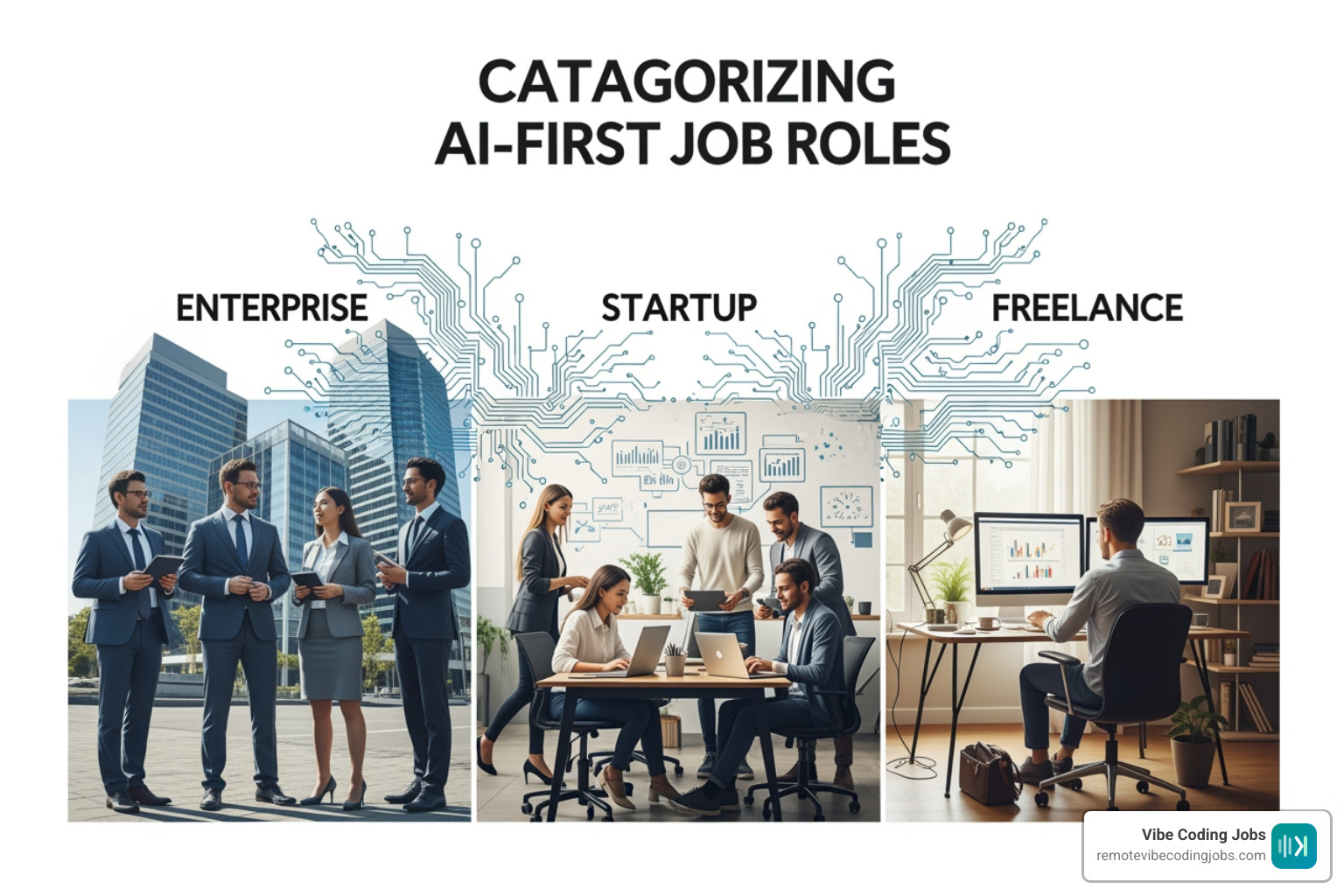
From Big Tech to “two-person-and-a-bot” startups, the hiring landscape is diverse.
Featured enterprise and platform roles
Even the giants are restructuring. Large platform companies and AI teams are actively recruiting for roles that focus on developer experience, internal tooling, and applied AI systems.
- Enterprise AI teams: Hiring for technical staff and platform roles focused on model integration, internal developer tooling, and AI product infrastructure.
- Developer tooling companies: Looking for staff and senior engineers who can improve the workflows other developers use to build and ship software faster.
Startup and growth-stage examples
This is where the most creative AI assisted developer positions live.
- Applied AI startups: Hiring senior developers who can bridge product, engineering, and go-to-market execution.
- AI agent teams: Recruiting builders to create lightweight SaaS products, internal copilots, and workflow automations using modern LLMs and RAG pipelines.
- Automation-focused companies: Seeking AI-native software developers who treat AI agents as a primary productivity layer for complex operational workflows.
Job titles to watch beyond “software engineer”
Don’t just search for “Software Engineer.” In 2026, the roles are being renamed to reflect the new reality:
- Product Engineer: A dev who owns the “what” and “why,” not just the “how.”
- AI Automation Engineer: Focused on replacing repetitive manual workflows with agentic systems.
- Creative Technologist: A blend of designer and developer who uses AI to prototype wild new interfaces.
- AI-First Developer: An engineer who defaults to AI agents for all coding tasks.
Skills, tools, and salary benchmarks for AI assisted developer positions
To land these roles, you need a specific “AI-native” stack. It’s no longer just about knowing Python or React; it’s about how you orchestrate those languages using AI.
The tool stack employers increasingly expect
The 2026 “Power Stack” includes:
- AI-Native Editors: AI-native code editors are increasingly standard for high-speed iteration and codebase navigation.
- Coding Agents: Agentic coding assistants are essential for multi-file edits, refactors, and implementation support.
- Backend/AI: Experience with RAG pipelines, vector databases, and popular orchestration frameworks for building LLM-powered applications.
- DevOps: AI-assisted developers are expected to handle their own CI/CD and observability.
Check out our comparison of Cursor vs Copilot or our list of Must-Have Vibe Coding Tools to stay ahead.
Salary ranges by seniority and work model
The data shows that AI fluency pays a significant premium.
| Level | Salary Range (Annual) | Hourly (Freelance) |
|---|---|---|
| Entry-Level (1-2 yrs) | $70,000 – $100,000 | $50 – $100 |
| Mid-Level | $100,000 – $150,000 | $100 – $200 |
| Senior AI-First | $150,000 – $250,000+ | $150 – $300+ |
Freelance vibe coders are particularly high earners right now because they can deliver projects 3x faster than traditional freelancers, often charging $100-$300/hour for their efficiency. For more details, see our Vibe Coding Salary Guide.
How candidates can prove AI-assisted skill, not just claim it
Hiring managers are wary of “prompt tourists.” To prove you’re the real deal:
- Show your “Prompt Logs”: Share how you iterated with an agent to solve a complex bug.
- Ship High Volume: A portfolio of 10 small, functional AI-powered apps is better than one giant, unfinished legacy project.
- Use Speed Tests: We offer a Vibe Coding Speed Test to help you quantify your shipping velocity.
- Quantify ROI: Don’t just say you built a tool; say you “built an AI agent that reduced manual data entry by 80%.”
How experienced developers can transition into AI-assisted roles in 30 to 90 days
If you’ve been coding traditionally for 10 years, you aren’t obsolete – you’re actually in the best position to become a “Super-Developer.” Your knowledge of architecture and “what good code looks like” is your secret weapon.

A practical 30-60-90 day transition plan
- Days 1-30: Tool Adoption. Stop using your old IDE. Move everything to an AI-native code editor. Learn to “talk” to your code. Use our AI Productivity Calculator to track your gains.
- Days 31-60: Build in Public. Create three small tools using agents. Focus on things like web scrapers, RAG bots, or API integrators.
- Days 61-90: Redesign your Workflow. Start writing specs before you write code. Practice “review-driven development” where you spend more time auditing AI output than typing.
What hiring managers struggle to evaluate
The biggest challenge for managers is “copy-paste risk.” They need to know if you actually understand the code the AI wrote. In interviews, expect to be asked to “debug this AI-generated block” or “explain why the agent chose this specific design pattern.” They are looking for ownership and the ability to steer the AI, not just follow it.
How AI-assisted development is changing hiring and team structure
Teams are getting smaller and more “outcome-based.” Instead of a team of 10 engineers, we are seeing “Squads of One” or “Squads of Two” where each person has the leverage of five people. Interviews are shifting away from LeetCode and toward “build a feature in 30 minutes using any AI tool you want.”
Frequently asked questions about AI assisted developer positions
Are AI assisted developer positions replacing traditional software engineers?
They aren’t replacing engineers; they are evolving the role. Think of it like moving from a shovel to an excavator. The person who knows where to dig (the architect/engineer) is still vital, but the person who only knows how to move dirt manually (rote coders) will find fewer opportunities.
Can beginners land AI-assisted roles without a computer science degree?
Yes, absolutely. In 2026, many companies care more about your “Proof of Work” than your degree. If you can show a repository of shipped, functional products, you are a viable candidate. For entry-level tips, see AI Coding Jobs (Entry-Level Remote).
What is the best way to stand out when applying?
Be a “Product Engineer.” Don’t just talk about code; talk about the business problems you solved. Show that you can use AI to build, test, and deploy end-to-end solutions. Mention your fluency in modern AI coding workflows explicitly in your resume.
Conclusion
The era of AI assisted developer positions is here, and it’s the most exciting time to be a builder in a decade. Whether you are a senior dev looking to 5x your output or a newcomer eager to break into tech, the tools are now powerful enough to turn your ideas into reality at the speed of thought.
At Remote Vibe Coding Jobs, we’re dedicated to connecting the best AI-fluent talent with companies that actually “get it.” If you’re ready to find a role that values your AI-native workflow, browse our Companies Hiring Vibe Coders (Remote AI Coding) and start your next chapter today. For more on the philosophy behind this movement, read our full breakdown on What is Vibe Coding?.