Which AI Coding Platform Should You Test First?
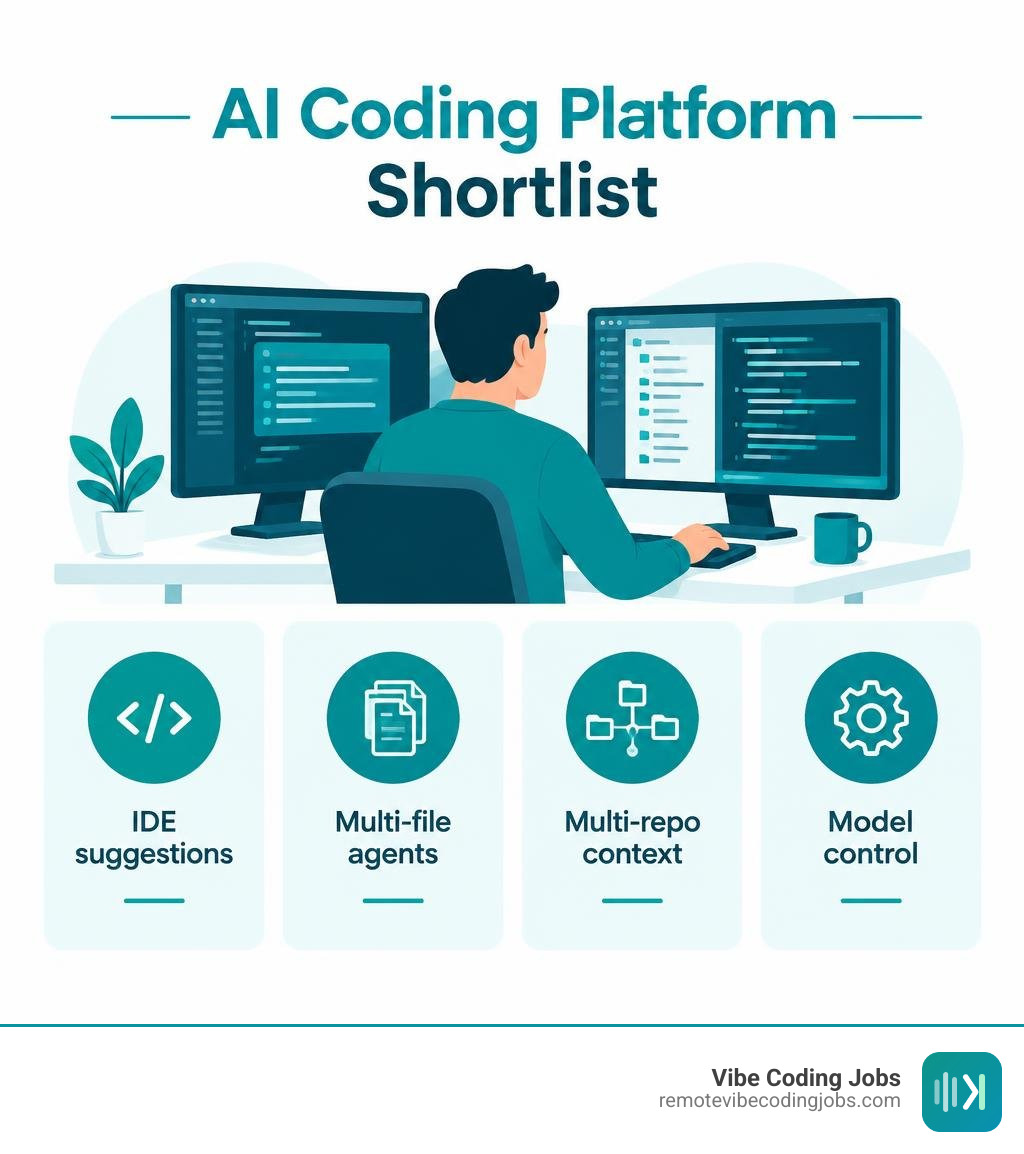
Start with the tool that fits your work. Test GitHub Copilot for code suggestions in your current IDE, Cursor for an AI-first editor with multi-file agents, and Claude Code for terminal-based coding tasks. If your work spans many repositories, add Augment Code to the shortlist. If you need more control over models and setup, try OpenCode or Cline.
Don’t judge a platform by how quickly it writes code. Give each one the same real task, then check its changes, tests, and cost. A fast answer that creates more review work is not a win.
I’m Di Su, a software engineer with over 10 years of experience building web products and improving development workflows. I bring that practical lens to this ai coding platform roundup: which tools help you ship sound code, and which add work?
Simple ai coding platform glossary:
By October 2026, developer adoption of AI tools has reached 90%, with engineers integrating machine learning assistance into roughly 60% of their daily workflows. However, rapid adoption reveals sharp paradoxes: studies show experienced developers can actually be 19% slower completing tasks with early AI setups despite perceiving a 20% speed improvement, while unmanaged code generation is tied to a 9% increase in bugs and 154% larger pull requests. Finding the right system is not just about raw code generation; it is about architectural control.
The Evolution of Developer Tooling: Autocomplete vs Autonomous Agents
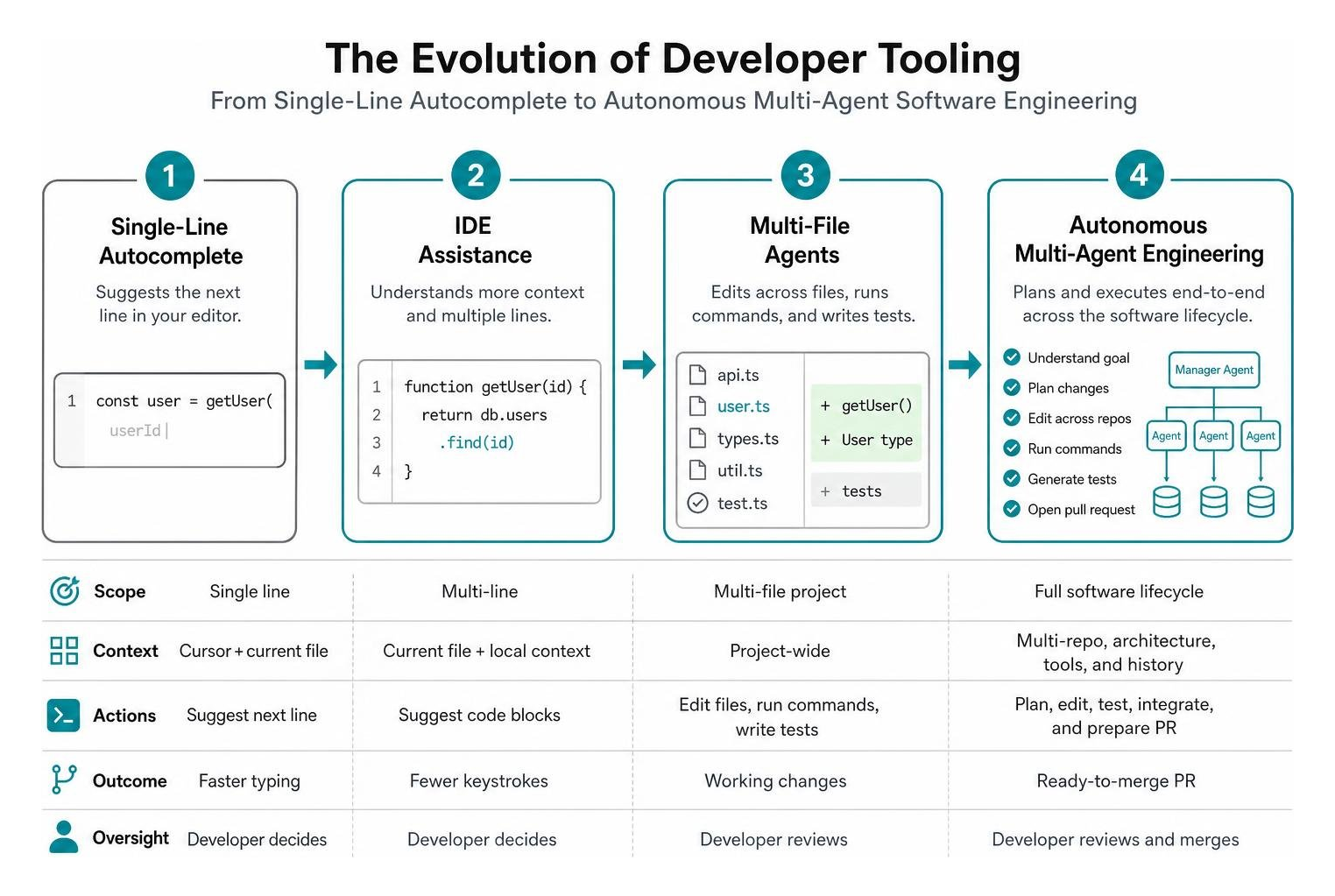
Developer tooling has progressed far beyond single-line ghost text. Where traditional autocomplete relies on static abstract syntax trees (ASTs) or local context to predict the next method signature, modern platforms function as autonomous engineering environments capable of reasoning across full software lifecycles.
What Is an AI Coding Platform vs Autocomplete?
An AI code assistant provides inline predictions inside your active buffer. In contrast, an AI coding platform operates across the broader engineering lifecycle—orchestrating multi-file edits, executing command-line instructions, generating integration tests, and interacting with deployment targets.
Modern teams turning to must-have AI tools for modern developers expect full workspace comprehension. For instance, systems like the Aperant autonomous software engine construct persistent project memory across architectures, turning high-level specifications directly into validated pull requests rather than isolated code fragments.
Multi-Agent Orchestration and Autonomous Refactoring
The state of the art in 2026 centers on multi-agent execution. Rather than relying on a single context window to analyze, plan, and write code simultaneously, platforms divide responsibilities among specialized agents:
- Planning Agents: Ingest issue descriptions, inspect architecture docs, and draft implementation roadmaps without modifying code.
- Build Agents: Execute targeted multi-file refactors within isolated sandboxes or shadow workspaces.
- Review and QA Agents: Run local test suites, linting rules, and security scans before surfacing a final diff.
Engineers adopting structured multi-agent orchestration workflows minimize hallucinations by keeping planning distinct from file writes.
Top AI Coding Platforms Reviewed and Compared
To help engineering teams navigate the landscape, we evaluated the primary contenders across context depth, enterprise security, and multi-file reasoning capabilities:
| Platform | Primary Interface | Multi-Repo Indexing | Security Standards | Key Differentiator | Pricing Model |
|---|---|---|---|---|---|
| Cursor | Standalone IDE (VS Code Fork) | Repository-Wide | SOC 2 Type II | Mission Control, Shadow Workspaces | Freemium / $20–$40 per user/mo |
| Claude Code | Terminal / CLI Native | Session AST / Grep | Zero Retention Options | Deepest Architectural Reasoning | Usage-Based API / Subscription |
| Augment Code | Extension / IDE Engine | 400,000+ Files Cross-Repo | SOC 2, ISO 27001 | Semantic Dependency Engine (70.6% SWE-bench) | Enterprise Tiered |
| GitHub Copilot | IDE Extension & Agent Mode | GitHub Graph Native | SOC 2, ISO 27001 | Seamless Native Ecosystem & CI Integration | $10–$39+ per user/mo |
| OpenCode | Multi-Client (CLI/IDE/App) | Local LSP Graph | 100% Client-Side Private | Open-Source, 75+ Model Providers | Free / Open-Source |
| Creor | Native AI Editor | Project Repo Map | BYOK / Granular Hooks | Bring-Your-Own-Key, Skill Graphs | Free / Pro |
| Peridot | Web / Enterprise On-Prem | Cross-Service Container | SOC 2, HIPAA, Air-Gapped | Complete On-Premise Data Sovereignty | Enterprise Custom |
Cursor and Claude Code: Deep Context and Agentic Execution
For hands-on engineering, Cursor and Claude Code represent two leading agentic philosophies.
The Cursor AI coding agent replaces the traditional IDE experience with features like Mission Control, which manages parallel sub-agents across live windows. It indexes your entire repository to power natural language code modifications (Cmd+K) and multi-file architectural refactors.
Meanwhile, Claude Code brings elite reasoning directly to your command line. Running without graphical overhead, it automates git operations, inspects runtime logs, and refactors deep backend services through simple terminal commands. For a detailed breakdown of how these modalities compare against ecosystem giants, see our Claude Code vs Copilot comparative breakdown.
Enterprise & Multi-Repo Intelligence: Augment Code and GitHub Copilot
Enterprise organizations managing distributed microservices require context engines that transcend single directories.
Augment Code tackles this with a proprietary Context Engine capable of indexing over 400,000 files across multiple repositories simultaneously. By evaluating semantic dependencies across distributed APIs, Augment achieves a 70.6% SWE-bench resolution rate compared to the 54% industry baseline.
GitHub Copilot remains the pragmatic standard for teams embedded in the GitHub ecosystem. With Agent Mode, Copilot can triage issues, suggest cross-file fixes, and automate review workflows within enterprise security boundaries. Understanding how these tools fit into your enterprise AI infrastructure architecture is critical for preventing security leaks, as highlighted in comprehensive evaluation of enterprise AI coding tools.
Open-Source and Web-Native Platforms: OpenCode, Creor, and Cloud IDEs
Developers requiring vendor independence and transparent governance increasingly favor open-source and modular editors:
- OpenCode: Backed by over 208,000 GitHub stars and 16 million monthly developers, OpenCode connects to more than 75 LLM providers via standard language server protocols (LSP) without retaining private telemetry.
- Creor: The Creor AI-native editor leverages dynamic Repo Maps and persistent Skill Graphs, enabling teams to bring their own API keys (BYOK) while strictly enforcing architectural rules.
- Browser-Based Environments: Cloud platforms like Bheem Kodee and CodeAgento deliver zero-setup, sandboxed development spaces equipped with real terminals, instant deployment pipelines, and integrated AI generators.
Selecting these modular solutions helps teams construct a tailored remote developer tools stack that prevents provider lock-in.
Core Architecture: Context Engines, Multi-Repo Indexing, and Deployment
The effectiveness of any modern coding platform rests on context retrieval. When working across large microservices, standard vector search frequently fails because semantic similarity does not equal functional code dependency.

Modern context engines combine AST graph parsing, lexical search, and vector embeddings to trace dependencies across microservices—mapping how a database migration in one repository impacts payment contracts in another.
Evaluating AI Coding Platform Security and Compliance
With over 60% of enterprises requiring formal AI governance in 2026, security architecture is a primary procurement hurdle. Development leaders must verify:
- Certifications: SOC 2 Type II, ISO 27001, and the emerging ISO 42001 (AI Management Systems).
- Data Sovereignty: Strict Zero Data Retention (ZDR) agreements ensuring proprietary source code is never used to train foundation models.
- Air-Gapped Deployments: Platforms such as the Peridot enterprise platform provide self-hosted containers behind enterprise firewalls for defense, healthcare, and finance sectors.
Token Efficiency and Total Cost of Ownership
Enterprise deployment costs scale rapidly if context windows are populated inefficiently. Platforms now utilize intelligent model routing: small, low-latency models handle real-time autocompletions, while high-reasoning flagship models are reserved for complex multi-file refactoring tasks. Establishing streamlined AI-assisted workflows ensures your team extracts peak agentic performance without runaway API billing.
How to Choose the Best AI Coding Platform for Your Stack

When selecting a platform, match your choice directly to your organizational constraints:
- Solo Engineers & Startups: Choose Cursor or Creor for high-velocity UI feature development and flexible BYOK options.
- Terminal-First Backend Teams: Adopt Claude Code or Aider for rapid debugging, bash scripting, and zero-distraction refactors.
- Large-Scale Enterprises: Prioritize Augment Code or GitHub Copilot Business for multi-repo dependency indexing and unified SOC 2 compliance.
- Security-Restricted Sectors: Standardize on self-hosted OpenCode instances or Peridot on-premise deployments.
Mastering these platforms opens substantial remote developer career opportunities with AI tools across modern engineering teams.
Frequently Asked Questions about AI Coding Platforms
What makes an AI coding agent different from traditional autocomplete?
Traditional autocomplete suggests characters or single lines based on immediate lexical tokens. An AI coding agent interprets high-level developer intent, plans execution steps, navigates the file tree, writes changes across multiple files, and validates output against build scripts and tests.
Which platforms support air-gapped and on-premise enterprise deployments?
Peridot, Tabnine Enterprise, and self-hosted instances of OpenCode support complete air-gapped and on-premise deployments. These environments run local or isolated LLM weights behind corporate firewalls, ensuring zero code leaves the organization’s infrastructure.
How do AI coding platforms impact long-term code quality and bug rates?
Because 67% of developers note that AI frequently produces code that looks correct but fails silently, unmonitored adoption can increase bug frequency by 9%. Platforms counteract this by incorporating automated test generation, syntax validation loops, and human-in-the-loop review gates prior to merging pull requests.
Conclusion
The shift toward agentic software engineering is fundamentally altering how software is planned, built, and shipped. Rather than typing out boilerplate, developers increasingly act as systems architects—orchestrating autonomous agents that build and verify features across complex distributed environments.
At RemoteVibeCodingJobs, we track how these developer toolchains transform modern engineering cultures. Explore our complete guide to AI coding tools for vibe coding to optimize your daily workflow, benchmark your team’s tooling, and stay ahead in an AI-native industry.
— Di Su