
Find Kotlin Backend Jobs That Match Your Stack and Work Style
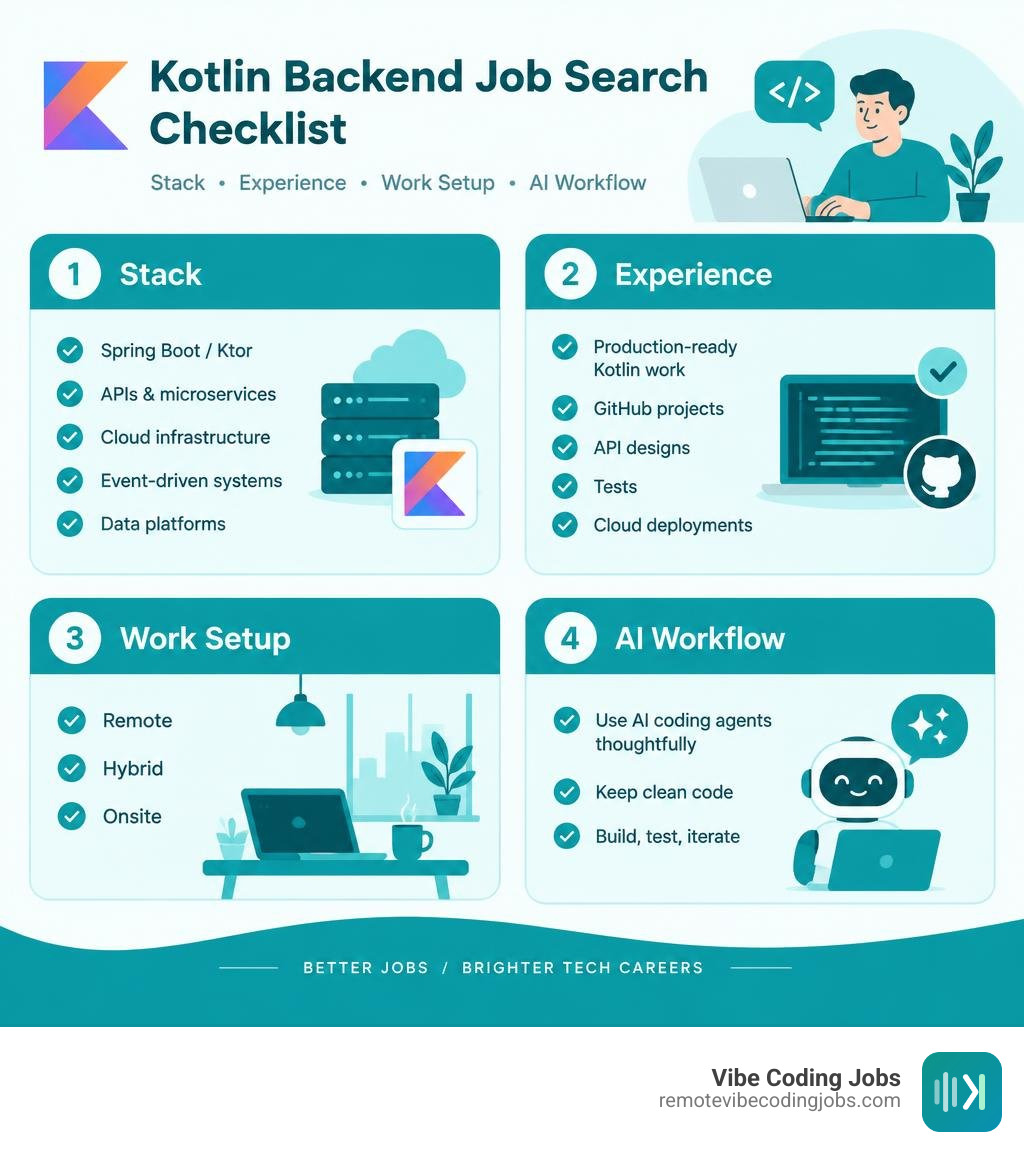
To find strong Kotlin backend jobs, search for roles that name both Kotlin and the server-side work you want to do: Spring Boot or Ktor, APIs, microservices, cloud infrastructure, event-driven systems, or data platforms. Then filter for your preferred setup – remote, hybrid, or onsite – and show proof of production-ready Kotlin work through GitHub projects, API designs, tests, and cloud deployments.
The best openings are not limited to one industry. Companies in fintech, travel, health tech, analytics, e-commerce, and enterprise SaaS use Kotlin alongside Java to modernize JVM services. Current roles range from mid-level remote work on Kotlin event-sourcing systems to senior platform positions requiring Kubernetes, Kafka, SQL, and Spring Boot experience.
Kotlin backend hiring is smaller than the broader Java market, but it rewards a focused profile. Employers commonly want engineers who can write clean services, own systems in production, communicate well in async teams, and use AI coding agents thoughtfully rather than treating generated code as a shortcut.
I am Di Su, a software engineer with more than 10 years of experience building scalable web products, improving development workflows, and connecting technical work to business results. While my background spans software engineering, growth, and user-focused systems, this guide applies that practical lens to helping developers assess Kotlin backend jobs by stack, work culture, and career fit.
Kotlin backend jobs further reading:
The Evolution of Kotlin Backend Jobs: Market Trends and Industry Adoption
Server-side Kotlin has transitioned from an experimental alternative to a pillar of modern JVM architectures. While early adoption was driven by mobile developers who fell in love with the language’s null safety and expressive syntax on Android, enterprise backend teams quickly discovered that those same qualities eliminate entire classes of server-side production bugs.
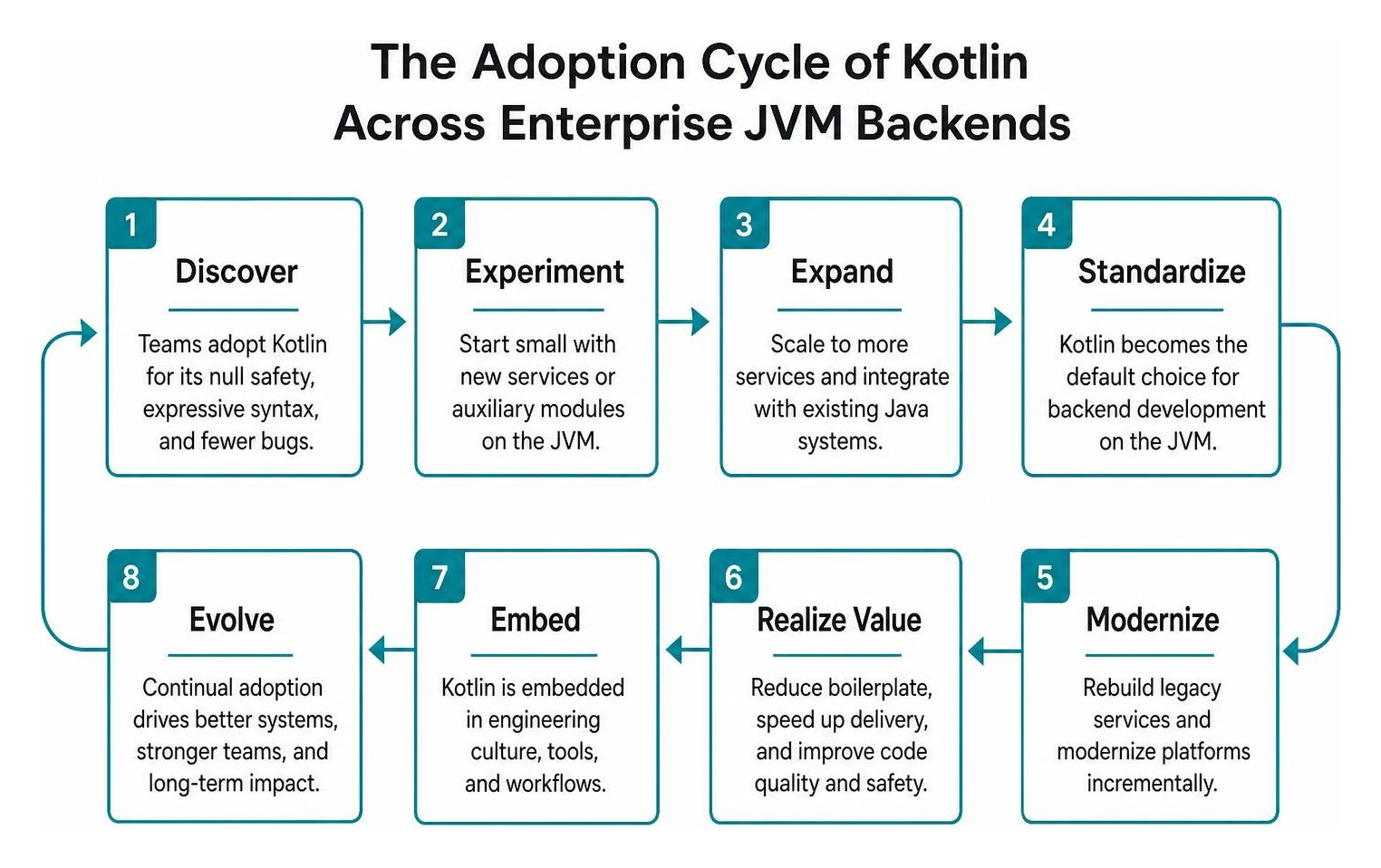
In 2026, organizations migrate their backend services to Kotlin to reduce boilerplate, speed up delivery cycles, and modernize legacy Java platforms without discarding their battle-tested JVM infrastructure. The ability to mix Java and Kotlin code in the same project allows engineering teams to adopt Kotlin incrementally, starting with new microservices or auxiliary modules before touching core domain layers.
Major logistics and transportation providers, like those hiring a Senior Kotlin Engineer at Flix, actively seek developers who bring at least two years of dedicated commercial Kotlin experience on top of broader backend foundations. These teams build B2B sales engines, distribution portals, and self-management platforms that interface with complex real-time operational workflows.
Enterprise Hiring Sectors and Real-World Use Cases
The demand for server-side Kotlin spans several distinct sectors:
- Fintech & Digital Banking: Modern financial applications rely on Kotlin’s immutability constructs and type safety to handle multi-currency accounting, payment routing, and high-frequency settlement services where concurrency errors carry severe financial consequences.
- Health Tech & Nomad Insurance: Startups like Genki serve tens of thousands of global customers across hundreds of countries by running lightweight Kotlin microservices paired with event sourcing to manage dynamic insurance policies and Stripe billing integrations.
- Analytics Platforms & Data Infrastructure: Modern analytics engines deploy Kotlin to orchestrate distributed query parsing, translate complex proprietary query languages into optimized SQL, and serve real-time dashboard APIs.
- Travel, Mobility & E-Commerce: Global transit operators rely on Kotlin services running on cloud platforms to coordinate seat allocations, route optimizations, and real-time fleet telematics.
Kotlin vs Java Backend Roles: Demand and Compensation
While the gross volume of classic Java postings remains massive across legacy enterprises, server-side Kotlin openings target modernized microservice setups, high-throughput APIs, and cloud-native architectures.
Engineering leads value Kotlin because its language-level null safety dramatically reduces null pointer exceptions in production, while features like data classes, extension functions, and smart casts reduce lines of code by up to 40% compared to traditional Java.
Essential Frameworks and Server-Side Architecture Demands
When browsing listings for backend engineers, the required technical stack generally splits between enterprise-grade frameworks and lightweight asynchronous engines.
A prominent example is the work done by a Sr. Backend Engineer at GoodData, where engineers operate across Spring Boot, Ktor, and Python microservices running on Kubernetes to deliver AI-native analytics platforms.

- Spring Boot (Kotlin DSL): Spring Boot remains the primary framework for enterprise Kotlin development. Teams take advantage of the dedicated Kotlin DSL for routing, bean configuration, and MockK testing integrations.
- Ktor: Developed by JetBrains, Ktor is a lightweight, asynchronous framework built from the ground up for Kotlin and coroutines. It is chosen by teams building lightweight microservices, high-performance API gateways, and web socket servers that demand minimal overhead.
- Micronaut & Quarkus: These compile-time frameworks are increasingly popular in serverless and containerized environments due to their instant startup times and low memory footprints.
Asynchronous Concurrency and Event-Driven Systems
Kotlin coroutines provide a structured concurrency model that simplifies non-blocking I/O. Instead of wrestling with complex reactive streams or callback chains, developers write imperative-looking code that executes asynchronously behind the scenes.

Event-driven architectures frequently pair Kotlin with message brokers like Apache Kafka, Apache Pulsar, and cloud-native queues. Teams adopt event sourcing patterns where state changes are stored as an immutable sequence of events, ensuring auditability across distributed commerce and financial services.
High-Performance Data Engineering and Distributed Platforms
Kotlin’s utility extends into high-performance data processing. Specialized teams use Kotlin alongside libraries like Apache Calcite, DuckDB, Polars, and pandas to build distributed query engines. These systems transpile custom domain-specific query languages into high-efficiency SQL, orchestrate distributed joins, and expose endpoints using high-speed gRPC protocols.
For engineers interested in low-level framework development and tooling, exploring Kotlin open-source development roles is an effective way to sharpen your systems-level knowledge.
AI-Agentic Workflows and Modern Engineering Practices
The server-side engineering landscape in 2026 has embraced agentic software development. Forward-thinking companies actively look for engineers who can orchestrate AI tools to boost developer velocity and automate operational friction.

Teams integrate tools like Claude Code and OpenAI Codex directly into their daily development cycles. Rather than manually writing boilerplate CRUD endpoints, database migrations, or unit tests, developers use natural language prompts and structured project context to draft implementations, refactor modules, and run automated triage on production incidents.
Vibe Coding and AI-Native Backend Development
The concept of “vibe coding”—blending high-level architectural guidance, natural-language prompt orchestration, and autonomous agent loops—has entered backend engineering. In practice, this means:
- Automated Code Review Agents: Engineering organizations deploy automated Claude plugins within their CI/CD pipelines to inspect pull requests for API contract violations, performance anti-patterns, and security regressions.
- On-Duty Triage Automation: AI agents monitor telemetry streams, triage stack traces, and draft preliminary hotfixes or rollbacks before human engineers step in.
- Rapid Service Prototyping: Developers define data models and OpenAPI contracts, allowing coding agents to scaffold complete Ktor or Spring Boot microservices with baseline test suites.
Essential Non-Technical Traits for Async Teams
While mastery of coroutines and cloud platforms is vital, engineering managers hiring for distributed teams place high emphasis on non-technical soft skills:
- High Ownership: The ability to take a feature from problem definition through deployment, monitoring, and production telemetry without constant oversight.
- Comfort with Ambiguity: Startups frequently use custom, evolving frameworks. Engineers must be willing to dive into source code, understand undocumented systems, and ask clarifying questions.
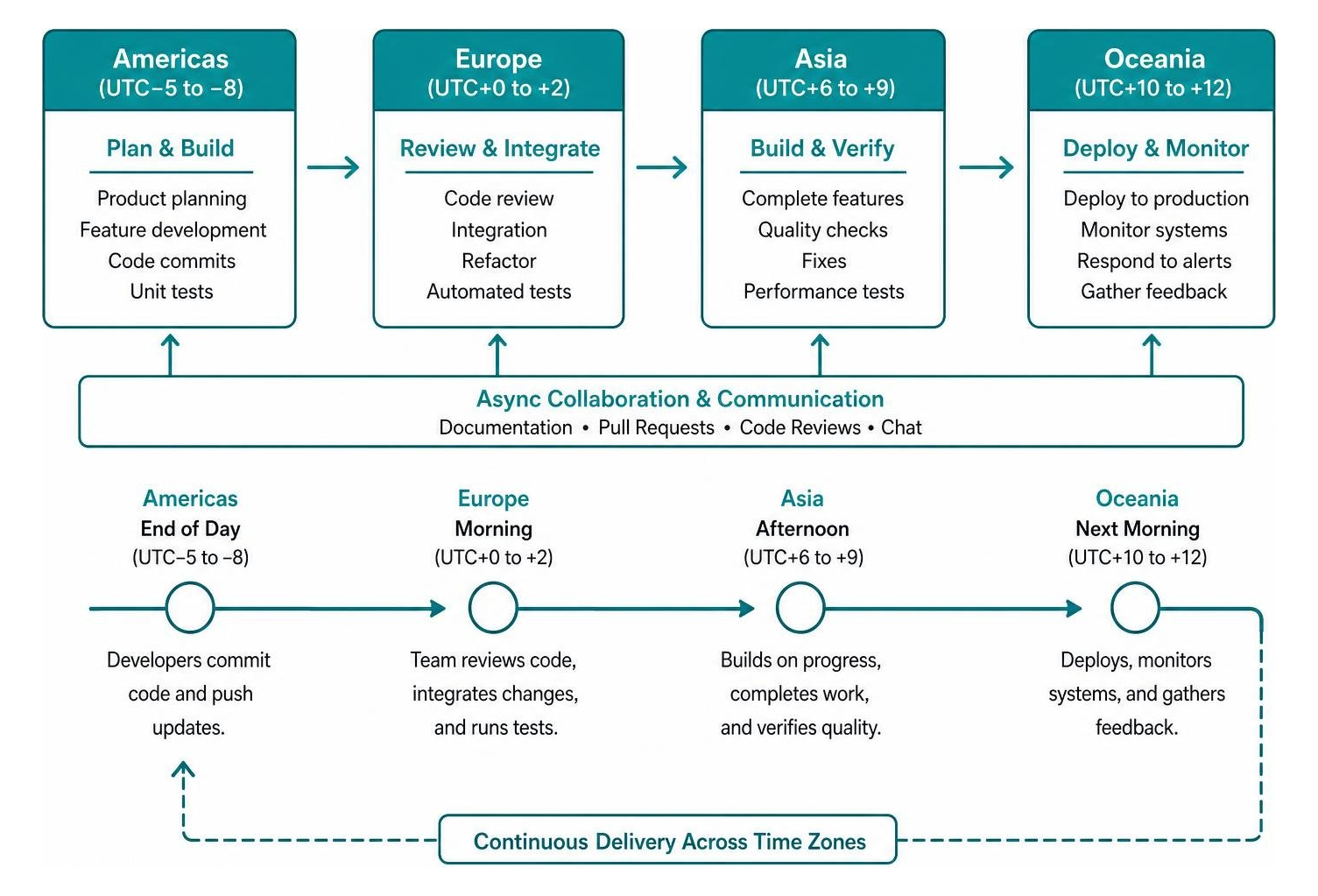
- Async Written Communication: Clear, structured documentation, precise pull request descriptions, and proactive communication eliminate meeting bottlenecks across disparate time zones.
Global Compensation Benchmarks and Experience Levels
Compensation for server-side Kotlin developers varies significantly across regions, influenced by local talent markets, taxation structures, and remote work arrangements.
| Region / Market | Junior (0-2 Yrs) | Mid-Level (2-5 Yrs) | Senior (5+ Yrs) | Lead / Staff (8+ Yrs) |
|---|---|---|---|---|
| United States | $85,000 – $120,000 | $120,000 – $160,000 | $160,000 – $220,000 | $220,000 – $300,000+ |
| Western Europe | €42,000 – €55,000 | €55,000 – €75,000 | €75,000 – €105,000 | €105,000 – €140,000 |
| Central / Eastern Europe | €28,000 – €40,000 | €40,000 – €60,000 | €60,000 – €85,000 | €85,000 – €115,000 |
| Latin America (USD Remote) | $20,000 – $35,000 | $35,000 – $55,000 | $55,000 – $85,000 | $85,000 – $120,000 |
Geographic Salary Variations for Kotlin Backend Jobs
In the United States, senior positions at leading tech firms regularly offer total compensation packages between $160,000 and $300,000+, depending on equity grants and bonus components.
European markets present varied compensation structures. In Germany, senior backend roles routinely offer between €75,000 and €100,000, while in Poland, monthly B2B contracts for experienced Kotlin developers range from 18,000 PLN to 56,000 PLN (~$55,000 to $170,000 annualized). In Latin America, cross-border remote contracts generally range between $2,900 and $6,000 per month, offering competitive local purchasing power.
Entry-Level to Staff Expectations in Kotlin Backend Jobs
Requirements scale steadily with seniority:
- Junior Engineers: Focus on core Kotlin language fundamentals, basic REST API development, SQL proficiency, and unit testing using JUnit and MockK.
- Mid-Level Engineers: Expected to independently design database schemas, implement event listeners, evolve existing microservice architectures, and build robust integrations with third-party APIs.
- Senior & Staff Engineers: Drive system-wide architectural decisions, optimize database query plans, maintain distributed messaging pipelines (Kafka/Pulsar), guide cloud infrastructure via Terraform, and mentor junior colleagues in clean code practices.
Work Arrangements: Remote, Async, and Relocation Trends
The server-side Kotlin ecosystem features a high proportion of remote-first and async-first teams. Because Kotlin is favored by modern, forward-thinking startups and digital nomad-oriented organizations, flexible working hours and location independence are common perks.
Many remote-first organizations pair competitive base salaries with equity grants, home-office stipends (such as company-issued Apple hardware), and flexible vacation policies (typically 25 paid annual leave days or more).
European Relocation and Visa Sponsorship Models
For engineers seeking international mobility, several European countries offer dedicated relocation programs. A Kotlin Backend Engineer role in the Netherlands, for example, illustrates how European tech hubs provide full visa sponsorship, relocation allowances, and access to tax incentives like the Dutch 30% ruling to attract senior JVM talent.
Async-First Collaboration and Meeting-Light Culture
Modern distributed teams operate on an asynchronous-first communication cadence. Rather than spending hours in recurring status meetings, engineers coordinate via:
- Written RFCs and Design Documents: Architectural modifications are proposed and reviewed through written markdown files before code is written.
- Structured Pull Request Walkthroughs: Context, testing strategies, and Loom or Claude summaries are included in PR descriptions to facilitate swift peer reviews across time zones.
- Autonomous Sprints: Engineers pull prioritized tasks from backlogs and manage their daily schedules independently, optimizing for deep focus time.
Frequently Asked Questions About Server-Side Kotlin
What are the most in-demand frameworks for server-side Kotlin?
Spring Boot remains the most widely deployed framework due to its extensive enterprise ecosystem and dedicated Kotlin DSL support. Ktor is the second most requested framework, particularly for lightweight microservices, reactive API gateways, and asynchronous web socket services. Quarkus and Micronaut are also frequently listed for serverless and container-native architectures.
How do Kotlin backend compensation packages compare to standard Java roles?
Kotlin backend roles often command a 10% to 20% salary premium compared to generic Java positions. This is primarily because Kotlin adoption is concentrated in modern product-led startups, high-growth fintechs, and tech-forward enterprises that offer updated compensation bands and equity participation.
Can developers transition from Android to Kotlin backend engineering?
Yes. While Android developers already have a firm grasp of Kotlin syntax and coroutines, transitioning to the backend requires mastering server-side concerns: relational and NoSQL database modeling, REST and gRPC API design, microservice architecture, containerization with Docker and Kubernetes, and distributed message queues like Kafka.
Conclusion
The server-side Kotlin landscape offers rewarding opportunities for engineers who combine JVM fundamentals with modern cloud-native practices. Whether you are building real-time event-sourcing backends, scaling high-throughput fintech APIs, or leveraging Claude Code to accelerate service delivery, mastering Kotlin on the server positions you at the forefront of modern software engineering.
To explore openings that match your preferred stack, culture, and remote work setup, check out our curated backend developer positions and set up your tailored alerts today.