
Find Remote Kotlin Developer Jobs Without the Noise
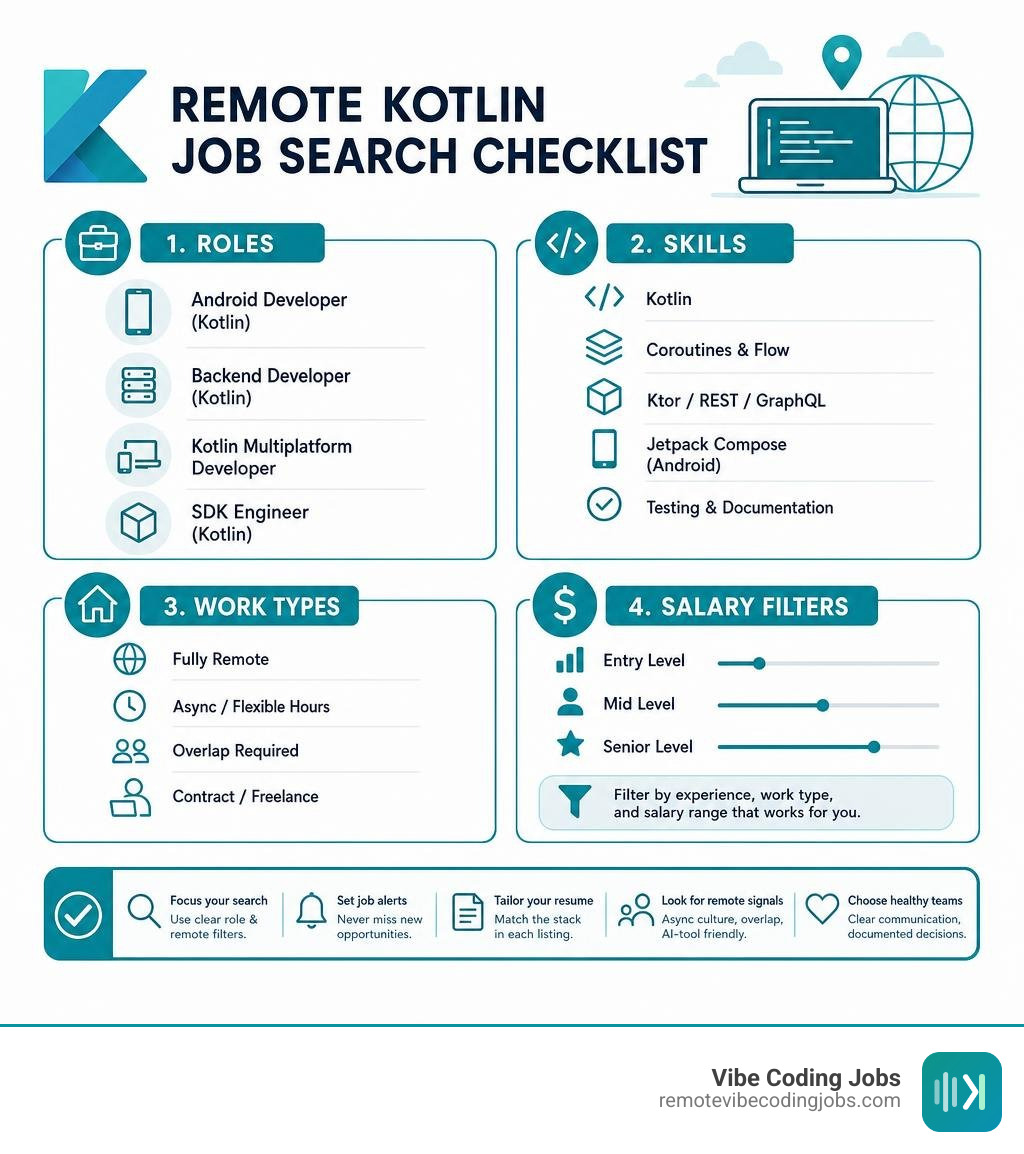
To find kotlin developer remote jobs quickly, focus your search on the role type you want – Android, backend, Kotlin Multiplatform, or SDK engineering – then filter for remote, experience level, and employment type. Set alerts on major job boards, tailor your resume to the stack in each listing, and prioritize companies that explain their remote culture, time-zone needs, and AI-tool policy.
- Android roles: Kotlin, Jetpack Compose, Coroutines, MVVM, and REST or GraphQL APIs.
- Backend and SDK roles: Kotlin, Java interoperability, Ktor, APIs, event-driven systems, testing, and clear documentation.
- Remote-ready signals: Async communication, flexible overlap hours, written decision-making, and support for tools such as GitHub Copilot or Claude Code.
The market is broad but competitive. One current U.S. job-board snapshot shows 933 remote Kotlin openings, including 678 full-time and 235 contract roles; 645 target mid-senior candidates. Globally, another jobs index lists 5,349 fresh Kotlin roles within a 90-day window. That means there are options, but generic applications get lost fast.
The best opportunities combine a solid Kotlin stack with proof that you can work independently: clean GitHub projects, useful documentation, thoughtful tests, and examples of how you use AI assistance without giving up engineering judgment. For a broader view of how AI-assisted development is changing remote work, see the history of artificial intelligence.
I am Di Su, a software engineer with 10+ years of experience building scalable, user-focused web products and improving development workflows. My background in software engineering, growth, and conversion work helps me assess kotlin developer remote jobs through both the technical requirements and the practical signals of a healthy remote team.
Must-know kotlin developer remote jobs terms:
Top High-Paying Kotlin Developer Remote Jobs Across Modern Tech Stacks
The modern engineering landscape in 2026 has expanded far beyond treating Kotlin) merely as an Android utility. While native mobile development remains a powerhouse, high-growth distributed teams actively hire Kotlin engineers across server-side microservices, distributed data pipelines, public developer tooling, and cross-platform shared codebases.
Today, hiring managers look for engineers who can leverage modern frameworks like Ktor or Spring Boot alongside asynchronous primitives. Whether building low-latency payment processors or crafting responsive mobile frontends, engineering teams value concise syntax, type safety, and seamless JVM interoperability.
| Role Specialization | Primary Tech Stack | Experience Benchmark | Typical Compensation Range |
|---|---|---|---|
| Android Product Engineer | Kotlin, Jetpack Compose, Coroutines, Flow, MVVM | 3–5+ Years | $110,000 – $145,000 / yr |
| Backend Distributed Systems | Kotlin, Ktor, Spring Boot, Event Sourcing, Kafka | 4–6+ Years | €55,000 – €75,000 / yr (EU) / $125k–$160k (US) |
| SDK & Developer Tools Engineer | Kotlin Multiplatform, Coroutine-native APIs, Gradle | 5+ Years | $130,000 – $170,000 / yr + Equity |
| AI Systems / Hybrid App Developer | Kotlin, REST/GraphQL, Claude Code, GitHub Copilot | 3–5+ Years | $120,000 – $145,000 / yr |
Navigating Backend and SDK Kotlin Developer Remote Jobs
Server-side Kotlin has become a top contender for teams looking to avoid Java verbosity while retaining JVM performance and reliability. Modern backend roles frequently focus on event-driven architectures, domain-driven design, and custom event sourcing systems.
In distributed backend teams, engineers routinely design asynchronous pipelines using Kotlin Coroutines, manage complex state transitions, and integrate external payment or insurance infrastructure via GraphQL and REST endpoints. If you want to explore the wider ecosystem of infrastructure and API engineering, check out active backend developer career opportunities across various modern stacks.
SDK development represents another high-leverage niche. Platforms building Backend-as-a-Service (BaaS) or developer infrastructure hire Kotlin engineers to design developer-facing libraries. These roles demand strict attention to idiomatic API design:
- Designing coroutine-native APIs that feel natural and intuitive to external developers.
- Writing bulletproof documentation, onboarding samples, and multiplatform integrations.
- Actively triaging issues in public repositories and collaborating asynchronously across international communities.
Mobile Architecture and Multiplatform Specializations
Native Android remains the foundation of mobile Kotlin hiring. Engineering organizations seeking senior talent emphasize reactive programming patterns, clean MVVM architectures, and modern UI toolkits like Jetpack Compose over legacy XML layouts.
At the same time, Kotlin Multiplatform (KMP) has transitioned into production-ready adoption. Teams now share business logic, networking layers, and validation algorithms between iOS and Android without compromising native platform performance.
Understanding background processing, robust memory-leak mitigation, and state lifecycle management is essential. For engineers assessing current mobile compensation tiers, reviewing benchmarked mobile developer salaries provides realistic expectations across various regional markets.
Essential Skills and Compensation Trends for Remote Kotlin Roles

Compensation for remote Kotlin professionals reflects both technical specialization and experience level. In the United States, mid-to-senior Kotlin roles consistently command annual base salaries between $120,000 and $145,000, with specialized infrastructure and SDK architects reaching higher brackets. In Europe, fully remote backend roles using modern event-sourcing and Ktor microservices regularly offer monthly rates up to €5,000 alongside equity participation (ESOP).
Beyond raw coding ability, successful remote engineers master asynchronous communication, proactive documentation, and AI-accelerated workflows. Discovering actionable strategies on how to land a remote vibe coding job can help you stand out when presenting both technical and async-first collaboration capabilities.
Key Technical Skills That Win Kotlin Developer Remote Jobs
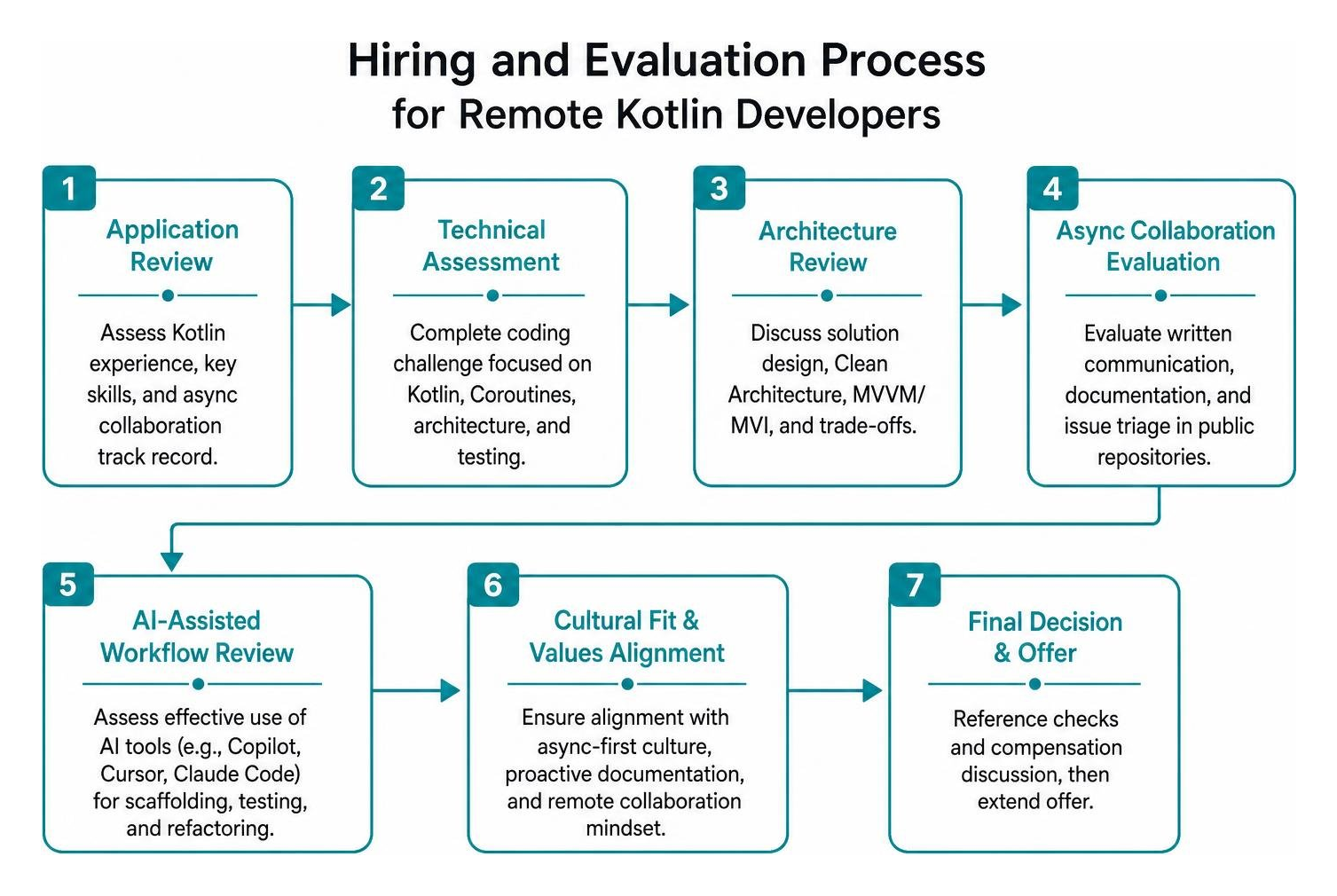
Hiring managers in async-first environments evaluate technical depth alongside execution speed. The core proficiencies modern job postings require include:
- Kotlin Concurrency: Mastering Coroutines, Structured Concurrency, and Flow for high-throughput, non-blocking I/O.
- Architecture & Testing: Applying Clean Architecture, MVVM or MVI patterns, and writing meaningful unit and integration tests.
- Ecosystem Interoperability: Navigating JVM dependencies, debugging legacy Java frameworks, and configuring build systems using Gradle.
- AI-Assisted Development: Seamlessly integrating tools like GitHub Copilot, Cursor, or Claude Code into your daily workflow for accelerated scaffolding, test generation, and refactoring.
Embracing these automated tooling workflows opens doors to modern vibe coding career opportunities, where engineers focus on high-level architecture while leveraging AI to handle repetitive boilerplate.
Navigating Full-Time vs. Contract Remote Work
The split in remote Kotlin hiring includes a mix of long-term stability and flexible engagements. For instance, current market data reveals approximately 678 full-time positions compared to 235 contract roles across active U.S. job boards.
When evaluating an offer, consider the complete compensation and operational structure:
- Full-Time Employment: Offers regular salary stability, healthcare coverage, paid parental leave, co-working space stipends, hardware allowances, and equity packages.
- Contract & Freelance: Delivers higher hourly or project billing flexibility, autonomy across client bases, and geographic freedom, but requires self-managed taxes, healthcare, and software licensing.
- Async Collaboration Requirements: Ensure the team’s core overlap requirements (e.g., 2–4 hours across specific time zones) align with your ideal schedule.
How to Build a Standout Portfolio and Ace Remote Hiring Processes

In a remote hiring market where hundreds of resumes can land on a recruiter’s desk, generic credentials are not enough. Distributed engineering leads look for concrete evidence that you can write clean, maintainable code independently.
To make your application stand out:
- Showcase Real Production Patterns: Publish a clean, well-tested repository using Kotlin Coroutines, Jetpack Compose, or Ktor. Implement proper separation of concerns rather than simple tutorial code.
- Demonstrate Clear Technical Writing: Include clear README files, API usage documentation, and architecture decision records (ADRs) explaining trade-offs.
- Highlight Modern Tooling: Share examples of how you scaffold features, document endpoints, or generate automated test suites using AI coding assistants.
Planning your long-term progression using a structured vibe coding remote career path will help you transition smoothly from mid-level implementation tasks to high-impact architectural leadership.
Frequently Asked Questions about Remote Kotlin Careers
What are the standard salary ranges for remote Kotlin developers in 2026?
In the United States, mid-to-senior remote Kotlin engineers typically earn between $120,000 and $145,000 annually. European remote roles often range from €45,000 to €65,000+ per year depending on experience, with many startups offering additional equity incentives and tech allowances.
How is AI-assisted development shaping remote Kotlin workflows?
Modern engineering teams use AI tools like Claude Code and GitHub Copilot to accelerate routine development tasks, including generating unit tests, writing API boilerplate, and drafting technical documentation. This shift allows developers to focus on architecture, domain logic, and clean code review.
Where are the best platforms to find curated remote Kotlin openings?
The most reliable way to find verified openings is through curated remote job directories, verified company talent boards, and developer-focused platforms that filter specifically for async-first cultures and modern technical stacks.
Conclusion
The market for remote Kotlin talent continues to reward developers who combine deep language expertise with modern development practices. By focusing on clean architectural design, async-first collaboration, and AI-accelerated workflows, you can position yourself for high-impact roles globally.
To accelerate your search, explore curated remote backend developer jobs and find distributed teams building next-generation software today.