
AI Tools Are Rewriting the Rules of Coding Careers
AI tools coding careers are no longer a niche conversation — they’re the fastest-moving shift in the tech job market right now.
Here’s what you need to know at a glance:
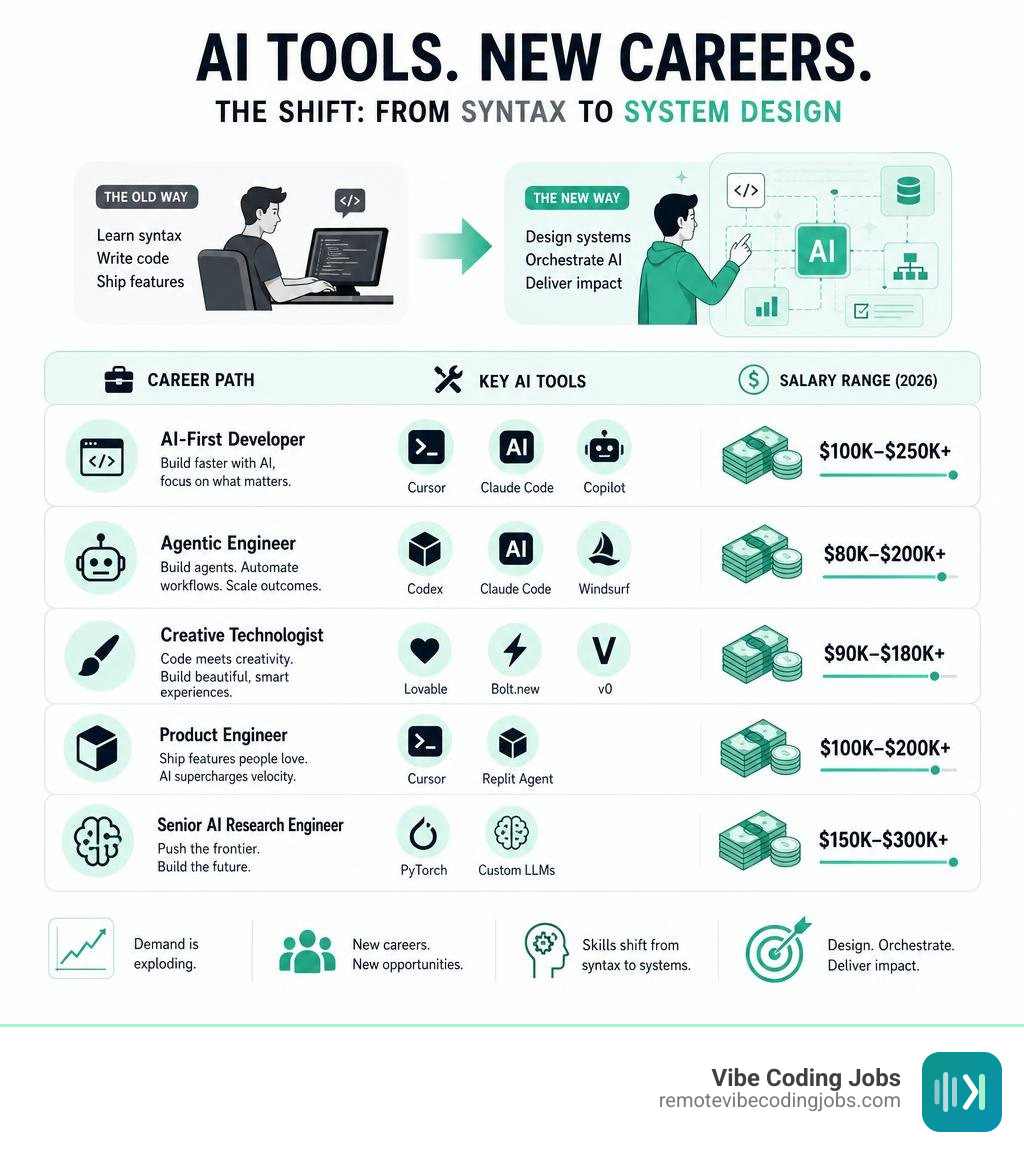
| Career Path | Key AI Tools | Salary Range (2026) |
|---|---|---|
| AI-First Developer | Cursor, Claude Code, Copilot | $100K–$250K+ |
| Agentic Engineer | Codex, Claude Code, Windsurf | $80K–$200K+ |
| Creative Technologist | Lovable, Bolt.new, v0 | $90K–$180K+ |
| Product Engineer | Cursor, Replit Agent | $100K–$200K+ |
| Senior AI Research Engineer | PyTorch, custom LLMs | $150K–$300K+ |
The old model was simple: learn syntax, write code, ship features. That model is breaking down fast.
Today, a viral Reddit thread from a senior developer captures the tension perfectly — junior devs can ship features in hours using AI tools, yet freeze completely when something breaks. The tools are powerful. But the career landscape around them is more complex than it looks.
The good news? Demand is exploding. The software development market is projected to grow from $24 billion in 2024 to $61 billion by 2029. CIOs plan to increase software spending by 3.9% in 2026 — more than any other tech category. And developers who know how to work with AI are commanding salaries that would have seemed extraordinary just three years ago.
This guide breaks down exactly what these new careers look like, what skills they require, and how to land one.
I’m Dominic Zijlstra, cofounder of Adaptify.ai and a data scientist and DevOps engineer with over a decade of experience building automated systems — experience that sits right at the intersection of AI tools coding careers. I’ve watched this shift happen from the inside, and I’ll show you what’s actually working.
Know your ai tools coding careers terms:
The Rise of Vibe Coding and AI-Native Engineering
The term “vibe coding” started as a tech meme, but in July 2026, it represents a multi-billion dollar shift in software development.
To understand why this is reshaping ai tools coding careers, we first have to answer: What is Vibe Coding?
Vibe coding is an informal term for building software by describing the “vibe” or end goal of a program in natural language, leaving the execution of syntax, package installations, and boilerplate writing to generative AI. This is a massive departure when we look at Vibe Coding vs Traditional Coding. Instead of manual typing, developers act as directors, system architects, and quality controllers.
Many developers ask: The Truth About AI and Coding. Is Your Job Safe? The answer is yes, but only if your skills evolve. AI is not replacing programmers; it is replacing the tedious, repetitive parts of programming. This shift is causing a dramatic split in how software is engineered:
| Traditional Software Engineering | Vibe Coding & AI-Native Engineering |
|---|---|
| Hand-writing syntax line-by-line | Orchestrating parallel AI agents to write blocks of code |
| Manual debugging via Stack Overflow | Interactive prompt-based debugging and error-log feeding |
| Heavy focus on memorizing APIs and syntax rules | Heavy focus on system architecture, product logic, and security |
| Slow prototyping and long iteration cycles | Shipping full MVPs in a weekend using natural language |
This evolution means developers are moving away from being “syntax typists” and shifting toward higher-leverage roles. By offloading boilerplate code to AI, we are seeing productivity spikes of 21% to 40% for junior developers. However, this speed comes with a warning: over-reliance on AI without understanding core programming concepts can lead to a dangerous debugging gap, where developers can ship features quickly but freeze when the code breaks.
Essential AI Tools Coding Careers Depend On
To build a successful career in this new era, you must master the specialized environments that power AI-native development.
At the forefront is Cursor, a fork of VS Code that has revolutionized how developers interact with their codebases. Rather than treating AI as a side-panel chatbot, Cursor embeds AI directly into your editor, allowing you to edit multiple files simultaneously, auto-generate code based on your entire workspace context, and instantly spot errors.
Another massive leap forward is the release of Claude Code by Anthropic | AI Coding Agent, Terminal, IDE. This tool brings agentic capabilities directly to your terminal. It doesn’t just suggest code; it can actively run terminal commands, execute test suites, read local documentation, and even self-correct its errors before presenting you with a final pull request.
To stay competitive, you should explore a variety of AI Coding Tools for Vibe Coding to find the workflow that fits your project. Whether you are using visual app builders like Lovable and Bolt.new for frontend design, or terminal-based agents like Aider and Claude Code, knowing how to combine these tools is the ultimate modern developer superpower.
How Agentic Engineering is Redefining Developer Roles
The industry is rapidly transitioning from simple autocomplete suggestions to fully autonomous agentic workflows. To understand this transition, we must look at Agentic Engineering What It Is How to Thrive in 2024 and how it has matured into the standard practice of 2026.
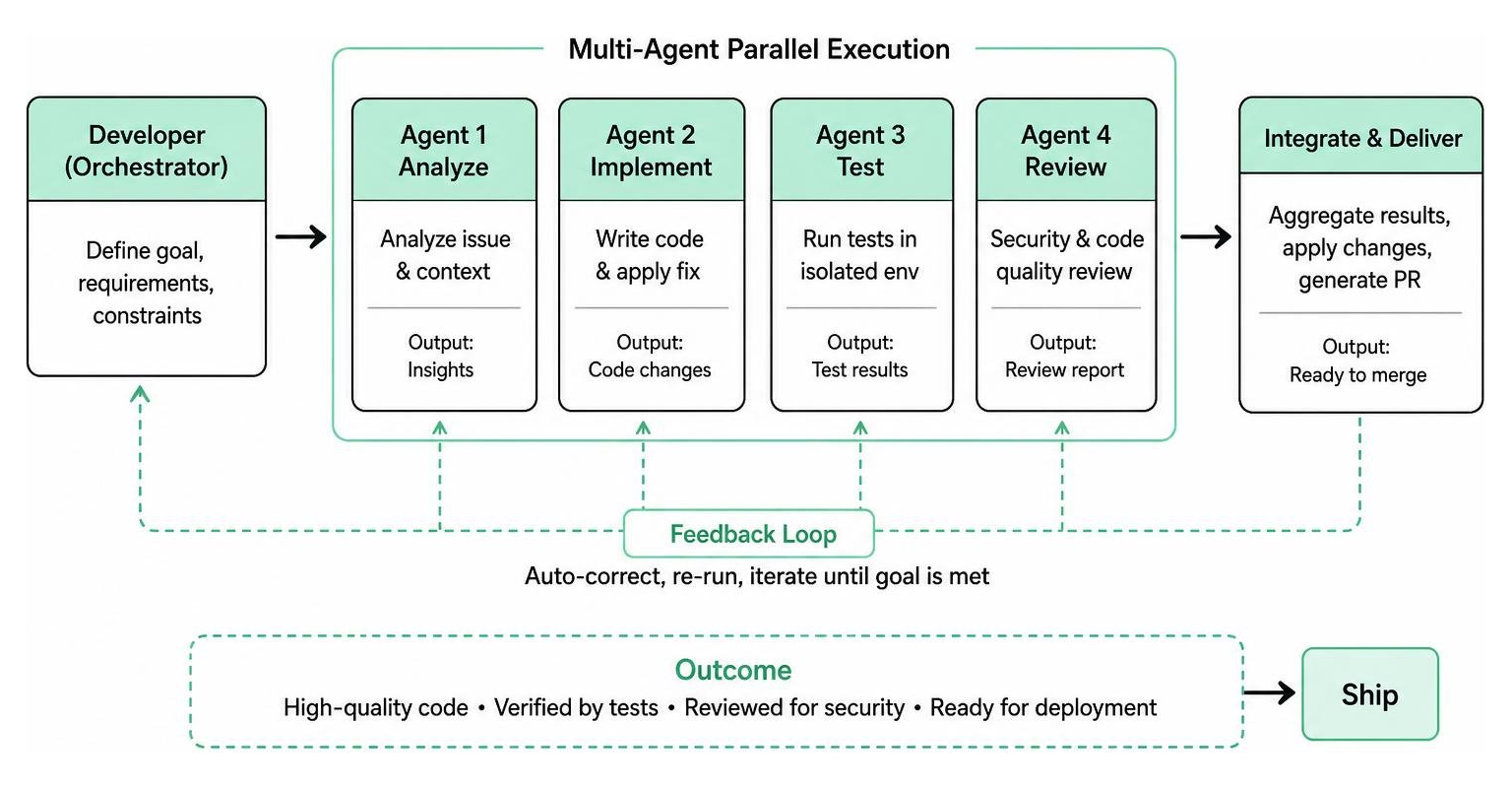
In an agentic workflow, a developer does not write code block by block. Instead, they define high-level requirements and let a fleet of specialized subagents work in parallel. For example, when deploying Codex in ChatGPT | AI Coding Agents for Software Engineering | OpenAI, teams are utilizing multi-agent systems designed to handle end-to-end engineering tasks.
One agent might analyze a GitHub issue, a second agent writes the fix, a third agent spins up a local cloud environment to run tests, and a fourth agent reviews the code for security vulnerabilities. This parallel orchestration allows small teams to ship complex software architectures in a single weekend.
Case Study: AI Tools Coding Careers at NVIDIA
To understand how the world’s most valuable technology companies are building and leveraging these tools, let’s take a closer look at NVIDIA.
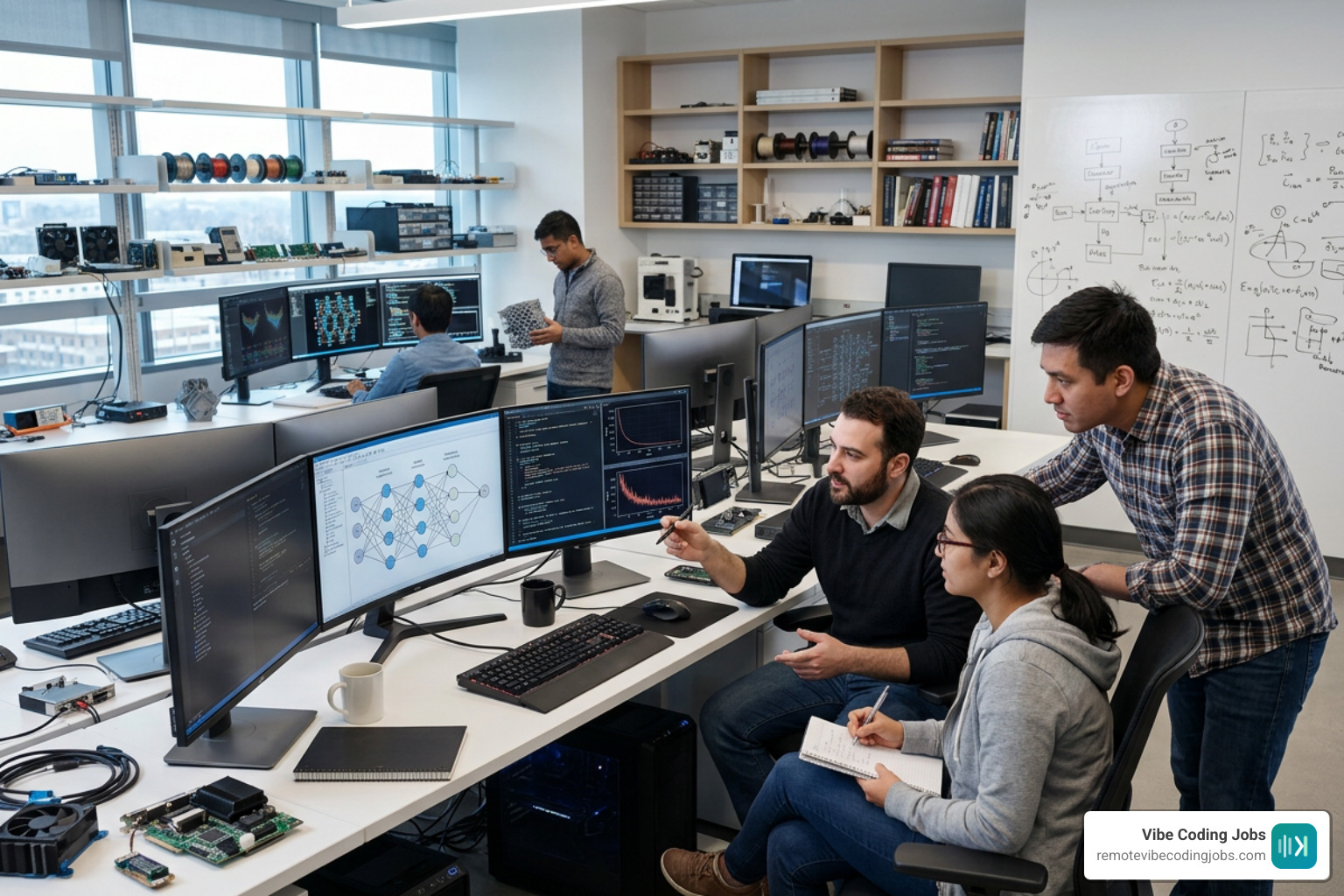
NVIDIA is not just a hardware giant; they are a primary driver of the software infrastructure powering modern AI. Within their teams, the role of a Senior Research Engineer in AI Coding Tools is at the cutting edge of how software will be written in the future.
Day-to-Day of a Senior Research Engineer in AI Coding Tools
What does a Senior Research Engineer in AI Coding Tools at NVIDIA actually do? Their day-to-day work focuses on pushing the boundaries of machine learning models specialized in code generation, translation, and optimization.
Unlike developers who simply use AI tools, these engineers build them. A typical day involves:
- Model Training and Fine-Tuning: Designing and training large language models (LLMs) on massive, curated datasets of high-quality source code.
- Code Generation Research: Investigating new neural network architectures that can reason through complex system dependencies, not just predict the next token of code.
- Evaluation and Benchmarking: Creating rigorous pipelines to test AI model outputs for security, performance, and compliance with strict coding standards.
- System Integration: Collaborating with hardware teams to optimize model inference on NVIDIA’s latest GPU architectures, ensuring coding assistants can respond in milliseconds.
Skills and Experience Required for NVIDIA AI Roles
Securing a role at this level requires a deep, academic, and practical understanding of both software engineering and machine learning.
Key requirements typically include:
- Deep Learning Frameworks: Mastery of PyTorch or TensorFlow to build and train neural network models.
- Systems Architecture: Experience in distributed computing, GPU acceleration, and low-latency system design.
- Programming Foundations: Exceptional proficiency in C++ and Python, with a strong grasp of data structures, algorithms, and compiler design.
- Research Contributions: A track record of publishing papers at top-tier AI conferences (like NeurIPS, ICML, or CVPR) or building significant open-source AI developer tools.
If you are looking to build the foundational skills required for these elite positions, check out our guide on AI-Assisted Development Career Opportunities Growth Certifications to plan your educational path.
Navigating NVIDIA’s Career Site, Talent Network, and Privacy Policies
For candidates interested in pursuing ai tools coding careers at NVIDIA, the company provides a robust talent acquisition infrastructure. Their career portal categorizes roles by job families (such as Deep Learning, Software Engineering, and Research) and offers various time types, including full-time, part-time, and internship positions.
To maximize your chances:
- Join the NVIDIA Talent Network: By submitting your profile to their talent network, you receive personalized job recommendations as soon as new AI coding tool roles open up.
- Leverage Career Resources: NVIDIA regularly publishes insights into their company culture, highlighting their flat organizational structure and collaborative environment where research engineers work directly with product teams.
- Understand Applicant Privacy: NVIDIA maintains a transparent applicant privacy policy, outlining exactly how your resume, portfolio, and assessment data are secured and processed during the evaluation phase.
Mapping Your Career Path in the AI Era
The job market of 2026 demands a proactive approach to career planning. If you are ready to transition into this space, we recommend checking out the comprehensive AI-Assisted Development Career Guide to understand how your existing skills map to new market demands.
To automate and personalize this process, developers are leveraging open-source tools like ayush488-glitch/ai-career-planner-skill . This custom Claude Code skill walks you through an interactive intake session to analyze your current technical baseline and generate a personalized, 6-month roadmap to land a high-paying AI engineering role.
Emerging Job Categories for AI Tools Coding Careers
As companies realize the massive efficiency gains of AI-assisted development, a whole new suite of job titles has emerged. These roles did not exist a few years ago, but today they represent some of the highest-paying opportunities in tech.
To explore these roles in depth, read about the AI Coding Jobs Growth Potential. Some of the most prominent emerging categories include:
- AI-First Developer: A software engineer who natively integrates tools like Cursor and Claude Code into their daily workflow. They focus on rapid prototyping, system integration, and managing AI context windows to ship software 5x faster than traditional developers.
- Creative Technologist: A hybrid role bridging the gap between design and code. Using tools like Lovable, v0, and Bolt.new, Creative Technologists build beautiful, functional prototypes directly from design concepts, bypassing traditional hand-off bottlenecks.
- Agentic Engineer: A specialist who designs, configures, and maintains autonomous multi-agent systems. They build the pipelines that allow AI agents to safely read codebases, run tests, and deploy features with minimal human intervention.
Optimizing Your Developer Resume and Portfolio for AI-Native Companies
Applying to modern, AI-native companies requires a modern approach to your application materials. Traditional resumes that simply list programming languages are no longer enough. AI-driven Applicant Tracking Systems (ATS) and forward-thinking hiring managers want to see how you leverage AI to solve business problems.
First, structure your achievements using frameworks that quantify your impact. Instead of writing “Wrote Python code,” write “Leveraged AI coding assistants to refactor legacy systems, reducing technical debt by 35% and accelerating feature delivery by 3x.” For a step-by-step breakdown of this process, read our Developer Resume for AI Native Companies The Ultimate Guide.
Second, your portfolio must showcase live, working applications. Static code in a GitHub repository is hard to evaluate; interactive, fully deployed projects built with AI assistance prove you know how to ship. Learn how to showcase your work effectively with our Build a Developer Portfolio with AI Tools 2026 Guide.
Finally, you can use advanced open-source career tools to optimize your search. For example, CraxCurl/AscendIQ is an AI-powered career operating system that uses parallel agents to analyze your resume, identify skill gaps, recommend personalized LeetCode problems, and optimize your application materials for ATS compatibility.
Frequently Asked Questions about AI Tools Coding Careers
Will AI tools replace human software developers?
No. While AI tools are incredibly powerful, they are shifting the bottleneck of software engineering rather than replacing the human element. According to research on How AI Coding Is Creating Jobs, the dramatic reduction in the cost and time required to write code is prompting organizations to build more products and tackle long-standing technical debt.
Furthermore, the flood of AI-generated code is creating massive downstream bottlenecks in code review, system integration, testing, security, and verification. Human developers are more critical than ever to act as curators, reviewers, and strategic problem-solvers who ensure the safety and reliability of these systems.
What is vibe coding and do I need a CS degree?
Vibe coding is the process of building software using natural language prompts and AI assistants to handle the underlying code syntax. Because these tools lower the barrier to entry, many companies are prioritizing practical building skills, a strong portfolio of AI-built projects, and excellent prompt engineering over formal credentials.
However, having a solid understanding of programming fundamentals is a massive advantage. Knowing how variables, loops, data structures, and APIs work allows you to write better prompts, spot AI hallucinations, and debug issues when the AI-generated code breaks. If you are just starting out, our guide on How to Vibe Coding AI Tools Beginner will show you how to build this essential foundation.
How can I use AI tools to automate my job search?
You can manage your entire job search as an operational pipeline directly from your development environment. By using open-source projects like karthikrshet/Career-Agents , you can integrate over 140 specialized AI career agents into your IDE via the Model Context Protocol (MCP).
These agents can run ATS resume reviews, generate personalized cover letters, run mock interview simulations, and organize your application pipeline without you ever having to leave your code editor.
Conclusion
The landscape of software development has changed forever. The rise of ai tools coding careers is opening up wild, creative, and highly lucrative opportunities for developers who are ready to evolve. By embracing these tools, you can transition from a line-by-line coder to a high-leverage software architect.
At RemoteVibeCodingJobs, we are dedicated to helping you navigate this transition. We curate daily listings of remote, AI-assisted “vibe coding” roles at forward-thinking, async-first companies that actively encourage the use of modern AI tools.

Ready to take the next step in your career? Learn more about async-first remote developer jobs and find your next opportunity on our job board today.