
Why Bolt Threads Careers Matter for Sustainable-Tech Talent
Bolt Threads careers offer a path into sustainable materials for people who can combine science, engineering, data, and product thinking. The strongest fit is not limited to lab scientists: computational biologists, materials engineers, process and quality specialists, and software builders can all help turn nature-inspired materials into products that brands can use.
Bolt Threads is known for work in bio-fabricated materials, including Mylo and b-silk. Its story shows where sustainable innovation is heading: away from purely traditional manufacturing and toward teams that test, model, scale, and validate new materials with real-world performance requirements.
For tech-minded applicants, the practical lesson is simple: build evidence that you can work across disciplines. A portfolio that shows data analysis, automation, experimental workflows, or clear async documentation can be as valuable as knowing the vocabulary of biomaterials.
I am Di Su, a software engineer and growth-focused builder with more than a decade of experience creating scalable, user-centered tools and digital products. In this guide to Bolt Threads careers, I will connect that practical tech perspective with the skills needed to contribute to sustainable-materials teams.
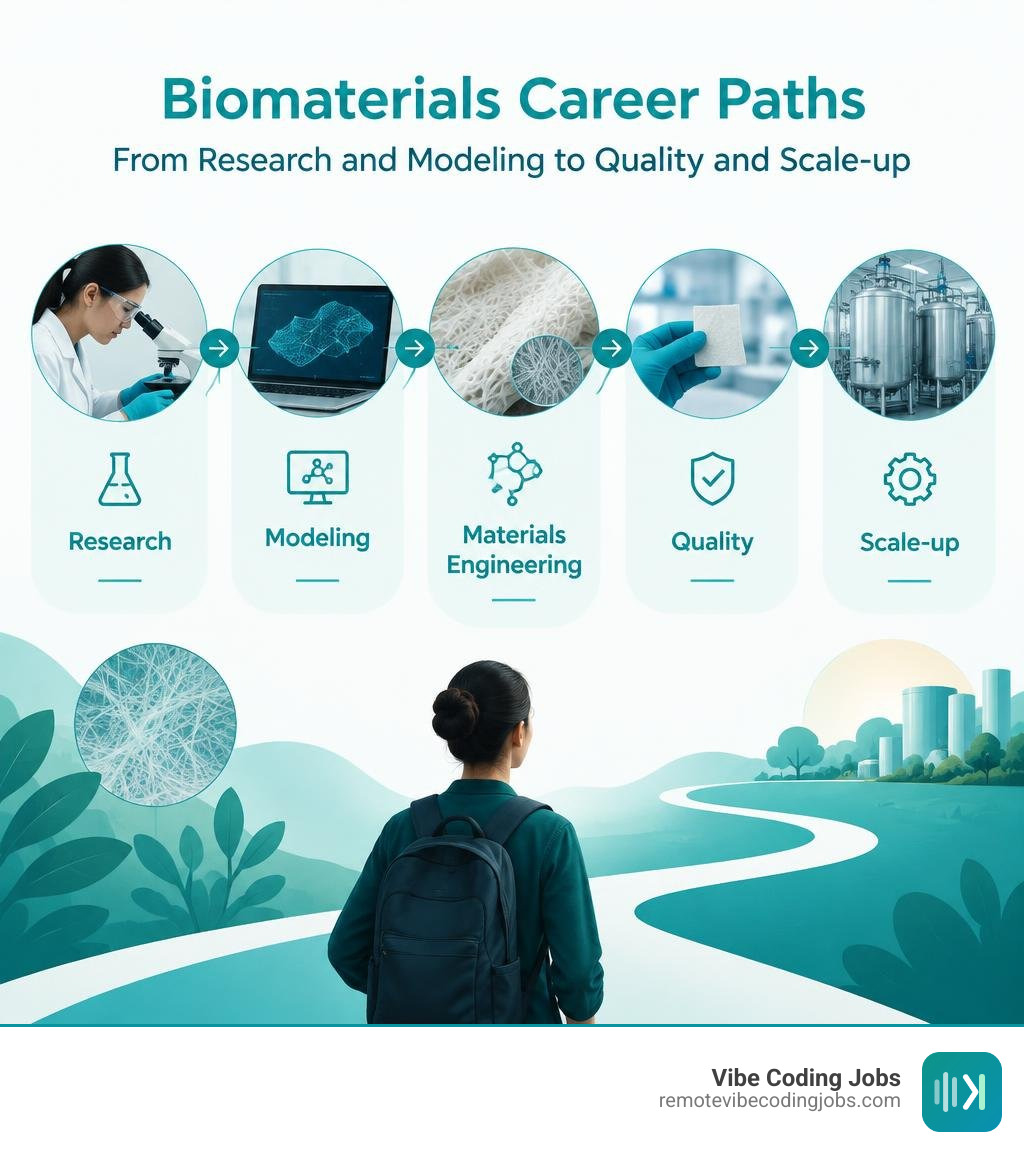
Explore more about bolt threads careers:
The Evolution of Bolt Threads Careers in Biomaterials and Tech
The biomaterials landscape has undergone a massive transformation over the past decade. Where material science was once confined to petrochemical synthesis and slow, manual laboratory iterations, companies at the intersection of synthetic biology and advanced computing have pioneered an entirely new sector. In this modern ecosystem, bio-fabrication relies as much on data infrastructure, computational modeling, and precision engineering as it does on organic chemistry.
Pioneering breakthroughs like mycelium-based alternatives (Mylo™) and bio-engineered polypeptide proteins (b-silk™) proved that high-performance materials could be derived directly from biological processes. Developing these innovations at commercial scale requires an evolving organizational culture that bridges diverse domains. Researching Bolt Threads organizational culture on Built In shows how collaborative hubs, such as those established in Emeryville and Europe, rely on cross-disciplinary talent where biologists, automation engineers, and software architects collaborate closely.
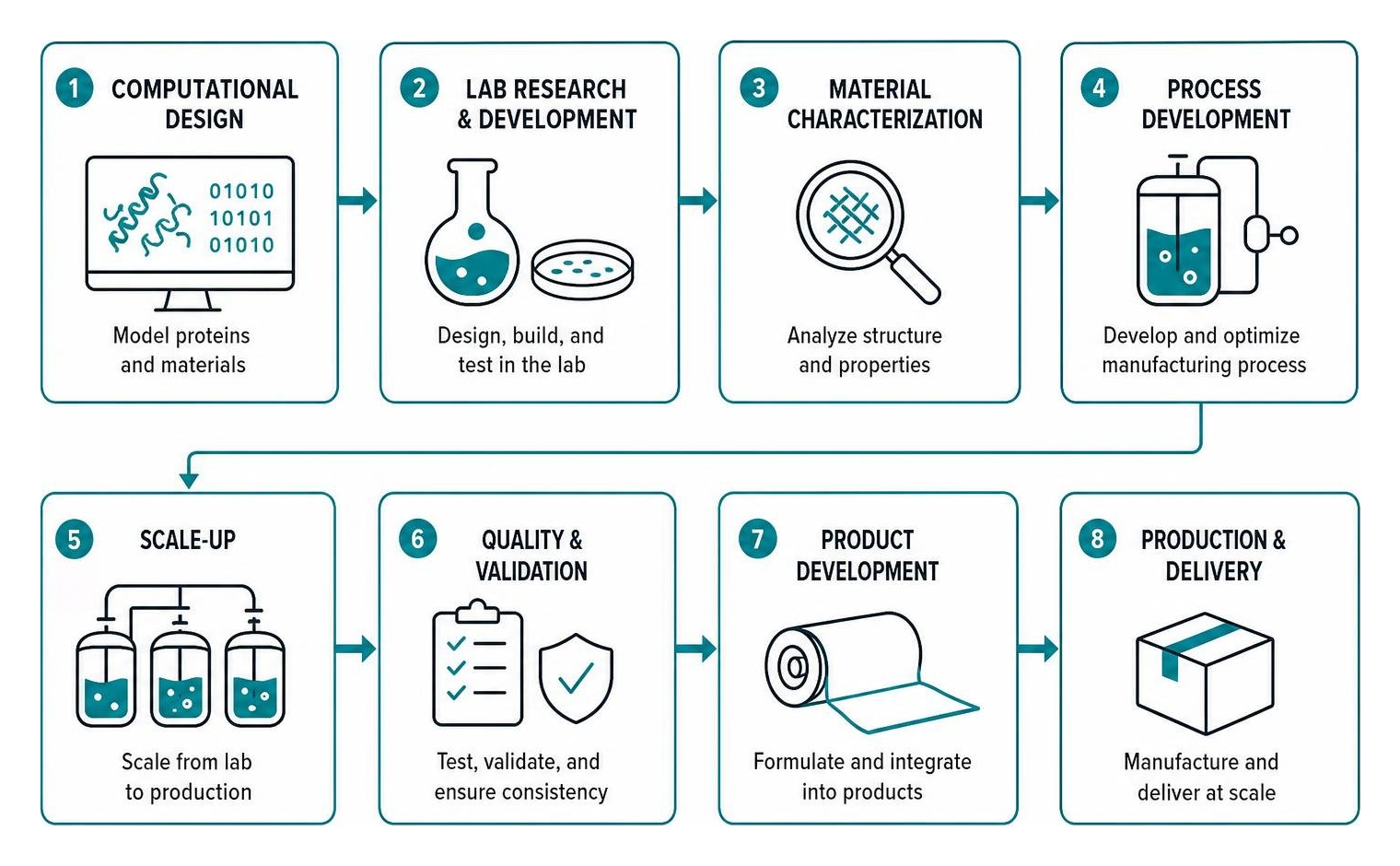
This evolution reflects broader shifts across technical hiring. Material innovation is no longer limited to wet-lab benches; it requires engineers capable of building scalable pipelines, analyzing large sensor datasets from bioreactors, and maintaining rigorous mechanical validation frameworks.
Core Engineering Roles in Bolt Threads Careers
Scaling bio-fabricated proteins into commercial consumer goods requires several core technical disciplines working in synchrony:
- Fermentation & Bioprocess Engineers: These specialists design and monitor large-scale bioreactor ecosystems. They optimize environmental parameters—such as dissolved oxygen, nutrient feeding schedules, pH levels, and agitation speeds—to ensure consistent protein yield.
- Protein & Polymer Chemists: Tasked with molecular design, these scientists analyze structural protein matrices to ensure that synthesized polymers exhibit required tensile elasticity, thermal resistance, and chemical stability.
- Quality Assurance & Materials Metrology: High-performance textiles must withstand real-world wear. Quality engineers run mechanical stress analyses, abrasion resistance tests, and chemical degradation profiles to validate product consistency across production batches.
- Process Scaling & Infrastructure Architects: Translating a successful benchtop experiment into metric tons of uniform material demands robust process engineering, automated control systems, and data-logging tools.
Securing these roles requires technical capability combined with genuine mission alignment. As highlighted in sustainable material mission insights, leading bio-tech organizations look for professionals who possess deep domain rigor and thrive in fast-scaling environments.
How Modern AI Tools Transform Bolt Threads Careers
The integration of artificial intelligence and automated tooling has shortened research-and-development cycles across the biotechnology sector. Where scientists once spent months evaluating protein structures manually, machine learning models now simulate molecular dynamics, predict folding structures, and screen candidate formulations in minutes.
Computational workflows also streamline experimental execution. Automated pipetting platforms, computer-vision quality scanners, and algorithmic strain-engineering suites generate massive datasets that require skilled analysis. Professionals who combine software engineering with biological data literacy are leading this transition.
Mastering these hybrid workflows aligns directly with adopting modern career path remote strategies, allowing distributed engineers to manage computational infrastructure, build automated data pipelines, and deploy predictive models from anywhere.
Essential Skills and Technical Standards in Modern Material Engineering

Bio-engineered fibers must meet the same exacting physical standards as traditional materials. Whether destined for high-end fashion, automotive upholstery, or technical gear, lab-grown polymers must adhere to measurable performance criteria:
| Parameter | Traditional Material Testing | Bio-Engineered Protein Validation | Modern Computational Tooling |
|---|---|---|---|
| Tensile Strength | Standard universal testing machine (ASTM D5034) | Micro-tensile load cells on single-filament arrays | Finite Element Analysis (FEA) simulations |
| Structural Uniformity | Visual inspection and manual caliper checks | Scanning Electron Microscopy (SEM) cross-sections | Automated computer-vision flaw detection |
| Thermal Stability | Differential Scanning Calorimetry (DSC) | Thermogravimetric Analysis (TGA) degradation curves | Predictive thermodynamic molecular modeling |
| Batch Consistency | Gravimetric sampling across output rolls | Spectroscopic molecular weight verification | Real-time IoT sensor telemetry in fermentation |
Technical Rigor Across High-Stakes Applications
Material standards in synthetic biology mirror the precision expected across mechanical and structural engineering fields. For instance, in aviation engine overhaul—such as the procedures documented in the Continental Aircraft Engine Overhaul Manual for C75, C85, C90, and O-200 engines—every component must satisfy exact torque tolerances and wear limits to ensure operational safety. Similarly, structural engineering standards outlined in historic and modern building codes (such as the UBC 1976 masonry and structural guidelines) require exact material tolerances to prevent catastrophic mechanical failure.
In bio-materials engineering, while the failure modes differ, the demand for precision remains identical. Engineers must verify that bio-fabricated matrices meet strict dimensional tolerances, maintain tear resistance under high mechanical stress, and resist environmental degradation over multi-year operational lifespans.
Bridging Biotech with Async and Computational Workflows
The modern engineering stack relies heavily on asynchronous collaboration, distributed cloud compute, and transparent documentation. While physical fermentation runs in specialized laboratories, the upstream modeling, telemetry analysis, and workflow automation frequently occur across distributed engineering teams.
Building structured, reproducible tools is one of the best ways to stand out in this field. Showcasing your capabilities through clear portfolio development projects—such as creating data-processing scripts, designing API pipelines for sensor data, or training machine learning models on open-source biological datasets—proves your ability to deliver production-grade results in async-first environments.
Navigating Career Paths at the Intersection of Tech and Sustainable Innovation

Transitioning into sustainable technology requires a balanced skill set combining technical domain knowledge with modern development practices. Today’s engineering landscape values builders who can move smoothly between data analysis, rapid prototyping, and production deployment.
For remote-first engineers, bio-tech and sustainable materials offer specialized career opportunities, including:
- Bioinformatics & Data Pipeline Engineering: Developing cloud infrastructure to ingest, clean, and process high-throughput genomic and proteomic sequencing data.
- Lab Automation & IoT Systems: Programming automated robotics, liquid handlers, and environmental sensors to run experimental batches with minimal manual intervention.
- Simulation & Computational Modeling: Running digital twin simulations of bioreactor fluid dynamics and testing physical stress limits on novel polymer networks.
To identify opportunities that match your technical stack and preferred working style, reviewing a dedicated remote tech recruitment guide can help you navigate modern hiring loops, portfolio expectations, and asynchronous evaluation processes.
Cultivating Impact-Driven Innovation Mindsets
Excelling at the forefront of material innovation requires specific operating principles:
- Extreme Ownership: Taking complete responsibility for features, pipelines, and experimental outcomes from initial architecture to final delivery.
- Bias for Momentum: Rapidly prototyping minimum viable models to validate hypotheses rather than waiting for perfect experimental conditions.
- Iterative Systems Thinking: Treating lab workflows, data pipelines, and production runs as interconnected, modular systems that require continuous optimization.
Frequently Asked Questions About Sustainable Tech Careers
What background is needed to enter biomaterials and biotech engineering?
Candidates typically come from backgrounds in biochemistry, chemical engineering, materials science, or computational biology. However, as the industry increasingly relies on automation and data analysis, there is substantial demand for software engineers, data scientists, and DevOps specialists with experience in scalable cloud infrastructure and numerical computing.
How do AI tools accelerate sustainable material prototyping?
AI models accelerate development by predicting how changes in amino acid sequences impact a protein’s physical and mechanical properties. This computational screening eliminates unviable candidates before wet-lab synthesis, cutting research timelines and material costs.
Are remote and async opportunities common in material technology companies?
Yes. While wet-lab operators and hardware technicians work on-site, computational biology, data engineering, software development, product management, and regulatory compliance roles are frequently structured around remote and asynchronous teams.
Conclusion
The intersection of synthetic biology, materials engineering, and modern computational tooling represents one of the most promising frontiers for technical talent. Building sustainable alternatives to petroleum-based materials requires diverse engineering skill sets working across physical laboratories and cloud-based software architectures.
As organizations scale their technical teams, candidates who combine scientific curiosity with rapid, AI-assisted development tools are well-positioned to drive meaningful innovation. To find your next role in distributed, cutting-edge software and engineering, explore innovative remote roles with the Bolt AI Tool and discover opportunities across forward-thinking technical teams.