
Why Remote Async Culture Fit Makes or Breaks Your Remote Career
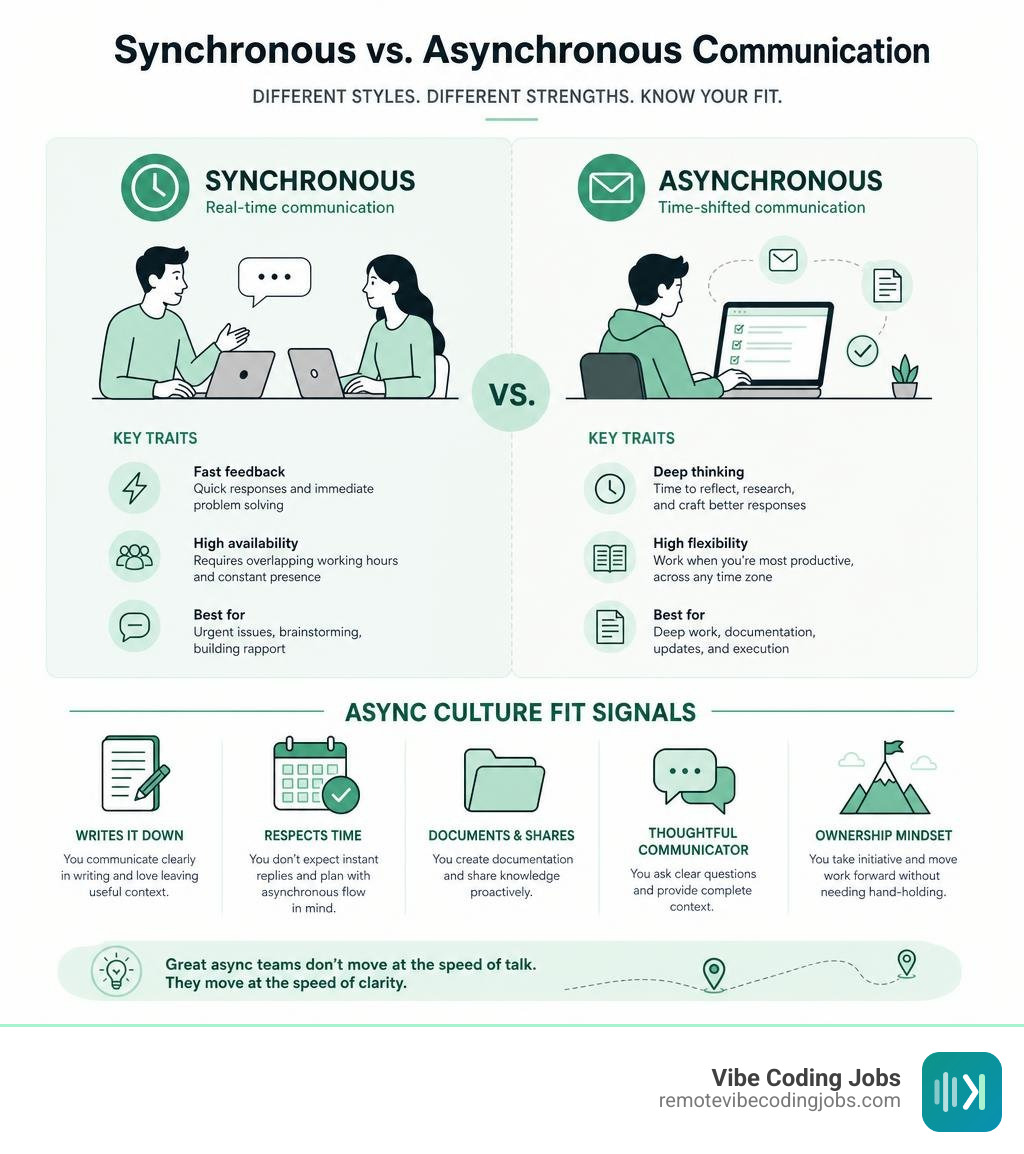
Remote async culture fit is how well a person’s working style, communication habits, and values match a team that operates without requiring everyone to be online at the same time.
Here’s a quick breakdown of what that actually means in practice:
- Remote = where you work (not in a shared office)
- Async = how you work (not at the same time as your teammates)
- Culture fit = whether your defaults — how you write, document, and make decisions — match the team’s norms
So remote async culture fit is the overlap of all three. You can work from home and still be a terrible fit for an async team if you need constant real-time feedback, hate writing things down, or go quiet when you’re blocked.
The numbers make the demand clear. 94% of workers want flexibility in when they work, and 52% want their company to be fully asynchronous-first. Yet the average employee still sits through 62 meetings a month — and considers roughly half of them a waste of time.
Something isn’t adding up.
Most companies offer “remote” work. Far fewer have actually built an async culture. And even fewer hire people who genuinely fit into one. That gap is where remote careers quietly succeed or silently fall apart.
I’m Dominic Zijlstra, cofounder of Adaptify.ai and founder of Traverse.link, with a background in data science, DevOps, and distributed systems engineering — roles where remote async culture fit is the difference between shipping fast and getting stuck in a loop of Slack pings and unnecessary standups. In this guide, I’ll show you exactly how to identify, evaluate, and thrive in a genuine async-first environment.
Must-know remote async culture fit terms:
1. Remote vs. Asynchronous: Why Location is Only Half the Battle
In July 2026, we find ourselves in an era where about 12.7% of all full-time employees work entirely from home, while another 28.2% operate under a hybrid model. But there is a massive trap that teams fall into when transitioning out of the office: they mistake remote work for asynchronous work.
Remote work simply describes where you do the work. It means you are not co-located with your colleagues. Asynchronous work, on the other hand, describes how and when the work gets done. It is a communication philosophy where the default mode of work does not require people to be online at the same time.
When teams migrate to remote setups without shifting to an async-first mindset, they incur a massive “timezone tax.” Distributed employees are forced into sacrificial, late-night synchronous meetings just to align. Furthermore, notification fatigue sets in, currently affecting up to 78% of employees.
In a traditional synchronous remote environment, employees are interrupted up to 15 times per hour. Studies show it takes an average of 23 minutes to regain deep focus after a single interruption. By adopting an async-first workflow, we protect our deep work and allow everyone to work during their peak periods of energy and creativity.
To understand the core balance of this lifestyle, you can read more about Remote Work Pros and Cons 2026 and see how top organizations navigate these shifts by reading Employees want asynchronous work – here’s how to do it right .
The Hidden Cost of “Remote-Friendly” Synchronous Work
When a company brands itself as “remote-friendly” but maintains synchronous habits, it creates a high-stress mimicry of office life. Decisions are still made over ad-hoc Zoom calls, and knowledge remains trapped in the heads of a few individuals instead of being documented.
This meeting dependency is highly destructive. Employees estimate that about 43% of their meetings could be canceled without any negative consequences. It also makes unplugging highly difficult: 22% of remote workers find themselves completely unable to unplug at the end of the day, leading directly to burnout. To see how these dynamics play out specifically for engineering teams, check out our comparison on Remote Work vs Office Developers.
2. Moving Beyond Vague “Culture Fit” to Objective Remote Async Culture Fit
Historically, “culture fit” has been a highly problematic term. It has often been used as a vague, fluffy platitude — a “secret sauce” or “our company DNA” — that leaders weaponize to arbitrarily reject candidates who do not match their personal backgrounds. When all else fails, “culture fit” is often the last refuge of the naysayer to veto remote work or push for Return to Office (RTO) mandates.
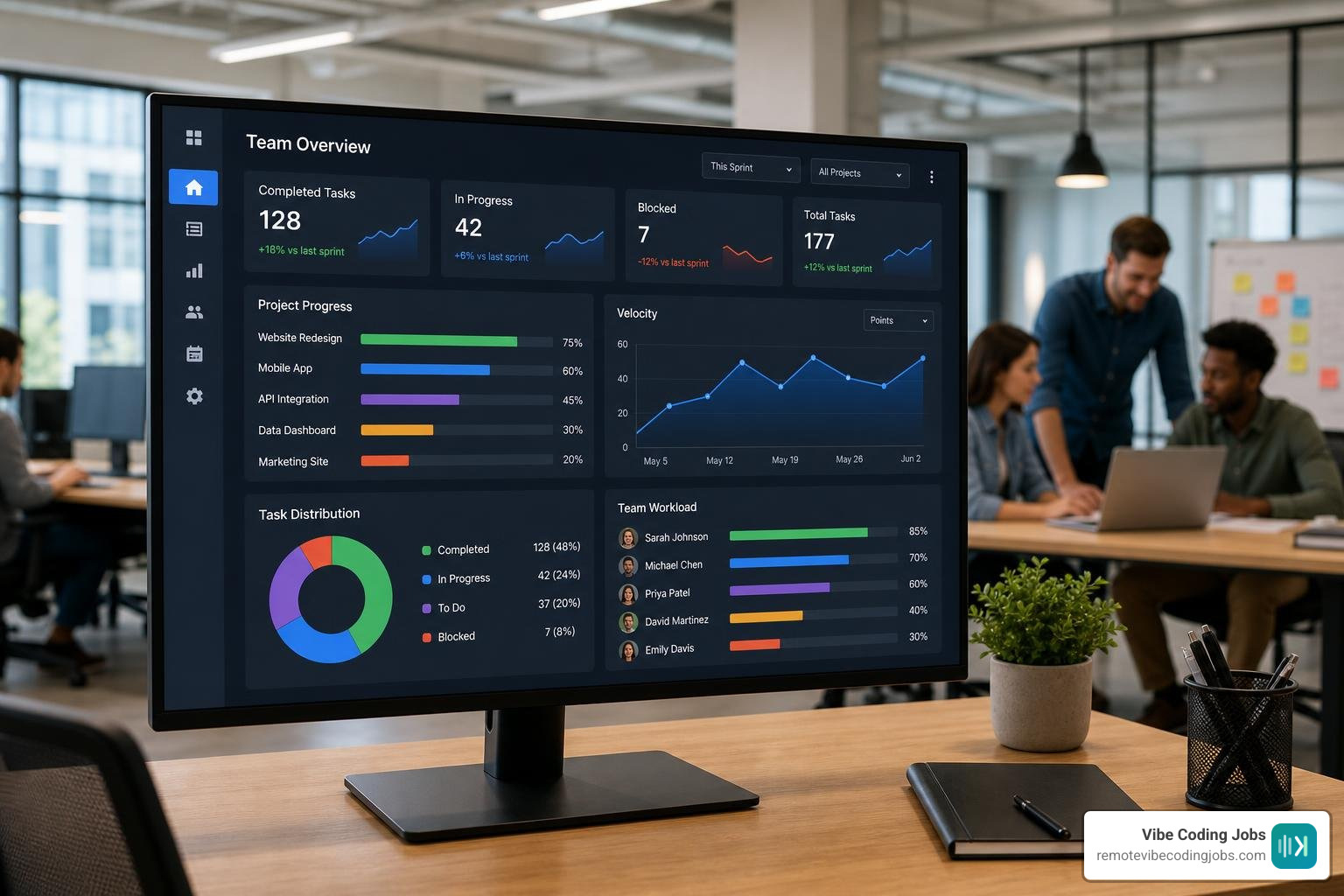
True remote async culture fit is entirely different. It is not about whether you want to grab a beer with your colleagues. It is an objective, observable alignment of values, systems, and documented behaviors. In an async-first team, culture is treated like a system of code: it is versioned, documented, and iterated upon in writing. To see how early-stage teams build this framework, take a look at this guide on how to build culture in a 100% remote asynchronous startup 2026 .
Why Vague “Vibes” Fail in Distributed Teams
Copying and pasting old office-centric playbooks into a distributed team causes engagement to tank. Forced virtual happy hours and mandatory “fun” channels do not build genuine connection.
Instead, a remote organization must focus on concrete, documented systems. When a team operates asynchronously, there is “nowhere to hide” in terms of performance. Because you cannot rely on physical facetime or desk presence, your contributions must be judged strictly on output and high-impact tasks. This structure naturally eliminates micromanagement, but it requires an operating system built on trust and clear documentation. To see how pioneering companies build these structures, read about Amazing Remote Developer Culture: Top Companies in 2024.
3. The Anatomy of a Strong Remote Async Culture Fit: Observable Behaviors
If you want to evaluate whether you or a candidate possesses a strong remote async culture fit, you must look for specific, observable behaviors rather than abstract personality traits.

The absolute foundation of async execution is writing as a default. In an async-first company, writing is not an administrative chore; it is the core mechanism of collaboration. Strong async communicators “front-load context” obsessively. They write messages that anticipate questions, define clear steps, and state goals upfront. This is often described as “communicating like a pen pal” — ensuring that a teammate in a completely different timezone has every piece of information they need to act without waiting for a real-time clarification cycle.
To master these written communication signals, we highly recommend reading Async Communication: The Complete Guide for Remote Professionals | RemoteResume.ai .
Key Indicators of a Candidate’s Remote Async Culture Fit
When we look for async-ready talent, we look for individuals who exhibit:
- Extreme Autonomy & Initiative: The ability to operate as a “one-person product team,” unblocking themselves and making sensible trade-offs without needing constant hand-holding.
- Proactive Documentation Habits: A natural tendency to write down decisions, build READMEs, and log technical assumptions so that the “company brain” remains searchable.
- Rigorous SLA Management: Clear respect for response turnaround expectations (e.g., acknowledging a thread within 4 hours, reviewing code within 24 hours) to keep the feedback loop moving.
- Async Tool Mastery: Comfort using thread-based communication, project management tools, and recorded video walkthroughs (like Loom) to replace synchronous touchpoints.
For a deeper look into how these workflows operate day-to-day, read our guide on Async-First Remote Developer Jobs: Culture, Workflow & Communication.
How Personality Types Impact Your Remote Async Culture Fit
It is a common myth that asynchronous remote work is only suitable for introverts. In reality, both extroverts and introverts face unique trade-offs in an async environment, and both can thrive with the right strategies.
- Introverts often love the uninterrupted blocks of time that async work provides, allowing them to achieve deep focus. However, they run the risk of isolating themselves completely or failing to make their achievements visible to the broader team.
- Extroverts may initially struggle with the lack of real-time banter and immediate feedback. However, they can find deep satisfaction by shifting their focus from superficial physical proximity to intentional, high-trust asynchronous connections.
To maintain balance, individuals can use the MMENDSS framework (Mindfulness, Meaning, Exercise, Nature, Diet, Sleep, and Social connection) to design their personal wellbeing. Extroverts can also leverage async tools like voice notes or quick video updates to keep communication warm and personal. To understand how this level of autonomy can supercharge your career, explore Why working in a remote, asynchronous culture can benefit … .
4. How to Objectively Evaluate Remote Async Culture Fit in Hiring
Evaluating whether a candidate is truly ready for asynchronous work cannot be done by simply asking, “Do you like working from home?” Most candidates will say yes. Instead, companies must design their recruitment processes to test for async-ready skills.
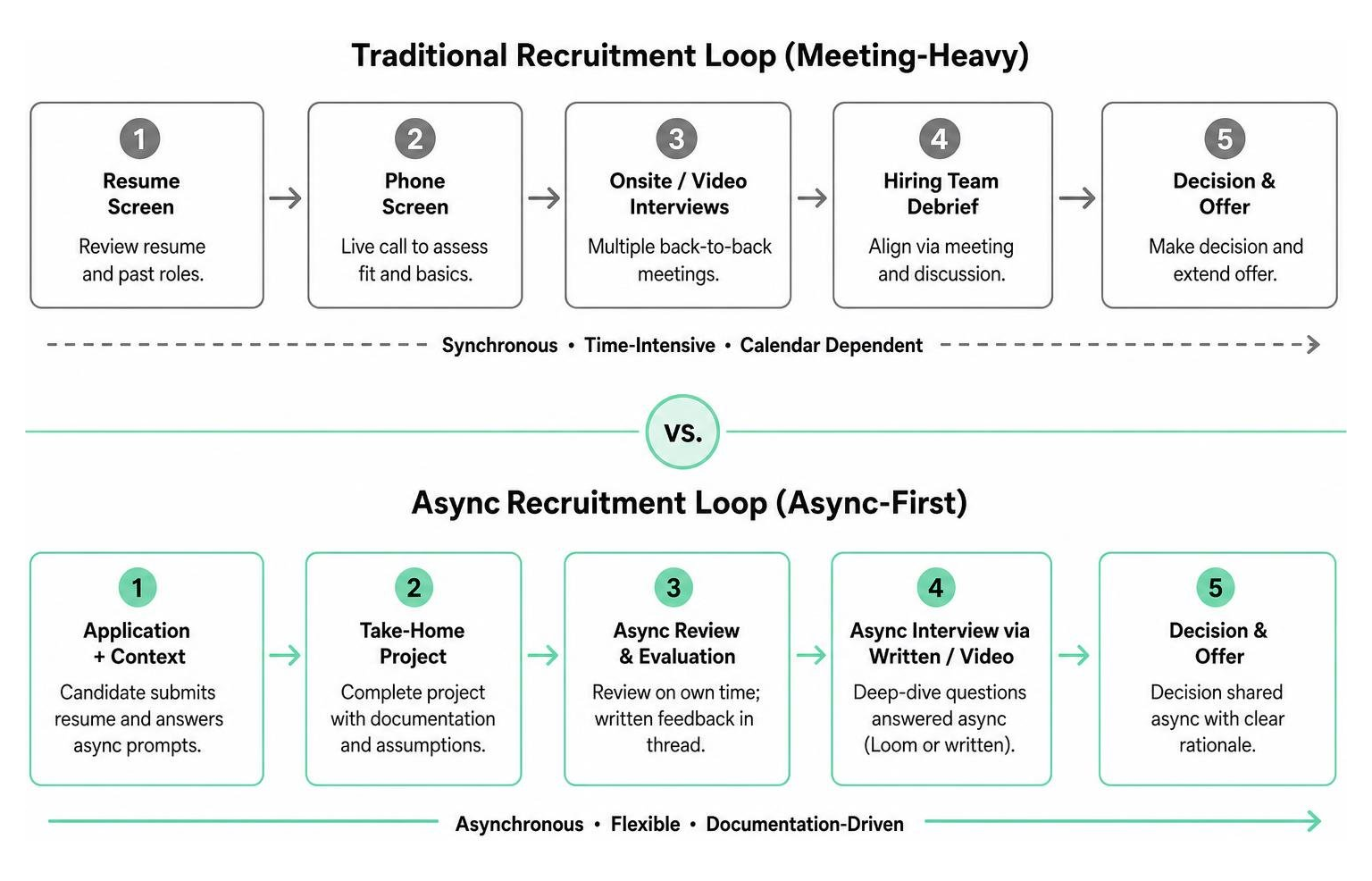
At Vibe Coding Jobs, we recommend using hands-on take-home projects that evaluate communication just as much as technical output. For instance, when evaluating a developer’s submission, we look closely at their README. Did they document their assumptions? Did they surface ambiguity early, or did they go dark?
To see the direct career benefits of finding a team that evaluates you this way, read about Async-First Remote Developer Jobs: Benefits.
The table below outlines how traditional, meeting-heavy interview loops compare to async-first evaluation methods:
| Traditional Interview Method | Async-First Interview Method | What It Evaluates |
|---|---|---|
| Real-time whiteboard coding | Take-home project with a written README | Autonomy, documentation, and real-world execution |
| “Tell me about yourself” chat | Written context-first questionnaire | Written clarity and front-loading context |
| Ad-hoc phone screens | Recorded video introduction (e.g., Loom) | Ability to present concepts clearly without live feedback |
| Vague references check | Evaluating how they ask clarifying questions in Slack/email | Empathy, communication SLAs, and tolerance for ambiguity |
Red Flags and Common Pitfalls in Async Hiring
During the hiring process, watch out for these critical red flags:
- Meeting Dependency: Candidates whose resumes are filled with meeting-heavy language (“coordinated daily standups,” “led weekly alignment calls”) rather than shipped artifacts.
- Going Dark Under Pressure: A candidate who hits a blocker during a take-home project and waits three days to ask for help, delaying the timeline.
- Over-Communication Theater: Sending hundreds of low-value Slack pings to create the illusion of presence, rather than producing high-quality, documented updates.
- Unreviewed Vibe Coding: In July 2026, AI-assisted development (vibe coding) is a massive force multiplier. However, shipping raw, unreviewed AI-generated code without testing or refactoring is a major cultural red flag.
To learn how to maintain high standards of focus and code quality in these environments, read Deep Work Culture Developer Jobs: Finding Focus & Flow.
Interview Questions to Assess Remote Async Culture Fit
If you are interviewing at an async-first company, or if you are hiring for one, these specific questions are highly effective for revealing true operational alignment:
- “Walk me through how a typical cross-team decision gets made in your current role without requiring a synchronous meeting.”
- “How do you handle blockers when you are stuck and your primary contact is in a different timezone and won’t be online for 8 hours?”
- “What does your personal documentation look like? How do you ensure your team can see your progress without having to ask you?”
- “What’s the most common communication breakdown you’ve experienced when working remotely, and how did you solve it?”
To prepare for these conversations, you can review the complete list of Async-First Culture Interview Questions — 8 Questions to Ask Before You Accept | JobsByCulture .
5. Designing an Async Culture That Accelerates Career Growth and Connection
Building a high-performance async culture does not happen by accident. It requires intentional design and a commitment to writing down core organizational artifacts.
First, we must establish a one-page values document that explicitly defines our communication norms: what tools we use, what requires a same-day response, and who is allowed to schedule meetings on your calendar. Second, we must curate a structured, hour-by-hour onboarding script for new hires. By pairing a new employee with a dedicated onboarding buddy and setting up clear milestones (such as shipping a low-risk improvement to production on Day 1), we can accelerate their integration.
To learn how to structure these engineering artifacts, read the detailed guide on How to build a remote-first engineering culture | Cadence blog .
Balancing Deep Work with Social Cohesion
While protecting blocks of deep work is critical, we must also prevent isolation. True async cultures build lightweight, optional social rituals. This can include sharing daily mood GIFs in Slack, running monthly pre-recorded demo days, or organizing quarterly in-person offsites.
By budgeting 1% to 2% of payroll for in-person retreats, companies can build deep, long-lasting trust that carries teams through months of asynchronous collaboration. To make sure your team has the right infrastructure for this balance, check out the Best Async Communication Tools for Dev Teams in 2026.
Learning Through Osmosis in an Async Environment
A common concern about remote work is that junior employees miss out on “learning through osmosis” by not sitting near senior leaders. However, an intentional async culture actually accelerates professional development more than traditional office-centric setups.
When a company defaults to written, discoverable documentation, all strategic decisions, code reviews, and leadership discussions are stored in open directories. Anyone in the company can read through the historical context of a major product shift, study senior engineering pull requests, or watch recorded strategic calls. This radical transparency democratizes access to knowledge, giving proactive builders unprecedented opportunities for rapid career advancement. Learn more about maximizing these opportunities in Remote Work Career Growth.
Frequently Asked Questions about Remote Async Culture Fit
What is the difference between remote work and async work?
Remote work refers strictly to where you work (outside of a physical office). Async work refers to how and when you work (collaborating without requiring team members to be online at the same time). You can have remote work that is highly synchronous (filled with constant Zoom calls and immediate response expectations), whereas async work relies on documentation and delayed, thoughtful responses.
How do you measure performance in an async culture without micromanagement?
Performance is measured entirely by results, shipped artifacts, and active participation in written feedback loops (such as code reviews and async retrospectives). Without physical presence or desk hours to track, there is “nowhere to hide” if work is not delivered, making micromanagement completely unnecessary.
Can extroverts survive and thrive in a fully asynchronous team?
Yes. Extroverts can thrive by replacing superficial office banter with deep, intentional connections built on trust. They can use rich async mediums like voice notes and recorded videos to maintain a personal touch, while seeking external social outlets in their local communities to fulfill their daily social energy needs.
Conclusion
Finding and cultivating remote async culture fit is the ultimate key to sanity in the modern remote work landscape. When you align with a team that values impact over visibility, documents decisions by default, and respects your focus time, remote work ceases to be a source of constant interruption and becomes a playground for high-leverage execution.
As we look forward in July 2026, the rise of “vibe coding” (AI-assisted development using tools like Cursor and Claude) is supercharging developer autonomy. These AI-native workflows allow engineers to build complex enterprise features at the speed of thought, but they demand an incredibly high level of async discipline, writing clarity, and outcome ownership.
If you are an AI-powered developer or a builder who thrives on high autonomy and quiet, focused execution, we can help you find your next role. Find remote vibe coding jobs on our platform today, and step into a workplace designed for true productivity and sanity.