
The Future of Work and Agentic AI Developer Positions
Why Agentic AI Developer Positions Are One of the Fastest-Growing Roles in Tech
Agentic AI developer positions are among the most in-demand and highest-paying roles in software engineering right now. Here’s a quick snapshot of what you need to know:
| Active remote listings | 800+ on Dice.com alone (38 new in the last 24 hours) |
| Typical salary range | $46,400 – $326,600/year depending on level and location |
| Average pay in major hubs | $158,100 – $213,800/year |
| Minimum experience (most roles) | 3+ years professional software development |
| Core frameworks | LangGraph, LangChain, AutoGen, CrewAI, Semantic Kernel |
| Key skill | Python + multi-agent orchestration + RAG pipelines |
Something shifted in AI development around 2024–2025. We moved from building chatbots that respond to building agents that act. These systems don’t just answer questions — they reason, plan, use tools, and execute multi-step tasks autonomously.
That shift created a new class of engineering role. One that sits at the intersection of software engineering, machine learning, and systems design.
The demand is real. Companies like Amazon AWS, BMC, Zillow, Capital One, and Stellantis are all actively hiring. So are fast-moving AI startups. And the roles span every industry — from supply chain and fintech to quantum computing and marketing automation.
This guide breaks down everything you need to know — skills, salary, career paths, and what it’s actually like to build production-grade agentic systems day to day.
I’m the RVCJ Editorial team at Remote Vibe Coding Jobs — we track and curate global remote developer roles across AI-first companies, including agentic AI developer positions, with a focus on async culture and modern engineering workflows. We’ve analyzed hundreds of real job postings across platforms like Dice, Indeed, and direct company listings to bring you verified, practical career intelligence for this guide.
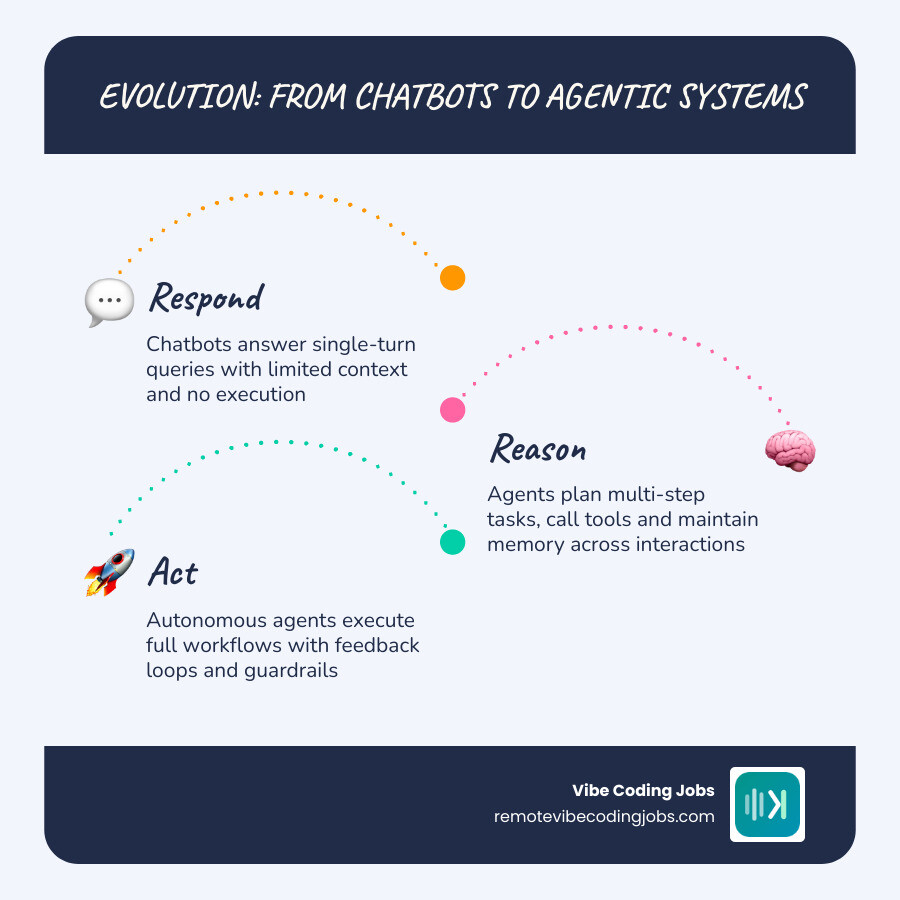
Key terms for agentic ai developer positions:
Defining the Role: Agentic AI vs. Traditional Engineering
To understand why agentic AI developer positions are exploding, we first have to look at what makes them unique. In traditional software engineering, we write explicit logic: “If X happens, do Y.” In traditional ML engineering, we train models to predict patterns.
An AI Engineer working on agentic systems, however, builds “autonomous” software. These developers aren’t just calling an API; they are building memory systems, reasoning loops, and tool-calling interfaces that allow an AI to decide its own path toward a goal. While an AI Research Engineer might focus on the underlying architecture of a model, the Agentic Developer focuses on how that model interacts with the world.
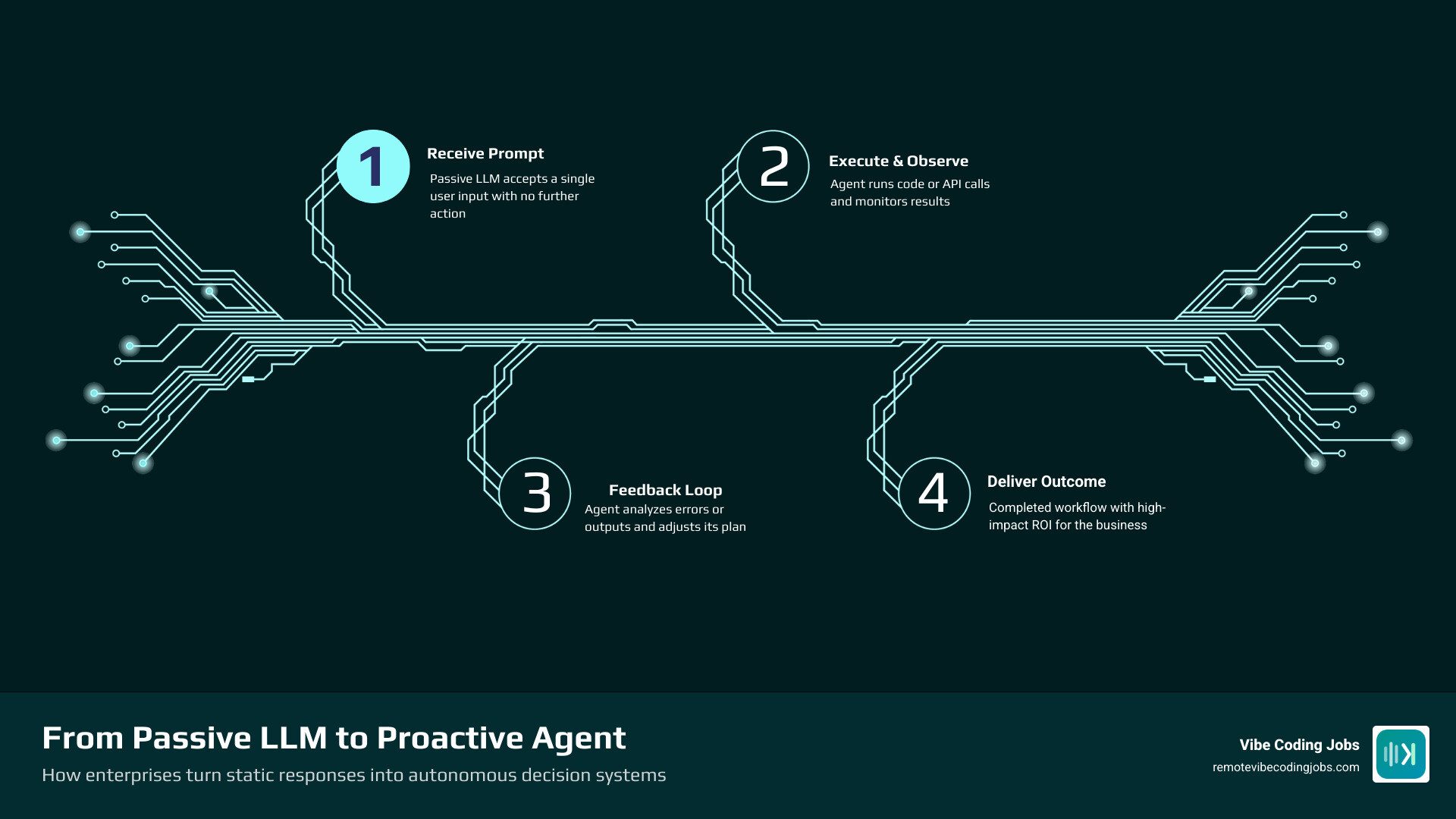
Shifting from Passive LLMs to Proactive Agents
The core difference lies in the “loop.” A passive LLM waits for a prompt and provides a response. A proactive agent, built by a skilled Applied AI Engineer, uses feedback loops to check its own work. If an agent tries to execute a piece of code and gets an error, it doesn’t just stop; it reads the error, reasons about why it happened, and tries a different approach. This decision logic is the “secret sauce” of agentic systems.
Why Enterprises are Prioritizing Agentic AI Developer Positions
Enterprises are moving beyond “toy” chatbots because they want a high-impact ROI. They need systems that can handle complex workflow automation—like an agent that can autonomously manage a supply chain, reconcile financial records, or even replicate the functions of an entire marketing department. By hiring for agentic AI developer positions, companies are looking to scale reasoning across their entire organization.
Ready to see who is hiring? You can Browse Agentic AI Roles on Vibe Coding Jobs to find teams building these proactive systems.
Essential Skills and Frameworks for Agentic AI Developer Positions

If you want to land one of these roles in 2026, your “vibe” needs to be backed by a very specific tech stack. While the field moves fast, several frameworks have emerged as the industry standards for Senior AI Agent Developer Roles.
Core Technical Proficiencies
At the foundational level, you need to be a Python wizard. Almost every Applied AI Engineer position requires deep proficiency in Python and backend development. Beyond the language, you must master:
- Orchestration Frameworks: LangGraph, LangChain, AutoGen, and CrewAI are the “big four.” These tools allow you to manage multi-agent collaboration and complex state management.
- RAG Pipelines: Knowledge of Retrieval-Augmented Generation (RAG) is non-negotiable. You’ll need to work with vector databases like Pinecone, Weaviate, or Qdrant to give your agents long-term memory.
- Tool Use & API Orchestration: As an AI Automation Tool Use Engineer, you’ll spend your days teaching agents how to interact with external APIs, SQL databases, and even web scrapers (using tools like Playwright or Selenium).
The Rise of Vibe Coding and Agentic IDEs
One of the most exciting trends we’ve seen at Remote Vibe Coding Jobs is the emergence of “vibe coding.” This isn’t just a buzzword—it’s a shift toward natural language development. Developers in these roles are increasingly using agentic IDEs like Cursor and Claude Code to ship features faster.
In fact, some agentic AI developer positions now explicitly mandate the use of GitHub Copilot and Claude as core components of the daily workflow. This allows an AI Developer Experience Engineer to focus on high-level system architecture and “vibe” (the intent and logic) rather than getting bogged down in boilerplate syntax.
Compensation, Experience, and Career Trajectories
The financial rewards for entering this field are significant. Based on our research of current job listings, the pay scale for agentic AI developer positions reflects the high level of specialized knowledge required.
Salary Comparison Table (Estimated 2026 Data)
| Experience Level | Typical Salary Range (USD) | Key Requirements |
|---|---|---|
| Entry-Level / Junior | $90,000 – $130,000 | 1+ years AI experience, strong Portfolio |
| Mid-Level | $145,000 – $210,000 | 3-5 years SWE, experience with RAG/Agents |
| Senior / Principal | $213,000 – $346,000 | 8-10+ years SWE, leading multi-agent architecture |
| Contract / Freelance | $75 – $150 / hour | Niche expertise in specific frameworks |
Roles like the AI Ops Engineer or a staff-level Applied AI Engineer often include equity packages and performance bonuses that can push total compensation even higher.
Entry-Level vs. Senior Agentic AI Developer Positions
While “vibe coding” makes the field more accessible, 90% of agentic AI developer positions still require at least 3 years of professional software development experience. Senior and Principal roles often demand 8 to 10 years of experience, as these individuals must mentor teams and make pragmatic architectural trade-offs between latency, cost, and accuracy.
Educational Backgrounds and Transitioning Roles
Do you need a PhD? Generally, no. While a Master’s in Computer Science or Mathematics is common, many companies are hiring based on practical skill sets. We are seeing a surge in Generative AI Engineer roles that prioritize a strong portfolio of agentic projects over formal degrees. If you can demonstrate that you’ve built a multi-agent system that solves a real-world problem, you’re a top candidate.
Building Production-Grade Agentic Systems
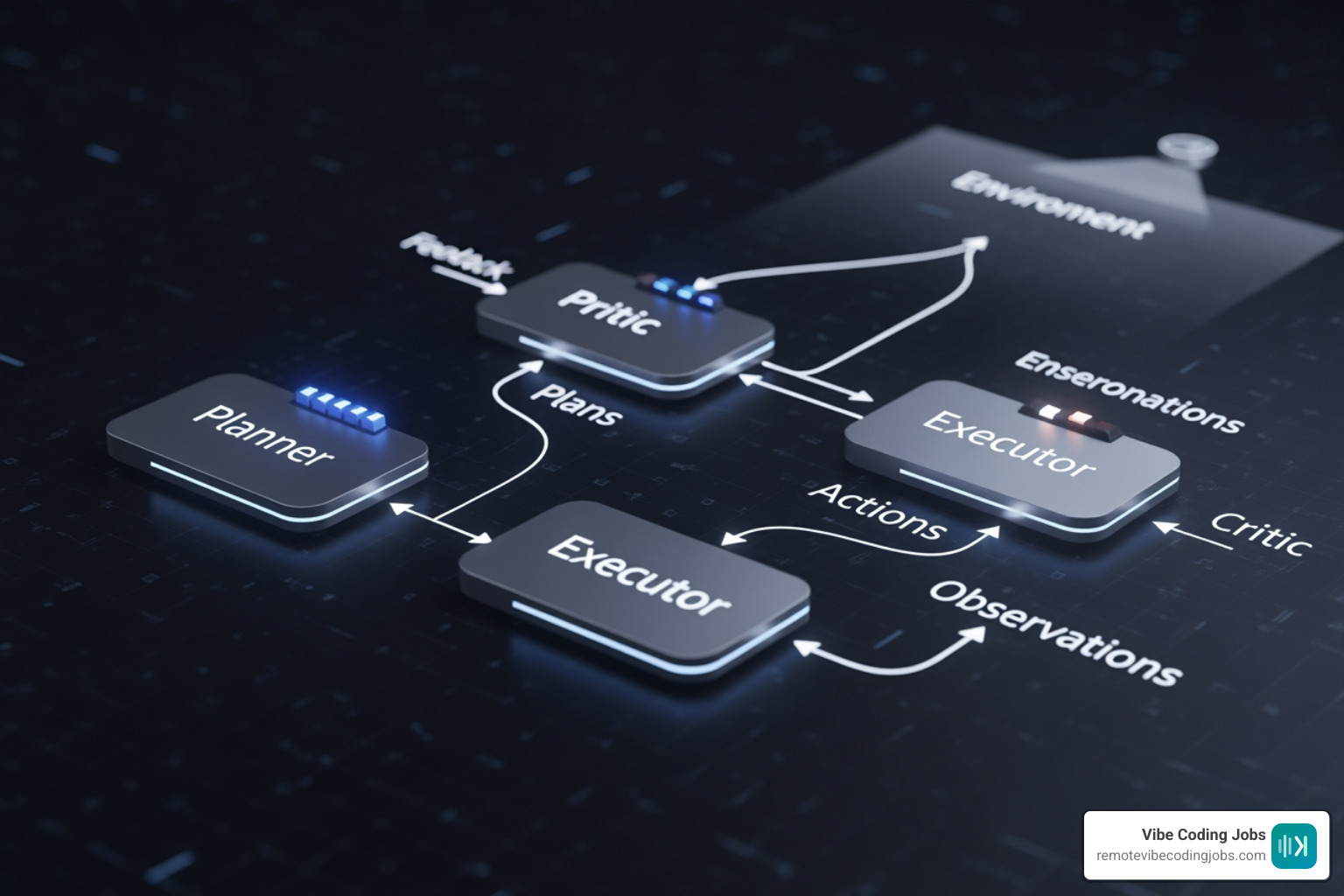
Moving a “cool demo” to a production environment is where the real work happens. Senior Agentic AI Developer Roles focus heavily on reliability and safety. If an agent has the power to delete files or spend money via an API, the stakes are incredibly high.
Scalability and Observability in Agentic Workflows
When you have multiple agents talking to each other, things can get messy (and expensive) quickly. An AI Automation Engineer must implement:
- Structured Logging: Tracking every thought, action, and observation the agent makes.
- Cost Management: Monitoring token usage to ensure an agent doesn’t enter an infinite reasoning loop that drains the company’s OpenAI balance.
- Latency Optimization: Making sure the agent’s “thinking time” doesn’t result in a poor user experience.
Security and Governance for Autonomous Agents
Security is a massive concern in agentic AI developer positions. Developers must build guardrails to prevent prompt injection (where a user tricks the agent into ignoring its instructions) and data leakage. This often involves policy-based routing and “human-in-the-loop” checkpoints for high-risk actions. An AI Security and Tool Use Engineer ensures that the agent follows enterprise-grade compliance and privacy standards.
Top Industries and Companies Hiring for Agentic AI Developer Positions
The search for talent is happening across the board. From tech giants like AWS building “AgentCore” memory systems to specialized firms like Xanadu integrating AI into quantum computing R&D, the opportunities are diverse.
Real-World Use Cases: From Marketing to Research
We’ve seen fascinating applications in the current job market:
- Marketing: Companies are hiring developers to build suites of 20+ autonomous agents that handle everything from SEO research to content drafting and CRM updates.
- Supply Chain: Firms like Stellantis are hiring for agentic AI developer positions to build agents that can autonomously reason through logistics and operations decisions.
- Fintech: Banks are using agentic systems for securities-based lending automation and natural language querying of massive financial datasets.
Whether you are an AI Developer – Agentic Systems or an AI Tool Use Engineer, your work is directly impacting the bottom line of these global industries.
Remote Work Trends in Agentic AI
The best part? Most of these roles are remote-friendly. Because agentic AI development requires deep focus and often involves global collaboration, many of the top companies are “async-first.” At Remote Vibe Coding Jobs, we specialize in finding these Remote Agentic AI Developer Jobs that offer the flexibility to work from anywhere while building the future.
Frequently Asked Questions about Agentic AI Careers
What is the difference between an AI Engineer and an Agentic AI Developer?
An AI Engineer might focus on integrating a single LLM into an app (like adding a chatbot to a website). An Agentic AI Developer builds systems where the AI can use tools, manage its own memory, and execute multi-step plans without constant human prompting.
Do I need a PhD to apply for agentic AI developer positions?
Not usually. While research roles might require one, most developer positions value 3-5+ years of software engineering experience and a proven ability to build and deploy agentic frameworks like LangGraph or AutoGen.
Which agent frameworks should I learn first in 2026?
Focus on LangGraph for complex state management and CrewAI or AutoGen for multi-agent orchestration. Mastering these, along with a vector database like Pinecone, will make you highly competitive.
Conclusion
The era of the passive chatbot is over. As we move through 2026, agentic AI developer positions are becoming the backbone of the new intelligent economy. Whether you’re a seasoned senior engineer or a “vibe coder” looking to level up your career, there has never been a better time to dive into autonomous systems.
At Remote Vibe Coding Jobs, we’re here to help you navigate this transition. From curated daily listings to deep dives into the latest tech stacks, we’re your partner in finding a role that fits your skills and your lifestyle.
Ready to take the next step? Compare Vibe Coding vs Traditional Development to see which path is right for you, and join us in building the future of work!