AI-Native Development Is Here — And It’s Not Just Autocomplete
What is agentic coding is one of the fastest-growing questions in software development right now — and for good reason.
Here’s the short answer:
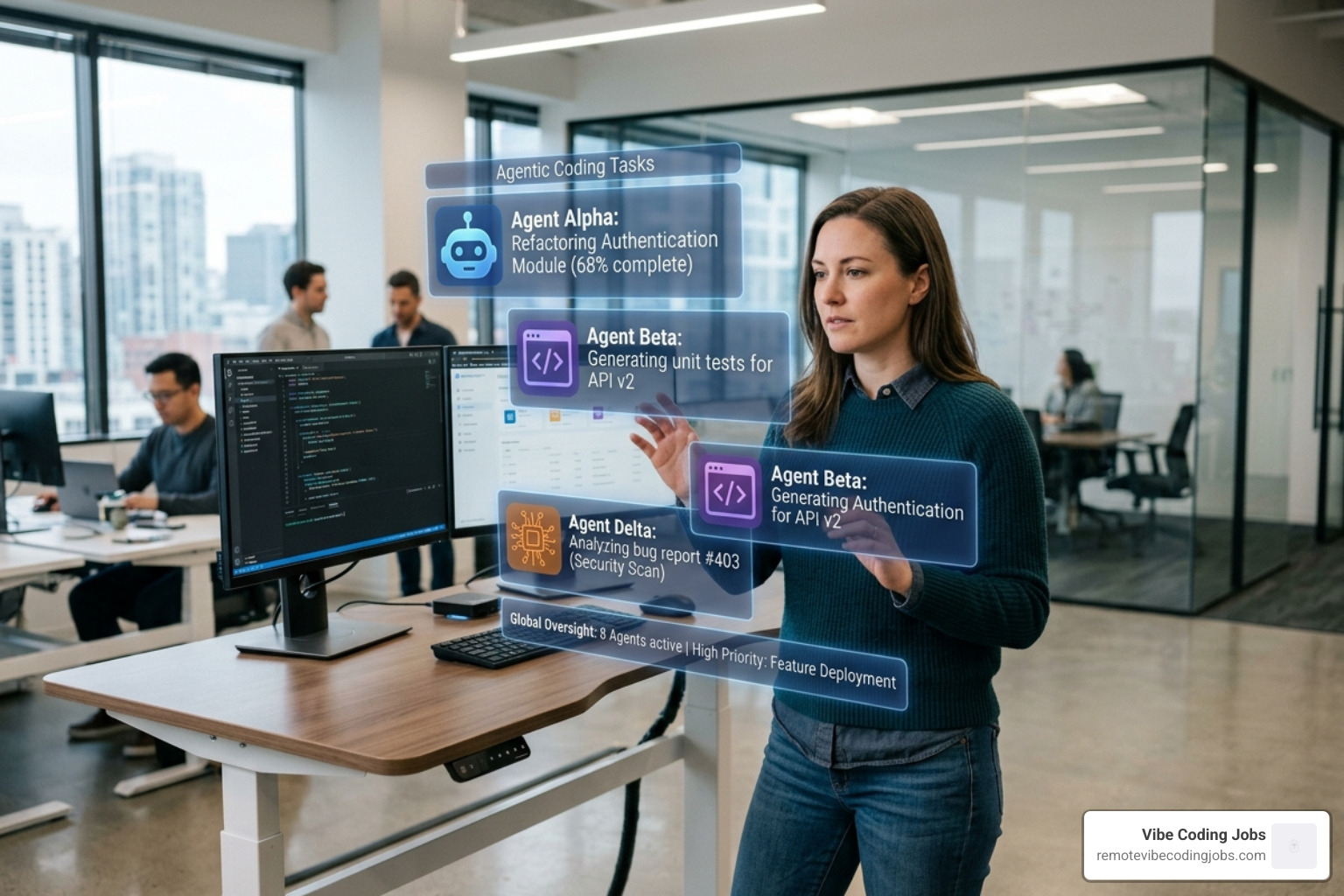
Agentic coding is a software development approach where autonomous AI agents plan, write, test, and debug code with minimal human intervention. Instead of suggesting the next line, they take a high-level goal and execute multi-step tasks across your entire codebase — on their own.
| Feature | Traditional AI Assistants | Agentic Coding |
|---|---|---|
| Input | Line-by-line prompts | High-level goals |
| Execution | Human-driven | Autonomous |
| Scope | Single function or snippet | Multi-file, full codebase |
| Feedback loop | You fix the errors | Agent self-corrects |
| Output | Code suggestions | Pull requests, passing tests |
Most developers have used AI tools that autocomplete a line or generate a function on demand. That’s useful. But it’s not agentic.
Agentic coding is different. You assign a task — “add authentication to the front end, update the API, and write unit tests” — and the agent figures out how. It reads your files, runs commands, interprets errors, and iterates until the job is done.
Gartner named AI-Native Development Platforms — the category that enables agentic coding — as one of its Top Strategic Technology Trends for 2026. The shift is already underway.
Developer and Flask creator Armin Ronacher described working with agentic coding tools as “catnip for programmers” — energizing, addictive, and unlocking productivity gains that feel genuinely new.
But with that power comes real complexity. Knowing when to use agentic tools, how to keep them safe, and where they still fall short is what separates vibe coding from actual engineering.
We are the RVCJ Editorial team at Remote Vibe Coding Jobs — we cover AI-assisted development workflows, agentic tooling, and remote engineering careers for developers building with tools like Claude Code, Cursor, and Copilot, and we’ve tracked the question of what is agentic coding from early experiments to the production-ready workflows teams are running today. This guide breaks down everything you need to move from prompting to engineering with AI agents.
What is Agentic Coding?
To understand what is agentic coding, we need to look at the concept of “agency.” In the AI world, an agent isn’t just a chatbot; it’s a system capable of using tools to achieve a goal. While traditional AI assistants wait for you to type every instruction, an agentic system acts as a “skilled contractor” rather than a “passive consultant.”
When we talk about agentic coding, we are describing an autonomous loop. You provide a high-level objective, and the agent enters a cycle of reasoning and acting. It doesn’t just generate text; it clones repositories, analyzes file structures, creates branches, and runs terminal commands. According to Agentic Coding: Autonomous AI Agents That Code | AgentsRoom, the defining characteristic is this autonomous iteration—the ability to think, act, observe the result, and adjust the plan.
This shift is reflected in the job market, where roles like the Agentic AI Engineer are becoming standard. These engineers don’t just write code; they build and supervise the systems that write code.
The Three Pillars of Agency
For a coding system to be truly agentic, it must stand on three pillars:
- Autonomy: The agent must be able to execute multi-step tasks without a human “babysitting” every line. It should be able to decide which file to open next or whether a test failure requires a refactor or a simple bug fix.
- Context: Unlike earlier models limited to a few lines of code, modern agents reason across entire repositories. They understand how a change in the database schema affects the frontend API calls.
- Control: This involves the governance mechanisms—the guardrails that ensure the agent operates within defined boundaries, following project-specific rules and security protocols.
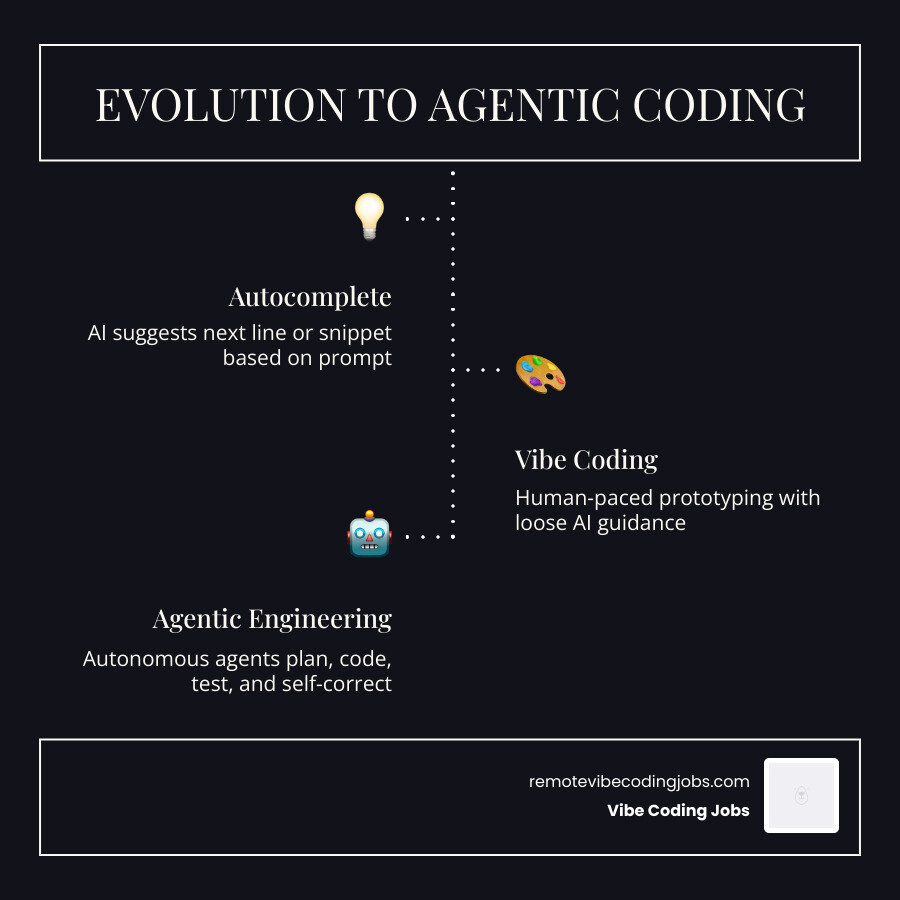
From Autocomplete to Autonomous Agents
We’ve moved through several eras of AI-assisted development to get to where we are in 2026.
- Level 1: Autocomplete (2021-2022): Tools like the early GitHub Copilot suggested the next few tokens.
- Level 2: Assisted Edit (2023): We began chatting with our IDEs, asking for specific functions to be written.
- Level 3: Supervised Agent (2024-2025): Agents began using tools (like terminal access) but required constant human “OKs” for every action.
- Level 4: Autonomous Agent (2026): We now have systems that can handle “Issue-to-PR” pipelines. You assign a GitHub issue, and the agent opens a verified Pull Request while you sleep.
As noted in Agentic Coding, Explained: From Autocomplete to Autonomous Agents (2026), the industry has moved from “AI as a typist” to “AI as a delegated worker.”
The Technical Engine: How Coding Agents Work
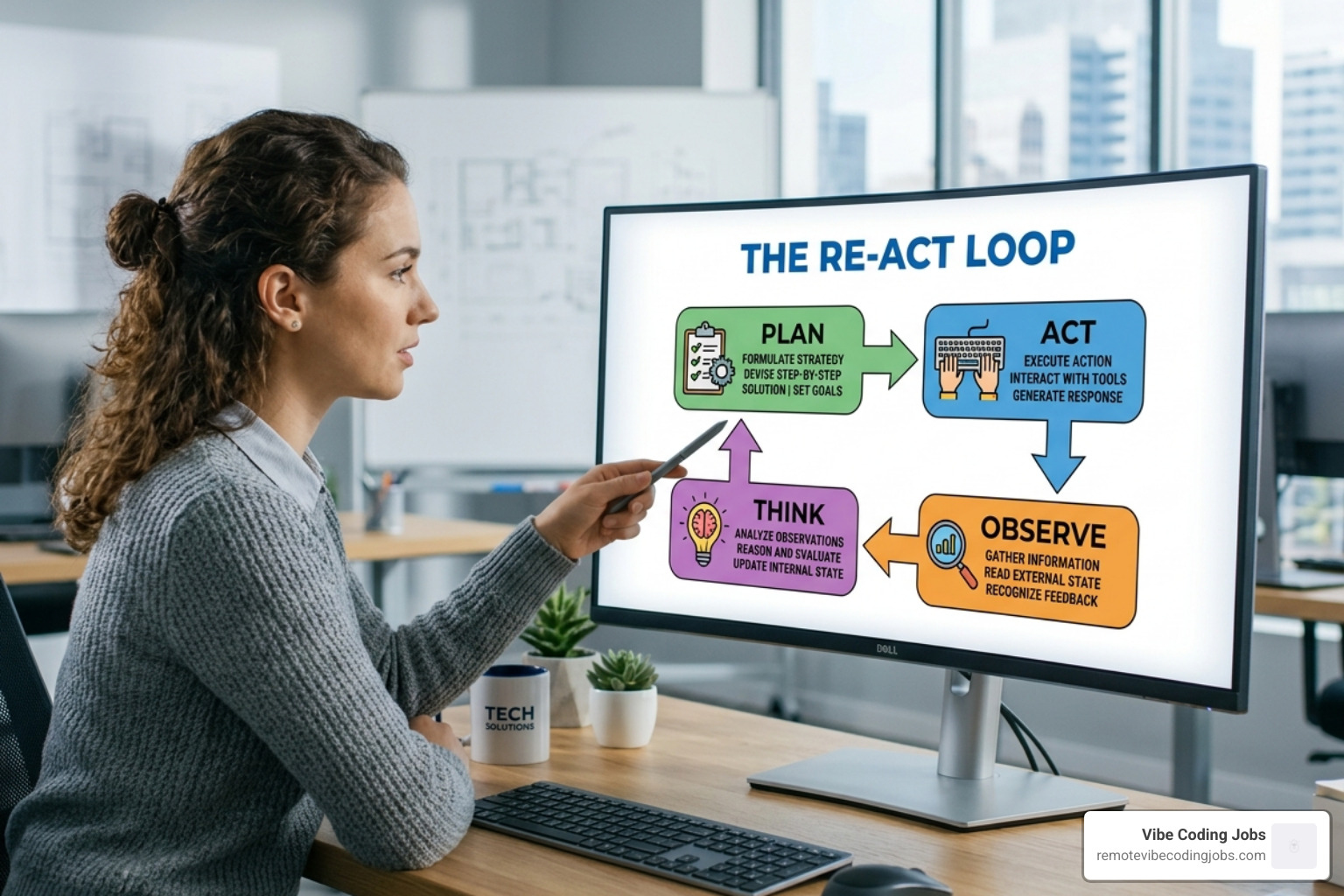
Technically, what is agentic coding powered by? The magic happens in what’s known as a Reason-and-Act (ReAct) loop.
Instead of a one-shot prompt, the agent follows a cycle:
- Plan: The agent breaks the high-level goal into smaller sub-tasks.
- Act: It uses a tool (e.g., writing a file or running
npm test). - Observe: It reads the output (e.g., a stack trace or a linter error).
- Adjust: Based on the observation, it updates its mental model and takes the next logical step.
This is why we see a surge in demand for an AI Developer – Agentic AI who understands how to orchestrate these loops.
Context Management and Protocols
To work effectively, agents need a way to “see” the tools humans use. This is where the Model Context Protocol (MCP) comes in. Standardized in 2025, MCP allows agents to connect to external data sources like Slack, GitHub, or even your local terminal seamlessly.
Furthermore, we use repository-level configuration files to give agents “long-term memory.” Files like AGENTS.md or CLAUDE.md act as behavioral contracts. They tell the agent: “Always use TypeScript,” “Never modify the /auth folder without permission,” or “Run the linter after every file change.”
The Execution Loop: Plan, Act, Observe, Adjust
The “Observation” phase is the most critical. When an agent runs a command and sees a “Module Not Found” error, it doesn’t stop. It realizes it needs to install a dependency, does so, and retries. This “self-healing” capability is what What is agentic coding? How it works and use cases | Google Cloud highlights as the engine of modern development. It’s the difference between an AI that gives you a broken snippet and an agent that gives you a working feature.
Vibe Coding vs. Agentic Coding: Understanding the Spectrum
We often hear the term “vibe coding” (popularized by Andrej Karpathy) used interchangeably with agentic coding, but they aren’t the same. Vibe coding is about “embracing the exponential”—it’s a , intuitive style of prototyping where the human is in a tight, synchronous loop with the AI.
| Factor | Vibe Coding | Agentic Coding |
|---|---|---|
| Pace | Human-paced (synchronous) | AI-paced (asynchronous) |
| Philosophy | Intuitive prototyping | Disciplined orchestration |
| Effort | Low upfront, high interaction | High upfront (specs), low interaction |
| Best For | Greenfield MVPs | Complex refactors, maintenance |
If you’re a Senior AI Engineer with Agentic AI, you likely use both. You “vibe” to explore a new UI idea, but you “agentically engineer” when it’s time to migrate a legacy database.
Why “Vibes” Aren’t Enough for Production
Vibe coding is great for getting a demo running, but it can lead to “code slop”—code that looks correct but is unmaintainable or architecturally inconsistent. Agentic coding introduces more discipline by using spec-driven development. As the paper Vibe Coding vs. Agentic Coding: Fundamentals and Practical Implications of Agentic AI argues, production-grade software requires the agent to adhere to rigid architectural constraints that “vibes” alone often ignore.
Measuring Productivity in the Agentic Era
How do we know if this is actually working? The stakes are high: Atlassian recently acquired a developer productivity company for US$1 billion just to help solve the mystery of measuring output in the age of AI.
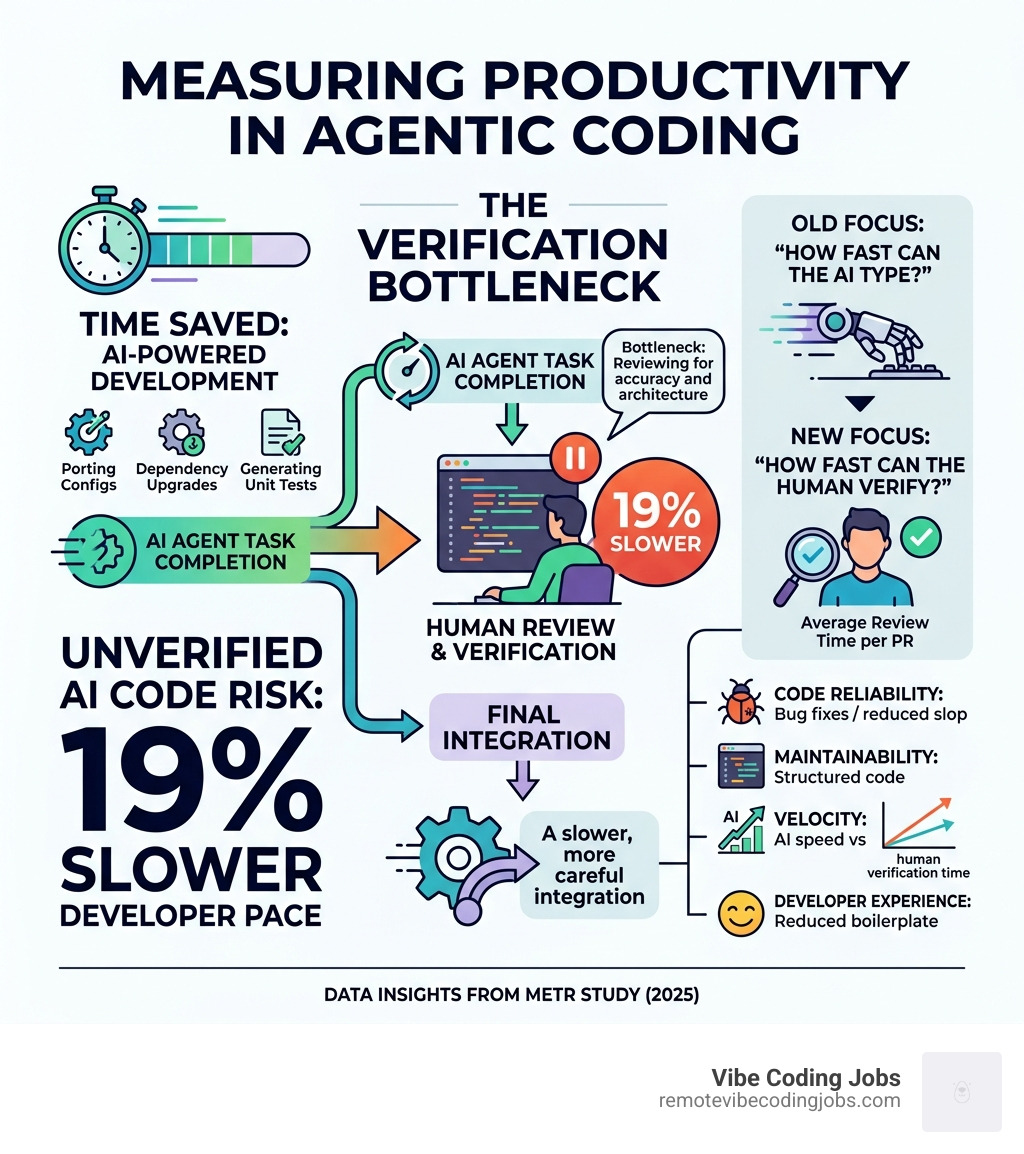
Interestingly, a 2025 METR study found that experienced developers were actually 19% slower when using AI on familiar tasks because of the “verification bottleneck.” It takes time to review what an agent has done. This is why the focus is shifting from “how fast can the AI type?” to “how fast can the human verify?”
Benefits and Risks of Autonomous AI Development
The benefits are obvious: agents can handle the “boring” work. They can port a config format across 50 files, upgrade a dependency in a monorepo, or generate a full unit test suite while you’re at lunch. It truly is “catnip” for those of us who hate mechanical refactoring.
However, the risks are just as significant. According to What Is Agentic Coding? Risks & Best Practices – Apiiro, autonomous agents expand the attack surface. If an agent has the power to install packages, it might fall victim to “Slopsquatting.”
Security Vulnerabilities and “Slopsquatting”
Slopsquatting is a 2026 security trend where attackers register malicious packages with names that AI agents are known to hallucinate. If an agent decides it needs a package called auth-middleware-utils (which doesn’t exist), and an attacker has registered that name with a payload, the agent might unwittingly pull malware into your build.
With 80% of organizations already reporting risky behavior from AI agents, the need for security is paramount. This is why companies are hiring specialized talent like an AI/ML Engineer – Agentic AI to build safer pipelines.
Best Practices for Safe Implementation
To implement what is agentic coding safely, we recommend these guardrails:
- Sandboxed Execution: Never run an agent directly on your host machine. Use Docker containers or ephemeral VMs.
- Read-Only by Default: Give agents read access to your whole repo, but require manual “Write” approval for sensitive directories.
- Human-in-the-Loop: Every agent-generated change must go through a standard Pull Request review. Never allow an AI to push directly to
main. - Strong Test Suites: Agents are only as good as your tests. Teams with 80%+ test coverage see dramatically higher success rates because the agent can verify its own work.
- Audit Trails: Use structured logging to track every decision the agent makes.
As What is Agentic Coding? An Honest Guide | Syntax.ai points out, the skill of the future isn’t just prompting—it’s knowing when to trust and when to verify.

Frequently Asked Questions about Agentic Coding
How does agentic coding differ from traditional AI assistants?
Traditional assistants (like early Copilot) are prompt-directed; they wait for your input to generate a snippet. Agentic tools are goal-directed; they take a high-level objective (“Fix the bug in the login flow”) and independently determine the steps (Read logs -> Find file -> Edit code -> Run test) to achieve it.
What are the best tools for agentic coding in 2026?
The landscape is moving fast, but the leaders fall into three categories:
- CLI Agents: Tools like Claude Code and Aider live in your terminal and have full access to your shell.
- AI-Native IDEs: Cursor and Windsurf integrate agentic loops directly into the editing experience.
- Orchestration Platforms: Platforms mentioned in What Is Agentic Coding? A Developer’s Guide for 2026 – Tembo allow you to run multiple agents in parallel across complex repositories.
How does agentic coding change the developer’s role?
The role is shifting from Coder to Architect and Supervisor. Instead of worrying about syntax, you spend your time defining the “intent” and the “constraints.” You become a manager of a very fast, very enthusiastic “AI intern.” This is why we see more openings for a Java Agentic AI Developer who can guide these systems through complex enterprise logic.
Conclusion
The transition from vibe coding to agentic engineering is the next great leap in our industry. By moving away from line-by-line prompting and toward autonomous, goal-oriented agents, we aren’t just coding faster—we’re scaling our ability to solve complex problems.
However, this new era requires a new kind of discipline. We must move beyond the “vibes” and embrace rigorous testing, sandboxed environments, and architectural oversight. The future of software isn’t just written by AI; it’s orchestrated by engineers who know how to lead it.
If you’re ready to find your next role in this exciting field, check out our latest listings at Remote Vibe Coding Jobs. Whether you’re a vibe coder or a seasoned agentic engineer, we have the curated daily listings you need to stay ahead.