The Best Vibe Coding Courses to Catch the AI Wave
Why Vibe Coding on Coursera Is Worth Your Attention Right Now
Coursera vibe coding courses give you a fast, structured path to building real software with AI — no traditional programming background required.
Here are the top options available right now:
| Course | Best For | Enrolled | Time to Complete |
|---|---|---|---|
| Vibe Coding Essentials: Build Apps with AI | Complete beginners, non-technical pros | 17,000+ | 4 weeks at 10 hrs/week |
| Vibe Coding with Cursor AI | Developers leveling up | 22,000+ | Self-paced |
| Vibe Coding Fundamentals | Total newcomers | 5,000+ | ~6 hours |
| Vibe Coding with GitHub Copilot | Technical professionals | — | ~9 hours |
| Vibe Coding Bootcamp | Full-stack builders | — | 1 week at 10 hrs/week |
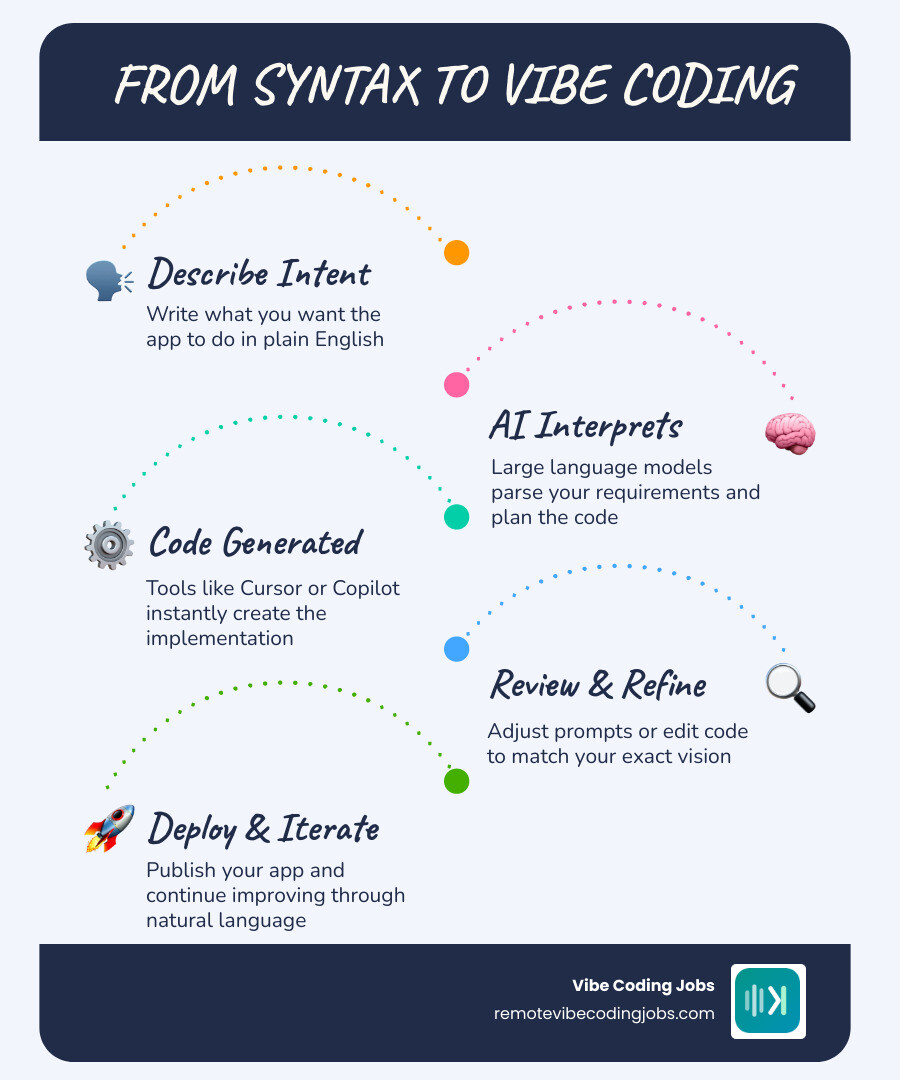
Vibe coding flips how software gets built. Instead of writing syntax line by line, you describe what you want in plain English — and AI tools like Cursor, GitHub Copilot, or Claude Code handle the implementation. The term was coined by AI researcher Andrej Karpathy, and by 2026 it has gone from a niche idea to a core skill for anyone who wants to ship software faster.
The appeal is real. Non-technical professionals — marketers, designers, accountants — are now building and deploying apps without ever learning traditional programming. And developers who adopt these workflows report working 5–10x faster on projects that used to take weeks.
That said, vibe coding isn’t magic. As one widely shared perspective puts it: “Vibe coding lowers the entry barrier, but fundamentals raise the capability ceiling.” Coursera addresses this directly by pairing hands-on AI tool training with just enough foundational knowledge to help you understand what the AI is actually building.
We’re RVCJ Editorial, the team behind Remote Vibe Coding Jobs — we cover AI-assisted development, vibe coding tools like Cursor and Claude, and career paths for developers going remote, and we’ve tracked the rise of Coursera vibe coding programs since they first appeared. In this roundup, we break down every major course worth your time so you can pick the right one and start shipping.
Must-know coursera vibe coding terms:
Why Coursera Vibe Coding is the Gold Standard in 2026
When we look at the educational landscape in 2026, Coursera has separated itself from the pack by blending academic rigor with the raw speed of AI-assisted development. While other platforms might offer a “quick hack” to building an app, coursera vibe coding programs are designed to build careers, not just side projects.
The data speaks for itself: 91% of learners who completed the Vibe Coding Essentials Specialization reported positive career outcomes. This isn’t just about learning a tool; it’s about understanding the Vibe Coding vs Traditional Software Engineering: Key Differences. In traditional engineering, you spend years mastering syntax. In vibe coding, you spend weeks mastering “intent” and “context.”
Coursera’s partnerships with industry giants like IBM, DeepLearning.AI, and top-tier universities ensure that the credentials you earn carry weight with recruiters. When 60% of recruiters now value professional certificates, having a verified credential in vibe coding is a massive advantage. These courses don’t just teach you to prompt; they teach you skill compounding—how to combine AI tools with systems thinking to become a “10x builder.” You can explore the full range of Best Vibe Coding Courses & Certificates [2026] – Coursera to see how deep the curriculum goes.
Top-Rated Programs to Master Coursera Vibe Coding
Navigating coursera vibe coding can be overwhelming because the field moves so fast. However, we’ve identified three distinct paths depending on where you are in your journey. Whether you’re a marketer wanting to build a custom tool or a senior dev looking to automate the boring stuff, there’s a program tailored for you.
Vibe Coding Essentials: Build Apps with AI Specialization
This is the flagship program for anyone coming from a non-technical background. If you are a marketer, designer, or accountant, this is your entry point. With over 17,121 learners already enrolled, it has become the go-to path for “vibe-first” creators.
The specialization takes about 4 weeks to complete if you put in 10 hours a week. It covers the entire lifecycle of an app, from the initial “vibe” to deployment. You’ll learn how to use tools like Cursor and GitHub Copilot to build everything from Chrome extensions to mobile apps. This is the ultimate Vibe Coding with AI: A Beginner’s Practical Guide 2026, focusing on high-level concepts rather than getting bogged down in semicolon placement. By the end, you’ll be deploying your own projects to Netlify and GitHub. You can start your journey here: Vibe Coding Essentials – Build Apps with AI | Coursera.
Deep Dive into Coursera Vibe Coding Fundamentals
If you’re brand new and just want to understand the “how” behind the magic, the Vibe Coding Fundamentals | Coursera course is a perfect 6-hour sprint. It’s designed to help you get over the “blank page” syndrome.
This course teaches you how to select the right LLM (Large Language Model) for your specific project and, more importantly, how to use conversational debugging. Instead of staring at an error code, you learn to talk to the AI to fix it. This is a crucial part of Vibe Coding Getting Started—learning that the “vibe” is a dialogue, not a one-way command. With over 5,000 learners, it’s a proven starting point for building logic skills without the syntax headache.
Professional Workflows with Vibe Coding with Cursor AI
For those who want to reach professional-grade speed, the Vibe Coding with Cursor AI | Coursera course is essential. Cursor AI has become the gold standard IDE (Integrated Development Environment) for vibe coders in 2026.
With 22,678 learners, this course focuses on “Agent Mode” and “Inline Editing”—features that allow the AI to not just suggest code, but to actually navigate your file structure and make multi-file changes. You’ll learn the Vibe Coder Tools: Copilot & Cursor and how to manage context so the AI doesn’t lose the plot as your project grows. This is where you master the Vibe Coding Workflow Guide, moving from a hobbyist to a professional builder who can ship production-ready features in hours.
Essential Tools and Technologies Taught in the Curriculum
The coursera vibe coding ecosystem isn’t just about one tool; it’s about a stack of technologies that work together. To help you understand the landscape, we’ve put together a comparison of the heavy hitters you’ll master in these courses.
| Feature | Cursor AI | GitHub Copilot | Claude Code |
|---|---|---|---|
| Primary Use | AI-Native IDE | Autocomplete & Chat | Terminal-based Agent |
| Best For | Full-project building | Snippets & Documentation | Complex Refactoring |
| Agent Mode | High (Composer) | Moderate | High |
| Context Awareness | Multi-file indexing | Single-file/Open tabs | Repository-wide |
Beyond the AI itself, you’ll learn how to use “glue” technologies. Coursera’s curriculum includes hands-on labs with GitHub for version control and Netlify for one-click deployments. You’ll also touch on platforms like Replit, Lovable, and Bolt.new, which allow for rapid prototyping. These are the building blocks for your Vibe Coding Portfolio Projects—the real-world evidence you’ll need to land a remote role.

Advanced Integration with Coursera Vibe Coding and MCP
One of the most exciting additions to the 2026 curriculum is the Model Context Protocol (MCP). If “prompting” is talking to the AI, “MCP” is giving the AI hands and eyes.
In courses like AI for Vibe Coding | Coursera, you learn how to connect your AI models to external data sources and tools. This means your AI can check your real-time database, pull information from an API, or even read your Slack messages to understand the “vibe” of a feature request. This level of integration is what separates a basic prompter from a professional Vibe Coder. It also covers secure coding—ensuring that while the AI is moving fast, it isn’t opening up security holes in your application.
Frequently Asked Questions about Coursera Vibe Coding
Do I need prior programming experience for Coursera vibe coding?
Absolutely not. In fact, many of these courses are specifically designed for people who have never written a line of code. What you do need is logical thinking and a good grasp of “systems thinking.” If you can describe a process step-by-step, you can vibe code. This makes the Vibe Coding Remote Jobs Career Path accessible to a much broader range of people than traditional software engineering ever was.
How long does it take to complete a vibe coding specialization?
Most learners finish a full specialization in about 4 weeks by dedicating 10 hours a week. However, because Coursera is self-paced, you can accelerate this. If you’re already familiar with some AI tools, you might find yourself shipping your first app in just a few days. This speed is why the Vibe Coding Salary Guide 2026 shows such a high ROI; you’re gaining a high-value skill in a fraction of the time it takes to learn C++ or Java.
What career outcomes can I expect from these courses?
As mentioned, 91% of learners see a positive outcome. This often looks like landing a role at an “AI-first” startup or an async-first company that values output over hours worked. By building a portfolio during your courses, you’re following the Vibe Coding Remote Job Ultimate Guide. You’re not just showing a certificate; you’re showing a gallery of working applications that you “vibed” into existence.
Conclusion
The shift toward vibe coding is the most significant change in software development since the invention of the high-level programming language. By choosing coursera vibe coding programs, you are future-proofing your career. You are moving from being a “writer of code” to an “architect of intent.”
At Remote Vibe Coding Jobs, we see the demand for these skills every single day. Companies are looking for builders who can leverage Cursor, Claude, and Copilot to solve problems at lightning speed. Whether you are just starting your Vibe Coding Remote Jobs Career Path or you are a seasoned pro looking to stay relevant, the time to start is now.
Don’t get left behind by the traditional syntax-heavy past. Dive into these courses, build your portfolio, and when you’re ready to ship for a living, come find your next role with us. The wave is here—it’s time to catch it.