
The Fastest Way to Find a Remote Cursor Job Board That Actually Works
The best remote cursor job board options and strategies available right now are:
- Vibe Coding Jobs — curated remote Cursor and vibe coding roles for AI-first teams
- Direct Company Career Pages — targeting AI-first startups and tech companies actively hiring Cursor developers
- Cursor’s Official Careers & Partner Boards — direct roles building the Cursor editor or working with close partners
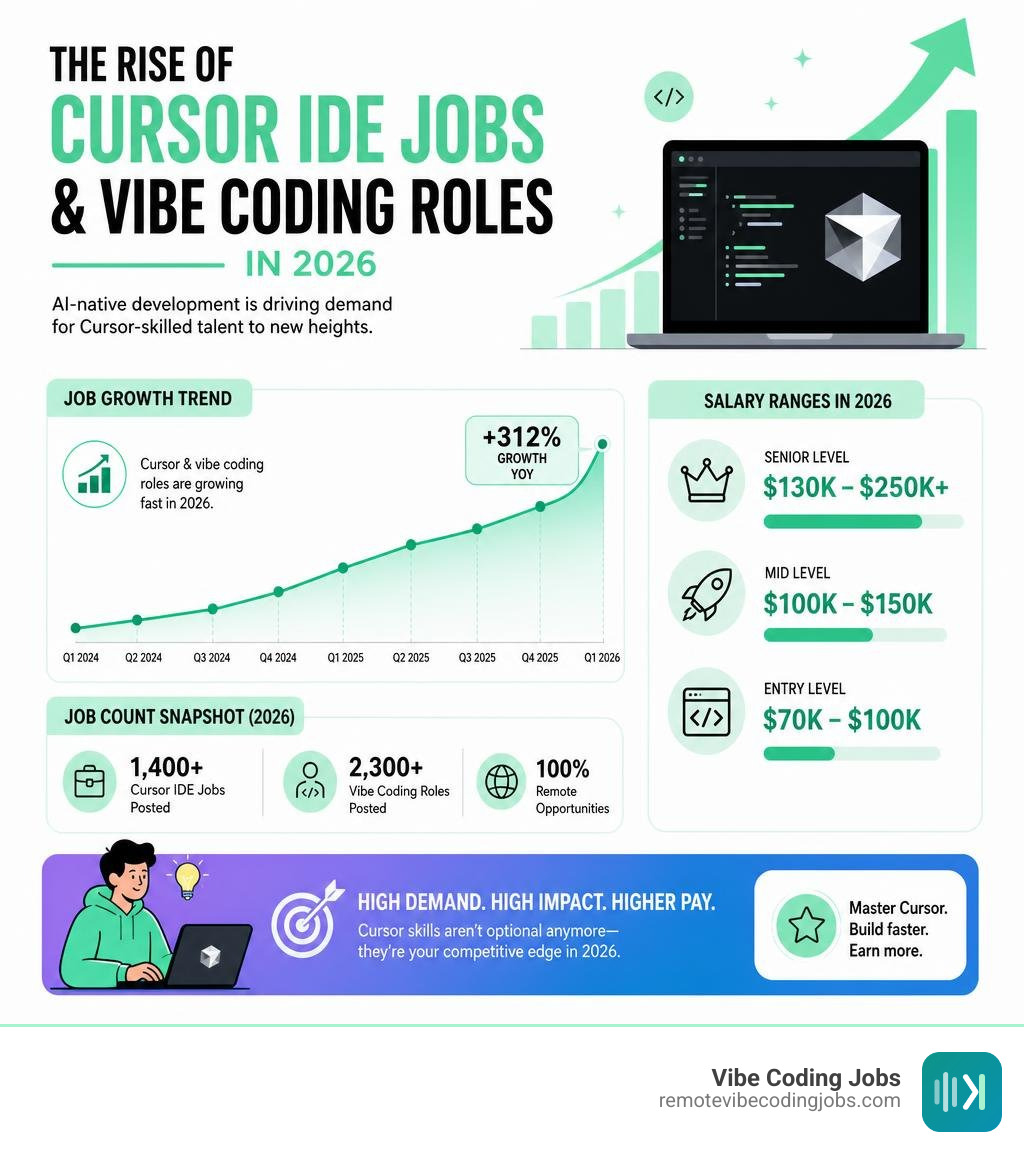
Something big has shifted in developer hiring. In 2026, Cursor isn’t just a nice-to-have tool — companies are writing it directly into job descriptions. There are now hundreds of open remote roles where Cursor proficiency is a core requirement, not a footnote.
The problem? These jobs are scattered across dozens of platforms. General job boards bury them under irrelevant results. And most developers are still scrolling LinkedIn when the best roles live somewhere else entirely.
Senior AI-first developers with Cursor experience can command $130K–$250K+. Even mid-level roles are hitting $100K–$150K. The demand is real, the pay is competitive, and the roles are genuinely remote.
You just need to know where to look.
I’m part of the RVCJ Editorial team at Remote Vibe Coding Jobs — we cover AI-assisted development, remote hiring trends, and career guidance for developers building with tools like Cursor, and we’ve spent considerable time mapping out every major remote cursor job board so you don’t have to. With that experience in hand, here’s exactly where to focus your search.
Remote cursor job board terms made easy:
- Where can I find remote software engineering roles that specifically encourage using AI tools like Cursor or Claude?
- async vibe coding jobs
Why Companies are Hiring for Cursor Experience in 2026
The software engineering landscape has fundamentally transformed. In July 2026, we are no longer debating whether AI will write code—we are actively hiring the engineers who know how to direct it. Cursor, the AI-first code editor built on top of VS Code, has emerged as the definitive tool for this new era.
But why are companies specifically seeking Cursor experience on a remote cursor job board?
Unlike traditional IDE extensions that merely offer basic autocompletion, Cursor integrates deeply with large language models like Claude 3.5 Sonnet and GPT-4. It enables:
- Codebase-Aware Completions: Cursor indexes your entire repository, allowing the AI to understand your project structure, design patterns, and internal dependencies.
- Multi-File Reasoning: Developers can ask the editor to refactor code or implement features that span across multiple files simultaneously, reducing manual coordination.
- Natural Language Editing: The transition to “vibe coding” means engineers can focus on system design and product architecture while the editor handles the boilerplate syntax.
This shift has created a massive demand for developers who can leverage these capabilities to ship software 2x to 5x faster. Startups and forward-thinking enterprises alike realize that a developer fluent in Cursor can deliver the output of a small team.
To understand how this changes your career trajectory, you can explore our breakdown of the cursor copilot developer jobs remote market career path and review the specific cursor copilot developer jobs remote requirements to see what hiring managers are looking for today.
The Best Remote Cursor Job Board Options to Find Your Next Role
Finding these cutting-edge roles requires looking in the right places. Traditional job boards often fail to categorize AI-assisted engineering properly, leaving you to sift through thousands of legacy listings.
Fortunately, specialized platforms and direct channels have emerged to connect AI-fluent developers with companies that encourage high-leverage workflows.

Here are the top options to bookmark today:
1. Remote Vibe Coding Jobs (RVCJ)
We built Remote Vibe Coding Jobs specifically to address this gap. Our platform aggregates remote “vibe coding” and AI-assisted development roles at async-first companies. We curate daily listings and filter them by culture, tech stack, and specific AI tools like Cursor and Claude. If you want a team that expects you to use AI to multiply your output, this is your starting point.
2. Cursor’s Official Careers Page & Partners
If you want to build the tool itself, you can apply directly to the team behind the editor. You can view open roles on the official Cursor · Careers page or check out active engineering listings on Jobs at Cursor .
3. Direct Outreach and AI-First Startup Portals
Many of the most exciting roles using Cursor are at early-stage, fast-moving startups. Instead of waiting for these roles to appear on general job boards, developers can monitor startup directories, GitHub repositories of AI tools, and apply directly through company career pages.
How to Navigate a Remote Cursor Job Board for Maximum Success
When searching for your next role, simply typing “software engineer” won’t cut it. You need a strategic approach to find companies that truly embrace AI-first development:
- Use Tool-Specific Filters: Search specifically for keywords like “Cursor”, “Claude Code”, “vibe coding”, or “AI-assisted”. This filters out legacy teams that might view AI tools with suspicion.
- Leverage Work-Model Filters: Ensure you select “100% Remote” or “Work from Anywhere” to avoid hybrid traps.
- Analyze the Tech Stack: Look for modern stacks (TypeScript, Next.js, Python, Tailwind) that align perfectly with Cursor’s code-generation strengths.
- Look for Salary Transparency: Focus your energy on boards that publish clear salary ranges so you can target high-paying, high-leverage positions.
For a deeper dive into navigating these platforms, check out our guide on cursor copilot developer jobs remote opportunities.
Key Features of a High-Quality Remote Cursor Job Board
Not all job boards are created equal. A high-quality remote cursor job board should provide:
- Daily Refreshed Listings: AI startups move incredibly fast; listings older than a few weeks are often already filled.
- Vetted Async-First Companies: The best teams using Cursor are built around asynchronous communication, trust, and high autonomy.
- Tool and AI Stack Insights: The platform should clearly state whether the company provides enterprise Cursor licenses and encourages LLM usage.
To learn more about what makes a great platform and how to spot the best hiring companies, read our article on cursor copilot developer jobs opportunities.
Common Job Titles and Salaries for Cursor Developers
As companies adapt to AI-assisted workflows, new job titles are emerging. These roles reflect a shift from manual coding to system orchestration, prompt engineering, and rapid prototyping.
| Job Title | Average Salary Range | Key Skills Required | Focus Area |
|---|---|---|---|
| AI-First Software Engineer | $130,000 – $210,000 | TypeScript, React, Cursor, Prompt Engineering, System Design | Building production apps using AI-assisted workflows. |
| Forward Deployed Engineer | $80,000 – $120,000 | Python, JS/TypeScript, Customer-Facing, AI Workflow Design | Embedding with clients to build and harden production-grade AI workflows. |
| AI Adoption Engineer | $110,000 – $170,000 | LLMs, Developer Tooling, CI/CD, Training & Enablement | Helping internal teams integrate Cursor and other AI tools into their pipelines. |
| Vibe Coder / Creative Technologist | $90,000 – $150,000 | Next.js, Tailwind, Cursor, Rapid Prototyping, v0 | Shipping MVPs and user-facing features at lightning speed. |
| Senior AI Systems Architect | $180,000 – $250,000+ | System Architecture, LLM APIs, Vector Databases, Security | Designing the high-level infrastructure that AI models and agents interact with. |
How to Build a Portfolio and Gain Cursor Experience
You do not need a computer science degree from an Ivy League university to land a high-paying Cursor role. In 2026, employers value proof of delivery and AI fluency far more than credentials.

Here is how you can build a stand-out portfolio that proves your Cursor expertise:
- Build and Ship Public Side Projects: Use Cursor to build 3 to 5 real-world applications. Focus on full-stack projects using modern frameworks like Next.js, Supabase, and Tailwind CSS.
- Document Your Workflow: Don’t just show the final product. Write blog posts or record short Loom videos demonstrating how you used Cursor to build the app. Show how you used inline edits, multi-file chat, and prompt iteration to solve complex bugs.
- Contribute to Open Source: Find open-source projects and use Cursor to identify bugs, write test suites, or implement new features. Submit clean pull requests with detailed, AI-assisted documentation.
- Master Prompt Engineering: Learn how to write highly effective prompts that guide the LLM to generate clean, maintainable code rather than messy boilerplate.
To accelerate your learning curve, read our comprehensive vibe coding with cursor tutorial unleash your ai coding potential and check out our cursor copilot developer jobs remote reviews tutorial for practical, hands-on advice.
Frequently Asked Questions about Cursor Jobs
What is the difference between vibe coding and traditional software engineering?
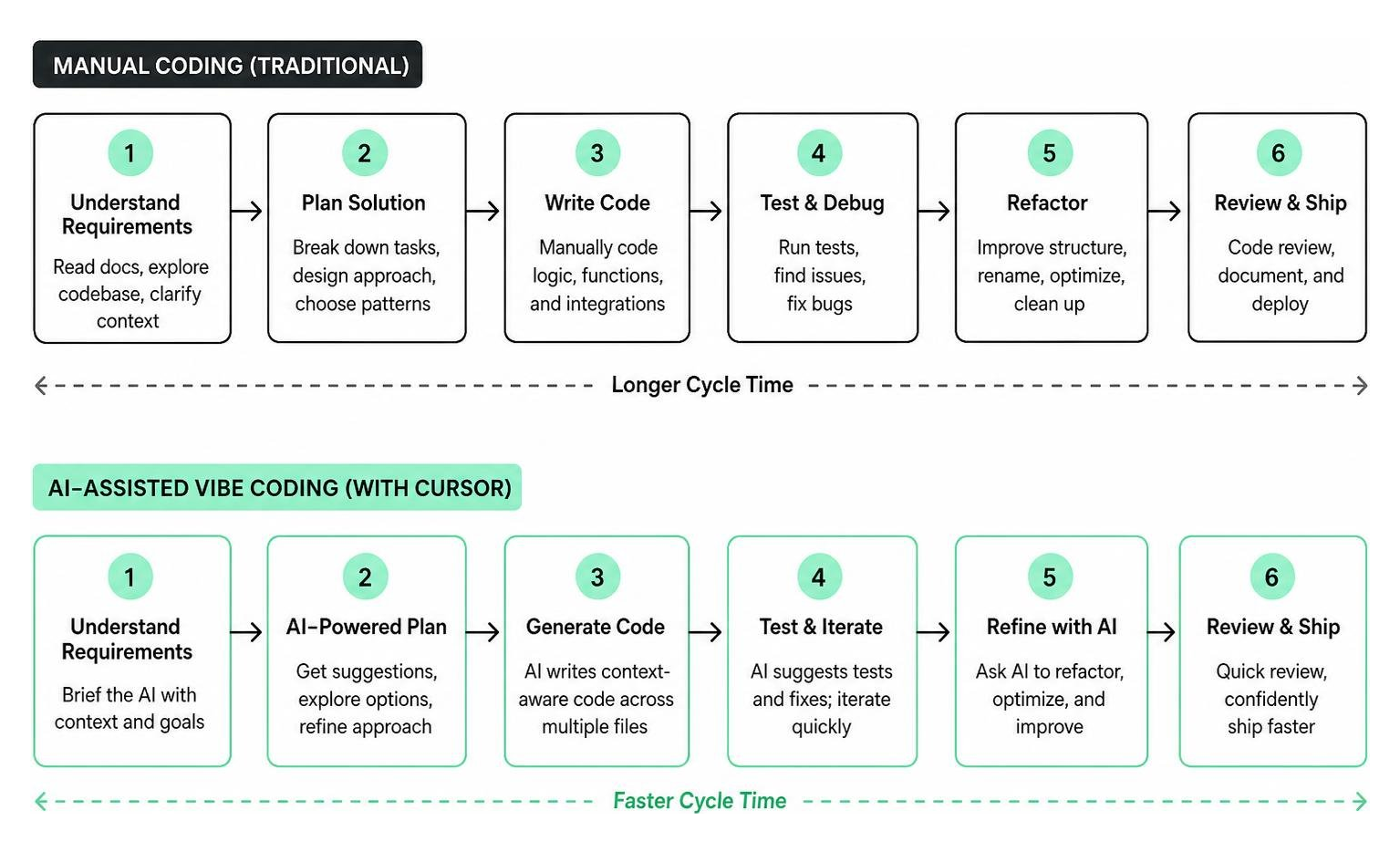
Traditional software engineering involves manually writing syntax, managing boilerplate code, and spending hours debugging syntax errors. Vibe coding, on the other hand, shifts the developer’s role to system architecture, product design, and quality assurance. You describe the “vibe” and functionality of what you want in natural language, and AI tools like Cursor generate the code. The human developer acts as the conductor, reviewing, refining, and assembling the pieces.
Are most Cursor developer jobs fully remote or hybrid?
The vast majority of companies hiring specifically for Cursor experience are remote-first or async-first. Because these companies value speed, efficiency, and modern tooling, they naturally reject legacy hybrid and on-site constraints. They focus on output rather than hours spent at a desk, making these roles ideal for digital nomads and remote professionals.
What programming languages are most in-demand for Cursor roles?
While Cursor supports almost every language, the most in-demand stacks for AI-assisted roles include TypeScript/JavaScript (especially React, Next.js, and Node.js) and Python (for AI integrations and backend services). These languages have massive public datasets, making the underlying LLMs incredibly proficient at generating and debugging them.
Conclusion
The era of manual boilerplate coding is winding down. In July 2026, the developers who command the highest salaries and enjoy the most freedom are those who have mastered AI-assisted workflows.
By using a specialized remote cursor job board like Remote Vibe Coding Jobs, you can bypass the noise of traditional platforms and connect directly with forward-thinking, async-first companies that want you to work smarter, not harder.
Stop endless scrolling on outdated platforms. Update your resume to highlight your AI-first workflows, build out your project portfolio, and take the next step in your career.
Ready to elevate your career?
Find Remote AI Engineer Jobs on Remote Vibe Coding Jobs today!