
What Is Remote NYC Technology — and Why It Matters in 2026
Remote NYC technology refers to the growing ecosystem of tech jobs, companies, and infrastructure based in New York City that can be performed fully or mostly from home. In 2026, Silicon Alley is no longer just a place — it’s a distributed network of engineers, AI builders, and product teams working across the five boroughs and beyond.
Here’s what you need to know at a glance:
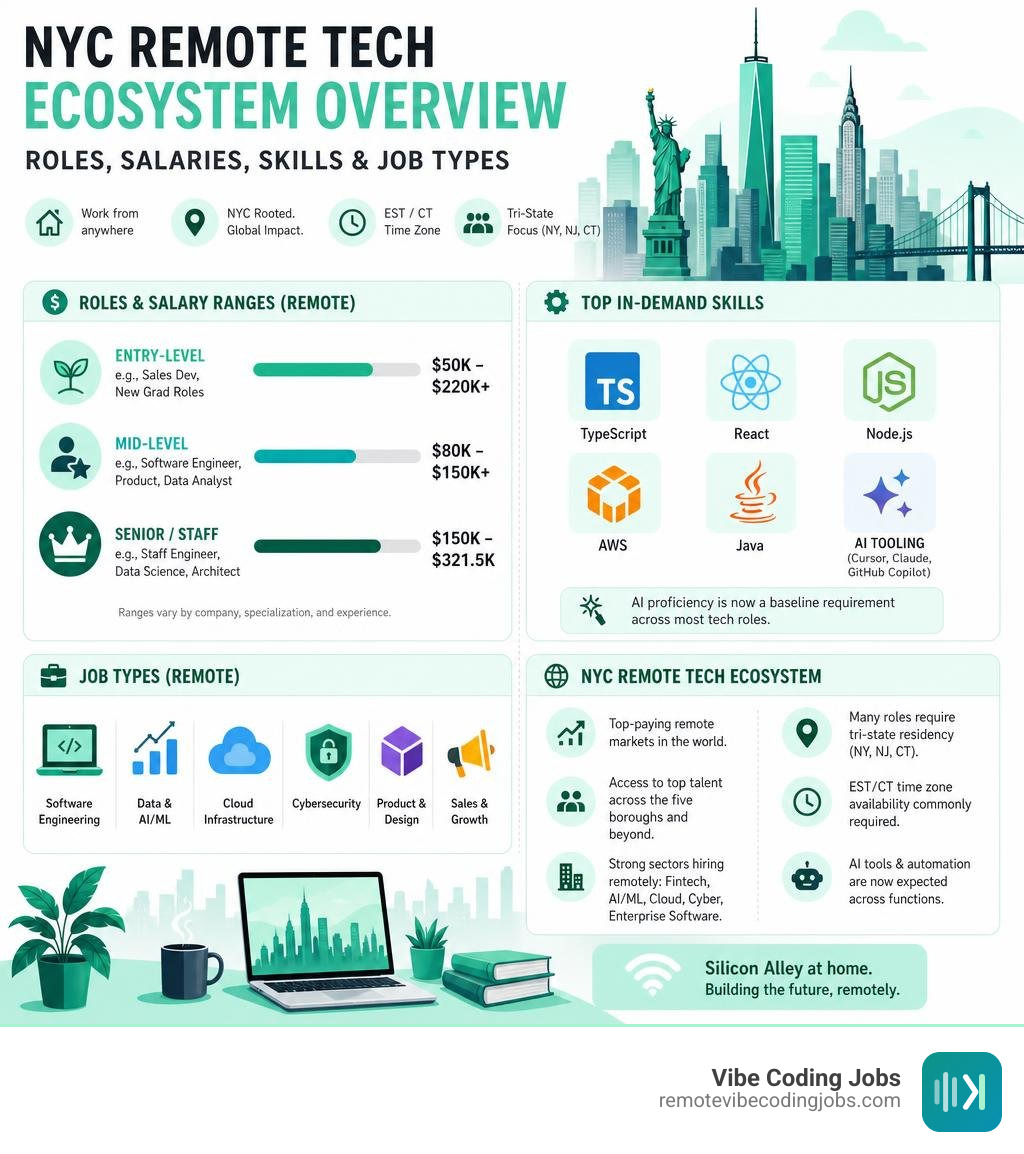
- Entry-level remote IT salaries in NYC range from ~$50,000 (sales development) to $220,000+ (data science, new grad roles)
- Senior and staff-level roles can pay $150,000 to $321,500 depending on the company and specialization
- Top in-demand skills: TypeScript, React, Node.js, AWS, Java, and AI tooling (Cursor, Claude, GitHub Copilot)
- Many “remote” NYC roles still require tri-state residency (NY, NJ, CT) or EST/CT timezone availability
- AI is now a baseline skill — fintech, SaaS, and AI-native startups explicitly list AI tool proficiency as a job requirement
- Key sectors hiring remotely: Fintech, AI/ML, cloud infrastructure, cybersecurity, and enterprise software
The NYC tech market is one of the most competitive — and best-paying — remote job markets in the world. But it has quirks. Geographic restrictions, hybrid expectations, and fast-moving AI skill requirements make it easy to apply to the wrong roles or get filtered out before a human even sees your resume.
This guide cuts through the noise.
I’m Di Su, a software engineer with over 10 years of experience in web development and scalable systems, and I’ve worked across the full stack of remote NYC technology — from building conversion-optimized platforms to shipping production code at growth-stage companies. Read on for a practical breakdown of every layer of this market, from entry-level salaries to AI-native roles.
Quick remote nyc technology definitions:
The Landscape of Remote NYC Technology in 2026

The concept of working in New York City’s tech sector has dramatically evolved. While the physical offices of Flatiron and Chelsea still hum with activity, the real expansion is happening asynchronously. However, “remote” in the context of remote nyc technology rarely means “work from a beach in Bali.”
In 2026, we are seeing highly defined guardrails around remote roles, driven by tax compliance, client-facing requirements, and the need for high-bandwidth collaboration.
The Reality of Remote vs. Hybrid Demand
While fully remote roles are highly sought after, many NYC-headquartered companies operate on a hybrid model or restrict their remote job offers to specific regions. For example, prominent fintech companies like Brigit often state a preference for NYC-based hybrid employees (requiring 2-3 days in the office) but open their doors to fully remote candidates provided they reside in the Eastern (EST) or Central (CT) time zones.
This timezone alignment ensures that team members can participate in synchronous standups and maintain tight feedback loops.
Geographic Salary Tiering
Another major trend shaping the 2026 market is geographic salary tiering. Companies are increasingly adopting market-based compensation models linked to local costs of labor. A prime example is the infrastructure and backend platform sector:
- Tier A (NYC / SF): Staff-level software engineering roles command premium base salaries ranging from $200,000 to $250,000.
- Tier B (Mid-market hubs): The same role pays between $180,000 and $225,000.
- Tier C (Other regional locations): The base salary range adjusts to $170,000 to $212,500.
This tiering means that if you are hired by an NYC firm but live outside the metropolitan area, your compensation will likely be calibrated to your local market index.
Government and Infrastructure Initiatives
The public sector is also adapting. The New York State Office of Information Technology Services (ITS) has formalized policies to support distributed state operations, as detailed on the Remote Work | Office of Information Technology Services portal.
Simultaneously, municipal entities like the NYC Office of Technology and Innovation (OTI) are working to modernize local infrastructure, ensuring that high-speed broadband and digital services reach all five boroughs. This supports a highly distributed local workforce that can work from home in Queens, Brooklyn, or Staten Island without missing a beat.
Entry-Level Roles and Salary Benchmarks
Breaking into the NYC tech scene remotely is highly lucrative, but the barrier to entry requires a modern skill set. The traditional entry-level IT helpdesk job still exists, but it has been largely augmented by cloud-native support, automated operations, and AI-assisted engineering roles.
Here is a breakdown of typical entry-level remote IT and software roles in NYC along with their annual salary ranges:
| Job Title | Typical NYC Remote Salary Range | Core Tech Stack / Skills |
|---|---|---|
| Sales Development Representative (SDR) | $50,000 – $60,000 | Outbound outreach, CRM tools, high-volume communication |
| Bilingual Hybrid Development Rep | $75,000 – $120,000 | Multi-language fluency, lead qualification, client discovery |
| Analyst I (Cybersecurity / Incident Handling) | $85,000 – $120,000 | Malware analysis, system monitoring, detection processes |
| AWS Account Executive | $110,000 – $137,000 | Cloud sales, AWS ecosystem, client relationship management |
| Site Reliability Engineer (SRE) – Entry Level | $105,000 – $300,000 | Automation, Python, cloud infrastructure, system reliability |
| Data Scientist (New Grad) | $120,000 – $220,000 | Machine learning, Python, SQL, predictive modeling, AWS |
| Product Engineer (Entry/Mid) | $140,000 – $200,000 | Full-stack development, React, Node.js, AI tool integration |
As you can see, the compensation ceiling for entry-level technical roles is remarkably high. SRE and Data Science roles command massive premiums because they directly impact system scale and predictive capabilities.
If you want to understand how these numbers scale as you gain experience, check out our comprehensive Remote Senior Software Engineer Salary Guide 2026: What to Expect and dive deep into language-specific trends with our analysis on Remote Developer Salary Trends 2026 Python: A Deep Dive.
Landing Entry-Level Remote NYC Technology Jobs
To land these highly competitive roles, you must optimize your application pipeline.
- Leverage AI Application Assistants: Modern job seekers use AI tools to match their resumes with job descriptions, cutting down application times significantly.
- Tailor Your Portfolio for End-to-End Ownership: Startups do not want developers who only write code when given highly detailed specifications. They want “high-agency” builders who can own a feature from discovery to deployment.
- Join Niche Talent Communities: Instead of shouting into the void on massive job boards, join the talent pipelines of specific companies and platforms that align with your ideal tech stack.
By understanding the current Vibe Coding Salary Pay Range, you can position yourself strategically during salary negotiations, ensuring you are compensated fairly for your modern development skills.
The Rise of AI and Vibe Coding in New York’s Tech Scene

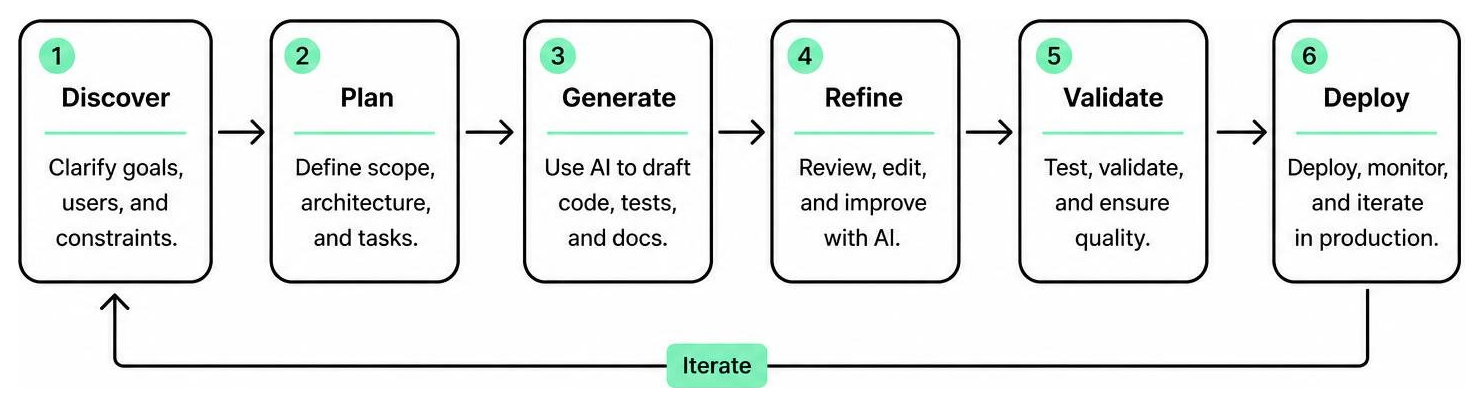
The most disruptive trend in remote nyc technology is the formalization of “vibe coding” — a term that has transitioned from developer slang to an official industry standard. Vibe coding refers to AI-assisted development where the engineer shifts their focus from manual syntax writing to high-level architecture, system design, and product thinking, leveraging AI tools like Cursor, Claude, and GitHub Copilot to generate the underlying code.
We are seeing this play out across the NYC tech ecosystem:
- Fintech Integration: Leading consumer fintech startups now explicitly list “experience using AI tooling efficiently and familiarity with AI-assisted development best practices” as a core requirement for full-stack engineering roles.
- AI-Native Agencies: Agencies like those working on custom “personal software” are hiring Forward-Deployed Engineers at salaries ranging from $120,000 to $180,000 to rapidly prototype custom internal tools for non-technical operations in regulated industries. You can view an active example of this profile via the Forward-Deployed Engineer | Kilvin | New York, NY | Zero G Talent posting.
- Enterprise Sports & Entertainment: Even traditional sports and venue management companies, such as Brooklyn Sports & Entertainment, are hiring AI Engineers (paying $125,000 – $150,000) to build autonomous AI agents and “AI coworkers” using frameworks like LangGraph and Amazon Bedrock.
The workflow of a modern remote developer in NYC has shifted from manual code typing to a continuous loop of system design and AI orchestration:
This evolution is also influencing local tech advocacy. Organizations like Tech:NYC actively engage with city and state policymakers to shape AI governance, ensuring New York remains a fertile ground for AI startups. They hire policy experts, such as their Director of Policy (with a base salary of $120,000 – $160,000), to track regulations in Albany and promote tech-friendly frameworks.
For a deeper look into how these tools are altering the compensation landscape, explore our guide on Remote AI Developer Jobs Tools Salary.
In-Demand Skills for Remote NYC Technology Professionals
If you want to remain highly competitive in this AI-driven market, your technical stack must be modern and versatile. Companies are looking for developers who can bridge the gap between traditional software engineering and modern LLMOps.
- Frontend: Deep familiarity with React, TypeScript, and native mobile development platforms (Swift/Android). See how startups are hiring for these roles on Senior Full Stack Engineer (React + Node.js) | Statusphere – A-Players | Built In .
- Backend & Cloud: Node.js, Java, Python, and AWS. Strong understanding of Infrastructure as Code (IaC) using Terraform or AWS CDK.
- AI & Automation: Direct experience integrating LLM APIs, building tool-calling patterns, and leveraging workflow automation platforms like n8n or Make.
- Database Systems: Normalizing schemas and optimizing performance in relational databases (PostgreSQL, MySQL) and cloud data warehouses (Snowflake).
To learn how to position these skills on your resume and explore which companies are actively hiring, check out our resource on Remote Developer Jobs AI Tools Career Growth Companies.
Frequently Asked Questions About Remote Tech in NYC
Navigating the remote tech job market can lead to a lot of questions. Here are the answers to some of the most common queries we receive from remote job seekers looking to break into the NYC tech scene.
What are the top platforms to find remote IT jobs in NYC?
Finding the right remote role requires looking beyond traditional, generic job boards. We recommend using a mix of specialized and broad platforms:
- Niche Aggregators: At RemoteVibeCodingJobs, we curate daily listings specifically filtered by culture, modern tech stacks, and AI tools like Cursor and Claude. We focus exclusively on async-first, forward-thinking companies.
- Direct Company Career Pages: Many high-growth startups do not post all their active roles on mainstream job boards. Checking the career portals of companies listed on Built In NYC can reveal hidden gems.
- Mainstream Directories: You can search broad listings on platforms like LinkedIn and Indeed to find enterprise roles at firms like PwC or Certinia.
How does geographic salary tiering affect remote NYC workers?
Geographic salary tiering means that your physical location directly impacts your base pay. If you live in New York City or San Francisco (Tier A), you will receive the highest scale of the salary band to offset the local cost of living.
If you move to a lower-cost area (Tier B or C), your employer may adjust your compensation downward based on their regional labor index. Always clarify how a company structures its remote compensation tiers during the initial recruiter screen.
What is the role of AI tools in securing remote NYC tech roles?
AI tools play a double role. First, they help you optimize your application process — utilizing AI resume matchers can help you align your experience with the exact keywords a company’s applicant tracking system (ATS) is looking for.
Second, demonstrating that you use AI coding assistants efficiently makes you a highly attractive candidate to modern, fast-moving startups. Companies want to know that you can leverage LLMs to automate repetitive tasks, allowing you to focus on high-level architecture and rapid feature delivery.
Conclusion
The remote tech landscape in New York City is incredibly vibrant, offering some of the highest compensation packages in the industry. Whether you are an entry-level SRE looking to secure a six-figure starting salary or a senior full-stack engineer ready to embrace the AI-assisted “vibe coding” revolution, Silicon Alley has a remote home for you.
Success in this market requires a high-agency mindset, a modern tech stack, and the ability to build and iterate rapidly using the latest AI tools.
If you are ready to find your next role at an async-first company that values output over hours, explore our curated list of opportunities on our Remote NYC Tech Jobs Portal. Let’s build the future of technology together, from the comfort of our own homes.