
How Swift International Human Resources Supports Cross-Border Hiring
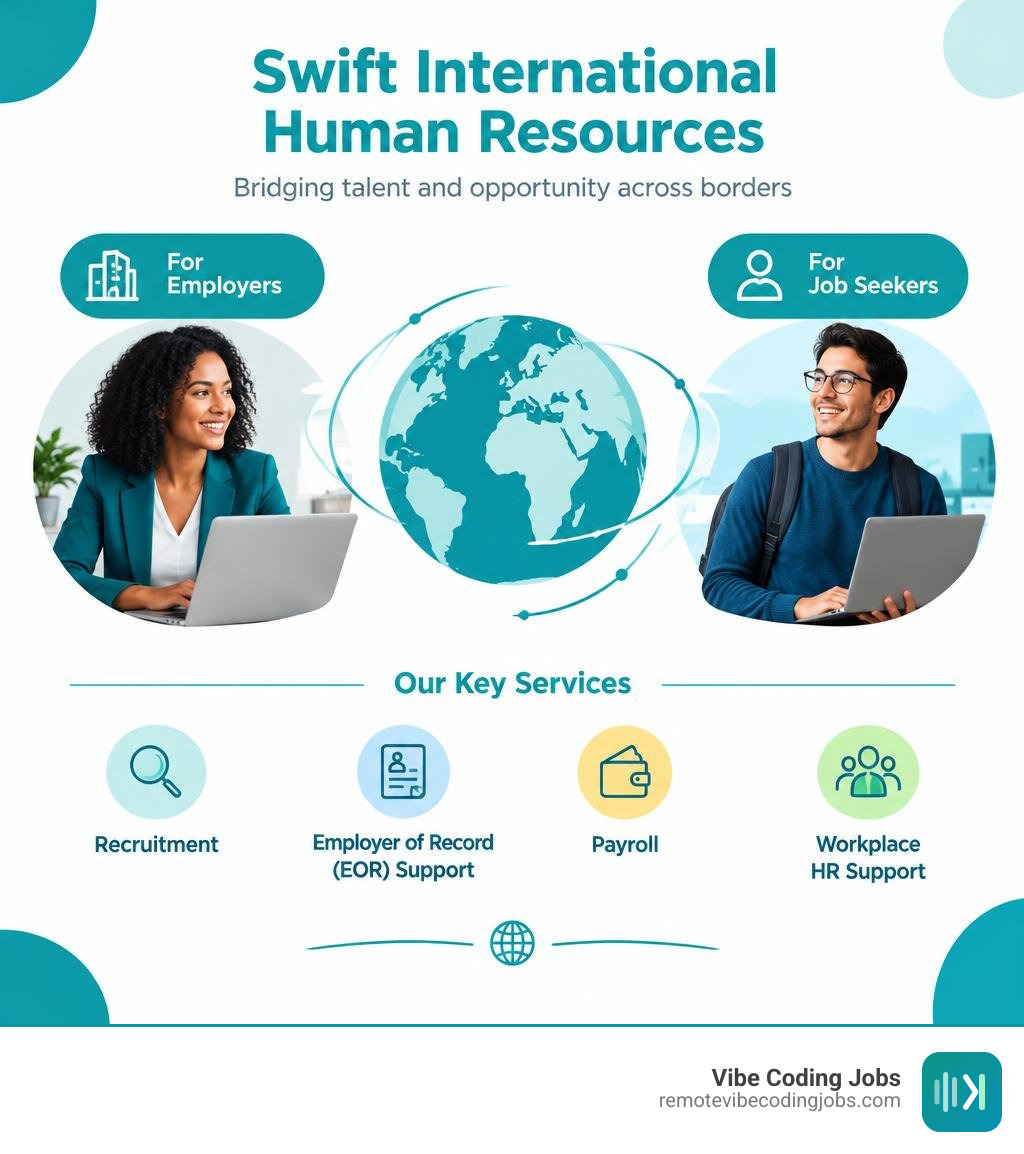
Swift International Human Resources helps businesses hire and manage staff in South Africa. Its services include recruitment, Employer of Record (EOR) support, payroll, and workplace HR support. For job seekers, that can mean access to roles with international employers without assuming every role is remote or open to every applicant.
If you’re a Swift or iOS developer, check the role itself before applying: Does it match your skills, location, pay needs, and preferred way of working? An HR provider can handle parts of the hiring process, but it does not replace that check.
I’m Di Su, a software engineer with more than 10 years of experience building web products and improving hiring workflows. I’ll use that practical lens to explain what swift international human resources offers and what developers should verify before pursuing a role.
Swift international human resources terms to know:
Understanding Swift International Human Resources and Global Staffing Services

Expanding engineering teams across international borders requires solving complex administrative, legal, and operational hurdles. Navigating foreign employment laws, local statutory contributions, and payroll systems can divert focus from core technical roadmaps. When organizations lack an established corporate presence in target regions, setting up compliant hiring pathways often introduces significant bureaucratic overhead.
Specialized human resources partners bridge these operational gaps. As an established staffing and employment solutions partner, Swift International Human Resources provides the infrastructure that enables overseas enterprises to source, contract, and manage professionals in South Africa and connected international markets.
Core Services Offered by Swift International Human Resources
Organizations managing cross-border teams require end-to-end workforce support. Swift delivers an integrated suite of human resource capabilities tailored to cross-border operations:
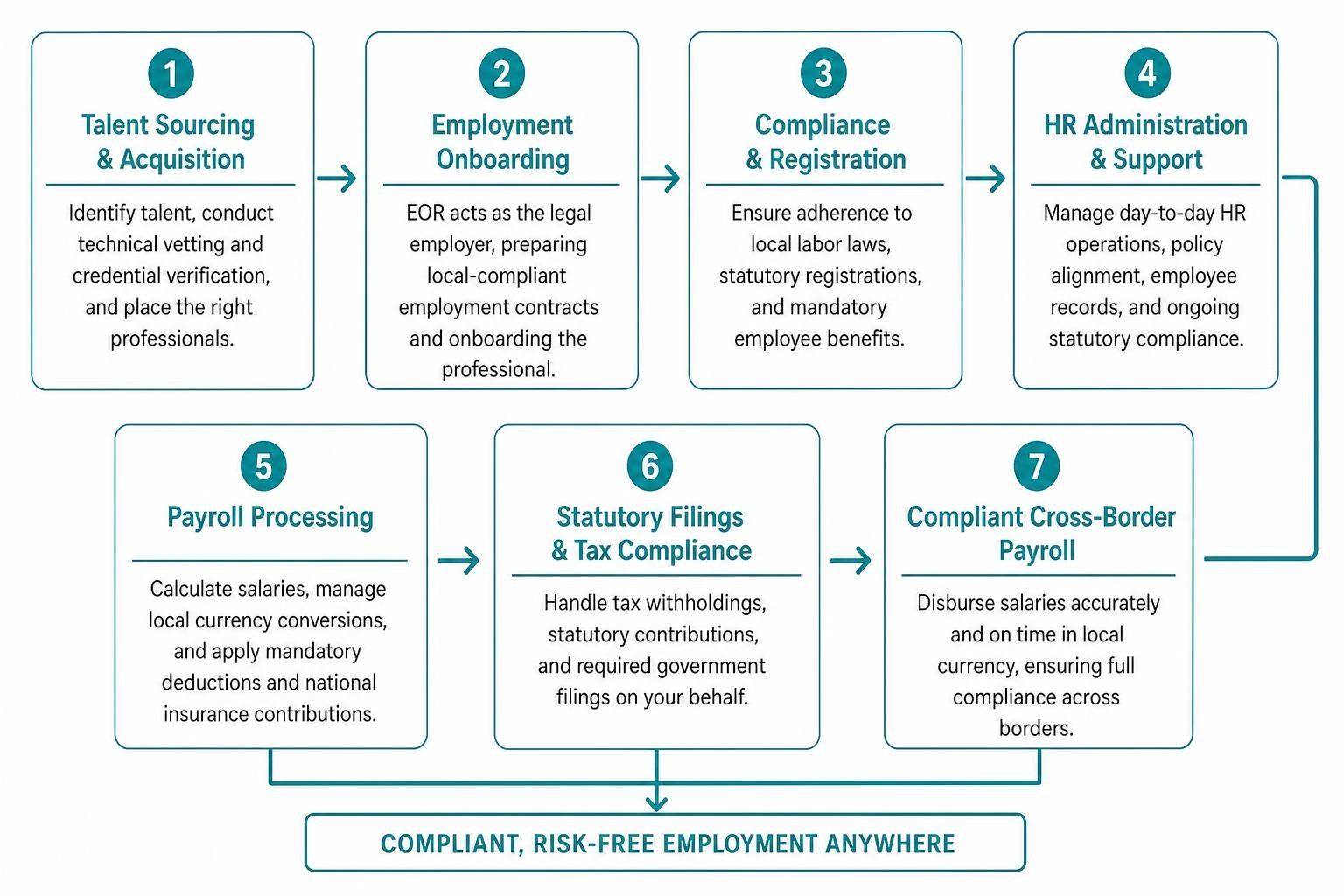
- Employer of Record (EOR) Services: Acting as the legal employer on record, handling statutory compliance, employment contracts, and tax filings while the client directs day-to-day work.
- Recruitment & Talent Acquisition: End-to-end talent identification, technical vetting, credential verification, and candidate placement across specialized industries.
- Payroll Outsourcing: Managing local currency conversions, mandatory deductions, national insurance funds, and timely salary disbursements across various jurisdictions.
- Industrial Relations Support: Aligning internal company policies with local dispute-resolution protocols and statutory labor guidelines to minimize employment liabilities.
- Occupational Health and Workplace Setup: Ensuring physical or remote working arrangements adhere strictly to regional workplace health and safety legislation.
Workforce Distribution and Executive Leadership
Understanding the internal distribution of an HR partner offers valuable insight into its operational reliability. Analytics from the Swift International Human Resources company profile highlight a specialized workforce structured around operational resilience and client support.
Operating with an estimated workforce of 125 employees and maintaining a solid +7.8% year-over-year team expansion, the agency displays steady organizational growth. The team structure features specialized departments:
- Workforce Breakdown: Finance accounts for approximately 9% of internal headcount, Administrative roles represent 7%, Operations sits at 7%, and core HR functions comprise 6%.
- Tenure Analytics: High employee stability is evident, with 31% of the staff recording over 11 years of continuous service, alongside healthy cohorts across intermediate tenure tiers (19% between 5–7 years and 19% between 8–10 years).
- Geographic Distribution: Operations are anchored at its Cape Town headquarters in South Africa (accounting for roughly 43% of direct staffing allocations), supported by strategic global links across key markets.
Navigating Compliance and Employer of Record Solutions
For modern development teams, evaluating whether to establish a foreign subsidiary or partner with an EOR provider is a critical strategic decision. The following breakdown illustrates how these paths differ across key operational metrics:
| Metric / Consideration | Direct Local Entity Establishment | Employer of Record (EOR) Solution |
|---|---|---|
| Speed to Market | 4 to 9 months for corporate registration | Immediate; onboarding completed in days |
| Initial Capital Investment | Substantial legal, tax, and registration overhead | Low; predictable recurring service fee structure |
| Labor Law Liability | Direct organizational legal exposure | Managed and mitigated by the EOR entity |
| Payroll & Statutory Filing | Requires internal legal and accounting staff | Fully managed by local payroll specialists |
| Termination & Offboarding | Direct exposure to dispute resolution forums | Structured compliance handling by HR specialists |
Benefits and Challenges of EOR in Emerging Markets
Utilizing an Employer of Record in South Africa unlocks clear benefits for scaling companies looking to expand their technical capabilities:
- Rapid Time-to-Hire: Engineering leaders can onboard talent immediately without waiting months for regulatory entity registration and bureaucratic approvals.
- Access to Competitive Technical Talent: Global companies tap into skilled, English-speaking talent pools operating in compatible time zones with Western European and North American markets.
- Reduced Regulatory Exposure: Statutory reporting, payroll deductions, and mandatory benefits align automatically with regional standards, safeguarding organizations against non-compliance penalties.
- Predictable Operational Costs: Fixed service tiers replace volatile legal retainer fees and unpredictable entity maintenance expenses.
However, operating through an EOR also introduces considerations that teams must actively manage:
- Operational Alignment: Day-to-day task delegation remains with the client, requiring clear async communication frameworks and established management protocols.
- Localized Benefits Parity: Companies must carefully structure performance bonuses, health coverage, and supplemental benefits to match local expectations and market standards.
South African Labor Law Compliance and Industrial Relations
Operating compliantly within South Africa demands a firm grasp of the Basic Conditions of Employment Act (BCEA) and the Labour Relations Act. Attempting to manage these frameworks remotely without local expertise exposes international employers to compliance pitfalls, costly arbitration hearings, and regulatory fines.
Swift addresses these statutory requirements through certified candidate screening, criminal record clearance verification, and structured employment agreements. When workplace grievances or structural changes occur, their industrial relations professionals oversee dispute resolution processes to ensure full regulatory adherence and smooth operational continuity.
Technology, Innovation, and Modern Recruitment Processes
Modern talent acquisition relies heavily on connected digital ecosystems. Global human resource management has evolved into a data-informed, automated discipline where operational speed and candidate transparency directly impact recruitment outcomes across distributed workforces.

How Swift International Human Resources Leverages HR Tech
Effective global hiring combines human expertise with modern software tooling to create frictionless cross-border employment pipelines:
- Automated Candidate Pipelines: Digital tracking platforms manage candidate screening, skill assessments, and documentation validation seamlessly.
- Secure Workforce Portals: Centralized interfaces allow employees to manage time tracking, access pay statements, and review statutory tax documentation.
- Data-Informed Workforce Analytics: Predictive metrics help evaluate time-to-hire targets and identify emerging talent availability across technical specializations.
- Asynchronous Onboarding Workflows: Structured digital checklists ensure newly placed engineers receive necessary access, legal disclosures, and equipment quickly.
Client Track Record and Proven Hiring Timelines
Long-term client partnerships spanning up to 11 years showcase the effectiveness of structured global HR pipelines. Key performance milestones achieved through integrated staffing frameworks include:
- Significantly Accelerated Placement Cycles: Standard hiring workflows execute in a fraction of the time required for traditional international entity setups.
- High Workforce Retention: Structured onboarding and clear compliance frameworks maintain low turnover across international placements.
- Scalable Project Deployments: Flexible staffing configurations support rapid team scaling during peak engineering workloads without long-term structural liabilities.
Frequently Asked Questions About Global Staffing Solutions
What is an Employer of Record and how does it protect candidates?
An Employer of Record (EOR) serves as the registered legal employer for a worker located in a different jurisdiction from the hiring company. The EOR manages employment agreements, processes monthly local payroll, remits statutory taxes, and guarantees mandatory local benefits. This framework protects professionals by ensuring their employment contracts comply fully with local labor laws, preventing misclassification risks.
How fast can international companies hire in South Africa?
Hiring timelines through an established EOR partner are significantly shorter than establishing a local corporate entity. While registering a subsidiary can take months, an EOR framework allows candidates with verified credentials to be onboarded, contracted, and placed on compliant payroll systems in a matter of days.
What industries benefit most from cross-border HR solutions?
Cross-border HR and EOR solutions support diverse industries, including:
- Software engineering, mobile app development, and cloud architecture teams.
- Customer support, business process outsourcing, and technical helpdesks.
- Engineering, infrastructure management, and project-based consulting.
- Financial services and operations teams requiring aligned time-zone coverage.
Conclusion
Navigating cross-border employment demands clear operational systems, whether you are scaling an engineering team or evaluating international career opportunities. Utilizing an established HR partner helps remove legal ambiguity, ensuring compliance, reliable payroll administration, and stable career paths across global markets.
For developers looking to apply their skills in flexible work environments, we invite you to explore remote mobile developer roles at RemoteVibeCodingJobs. Explore open listings today to find your next career opportunity.
— Di Su