
Find the Right Swift Courier Job for You
Swift courier jobs can refer to practical logistics roles such as local parcel delivery, same-day delivery, line-haul driving, dispatch, and warehouse work. If you found this guide through RemoteVibeCodingJobs, the connection is career research: many delivery operations now depend on routing apps, proof-of-delivery software, warehouse systems, and AI-assisted scheduling tools, while RemoteVibeCodingJobs focuses on remote AI-assisted development jobs that build or improve similar digital products.
Most driver roles involve loading packages, planning efficient routes, completing deliveries on time, collecting proof of delivery, and communicating clearly with customers and dispatch.
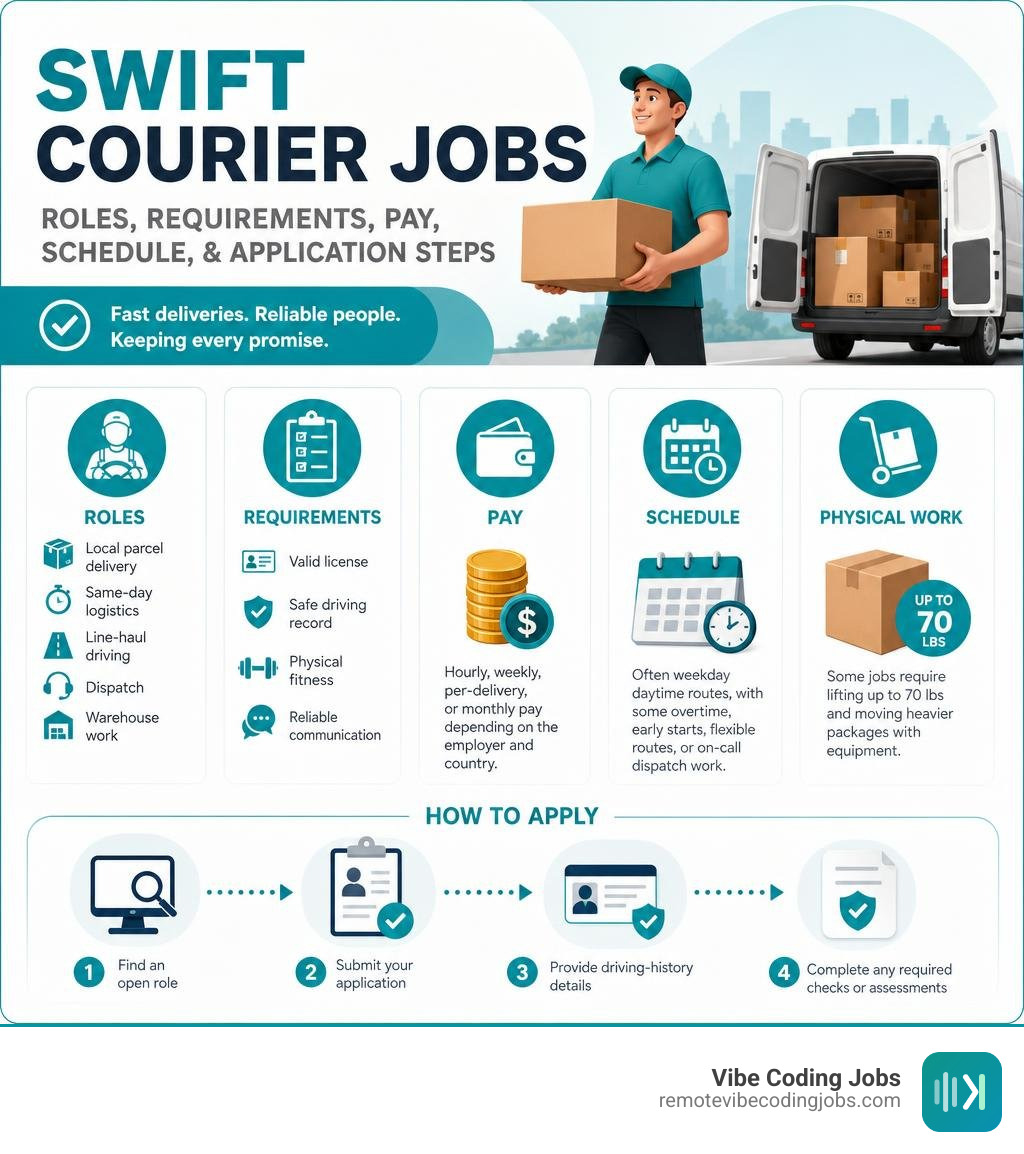
Here is the quick view:
| What to expect | Typical details |
|---|---|
| Employment type | Employee roles or independent-contractor driver positions |
| Basic requirements | Valid license, safe driving record, physical fitness, and reliable communication |
| Physical work | Some jobs require lifting up to 70 lbs and moving heavier packages with equipment |
| Pay structure | Hourly, weekly, per-delivery, or monthly pay depending on the employer and country |
| Schedule | Often weekday daytime routes, with some overtime, early starts, flexible routes, or on-call dispatch work |
| How to apply | Find an open role, submit your application, provide driving-history details, and complete any required checks or assessments |
Swift can refer to several different courier and transportation businesses, and it can also refer to the Swift programming language used in iOS and logistics app development. For courier roles, job terms are not universal. Always confirm the legal employer, whether the role is employee or contractor-based, the vehicle and insurance arrangements, pay method, service area, and benefits before accepting an offer.
I am Di Su, a software engineer and growth-focused builder with experience creating high-traffic job and product experiences. I bring that practical, candidate-first lens to swift courier jobs, helping you cut through vague listings and understand both the delivery work itself and the tech systems behind modern logistics.
Swift courier jobs terminology:
- Swift Transportation Driver Training Pay
- Swift Current Career Opportunities
- Working for Taylor Swift
Overview of Swift Courier Jobs: Roles and Responsibilities
When searching for swift courier jobs, it helps to understand that courier logistics spans several different job roles. Across the global delivery network, courier operations range from localized same-day package handoffs to regional line-haul driving and centralized dispatch management.
For readers of RemoteVibeCodingJobs, this overview is also useful if you are exploring logistics technology careers. The everyday problems couriers face, such as route planning, package scanning, exception handling, customer notifications, and dispatch coordination, are the same problems software teams often solve with mobile apps, internal tools, mapping APIs, and AI-assisted workflow automation.
Courier delivery providers have operated in the logistics industry for decades. For example, major parcel networks have built presences in over 10,000 locations across more than 25 years of operation. Regional players like Swift Delivery & Logistics Inc. (founded in 1992 and generating around $17.8 million in annual revenue) highlight how established the last-mile parcel ecosystem is.
Daily Responsibilities in Swift Courier Jobs
A standard day in a courier position starts well before turning the ignition key. Drivers are responsible for organizing shipments, verifying address accuracy, and ensuring cargo is properly balanced inside the delivery vehicle.
Key daily tasks include:
- Package Handling & Sorting: Safely loading delivery vans, arranging parcels by stop sequence, and inspecting shipments for damage.
- Route Optimization: Using GPS tools and navigation units to build efficient travel sequences that avoid traffic bottlenecks and cut down transit times.
- Physical Transport: Lifting individual boxes up to 70 lbs independently and maneuvering larger shipments up to 150 lbs using hand trucks or carts.
- Proof of Delivery (POD): Collecting signatures electronically, scanning barcodes, and sending real-time automated delivery notifications to dispatch and customers.
- Vehicle Care: Completing daily pre-trip and post-trip vehicle safety inspections, topping off fluids, and reporting maintenance needs immediately.
These responsibilities also create strong product knowledge for people who later move into logistics software, operations analytics, QA testing, customer support engineering, or product management roles.
Independent Contractor vs. Employee Courier Positions
Understanding the employment arrangement is essential when applying for swift courier jobs. Companies offer both W-2 employee positions and 1099 independent contractor driver models depending on the service region and route type.
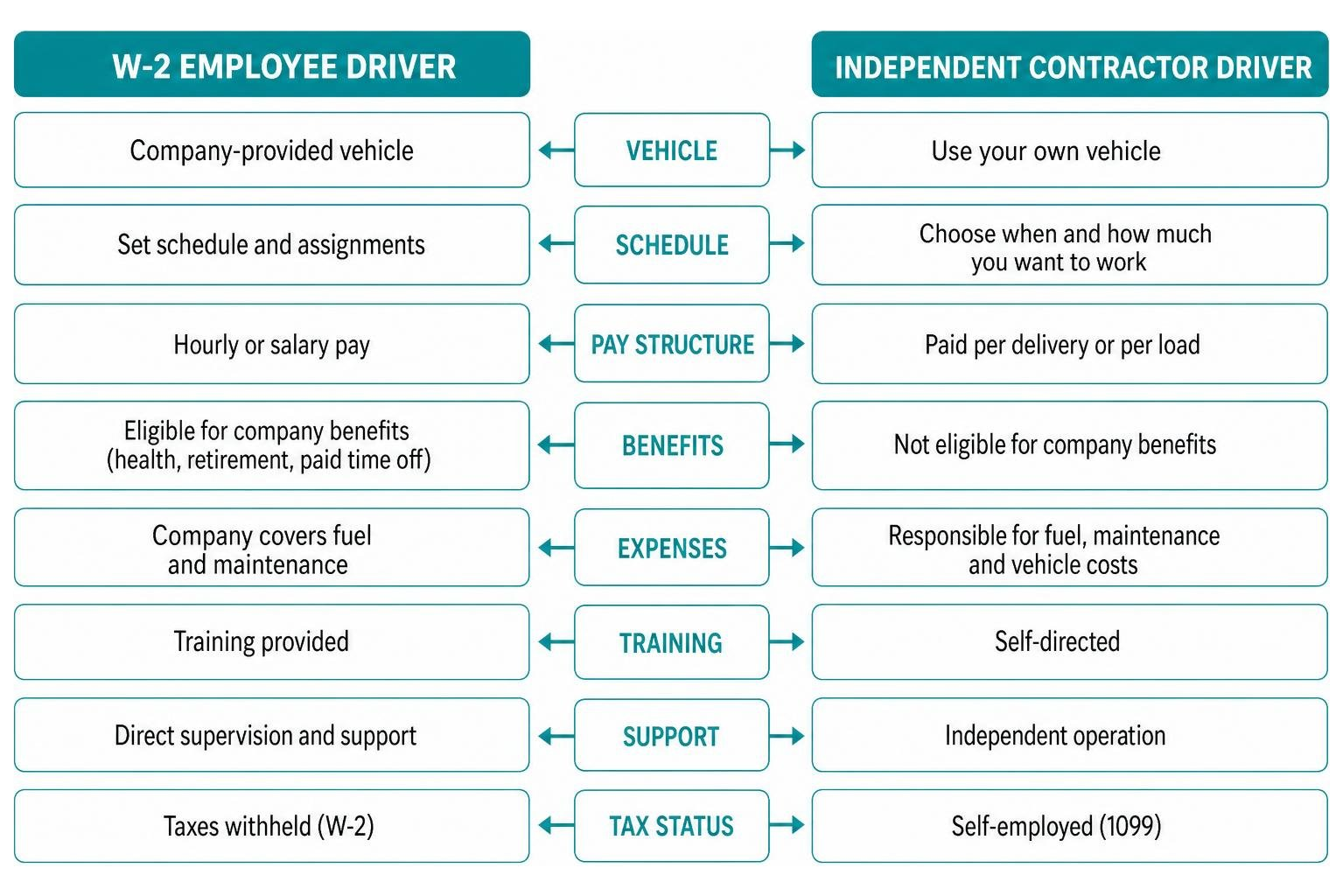
Under W-2 employee setups (such as line-haul van drivers or corporate delivery positions), drivers receive company-provided vehicles, scheduled shifts, and direct benefits. In contrast, independent contractor models allow drivers to utilize their own cargo vans or vehicles, enjoy enhanced schedule flexibility, and receive dispatch assignments as self-employed operators. To explore contractor options directly, check out the IC Driver Application details to understand vehicle and insurance criteria.
If you are comparing courier work with remote tech work, pay attention to the same practical questions RemoteVibeCodingJobs encourages candidates to ask: who is the legal employer, what tools are required, how performance is measured, and how much schedule control you actually have.
Qualifications and Driver Requirements
Landing a courier role requires meeting specific safety standards, physical criteria, and legal documentation requirements. Employers prioritize reliable drivers who maintain safe driving records while representing their delivery brand.
For candidates who may later pivot into remote logistics technology or AI-assisted development roles, these requirements also build useful domain expertise. Experience with delivery apps, handheld scanners, dispatch communication, exception reporting, and customer-service workflows can become valuable context when applying for software, QA, support, or operations roles in logistics-adjacent tech teams.
Driving Record and License Standards
Your driving history is the single most important factor when recruiters evaluate your application. Most courier agencies enforce strict abstract guidelines to maintain compliance with commercial driver insurance policies.
Standard licensing and abstract rules include:
- Valid License: A clean, current driver’s license appropriate for the vehicle class (e.g., standard Class D or Class C, or C1 7.5-Tonne commercial credentials for larger freight vans).
- Clean Driving Abstract: Usually no more than 2 minor moving violations or accidents within the prior 24 months.
- Insurance Restrictions: Commercial policies often require drivers to be at least 25 years old with at least 180 days of verifiable driving experience in the relevant vehicle class within the past two years.
- Tachograph Cards: For heavy van operations in regions like the UK, drivers must possess a valid Digital Tachograph Card to log driving hours accurately.
Physical Demands and Background Vetting
Beyond getting behind the wheel, couriers must satisfy physical performance metrics and pass background security checks.
Physical demands frequently involve lifting packages weighing up to 70 lbs independently and using specialized moving gear to maneuver freight up to 150 lbs, as noted in regional listings like the Courier job requirements in Swift Current.
For vetting, applicants must generally supply:
- A comprehensive 5-year employment and reference history to verify past reliability.
- A clean background check, such as a Disclosure and Barring Service (DBS) check for international or freight forwarding roles.
- Mandatory completion of pre-placement driver assessment training prior to taking on independent delivery routes.
If your long-term goal is a remote tech role, keep a record of the tools and processes you use on the job. Specific examples, such as reporting delivery exceptions, improving route sequencing, or training others on scanner workflows, can strengthen a future resume for logistics software support, product operations, or AI-assisted development roles.
Salary, Working Hours, and Benefits
Earnings and shift structures for swift courier jobs vary depending on location, vehicle type, and contractual structure. This matters whether you want a long-term courier career or are comparing delivery work with remote tech roles listed on RemoteVibeCodingJobs.
| Location / Role | Compensation Structure | Standard Working Hours | Notable Conditions |
|---|---|---|---|
| Swindon, UK (Van Driver) | £14.75 per hour | 45 hours/week (07:45-17:15, M-F) | Saturday overtime available |
| Abu Dhabi, UAE (Delivery Driver) | $1,000 per month | Full-time standard schedule | Open to freshers on self-sponsored visas |
| Monte-Carlo, Monaco (Courier) | $1,300 per month | Full-time standard schedule | Visa status required |
| Nakuru, Kenya (Courier Driver) | $900 per month | 08:00-17:00, Monday to Friday | Meal allowances included |
| Regional Dedicated Trucking (US) | $1,400 per week | Regional dedicated routes | Guaranteed Pay+ Program support |
Pay Rates and Earnings in Swift Courier Jobs
Compensation across the courier landscape reflects localized market economics and specialized driving credentials. While local van driving roles in European markets offer hourly pay around £14.75 per hour, global monthly rates in entry-level international markets range between $900 and $1,300 per month. On the upper end of domestic transport, regional dedicated haulers earn structured weekly pay rates reaching $1,400 per week.
When comparing offers, look beyond the headline pay. Contractor roles may require fuel, insurance, maintenance, tax planning, and vehicle depreciation costs. Employee roles may provide more predictable schedules and benefits but less route flexibility.
Schedules, Hours, and Compensation Perks
Work schedules for couriers typically follow structured daytime hours. Standard full-time positions center around a 45-hour work week from Monday through Friday (for example, 07:45 to 17:15 shifts), with optional Saturday overtime available during peak season peaks.
For drivers seeking non-traditional hours, 24/7/365 dispatch hubs provide flexible morning runs, call-in routes, or on-demand dispatch shifts that let drivers adapt their schedules around personal commitments.
If you are evaluating a pivot into remote AI-assisted development work, compare the full lifestyle picture: fixed depot start times versus async work, physical workload versus screen-based work, and route-based productivity versus project-based outcomes.
Work Environment, Company Culture, and Career Growth

Workplace conditions in parcel logistics balance collaborative local teamwork with individual time on the open road. Drivers frequently describe their immediate co-workers and depot teams as supportive and family-like.
Company Culture and Daily Work Challenges
While van delivery environments offer a laid-back culture when out on routes, last-mile couriers operate under tight dispatch deadlines. Drivers must adapt to tight delivery windows, unexpected traffic delays, vehicle maintenance checks, and fluctuating package volumes. Strong communication with central dispatchers is key to staying on schedule and managing route adjustments seamlessly.
From a RemoteVibeCodingJobs perspective, these daily challenges are also examples of real-world operational problems that technology teams try to improve. Better route optimization, clearer driver apps, automated customer notifications, and AI-assisted dispatch workflows all start with understanding what happens on the road.
Career Advancement Opportunities
Starting as an entry-level delivery driver can open doors to broader logistics careers. Experience behind the wheel provides hands-on operational insights that translate well into supervisor, dispatch lead, or warehouse management positions.
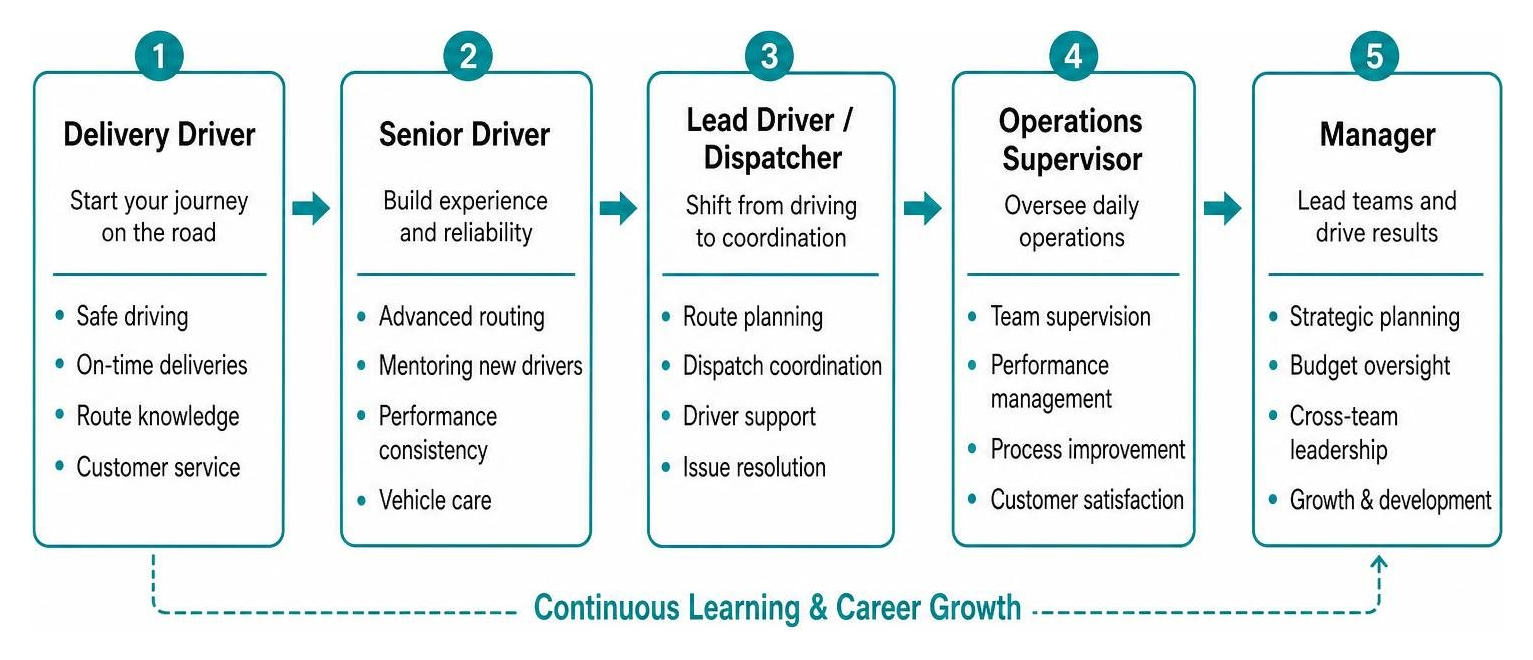
Potential growth paths include:
- Transitioning from van delivery driver to lead dispatch coordinator or field operations manager.
- Moving into warehouse logistics, managing inventory processing, packaging, and facility operations.
- Exploring broader career portals like the Courier Swift Express career portal to view open warehouse manager and lead specialist positions.
- Using logistics experience as domain knowledge for remote roles in QA testing, customer support engineering, product operations, data operations, or AI-assisted software development.
If you want to move from courier operations into tech, build evidence of your systems knowledge. Document the delivery tools you used, workflow bottlenecks you noticed, and process improvements you helped make.
How to Apply for Swift Courier Driver Positions
Applying for a courier role is a straightforward process when you have your driving and employment records organized in advance. If you are also considering remote tech work, treat the process as a chance to clarify whether you want hands-on logistics work, logistics technology work, or a gradual transition between the two.
- Find Open Listings: Search regional job boards and carrier websites for active delivery vacancies.
- Review Vehicle Requirements: Determine whether the role provides a company van or requires an independent contractor cargo vehicle.
- Submit Your Application: Complete online forms detailing your work background and driving qualifications.
- Pass Abstract & Background Checks: Provide your driving history abstract and complete standard background vetting (such as a DBS check).
- Complete Onboarding Assessment: Participate in driver assessment training and route shadow runs prior to solo dispatch.
Step-by-Step Hiring Process
To get started, submit an online contractor form or employee application through official carrier portals. Prospective candidates can review current opportunities via Swift Transportation driver job opportunities to explore corporate and driving vacancies. Once your driving abstract (showing 2 or fewer infractions over 24 months) and 5-year reference checks clear, you will complete practical pre-placement driver evaluations before receiving your assigned delivery routes.
Before accepting an offer, ask for written details on pay method, contractor expenses, vehicle requirements, insurance, route expectations, overtime rules, and termination terms. For tech-minded candidates, also ask what dispatch, scanning, mapping, and customer notification systems you will use. Those tools can become relevant experience if you later apply for remote roles that support logistics software or AI-enabled operations.
Frequently Asked Questions about Swift Courier Roles
What qualifications are required for courier driver roles?
Candidates usually need a valid driver’s license, a clean driving abstract (typically no more than two violations in 24 months), and physical ability to lift 70 lbs independently. Certain commercial van roles require drivers to be at least 25 years old with 180 days of commercial driving experience.
How much do courier drivers typically earn?
Earnings vary by location and vehicle class. Local van drivers earn around £14.75 per hour in the UK, while monthly roles in international markets range from $900 to $1,300 per month. US regional dedicated haulers earn up to $1,400 per week.
Does Swift hire independent contractors for parcel delivery?
Yes, independent contractor driver options are available in many metro markets. Independent contractors use their own delivery vehicles, maintain flexible dispatch schedules, and manage their own operating expenses as self-employed operators.
Why is RemoteVibeCodingJobs covering swift courier jobs?
RemoteVibeCodingJobs focuses on remote AI-assisted development jobs, not courier hiring. This guide is useful for career research because courier operations increasingly depend on software systems, mobile apps, route optimization, scanning tools, and AI-supported dispatch workflows. Understanding courier work can help candidates evaluate logistics roles or build domain knowledge for remote tech jobs connected to transportation and delivery products.
Conclusion
Finding the right job in courier delivery depends on evaluating your licensing credentials, physical fitness, income goals, and schedule preferences. Whether you prefer the stability of a W-2 employee van driver role or the flexibility of an independent contractor dispatch model, courier logistics provides a reliable career path in an essential industry.
For RemoteVibeCodingJobs readers, the bigger takeaway is that delivery work and software work increasingly overlap. Courier teams rely on routing systems, mobile proof-of-delivery tools, warehouse platforms, and AI-assisted dispatch processes. If you enjoy solving those operational problems but want a remote, async-first career path, consider building skills in software development, QA, data operations, support engineering, or product operations.
If you are also interested in tech-driven roles and remote opportunities, explore how software skills intersect with modern logistics systems. Check out our curated listings to Explore tech remote roles and find your next career move at RemoteVibeCodingJobs!