
How AI Makes Code From Plain English
Yes, AI can turn a plain English prompt into working code. Describe what you want the software to do, name your preferred language or framework, and give the tool a clear way to check the result. An AI coding agent can then edit files, run tests, and fix errors. You should still review the changes before you ship them.
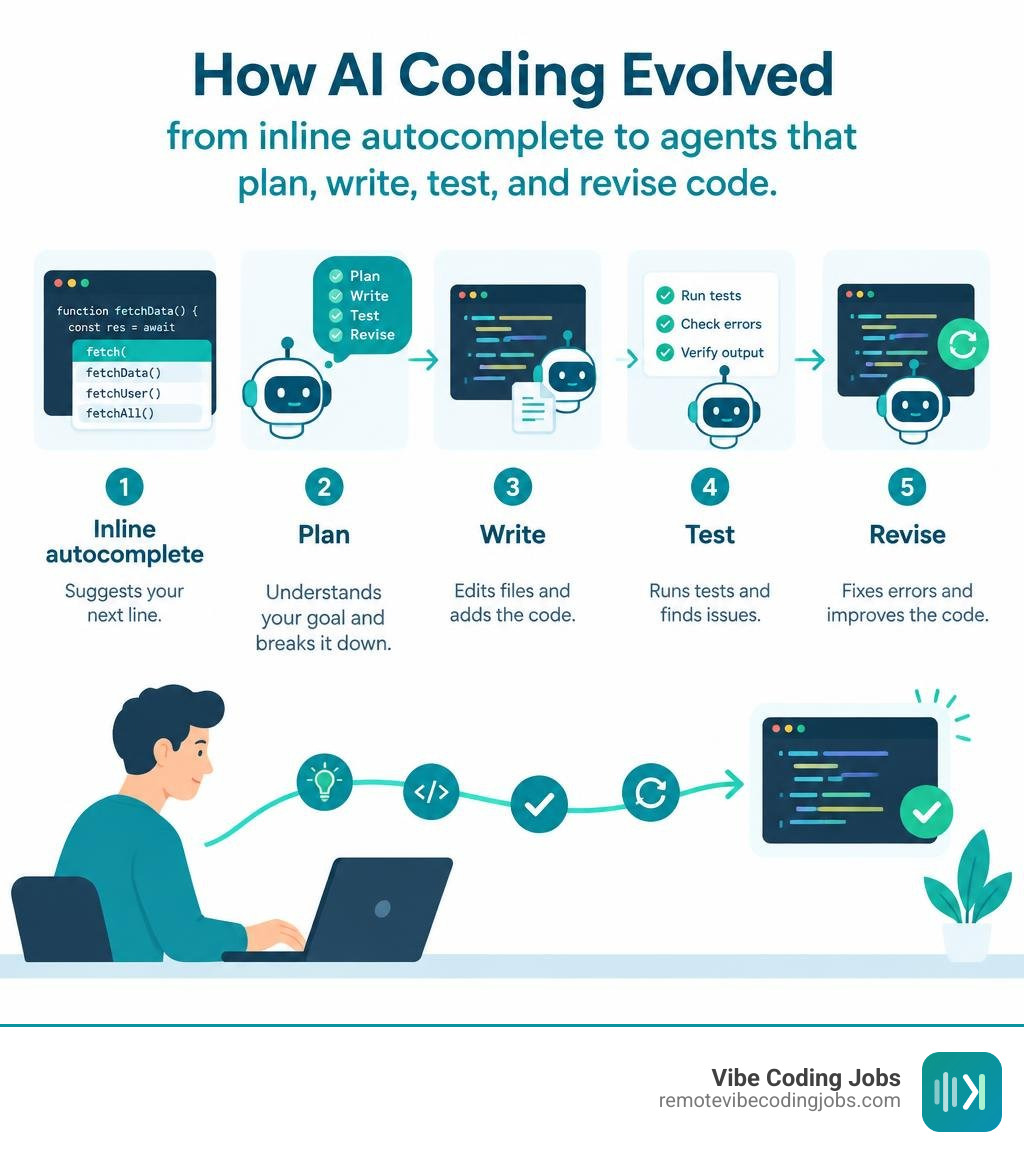
That is the shift from autocomplete, which suggests your next line, to agents that can work through a larger task. This guide explains how they do it, where they help, and where your judgment still matters.
I’m Dominic Zijlstra, a founder and former data scientist and DevOps engineer. My work building automated systems shapes how I answer the question behind “ai make code”: how do you turn a prompt into code you can trust?
Ai make code definitions:
How Autonomous Systems and AI Make Code Across the Full Development Loop
The software industry has shifted far beyond simple inline suggestions. Today, autonomous coding systems take a high-level user prompt and direct an end-to-end development cycle. Instead of merely predicting the next token in an open file, modern agents create structured multi-step plans, decompose features into modular files, execute system commands, and continuously refine their implementations against test suites.
Industry benchmarks demonstrate the profound impact of these tools: developers using platforms like GitHub Copilot · Your AI pair programmer · GitHub report up to 75% higher job satisfaction and write code up to 55% faster without sacrificing quality. Enterprise adoptions show similar velocity spikes; for instance, Brazilian cosmetics giant Grupo Boticário boosted developer productivity by 94% after rolling out AI assistance.
This evolution marks the core difference between standard manual authoring and the emerging dynamics of vibe coding vs traditional development. When you let an autonomous system manage boilerplate, syntax validation, and CI/CD deployment routines, the human developer transitions from an author of lines into an architect of intent and quality gates.
Step-by-Step Breakdown: Prompt Engineering to Let AI Make Code
To consistently yield production-grade results when you have an AI make code, you must treat your natural language instructions as strict functional specifications. The modern generation pipeline follows a repeatable progression:
- Intent Specification: Define what the software should accomplish, its technical stack, architecture patterns, and boundary conditions.
- Context Injection: Feed relevant schema definitions, API documentation, existing component libraries, and environment parameters directly into the agent.
- Plan Validation: Review the generated implementation plan before allowing files to be modified across your file tree.
- Iterative Generation: Produce code changes in bounded, inspectable chunks rather than massive, unchecked commits.
- Automated Verification: Run integration suites and static analysis tools to validate behavior against acceptance criteria.
Following a structured learn vibe coding tutorial helps engineers build the habit of providing verifiable constraints rather than vague creative requests, ensuring the resulting codebase remains maintainable over time.
Virtual Machines, Dedicated IDEs, and MCP Connectors
Modern coding agents do not operate in a vacuum—they leverage dedicated runtimes to execute real-world development tasks. Platforms like Autonomous AI Coding Assistant & Code Generator | SuperNinja spin up dedicated virtual machine environments containing full VS Code instances. This architectural separation allows the agent to install dependencies, run background processes, and test full-stack web applications without polluting local environments.
Crucially, the ecosystem has converged around the Model Context Protocol (MCP). By implementing MCP connectors, agents can interact safely with developer tooling, ticketing backlogs, external databases, and internal APIs. Similarly, terminal-first workflows like Claude Code by Anthropic | AI Coding Agent, Terminal, IDE execute commands locally in the developer’s environment, asking for explicit permission before modifying files, running bash commands, or initiating network calls.
The Core Architecture: Dedicated Environments, Terminals, and Multi-Model Routing
The tool landscape in 2026 spans terminal CLIs, specialized IDEs, and cloud virtual machines. Deciding where an agent executes code depends heavily on project scope, team compliance policies, and computational requirements. Understanding IDE vs terminal vs autonomous AI coding environments helps teams select the right operational tier.
| Environment Type | Primary Workflow Interface | Model Strategy | Best Suited For | Key Advantages |
|---|---|---|---|---|
| Terminal CLI Agent (e.g., Claude Code, Copilot CLI) | Command-line shell, Slack, Git hooks | Single or Frontier Dynamic Routing | Local multi-file refactors, script debugging, git PR automation | Runs locally, zero IDE lock-in, uses system tools directly |
| Integrated Agentic IDE (e.g., Cursor, Warp Code) | Customized VS Code fork, Modern Terminal | Mixed-Model (Claude, GPT-5.5, Gemini Pro) | Day-to-day feature builds, real-time diff editing | Deep repo indexing, AST parsing, rich prompt interfaces |
| Cloud Virtual Machine Agent (e.g., SuperNinja, Replit) | Web-based sandboxed OS & IDE | Dynamic frontier routing across models | Complete prompt-to-app builds, MVPs, background jobs | Isolated execution, parallel agents, automatic cloud deployments |
Developers using advanced environments like Warp Code: AI-Powered Code Editor for Agents | Warp leverage mixed-model workflows. These systems dynamically assign specialized LLMs to distinct sub-tasks: routing complex architectural reasoning to frontier models while dispatching quick syntax completions to lower-latency models.
Multi-File Workflows and Refactoring When You Let AI Make Code
One of the largest hurdles in automated development was context drift across large repositories. In earlier paradigms, language models could only hold snippets in their prompt context, leading to broken imports and hallucinated functions during large edits.
Today’s agentic systems solve this with repository-level abstract syntax tree (AST) indexing and semantic vector embeddings. When modifying a database model, the agent automatically identifies which controllers, API contracts, and frontend views depend on that schema. If you are learning how to vibe code a full stack app, you will notice modern agents simultaneously orchestrate cross-cutting concerns—such as updating client-server TypeScript types—without dropping context mid-stream.
Autonomous Testing and Self-Healing Debuggers
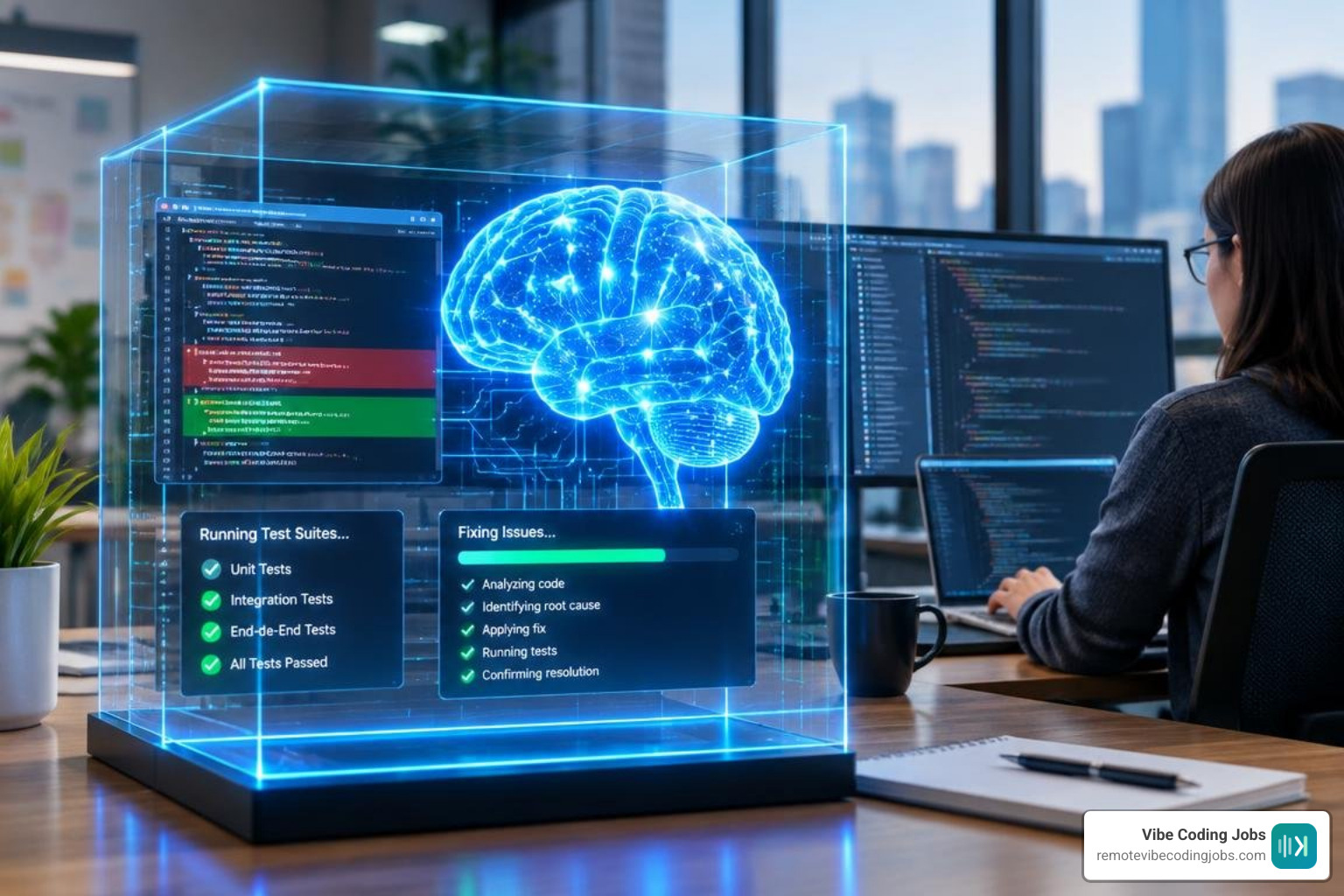
Writing code is only half the battle; ensuring it runs cleanly in production is where automated workflows excel. When an agent writes a new feature, it can automatically synthesize accompanying unit and integration tests.
If a test fails or a terminal command outputs a stack trace, the autonomous agent intercepts the error output, isolates the root cause in the source code, applies a targeted patch, and re-executes the test runner until all checks pass. By combining automated linting with runtime feedback loops, the system eliminates routine debugging friction.
Vibe Coding in Practice: Rapid Prototyping for Startups and Non-Engineers
The convergence of natural language interfaces and autonomous runtimes has unlocked “vibe coding”—a paradigm where creators describe business logic and visual aesthetics in plain language, leaving implementation mechanics to intelligent models. The methodology answers what is vibe coding? by reorienting software development toward rapid ideation and live iteration.
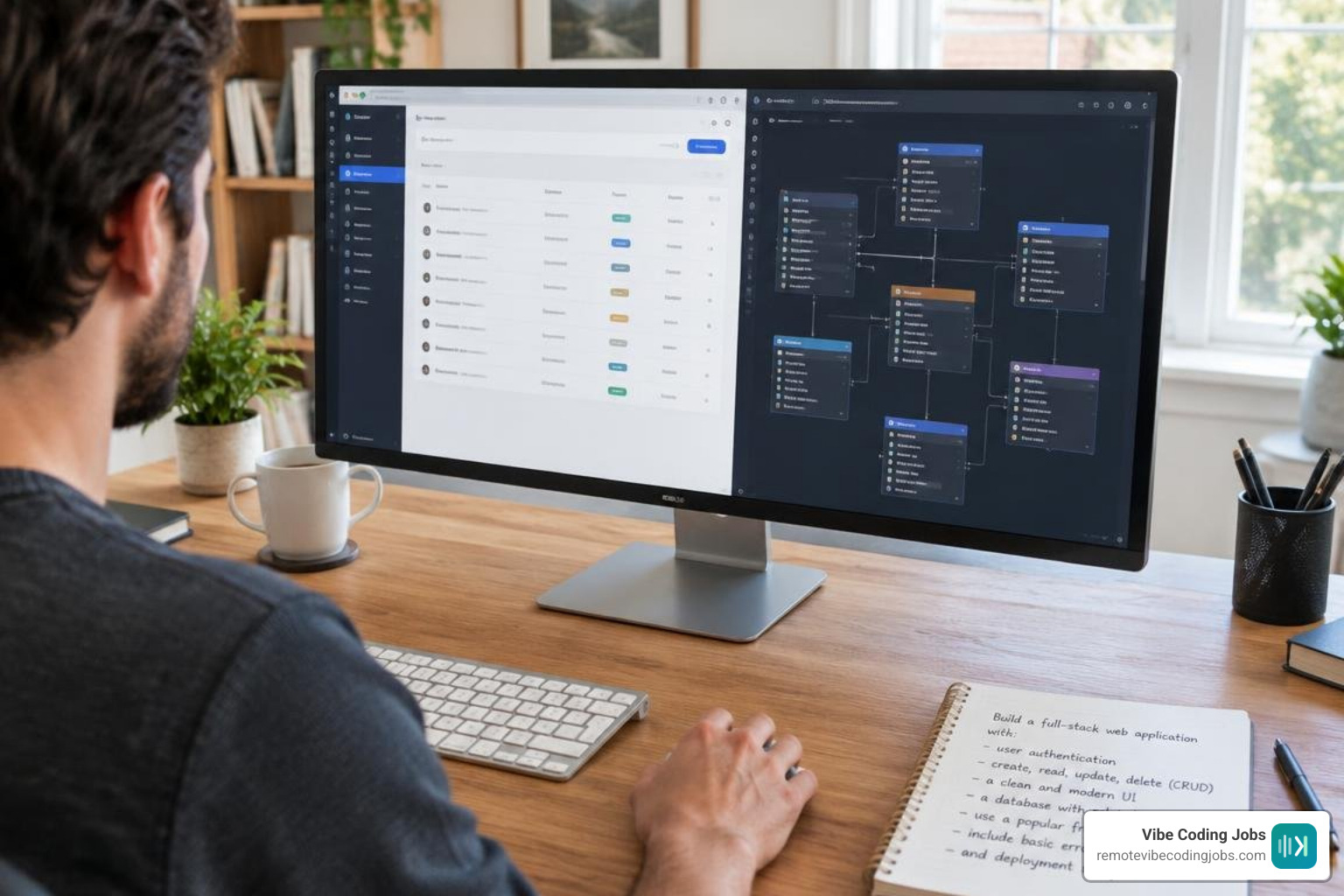
Founders and product managers routinely build MVPs over a single weekend, turning high-level design specifications into deployed applications backed by serverless infrastructure. This approach has enabled teams to launch customer-facing tools, internal admin dashboards, and automation bots in fractions of the time traditionally required, as demonstrated in our breakdown of building your vibe coding first SaaS weekend.
Full-Stack Scaffolding from UI to Database
End-to-end code generation platforms handle the entire modern web stack seamlessly:
- User Interface: Generates responsive, accessible UI components utilizing Tailwind CSS, React, Vue, or modern web standards.
- Backend Routing: Scaffolds resilient REST or GraphQL endpoints with complete input validation and error handling.
- Database Schema & Migrations: Drafts relational schemas (PostgreSQL) or document structures with proper indexing and foreign key constraints.
- Authentication & Security: Integrates secure authentication workflows, session tokens, and role-based access control (RBAC).
Whether building full platforms or exploring specialized creative coding with tools like the AI Powered Code Editor for Game Development, modern scaffolding tools reduce initial setup overhead to a single command.
Bridging the Digital Fluency Gap in Education and Teams
As coding automation permeates technical workflows, educational frameworks are evolving to prepare the next generation. Research from the educational initiative CodeAI reveals a striking contrast: while 84% of students already use AI tools, only 16% of high school leaders report that all their students are actively learning about it in their curriculum.
To address this gap, CodeAI has delivered over 2 billion hours of learning across 190 countries, reaching more than 150 million students—with half of its user base identifying with groups traditionally underrepresented in tech. Integrating digital fluency into core curricula ensures aspiring developers learn not just how to prompt models, but how to direct systems ethically, review code critically, and verify architectural integrity.
Security, Code Integrity, and Enterprise Governance
Deploying AI-generated code to production requires strict governance frameworks. Because large language models are trained on broad public corpuses, engineering teams must safeguard against insecure patterns, unintentional intellectual property exposure, and outdated dependency vulnerabilities.
Validating these safeguards answers the ongoing industry discussion around is vibe coding legitimate? future. When backed by rigorous static analysis, containerized sandboxes, and policy compliance engines, automated code generation meets the rigorous compliance bars required by enterprise IT organizations.
Intellectual Property and Code Referencing Safeguards
To protect enterprise code integrity, leading developer platforms implement strict IP filters and data retention controls:
- Code Referencing Filters: Systems flag or block suggestions that closely match public open-source repositories, ensuring licenses (such as GPL) are respected.
- Enterprise Data Isolation: Enterprise configurations prevent proprietary prompts and repository contents from being used to train general public models.
- Secret Redaction: Real-time scanners automatically scrub API keys, passwords, and sensitive environment variables before prompts leave the local machine.
- Audit Logs and Compliance: Granular logging gives security teams visibility into model usage, generated diffs, and developer interactions.
Human-in-the-Loop Review Best Practices
Regardless of model capabilities, human accountability remains the foundation of software engineering. Organizations shipping AI-generated code successfully enforce the following review protocols:
- Small, Inspectable Diffs: Avoid giant, unreviewed PRs by prompting the agent to complete small, bounded changes.
- Automated CI/CD Validation: Run automated end-to-end tests, linters, and type-checkers on every generated branch.
- Independent Security Audits: Conduct automated vulnerability scans for common web issues like SQL injection, cross-site scripting (XSS), and improper authorization checks.
Frequently Asked Questions About AI Code Generation
Can AI build and deploy a complete production application independently?
Yes, autonomous AI agents can create, verify, and deploy complete applications when given appropriate environment permissions, cloud credentials, and deployment webhooks. However, production systems require human oversight to review architectural patterns, verify compliance, and approve live deployments.
How do AI agents handle massive codebases without losing context?
Modern agents use a combination of repository-wide AST parsing, dynamic semantic search, and large context windows. Rather than dumping an entire repository into the model at once, the system searches the dependency graph, identifies relevant files, and loads only the necessary context into memory to complete the task accurately.
What core skills do developers need when AI writes the syntax?
As syntax generation becomes automated, high-performing developers focus heavily on systems architecture, precise functional requirement definition, test design, and code verification. Exploring AI assisted development career growth tools will help you master the high-level orchestration skills that top remote teams actively look for.
Conclusion
The ability to translate natural language prompts directly into robust, production-ready code is transforming software development. By delegating boilerplate creation, syntax debugging, and test generation to autonomous agents, engineering teams are shipping products faster while maintaining high quality standards.
At RemoteVibeCodingJobs, we aggregate daily curated listings for developers who leverage AI tools and vibe coding workflows to ship software at async-first companies. To explore the best platforms powering this shift, check out our guide to the best AI coding tools for vibe coders 2026 and discover the future of modern development today.