
Why a Swift Software Engineer Career Is Worth Exploring
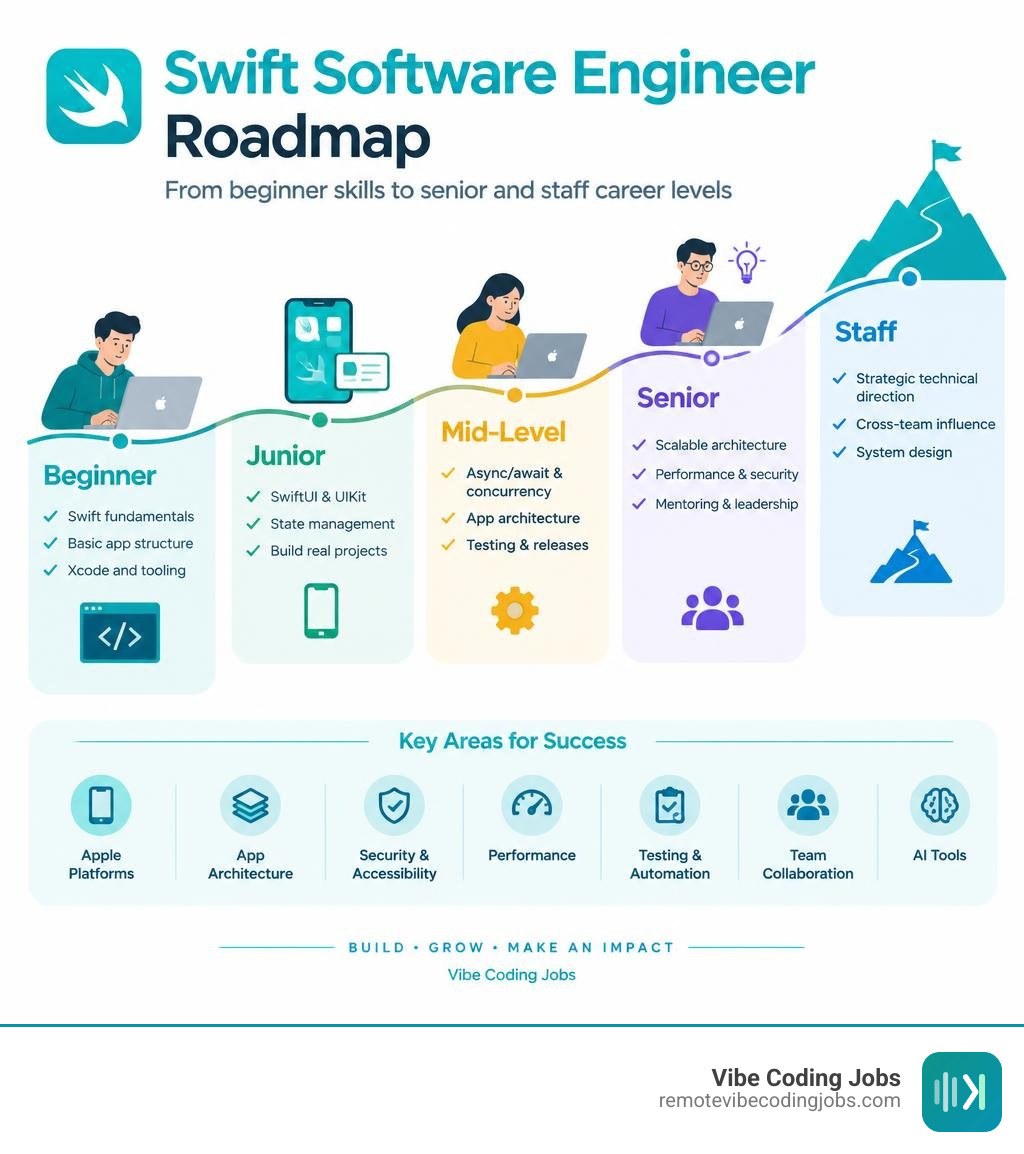
A Swift software engineer builds native apps for Apple platforms, including iOS, iPadOS, macOS, watchOS, and visionOS. To become one, learn Swift fundamentals, build interfaces with SwiftUI and UIKit, master async/await and Swift concurrency, then ship real work you can show in an App Store app, GitHub project, or portfolio.
The role goes beyond making screens look good. Strong Swift engineers design reliable app architecture, manage state, protect user data, automate testing and releases, and work well with product, design, and backend teams. Modern teams also expect practical use of AI tools for prototyping, test generation, refactoring, and documentation – while engineers remain accountable for security, accessibility, performance, and code quality.
This is a broad career path. You might build secure banking flows, Bluetooth-connected hardware apps, health tools, media products, developer tools, or spatial experiences for Apple Vision Pro. The best opportunities increasingly reward engineers who combine deep Apple-platform knowledge with clear async communication and AI-assisted delivery.
I am Di Su, a software engineer with 10+ years of experience building scalable, user-focused products and improving the systems behind them. While my background spans web engineering, conversion optimization, and growth, this guide helps aspiring Swift software engineer candidates apply the same product thinking to Apple-platform careers.
Glossary for swift software engineer:
The Evolution and Core Skills of a Swift Software Engineer
The landscape of Apple-platform development has transformed significantly over the past decade. Rooted in the modern Swift Programming Language, the ecosystem has evolved from imperative UIKit views and manual memory tracking into declarative UIs, structured concurrency, and powerful cross-platform native frameworks.
Today, a high-performing Swift engineer navigates both legacy patterns and modern paradigms with equal confidence. Understanding Automatic Reference Counting (ARC) remains essential for preventing memory leaks, while modern frameworks like Combine and native async/await syntax ensure seamless asynchronous data flow without callback hell.
| Feature / Dimension | SwiftUI | UIKit |
|---|---|---|
| Programming Paradigm | Declarative state-driven UI | Imperative event-driven UI |
| Cross-Platform Support | iOS, iPadOS, macOS, watchOS, tvOS, visionOS | Primarily iOS and iPadOS (Catalyst on macOS) |
| State Management | Native bindings (@State, @Observable, @Binding) |
Manual delegates, target-action, and notification patterns |
| Legacy Compatibility | Best for modern OS versions (iOS 15+) | Complete backward compatibility across all legacy versions |
| Animation & Layout | Built-in reactive springs, transitions, and canvas layouts | Auto Layout constraints, Core Animation layers, frame math |
Core Technical Competencies Across Apple Platforms
Mastering the Apple ecosystem requires proficiency across several technical layers:
- Declarative vs. Imperative Layouts: Combining SwiftUI’s rapid UI construction with UIKit’s low-level control when integrating custom gesture recognizers or fine-grained rendering lifecycles.
- Reactive Data Streams: Using Combine for publishers, subscribers, and continuous data pipelines alongside Swift async sequences.
- Data Persistence: Architecting robust storage layers using modern SwiftData or Core Data schemas with background context synchronization and encrypted persistence.
- Accessibility and Usability: Building inclusive interfaces that adhere to Apple’s Human Interface Guidelines, supporting Dynamic Type, VoiceOver accessibility elements, and high-contrast styling.
Career Progression and Compensation for a Swift Software Engineer
Engineering paths in the Swift ecosystem range from junior developers shipping feature tickets to staff mobile leads setting architectural patterns across enterprise codebases. According to industry verified compensation benchmarks, competitive engineering packages include base salaries, performance bonuses, and equity.
- Junior Engineer ($90,000 – $120,000 total comp): Focuses on building user-facing views, implementing clean API integrations, writing unit tests, and learning codebase conventions.
- Senior Engineer ($140,000 – $190,000 total comp): Owns complete product domains, refactors legacy UIKit views into modular SwiftUI, mentors engineers, and manages complex state flows.
- Staff / Principal Lead ($200,000 – $280,000+ total comp): Drives cross-app architecture, sets company-wide build and security guidelines, optimises CI/CD runtimes, and leads multi-platform visionOS or macOS integrations.
Engineers seeking geographic flexibility can explore modern remote Swift developer opportunities that emphasize asynchronous problem-solving over rigid co-location.
Modern Architecture, Concurrency, and Scaling Apple-Platform Apps
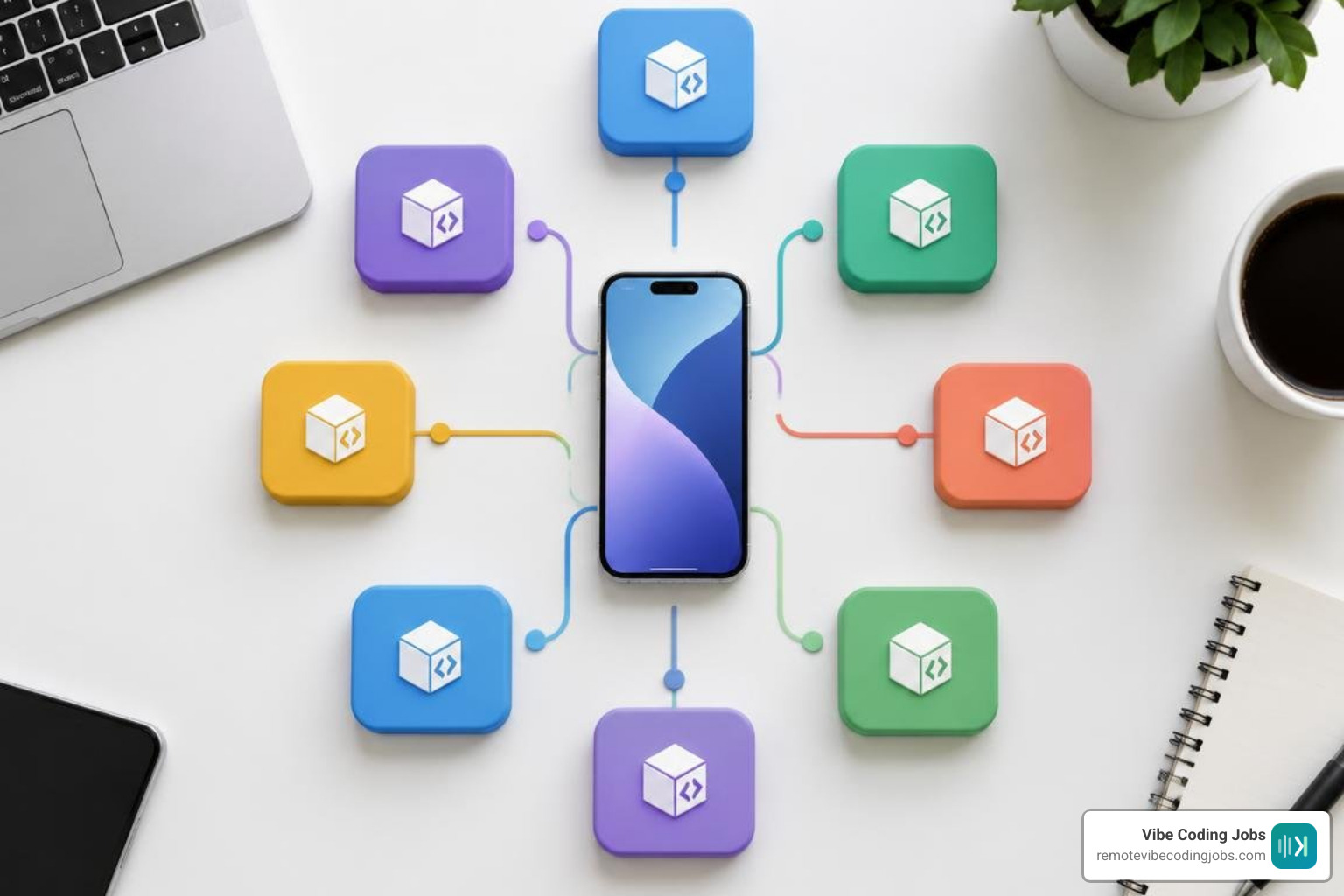
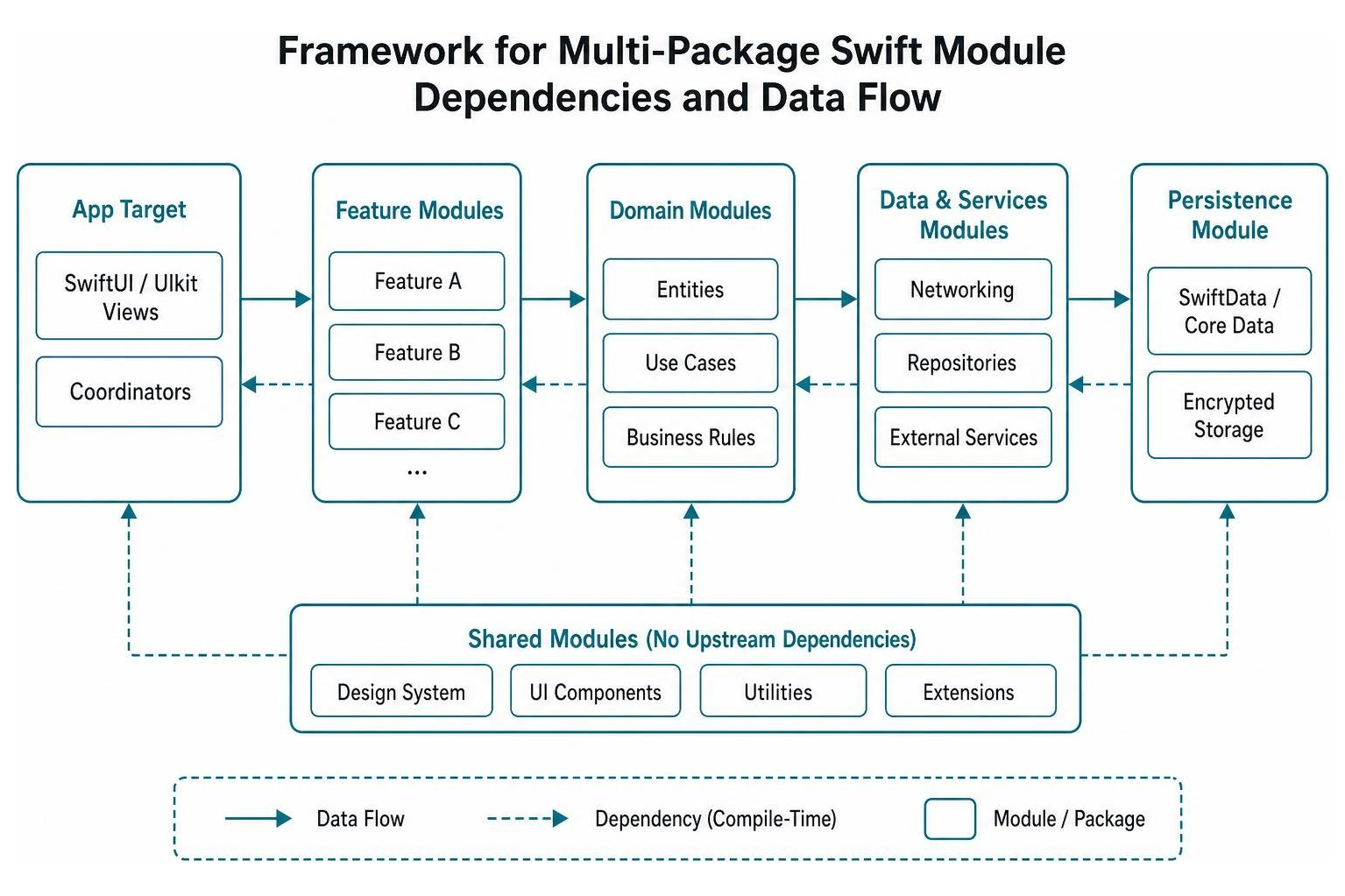
Building large-scale iOS applications requires scalable architecture that isolates responsibilities and minimizes compile times. Standard design patterns include:
- MVVM and MVVM-C: Separating presentation from data transforms while employing Coordinators to decouple navigation logic from views.
- The Composable Architecture (TCA) and Redux: Utilizing centralized state containers with deterministic unidirectional data flow, as showcased in Sean Hong’s TCA and Swift modular patterns to streamline testability across multi-engineer teams.
- Clean Architecture & SPM Modularization: Splitting feature verticals, networking, design systems, and domain entities into isolated Swift Package Manager (SPM) modules or Tuist workspaces.
Swift 6 Concurrency, Actors, and Thread Safety
The release of Swift 6 introduces strict compile-time concurrency checking, completely eliminating data races by enforcing actor isolation and Sendable boundary verification. Migrating from older Grand Central Dispatch (GCD) queues to structured concurrency patterns—such as TaskGroup and dedicated background actor types—dramatically reduces UI hang rates and thread contention.
Adopting these advanced patterns requires focused technical attention, which is why developers thrive when finding deep work environments for Swift engineers that protect uninterrupted focus.
Modern Tooling for the High-Impact Swift Software Engineer
To ship code reliably across continuous release cycles, elite Swift engineers leverage modern development tooling:
- Tuist & Swift Package Manager (SPM): Automating Xcode project generation, enforcing boundary rules, and avoiding merge conflicts in
.pbxprojfiles. - Fastlane & Xcode Cloud: Automating certificate provisioning, TestFlight distributions, localized screenshots, and deployment runs.
- Automated Testing Suites: Implementing comprehensive unit tests via XCTest, UI automation, and snapshot testing to prevent visual regressions.
- Performance Profiling: Using Xcode Instruments (Time Profiler, Allocations, Leaks) to eliminate retain cycles and ensure 60/120fps scrolling smoothness.
AI-Assisted Workflows and Vibe Coding in Modern Swift Workflows

The rise of AI-assisted engineering has introduced “vibe coding”—a workflow where developers direct natural-language LLMs (such as Claude Code, Cursor IDE, and native Xcode intelligence) to draft boilerplate, explore architectural alternatives, and generate initial UI layouts.
Modern mobile engineers tap into emerging AI coding opportunities to supercharge feature delivery while applying their native platform expertise to audit code security, manage edge cases, and maintain performance.
Asynchronous Collaboration and AI-First Mobile Teams
Remote-first engineering cultures thrive when paired with AI tooling and clear async-first engineering communication. By writing detailed architectural RFCs and using AI agents to scaffold unit tests and draft PR summaries, distributed teams reduce meeting bloat and accelerate release cadences without compromising software reliability.
High-Impact Industries, Specializations, and Portfolio Differentiation
Swift developers create software across a wide range of specialized industries:
- Fintech & Banking: Requires strict data security, cryptographic hashing, SSL certificate pinning, and biometric KYC verification, as exemplified by Emad Beyrami’s enterprise Swift security practices.
- IoT & Connected Hardware: Relies on CoreBluetooth, low-energy BLE pairing, and real-time streaming protocols.
- Hardware Integration & High-Performance Graphics: Interfacing Swift with C++ libraries and Metal GPU shaders to run photogrammetry, 3D rendering, and local spatial simulations.
- Spatial Computing & on-device AI: Building native visionOS spatial experiences and integrating CoreML for fast, private on-device model inferences.
Standing Out Through Open Source, Awards, and Specialized Apps
To stand out in the mobile engineering job market, build concrete proof of your skills:
- Ship an Independent App Store App: Demonstrate the end-to-end release lifecycle, including privacy manifests, in-app purchases, and SwiftUI design systems.
- Win Industry Recognition: Compete in global coding challenges, demonstrated by Nikunj Mathur’s CoreML and Swift Student Challenge achievements.
- Contribute to Open Source: Publish reusable SPM packages, write technical articles documenting system architecture, or release custom developer tools.
Frequently Asked Questions About Swift Development Careers
What is the difference between a Swift developer and a cross-platform mobile developer?
A Swift developer builds natively using Apple’s official languages, SDKs, and toolchains (Swift, SwiftUI, UIKit, Xcode). This native approach provides full access to cutting-edge hardware features (such as Metal, ARKit, and Apple Neural Engine), offers top-tier runtime performance, and aligns directly with Apple’s platform design standards.
Cross-platform developers use abstractions like Flutter or React Native to share UI logic across Android and iOS, which can introduce overhead and delay access to new OS features.
Is Swift still relevant outside the iOS ecosystem?
Yes. While iOS remains the largest ecosystem, Swift is a versatile general-purpose language used across macOS, watchOS, tvOS, and visionOS.
Additionally, Swift’s bidirectional interoperability with C++ and its expansion into server-side architectures (via frameworks like Vapor) make it an efficient language for backend services and embedded systems.
How has Swift 6 strict concurrency changed iOS development expectations?
Swift 6 makes thread safety a compile-time guarantee rather than a runtime debugging challenge. By enforcing actor boundaries, data isolation, and Sendable constraints, the compiler prevents race conditions before code ever reaches production.
Modern teams expect engineers to design asynchronous systems around actors and structured concurrency rather than relying on manual thread locks or unstructured background queues.
Conclusion
A career as a Swift software engineer offers opportunities to build impactful software across millions of Apple devices worldwide. By mastering modern architecture, adopting Swift 6 concurrency, integrating AI-assisted development tools, and building a distinct portfolio, you position yourself for long-term growth across native mobile engineering.
If you are ready to take your next career step with modern, async-first teams, explore open remote mobile developer roles today and start building the future of mobile software.