The Skeptical Manager’s First Look at Vibe Coding Remote Hire in 2026
If you’ve been hearing buzz about vibe coding remote hire but aren’t sure whether it’s a real hiring category or just Twitter hype, here’s the short answer:
It’s real. And it’s moving fast.
- What is a vibe coder? A developer who uses AI tools like Cursor, Claude, and Windsurf to build software through natural language prompts – focusing on architecture and product logic rather than writing every line by hand.
- Is it a legitimate job category? Yes. As of July 2026, there are over 800+ active vibe coding job listings across major remote job boards, spanning engineering, product, operations, and even marketing roles.
- How fast can you hire one? Vetted candidates can be matched in as little as 72 hours for freelance roles, or a full-time hire closed within 14 days.
- What do they cost? Entry-level remote vibe coders earn $70,000-$100,000/year. Senior AI-first developers command $150,000-$250,000+. Freelancers typically charge $100-$300/hour.
- Why should you care? Teams using AI-assisted workflows report 2-5x productivity gains within the first month. Industry reports show cost savings of up to 58% compared to traditional local hiring.
The term “vibe coding” was coined by AI researcher Andrej Karpathy in 2025 to describe a shift already happening in software teams: developers were no longer writing code so much as directing it. The developer’s role was moving from syntax typist to software architect. Skeptical managers started paying attention when they saw what their competitors were shipping – and how fast.
I’m Dominic Zijlstra, a former data scientist and DevOps engineer, and my work building automated technical systems gives me a grounded, no-hype perspective on vibe coding remote hire that I’ll share throughout this guide. Whether you’re evaluating your first AI-assisted hire or rethinking your entire engineering team structure, the sections below will give you a clear framework.
Discover more about vibe coding remote hire:
- Where can I find remote software engineering roles that specifically encourage using AI tools like Cursor or Claude?
- async vibe coding jobs
- cursor ai developer remote
Why a Vibe Coding Remote Hire is Your Secret Weapon in 2026
We have all felt the frustration of the traditional software bottleneck. You draft a product specification, hand it off to your engineering team, and wait weeks—sometimes months—for a functional prototype. In the market of 2026, this delay is no longer sustainable.
This is where a vibe coding remote hire becomes your team’s unfair advantage. By bringing on an AI-first developer, you are not just hiring another pair of hands to type out syntax; you are hiring a force multiplier.
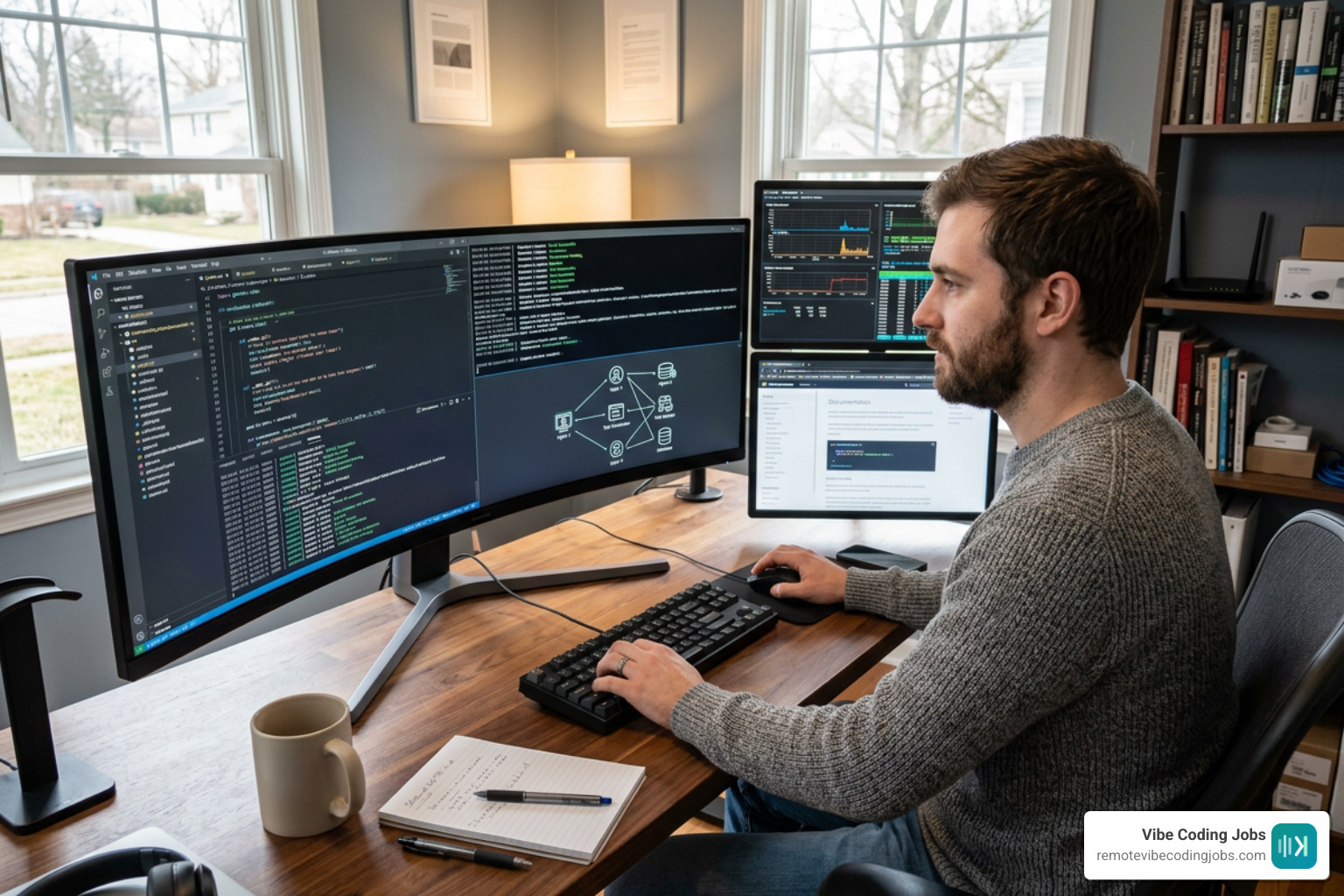
When a developer operates in a state of “vibe coding,” they leverage AI to handle the heavy lifting of boilerplate code, database migrations, and basic API integrations. This allows them to ship software up to 5x faster and build products 70% cheaper than traditional agencies, as documented by specialized builders like the Vibe Coding Company – Build Software & SaaS 70% Cheaper, 5x Faster .
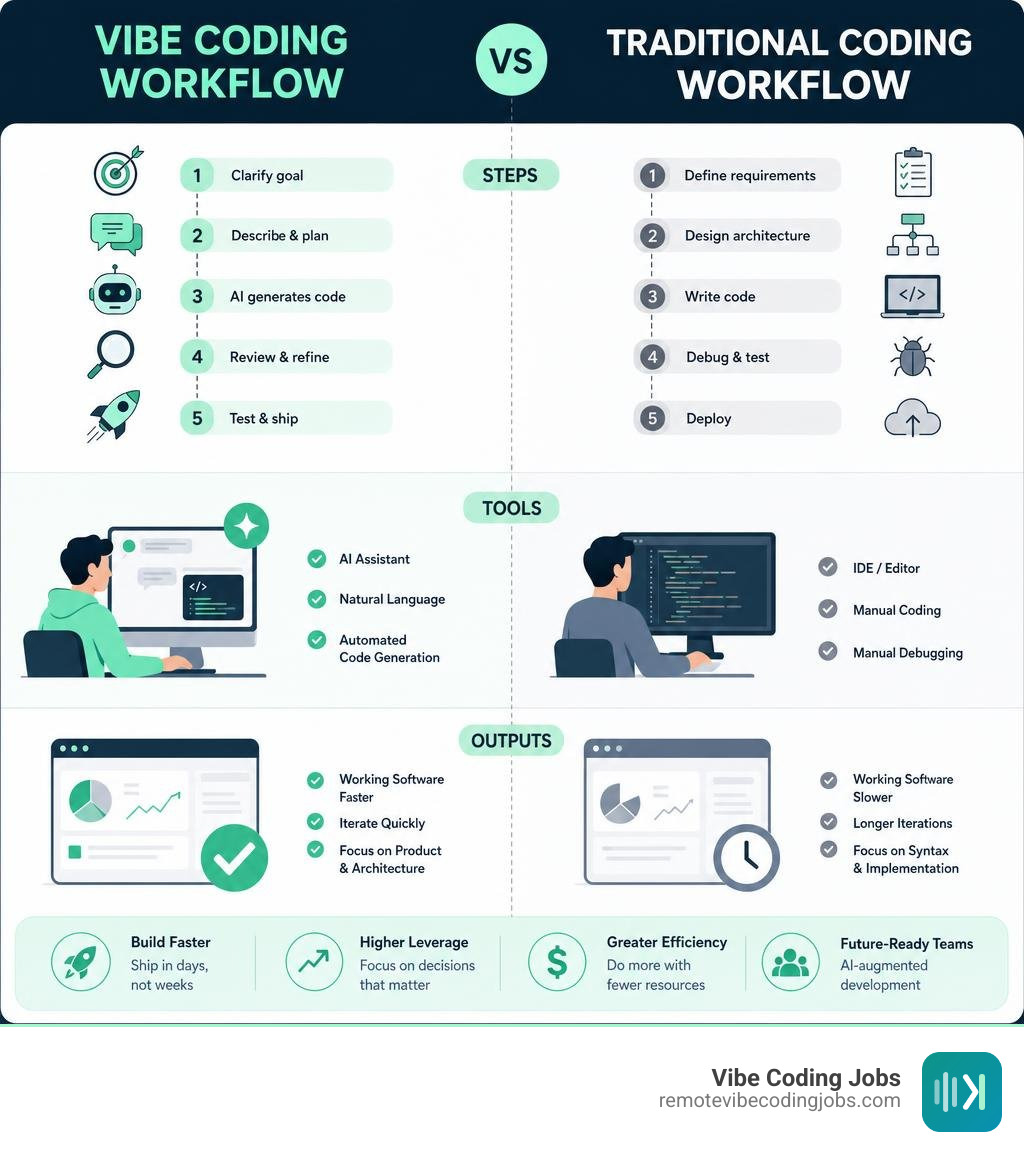
To understand how this changes the game for your team, let’s look at the direct differences between these two methodologies. For a deeper dive into this paradigm shift, check out our guide on Vibe Coding vs Traditional Development.
| Metric / Dimension | Traditional Development | Vibe Coding (AI-Assisted) |
|---|---|---|
| Primary Activity | Writing and debugging syntax by hand | System architecture, prompting, and quality review |
| Speed to MVP | 2 to 3 months | 2 to 4 weeks |
| Boilerplate Handling | Manual implementation | 100% automated via AI assistants |
| Core Developer Skill | Language syntax and framework mastery | Logic, debugging, and system design |
| Output focus | Lines of code written | Working features and product value |
Shifting from Syntax Typists to Software Architects
For decades, the industry valued developers who could memorize complex language syntax and framework quirks. Today, those skills are being commoditized. The rise of AI-assisted workflows has transformed the developer’s identity from a “syntax typist” to a “software architect.”
In this new era, the value of a developer lies in their ability to design systems, manage data flows, and craft precise prompts that guide AI agents. This evolution is the foundation of the Agentic Engineering Future. Instead of spending hours debugging a missing semicolon, vibe coders spend their time thinking about how different microservices interact, how data is secured, and whether the user experience feels intuitive. They focus on the what and the why, leaving the how to highly capable LLMs.
The Business Case: 58% Cost Savings and 14-Day Hiring Cycles
Let’s talk numbers. Traditional local hiring is slow and incredibly expensive. The average cost of sourcing, vetting, and onboarding a single local developer hovers around $4,000 in direct recruiting costs alone, not to mention the weeks of lost productivity.
By pivoting to a remote vibe coding model, we can tap into a global talent pool of over 450,000 developers across 190 countries. This global reach allows companies to save up to 58% compared to traditional local hiring.
Furthermore, the hiring cycle itself is dramatically compressed. Because vibe coders rely on practical, demonstratable output rather than academic algorithm puzzles, vetting is highly streamlined. Platforms specializing in AI-fluent talent can match you with freelance vibe coders in roughly 72 hours, and secure full-time remote hires within 14 days. If you want to see which forward-thinking organizations are already leveraging this model, take a look at our list of Companies Hiring Vibe Coders.
The Vibe Coder’s Tech Stack: Beyond the Hype
To the uninitiated, vibe coding looks like magic: a developer types a few sentences of plain English, and a fully functional application appears. But behind that seemingly effortless “vibe” lies a highly structured tech stack and a disciplined methodology.
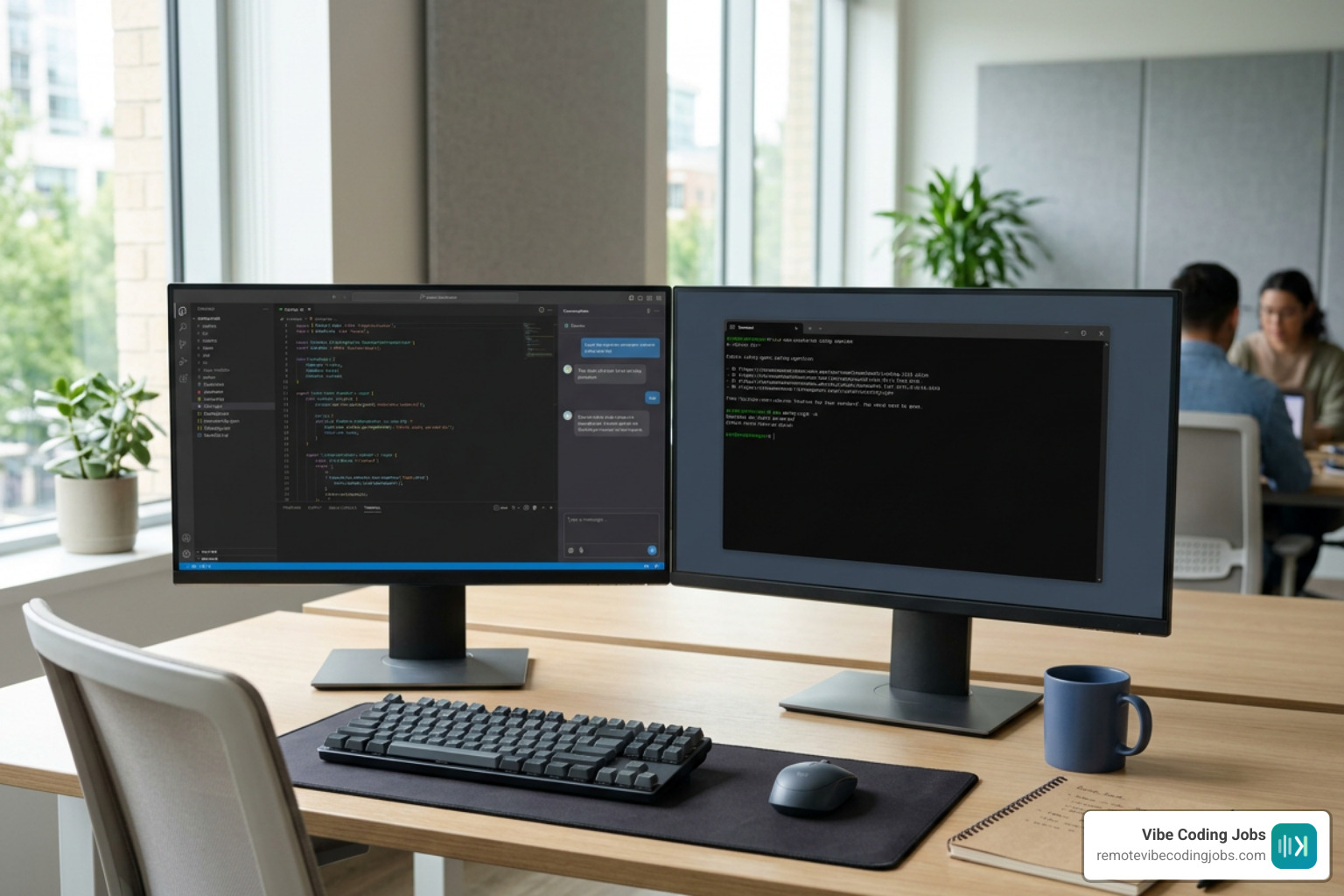
Professional vibe coders do not just open a generic web chat and ask for code. They use specialized, context-aware environments designed to integrate AI directly into their local files and terminal. To understand what tools your candidates should be bringing to the table, review our breakdown of Must Have Vibe Coding Tools.
AI-Native Editors and Terminal Agents
The tooling for AI-assisted development has evolved far beyond simple autocomplete extensions. The modern vibe coder’s toolkit is built around deep integration:
- Cursor & Windsurf: These are AI-native forks of VS Code that can read your entire codebase, understand its structure, and edit multiple files simultaneously based on natural language instructions.
- Claude Code: A terminal-based agent that can run tests, debug terminal errors, and execute git commands autonomously. Proponents of CLI-based workflows often point to the README.md at main · EnzeD/vibe-coding as the gold standard for setting up highly efficient, terminal-driven AI development environments.
- Bolt.new & Lovable: These prompt-to-app platforms allow developers to visually design, build, and deploy full-stack web applications in a fraction of the time it would take to configure local environments manually.
Context Management and the Memory Bank Methodology
The biggest risk in vibe coding is “AI drift”—where the AI assistant loses track of the project’s overall architecture and begins generating messy, conflicting code. Elite vibe coders prevent this by using a structured “Memory Bank” methodology.
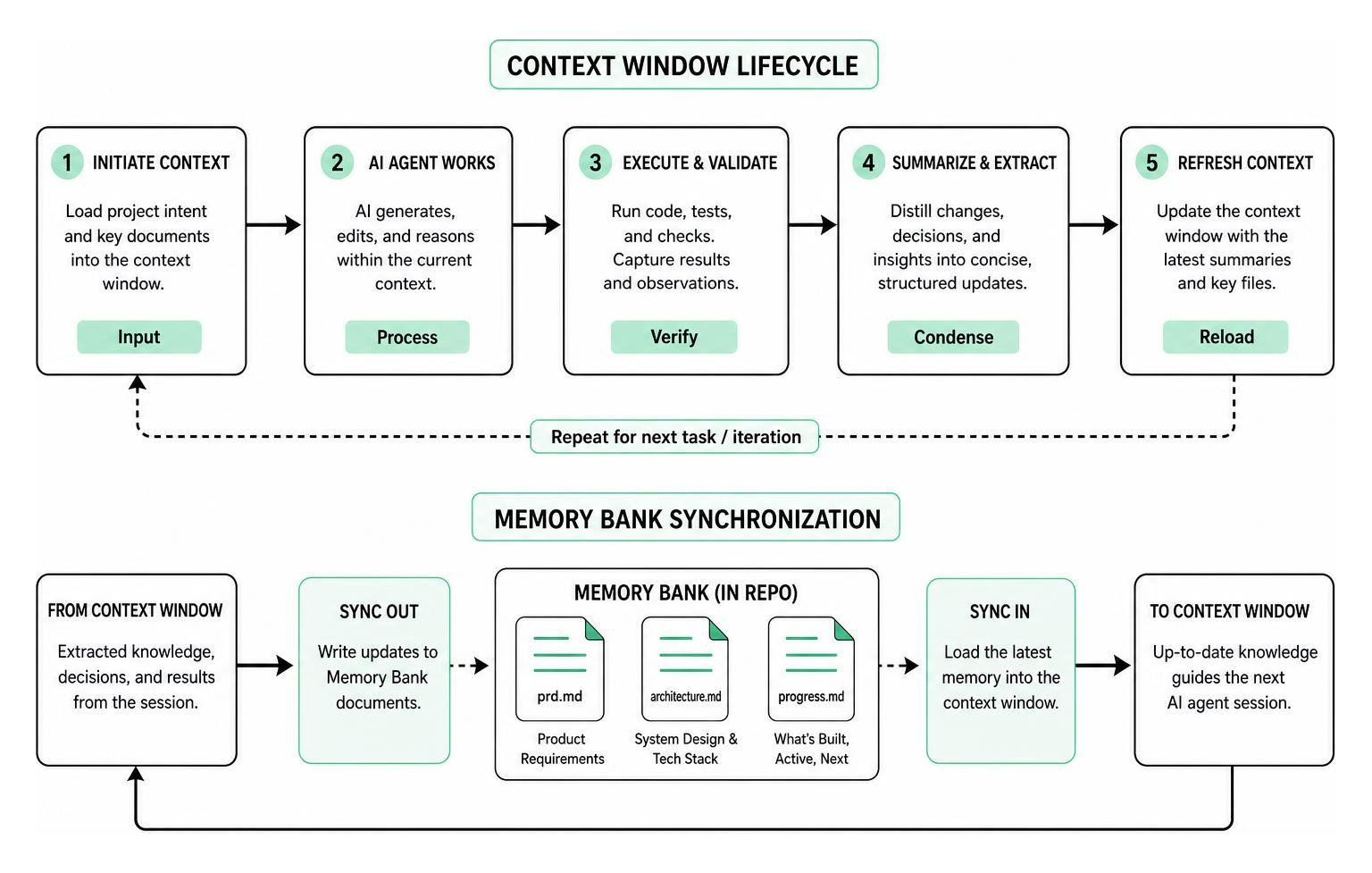
Instead of letting the AI write code blindly, the developer maintains a set of system-level Markdown documents within the repository:
prd.md(Product Requirements Document)architecture.md(System Design & Tech Stack)progress.md(What has been built, what is active, and what is next)
By setting these files as “Always Read” rules for the AI, the developer ensures the model stays aligned with the system’s core logic, preventing the codebase from dissolving into unmanageable spaghetti code.
Vetting and Interviewing AI-First Developers
As a manager, your biggest concern is likely quality control. How do you know if a candidate actually understands software engineering, or if they are simply copy-pasting prompts without knowing how the underlying system works?
The answer is to throw out the old playbook. Traditional technical interviews—like whiteboard LeetCode puzzles—are completely useless for vetting vibe coders. If you want to find builders who can ship real products, you must focus on practical, project-based evaluation. For more context on why the industry is moving away from algorithmic tests, read our analysis on Remote Coding Jobs No Leetcode.
Vetting Your Next Vibe Coding Remote Hire Without LeetCode
When hiring for a vibe coding remote hire position, we recommend a three-step practical vetting process:
- The Loom Video Portfolio Review: Ask candidates to submit a short, 5-minute Loom video walking through a project they built using AI. Have them explain why they chose their tech stack, how they structured their prompts, and how they resolved a specific instance where the AI got stuck.
- The Weekend MVP Challenge: Instead of a live coding puzzle, give the candidate a real-world, lightweight product specification (e.g., “build a simple customer feedback tracker with email alerts”). Give them 48 hours to build, deploy, and document it.
- The Prompt-to-Spec Audit: Provide the candidate with an existing, slightly buggy codebase and ask them to use their AI tools to identify the bugs, refactor the code for better performance, and write automated tests.
Assessing AI Leverage and Technical Intuition
During the interview process, you are looking for two specific traits: AI Leverage and Technical Intuition.
AI Leverage is the developer’s ability to maximize their tools—knowing when to use a visual builder like Lovable for rapid prototyping, and when to drop into Claude Code for backend optimization.
Technical Intuition is their ability to identify “AI hallucinations” and steer the model back on track. When an LLM generates a non-working block of code, an amateur will repeatedly prompt the AI with “it doesn’t work,” leading to an infinite loop of broken code. A professional vibe coder will read the error log, identify the logical gap, and provide a sharp, corrective instruction. This level of autonomy is highly dependent on clear, written communication, which is essential for Async First Remote Developer Jobs Workflow Productivity.
Compensation Benchmarks for AI-Assisted Talent
Because vibe coding is a rapidly maturing field, compensation structures can vary widely depending on experience, region, and the specific role. However, clear industry benchmarks have established themselves as we move through 2026.
For a comprehensive breakdown of the current financial landscape, you can refer to the Vibe Coding Salary Guide 2026.
Budgeting for a Vibe Coding Remote Hire: Salaries and Rates
Depending on your project scope and budget, there are three primary tiers of vibe coding talent:
- Entry-Level / Technical Assistants ($70,000 – $100,000 / year): Often self-taught or bootcamp graduates who excel at rapid prototyping, building internal tools, and automating simple business processes. Contract rates for these roles can start around $25/hour.
- Mid-Level / AI-Forward Developers ($100,000 – $150,000 / year): Developers who combine solid software fundamentals (TypeScript, Python, SQL) with advanced prompt-engineering and context-management skills.
- Senior AI-First / Product Engineers ($150,000 – $250,000+ / year): Elite builders who act as solo-pod engineering teams. They design complex, scalable architectures, manage agentic workflows, and can ship enterprise-grade SaaS products autonomously.
- Freelance / Contract Vibe Coders ($100 – $300 / hour): Highly specialized consultants brought in to rapidly build MVPs, audit AI-generated codebases, or set up automation pipelines.
Mitigating Risks: Technical Debt, IP, and Security
While the speed of vibe coding is revolutionary, it does introduce unique risks that managers must actively mitigate:
- Technical Debt: Because AI tools can generate thousands of lines of code in seconds, it is easy to accumulate technical debt. We must enforce strict engineering guardrails, requiring developers to periodically refactor “magic” AI code and write comprehensive automated test suites.
- Intellectual Property & Security: Ensure your team is using enterprise-grade AI subscriptions that guarantee your proprietary code is not used to train public models.
- Model Context Protocol (MCP): When using terminal-based agents, establish clear security policies. Avoid running terminal commands in
--yoloor--dangerously-skip-permissionsmodes on production servers to prevent accidental data loss or unauthorized access.
Frequently Asked Questions about Vibe Coding Hires
Do vibe coders need to know how to code?
Yes. While AI dramatically lowers the barrier to entry, having a solid grasp of programming fundamentals (variables, functions, API integrations, and database structures) is a massive multiplier.
A vibe coder who understands TypeScript or Python can write significantly better prompts, audit AI-generated code for security vulnerabilities, and debug complex logical errors that would leave a non-technical builder completely stuck.
How do I write a job description for a vibe coding remote hire?
To attract top-tier AI-first talent, your job description should move away from traditional requirements and focus on builder output. You can look at active listings on specialized platforms to see how modern companies structure these roles.
A compelling job description should include:
- A Focus on Outcomes: “We are looking for a builder to own our product lifecycle and ship functional, elegant features fast.”
- Tool Stack Requirements: Explicitly list modern tools like Cursor, Claude Code, Windsurf, and Supabase.
- An Async-First Culture: Emphasize autonomy, deep work, and prompt-based collaboration over endless meetings.
Can vibe coding replace my entire engineering team?
No. Vibe coding does not replace developers; it evolves their role. While you may need fewer “junior syntax typists” to handle basic tasks, the need for experienced software architects, system designers, and product-focused engineers who can direct AI agents is higher than ever.
By automating repetitive coding tasks, your team can pivot their focus to creative problem-solving, user experience, and strategic business logic.
Conclusion
The shift toward AI-assisted development is no longer a future prediction—it is the standard operational model for high-velocity teams in 2026. Embracing a vibe coding remote hire allows your organization to ship products faster, reduce development overhead, and build a highly autonomous, creative engineering culture.
If you are ready to find vetted, AI-fluent developers who can bring your product vision to life without the traditional hiring headaches, we can help. Explore our curated listings of elite, remote-first builders and take the first step toward scaling your team: