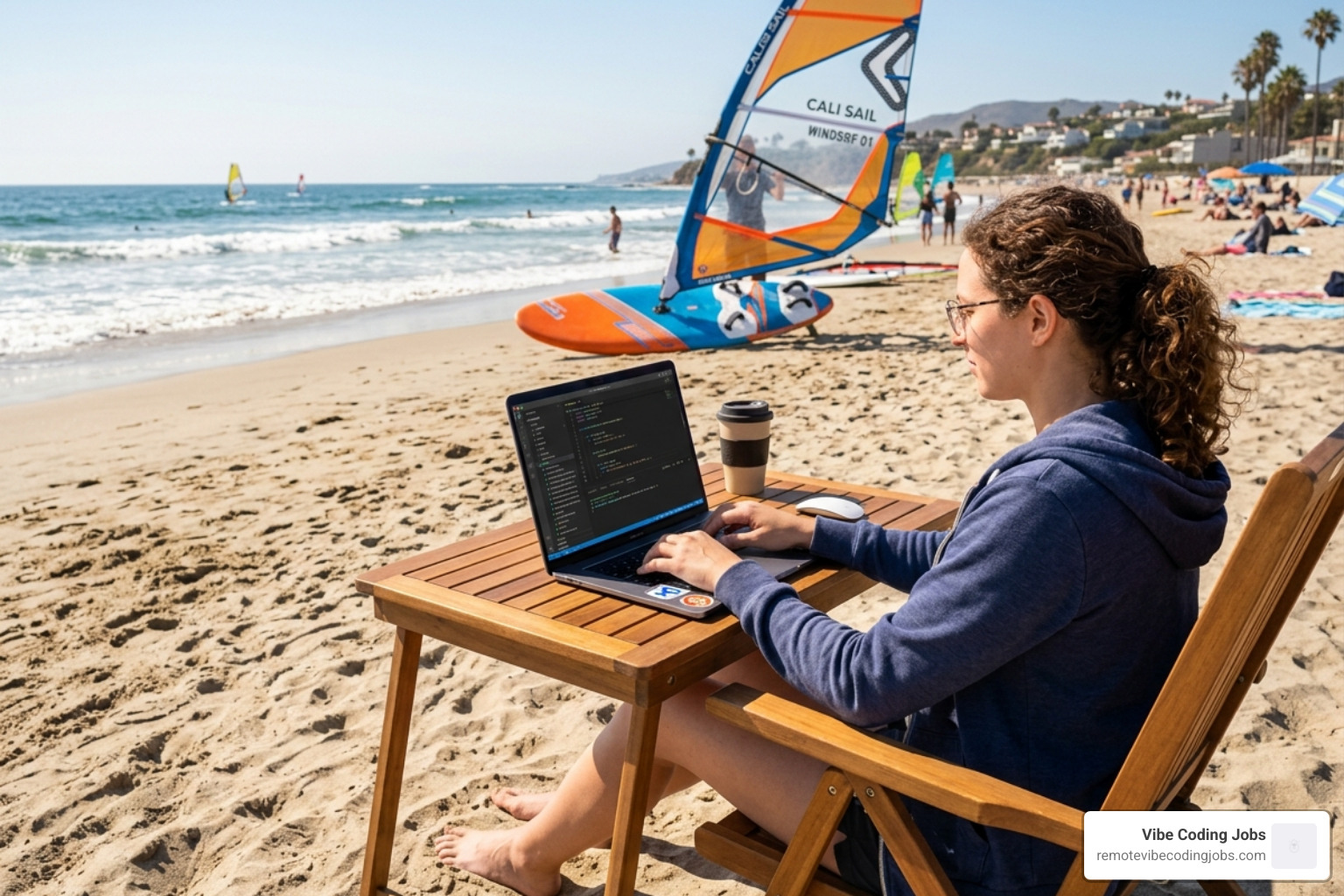
Windsurf Freelance AI Jobs: How to Vibe Code Your Way to Freedom
The Rise of Remote Windsurf Coding Jobs in 2026
Remote windsurf coding jobs are one of the fastest-growing niches in the developer job market right now. Here’s a quick snapshot of what’s available and what you need to know:
Quick Answer: Where to Find Remote Windsurf Coding Jobs
| What | Details |
|---|---|
| Live Windsurf roles | 6 curated on Remote Vibe Coding Jobs; 12 on RemoteFront |
| Total vibe coding jobs | 406 total, 157 remote positions |
| Typical pay (contract) | $55–$65/hr (senior level, US) |
| Top skills needed | Prompt engineering, React, TypeScript, Python, agentic workflows |
| H1B sponsorship | Available at select employers (e.g., American Unit, Inc) |
| Best tool pairing | Windsurf + Cursor used together by many engineers |
The way developers work is changing fast. AI-native editors like Windsurf — built by Codeium — are shifting the developer’s job from typing syntax to directing intelligent agents. Companies aren’t just tolerating this shift. They’re hiring specifically for it.
In May 2026, job listings explicitly name Windsurf proficiency as a requirement. Roles span from senior contract engineers earning $65/hr to full-stack positions at healthtech and fintech companies. The async-first, remote-first culture that vibe coding enables makes these roles especially attractive for developers who want location freedom.
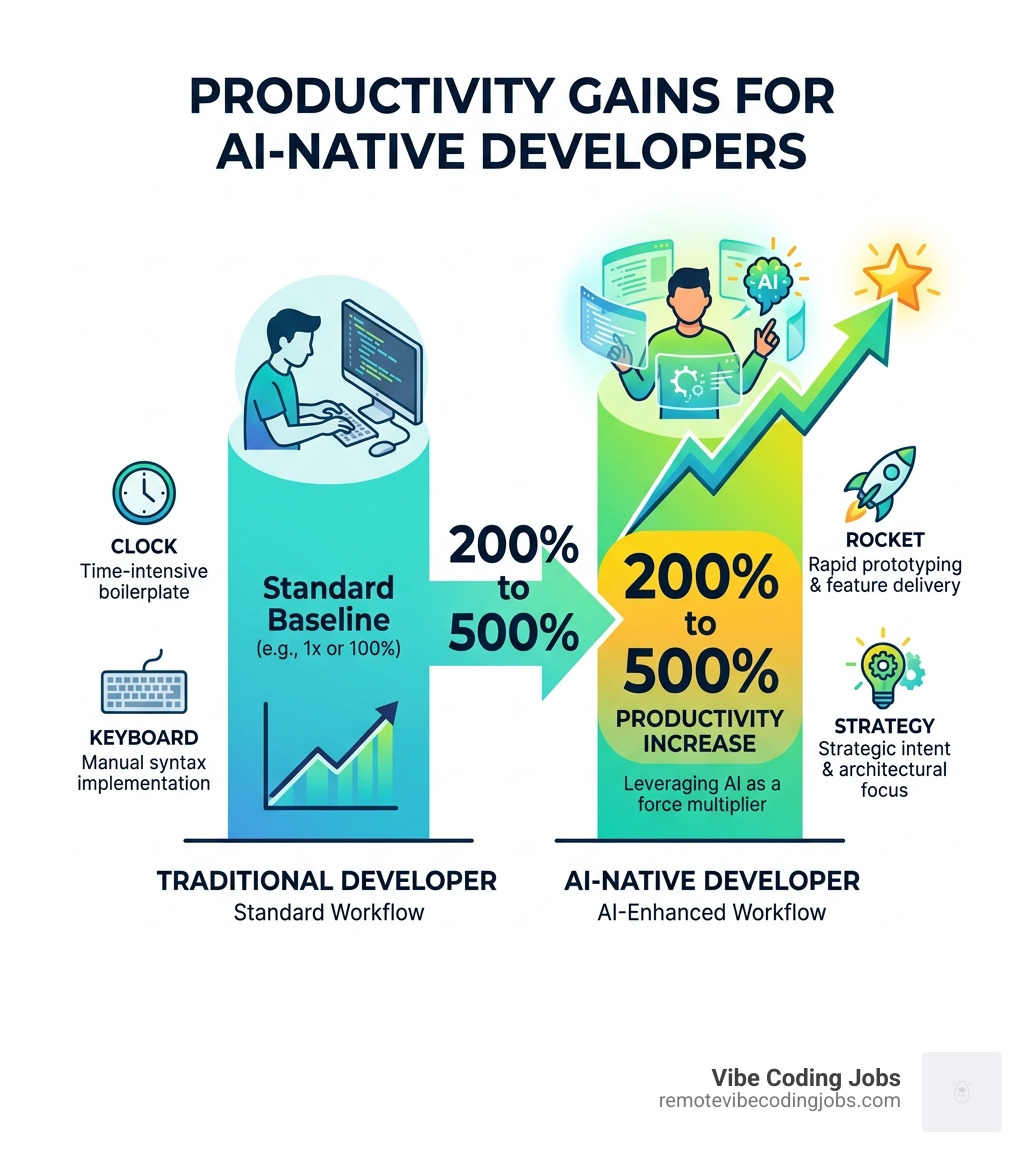
Early adopters of AI-native workflows report productivity gains of 200% to 500%. That’s not a small edge — it’s the kind of leverage that gets you hired, promoted, and paid more.
I’m RVCJ Editorial, the team behind Remote Vibe Coding Jobs — we’ve tracked and curated hundreds of remote windsurf coding jobs and AI-native developer roles across async-first companies globally. Our focus is helping engineers like you cut through the noise and find roles that actually match your stack, experience, and work style.
Below, we break down everything: the tools, the skills, the salaries, and exactly how to land one of these roles.
What is Windsurf and the Rise of Remote Windsurf Coding Jobs?
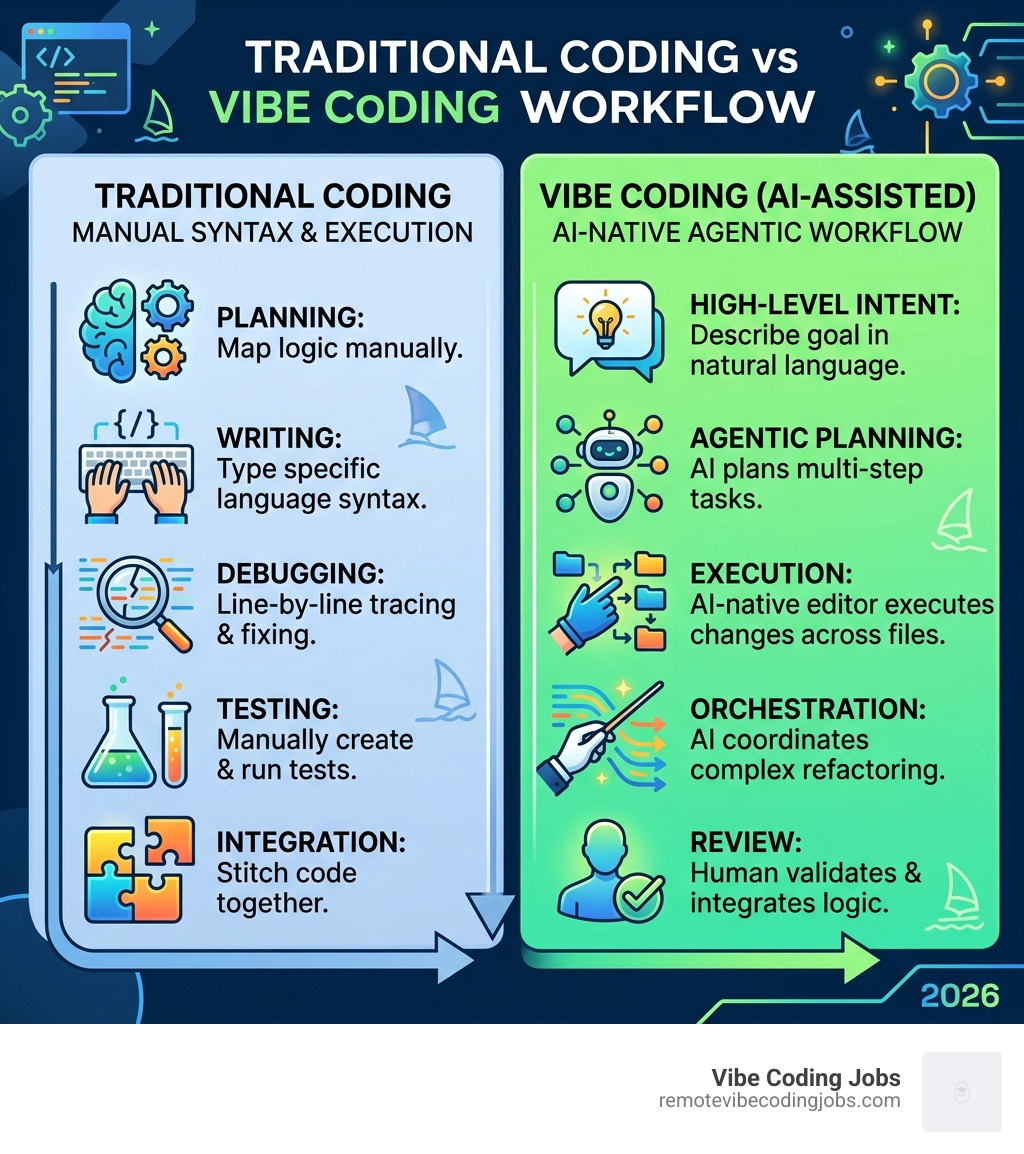
At its core, Windsurf (created by Codeium) is an AI-first code editor that has fundamentally shifted how we think about integrated development environments (IDEs). While traditional editors added AI as a plugin, Windsurf was built from the ground up to be AI-native.
The standout feature that has companies scrambling for remote windsurf coding jobs is Cascade. Cascade isn’t just an autocomplete tool; it is an agentic AI. This means it can autonomously plan and execute multi-step coding tasks across your entire codebase. Instead of you manually opening five files to update a shared interface, you give Cascade the high-level intent, and it handles the orchestration.
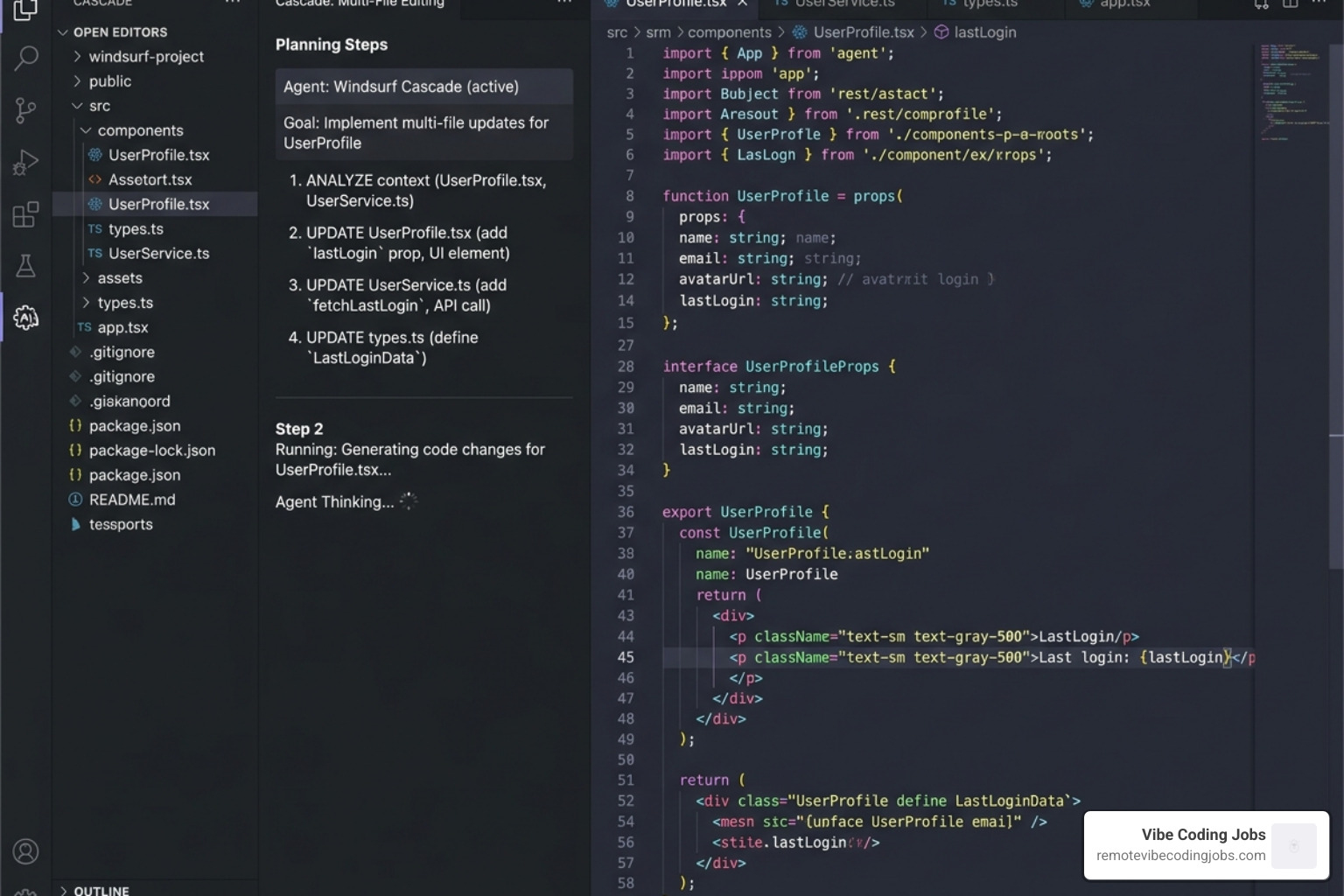
Windsurf offers several differentiators that make it a favorite for “vibe coding”:
- Deep AI Orchestration: It understands the relationship between your terminal, your files, and your intent.
- Context-Aware Terminal: The AI can see terminal output, helping it debug errors in real-time without you copy-pasting stack traces.
- VS Code Integration: Since it is built on top of the VS Code ecosystem, you keep all your favorite extensions while gaining elite AI superpowers.
We are seeing a massive surge in demand for Windsurf-proficient engineers on the Vibe Coding Jobs platform because companies have realized that one “vibe coder” using these agentic workflows can often outperform a team of three traditional developers.
Essential Skills for Remote Windsurf Coding Jobs
Landing one of these roles requires more than just knowing how to write code. You need to master the “meta-skills” of AI-assisted development:
- Prompt Engineering: Learning how to describe the “vibe” or high-level logic of a feature so the AI produces secure, clean, and maintainable code.
- Agentic Workflow Management: Knowing when to let the AI take the lead and when to intervene. This involves creating refactor.md roadmaps—structured documents that guide the AI through complex, multi-step refactors.
- Context Window Optimization: Using @ mentions effectively to point the AI to specific files, folders, or documentation, ensuring it doesn’t lose the thread of the project.
- Verification and Logic: As a vibe coder, your job shifts toward being a “software architect.” You must be able to verify AI-generated logic and perform security auditing to ensure the output aligns with engineering principles.
Top Tech Stacks for Remote Windsurf Coding Jobs
While Windsurf works with almost any language, certain stacks dominate the remote job listings in 2026. If you want to be highly employable, focus on these pairings:
- Frontend: React, Next.js, and TypeScript are the undisputed kings. Many roles look for developers who can use Windsurf to rapidly prototype UI/UX into functional code.
- Backend: Python, Node.js, and Go are frequently paired with Windsurf requirements, especially for building AI-native systems and production infrastructure.
- Infrastructure & DevOps: Experience with Docker, Kubernetes, and GraphQL is highly valued. Companies like American Unit, Inc often look for senior engineers who can orchestrate AI agents to scale complex applications using these tools.
- Legacy Modernization: We’ve seen roles (such as those at Telemedi) that require PHP (Symfony) combined with React, where the goal is using Windsurf to refactor legacy codebases into modern standards.
The Vibe Coding Revolution: Why Companies Want AI-Native Engineers
“Vibe coding” might sound casual, but it represents a high-level shift in software engineering. It refers to a development style where the engineer focuses on natural language descriptions and strategic intent rather than manual syntax implementation.
Companies are pivoting toward this model for several reasons:
- 200% Productivity Increase: Early adopters aren’t just faster; they are more ambitious. They can build MVPs in days instead of weeks.
- Product-Led Engineering: Vibe coders act as “Product Engineers.” They take end-to-end ownership of features, bridging the gap between a product manager’s vision and a functional application.
- Async-First Communication: Because AI handles the boilerplate, developers have more time for thoughtful, asynchronous documentation and system architecture.
- High-Agency Culture: Companies hiring for remote windsurf coding jobs typically value high trust and ownership. They want “commandos”—developers who can solve problems independently by leveraging the best tools available.
Compensation and Career Growth in the Windsurf Ecosystem
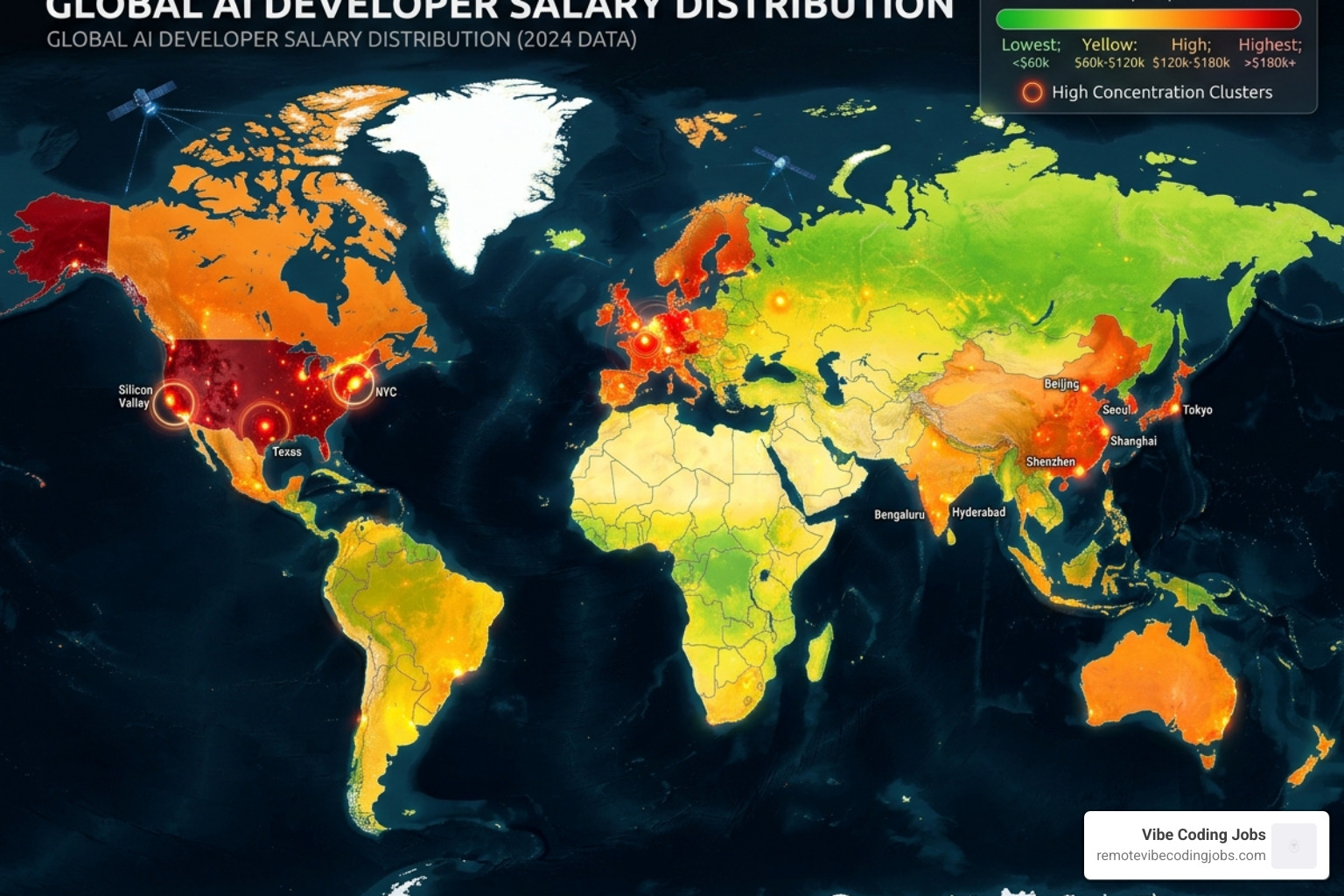
The financial rewards for mastering Windsurf are significant. Because you are essentially a force multiplier, companies are willing to pay a premium.
- Hourly Rates: Senior-level contract roles in the United States, such as those at American Unit, Inc, are currently offering $55/hr to $65/hr.
- Annual Salaries: For full-time remote roles, we see ranges from $180k to $320k for senior software engineers at AI-centric startups and enterprises.
- Entry-Level: Even “vibe coding” interns or junior developers (1-2 years experience) can command $70,000 to $100,000, as their ability to use AI tools makes them more productive than traditional juniors.
- Benefits: Beyond the salary, many companies now provide paid subscriptions to Windsurf and other AI tools as a standard developer benefit. Some, like American Unit, Inc, even have a proven track record of H1B sponsorship (with dozens of sponsorships handled annually from 2020 through 2026).
Finding these high-paying roles is easier when you use a curated board like Vibe Coding Jobs, which filters specifically for companies that embrace this “no-BS,” AI-first culture.
How to Transition into a Vibe Coding Career
If you’re a traditional developer, you don’t need to throw away your expertise. In fact, elite engineering knowledge is the best foundation for becoming a top-tier vibe coder.
Step 1: Strengthen the Foundations You still need to understand logic, system architecture, and security. Windsurf handles the “how,” but you are responsible for the “why.”
Step 2: Build an AI-First Portfolio Stop listing just your languages. Start listing your AI-assisted projects. Show how you used Windsurf’s Cascade to refactor a complex system or how you built an agentic workflow to automate testing.
Step 3: Master the Tools Practice using Windsurf alongside other tools like Cursor or Claude. Many “vibe coding” experts use multiple tools in combination—for example, using Cursor for context awareness and Windsurf for autonomous multi-file edits.
Step 4: Shift Your Mindset Move from being a “code typist” to a “software strategist.” Focus on learning how to guide AI to produce clean code that follows SOLID, KISS, and DRY principles.
Frequently Asked Questions about Windsurf Careers
How does Windsurf’s Cascade feature differ from other AI editors?
Unlike standard chat assistants or tab-completion tools, Cascade is agentic. It can autonomously plan multi-step tasks. If you ask it to “Add a new user authentication flow,” it doesn’t just give you the code; it can create the necessary files, update the database schema, and modify the frontend components across your entire codebase while staying aware of the project’s context.
Is Windsurf proficiency replacing traditional coding skills?
No. It is a productivity multiplier for elite engineers. While it lowers the barrier for beginners, the most successful vibe coders are those who already understand software fundamentals. You need your traditional skills to audit the AI’s output for security, performance, and architectural integrity.
What types of companies are hiring for Windsurf roles in 2026?
We see three main categories:
- AI-First Startups: Companies building the next generation of AI tools and platforms.
- Healthtech & Fintech Innovators: Organizations like Telemedi that need to move fast in complex domains and value the rapid prototyping capabilities of AI.
- Enterprise Digital Transformation: Larger firms (like those listed on the General Catalyst or Kleiner Perkins boards) that are modernizing their infrastructure and want high-agency developers who can lead the charge.
Conclusion
The era of manual boilerplate and syntax-grinding is coming to an end. Remote windsurf coding jobs represent the future of software engineering—a future where your value is defined by your creativity, your strategic intent, and your ability to orchestrate powerful AI agents.
Whether you are looking for a senior role at $320k/year or a flexible freelance gig at $65/hr, the opportunities in the Windsurf ecosystem are exploding. By mastering agentic workflows and adopting a product-engineer mindset, you can secure a career that offers both high compensation and true location freedom.
Ready to start your journey? Check out our curated listings and read more about the Vibe coding career path success stories interview tips to land your next big role.