
The Rise of Claude AI Vibe Jobs: What Every Developer Needs to Know in 2026
Claude AI vibe jobs are reshaping how software gets built — and who gets hired to build it. Here’s the quick answer if you want it fast:
What are Claude AI vibe jobs?
- Developer roles where you direct AI tools like Claude Code to build software, rather than writing every line by hand
- Focus on prompt engineering, system design, and reviewing AI-generated code — not memorizing syntax
- Fully remote 50% of the time, with salaries ranging from $70K entry-level to $250K+ senior
- Over 1,200 active listings as of mid-2026, spanning startups to enterprises
- Tools most commonly required: Claude Code, Cursor, Windsurf, MCP servers, and Bolt.new
The job market for AI-native developers has quietly exploded. One signal that says it all: a single developer used Claude Code to apply to 740+ jobs autonomously — and landed a Head of Applied AI role. That’s not just a productivity story. It’s a preview of how the entire category works.
Vibe coding isn’t about skipping the hard parts. It’s about shifting where the hard parts live — from typing boilerplate to making smart architectural decisions, writing tight prompts, and catching AI mistakes before they ship.
I’m part of the RVCJ Editorial team at Remote Vibe Coding Jobs, where we cover AI-assisted development, remote hiring trends, and career guidance for developers building with tools like Claude, Cursor, and Copilot — the exact landscape that defines claude ai vibe jobs today. If you’re a developer trying to navigate this fast-moving market, you’re in the right place.
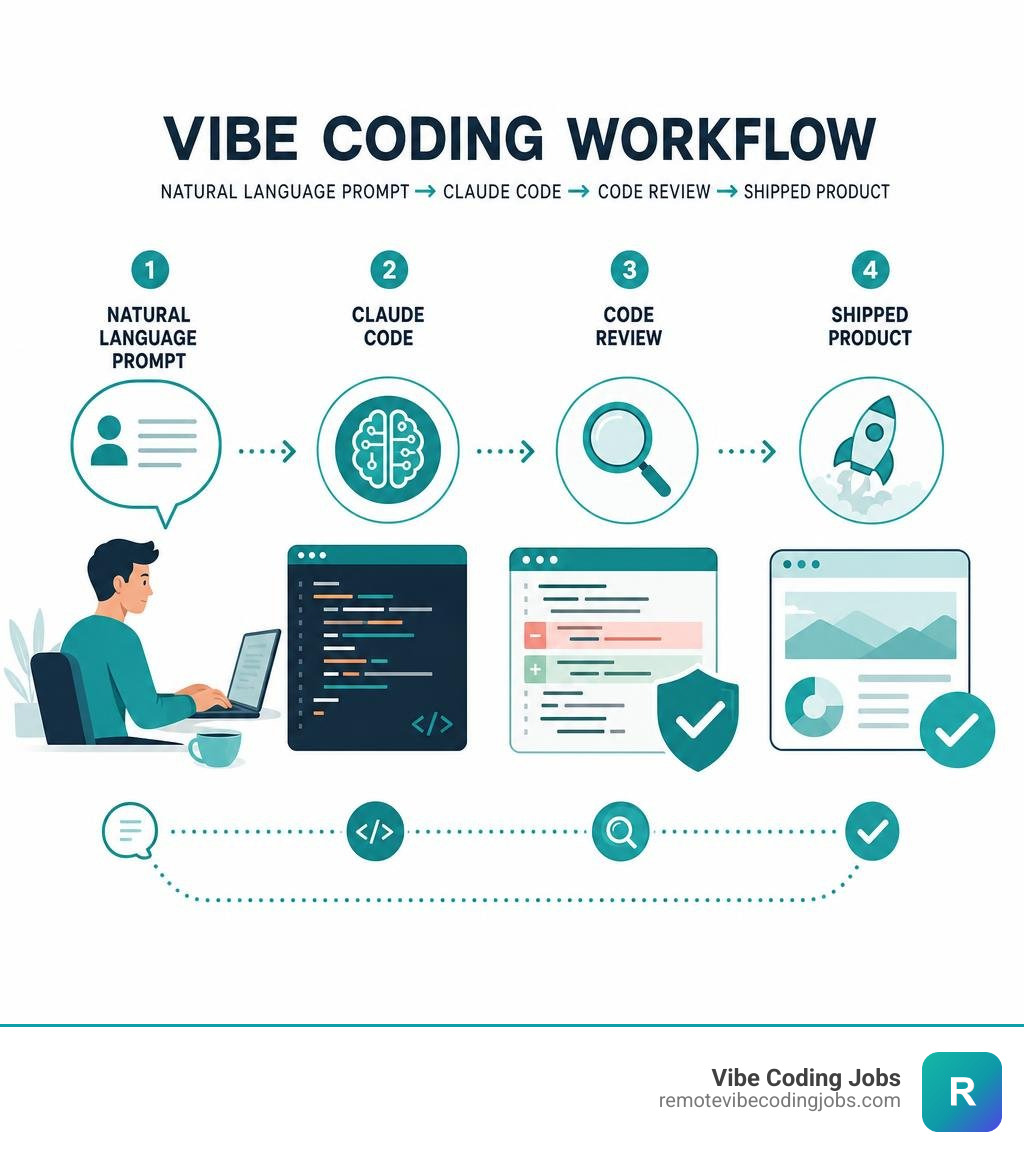
What is Vibe Coding and How Does It Redefine Software Engineering?
At its core, vibe coding is the act of orchestrating code through natural language, using LLMs and agentic AI systems to do the heavy lifting of writing, debugging, and deploying. Instead of agonizing over semicolons or memory allocation, a vibe coder describes the desired outcome, reviews the generated draft, and guides the AI toward the final product.
For a complete breakdown of this shift, check out our guide on What is Vibe Coding.
This is a fundamental departure from traditional software engineering. In the classic model, a developer’s value was closely tied to their syntax fluency—how quickly they could write clean, bug-free code from scratch. In the vibe coding era, value is determined by architectural vision, system integration skills, and critical oversight. It is the ultimate expression of human-AI collaboration. To understand how these two methodologies stack up head-to-head, read our analysis of Vibe Coding vs Traditional Development.
The Shift from Syntax to System Architecture
When syntax is commoditized, system design becomes your superpower. Vibe coders do not spend their mornings writing boilerplate API endpoints. Instead, they focus on:
- System Design: Mapping out how databases, APIs, and microservices talk to each other.
- Prompt Engineering & Context Management: Keeping the AI’s context window clean by feeding it precise instructions, schema definitions, and clear boundary rules.
- Critical Code Review: Reading every line of AI-generated output to detect when the model is “lying” or introducing subtle security vulnerabilities.
By letting AI handle the repetitive boilerplate, developers experience a 2x to 5x productivity increase within their first month of adopting these workflows.
Why Companies are Hiring for Claude AI Vibe Jobs
Employers are waking up to a simple mathematical reality: a small team of AI-fluent developers can ship software faster and cheaper than a massive department of traditional coders. This has led to a surge in hiring for specialized claude ai vibe jobs.
Companies want builders who can rapidly prototype MVPs and deploy agentic workflows using terminal-based tools. Anthropic’s own hiring portal highlights this paradigm shift (explore their open positions on the Careers – Anthropic page). Startups and enterprise giants alike are looking for “operators” who can leverage Claude Code to interact directly with production repositories, run test suites, and deploy changes autonomously.
The Tech Stack of a Modern Vibe Coder
To land one of these coveted positions, you cannot rely on a traditional tech stack alone. You must master the emerging suite of AI-native developer tools.
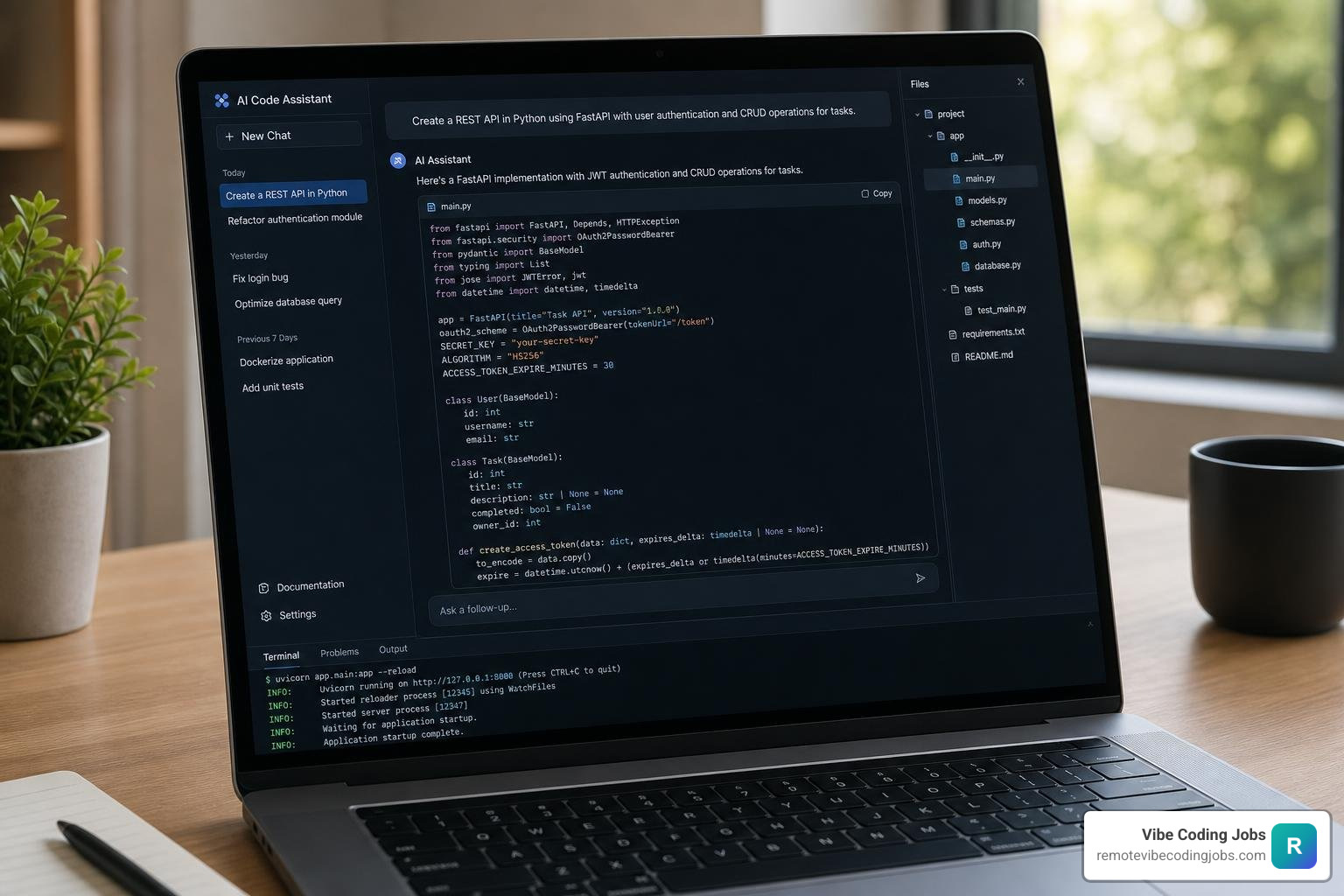
For a deep dive into the software powering this revolution, read our breakdown of the Best AI Coding Tools for Vibe Coders 2026.
Claude Code, Cursor, and MCP Servers
The modern vibe coding stack is built around a few industry-standard tools:
- Claude Code: Anthropic’s terminal-based agentic coding tool. Unlike standard chat interfaces, Claude Code runs directly in your CLI, analyzes your codebase, executes terminal commands, runs tests, and applies multi-file edits.
- Cursor: The fork of VS Code that has become the darling of AI-fluent engineers. Its “Composer” feature allows for multi-file generation and lightning-fast iterations. To see how it stacks up against older tools, check out Cursor vs Copilot: Developer Jobs Comparison.
- Model Context Protocol (MCP): This open standard allows developers to build secure connections between LLMs and external data sources (like GitHub, Slack, or local databases), enabling agentic workflows to operate with full context.
Automating the Development Lifecycle
Vibe coding is not just about writing code; it is about automating the entire shipping pipeline. Companies hiring for claude ai vibe jobs expect you to know how to Automate Coding Tasks: How to Use AI for Efficiency.
This includes using AI to build and maintain CI/CD pipelines, package applications into Docker containers, and manage deployments on cloud platforms like DigitalOcean or AWS. The goal is a seamless loop where you prompt, the AI builds, the pipeline tests, and the system deploys—all with minimal manual friction.
Navigating the Market for Claude AI Vibe Jobs
The job market for AI-assisted developers is highly lucrative, but it looks very different from the traditional tech landscape.
Salary Expectations and Contract Types in 2026
Salaries for vibe coders are incredibly diverse. Entry-level positions typically start around $70,000, while top-tier experts commanding agentic workflows can earn upwards of $250,000—or even up to $465,000 per year for enterprise architect roles.
For a comprehensive breakdown, see our Vibe Coding Salary Guide 2026 and read about Remote Developer Salaries in 2026: What to Expect.
| Experience Level | Typical Salary Range (Full-Time) | Typical Freelance Rate |
|---|---|---|
| Entry-Level (1-2 years experience with AI tools) | $70,000 – $100,000 | $50 – $100 / hour |
| Mid-Level (3-5 years experience, strong system design) | $100,000 – $150,000 | $100 – $200 / hour |
| Senior / Agentic Specialist (Expertise in MCP, workflows) | $150,000 – $250,000+ | $200 – $400+ / hour |
Note: About 50% of these roles in our database are fully remote, offering incredible geographical flexibility.
Finding Entry-Level and Senior Claude AI Vibe Jobs
If you are looking to break into this field, you do not need a decade of traditional coding experience. In fact, vibe coding roles average just 3 years of required experience, compared to the 5-8 years often demanded by traditional senior engineering posts.
You can find hundreds of active listings on general platforms like Claude Ai Jobs, Employment | Indeed , or look for hybrid opportunities like this Vibe Coder role based in Bogotá. For those just starting out, we’ve curated a list of AI Coding Jobs: Entry Level Remote Opportunities to help you get your foot in the door.
How Employers Evaluate AI-Native Developers
The days of memorizing sorting algorithms for a whiteboard interview are numbered. Employers hiring vibe coders care about one thing: can you ship functional software quickly and safely using AI?
The Death of the Whiteboard Interview
To understand how the interview process has shifted toward practical execution, explore Remote Coding Jobs No LeetCode: Easy Interview, Practical Skills.
Instead of LeetCode tests, modern companies evaluate candidates through:
- Screen Recordings: Many employers now ask for a 5-10 minute screen recording of you using Claude Code or Cursor to build a feature from scratch. They want to see how you handle errors, reset context, and guide the model.
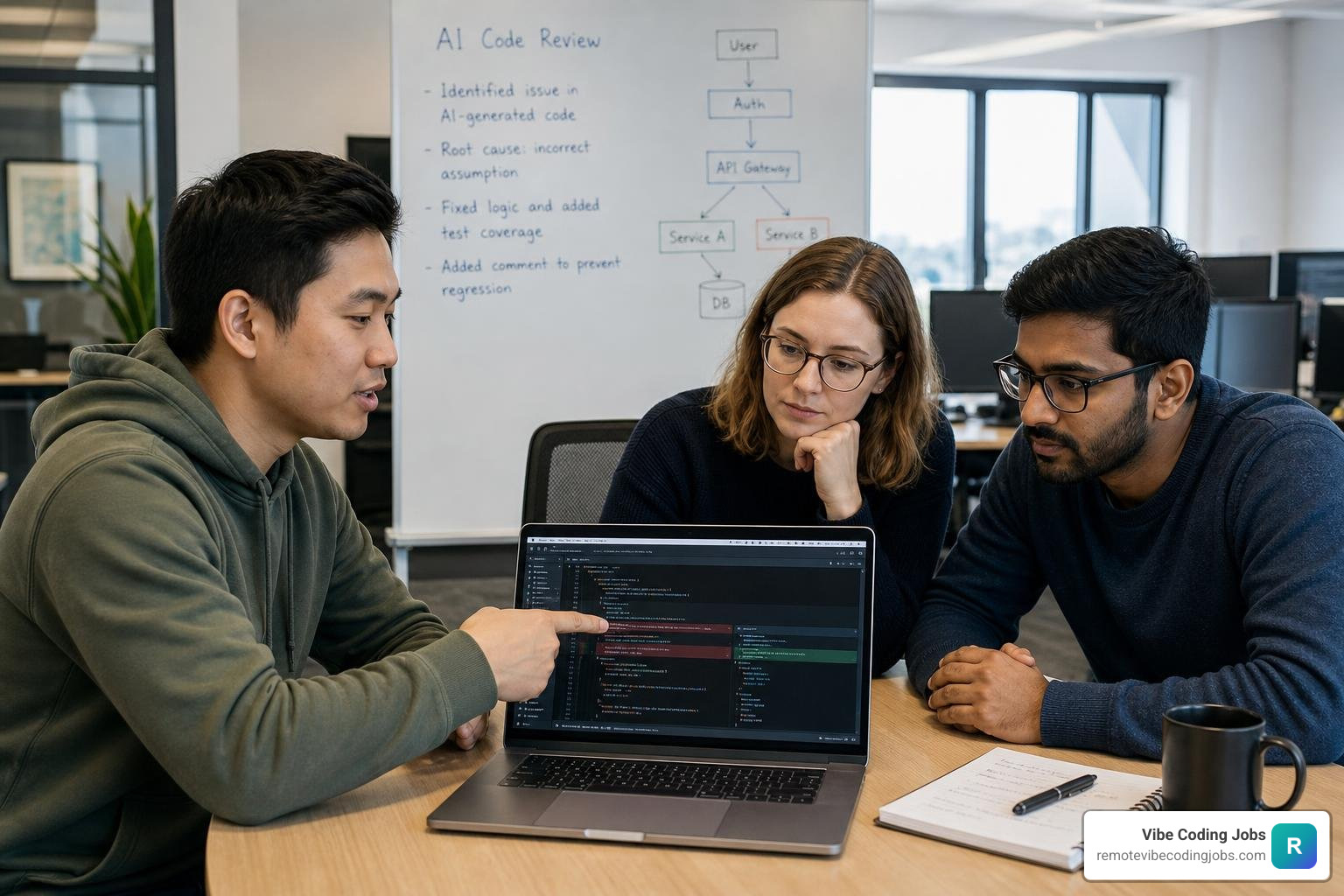
- Practical QA Audits: You might be given an AI-generated codebase containing subtle logical flaws and asked to find and fix them.
- Live Prompting Demonstrations: Proving you can translate an ambiguous product request into a working prototype in real-time.
Building a Portfolio That Proves AI Fluency
To stand out, your portfolio needs to showcase your relationship with AI. This is discussed in detail in our playbook on How to Get a Vibe Coding Job: Skills, Portfolio, Networking.
When submitting your GitHub repositories, make sure to include:
- CLAUDE.md Files: This file acts as a instruction guide for AI agents entering your repository, detailing build commands, testing strategies, and code style preferences.
- Clear Documentation of the AI’s Role: Explicitly state what the AI built, where it struggled, and how you corrected its trajectory.
- Shipped MVPs: Live, interactive links to web apps you built and deployed using tools like Bolt.new or Lovable.
The Future of Vibe Coding: Sustainability and Scale
As vibe coding transitions from a trend into an industry standard, companies are grappling with how to scale these workflows sustainably.
Are Vibe Coders Replacing Traditional Developers?
The short answer is no, but they are fundamentally evolving the role. Vibe coding is creating entirely new job categories like Product Engineers, Creative Technologists, and AI Systems Architects.
These roles blend engineering, product design, and business logic. The developer of 2026 is less of a “code typist” and more of a product director. The demand for software is infinite; by lowering the barrier to creation, AI is simply allowing us to build more ambitious things faster.
Avoiding Common Pitfalls in AI-First Teams
While vibe coding is incredibly powerful, it introduces unique challenges that teams must actively manage:
- The Trap of Blind Trust: Shipping AI-generated code without reviewing it line-by-line is a recipe for catastrophic security bugs.
- Technical Debt: AI can generate massive amounts of code quickly, but if left unrefactored, it can become an unmaintainable mess.
- Context Bloat: Forgetting to reset your AI session or clear out old chats can cause the model to go in circles and hallucinate.
- Prompt Caching Inefficiencies: Not optimizing your context can lead to slow response times and high API costs.
Frequently Asked Questions about Vibe Coding
Do I need a computer science degree to get a vibe coding job?
No. While understanding computer science fundamentals (like databases, APIs, and basic logic) is incredibly helpful, many employers value a proven portfolio of shipped AI-assisted products over a formal degree. Fluency with AI tools and a strong QA mindset are the ultimate equalizers.
What are the most common tools used in vibe coding?
The most required tools in 2026 job descriptions are Claude Code, Cursor (specifically its Composer feature), Windsurf, Bolt.new, and Lovable. Knowing how to use these tools in combination is highly valued.
How much can I earn as a freelance vibe coder?
Freelance vibe coders are commanding rates between $100 and $300+ per hour. Because AI allows them to deliver completed projects in days rather than weeks, clients are happy to pay premium rates for rapid execution.
Conclusion
The software engineering landscape has changed forever. The developers who thrive in 2026 and beyond won’t be those who fight against AI automation, but those who embrace it to become 10x builders.
At Remote Vibe Coding Jobs, we are dedicated to helping you find your place in this exciting new world. We curate daily listings of remote, AI-assisted roles at forward-thinking, async-first companies.
Ready to make the leap? Explore the async-first remote developer jobs benefits and find your next role on our platform today. Let’s build the future, one vibe at a time.