
Start With a Free Coding Job Playbook Built for 2026
A coding job playbook free resource should give you a clear path to stronger applications, sharper interview prep, and credible proof that you can build with AI, not just prompt it.
| What a useful free coding job playbook includes | Why it matters |
|---|---|
| Targeted resume and application guidance | Helps you match the real needs behind each job description |
| Technical interview study plan | Covers coding, system design, and behavioral preparation |
| AI-assisted workflow examples | Shows how to use agents without losing engineering judgment |
| Portfolio and personal-brand checklist | Gives recruiters visible evidence of your work |
| Job-tracking and outreach process | Keeps your search focused instead of turning into mass application spam |
The developer job market has changed fast. AI model costs fell dramatically from 2022 to 2025, open-source checkpoints expanded from a few dozen to thousands, and coding agents can now give near-real-time feedback. That makes AI tools more accessible, but it also raises the bar: employers need people who can turn fast prototypes into secure, tested, maintainable software.
For remote, async-first roles, a generic resume and a pile of Easy Apply submissions are rarely enough. The strongest candidates show precise fit, practical AI fluency, thoughtful engineering habits, and public proof of what they can ship.
I am Hansjan Kamerling, cofounder of Adaptify SEO, with more than a decade in technology and product design. My work building scalable, automated systems informs this coding job playbook free guide and the practical career steps that follow.
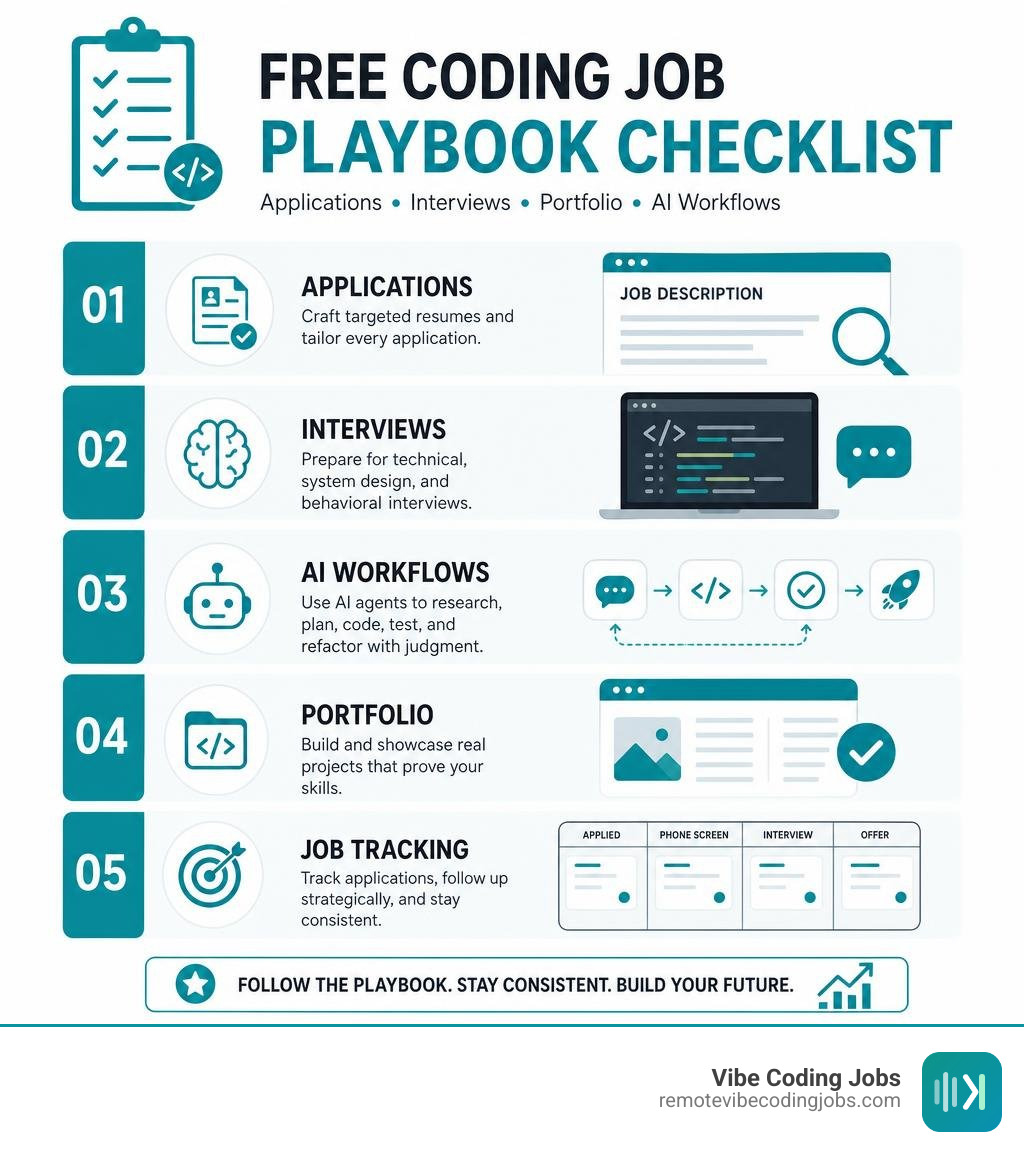
Core Elements of the Coding Job Playbook Free

When we designed our strategy for modern technical career growth, we realized that traditional job search tactics were simply missing the mark. Applying to hundreds of job boards with a static resume no longer works. Modern Applicant Tracking Systems (ATS) and talent teams evaluate contextual meaning rather than simple keyword repetition. To succeed, your job hunt must run like an organized engineering project.
The core elements of a comprehensive coding job playbook free model rest on three foundational pillars: application precision, semantic resume alignment, and demonstrable proof of execution. Rather than spamming companies, high-converting candidates focus on deep alignment with role requirements.
- Application Precision: Targeting fewer, higher-fit positions where your stack and preferences match the company’s culture.
- Semantic Resume Tailoring: Restructuring your true experiences so that LLM evaluation systems and recruiters quickly recognize your relevant achievements.
- Verified Portfolio Output: Sharing public repositories, Architecture Decision Records (ADRs), and live deployments that prove your ability to ship production-ready code.
Understanding these mechanics is essential when learning How to Land Remote Vibe Coding Job Skills in an ecosystem dominated by automated screening tools.
Download Your Coding Job Playbook Free for 2026
Navigating the engineering market requires structured frameworks rather than unstructured advice. We advocate leveraging comprehensive open-source and freely accessible career playbooks that detail every stage of the technical hiring loop.
A modern 115-page developer guide or open-source career playbook offers structured, step-by-step tracks:
- Structured Study Plans: Timelines tailored specifically for Junior (3 months), Mid-Level (6 months), and Senior (4 months) candidates.
- Extensive Problem Repositories: Access to curated collections of over 1,400 LeetCode problems categorized by company asking frequency and core data structure concepts.
- Systems Design Playbooks: End-to-end templates detailing load balancing, microservice architectures, caching, and database sharding.
- Behavioral Frameworks: Rubrics aligned with company leadership principles to help you structure compelling career stories.
By relying on community-tested resources, you ensure your preparation aligns with current engineering expectations rather than outdated recruitment tropes.
AI-Powered Resume Tailoring and Application Automation
In 2026, candidates can flip the script on automated employer screens by deploying their own AI job search pipelines. Open-source tools enable candidates to automate job discovery, evaluate candidate-to-role compatibility, and format tailored applications.
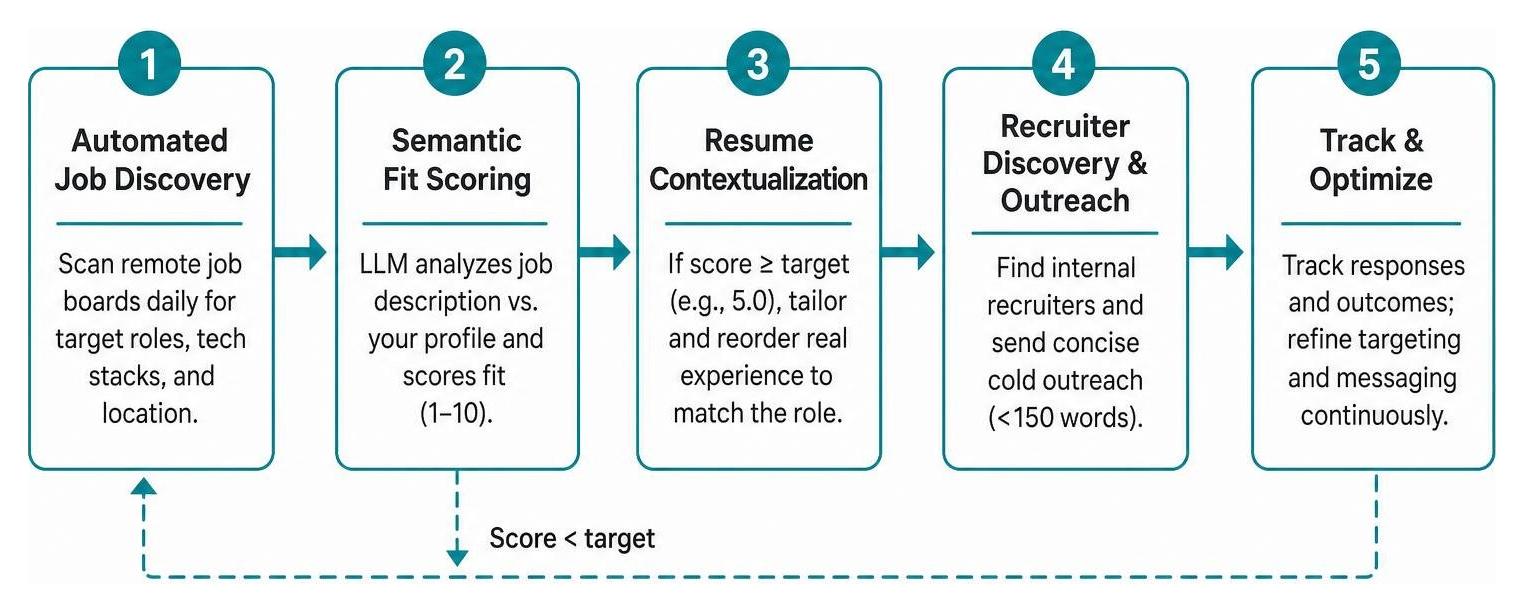
Using agentic frameworks like the job-applier-agent skill or headless browser tools driven by Playwright, developers can streamline the application pipeline:
- Automated Job Discovery: Python scripts and serverless workflows search remote job boards daily for target titles, tech stacks, and remote parameters.
- Semantic Fit Scoring: Large language models analyze full job descriptions against a candidate’s structured profile, scoring job alignment on a scale of 1 to 10.
- Truthful CV Contextualization: If the fit score meets the target threshold (such as 5.0 or higher), the agent dynamically reorders real resume bullet points to highlight relevant experiences without fabricating skills.
- Direct Recruiter Discovery & Cold Outreach: Rather than relying solely on web portals, candidates identify internal technical recruiters and send concise cold emails (under 150 words) presenting concise proof of work.
This precision-driven, semi-automated methodology replaces volume-based application spam with tailored, high-converting outreach.
Navigating Tech Interview Preparation and Career Transitions
Preparing for modern technical evaluations requires a two-pronged strategy: mastering foundational computer science concepts while demonstrating proficiency with AI-assisted software engineering. While traditional software roles heavily emphasized standalone manual syntax execution, modern engineering evaluations increasingly assess your system design instincts, architectural judgment, and ability to manage AI tools effectively.
Candidates looking to maximize their trajectory should explore insights on AI Coding Jobs Remote Career Growth to understand how companies evaluate technical depth alongside modern AI workflows.
Mastering Technical Interviews for Top Engineering Roles
Landing roles at premier technology companies demands a clear understanding of full multi-stage interview loops. Big Tech hiring processes typically consist of initial recruiter screens, technical phone evaluations focusing on Data Structures and Algorithms (DSA), and multi-round onsite loops covering complex system design and behavioral culture fits.
To prepare efficiently, candidates should utilize structured community resources such as the FAANG-Playbook GitHub Repository alongside structured study routines:
- Master Recurring Patterns: Focus on core algorithmic patterns—such as sliding windows, two pointers, graph traversals, and dynamic programming—rather than trying to memorize thousands of individual problems.
- System Design Execution: Practice drawing scalable architectures on digital whiteboards, systematically discussing latency trade-offs, state management, API contracts, and database choices.
- Structured Mock Practice: Perform timed peer mock interviews using standardized rubrics to hone clear, concise communication under pressure.
- Company Playbook Customization: Review specific engineering blog posts and core values before interviewing with targeted firms to speak directly to their operational culture.
Transitioning from Vibe Coding to Scalable Production Engineering
The rapid rise of AI coding assistants introduced the concept of “vibe coding”—using natural language prompts to quickly generate functional software prototypes. While rapid prototyping is excellent for early product exploration, relying purely on unstructured AI generation creates fragile, unmaintainable codebases plagued by security flaws, hidden edge-case failures, and architectural chaos.
Professional engineering demands transitioning from unstructured prompting to disciplined, production-grade workflows.
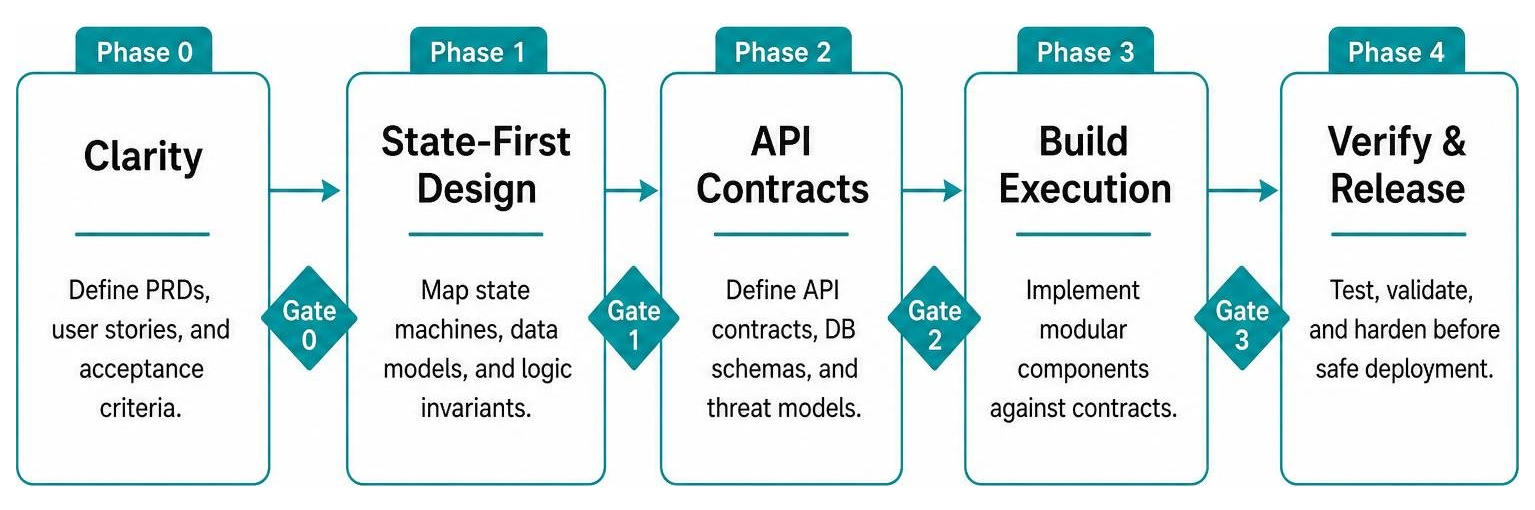
To enforce engineering rigor when using AI tools, developers can adopt structured frameworks like the Founder Playbook for AI Agents, which enforces a 5-phase gated lifecycle:
- Phase 0 (Clarity): Define lightweight Product Requirement Documents (PRDs), explicit user stories, and acceptance criteria before writing code.
- Phase 1 (State-First Design): Map out state machines, data models, and logic invariants prior to UI generation.
- Phase 2 (API Contracts): Define explicit server-side API contracts, database schemas, and threat models.
- Phase 3 (Build Execution): Direct AI coding agents to implement modular components against established contracts.
- Phase 4 (Ship & Validate): Execute automated test suites, conduct security audits, and verify performance benchmarks before merging pull requests.
By applying strict control layers to AI tools, candidates bridge the gap between rapid prototyping and professional software delivery. You can discover more strategies on balancing AI speed with software quality in our guide to Remote Developer Jobs AI Tools Productivity.
Essential Skills, AI Tools, and Personal Branding in 2026

The developer skill matrix in 2026 places a premium on context management, architectural foresight, and system verification. While foundational programming logic remains vital, modern developers distinguish themselves through their mastery of agentic developer tooling and open-source ecosystems.
Candidates eager to build a strong foundation can consult classic educational resources like the How to Learn to Code and Get a Developer Job [Full Book] reference guide alongside modern tool learning paths.
| Tool / Concept | Primary Engineering Role | Key Career Value |
|---|---|---|
| Claude Code CLI | Agentic terminal coding & repo refactoring | High-speed multi-file code editing & triage |
| Cursor / Windsurf | AI-native IDE interaction & inline inline code editing | Rapid context-aware feature development |
| Model Context Protocol (MCP) | Connecting AI models to external databases & tools | Standardizing enterprise AI system integrations |
| Memory Hierarchies | Managing CLAUDE.md files and persistent project context | Eliminating redundant agent prompt instructions |
Maximizing Your Coding Job Playbook Free with AI Automation
Job seekers can gain a massive advantage by setting up automated, serverless job hunting infrastructures. Instead of manually scanning job boards daily, developers can deploy personal automation pipelines hosted on free-tier cloud platforms.
Using GitHub Actions workflows combined with scheduled CRON jobs, candidates can deploy Python scrapers that track new tech job listings. These serverless pipelines can automatically pass scraped job descriptions to LLM APIs (such as Gemini or Claude) to calculate fit scores and format customized daily digest emails.
By automating administrative tasks, job seekers free up dedicated hours every day to focus on building portfolio projects, completing technical coding challenges, and reaching out directly to hiring managers. This approach is particularly effective for candidates looking for early-career opportunities, as detailed in our analysis of AI Coding Jobs Entry Level Remote positions.
Building a High-Impact Brand on LinkedIn and Tech Platforms
In an era where AI can generate standard text resumes in seconds, personal proof of work has become the primary signal that recruiters trust. Building a public presence across LinkedIn, GitHub, and technical publishing platforms creates inbound job opportunities and validates your technical abilities.
Effective strategies for personal branding include:
- Public Proof of Work: Consistently share short videos, Architecture Decision Records, or GitHub commits explaining how you solved complex technical challenges.
- Open Source Contributions: Submit pull requests, bug fixes, or documentation updates to active open-source repositories and AI tool extensions.
- Strategic Recruiter Networking: Connect directly with engineering leads and technical recruiters, opening conversations with concise project demos or thoughtful questions about their engineering stack.
- Avoiding Application Spam: Refrain from submitting generic resumes through mass apply bots. High-volume generic applications burn candidate reputations and lead to high automated rejection rates.
Frequently Asked Questions About Tech Hiring
What are the main differences between traditional coding roles and AI-augmented roles?
Traditional software engineering roles placed heavy emphasis on manual syntax writing, manual test generation, and deep memorization of language-specific API details. In contrast, AI-augmented roles treat developers as system architects and orchestrators who guide AI coding agents.
In AI-augmented development, speed comes from defining clear system boundaries, crafting precise context configurations (such as CLAUDE.md rules), establishing robust test suites, and performing strict code reviews on AI-generated pull requests. While traditional roles rewarded raw typing and syntax fluency, modern roles prioritize context economics, system architecture, security auditing, and rapid iterative verification.
How can candidates avoid common application pitfalls when using AI tools?
The most dangerous application pitfall is using AI tools to fabricate experience, inflate skill ratings, or flood job boards with generic applications. Automated Applicant Tracking Systems and hiring managers easily spot mass-generated cover letters and bloated resume keywords.
To avoid these traps:
- Never fabricate experience: Ensure AI tools only highlight genuine project achievements, real technical stacks, and verifiable metrics.
- Maintain strict review standards: Always proofread AI-generated cover letters and email outreach to remove robotic phrasing and maintain an authentic human tone.
- Verify AI-generated code: When completing take-home coding assessments, thoroughly audit all AI-generated code for security vulnerabilities, IP risks, and outdated dependencies before submission.
How do I build a portfolio that stands out to Big Tech companies like Google and Microsoft?
Top engineering firms receive thousands of standardized portfolio sites every day. To stand out, your portfolio must demonstrate real-world engineering discipline rather than simple tutorial clones.
Focus on building production-ready applications that solve genuine problems:
- Include Architecture Decision Records (ADRs): Document why you selected specific databases, state management patterns, and hosting providers over competing alternatives.
- Deploy Live, Tested Systems: Provide live application URLs backed by automated continuous integration (CI/CD) pipelines, comprehensive test coverage, and clear documentation.
- Showcase AI Agent Integration: Demonstrate your ability to integrate AI models securely by building applications that utilize Model Context Protocol (MCP) servers, persistent memory contexts, and structured validation layers.
Conclusion
Landing a top remote developer job in 2026 requires moving away from outdated application volume strategies and adopting a structured, engineering-led job hunt. By leveraging a coding job playbook free workflow—combining targeted resume tailoring, agentic application pipelines, gated production engineering habits, and verified public portfolios—you position yourself at the forefront of modern software engineering talent.
At RemoteVibeCodingJobs, we help developers fast-track their job search by curating daily listings from async-first companies that actively embrace AI-assisted workflows. Whether you build with Cursor, Claude Code, or modern stack frameworks, finding the right culture fit makes all the difference.
Take the next step in your developer career today. Explore Remote Swift Coding Jobs and AI Roles on RemoteVibeCodingJobs to find curated listings, apply with confidence, and secure your next engineering position.