
The Rise of AI Playbook Remote Jobs in 2026
AI playbook remote jobs are among the fastest-growing opportunities in tech right now — and if you want the quick answer, here’s what they are and where they pay:
| Role | Typical Remote Salary | Location |
|---|---|---|
| Head of AI Value Strategy | $336,000 – $507,000 OTE | US Remote |
| Senior AI Strategy & Operations Manager | $170,000 – $225,000 | US Remote |
| AI Strategy & Planning Manager | $174,000 – $232,100 | US Remote |
| AI Strategist | $75,000+ | US Remote |
| AI Orchestration Lead | Competitive + equity | Global Remote |
These roles sit at the intersection of AI strategy, workflow automation, and remote operations. Companies hire for them to build the systems, playbooks, and agent infrastructure that make AI adoption stick — not just in theory, but in daily practice across every department.
The timing makes sense. Gartner projects that by the end of 2026, 40% of enterprise applications will feature task-specific agents. Companies are scrambling to find people who can orchestrate that shift — and they’re hiring remotely to do it.
I’m RVCJ Editorial, the team behind Remote Vibe Coding Jobs, where we track remote AI-assisted development roles and cover hiring trends across async-first, AI-native companies — including ai playbook remote jobs across orchestration, strategy, and enablement. Read on for a full breakdown of the skills, tools, salaries, and job-search tactics that matter most right now.
Defining AI Playbook Remote Jobs and Why They Are Surging

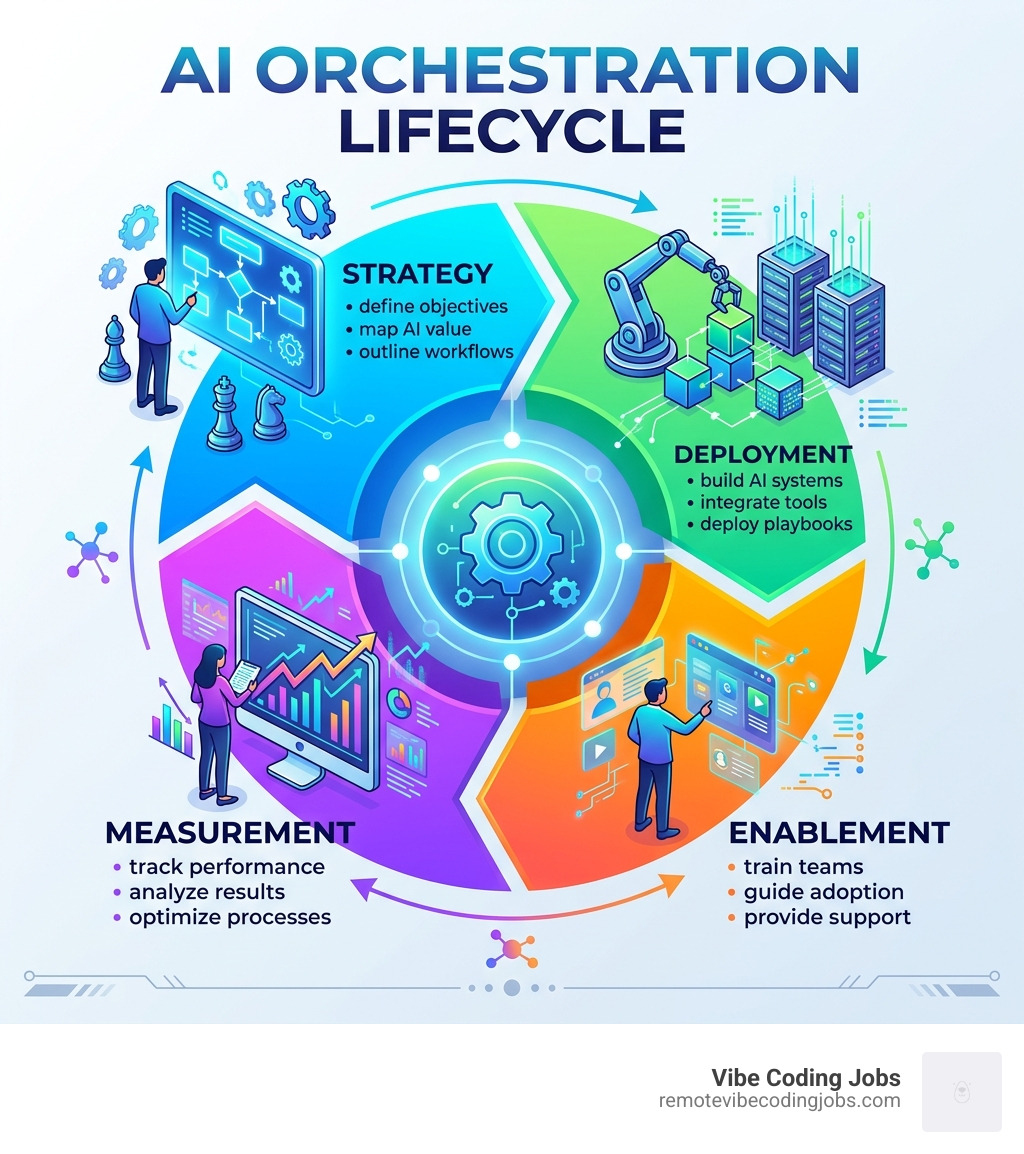
In May 2026, we are witnessing a fundamental shift in how companies operate. The “AI Playbook” isn’t just a document; it’s a living set of automated workflows and strategic decisions that define how a business functions. AI playbook remote jobs represent the professionals who design, implement, and manage these systems.
But why now? The remote work paradigm has evolved. In 2020, an estimated 1 million engineering jobs went unfilled, forcing companies to look globally. Today, that global talent hunt has merged with the AI revolution. Companies like Outreach are hiring for high-level roles like the Head of AI Value Strategy to ensure their AI tools actually solve C-level business problems rather than just being “neat tech.”
The surge is driven by three key factors:
- Agentic AI Maturity: We’ve moved beyond chatbots. As Gartner projected, 40% of enterprise apps now feature task-specific agents. Someone needs to manage these “digital employees.”
- The Operational Gap: Many companies have AI tools but no strategy. Role like the Senior Remote Operations Manager – AI Strategy at Cribl bridge this gap by building AI Centers of Excellence (CoE).
- Fractional Leadership: Startups are increasingly moving toward fractional models, where a strategy expert might manage remote contractor teams across multiple time zones.
Emerging AI Job Titles to Watch
If you are scanning job boards, look for these titles that signal an AI playbook focus:
- AI Orchestration Lead: Reports to the CEO to prevent fragmented AI adoption.
- AI Enablement Lead: Focuses on training the human workforce to use the AI stack.
- AI Value Strategist: Translates technical capabilities into financial ROI.
- Applied AI Engineer (Internal Operations): Builds the custom tools the company uses to automate itself.
Essential Skills and Tools for AI Orchestration
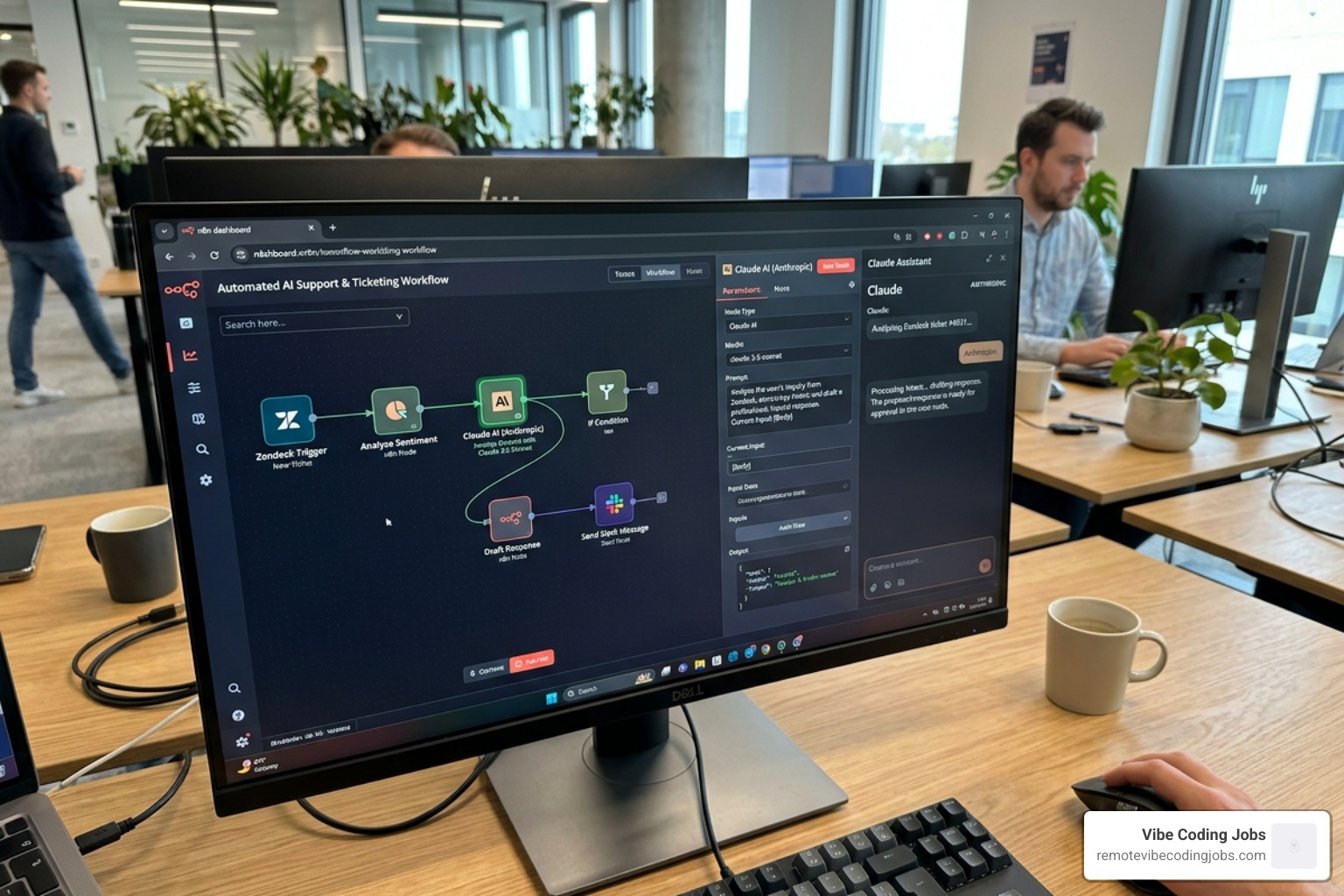
To succeed in ai playbook remote jobs, you need to be a “polyglot” of both business strategy and technical execution. We often call this “vibe coding”—the ability to use AI tools to build complex systems without necessarily writing every line of code by hand.
The modern AI orchestrator’s toolkit is built on several pillars:
The AI Engine Room
You must be fluent in the leading Large Language Models (LLMs) and their specific strengths. Roles like the American Express AI Engineer III – Agentic AI require a deep understanding of how to build agentic systems that can reason and take action.
- Claude (Anthropic): Preferred for its nuance and large context window.
- Cursor: The gold standard for AI-assisted development (vibe coding).
- GitHub Copilot / Windsurf: Essential for maintaining code quality at scale.
Automation and Integration
“Playbook” roles are fundamentally about connection. You aren’t just using AI; you are connecting it to the company’s data.
- n8n / LangChain: For building autonomous agents and long-running workflows.
- AWS / Cloud Infrastructure: Even in remote strategy roles, understanding the “where” and “how” of deployment is vital.
- Python / SQL: The “glue” languages that remain essential for data manipulation.
Companies like Supabase are hiring for roles like Supabase AI Tooling Engineer to build the very tools that other developers use. Meanwhile, entry-level positions like the Junior AI Automation Specialist at Blue Forest Digital focus on the tactical deployment of these tools to optimize marketing and sales funnels.
High-Paying Roles and Compensation Structures
The compensation for ai playbook remote jobs is, frankly, staggering. Because these roles directly impact “revenue per employee”—a key KPI for AI-native companies—the ROI on a good strategist is easy to prove.
| Role Title | Salary Range / OTE | Key Perks |
|---|---|---|
| Head of AI Value Strategy | $336k – $507k | High Equity, Performance Bonuses |
| Staff AI Engineer | $200k – $280k | Remote-First, Unlimited Tokens |
| AI Strategy Manager | $170k – $232k | Health/401k, Retreats |
| AI Security Engineer | $180k – $250k | Specialized Security Focus |
For instance, a Staff Engineer – AI Security at Twilio commands a premium because they protect the AI playbooks from vulnerabilities. Similarly, roles like the Staff AI Engineer at Grafana Labs offer the chance to work in highly transparent, async-first cultures where your impact is measured by the efficiency of the systems you build.
The New Compensation Model
Beyond the base salary, we’re seeing unique perks in the AI space:
- Unlimited Tokens: Free access to top-tier models (Claude, GPT-4, etc.) for personal and professional experimentation.
- Border-Free Hiring: Companies like GitLab and Trilogy pay based on the role’s value, not your ZIP code. A Staff Backend Engineer at GitLab can often live anywhere while earning a San Francisco-level salary.
- AI Tooling Budgets: Stipends specifically for your personal “vibe coding” setup.
Navigating the Hiring Process for AI Strategy Roles
Landing one of these roles requires a different playbook than traditional tech jobs. Because the field is moving so fast, your ability to demonstrate curiosity and execution is more important than a ten-year-old degree.
The Strategy for Finding Hidden Opportunities
Many high-paying ai playbook remote jobs never hit the major job boards. They are filled through “fractional” networks or direct founder outreach.
- Direct Outreach: As noted in recent Medium insights on startup hiring, messaging a founder directly on LinkedIn with a specific observation about their AI implementation can be more effective than 100 cold applications.
- The Fractional Path: Start as a contractor or part-time strategist. Many companies use this as a “trial period” before offering a full-time leadership role.
- Portfolio over Resume: Show, don’t tell. Build a custom agent or an automated workflow and share the documentation. Roles like the Generative AI/LLM Engineering Fellow at Fitzroy Consulting LLC value this hands-on experimentation.
Mastering the Interview for AI Playbook Remote Jobs
The interview process for these roles is increasingly simulation-based. You might encounter:
- “A Day in the Life” Simulations: Some companies, like Playbook AI, use 5-6 hour simulations to see how you handle real-world workflow design.
- Technical Communication Tests: Can you explain how an AI Automation Tool Use Engineer role impacts the bottom line to a non-technical CEO?
- AI Orchestration Case Studies: You might be asked to design a multi-agent system for a specific department, such as the roadmap ownership required for an AI Orchestration Lead at ScorePlay.
Are there location restrictions for these ai playbook remote jobs?
While the dream is “work from anywhere,” reality often involves time zone constraints. Companies like Trilogy source talent from over 130 countries, but they often require “overlap hours” to ensure the team can collaborate.
However, “border-free” is becoming the standard. Whether you are an Anthropic Data Center Portfolio Planning Lead or a junior dev, the emphasis is shifting toward skill over ZIP code. The most important “location” is being online and responsive in an async-first environment.
Conclusion
The rise of ai playbook remote jobs represents a new chapter in the remote work story. We are moving away from “remote as a perk” and toward “remote as a high-performance operating model” powered by AI. By mastering the tools of orchestration—like n8n, Claude, and Cursor—and understanding the strategic value of AI, you can secure a role that offers both high compensation and true location freedom.
At RemoteVibeCodingJobs, we believe the future belongs to those who can “vibe code”—using AI to amplify their human creativity and strategic thinking. If you’re ready to stop being a “code typist” and start being a software architect, it’s time to build your own AI playbook.
Ready to find your next role? Explore our curated listings of AI coding tools for vibe coding and start applying to the companies that are building the future of work today. Don’t just work remotely; work intelligently.