
Choose Pair Programming Interview Tools That Show Real Engineering Work
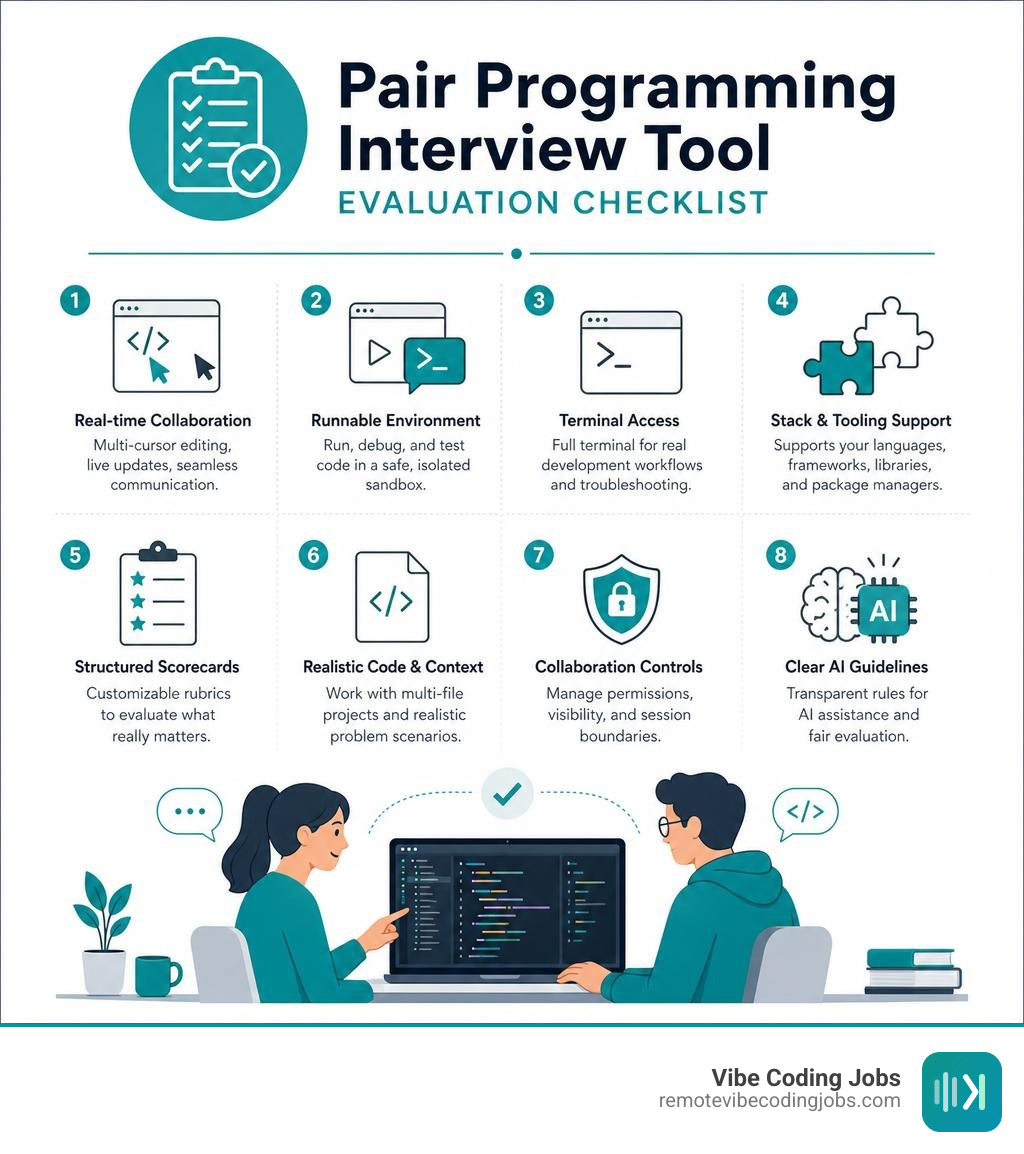
The best pair programming interview tools replace whiteboards and awkward screen shares with a shared coding workspace. Look for real-time multi-cursor editing, a runnable sandbox, terminal access, support for your hiring stack, structured scorecards, and clear rules for AI use.
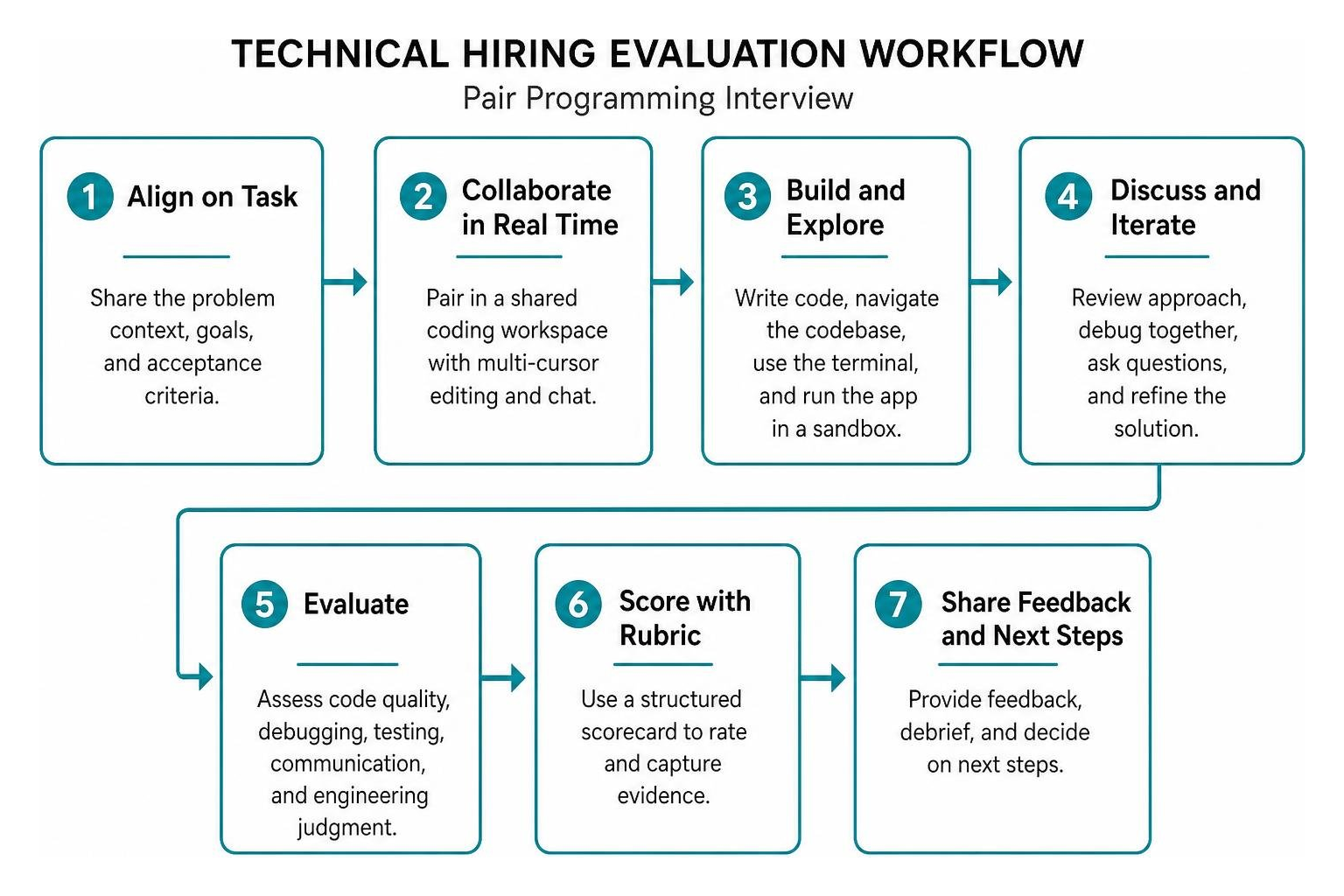
A pair programming interview is not a speed test. The candidate and interviewer work through a realistic task together, often with one person driving and the other reviewing, asking questions, and discussing tradeoffs. That lets teams assess code quality, debugging, communication, testing, and judgment – skills a blank whiteboard rarely reveals.
This matters because screen-share interviews can feel far removed from day-to-day development. One industry survey found that 83% of engineers see them as disconnected from real engineering work. A purpose-built collaborative IDE reduces that friction and gives both sides a clearer view of how work actually gets done.
In this roundup, we compare the tools and capabilities that matter most for remote, AI-assisted engineering interviews – including realistic repositories, live execution, collaboration controls, evaluation rubrics, and candidate-friendly setup.
I am Di Su, a software engineer with more than 10 years of web development and product-growth experience, including building scalable, user-focused workflows with Svelte and Python. My work across software, conversion optimization, and remote-friendly products informs how I assess pair programming interview tools: by whether they help people demonstrate practical skill rather than perform for a test.
Why Static Whiteboards and Screen Shares Fail Modern Technical Hiring
For years, the standard technical evaluation relied on either a blank whiteboard or an ad-hoc video screen share. Both methods introduce unnecessary cognitive friction. Screen sharing over traditional meeting software forces candidates to navigate laggy video compression, display scaling artifacts, and the awkwardness of typing while someone stares at their full desktop. It transforms what should be a collaborative design session into a high-pressure interrogation.
Furthermore, static whiteboard challenges isolate candidates from the tools they rely on daily. When an engineer is asked to invert a binary tree on a blank digital canvas without a runtime, linter, or debugger, the company learns nothing about how they navigate real code. Real-world development requires inspecting multi-file codebases, verifying outputs, understanding asynchronous state, and running tests. Moving away from trivia allows teams to focus on Remote Coding Jobs No Leetcode Practical Skills Projects that reflect day-to-day software architecture.
The Flaws of Algorithmic Quizzes and LeetCode Loops
Algorithmic quiz rounds create an artificial barrier that filters for recent test preparation rather than actual engineering craftsmanship. Data shows that top engineers are 2.4x more likely to decline to complete a LeetCode-only loop. When interviewers rely entirely on obscure puzzles, they introduce massive false negative rates, rejecting skilled builders who simply have not spent weeks memorizing dynamic programming tricks.
Modern software delivery centers on API integration, performance optimization, secure data handling, and architecture decomposition. Industry data indicates that unstructured coding interviews have 38% lower predictive validity than structured pair sessions. Forward-thinking companies are recognizing this gap and shifting toward Remote Coding Jobs No Leetcode Alternative Assessments that respect candidate time and surface genuine technical depth.
Driver-Navigator Collaboration vs Observational Grilling
A true pairing session uses a proven driver-navigator model. In an effective interview setup, the candidate drives the keyboard approximately 90% of the time, while the interviewer navigates by clarifying requirements, answering domain questions, and occasionally driving to relieve pressure.
This dynamic fosters active listening and natural conversational hooks. Instead of suffering through long, tense silences, candidates can outline their architectural intentions out loud. When candidates know they are participating in a collaborative simulation rather than an observational trial, anticipatory anxiety drops significantly, allowing their actual engineering abilities to shine.
Key Features to Demand from Modern Pair Programming Interview Tools
To conduct high-fidelity evaluations, your hiring stack requires dedicated environments rather than basic text pads. Modern platforms should deliver instant initialization, comprehensive language support, and interactive debugging capabilities out of the box.
| Feature Area | Legacy Screen Sharing / Text Pads | Purpose-Built Pair Programming Platforms |
|---|---|---|
| Code Execution | None or single-file toy runners | Multi-file sandboxes with live package managers |
| Collaboration | Unilateral screen broadcast | Multi-cursor real-time editing with follow mode |
| Candidate Friction | Local machine drift, OS dependency clashes | Zero-setup, instant browser-based execution |
| AI Integration | Unmonitored or outright banned | Embedded AI tracking prompts, diffs, and validation |
| Evaluation Scoring | Subjective, post-hoc memory | Integrated rubrics, timestamped notes, ATS sync |

Essential Architecture for Pair Programming Interview Tools
At an architectural level, leading platforms build upon proven web primitives to deliver zero-latency collaboration. By leveraging the Monaco Editor paired with WebSockets, both participants receive instantaneous cursor synchronization and syntax highlighting.
Under the hood, these platforms use isolated execution engines—such as containerized sandboxes or the open Piston execution API—to compile dozens of languages safely. Open-source references like rushikeshxdev/HireeFlow.ai showcase how WebRTC peer-to-peer video streaming integrates alongside Monaco editors and real-time execution layers. Delivering zero-login access ensures candidates can join directly from a browser link without installation delays or permission barriers.
Take-Home Project Continuity and Realistic Repo Environments
The most effective pair programming interviews do not start from a blank file. Instead, they bridge take-home assignments directly into the live round. Platforms like CodePair | Live Coding Interviews in Real Dev Environments provide reproducible environments backed by Nix, supporting over 100 programming languages and 1,000+ packages and services.
This approach allows teams to spin up complete frontend previews, backend APIs, and live database instances within seconds. When teams evaluate how candidates extend existing projects—such as refactoring JavaScript CodePair Interviews From Real Submissions | CodeSubmit—they see how the applicant navigates architectural trade-offs, state management, and edge-case handling. Utilizing AI-Powered Remote Pair Programming Tools Boost Teamwork inside realistic codebases mirrors how remote teams build production software every day.
Evaluating AI Assistance, Vibe Coding, and Real Engineering Judgment
The software industry has evolved beyond manual syntax typing. With tools like GitHub Copilot and LLM assistants increasing developer task completion speeds by up to 55%, forbidding AI in technical assessments no longer makes sense. Technical hiring must evaluate how engineers orchestrate AI while applying rigorous technical oversight. Understanding the shift between Vibe Coding vs Traditional Software Engineering Key Differences helps teams design interviews that evaluate problem decomposition, prompt precision, and critical code review.
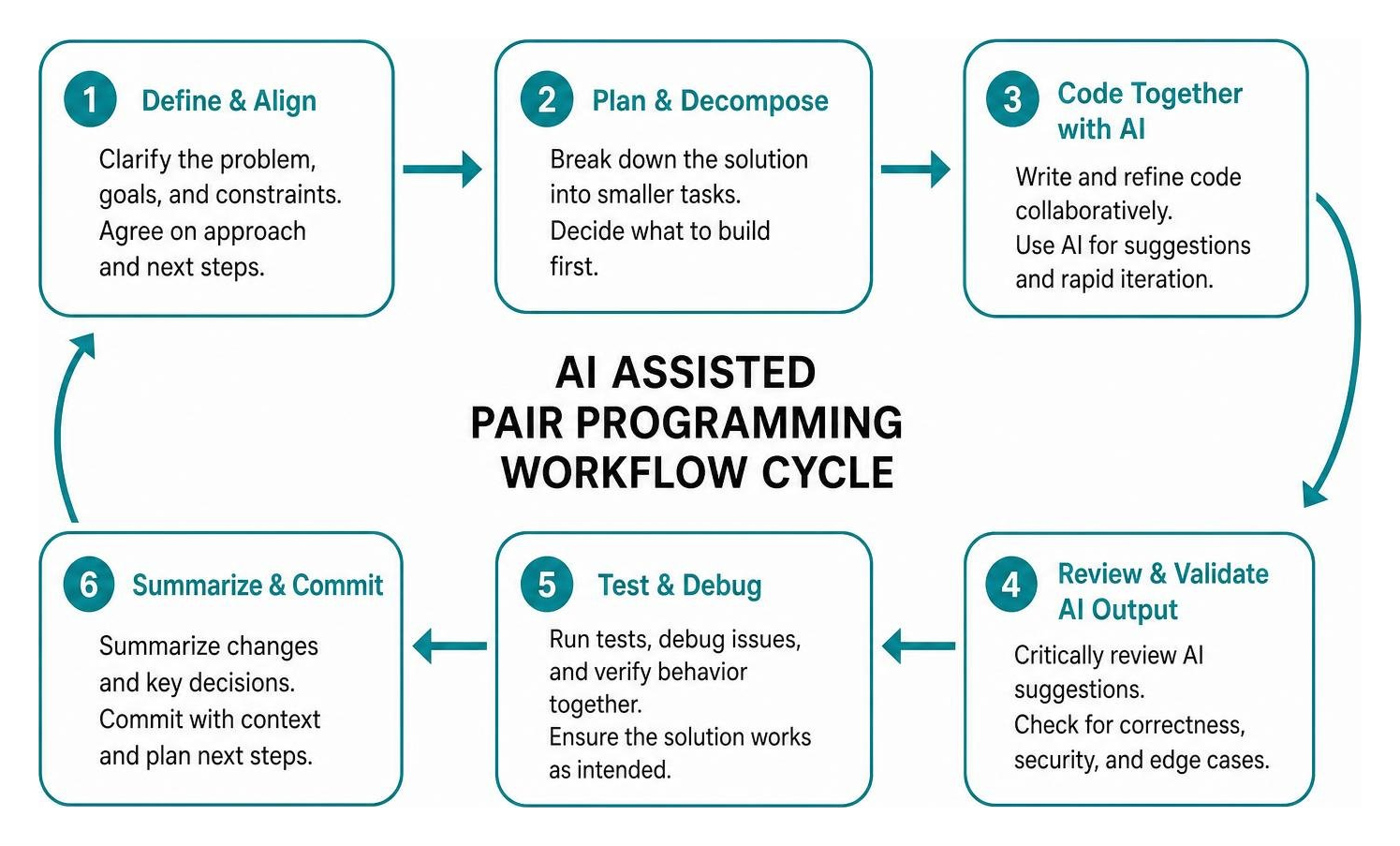
However, AI integration comes with real risks that interviewers must test. A 2022 NYU study revealed that 40% of AI-generated code snippets contained security vulnerabilities, such as weak authentication or SQL injection flaws. High-signal pairing interviews do not grade candidates on whether they can write raw boilerplate from memory; they evaluate whether the candidate spots hallucinations, writes defensive unit tests, and validates AI outputs before committing code.
How Open-Source Pair Programming Interview Tools Compare
For teams seeking custom deployment options, self-hosted open-source repositories provide flexible foundations. Tools such as humancto/CollabCode demonstrate how lightweight architectures utilizing Firebase Realtime Database and the ACE Editor can provide multi-language execution and collaborative editing with zero monthly license overhead. Candidates looking to practice these workflows can also sharpen their skills on collaborative mock platforms like Pramp: Practice Mock Interviews & Coding Problems – Land Top Jobs.
These open environments often include interviewer-only note fields, timestamped observations, and passive session analytics. Whether utilizing self-hosted solutions or enterprise systems like the Pair Programming Interview Platform | InCruiter, the objective remains consistent: give candidates an accessible sandbox while providing interviewers with clear behavioral signals.
Evaluating Prompt Clarity, Task Ownership, and Code Validation
When candidates use AI assistants during live pairing rounds, interviewers should assess an objective “AI Readiness” dynamic. This involves observing how specific their prompts are, whether they break complex features into bite-sized functions, and how thoroughly they verify the output.

Mastering these workflows is a cornerstone of Remote Developer Skills in Demand 2026 Future-Proof Your Career. During an evaluation, candidates should narrate their reasoning before generating logic, inspect edge cases, and run automated test suites to verify system behavior.
How to Structure Fair, High-Signal Live Pairing Loops
A successful pair programming interview requires intentional structure to prevent the session from becoming an arbitrary conversation. Unstructured interviews introduce subjective bias, whereas standardized competency rubrics boost predictive hiring validity by up to 38%.
- Phase 1: Environment Alignment & Problem Scoping (5-10 Minutes): Confirm audio, video, and runtime access. Present the problem statement, explore constraints, and define input/output contracts before writing code.
- Phase 2: Architectural Interface Design (10-15 Minutes): Candidate and interviewer outline class interfaces, database schemas, or API boundaries together, establishing conversational hooks early.
- Phase 3: Collaborative Implementation & AI Orchestration (20-30 Minutes): The candidate drives implementation, writing modular functions or prompting AI tools while verbalizing trade-offs and handling state mutations cleanly.
- Phase 4: Defensive Testing & Edge Case Hardening (10-15 Minutes): Write unit tests covering boundary conditions, validate security assumptions, and verify runtime behavior in the live sandbox.
- Phase 5: Debrief, Architectural Extensions & Questions (5-10 Minutes): Discuss how the system would scale under production load, review logging/observability needs, and sync structured notes directly into your ATS.
Frequently Asked Questions About Pair Programming Interview Tools
What is a pair programming interview and how does it differ from traditional coding interviews?
A pair programming interview is an interactive technical assessment where a candidate and an interviewer collaborate on a practical coding challenge inside a shared, real-time development environment. Unlike traditional whiteboard sessions or LeetCode screenings that test algorithmic memory in isolation, pair programming evaluates practical software craftsmanship, communication, debugging workflows, and system design under realistic working conditions.
How should candidates leverage AI coding assistants during live pairing sessions?
Candidates should treat AI assistants as junior collaborators rather than authoritative decision-makers. Always verbalize your intent before submitting a prompt, break large requirements into small functional chunks, and critically review all generated code for security vulnerabilities and logical edge cases. Candidates can review the Best AI Coding Tools 2026 to familiarize themselves with modern developer copilots and prompt techniques.
What are the most common candidate mistakes in pair programming interviews?
The most frequent mistakes include:
- Coding in Total Silence: Jumping straight into implementation without discussing architectural intent or asking clarifying questions.
- Blindly Accepting AI Output: Inserting unverified AI code blocks without reviewing logic, error handling, or performance implications.
- Ignoring Edge Cases: Failing to account for null inputs, async race conditions, or network timeouts.
- Premature Optimization: Over-engineering micro-optimizations early instead of delivering a clean, working solution first.
Conclusion
The era of assessing software engineers through abstract whiteboard puzzles and disjointed screen shares is over. Modern engineering is collaborative, multi-faceted, and increasingly AI-augmented. By implementing specialized pair programming interview tools, engineering teams eliminate environment setup friction, reduce costly false negatives, and evaluate the exact problem-solving and communication skills needed for production success.
If you are an engineer looking for modern, async-first teams that value practical development over LeetCode trivia, explore top AI coding workflows and career paths on our curated job board today.