
Non Coding Remote Jobs: Where to Start
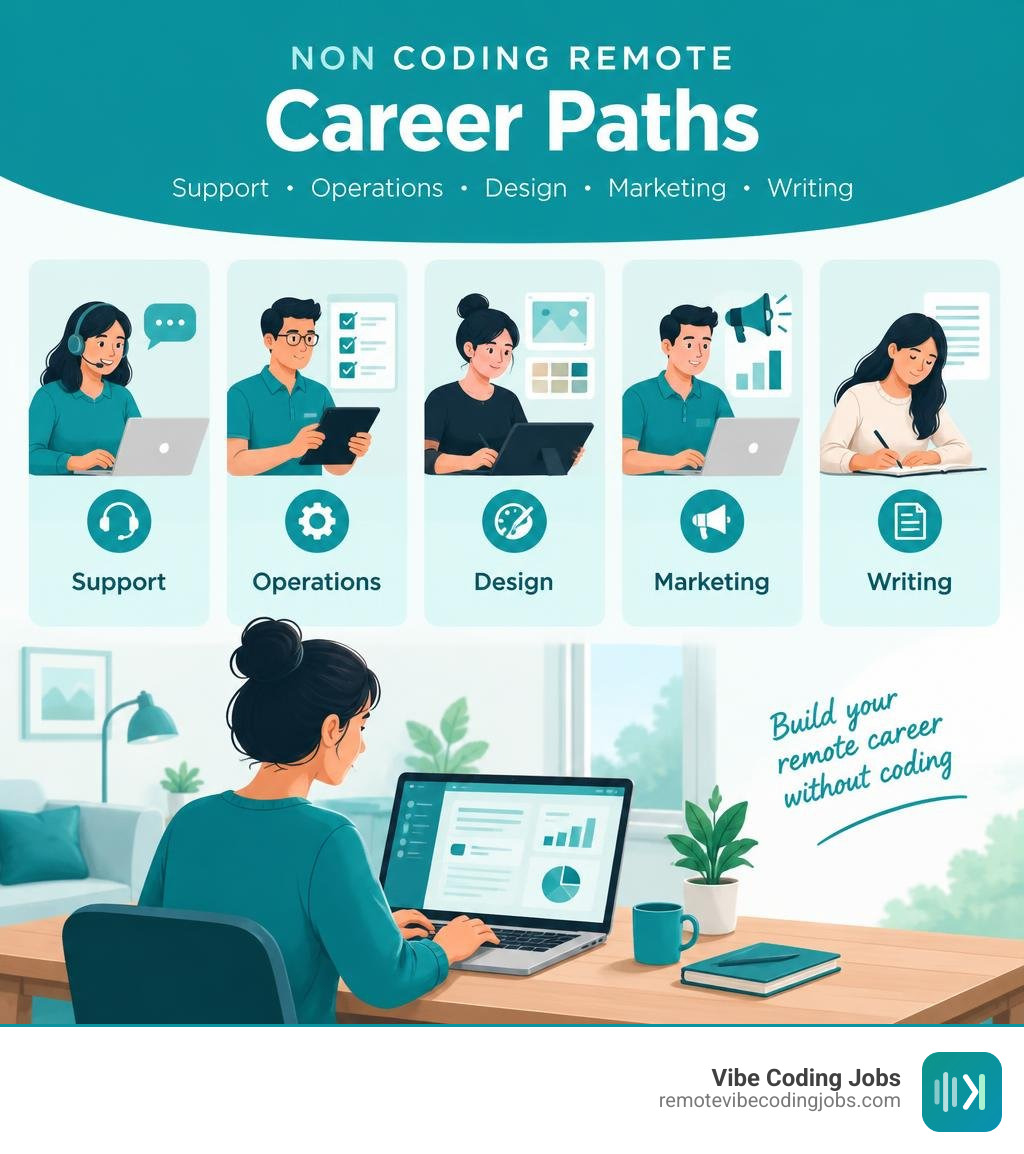
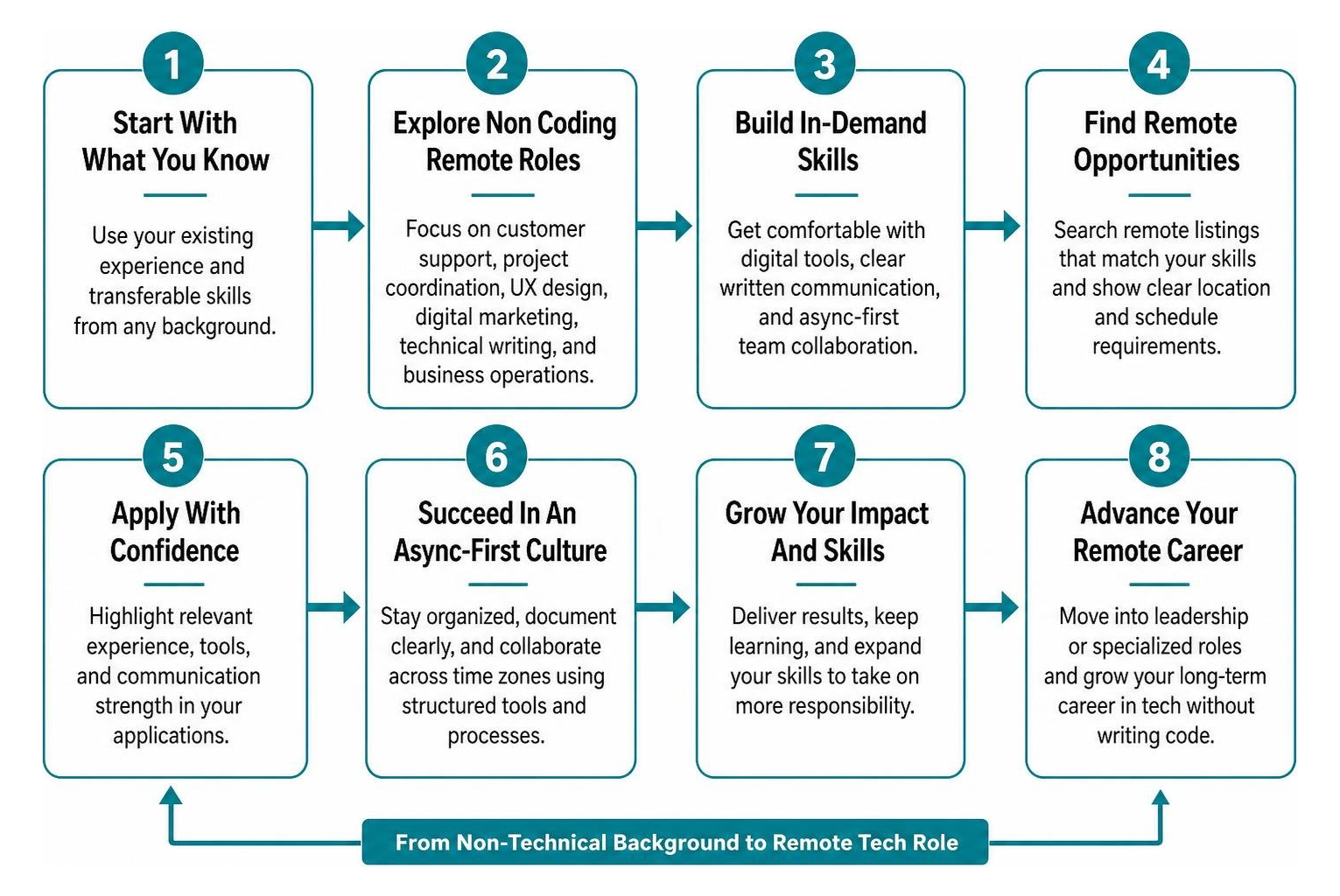
The best non coding remote jobs include customer support, project coordination, UX design, digital marketing, technical writing, and business operations. Start with the work you already know, then look for remote listings that match your skills and show clear location and schedule requirements. You do not need to write software to work in tech, but you do need to be comfortable with digital tools and clear written communication.
I’m Di Su. My background spans software engineering, marketing, and e-commerce, so I’ll use both sides of that experience to help you assess non coding remote jobs and the skills they require.
Key non coding remote jobs vocabulary:
High-Demand Industries Offering Non Coding Remote Jobs in 2026
The shift toward flexible virtual employment has opened up thousands of positions across diverse sectors that do not require writing a single line of syntax. In 2026, companies prioritize candidates who can analyze data, coordinate cross-functional teams, articulate complex product narratives, and maintain regulatory compliance.

When exploring flexible non-coding opportunities across the wider web, several clear industry leaders emerge:
- SaaS and Enterprise Software: Cloud technology companies hire extensively for project managers, product marketing leads, customer onboarding specialists, and sales enablement managers. These teams thrive within an async-first remote work culture, prioritizing structured documentation and autonomy over synchronous office meetings.
- Digital Healthcare and Telehealth: Telehealth networks, healthtech platforms, and medical providers hire remote patient coordinators, credentialing analysts, telephonic case managers, and medical records specialists who navigate clinical documentation rather than software code.
- E-Commerce and Consumer Platforms: Online retailers and marketplace platforms rely on operations specialists, marketplace content designers, brand managers, and logistics coordinators to keep supply chains and customer experiences running seamlessly.
- Fintech and Digital Banking: Financial technology institutions require fraud risk analysts, compliance specialists, customer onboarding representatives, and account executives to maintain financial governance across global markets.
- Government, Public Sector, and Higher Education: Public agencies and modern edtech providers frequently post non-technical openings for instructional designers, online evaluators, and system implementation coordinators.
Top Career Paths You Can Pursue Without Writing Code
The tech ecosystem relies heavily on professionals who bridge the gap between engineering teams and end users, creating dozens of viable tech jobs without coding. Modern workplaces leverage no-code automation platforms, interactive prototyping applications, and structured project management systems, allowing non-engineers to make significant contributions without traditional coding knowledge.
Product, Project, and Operations Management
Operations and project leadership ensure engineering resources align with strategic business goals. These professionals manage timelines, organize sprints, document requirements, and unblock cross-functional dependencies.
- Technical Project Manager & Scrum Master: Facilitates Agile team rituals, manages backlogs, tracks velocity, and eliminates organizational friction using tools like Jira, Asana, and Linear.
- Product Operations Specialist: Optimizes internal team tooling, analyzes customer feedback loops, and streamlines communication between engineering, marketing, and sales departments.
- Business Analyst: Conducts market research, assesses operational efficiency, and models business requirements without touching source code.
When evaluating team environments, understanding the structural differences between startups versus enterprise tech companies helps you target teams where your management approach will have the most immediate impact.
High-Paying Non-Coding Remote Jobs in Tech Design and Marketing
Creative and commercial roles translate functional software capabilities into customer adoption and revenue.
- UI/UX Designer: Focuses on user journey mapping, design system maintenance, wireframing, and interactive prototyping using Figma, Sketch, and Adobe XD. The Bureau of Labor Statistics reported that web and digital interface designers earned an average wage of $98,090 as of May 2024.
- Product Marketing Manager (PMM): Develops go-to-market strategies, positions feature releases, creates sales enablement collateral, and builds customer personas.
- Technical Content Writer & SEO Strategist: Researches technical topics, builds product documentation, and writes search-optimized articles that drive organic pipeline growth. Non-technical teams routinely leverage modern AI tools and workflow productivity stacks to speed up research, automate outlines, and maintain strategic consistency.
Entry-Level and Non-Phone Non Coding Remote Jobs
If you prefer written communication over back-to-back phone conversations, several entry-level and asynchronous non-phone positions offer steady remote pathways centered around ticket-based and data-focused responsibilities.
- Customer Success Specialist & Live Chat Support: Manages customer inquiries, resolves ticketing queues via Zendesk or Intercom, and monitors account health without voice calls.
- Compliance Specialist & Credentialing Coordinator: Verifies legal documentation, conducts fraud checks, and ensures regulatory compliance across enterprise systems.
- Data Verification & Operations Associate: Audits system records, ensures catalog accuracy, and manages database entries using advanced spreadsheet modeling.
Reviewing strategies for landing entry-level remote positions helps build a competitive, asynchronous application portfolio even when you are starting fresh.
Remote Healthcare and Clinical Support Roles
Healthcare is one of the fastest-growing sectors for remote non-technical work, offering both clinical and administrative career paths.
- Telephonic Nurse Case Manager: Coordinates outpatient care plans, evaluates clinical documentation, and provides remote patient triage using telehealth software.
- Outpatient Medical Coding Specialist: Translates healthcare provider documentation into standardized alphanumeric ICD-10-CM/PCS and CPT diagnostic codes for accurate insurance reimbursement. Coders work in systems like Optum, maintaining productivity rates (such as 15 to 30 charts per hour depending on complexity) while hitting minimum accuracy thresholds of 95%.
- Remote Pharmacy Technician: Manages prescription data entry, processes insurance pre-authorizations, and assists with medication therapy management coordination.
- Online Mental Health Counselor: Conducts teletherapy sessions, coordinates treatment roadmaps, and documents progress notes via secure electronic health record platforms.
Compensation Outlook and Salary Ranges for Non-Technical Roles
Working remotely in a non-coding capacity does not require sacrificing earning potential. Non-technical professionals frequently command six-figure salaries depending on specialized domain experience, strategic ownership, and analytical proficiency.

According to the Bureau of Labor Statistics, all Computer and Information Technology Occupations held a median annual wage of $105,990 as of May 2024. Furthermore, analytical roles such as Data Scientists commanded a median annual wage of $112,590 (projected to grow 34% from 2024 to 2034), while Information Security Analysts earned a median pay of approximately $124,910 (projected to grow 29%).
You can explore live market data across regions on platforms like Remote non coding jobs | TopSalaries.tech or review our guide on benchmarking tech industry remote salary trends to see how compensation packages are structured.
| Non-Coding Role Category | Median Salary Range (USD) | Primary Tool Stack | Entry Barrier |
|---|---|---|---|
| Technical Project Manager / Scrum Master | $95,000 – $130,000 | Jira, Asana, Confluence, Miro | Moderate (Certifications help) |
| Product Marketing Manager | $110,000 – $165,000 | HubSpot, Notion, Google Analytics, Claude | Moderate to High |
| UI/UX Designer | $85,000 – $125,000 | Figma, FigJam, Adobe Creative Suite | Portfolio-Driven |
| Information Security Analyst | $105,000 – $135,000 | Splunk, Wireshark, Compliance Frameworks | High (Certifications/Technical Literacy) |
| Customer Success Manager | $70,000 – $105,000 | Salesforce, Zendesk, Catalyst, Slack | Low to Moderate |
| Medical Coder (CPC / CCA) | $50,000 – $75,000 | Optum, Epic, ICD-10/CPT Codebooks | Certification Required |
| Live Chat Support / Operations Associate | $40,000 – $65,000 | Intercom, Zendesk, Google Sheets | Low (Entry-Level Friendly) |
How to Break into Remote Work Without a Tech Degree
Transitioning into a remote non-coding career is primarily an exercise in demonstrating digital workplace fluency, structured communication, and specialized domain knowledge. Employers value demonstrable output and problem-solving over traditional university credentials.
- Conduct a Transferable Skill Audit: Evaluate your existing professional strengths. If you have background experience in retail management, your inventory and team management translate directly into Agile project coordination or operations management.
- Earn High-Leverage Industry Certifications: Targeted credentials validate your capabilities without requiring a multi-year degree:
- Project Management & Operations: Certified ScrumMaster (CSM), PMI Agile Certified Practitioner (PMI-ACP), or the Google Project Management Certificate.
- Cybersecurity & Risk: CompTIA Security+ or ISC2 Systems Security Certified Practitioner (SSCP).
- Healthcare Administration: AAPC Certified Professional Coder (CPC) or AHIMA Certified Coding Associate (CCA).
- Build a Public Proof of Work: Rather than submitting a plain text resume, provide tangible proof of your abilities. Designers should maintain an interactive Figma case-study portfolio; technical writers can publish user guides on personal blogs; product marketers can create public teardowns of SaaS onboarding funnels.
- Demonstrate Asynchronous Fluency: Master tools like Loom, Slack, Notion, and Google Workspace. In remote hiring loops, clear, structured written communication serves as an immediate indicator of how effectively you will perform day to day.
How to Find and Land Legitimate Virtual Roles
Navigating the remote job market requires filtering out deceptive listings, multi-level marketing schemes, and automated spam postings.
- Target Curated Platforms: Avoid generic bulletin boards with unverified listings. Focus on specialized remote-work hubs and company career pages that publish structured, culture-first job descriptions.
- Verify Employer Application Portals: When you find an attractive posting on an aggregate board, navigate directly to the hiring organization’s official careers page to confirm the vacancy is active before submitting personal details.
- Optimize for Asynchronous Screenings: Prepare for one-way video prompts and written evaluations. Test your webcam, clean your audio input, and practice answering behavioral questions clearly and concisely.
- Establish a Focused Digital Profile: Update your LinkedIn headline to reflect your specialized function (e.g., “Remote Product Marketing Lead | B2B SaaS Go-to-Market”) rather than a generic job seeker title. Participate in relevant professional communities to surface unlisted opportunities.
Frequently Asked Questions About Non-Coding Remote Work
Can you make six figures in remote tech without knowing how to code?
Yes. Senior individual contributors and managers in product marketing, UI/UX design, technical project management, information security analysis, and enterprise account management frequently earn well over $100,000 to $160,000 annually without writing code. Earning potential is tied directly to strategic value, operational efficiency, and revenue generation rather than syntax knowledge.
What certifications carry the highest ROI for non-coding remote jobs?
The highest return on investment comes from credentials recognized across specific industry verticals:
- Agile & Project Management: Certified ScrumMaster (CSM) and Project Management Professional (PMP).
- Technical Literacy & Security: CompTIA Security+ and AWS Certified Cloud Practitioner.
- Healthcare Administration: Certified Professional Coder (CPC) via AAPC or Certified Coding Specialist (CCS) via AHIMA.
- Operations & CRM: Salesforce Administrator and HubSpot Inbound Marketing Certifications.
Which non-phone remote jobs are best for entry-level applicants?
The most reliable entry pathways that do not require continuous phone communication include live chat customer support, asynchronous helpdesk ticket resolution, content moderation, data verification, and digital credentialing analysis. These roles prioritize structured writing, speed, and tool proficiency over verbal presentations.
Conclusion
The remote employment landscape in 2026 proves that technical careers are built on far more than just software engineering syntax. Organizations across SaaS, digital healthcare, finance, and e-commerce depend on skilled communicators, creative designers, meticulous project coordinators, and analytical operators to scale their distributed teams.
By auditing your transferable strengths, acquiring targeted certifications, mastering asynchronous collaboration tools, and presenting a clear portfolio, you can secure a sustainable, flexible remote career. If you are ready to find roles at companies that champion modern tooling and asynchronous collaboration, explore curated daily listings and company tech stacks on RemoteVibeCodingJobs.
— Di Su