How to Vibe Code Your Way into an Async MMO Career
Defining the New Paradigm: Async AI Programming vs. Traditional Coding
To understand the current landscape of async vibe coding opportunities, we first have to draw a line between where we were and where we are now. Traditional coding was a manual, syntax-heavy process. You spent 80% of your time fighting with semicolons, library versions, and boilerplate. Then came the “Copilot era,” where AI acted like a sophisticated autocomplete.
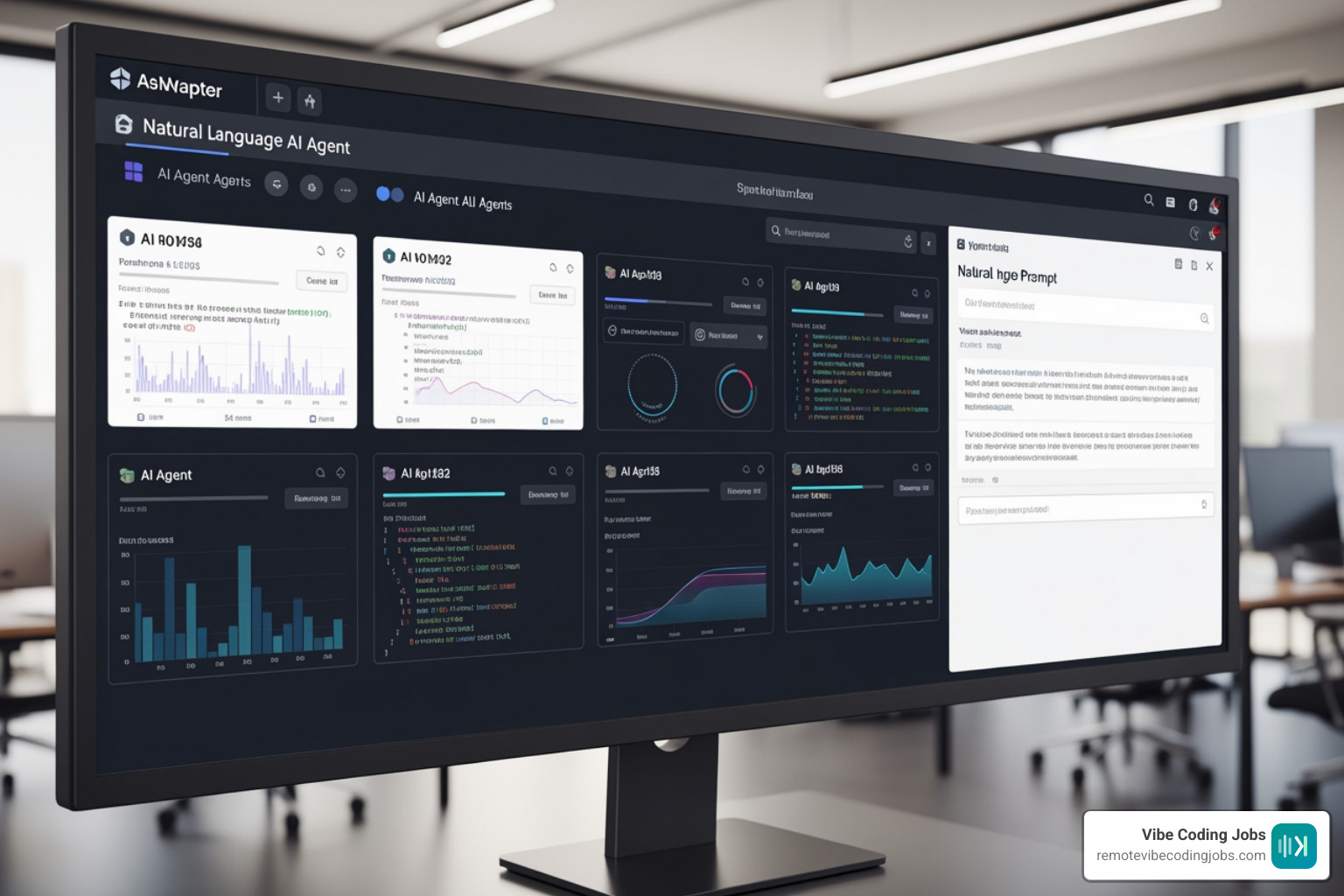
By May 2026, we have entered the era of Asynchronous AI Programming. This isn’t just about having an AI help you finish a line of code; it’s about a fundamental shift in your role. You have moved from being a “Conductor” (managing one thing at a time) to an “Orchestrator” (managing a fleet of agents).
As discussed in The rise of async AI programming – Hacker News, the distinction is crucial. Vibe coding allows you to build based on high-level functional requirements. Async programming takes that “vibe” and applies a structured workflow: you define the problem, delegate the implementation to a background agent, and return later to review the output.
| Feature | Manual Coding (Pre-2023) | AI Copilots (2023-2025) | Async Agents (2026) |
|---|---|---|---|
| Primary Skill | Syntax mastery & Algorithms | Prompt engineering | Problem definition & Review |
| Workflow | Synchronous & Linear | Human-in-the-loop (Real-time) | Asynchronous & Parallel |
| Speed | 1x (Baseline) | 2x – 3x faster | 5x – 10x faster (Multi-tasking) |
| Output | Lines of code | Code snippets/functions | Full Pull Requests with tests |
| Bottleneck | Human typing speed | Human attention span | Human review/judgment |
In this new paradigm, your value isn’t in how fast you can type, but in how clearly you can specify the target outcome. If you can describe a feature’s behavior, its constraints, and its success criteria, the AI agents handle the “grind” while you’re grabbing a coffee or sleeping across a different timezone.
High-Growth Async Vibe Coding Opportunities in 2026
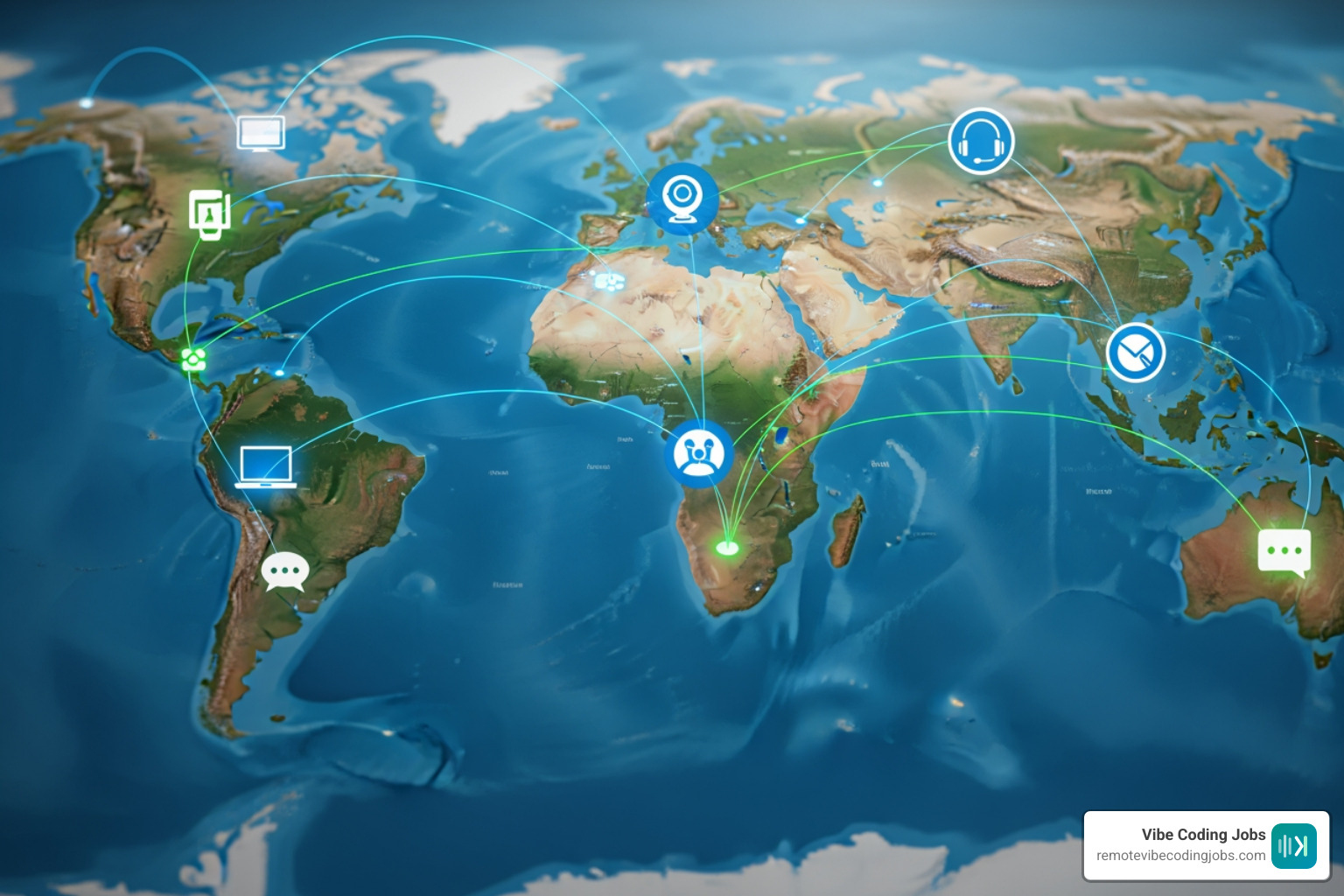
The job market has responded aggressively to this productivity explosion. We are seeing async vibe coding opportunities pop up in sectors that were previously considered “non-technical.” Because tools like Cursor and Claude have lowered the barrier to entry, “vibe coding” is now a listed requirement for roles in marketing, finance, and operations.
Here is where the growth is most concentrated:
- Engineering & DevOps: Companies are looking for “Vibe-Native Builders.” These are developers who don’t just use AI—they architect systems specifically so AI agents can maintain them. This involves setting up robust testing suites and clear documentation so agents don’t hallucinate.
- Product Management: The “Technical PM” has been replaced by the “Vibe-Coding PM.” Instead of writing a Jira ticket and waiting two weeks for a prototype, PMs are using tools like Lovable and v0 to ship functional MVPs in hours.
- AI-Driven SEO & Content: Roles like the Vibe Coder at Adaptify SEO represent a new breed of marketing engineering. These roles involve building AI-powered content pipelines and SEO automation tools using Python, FastAPI, and React.
- Operations & Finance: We’re seeing a surge in roles where “vibe coding” is used to automate reporting. A finance manager might use Python and Zapier to build a custom internal tool that bridges ESG data with AI-driven analytics.
For a deeper dive into which companies are leading the charge, check out our guide on Async First Remote Developer Jobs Companies Roles. Currently, over 70% of developers use AI tools daily, and the fastest-growing segment is the “Async Agent” user who prioritizes shipping over “the grind.”
The Tech Stack and Workflow of a Modern Vibe Coder
To stay competitive, you need to master the “Vibe Stack.” In 2026, this isn’t just about a programming language; it’s about the orchestration layer.
- The IDE: Cursor remains the gold standard, having evolved into a multi-agent environment that can index your entire codebase and predict your next architectural move.
- The Brain: Claude and Mistral Medium 3.5 are the heavy hitters. Mistral’s new “Work Mode” allows you to teleport sessions between your local CLI and the cloud, letting agents run independently while you’re offline.
- The Frontend: v0 and Lovable allow for “UI-first” development. You describe the “vibe” of the interface, and the AI generates the React/Next.js code instantly.
- The Sandbox: Replit and GitHub Copilot Agents provide the environment where these agents can safely execute code, run tests, and verify their own work before you ever see it.
Mastering these tools leads to significant productivity benefits, with many teams reporting a 2-3x faster time-to-market. You can find more about the specific culture and tools that define high-paying vibe coding roles in our dedicated blog sections.
Leveraging AI Agents for Async Vibe Coding Opportunities
The “Async” in async vibe coding comes from parallel processing. In a traditional remote job, you might be blocked waiting for a code review. In an async vibe coding role, you are never blocked.
When you encounter a bug or need a new feature, you fire off a “fire-and-forget” task to a cloud agent. These agents, like Claude Code or Mistral Vibe, operate on a server, churn through the logic, and file a Pull Request (PR) when finished.
As a developer, your workflow shifts to Intent-Verified Reviews. Instead of checking every line of syntax, you verify that the agent’s output matches your original intent. Tools now provide natural-language summaries and even screenshots of UI changes, making the review process 55% faster than traditional methods. This workflow and productivity shift is what allows solo developers to maintain massive SaaS platforms that previously required entire teams.
Mastering the Interview for Async Vibe Coding Opportunities
Landing these roles requires a different strategy than the “Whiteboard LeetCode” era. Companies now prioritize your ability to collaborate with AI.
- Problem Definition: Can you take a vague request and turn it into a precise technical specification?
- Automated Verification: Do you know how to write the tests that will keep your AI agents on the rails?
- Portfolio Documentation: Your GitHub shouldn’t just be code; it should be a record of your process. Show how you used agents to iterate.
- Written Communication: In an async-first world, your documentation is your “vibe.” High-quality READMEs and PR descriptions are the primary way culture and communication happen.
How to Break Into the Async MMO Career Market
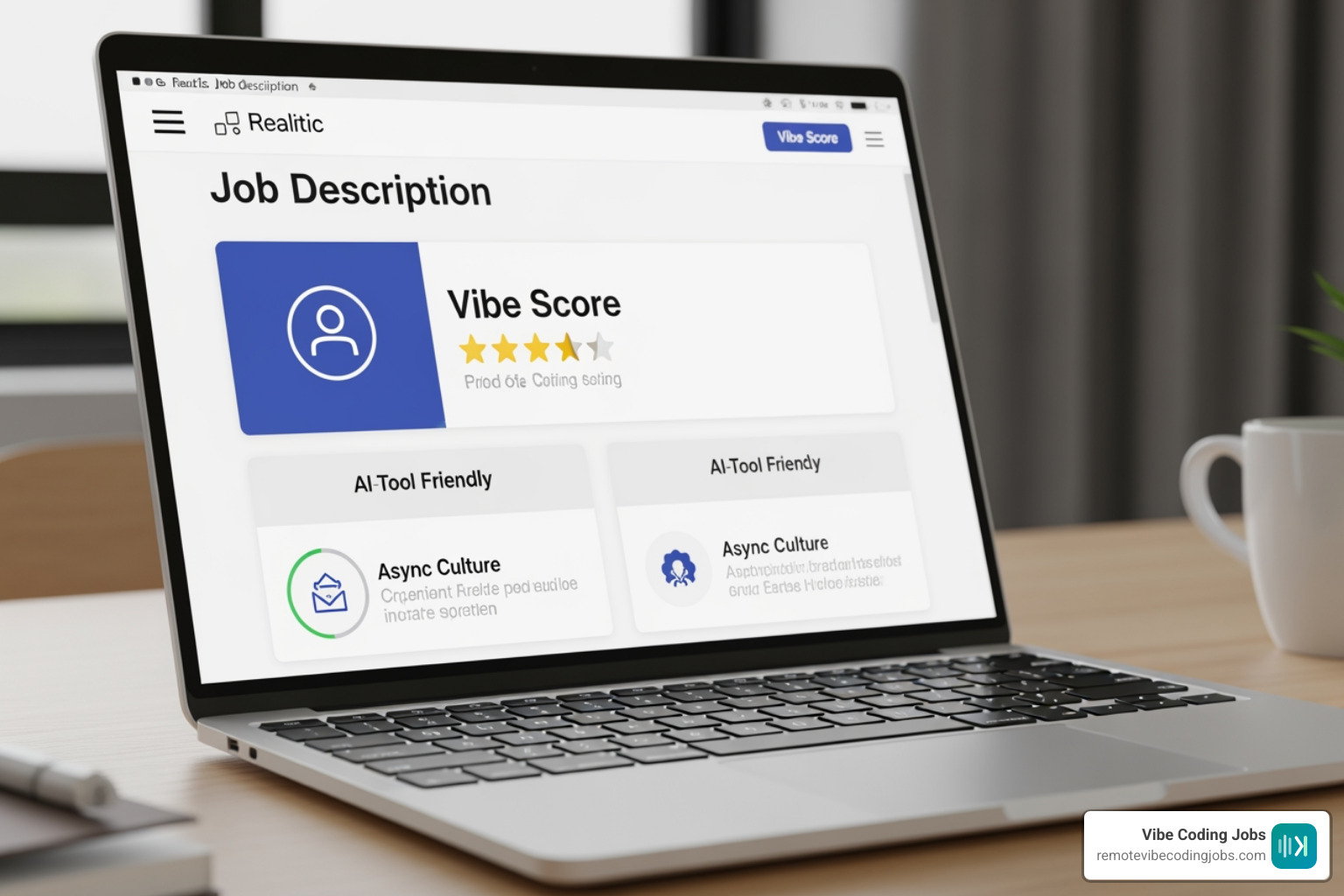
The “Async MMO” (Massively Multiplayer Online) career is one where you work across timezones, with colleagues you might never meet in person, all coordinated through high-fidelity documentation and AI agents. To break in, you need to find the right “vibe.”
At RemoteVibeCodingJobs, we use a proprietary Vibe Score to help you filter through the noise. Generic job boards are often full of “office-optional” roles that claim to be remote but actually expect you to be on Zoom calls all day. A true async vibe coding opportunity is found at companies that:
- Measure output, not hours.
- Protect “Deep Work” by eliminating mandatory meetings.
- Actively encourage the use of Cursor, Claude, and other AI-native tools.
You can start by testing your skills in the Vibe Coders Platform, where developers compete in “Flash Fires” (24-hour sprints) to build production-ready apps using AI. These competitions are a great way to meet co-founders and get noticed by VCs. For those just starting their journey, our Async First Remote Work Guide provides a roadmap for transitioning from a traditional 9-to-5 to a location-independent vibe coding career.
Frequently Asked Questions about Vibe Coding
What is the difference between vibe coding and async programming?
Vibe coding is the method—using natural language and AI tools to build software based on the “vibe” or intent. Async programming is the workflow—delegating those tasks to agents that work in the background so you can focus on other things. Think of vibe coding as the “how” and async programming as the “when.”
What salary can I expect in an async-first AI role?
Based on our current listings, salaries for async vibe coding opportunities are highly competitive. Junior roles (vibe-native builders) start around $50K–$80K, while Senior Orchestrators and AI Engineering Leads can command upwards of $300K–$397K. Often, these roles offer greater flexibility and performance-based bonuses because the productivity ceiling is so much higher. You can see more details on culture, tools, and salary in our trend reports.
How do I start with vibe coding competitions?
The best way is to jump into the Vibe Coders Battle Arena. They offer various formats, from 24-hour sprints to month-long “Long Cooks.” It’s an excellent way to build a portfolio of “verifiable research” and prove you can ship magical products under constraints.
Conclusion
The future of software development isn’t just “AI-assisted”—it is AI-native. By May 2026, the developers who are thriving aren’t the ones who memorized the most syntax, but the ones who learned to orchestrate the most “vibes.”
Async vibe coding opportunities offer a path to a career defined by autonomy, location freedom, and high-velocity shipping. Whether you are an engineer, a designer, or a product manager, the tools are now in your hands to build at the speed of thought.
Are you ready to stop grinding and start orchestrating? Find your next role at RemoteVibeCodingJobs.com and join the ranks of developers who are vibe coding their way to the top of the async economy.