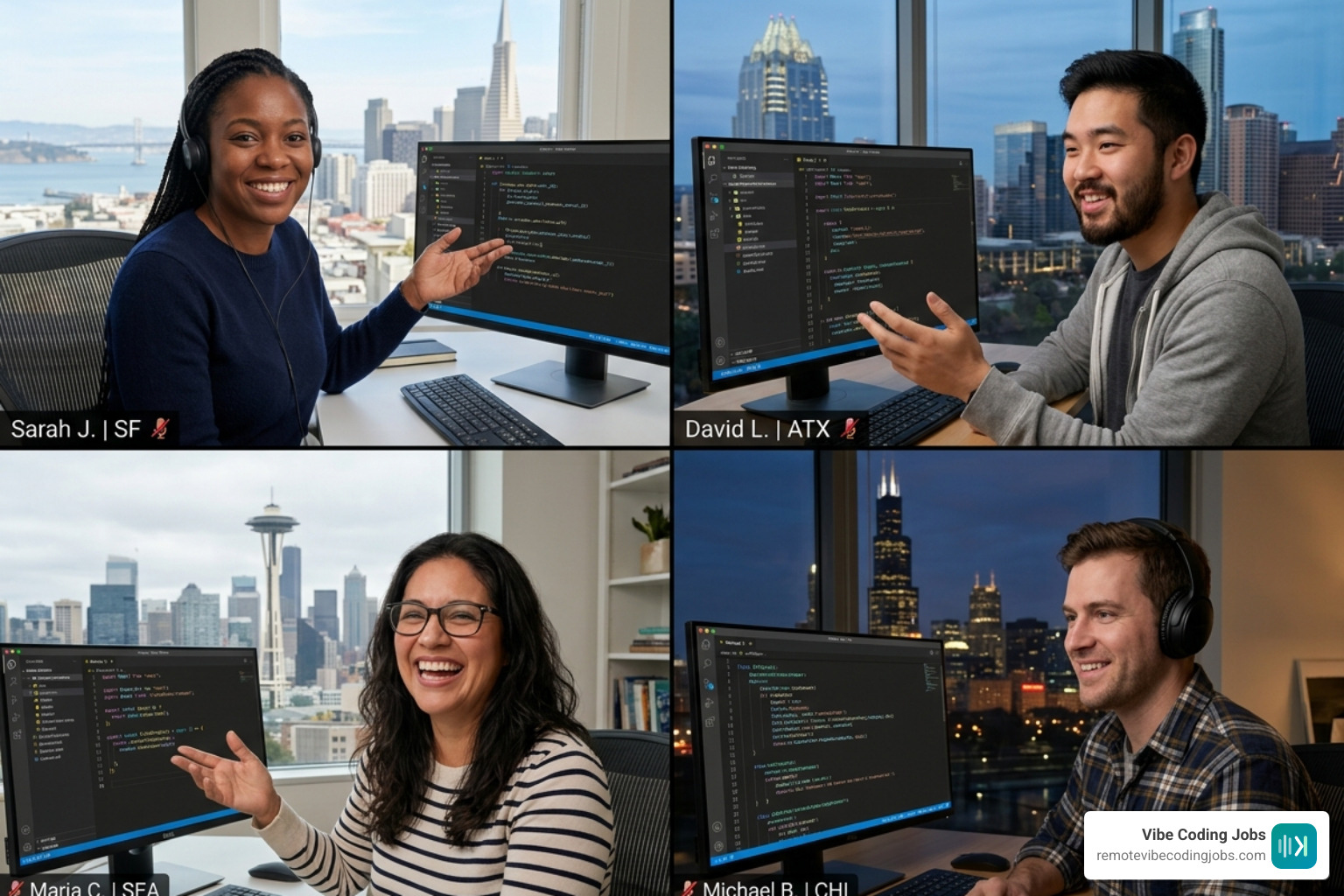
Why Getting Culture Fit Right in Remote Dev Teams Changes Everything
Culture fit remote dev hiring is one of the most overlooked factors in building a high-performing distributed engineering team — and getting it wrong is expensive.
Here’s a quick breakdown of what it means and how to screen for it:
| Step | What To Do |
|---|---|
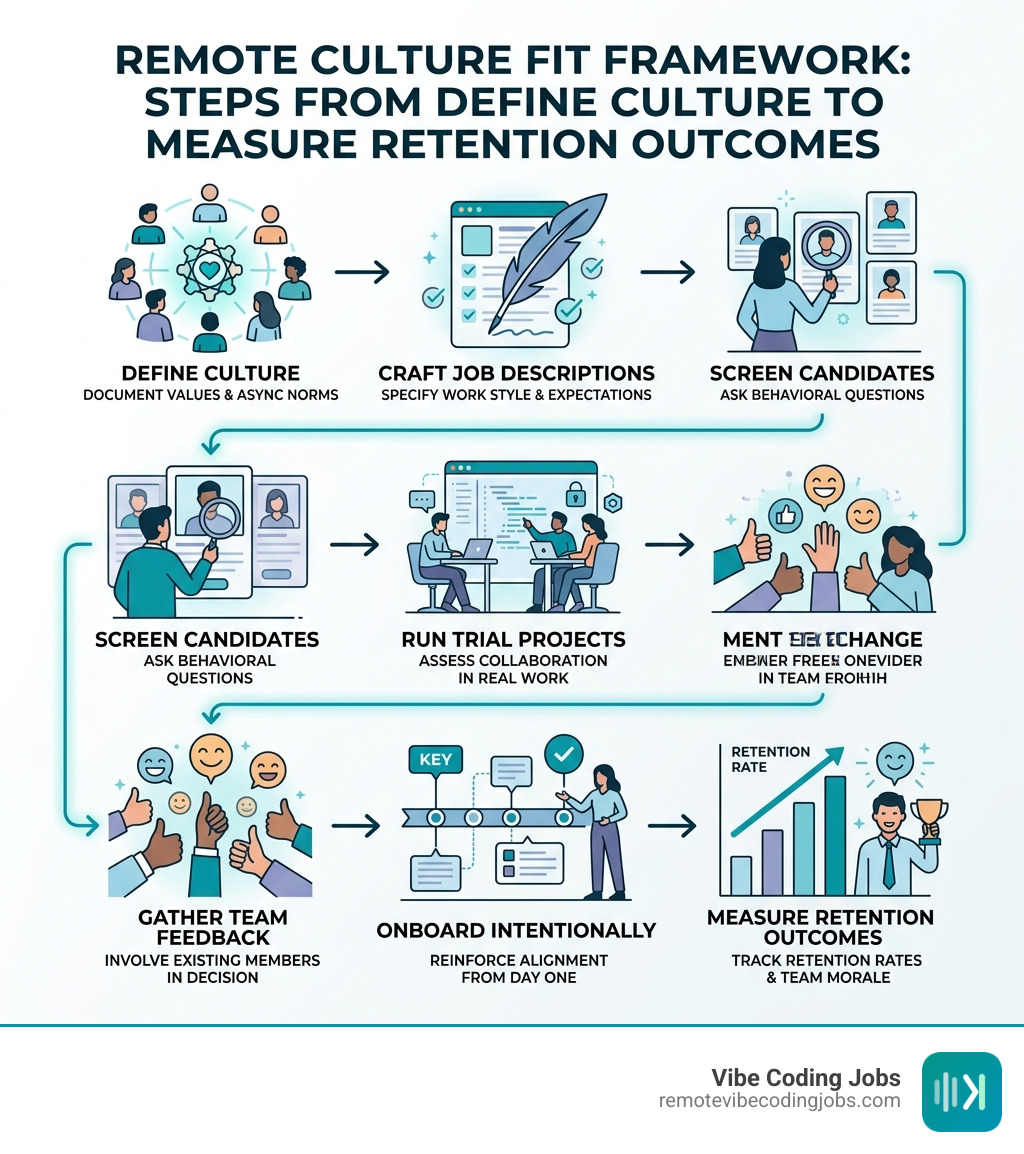
| Define your culture | Document values, async norms, tools, and communication expectations |
| Write honest job descriptions | Be specific about work style, core hours, and non-negotiables |
| Ask behavioral questions | Focus on async communication, ownership, and conflict resolution |
| Use paid trial projects | Assess real-world collaboration, not just interview performance |
| Get team feedback | Involve existing members in the hiring decision |
| Onboard intentionally | Reinforce cultural alignment from day one with structure and a culture buddy |
The stakes are real. According to a 2025 Harvard Business Review study, 65% of remote workflows break down due to mismatched expectations — not technical skill gaps. And teams with high trust levels outperform rivals by 50% in productivity. Yet most hiring processes still treat cultural alignment as an afterthought.
The challenge is sharper in remote settings. Without hallway conversations or casual lunches, misalignment surfaces slowly — and by the time it’s obvious, the damage to morale, delivery speed, and retention is already done. One cultural mismatch can quietly cost a team months of productivity and thousands in recruiting fees.
This guide covers exactly how to avoid that.
I’m the RVCJ Editorial team — we cover AI-assisted development, async hiring, and remote career strategy for developers building with tools like Cursor, Claude, and Copilot, with deep experience in evaluating culture fit remote dev across global distributed teams. We’ll walk you through every stage of the screening process, from writing better job descriptions to running paid trials that reveal how someone actually works.
Why Cultural Alignment is Critical for Remote Performance
When we talk about culture fit remote dev, we aren’t talking about who you’d like to grab a beer with. In a distributed environment, “culture” is the operating system of your team. It’s the set of unwritten rules that dictate how a developer reacts when they hit a blocker at 2:00 AM, how they document a complex API, and how they provide feedback on a pull request.
Cultural alignment directly impacts the bottom line. Employees who feel aligned with their company’s values are significantly more likely to stay long-term, reducing the massive overhead of developer turnover. In the tech world of April 2026, where the demand for software engineers is projected to increase by 22% by 2029, retaining the talent you have is a competitive necessity.
Impact on Remote Team Productivity
In a remote setting, the “vibe” isn’t just a feeling—it’s a metric. High-performing distributed groups rely on asynchronous updates 60% more than synchronous meetings, according to a 2025 Slack study. If a developer isn’t culturally aligned with an async-first mindset, they become a bottleneck, constantly waiting for “live” permission instead of pushing forward.
Trust is the currency of remote work. A 2025 Harvard Business Review study found that teams with high trust levels outperform rivals by 50% in productivity. When a candidate’s work style matches the team’s rhythms, trust is built faster. Conversely, mismatched expectations lead to friction; 37% of remote workers struggle to stay aligned on priorities because the “how” of the work was never clearly established during the hiring phase.
The Cost of Cultural Misalignment
Hiring for technical skills while ignoring culture is a recipe for “expensive churn.” A single bad hire can cost a startup upwards of $15,000 in recruiting fees and onboarding time, not to mention the four to six months of lost productivity.
Beyond the dollar amount, the “cultural tax” is heavy. Misaligned hires often cause:
- Communication breakdowns: A short Slack message that feels “rude” to one person but “efficient” to another.
- Project delays: Waiting for a meeting to solve a problem that should have been documented.
- Low morale: Existing team members often have to pick up the slack or mediate conflicts arising from different work philosophies.
Defining and Communicating Your Remote Culture
You cannot screen for what you haven’t defined. Before posting a job, we recommend mapping out your “Engineering DNA.” Are you a “move fast and break things” shop, or do you value high-discipline, tested code? Do you live in Slack, or do you prioritize Async First Remote Developer Jobs Culture Workflow Communication to give everyone deep work blocks?
Crafting Job Descriptions for Culture Fit Remote Dev
Generic job posts attract generic candidates. To find a true culture fit remote dev, your job description should be “brutally honest.” Don’t just list Python and React; describe the reality of a Tuesday morning at your company.
Effective JDs should include:
- Work Style: Explicitly state if you are async-first or if you require specific “overlap hours” (e.g., 10 AM – 2 PM EST).
- The Tool Stack: Mention not just the languages, but the collaboration tools. “We document in Notion, track tasks in Linear, and vibe-code with Cursor.”
- A Human Element: Include a quote from a current team member about what they actually love (or find challenging) about the role. This humanizes the position and helps candidates self-select.
Communicating Values Through Vibe Coding Principles
In 2026, the “vibe” has evolved. With the rise of AI-assisted development, a new cultural pillar has emerged: the vibe coding mindset. This involves using tools like Cursor and Claude to accelerate the development lifecycle.
A developer who fits a modern Vibe Coding Remote Career isn’t just a “coder”; they are an orchestrator. They value autonomy and are proactive in their communication. They don’t wait for a ticket to be perfectly groomed—they use AI to prototype, document as they go, and share progress frequently. If your company values this AI-native workflow, you must communicate that early.
Proven Strategies to Assess culture fit remote dev Candidates
Assessing culture fit remotely requires a shift from “gut feeling” to structured evaluation. Since you can’t see how someone interacts in an office, you have to create digital “stress tests” for their soft skills.
| Assessment Method | Best For… | Why It Works |
|---|---|---|
| Asynchronous Task | Testing written communication | Reveals if they can explain complex logic without a live call. |
| Behavioral Interview | Assessing past habits | Focuses on actual experiences rather than hypothetical “what ifs.” |
| Personality Assessment | Understanding work style | Tools like the Big Five help identify self-motivation and openness. |
| Live “Vibe” Session | Evaluating collaboration | A casual video call to see if they “click” with the team’s energy. |
Behavioral Questions for culture fit remote dev
The best predictor of future behavior is past behavior. Avoid generic questions like “Are you a team player?” Instead, use situational prompts that force the candidate to describe a specific moment in time.
- On Ownership: “Tell me about a time you found a bug or a gap in a project that wasn’t ‘your responsibility.’ What did you do?”
- On Independent Problem-Solving: “Describe a situation where you were stuck on a technical problem and no one was online to help. How did you handle it?”
- On Feedback Loops: “Tell me about a time you received critical feedback on a pull request that you disagreed with. How did the conversation go?”
- On Communication: “How do you ensure your teammates know what you’re working on when you’re working in a different time zone?”
Using Paid Trials and Team Feedback
Nothing reveals a culture fit remote dev better than actual work. At Vibe Coding Jobs, we advocate for the “Trial Week.”
- Real-World Tasks: Give them a ticket from your actual backlog.
- Paid Work: Always pay a fair rate. It shows you value their time and sets a professional tone.
- Peer Reviews: Have the developers they will actually work with review their code and their communication. Did they ask the right questions? Did they document their logic?
A developer who is technically brilliant but ignores the team’s Slack conventions or refuses to use the agreed-upon AI tools during a trial is a clear cultural mismatch.
Scaling Global Teams and Avoiding Common Mistakes
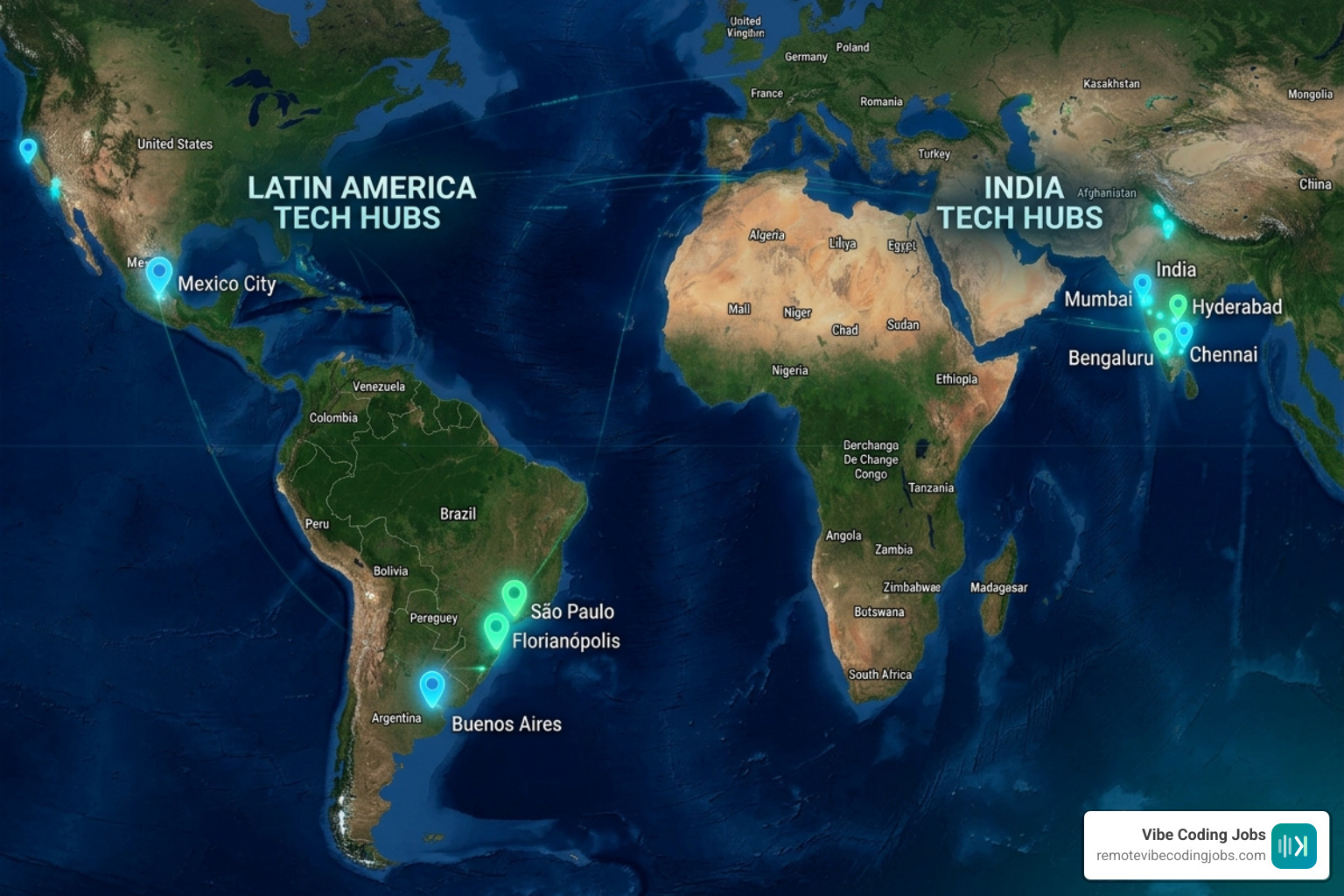
As you grow, maintaining cultural alignment becomes harder. When you hire across borders—from the tech hubs of India to the rising talent in Latin America—you encounter regional nuances that can either strengthen or strain your culture.
Navigating Regional Differences in India and LATAM
Hiring a culture fit remote dev in a global market requires “cultural intelligence.”
- Latin America (LATAM): Often favored by US companies for time zone alignment. Developers in LATAM frequently share similar work values regarding real-time collaboration and have high English proficiency.
- India: Indian work culture often leans toward “collectivism”—a strong focus on group success and camaraderie. However, communication styles can be “high-context,” meaning non-verbal cues and hierarchy play a larger role.
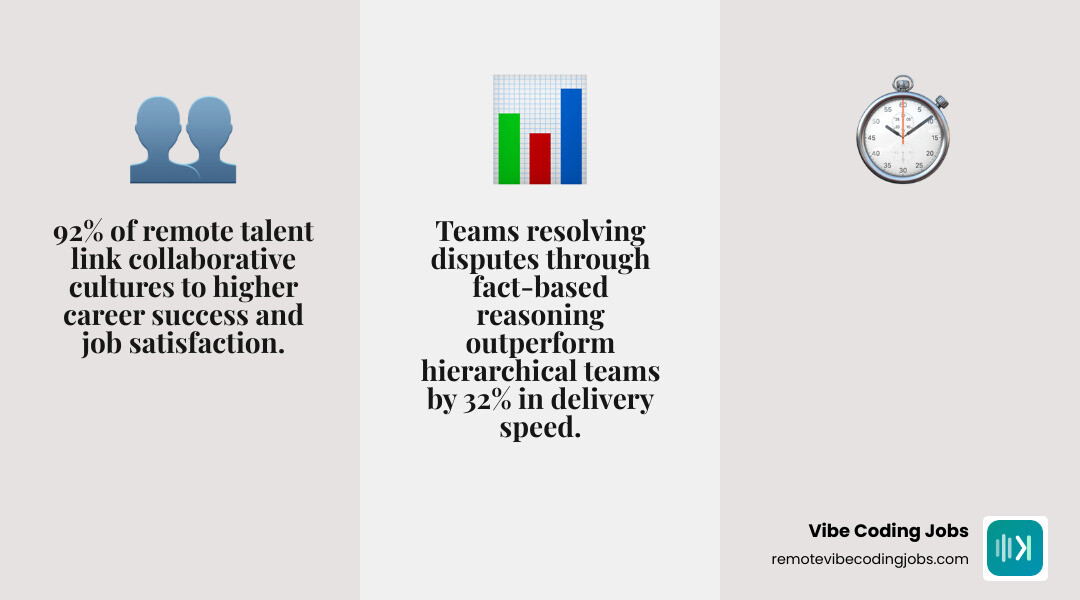
The key is to bridge these gaps with clear protocols. For example, addressing “Indianisms” or high-context communication early can prevent misunderstandings. Teams that resolve disputes through fact-based reasoning and open dialogue outperform hierarchical teams by 32% in delivery speed. To help global hires feel connected, consider implementing Remote Work Loneliness Solutions like virtual coffee chats or “watercooler” channels.
Common Mistakes to Avoid in Remote Hiring
- Rushing the Process: If you’re desperate to fill a seat, you’ll ignore red flags. A “good enough” hire for culture is a “bad hire” for the long term.
- The “Skills-Only” Trap: A 10x developer who destroys team morale is actually a -10x developer.
- Vague Expectations: If you don’t tell them you expect daily async updates, you can’t be mad when they don’t provide them.
- Unwritten Values: If your culture only exists in your head, it doesn’t exist for a remote hire.
Onboarding and Measuring Success
Onboarding is the final stage of the “screening” process. It’s where you confirm the fit.
- Culture Buddies: Assign a veteran team member to help the new hire navigate the “vibe” and unwritten rules.
- Structured 4-Week Plan: Week 1 is for setup; Week 2 is for pairing; Week 3 is for small independent tasks; Week 4 is for full ownership.
- Retention Metrics: Track how long culturally aligned hires stay compared to those hired purely for skills.
- Engagement Surveys: Use regular “pulse checks” to see if the new hire feels they are living the company values.
Frequently Asked Questions about Remote Culture Fit
How does culture fit differ when hiring for “vibe coding” roles?
In “vibe coding” roles, the emphasis shifts toward adaptability and tool-fluency. We look for developers who aren’t precious about “writing every line by hand.” A culture fit for a vibe coding team is someone who is excited to use AI to ship faster, values outcomes over “hero coding,” and is comfortable with the rapid iterations that AI tools allow.
What are the best tools for sourcing culturally aligned remote devs?
Beyond the big boards, look where the “vibe” is. Developer communities on Discord, specialized platforms like Vibe Coding Jobs, and even Twitter (X) are great places to find talent that is already engaged with modern remote work trends. These platforms allow you to see a candidate’s public interactions, which is a great “pre-screen” for cultural fit.
How do you measure the ROI of a cultural fit hiring strategy?
The ROI is seen in retention and velocity. Teams with high cultural alignment spend less time in meetings resolving “people issues” and more time shipping code. According to Gallup, teams with aligned priorities demonstrate 21% higher profitability. You can also measure the reduction in recruitment costs as your turnover rate drops.
Conclusion
Building a world-class distributed team isn’t just about finding the best coders; it’s about finding the best teammates for your specific environment. By defining your values, being brutally honest in your job descriptions, and using behavioral screening, you can build a team that doesn’t just work together—they “click.”
At Vibe Coding Jobs, we believe the future of software development is remote, async-first, and AI-assisted. We curate daily listings from companies that prioritize this exact culture. Whether you are looking to hire a developer who masters Cursor and Claude, or you are a developer looking for a team that respects your deep work blocks, we are here to bridge that gap.
Ready to find your next cultural match? Visit https://remotevibecodingjobs.com to explore our curated listings and start building your high-vibe remote team today.