How to Get Hired as an AI Powered Developer
The Developer Job Market Has Changed — Here’s What You Need to Know About AI Assisted Coding Careers
AI assisted coding careers are one of the fastest-growing segments in tech right now. Here’s a quick snapshot of what they look like in 2026:
What are AI assisted coding careers?
- Roles where developers use AI tools (like Cursor, GitHub Copilot, or Claude) to write, review, debug, and ship code faster
- Jobs that blend traditional software engineering with prompt engineering, agent workflows, and AI oversight
- Positions spanning full-stack dev, product engineering, MLOps, AI QA, and more
- Salaries ranging from ~$120K (median) to $300K+ for top AI-native engineers — 18–43% above traditional roles
Who is hiring? Companies across every sector, from AI labs like OpenAI to enterprise software teams, are actively building out AI-powered engineering functions.
The numbers tell a clear story. 85% of developers now regularly use AI tools, and the global market for AI in software development is on track to hit $100 billion by 2027. Yet trust in AI accuracy has dropped to just 29% — which means skilled humans who can verify, steer, and own AI-generated work are more valuable than ever.
This isn’t a niche trend. It’s a fundamental shift in how software gets built — and how developers get hired.
I’m the RVCJ Editorial team at Remote Vibe Coding Jobs, where we cover AI assisted coding careers, developer hiring trends, and the tools shaping modern engineering workflows. We track remote roles across AI-first teams daily, so everything in this guide is grounded in what’s actually happening in the job market right now.
What AI Assisted Coding Careers Actually Look Like in 2026
In 2026, the term “coding” has undergone a massive rebrand. We’ve moved past the era of manual syntax memorization and entered the age of “vibe coding.” If you’re looking into AI assisted coding careers, you aren’t just a person who types; you’re a conductor of a very high-tech orchestra.
What AI-assisted coding is and how it differs from traditional coding
Traditional coding was often a battle of attrition against compiler errors and documentation. You spent 80% of your time searching for why a library wasn’t importing and 20% actually building logic.
AI assisted coding careers flip this ratio. Today, developers use natural-language prompting to describe features and system behaviors. We use autonomous agents to handle the “grunt work”—boilerplate, unit tests, and documentation—while we focus on high-level system design, security, and verification.
The biggest difference? Human oversight. In 2026, the job is less about writing code and more about auditing it. Because LLMs (Large Language Models) can hallucinate or introduce subtle security flaws, the modern developer acts as a “validator-in-chief.” We pair-program with agents, delegating tasks like “refactor this legacy module to use our new API” while we watch the diffs to ensure the logic holds up.
Why AI assisted coding careers are growing so fast
The demand isn’t just hype; it’s fueled by a massive gap between software needs and developer bandwidth. Here is why the market is exploding:
- Productivity Gains: Recent studies show AI boosts developer productivity by 50–60%. Companies can now ship features in days that used to take months.
- The $1.8 Trillion Market: Global software demand is projected to hit $1.8T by 2030. To meet this, Gartner projects AI will automate 30% of current software tasks by 2025 (a milestone we’ve already passed).
- Enterprise Adoption: 90% of enterprise engineers are expected to use AI code assistants by 2028. Tools like GitHub Copilot now have 4.7 million paid subscribers, growing 75% year-over-year.
- Market Growth: The global market for AI in software development is growing at a 25% CAGR, headed toward $100 billion.
While 85% of us use these tools, the fact that trust in AI accuracy dropped to 29% in the 2026 Stack Overflow survey means companies are desperate for “AI-capable” humans who know how to catch the mistakes the machines make.
Will AI Replace Developers or Redesign the Job?
The short answer: No, it won’t replace you, but it will fundamentally redesign your daily calendar. The fear of job security is real—60% of engineers express concern—but the reality is a transformation of the role rather than its extinction.
Which AI assisted coding careers are most affected first
The impact isn’t distributed equally.
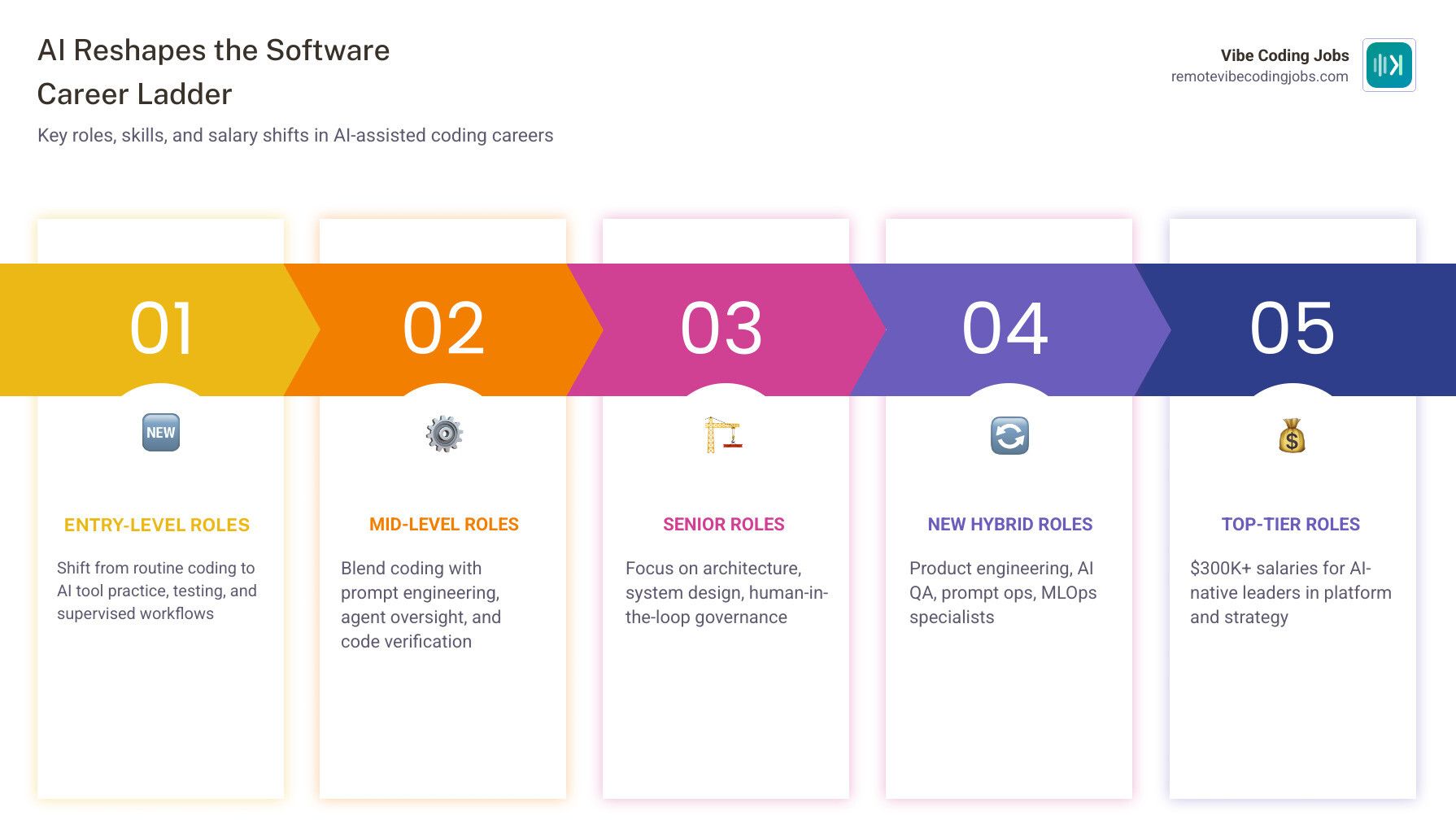
- Entry-level roles: These are seeing the most significant shift. Junior devs no longer spend their first year writing basic CRUD apps; they are now expected to manage agents that do it for them.
- QA and Support Engineering: These roles are becoming “AI-First.” Instead of manual testing, QA engineers now build automated evaluation frameworks to test AI-generated code.
- Senior Engineers: For seniors, the job has shifted toward architecture and AI ethics. They spend more time on “human-in-the-loop” quality control and less on syntax.
Data analysis and code maintenance are also seeing heavy automation, but this creates a massive need for AI Assisted Development Career Growth in areas like MLOps and observability.
What hiring managers now expect in AI assisted coding careers
Hiring managers are no longer just looking for a “Python Dev.” They want someone who can thrive in ambiguity. According to job descriptions from leaders like OpenAI, they are looking for engineers who can:
- Think Holistically: You need to care about speed, performance, and user experience, not just the code block.
- Own the Lifecycle: From idea to prototype to production, you are expected to be an “Applied AI Engineer.”
- Handle Agent Workflows: Can you build a system where an AI agent proactively proposes bug fixes?
For example, roles like the Applied AI Engineer, Codex Core Agent | OpenAI emphasize turning ideas into productionized systems with a strong bias for quality and velocity.
The Best AI Assisted Coding Careers to Target
If you’re looking to future-proof your career, you need to know where the “hot” roles are. We are seeing a shift toward “Product Engineers”—people who are part-developer, part-product manager.
Core engineering paths with the strongest demand
Demand is skyrocketing for roles that bridge the gap between LLMs and enterprise infrastructure.
- AI-First Developer: A developer who builds applications where AI is the core feature, not an afterthought.
- Infrastructure & Platform Roles: Someone has to build the tools that the AI uses. This includes building robust APIs, RBAC (Role-Based Access Control), and compliance surfaces.
- LLM Integration Specialists: Focus on connecting models to real-world data while maintaining security and observability.
Check out AI Assisted Development Career Growth Jobs for a deeper look at these specific paths.
New hybrid roles beyond software engineering
AI is reshaping traditional tech roles into something entirely new:
- Creative Technologist: Blending design and code to create AI-driven user experiences.
- AI QA / Prompt Ops: Ensuring that the prompts and the model outputs are reliable and safe.
- Technical Product Manager: PMs who can “vibe code” prototypes to show engineering exactly what they want.
Real examples of companies hiring for AI-powered coding work
The big players are already setting the standard.
- OpenAI: They are hiring for Strategic Initiatives, Codex | OpenAI to build autonomous collaborators that can write features and fix bugs independently.
- Google: Roles like Senior Staff Software Engineer, Gemini Code Assist @ Google | AnitaB.org Job Board focus on scaling AI assistance to millions of developers.
These companies aren’t just looking for coders; they are looking for people who can design the “proactive AI software engineer” of the future.
Skills, Tools, and Proof of Work That Get You Hired
To land a job in AI assisted coding careers, your GitHub profile needs to look different than it did three years ago. It’s no longer about how many lines you wrote, but how many systems you orchestrated.
The must-have skills for thriving in AI-assisted development
- Verification & Auditing: Since trust in AI is low (29%), your ability to find the “hallucination” in 500 lines of generated code is your superpower.
- System Architecture: AI is great at functions but bad at “the big picture.” You need to know how the backend, frontend, and database fit together.
- Prompt Engineering & Agentic Reasoning: Knowing how to “talk” to the model to get the desired output without endless retries.
- AI Ethics & Security: Understanding model limitations and preventing prompt injection or data leaks.
Which AI coding tools matter for different use cases
You need to be proficient in the “Modern AI Stack.” Here’s a quick comparison:
| Tool | Best For | Key Feature |
|---|---|---|
| Cursor | Deep IDE integration | Native AI chat and “Composer” mode |
| GitHub Copilot | General purpose | Huge ecosystem and enterprise support |
| Claude 3.5/4 | Complex reasoning | Best-in-class coding logic and “Artifacts” |
| Augment Code | Enterprise scale | High-speed, context-aware suggestions |
For more on choosing your primary tool, see our guide on Cursor vs Copilot.
How to build a portfolio that proves AI-native ability
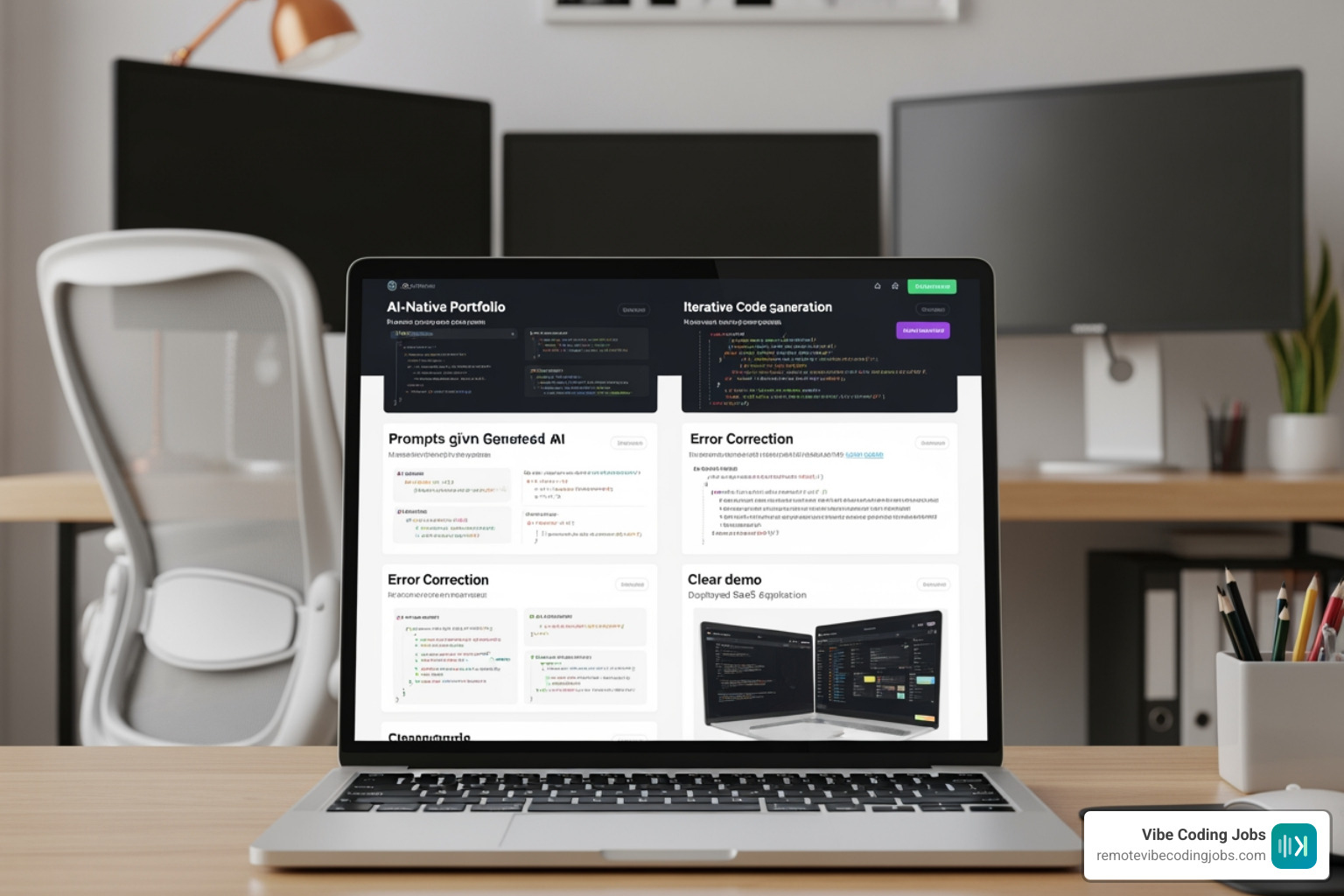
Stop showing off “Todo” apps. Instead, show a project where you used an AI agent to build a complex feature in record time.
- Document the Workflow: Show the prompts you used and how you corrected the AI’s mistakes.
- Focus on Outcomes: “Built a full-stack SaaS in 48 hours using Cursor and Claude, including automated testing.”
- Agent Demos: Create a video showing an autonomous agent you built to handle repetitive PR reviews.
Check out Cursor Copilot Developer Jobs Remote Market Career Path for tips on positioning your “AI-native” portfolio.
Salaries, Career Paths, and Transition Plans
The “AI Premium” is very real. Professionals who can leverage AI effectively are commanding significantly higher pay than those stuck in traditional workflows.
Salary ranges for AI IT and software roles
If you have “AI” in your skill set, the numbers look great:
- Median AI Developer: ~$120K – $160K.
- Top AI-Native Engineers: $300K+.
- OpenAI Roles: $230K – $400K + equity for roles like Strategic Initiatives.
- The “AI Premium”: 18% to 43% higher than traditional roles.
For a full breakdown, see our reports on Vibe Coding Salary and AI ML Engineer Salaries.
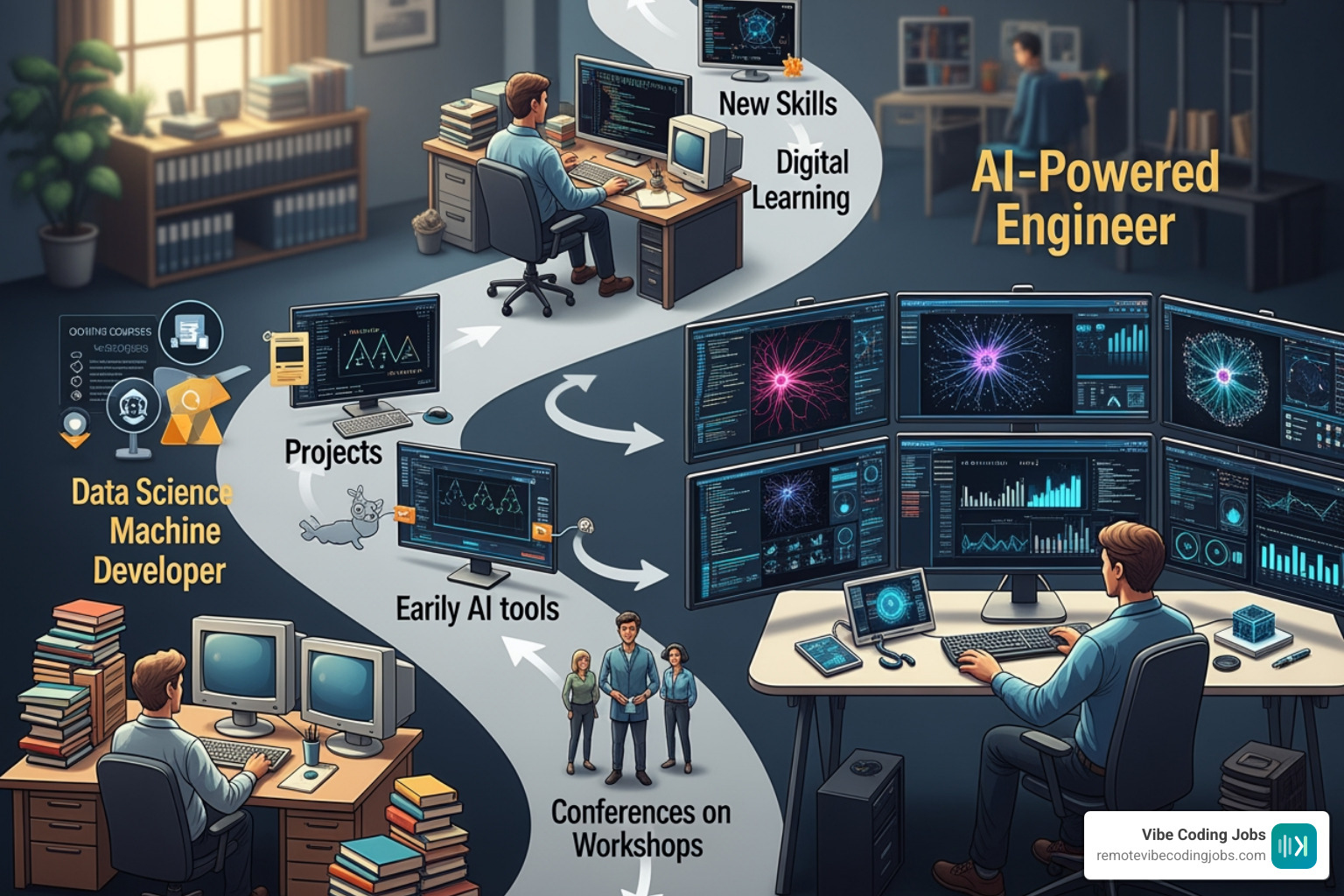
How beginners and career changers can enter AI assisted coding careers
You don’t need a CS degree from Stanford anymore, but you do need a “shipping” mindset.
- Learn the Fundamentals: You still need to understand logic, loops, and APIs.
- Master the Tools: Spend 100 hours in Cursor or Copilot.
- Build in Public: Share your “vibe coding” journey on X or LinkedIn.
- Target Entry-Level AI Roles: Look for AI Coding Jobs Entry Level Remote Opportunities.
How experienced developers should evolve to stay ahead
If you’re a senior dev, don’t fight the AI. Become its manager.
- Focus on Review Loops: Become the best code reviewer in your company.
- Design the Infrastructure: Move into roles that build the “AI Coding Infrastructure.”
- Upskill in MLOps: Learn how models are deployed and maintained.
Check out the Vibe Coding Career Path for a long-term roadmap.
How to Get Hired as an AI Powered Developer
Getting hired in 2026 requires a different strategy. Resume keywords are less about “Java” and more about “LLM Orchestration” and “Agentic Workflows.”
A step-by-step job search plan for AI assisted coding careers
- Curate Your Stack: Decide if you are a “Cursor Specialist” or a “Copilot Pro.”
- Quantify Your Wins: Instead of “wrote code,” use “Reduced feature delivery time by 40% using AI-assisted workflows.”
- Target AI-First Companies: Use Vibe Coding Jobs to find Best Companies Hiring AI Developers Remote.
- Master Async Communication: Most AI-forward companies are remote and async. Your ability to write clear documentation is as important as your code.
What to say in interviews about AI usage without raising red flags
Some developers are still afraid to admit they use AI. Don’t be. The key is to talk about Verification.
- Do say: “I use AI to generate the initial structure, but I manually verify every security-sensitive line and run a custom test suite to ensure accuracy.”
- Don’t say: “I just copy-paste whatever the AI gives me.”
- Focus on Trust Boundaries: Explain how you handle hallucinations and how you ensure the AI-generated code meets the company’s architectural standards.
Where demand is heading in 2025-2026
We are seeing a massive shift toward Enterprise Governance. Companies like OpenAI are building “Codex for Teams,” which requires engineers who understand RBAC, compliance, and audit surfaces. The demand for Remote Developer Jobs AI Tools Trends Salary is shifting from “builders” to “architects of AI systems.”
Stay updated with the State of Vibe Coding 2026.
Frequently Asked Questions about AI assisted coding careers
Are AI assisted coding careers safe long term?
Yes, but they are different. The “safety” comes from your ability to solve business problems, not your ability to remember syntax. As long as businesses need software to solve problems, they will need “Problem Solvers” (who happen to use AI).
Do junior developers still have a future in AI-powered software work?
Absolutely. However, the “Junior” role now involves more supervision and testing. Juniors who embrace AI tools early will likely reach “Senior” level productivity much faster than previous generations.
Is using AI making developers worse at coding?
It can lead to skill atrophy if you use it blindly. The best developers use “deliberate practice”—they ask the AI to explain why it made a certain choice, ensuring they are still learning the underlying fundamentals.
Conclusion
The era of the “manual coder” is fading, but the era of the AI-powered developer is just beginning. By mastering the tools of the trade—whether it’s Cursor, Claude, or autonomous agents—you aren’t just keeping your job; you’re supercharging your career.
The path forward is clear:
- Embrace the “vibe coding” mindset.
- Focus on verification and system design.
- Build a portfolio that proves you can ship at 10x speed.
Ready to find your next role? Check out AI Assisted Development Career Opportunities Growth Trends or see which Companies Hiring Vibe Coding Experts are looking for talent today. You can also explore specific opportunities like Sendbird company careers to see how modern teams are integrating AI into their workflows.
At Remote Vibe Coding Jobs, we’re here to help you navigate this transition. The future isn’t AI vs Developers—it’s Developers with AI winning the market. Let’s go build something amazing.