
The Job Market Has Changed — AI Tool Specific Jobs Are Here Now
AI tool specific jobs are among the fastest-growing roles in tech right now. Here’s a quick look at the most in-demand ones in 2026:
| Job Title | Typical Salary (US) |
|---|---|
| AI Research Scientist | ~$196,000 |
| Computer Vision Engineer | ~$164,000 |
| Machine Learning Engineer | ~$161,000 |
| Data Scientist | ~$155,000 |
| AI Engineer | ~$151,000 |
| NLP Engineer | ~$112,000 |
| Agentic AI Developer | $150,000–$250,000+ |
| Vibe Coder / AI-Native Developer | $70,000–$250,000+ |
The US Bureau of Labor Statistics projects computer and information research roles will grow 20% between 2024 and 2034 — roughly triple the average for all occupations. And that was before agentic AI and tools like Cursor and Claude Code started reshaping how software gets built.
Here’s the thing most job boards won’t tell you: the definition of an “AI job” has expanded dramatically. It’s not just data scientists and ML engineers anymore. Designers, marketers, and product managers are now landing high-paying roles specifically because they can ship with AI tools. Companies like Pinterest, TikTok, and Mercedes-Benz are actively posting roles that require proficiency in tools like Cursor, Claude Code, and GitHub Copilot.
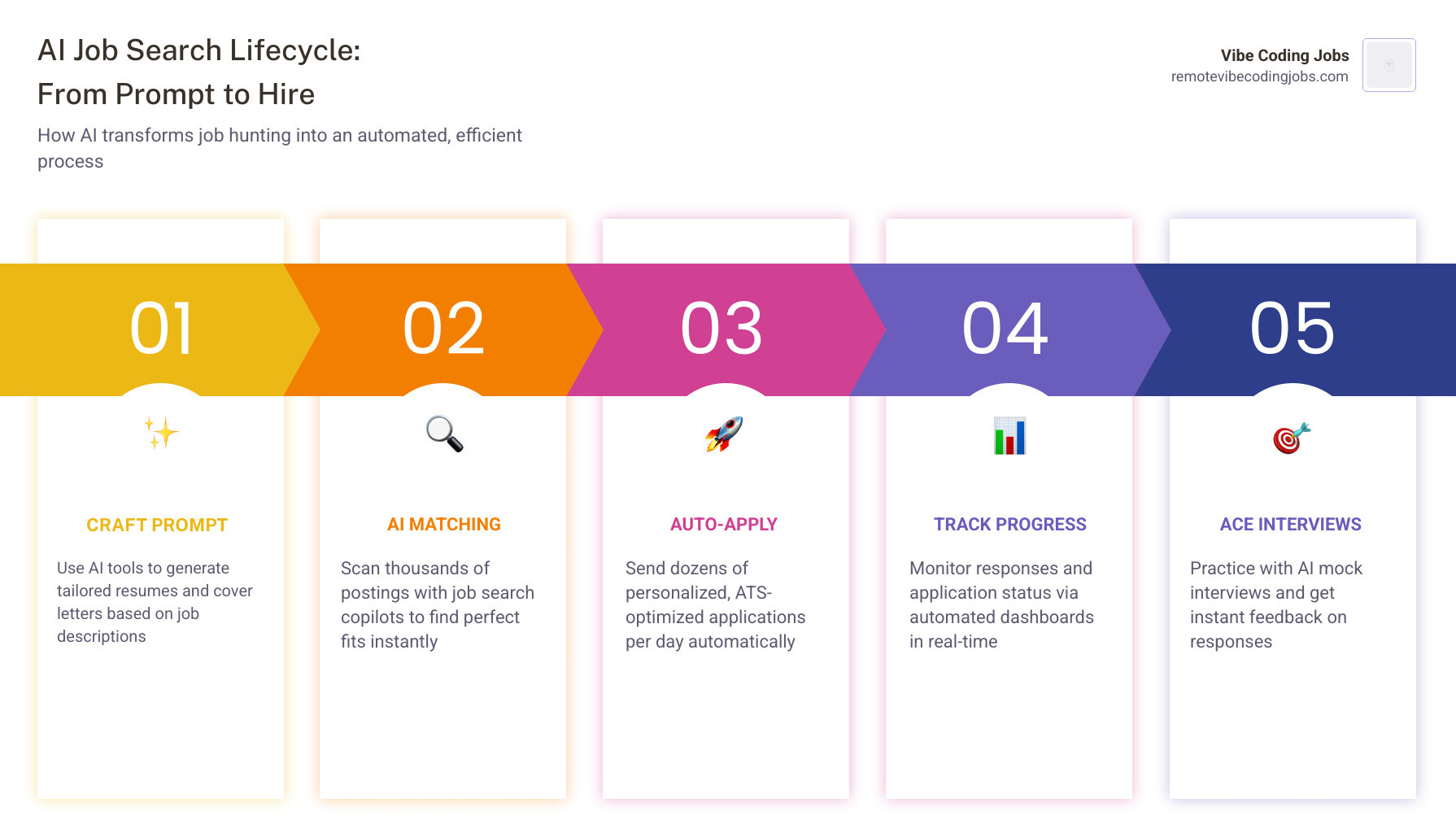
The old playbook — apply to 50 jobs, hear back from one — is also changing. AI-powered job search tools now let you send dozens of tailored, verified applications per day, cutting job search time by up to 80%.
This guide will walk you through exactly which roles are hiring, what skills they require, what they pay, and how to use AI to find and apply for them faster.
Written by RVCJ Editorial, the team behind Remote Vibe Coding Jobs — we cover AI-assisted development, remote hiring trends, and career guidance for developers building with tools like Cursor, Claude, Copilot, and Replit, with a specific focus on ai tool specific jobs at async-first companies. If you’re ready to stop scrolling job boards manually, you’re in the right place.
The Most In-Demand AI Tool Specific Jobs in 2026
As we navigate through 2026, the landscape of ai tool specific jobs has shifted from experimental research to production-scale reality. Companies are no longer just looking for someone who “knows AI”; they are looking for specialists who can orchestrate specific ecosystems.
Machine Learning (ML) and NLP Engineers
The backbone of the industry remains the Machine Learning Engineer. These professionals earn an average of $161,522 annually by building the models that power everything from recommendation engines to autonomous systems. Closely related are Natural Language Processing (NLP) Specialists. In 2026, these roles have evolved beyond simple chatbots to building complex “Virtual Collaborators.” Companies like Anthropic are actively hiring Research Engineers for Virtual Collaborator workflows, focusing on training models like Claude to handle real-world organizational data and complex document manipulation.
Computer Vision and Robotics
Computer Vision Engineers ($164,000 median pay) are finding massive opportunities in healthcare diagnostics and manufacturing. By using AI to “see,” these specialists are automating quality control on factory floors and helping doctors identify patterns in medical imaging that the human eye might miss. Similarly, Robotics Engineers are integrating AI to reduce costs and increase facility output, moving 20% faster than traditional automation methods.
The Rise of Agentic AI Developers
A brand-new category has exploded in the last year: the Agentic AI Developer. Unlike traditional software engineers who write static code, these developers build “agents”—autonomous systems that can plan, execute, and reason across multiple tools. We are seeing roles like the Agentic AI Developer Advocate, where the “employee” might actually be an AI agent representing a community of developers. This isn’t science fiction; it’s a $60,000+ contract role happening right now.
AI Ethics and Systems Management
With great power comes great responsibility (and high-level paperwork). AI Ethics Specialists are now essential to ensure models aren’t biased or invading privacy. Furthermore, the role of the Senior Director of AI, R&D & Agentic Systems has become a staple in mid-to-large tech firms. These leaders aren’t just coding; they are making high-conviction bets on model stacks and compute economics.
Comparing Entry-Level vs. Senior AI Roles
If you’re just starting, you might wonder how your day differs from a veteran’s. Here is a breakdown:
| Feature | Entry-Level AI Job | Senior AI Research Scientist / Tech Lead |
|---|---|---|
| Primary Focus | Prompt engineering, data cleaning, API integration | Architecture design, RLHF/DPO, model fine-tuning |
| Tools | Cursor, Replit, Python, basic LLM wrappers | PyTorch, vLLM, HuggingFace, custom RAG pipelines |
| Responsibility | Shipping features and prototypes | Owning the model lifecycle and compute strategy |
| Typical Experience | 0-2 years + strong portfolio | 8+ years engineering + deep ML expertise |
For a broader look at the market, check out these 9 Artificial Intelligence Jobs to Explore in 2026.
Essential Skills and Qualifications for AI Careers
To land ai tool specific jobs, you need a blend of “hard” technical skills and “soft” architectural thinking. While a degree in Computer Science or Mathematics provides a solid foundation, 2026 has proven that practical experience and certifications often speak louder than a diploma.
The Technical Stack
- Languages: Python remains king for ML, but TypeScript and React are essential for building the UIs that users actually interact with. We’re also seeing a surge in Rust for high-performance AI agents.
- Frameworks: You need to be comfortable with PyTorch or TensorFlow if you’re on the research side. If you’re on the application side, mastering Applied AI Engineer skills like PHP, TS, and production LLM scaling is the way to go.
- Modern Infrastructure: Knowledge of RAG (Retrieval-Augmented Generation) pipelines, MCP (Model Context Protocol) servers, and vector databases is no longer optional.
Education: Degrees vs. Certifications
The US Bureau of Labor Statistics projects 356,700 job openings annually in computer and information technology. Many of these roles are being filled by people who took non-traditional paths. While a Master’s degree can be a “game-changer” for research roles, many 16 Artificial Intelligence Career Paths are accessible via industry-recognized certifications and a killer GitHub portfolio.

Mastering AI Tool Specific Jobs Through Vibe Coding
We cannot talk about 2026 without mentioning “vibe coding.” This is the practice of using AI-native tools to ship software at 3-10x the traditional speed.
- Cursor & Claude Code: These aren’t just text editors; they are “AI pilots.” Vibe coders use natural language prompts to scaffold, test, and document entire apps.
- Rapid Prototyping: Tools like v0, Replit, and Bolt allow a single developer to do the work of a five-person team.
- Shift in Mindset: The job has shifted from “syntax memorization” to “system architecture.” You don’t need to remember how to write a for-loop in every language; you need to know how to prompt an agent to build a secure, scalable authentication system.
How to Land AI Tool Specific Jobs Using Automation
If you’re looking for a job in AI, you should probably use AI to find it. It’s the ultimate “dogfooding” exercise.
- Job Search Copilots: Modern AI tools allow you to automate the “grind.” These systems help match skills to millions of openings, significantly increasing interview rates.
- Auto-Apply Platforms: Specialized AI platforms can submit 10x more applications than a human can manually. Imagine sending 50 personalized, high-quality applications per day while you focus on building your portfolio.
- ATS Optimization: AI tools can now tailor your resume for each specific job description in under six seconds, ensuring you pass the “robot filters” that many companies use.

Salaries and Growth Outlook for AI Professionals
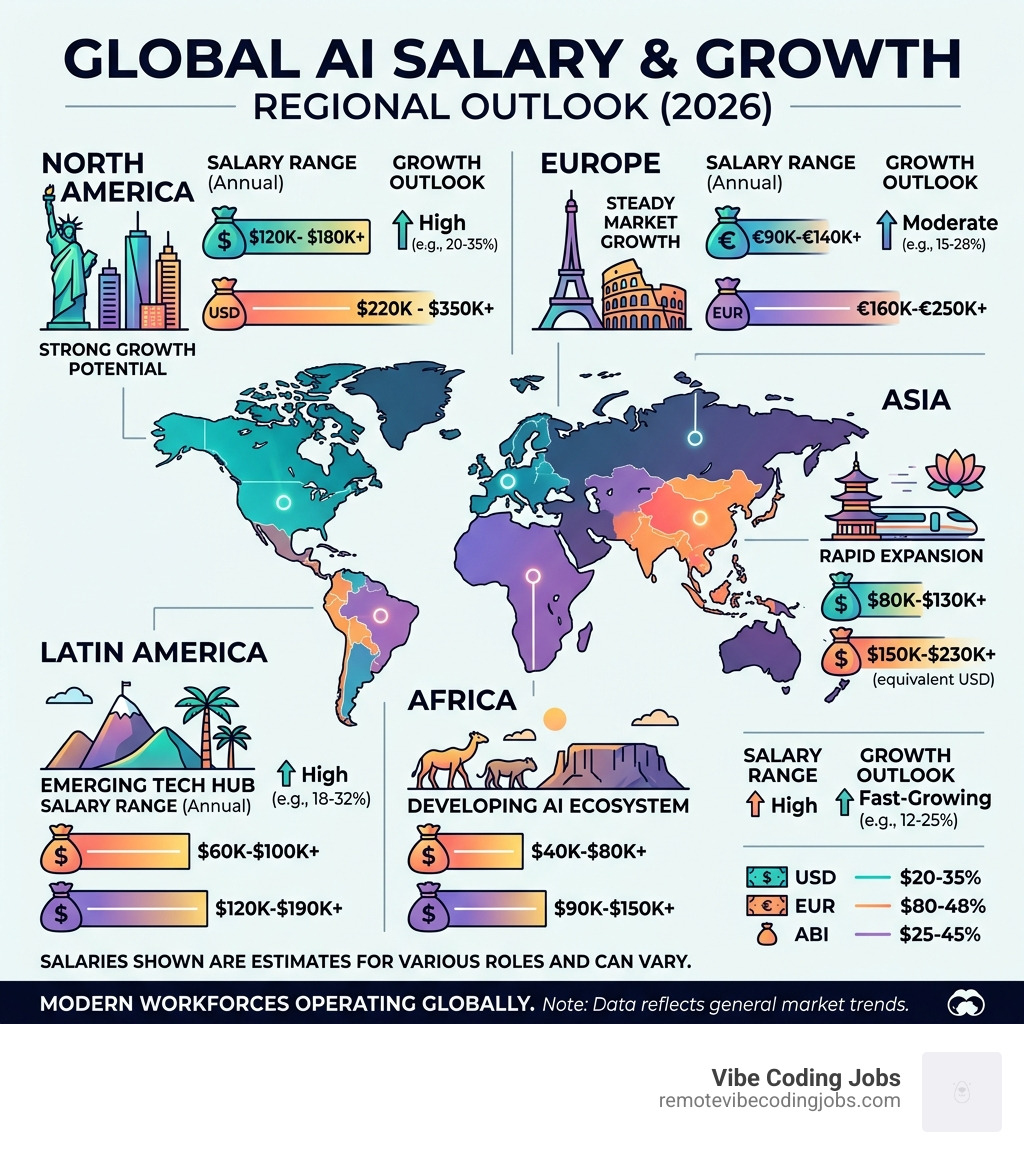
The money in AI is, frankly, staggering. In 2026, we are seeing a “remote work premium” where companies are willing to pay top dollar for talent that can work autonomously across time zones.
High-Paying Targets
According to the 10 Highest-Paying AI Jobs & Salaries in 2026, the ceiling is incredibly high. While the average ML engineer makes $161k, senior roles at companies like Anthropic or QuillBot offer compensation packages ranging from $500,000 to $850,000 USD. Even mid-level roles for “Product Designers” who can code with AI are seeing salary ranges between $103,000 and $230,000.
Industry Growth
The 21% growth predicted for computer research scientists isn’t just a statistic; it’s a reflection of AI’s integration into every sector. 72% of organizations now use AI to improve at least one business function. This means the “safe” jobs are no longer just at Google or Meta—they are in healthcare, logistics, and even real estate private equity.
Frequently Asked Questions about AI Careers
Can I get an AI job without a degree?
Yes, absolutely. In 2026, your “proof of work” matters more than your “proof of attendance.” We’ve seen “vibe coders” land $150k roles simply by showcasing a portfolio of live, AI-generated products. If you can build a functional agentic system and document it on GitHub, you are more valuable than a graduate with no hands-on experience. Focus on hackathons, open-source contributions, and specialized certifications.
What programming languages are best for AI?
Python is the foundational language for almost all AI work. However, if you want to be an “Applied AI Engineer,” you should also master TypeScript (for the web) and SQL (for data management). For those interested in the cutting edge of AI agents, learning Rust is a major competitive advantage due to its safety and speed.
Which industries are hiring the most AI specialists?
- Healthcare: For diagnostic tools and patient outcome prediction.
- Fintech: For fraud detection and automated credit scoring.
- Real Estate & Private Equity: Companies are building “internal AI operating systems” to manage deal flows and automate CRM updates.
- Creative Productivity: Platforms like QuillBot are hiring directors to turn simple tools into full-scale “agentic platforms.”
Conclusion
The era of manual job hunting and manual coding is fading. AI tool specific jobs represent the future of work, where the most valuable skill is “AI fluency”—the ability to partner with machines to produce disproportionate results. Whether you’re a seasoned ML researcher or a “vibe coder” shipping your first app, the opportunities in 2026 are limitless.
At Remote Vibe Coding Jobs, we believe that the best way to future-proof your career is to embrace these tools today. We curate daily listings from companies that don’t just “accept” AI tools but mandate them. If you’re ready to skip the manual grind and join an async-first, AI-native team, find remote vibe coding jobs on our platform today. The robots are hiring—make sure they find you.