
The Rise of Async Company Developer Jobs in 2026
Async company developer jobs are exploding in 2026 — and if you want to find the best ones fast, here’s what you need to know right now:
Top platforms to find async developer jobs:
| Platform | Jobs Available | Best For |
|---|---|---|
| Vibe Coding Jobs | 260+ async-first roles | AI/vibe coding developers |
| 3,000+ worldwide | High volume, all levels | |
| GitHub | Community & Projects | Networking and open source |
The developer job market has shifted hard toward async-first work. Over 3,000 async developer jobs are listed worldwide right now, with 1,648 of those being fully remote. Companies like Gusto, Docker, and a growing wave of AI-native startups are actively hiring engineers who can thrive without mandatory standups or back-to-back meetings. This shift is part of a broader movement toward asynchronous communication in the tech industry.
The core idea is simple. Async-first companies replace live meetings with written communication, recorded updates, and documented decisions. Engineers get uninterrupted focus time. Teams stay aligned across time zones without sacrificing productivity.
This is no longer a niche perk. It’s becoming the default for the best-paying remote developer roles — especially in AI, Web3, and developer tooling.
We — the RVCJ Editorial team — cover AI-assisted development, remote work trends, and developer hiring, with deep expertise in helping engineers land async company developer jobs at no-BS, async-first companies. In this guide, we break down the top platforms, tech stacks, salaries, and strategies you need to land your next async role in 2026.
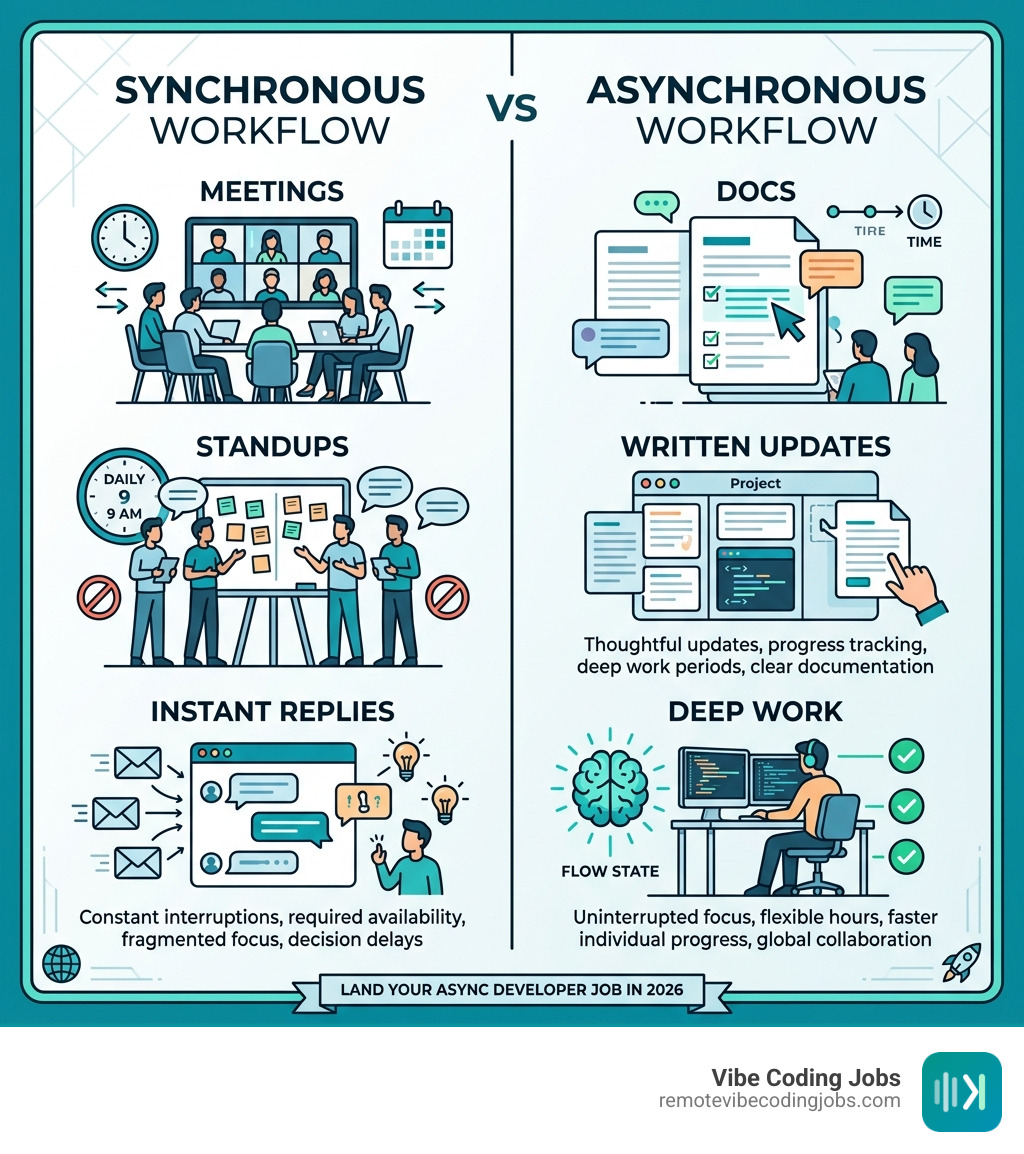
Defining Async-First: Why Developers are Ditching Synchronous Meetings
The traditional “9-to-5” synchronous model is dying. In its place, a more efficient, human-centric model has emerged: the async-first company. But what does it actually mean to work in an async-first environment?
At its heart, async-first means that the default mode of asynchronous communication is written. Instead of a “quick 15-minute call” that inevitably drains an hour and breaks your flow, teams communicate via well-crafted documents, tickets, and recorded videos.
In these environments, deep work is the default, not the exception. Developers are given the trust to manage their own time, allowing for true timezone flexibility. You aren’t judged by when your Slack dot is green; you’re judged by the quality of your code and the clarity of your documentation.
To maintain alignment without meetings, async teams rely on a specific set of tools and rituals:
- Linear: For project management that doesn’t require a daily status meeting.
- Notion: To serve as the “single source of truth” where every decision is documented.
- Loom: For walkthroughs and code reviews that teammates can watch at 2x speed when they wake up.
- Slack (with async norms): Using threads and status updates instead of expecting immediate replies.
This shift significantly boosts workflow productivity. When you don’t have to wait for a meeting to make a decision, the “idle time” in your development cycle vanishes. Documentation becomes a byproduct of the work, rather than a chore performed after the fact.
How to Find Async Company Developer Jobs in 2026
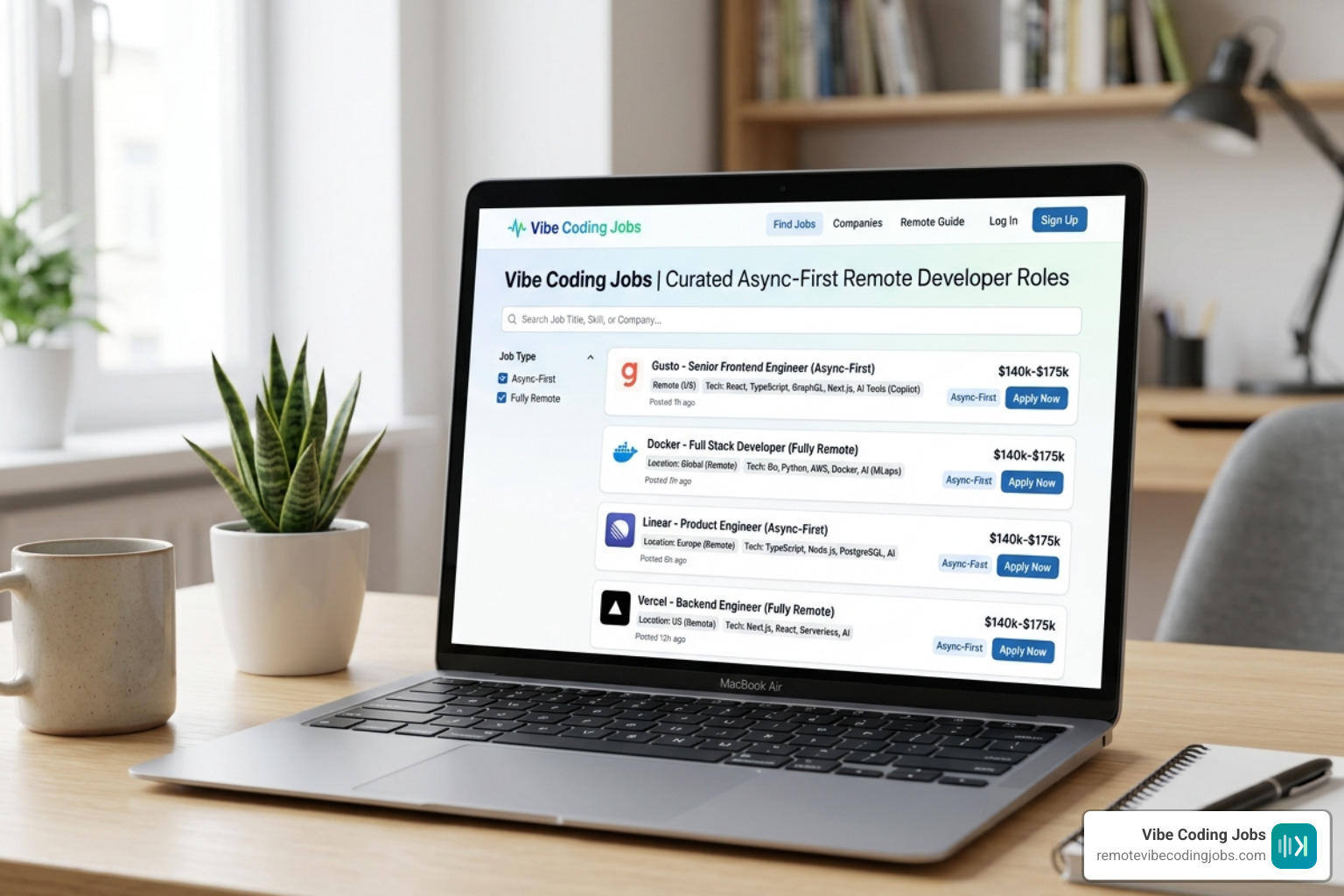
Finding async company developer jobs requires a different strategy than the standard “spray and pray” approach on major job boards. Because async roles are highly coveted, they often appear on niche platforms first.
We recommend finding your dream remote job by focusing on boards that vet for company culture. In 2026, the best opportunities are found by filtering for “Async-First” tags and specifically looking for roles that embrace “Vibe Coding”—the practice of using AI tools like Cursor and Claude to accelerate output.
How to Evaluate Async Company Developer Jobs for Culture Fit
Not every “remote” job is truly async. Many companies simply move their office toxicity to Zoom. To find a flexible culture, look for these green flags in job descriptions or during the interview:
- Written-first norms: Do they mention RFCs (Request for Comments) or design docs?
- Recorded updates: Do they use Loom or internal podcasts instead of standups?
- No-meeting Wednesdays: (Or even better, no meetings by default).
- Autonomy: Look for mentions of “output-based” performance rather than “hours logged.”
- Trust-based management: Does the company emphasize results over surveillance?
High-Paying Async Company Developer Jobs in Web3 and AI
If you are looking for the highest compensation packages, the intersection of async company developer jobs, Web3, and AI is where the action is. Companies in this space are often “born in the cloud” and have no legacy office culture to hold them back.
Roles in blockchain engineering (Solidity, Rust) and AI-native workflows (LLM orchestration, agentic frameworks) often come with impressive salary and tool stipends. For example, DevOps roles in the Web3 space can range from $115k to $138k+, while senior AI engineers are frequently clearing $200k+ with significant equity. These companies don’t just “allow” AI tools; they mandate them to keep up with the pace of innovation.
Essential Tech Stacks for Async Remote Programming Jobs
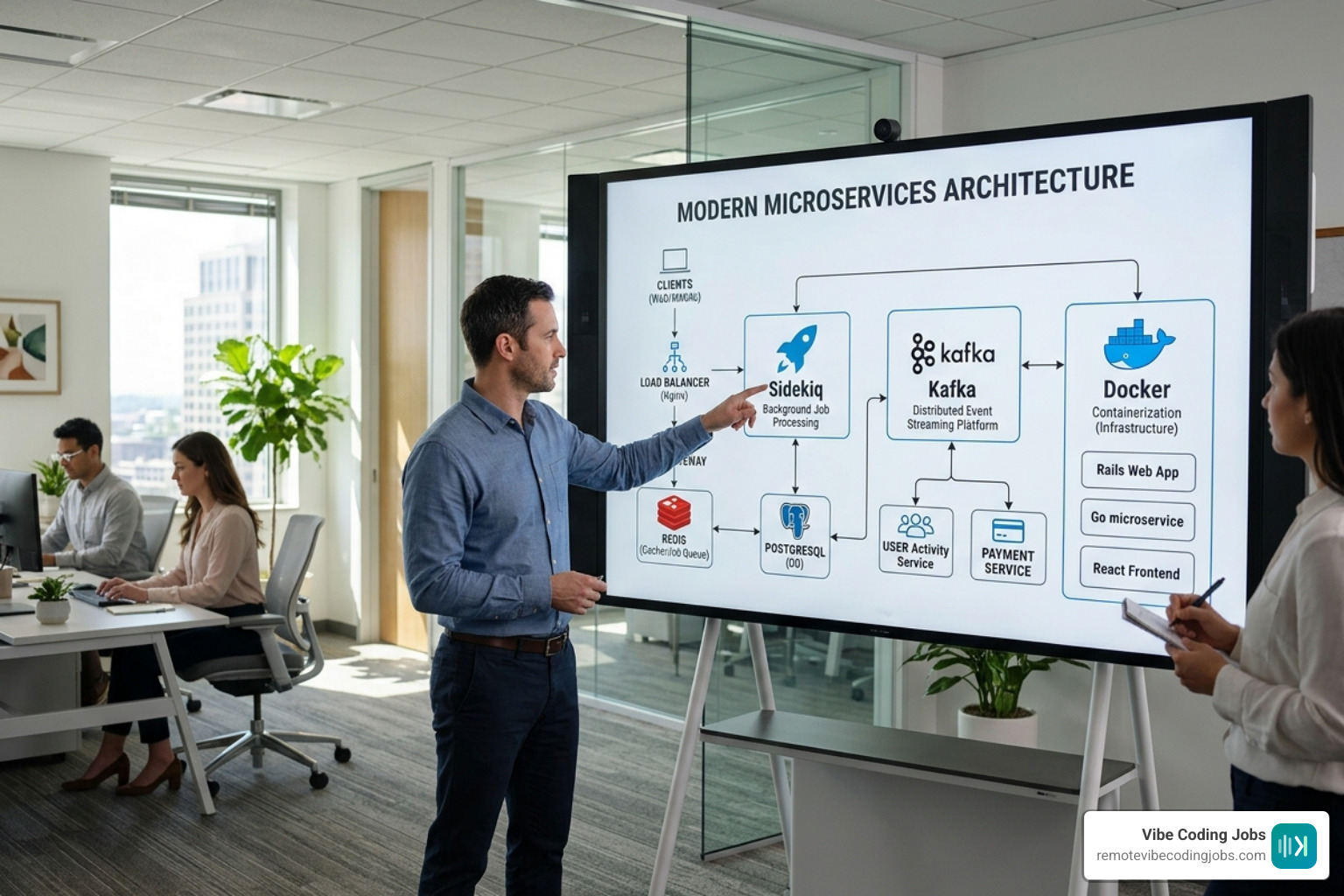
Working asynchronously requires a specific technical mindset. You aren’t just writing code; you’re building systems that are resilient and observable because you might not be online when a teammate interacts with your service.
According to recent job postings from companies like Gusto and Docker, the most in-demand technologies for async company developer jobs include:
- Asynchronous Processing: Mastery of Sidekiq and Kafka is essential for handling heavy loads and background jobs in Ruby on Rails environments.
- Containerization & Orchestration: Docker and Kubernetes are the bedrock of remote-first infrastructure, ensuring “it works on my machine” translates to production.
- Modern Backend: Node.js remains a powerhouse for building fast, scalable APIs that support async frontends.
- Frontend Excellence: React and TypeScript are the standard for building the rich, interactive UIs that modern async tools require.
Companies are specifically looking for “Systems Thinkers”—developers who can design abstractions that allow other teams to work independently without needing constant sync-up meetings.
Salary Benchmarks and Benefits for Senior Async Developer Roles
The compensation for async company developer jobs in 2026 is highly competitive, reflecting the high level of discipline required for self-management.
- Base Salary: Senior roles typically range from $160,000 to $220,000 USD, with top-tier firms like Docker offering up to $242,000 for specialized frontend roles.
- Equity: Most async startups offer meaningful equity packages, viewing developers as partners in the business.
- Flexible Hours: True flexible hours mean you work when you are most productive, whether that’s at 5 AM or 11 PM.
- Unique Perks: Look for “Whaleness Days” (company-wide days off), 4-day work weeks (offered by 7+ companies currently hiring), and technology stipends (usually ~$100/month) to keep your home office top-notch.
- Family Support: Leading async companies often provide 16 weeks of paid parental leave, recognizing that work should empower a better life, not replace it.
These teamwork benefits are designed to prevent burnout and ensure long-term retention in a global talent market.
Frequently Asked Questions about Async Company Developer Jobs
How does async work improve developer productivity?
Async work is a superpower for productivity benefits. By eliminating the “meeting tax,” developers can spend 4–6 consecutive hours in a flow state. Because all communication is written, documentation becomes a natural byproduct of the workflow. You never have to ask “Why did we make this decision?” because the Slack thread or Notion doc from six months ago is right there. Using a platform like Vibe Coding Jobs helps you find companies that protect this focus time at all costs.
What experience levels are companies targeting for async roles?
While there are entry-level roles, the majority of async company developer jobs target Mid-to-Senior levels (5–8+ years of experience). This is because async work requires high levels of communication workflow mastery and self-discipline. Companies need to know you can unblock yourself, manage your own schedule, and write clear technical specifications without a manager hovering over your shoulder.
Which geographic locations offer the most async opportunities?
The beauty of async is that it is geographically flexible. While many companies have legal hubs in the US, EU, UK, or Canada, “Worldwide” is becoming the most common location tag. In April 2026, there are over 1,600 fully remote async positions available globally. Whether you are in a beach house in Bali or a flat in London, async-first companies care about your PRs, not your GPS coordinates.
Conclusion
The future of software engineering isn’t just remote; it’s asynchronous and AI-augmented. The shift toward “Vibe Coding”—where developers use tools like Cursor and Claude to handle the boilerplate while they focus on high-level architecture—is perfectly suited for the async-first movement.
If you’re tired of “Zoom fatigue” and want to reclaim your schedule, it’s time to pivot. We invite you to explore the curated listings at remotevibecodingjobs.com to find your next role at a company that values your time, your focus, and your “vibe.”