The Reality of Claude Code AI Impact Jobs: Disruption or Transformation?
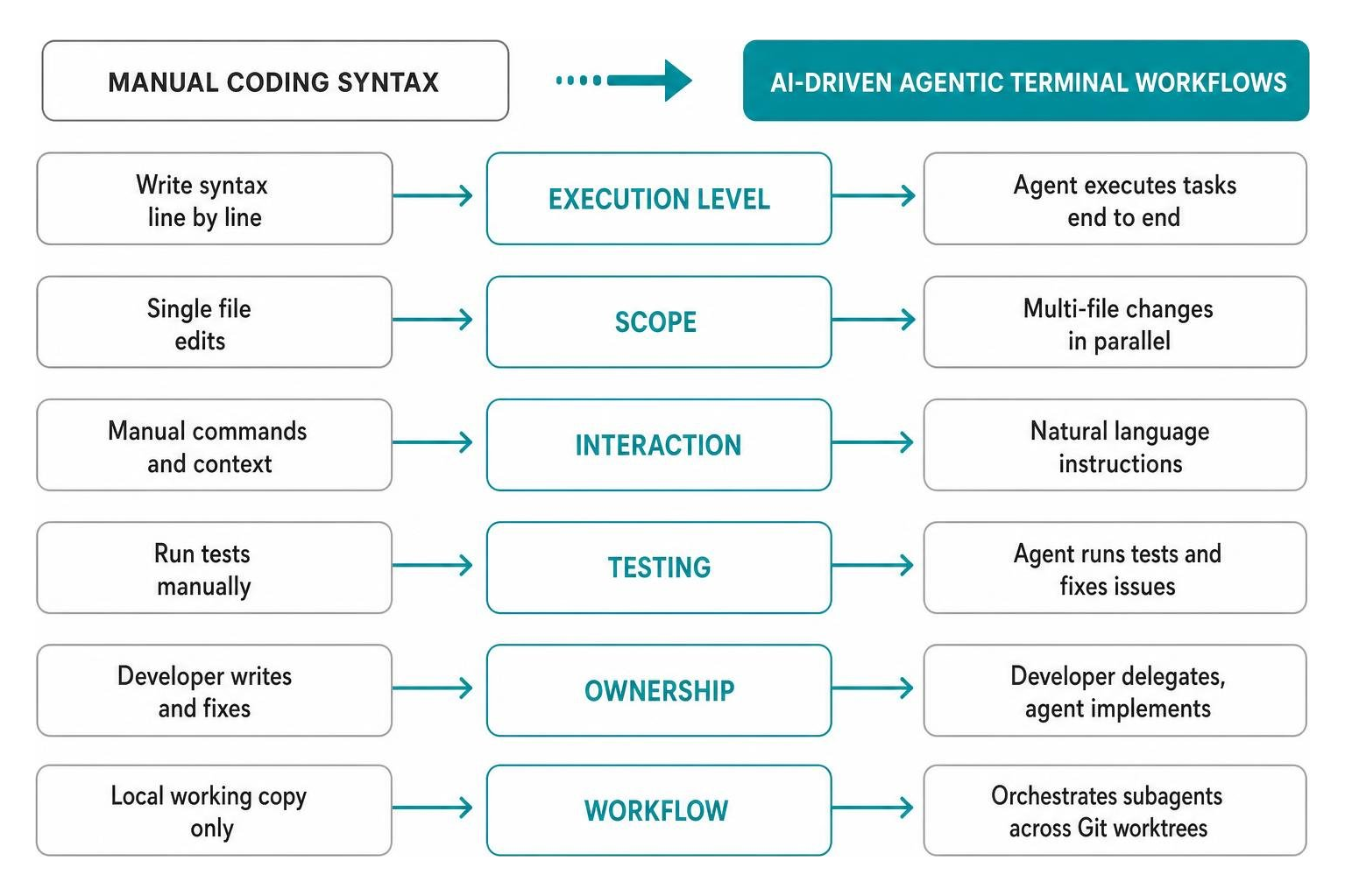
Software development is undergoing a fundamental structural shift. Rather than acting as a simple autocomplete helper inside an editor, terminal-native agents run commands, edit multiple files in parallel, execute test suites, and fix compilation errors autonomously. This shift from syntax assistance to full task execution is driving the reality of claude code ai impact jobs.
Developers are no longer evaluated purely on how fast they write functions or memorize syntax. Instead, developer leverage comes from managing agentic terminal automation. Single engineers can now direct multiple subagents across isolated local branches using Git worktrees, generating daily outputs that used to require entire feature teams.
However, high technical task coverage does not mean human roles disappear overnight. While software engineering tasks are highly exposed to automation, the core responsibility of an engineer shifts from writing routine boilerplates to system design, edge-case evaluation, and architectural validation. For insights into where these shifts are happening across remote roles, explore our update on AI Coding Jobs Market Trends.
Measuring the Claude Code AI Impact Jobs Market Metrics
To understand the broader economic impact, we have to look directly at the data. Anthropic reports an 8x increase in code produced per engineer since the beginning of 2026. Data from the U.S. Bureau of Labor Statistics (BLS) and Anthropic’s Economic Index reveals that Computer Programmers are the single most exposed occupation, with a 75% observed task coverage by AI tools.
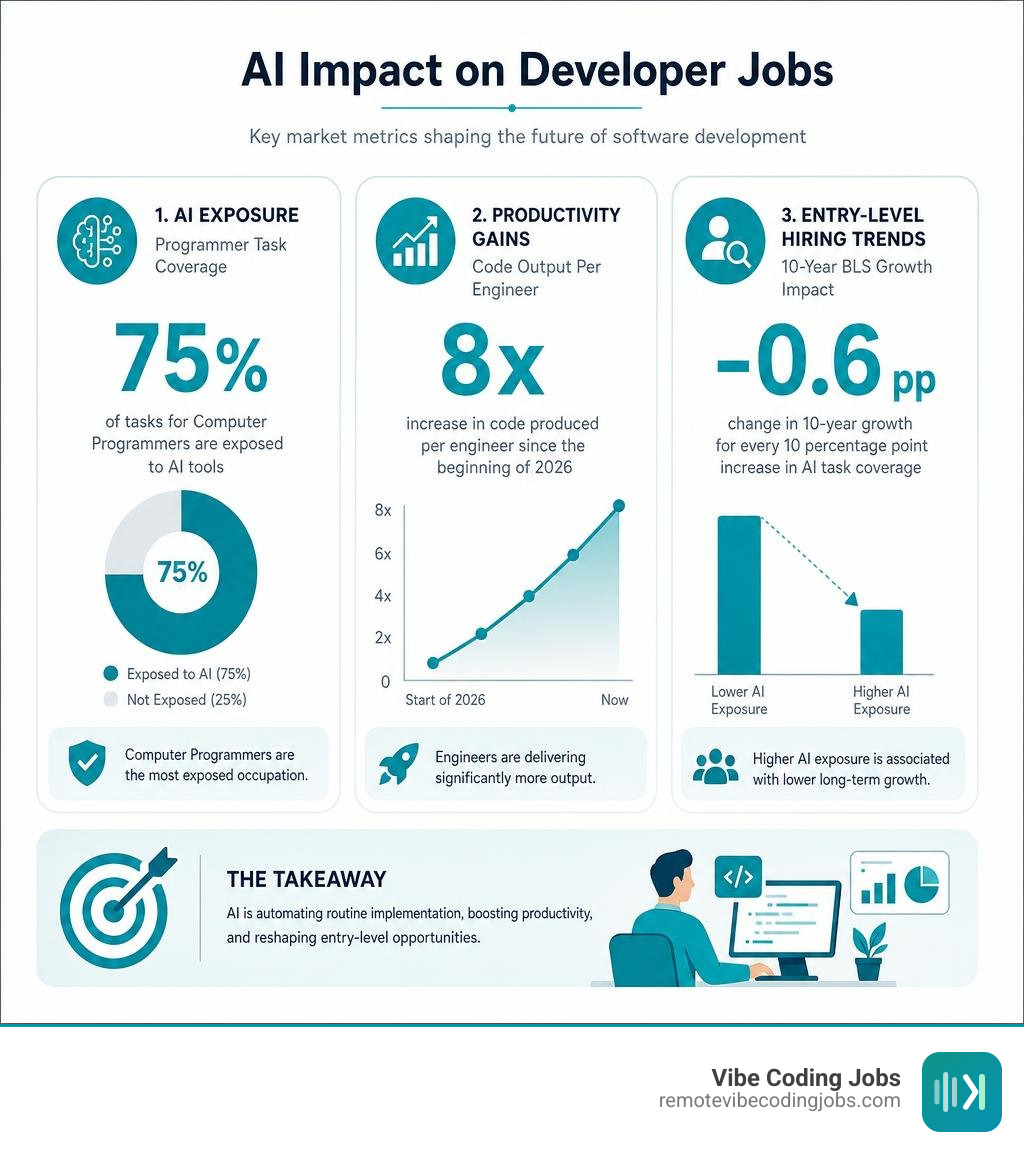
Historically, for every 10 percentage point increase in AI task coverage, an occupation’s 10-year BLS growth projection drops by 0.6 percentage points. Yet theoretical capability differs from real-world usage. Across the broader Computer & Math occupational category, Claude currently covers roughly 33% of daily tasks in real enterprise settings—a clear gap from its theoretical capability limit of 94%.
| Occupational Exposure Metric | Empirical Data Point | Strategic Workforce Implication |
|---|---|---|
| Programmer Task Coverage | 75% observed coverage | Routine implementation moves entirely to automated agents. |
| Output Acceleration | 8x increase per developer | Engineering output metrics shift from lines written to system yield. |
| High-Exposure Demographics | 17.4% graduate degree holders | Highly compensated, educated knowledge workers face the highest task exposure. |
| Young Worker Hiring Rate | 14% decrease since 2022 | Entry-level talent pipelines compress as routine junior tasks disappear. |
Furthermore, highly exposed roles carry high historical compensation: workers in top-quartile AI-exposed positions earn 47% more on average than unexposed workers. Graduate degree holders make up 17.4% of the high-exposure group compared to just 4.5% of unexposed occupations. To adapt to these changing performance bars, see our guide on the Best Claude Code for Remote Developers in 2026.
The Emergence of 100 Percent AI-Written Codebases
Inside forward-thinking engineering organizations, an estimated 80% to 90% of all production code is generated directly by Claude Code, with select teams reaching 100% AI-written codebases.
When code generation becomes fully automated, traditional Integrated Development Environments (IDEs) take a back seat to terminal agents, Slack integrations, and mobile interfaces. Engineers initiate complex features via command-line prompts, monitor background dynamic workflows, and evaluate automated pull requests generated directly by CLI subagents. Check out the official Claude Code product overview to see how terminal-native agentic search navigates complex codebases without manual file selection.
Empirical Labor Data: Job Displacement vs Workflow Transformation
The debate around claude code ai impact jobs often focuses on mass layoffs, but empirical workforce telemetry shows a more subtle reality: workflow transformation and role compression.

Rather than sudden organizational downsizing, team headcounts stabilize while individual capacity scales dramatically. Single generalist developers leveraged by AI agents now manage end-to-end features, data pipelines, and infrastructure tasks that previously required three times the headcount.
Managing Claude Code AI Impact Jobs for Early-Career Engineers
The most immediate disruption occurs at the entry level. Job-finding rates for young workers (aged 22 to 25) entering highly AI-exposed occupations dropped by about 0.5 percentage points—a 14% decline compared to 2022 baselines.
Because automated agents take over routine bug fixes, basic documentation, and CRUD boilerplate, companies are reducing junior hiring. This creates a career pipeline challenge: if entry-level roles disappear, how do junior workers gain the deep domain context needed to become senior architects?
According to the Anthropic Economic Index research, aggregate unemployment has not spiked, but role compression is reshaping early careers. To navigate this changing hiring landscape, check out our comprehensive AI-Assisted Development Career Guide.
Why Domain Expertise Now Outweighs Syntax Knowledge
Empirical analysis of roughly 400,000 interactive sessions reveals a striking human-AI division of labor:
- Planning Decisions: Humans retain ~70% of high-level architectural and requirement planning decisions.
- Execution Decisions: The AI agent makes ~80% of technical execution decisions, including writing syntax, modifying files, and running terminal commands.
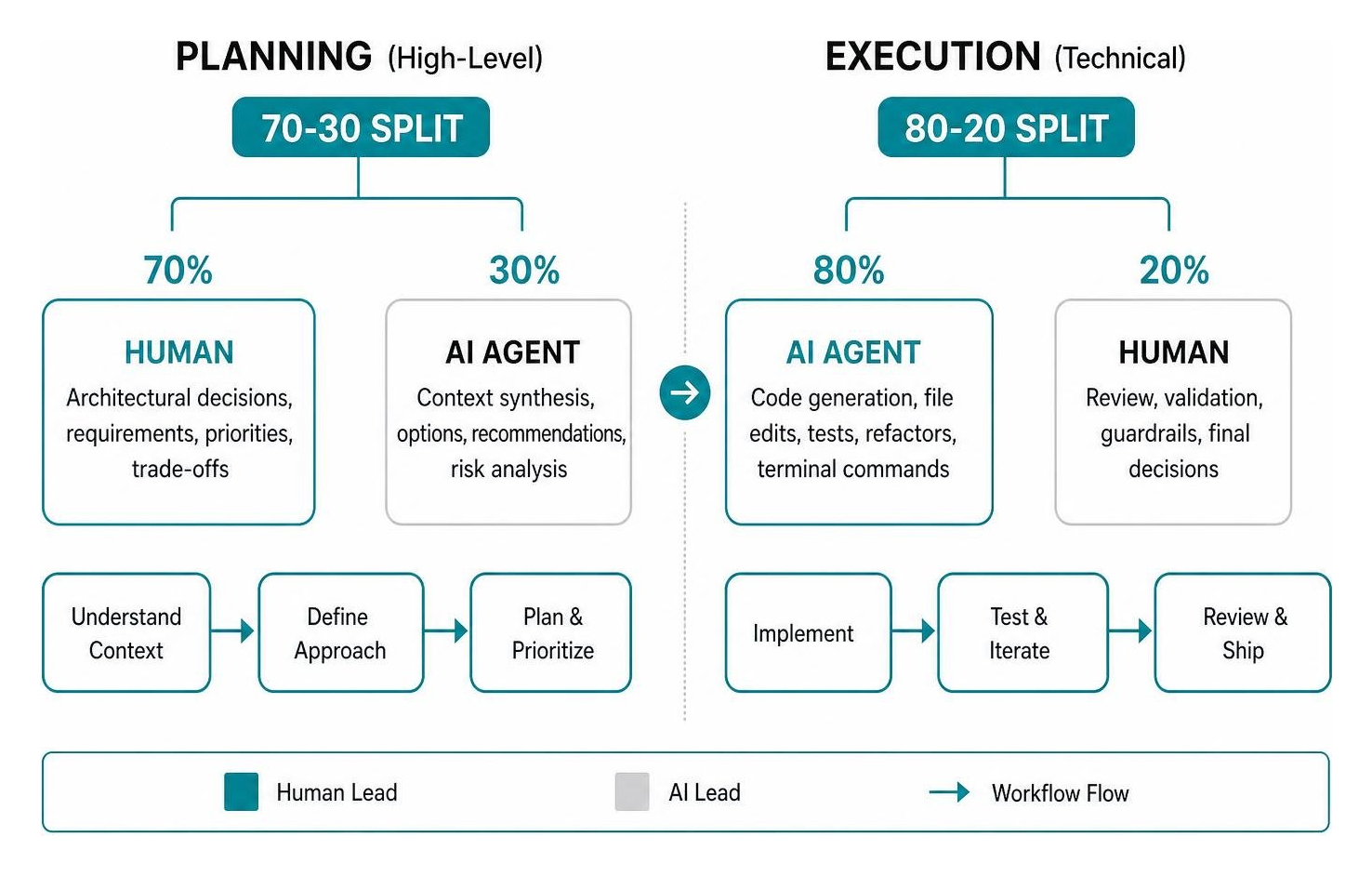
This split explains why domain expertise—understanding the business rules, security constraints, and customer needs—has become far more critical than memorizing language syntax. Non-software professionals (such as legal experts, accountants, and product managers) achieve code-producing success rates within 5 to 7 percentage points of seasoned software engineers when using Claude Code.
Expert users also act as action multipliers. Prompts from domain experts trigger twice as many autonomous actions (12 vs. 5) and generate over five times as much output per turn compared to novices. Detailed insights on this shift can be found in Anthropic’s research on agentic coding expertise and our comparative analysis of Vibe Coding vs Traditional Software Engineering.
The Economics of Agentic Coding: Token Budgets, ROI, and Code Migrations
When evaluating claude code ai impact jobs, business leaders face a choices on token economics: manage usage through strict per-token budgets, or measure returns through gross operational yield.

Consider real-world large-scale system refactoring. The Bun runtime migration from Zig to Rust using Claude Code consumed 5.9 billion uncached input tokens and 690 million output tokens, costing approximately $165,000 in API pricing. In under two weeks, over one million lines of code were ported with 100% test suite pass rates before merging.
Traditionally, a codebase migration of that scale would take multi-year engineering cycles and cost upwards of $3 million in salaries. Read Anthropic’s technical breakdown of large-scale code migrations to see how multi-agent loops turn multi-year technical risks into predictable, multi-week refactoring tasks.
Dynamic Workflows, Loops, and Test-Time Compute
Modern software orchestration relies on agentic loops and test-time compute. Test-time compute allows an AI model to run reasoning steps and self-correction loops before presenting its output to the user.
- Dynamic Workflows: Tasks are broken down across tens or hundreds of parallel subagents that write code, compile, run tests, and review each other’s work autonomously.
- Automated Permissioning: Features like “Auto Mode” solve prompt fatigue by evaluating tool execution safety automatically, allowing background tasks to run without constant manual pop-up confirmations.
- Continuous Integration Loops: Background subagents can continuously monitor integration test timing, identify build bottlenecks, and open optimized pull requests autonomously.
To master orchestrating these continuous subagent loops, review our operational guide on Multi-Agent Workflows.
Emerging Engineering Bottlenecks: System Design, Review, and Security
When generating code becomes virtually free, the primary constraints in software engineering shift upstream and downstream:

- Idea Generation and System Framing: Defining exact problem boundaries, data flow architectures, and business constraints before triggering agents.
- Adversarial Code Review: Establishing independent review subagents and automated mechanical referees (compilers, test harnesses) to evaluate AI pull requests.
- Security Auditing: Protecting codebases against instruction drift, prompt injection vulnerabilities, and subtle edge-case safety bugs.
- Context Management: Structuring workspace rulebooks (like
CLAUDE.mdfiles) to keep agent execution aligned with architectural standards.
As noted in coverage of Anthropic engineer warnings on workforce reshaping, the transition away from routine syntax implementation will require workers to adapt quickly as manual coding tasks are restructured.
Policy Frameworks and Societal Responses to Cognitive Automation
The rapid diffusion of agentic coding tools highlights broader workforce policy questions. Because AI automates routine cognitive tasks faster than traditional educational institutions adapt, multi-tiered responses are necessary:

- Early-Career Retraining Pipelines: Re-evaluating university computer science curricula to emphasize system architecture, security auditing, and agent orchestration over isolated syntax exercises.
- Institutional Knowledge Preservation: Setting up structured documentation standards so that lean, AI-leveraged engineering teams do not lose critical system context when staff turns over.
- Proactive Labor Market Measurement: Tracking real-time usage telemetry and entry-level hiring metrics—rather than relying solely on delayed unemployment data—to design targeted workforce transition policies.
Frequently Asked Questions About AI Coding Tools
Is Claude Code replacing human software engineers?
No, but it is dramatically altering what engineers do day-to-day. While routine syntax implementation is heavily automated (with Computer Programmers showing 75% observed task coverage), human developers remain vital for high-level architectural planning, system safety, trade-off decisions, and product vision.
How is AI-assisted development affecting entry-level hiring?
Entry-level hiring for young workers (ages 22–25) in highly exposed roles has slowed by about 14% compared to 2022. Companies are relying on smaller, higher-leverage teams composed of experienced developers or high-output generalists, making entry-level talent pipelines a key area for workplace adaptation.
Should companies manage AI development by token budgets or ROI?
Leading tech organizations evaluate AI tool usage through total ROI rather than strict token caps. Restricting token budgets to cut costs can limit high-value development gains, whereas open access to agentic workflows can deliver outsized returns in software delivery speed and product innovation.
Conclusion
The evolution of claude code ai impact jobs marks a major shift in software engineering. Manual syntax creation is increasingly handled by agentic loops, while true developer leverage now lies in domain expertise, system architecture, security oversight, and product direction.
At Vibe Coding Jobs, we help developers navigate this transition by connecting generalist builders with forward-thinking tech teams. Explore open opportunities on our AI Engineer Remote Jobs board to find high-leverage roles built for the modern AI development era.