The New Stack: Top Developer AI Tools Remote Teams Rely on in 2026
The software engineering landscape has shifted from basic inline suggestions to full autonomous agency. In 2026, remote engineering teams no longer spend hours writing boilerplate or chasing down routine integration bugs. Instead, developers supervise networks of specialized agents that draft, execute, and verify code across cloud environments. These developer AI tools remote teams rely on have become essential infrastructure for distributed engineering.
To choose the right solution for your stack, it helps to understand how these tools differ across their environment architecture, context capacities, and supported workflows:
| Tool | Core Environment Architecture | Context Window & Memory Management | Operating System & Sandbox Support | Primary Remote Use Case |
|---|---|---|---|---|
| Cursor | Native IDE & Cloud Agents | Full multi-model dynamic context | Cross-platform desktop, Web CLI, Remote Containers | Real-time pair programming and parallel branch tasks |
| Devin | Autonomous Cloud Environment | Frontier model dynamic memory | Cloud VMs (Linux, macOS, Windows) | End-to-end task automation and background PR delivery |
| NonBioS.ai | Dedicated Root Linux VM | Strategic Forgetting curated memory | Full Linux VM (4GB RAM, 2 vCPUs) | Full-stack scaffolding, hosting, and live debugging |
| Eric.Build | AI-Native Desktop IDE | Up to 200K tokens with 6-level compaction | Local OS with real PTY terminal and Cloud Tunnels | Deep multi-agent orchestration across legacy/modern code |
| Eva | Open-Source Self-Hosted Sandbox | Document-driven contextual session | Docker, Vite, Tailwind cloud execution sandbox | Automated pull requests and browser-verified testing |
| pre.dev | Long-Horizon Architecture Agent | Persistent multi-session memory | Cloud container runtime with 195+ API integrations | Structured roadmap planning and end-to-end builds |
Evaluating these choices means balancing immediate interactive assistance with long-term, unattended execution. Detailed breakdowns like our Cursor vs Windsurf Comparison highlight how interactive IDEs stack up against adjacent tools. Let us explore the two main categories defining remote development today.
Autonomous Cloud Engineers: Devin, NonBioS, and Eva
Autonomous cloud engineers operate independently inside their own cloud computing environments rather than living merely as plugins inside an editor.
Meet Devin, your team’s autonomous software engineer, an agent designed to tackle engineering tasks from start to finish. When assigned an issue, Devin spins up on-demand virtual machines across Linux, macOS, or Windows. It runs its own browser, navigates local servers, troubleshoots failed builds, and creates complete pull requests. Because it runs independently in the cloud, Devin keeps working even after you close your laptop at the end of your day.
Taking a system-level approach, NonBioS.ai – The AI Software Dev provides each agent with a dedicated Linux machine featuring full root access, 4GB of RAM, and 2 vCPUs. This configuration comfortably handles thousands of concurrent users for typical SaaS applications. NonBioS uses a proprietary technique called Strategic Forgetting to prune irrelevant conversational noise while keeping critical architectural constraints intact over long sessions.
For engineering teams seeking total control and open-source transparency, Eva – Your New Coworker provides a self-hosted platform under the MIT license. Eva connects to cloud sandboxes with Docker and real browser drivers, where snapshot builds complete in approximately six minutes. Remote developers can use Eva for live interactive pair programming or schedule background cron routines to run nightly test audits and validation sweeps.
AI-Native IDEs and Orchestrators: Cursor, Eric.Build, and pre.dev
While autonomous agents excel at independent tasks, AI-native IDEs keep human developers at the center of , interactive feature creation.
AI Coding Agent for Building Ambitious Software | Cursor remains a central pillar of modern development workflows, trusted by over half of the Fortune 500 to accelerate engineering safely at scale. Cursor features a Mission Control interface that lets engineers track fleets of parallel AI tasks across multiple repositories, switching between frontier models like GPT-5.6 or Gemini 3.1 Pro depending on the task.
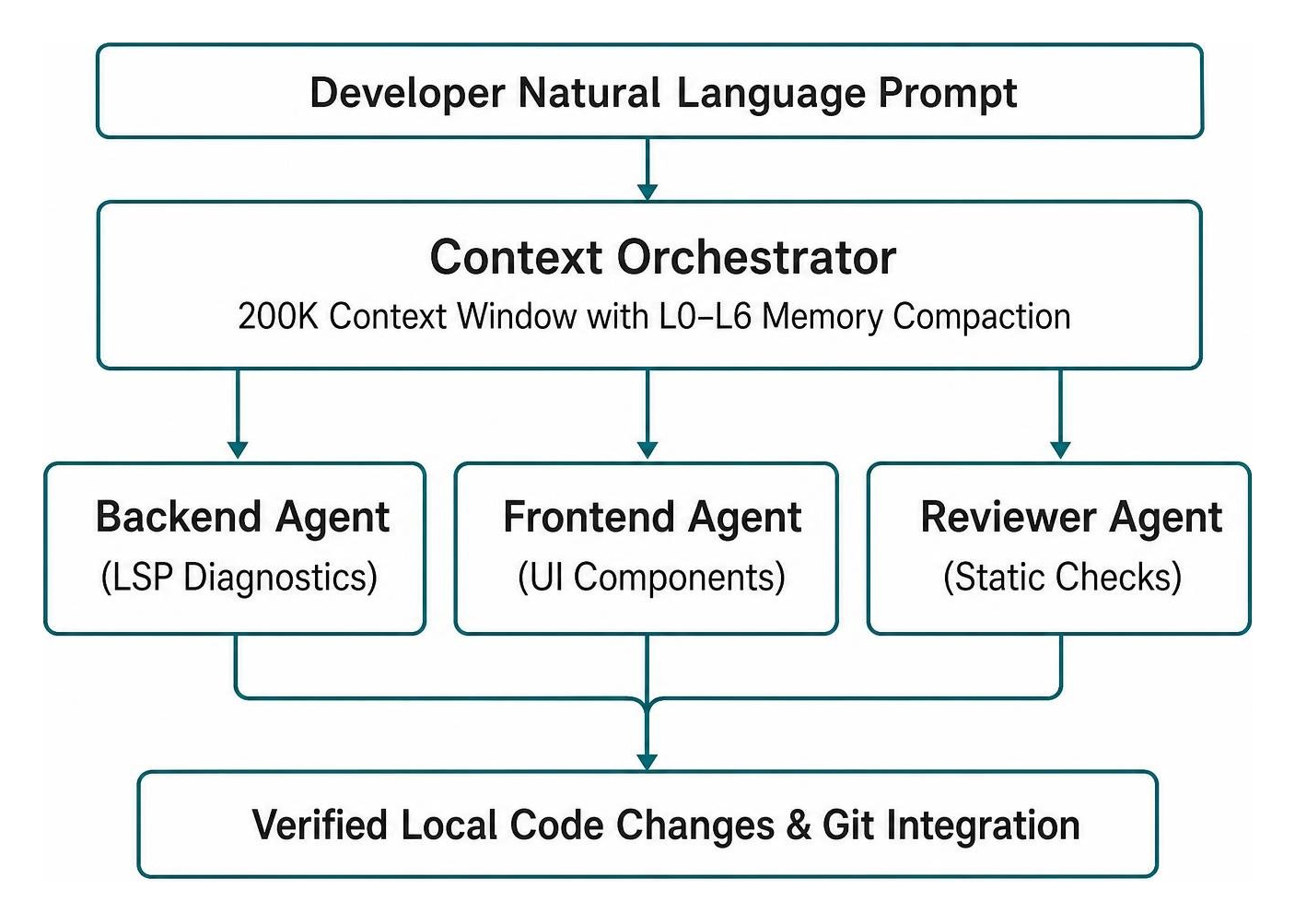
Eric.Build — AI-Native Development Environment focuses on deep context and parallel execution. It includes over 50 built-in AI tools, supports 8+ languages via native Language Server Protocol (LSP) integrations, and provides a 200K token context window. To avoid performance drops over long coding sessions, Eric.Build uses a 6-level memory compaction system (L0–L6) that gradually summarizes older context rather than discarding it abruptly.
Similarly, One agent, from coding to beyond acts as a long-horizon planner. It structures roadmaps and verifies architectural specs before touching code, connecting natively to 25 services across 9 categories and 195 API providers to ensure backend and frontend consistency.
Integrating AI Coding Agents into Async and Version Control Workflows
For distributed engineering teams, integrating AI tools smoothly into version control systems is essential. Exploring remote developer AI tools: stack integration and benefits shows that raw code generation only adds value when it respects branching strategies, passes continuous integration gates, and documents architectural decisions.
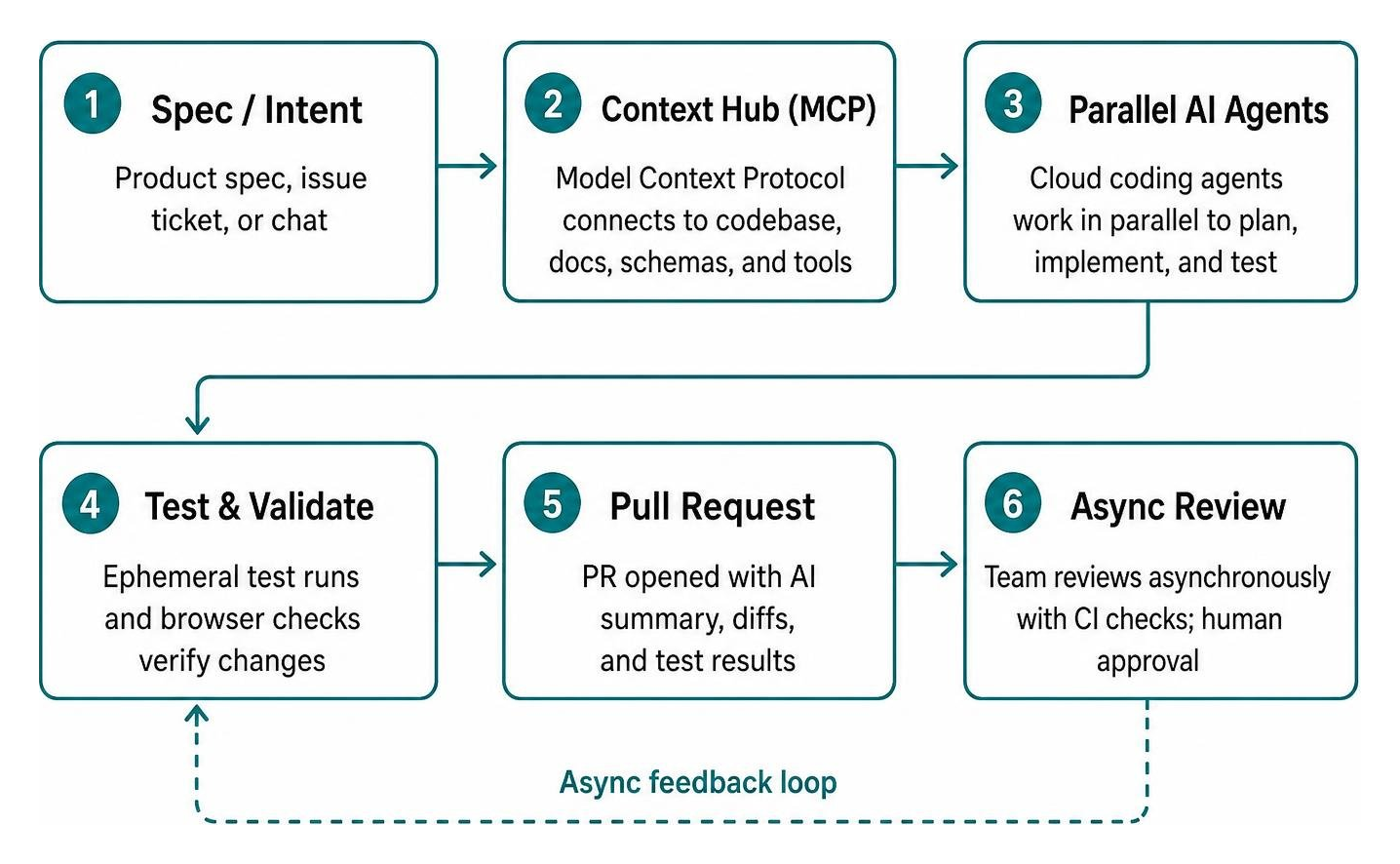
Modern agents integrate directly with GitHub, GitLab, and enterprise CI/CD systems using the Model Context Protocol (MCP). MCP provides a standardized JSON-RPC interface that lets AI agents query external databases, check production schemas, and trigger staging builds securely. To see how these tools fit into modern development environments, review the curated list of Awesome AI-Powered Developer Tools.
Core Capabilities of Developer AI Tools Remote Engineers Use Daily
Modern developer environments have evolved beyond basic code completion into comprehensive engineering platforms. The everyday tools used by remote teams now handle several critical tasks:
- Live LSP Code Diagnostics: Agents use Language Server Protocol engines to catch type errors, broken references, and syntax issues as they generate code.
- Automated Test Generation: Tools generate full unit and integration test suites for new modules, verifying edge cases before opening a pull request.
- Complex Multi-File Refactoring: Agents coordinate changes across database schemas, backend APIs, and frontend state management in a single pass.
- Database Migrations: Tools generate SQL and ORM schema migrations alongside rollback scripts, testing them automatically against temporary database instances.
- Legacy Code Modernization: Agents systematically analyze legacy frameworks, updating deprecated patterns to modern standards while maintaining original business logic.
Mastering these features is central to modern vibe coding workflows. To optimize your development setup, look into practical guides on AI coding tools for vibe coding along with our collection of must-have AI tools for vibe coding.
Async Collaboration and Team Handoffs
Asynchronous communication is the bedrock of productive distributed teams. AI tools act as automated bridges across different time zones.
When an engineer in London finishes their day, they can tag an autonomous agent on an open issue in Slack or Microsoft Teams. While the human team rests, the agent reviews the task, creates an isolated development branch, writes the code, runs the test suite, and opens a pull request.
When engineers in San Francisco begin their morning, they find a well-documented PR waiting for review. The submission includes clear summaries, interactive browser recordings, and test logs. For an in-depth perspective on modern distributed workflows, read our 2026 guide comparing remote work tools for developers.
Code Quality, Security, and Enterprise Governance
Integrating autonomous agents into production codebases requires clear safeguards. Remote engineering teams must ensure that AI-generated code meets strict security standards without exposing proprietary company intellectual property.
Infrastructure platforms like Coder | Enterprise AI Development Infrastructure & Governance help organizations define secure, containerized workspaces. These environments isolate agent execution from internal networks while applying automated static analysis and OWASP Top 10 vulnerability checks to every change before it reaches human review.
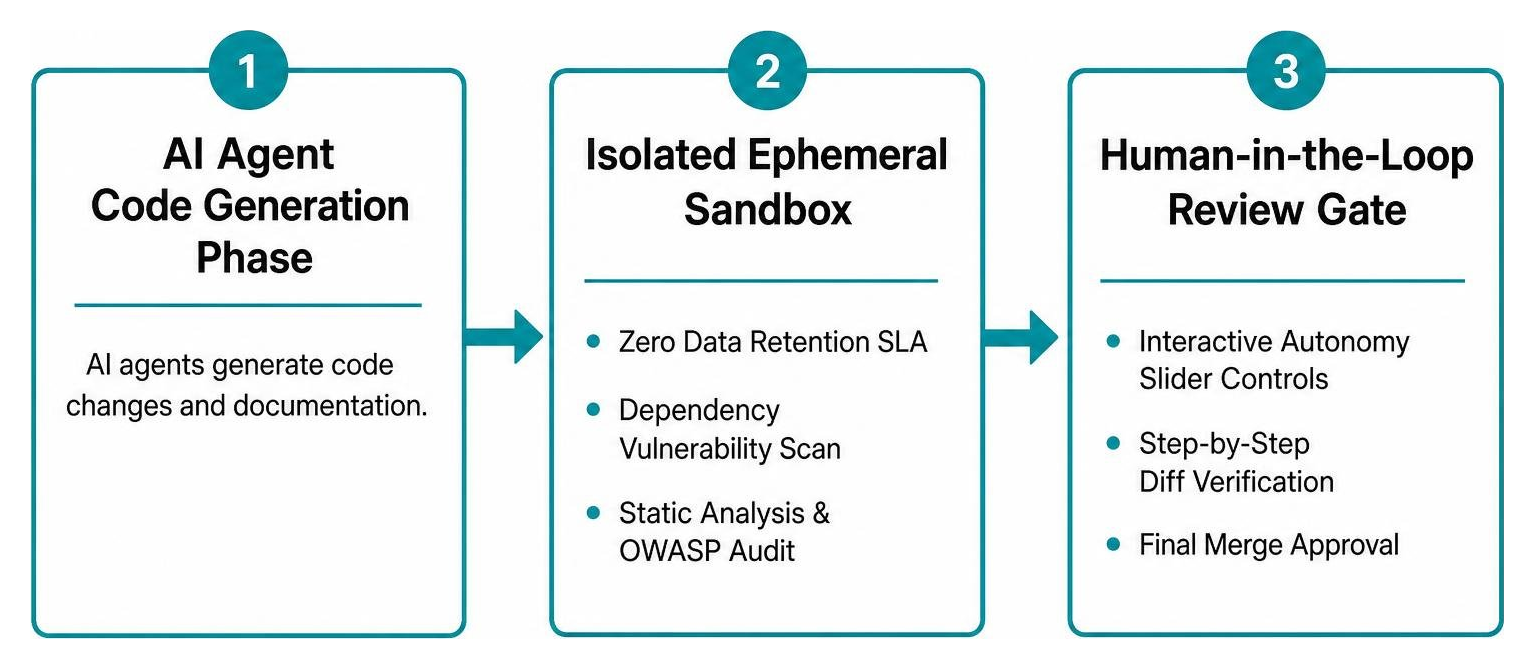
Security and Compliance for Developer AI Tools Remote Deployments
When deploying developer AI tools across remote environments, enterprise security teams focus on four foundational requirements:
- Zero Data Retention Policies: Commercial AI providers must offer binding agreements ensuring proprietary source code is never stored or used to train public foundation models.
- Network Isolation and VPC Sandboxing: Autonomous agent tasks must run in single-tenant, ephemeral virtual environments without unauthorized access to internal corporate networks.
- Identity and Access Governance: Tool access must integrate with enterprise single sign-on (SSO), SCIM provisioning, and role-based access controls (RBAC) backed by comprehensive audit logging.
- IP Protection and Ownership: Contracts must state clearly that all generated code, architectural plans, and test artifacts remain the sole intellectual property of your organization.
Teams building custom workflows can explore our guide to an AI-powered arsenal of vibe coding tools to learn how to keep distributed stacks secure and compliant.
Balancing Autonomy and Human Verification
Giving an AI assistant full autonomy does not mean giving up developer control. Modern tools use configurable autonomy settings, letting engineers adjust how independently the agent operates based on the complexity of the task:
- Interactive Assist Mode: The tool acts as an inline pair programmer, presenting diffs for immediate review and approval.
- Supervised Task Mode: The agent plans multi-file changes and executes terminal commands, pausing for explicit human confirmation before making permanent edits.
- Autonomous Agent Mode: The agent independently writes code, executes local tests, debugs errors, and submits a final pull request for asynchronous human review.
To see how these interactive models work in production, check our comparison of vibe coder tools like Copilot and Cursor.
Pricing Models, Token Economics, and Productivity ROI
Evaluating developer AI tools requires looking closely at pricing structures, inference costs, and measurable productivity gains.
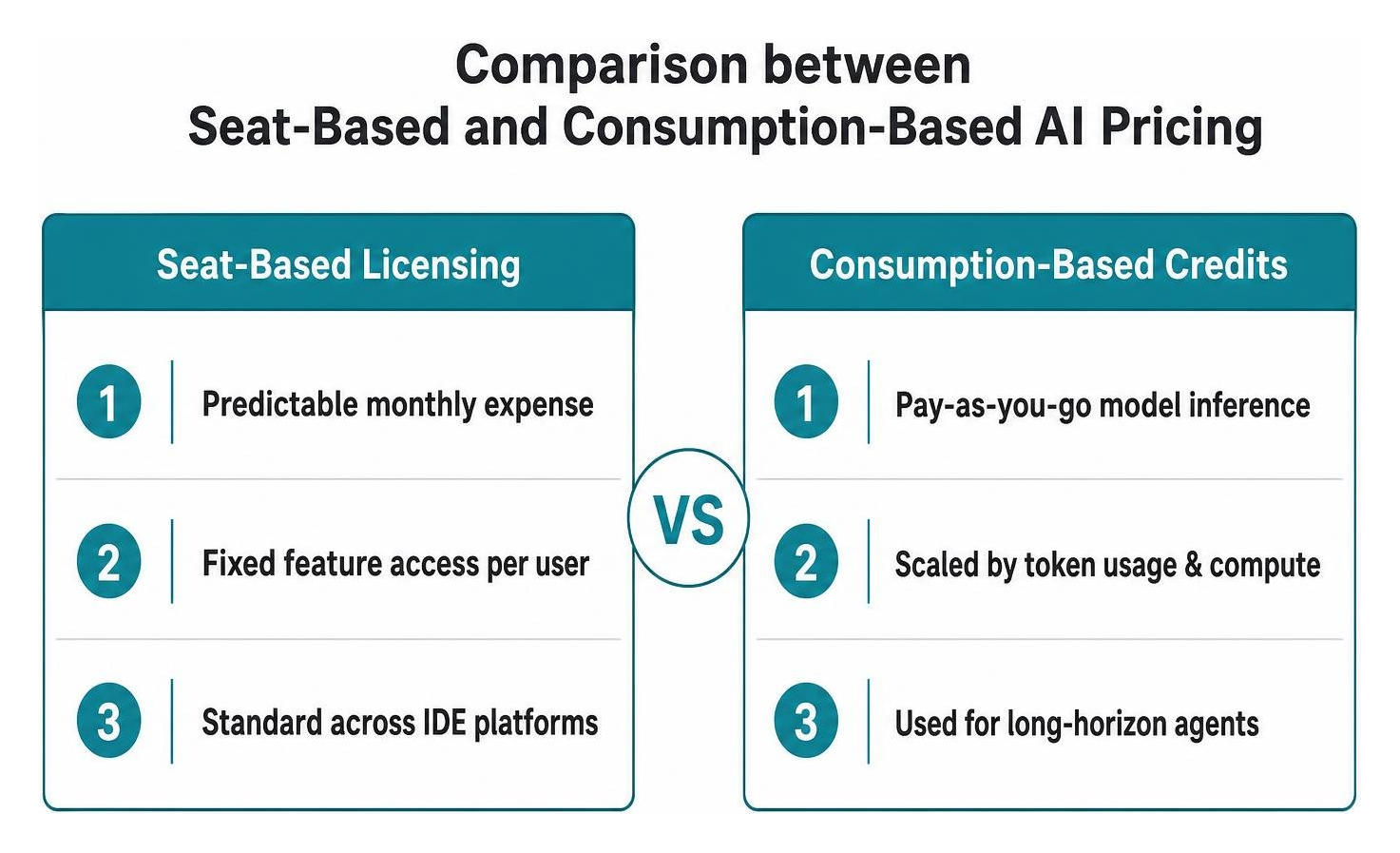
Frontier AI models continue to become more cost-effective. Devin delivers up to 40% greater cost efficiency, giving teams access to top-tier reasoning capabilities for up to 60% less compute spend. In parallel, prompt-caching techniques in environments like Eric.Build offer up to 10x savings on repeated context queries during long debugging sessions.
For most engineering teams, the return on investment comes from automating routine maintenance. Offloading tasks like library updates, bug triage, and test creation to AI agents frees senior engineers to spend more time on high-impact product architecture and customer problems. For insights into how these economics are reshaping tech hiring, read our analysis of remote AI developer jobs and AI tools.
Frequently Asked Questions about Remote Developer AI Tools
What engineering tasks still require human intervention?
While autonomous agents handle boilerplate generation, testing, and targeted bug fixes, humans remain essential for:
- Evaluating broad system architecture trade-offs
- Interpreting complex business and domain requirements
- Reviewing high-stakes security and financial logic
- Making final decisions on pull request merges
How do autonomous AI developer tools protect proprietary source code?
Leading tools protect proprietary code through zero-data-retention enterprise agreements, single-tenant ephemeral virtual machines, and robust access controls like SSO, SCIM, and audit logging. Teams with strict compliance needs can also run self-hosted, open-source agents inside their own private VPCs.
What is the typical learning curve when adopting AI-native IDEs?
Because most AI-native IDEs are built on the familiar VS Code ecosystem, developers can get started right away using their existing extensions and keybindings. The main adjustment is learning how to write clear, structured prompts, frame tasks effectively with context files, and review automated multi-file diffs efficiently.
Conclusion
The rise of autonomous coding agents is transforming remote software engineering. By handing off routine implementation, automated testing, and initial bug triage to intelligent tools, distributed teams can ship better software faster without burning out.
As autonomous agents continue to evolve, the most successful developers will be those who master these tools to amplify their own engineering reach. If you want to build at the forefront of this shift, explore curated remote vibe coding and AI developer roles at forward-thinking, async-first companies today.