
AWS and React: The Power Couple of Remote Engineering
The Evolving Role of the Remote React AWS Engineer in 2026
The landscape for a remote react aws engineer has shifted dramatically over the last few years. In 2026, the “manual grind” of traditional software development is being replaced by high-velocity, cloud-native strategies. Companies no longer just want someone who can build a UI; they want engineers who understand the financial and operational impact of their architectural choices. This means moving beyond simple component creation and into the realm of full-stack ownership where the frontend and backend are inextricably linked through cloud services.
One of the most significant shifts we’ve seen is the move toward “scale-to-zero” economics. By leveraging AWS serverless technologies, companies are achieving staggering cost reductions. Research shows that migrating from traditional, always-on infrastructure to an AWS serverless stack can result in a 92% reduction in monthly costs, sometimes dropping from $150/mo to as little as $12/mo. For a remote-first startup, this isn’t just a technical win; it’s a massive business advantage that allows for longer runways and more aggressive experimentation. This economic model is a cornerstone of modern engineering, as it aligns technical performance directly with business sustainability.
Furthermore, the rise of Vibe Coding has changed how we define productivity. Vibe coding isn’t about being “lazy”; it’s about prioritizing high-level logic and architecture over manual syntax. By using AI-native workflows with tools like Cursor and Claude, a modern remote react aws engineer can ship 10+ production experiments monthly, bypassing the traditional development queues that used to slow down innovation. This shift allows engineers to focus on the “intent” of the software rather than the boilerplate, effectively turning developers into system architects who direct AI to handle the implementation details.
In this environment, Async First culture is the gold standard. Senior engineers are now expected to exhibit “architectural leadership,” similar to the expertise shown by Philip Damra, where the focus is on event-driven microservices that handle peak loads without breaking a sweat. Whether you are building a React frontend or orchestrating a complex backend, the goal in 2026 is high-velocity shipping with minimal overhead. The modern engineer is a polyglot of sorts, fluent in both the visual language of the user and the invisible language of the cloud.
Essential Tech Stack and Skills for Senior Cloud Developers
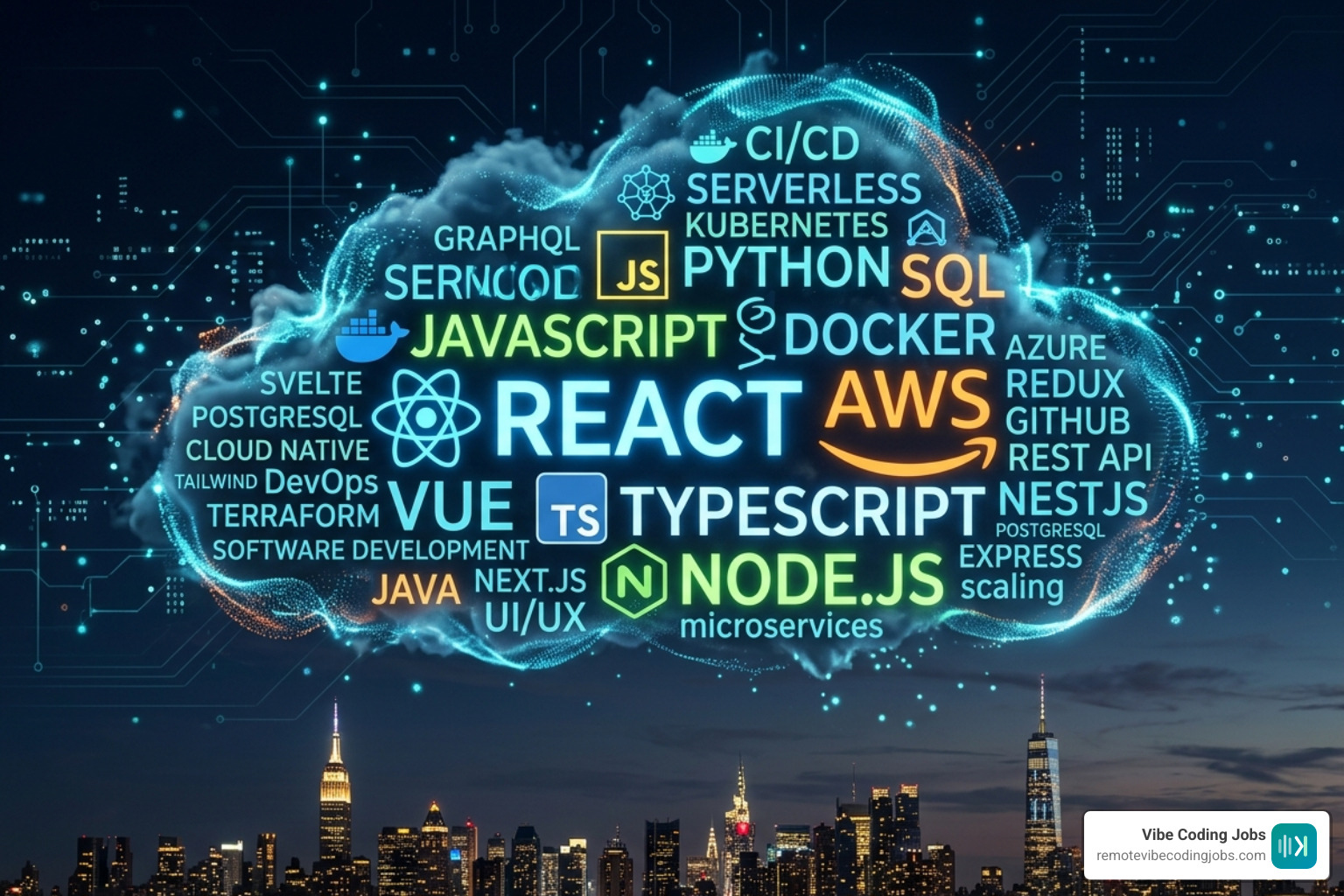
To succeed as a remote react aws engineer, your toolbox needs to be both deep and wide. It starts with a mastery of Aws, but specifically the serverless ecosystem. Employers are hunting for developers who can seamlessly integrate AWS Lambda, API Gateway, and DynamoDB into their React Developer workflows. This integration is what separates a standard frontend developer from a cloud-native engineer who can build truly scalable applications.
The Power of Serverless and SSR
Performance is a feature, not an afterthought. We’ve seen that optimizing auto-scaling triggers on AWS Elastic Beanstalk can reduce median response times by 79% during high traffic spikes. Additionally, implementing programmatic SEO with Next.js Server-Side Rendering (SSR) can lead to a 173% increase in organic keywords—a metric that Josiah Hawkins has successfully demonstrated in real-world projects. By moving logic to the edge and utilizing AWS CloudFront, engineers can ensure that users across the globe experience near-instant load times, regardless of their physical distance from the origin server.
Infrastructure as Code (IaC)
In 2026, manually clicking buttons in the AWS Console is a red flag. Senior roles require proficiency in Terraform or the AWS CDK (Cloud Development Kit). Modernizing deployment practices with these tools contributes to a 40% increase in transaction speeds for clients by ensuring environments are consistent and reproducible. IaC allows teams to treat their infrastructure with the same rigor as their application code, including version control, peer reviews, and automated testing. This reduces the risk of “configuration drift” and ensures that the production environment is a perfect mirror of the staging setup.
Quality and Collaboration
- Test Coverage: Standard industry benchmarks for robust React applications now include achieving 80%+ test coverage using tools like React Testing Library and Jest. This ensures that as the codebase grows, regressions are caught early.
- Open Source: Active Open Source contributions are a major signal of high-level competence. It shows you can work within a community and adhere to high standards of code quality.
- Global Mindset: Being Global Friendly means you can collaborate across time zones (from the US to Nepal or India) using async documentation and clear communication. This is essential for the modern remote landscape where talent is distributed worldwide.
Mastering the Remote React AWS Engineer Tech Stack
The backend of a React application is just as important as the components. Most high-paying roles require Node.js expertise, often using modular Express.js or NestJS frameworks. By using TypeScript, engineers can reduce duplicate code by 30%, making the codebase more maintainable and less prone to runtime errors. TypeScript’s static typing acts as a form of documentation that evolves with the code, which is invaluable in large, complex projects.
GraphQL and AWS AppSync are also becoming staples for data-heavy applications. This tech stack allows for real-time updates and efficient data fetching, which is a specialty for engineers like Amit Gaddi. We also see a trend toward “BFF” (Backend for Frontend) architectures using TanStack Query to manage server state. This No Bs engineering approach focuses on what works: event-driven microservices, robust CI/CD pipelines, and zero-downtime releases. By decoupling the frontend’s data needs from the core backend services, teams can iterate faster and provide a more tailored user experience.
Market Trends: Salaries and Remote Opportunities
The market for a remote react aws engineer in May 2026 is incredibly lucrative. Companies are moving away from generalist “web developers” and toward specialized cloud engineers who can own the full lifecycle of a feature. This specialization is driven by the increasing complexity of cloud ecosystems and the need for developers who can navigate both the frontend and the underlying infrastructure.
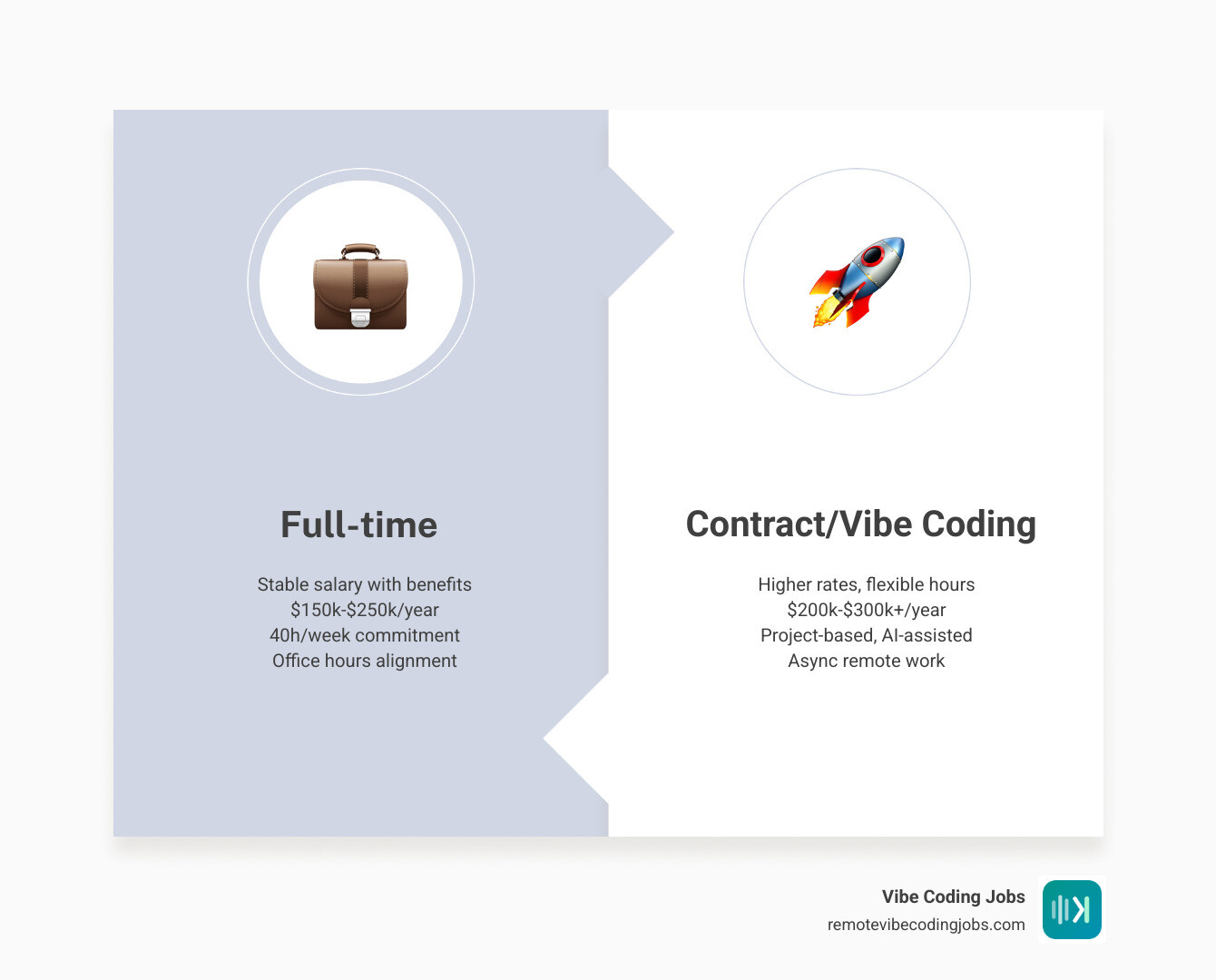
Current data shows that senior-level remote roles for AI-native and platform engineering can command salaries as high as $300,000 per year. Even entry-level “vibe coding” roles—those focused on AI-assisted development—are starting between $60,000 and $90,000. The gap between these tiers is often defined by an engineer’s ability to manage complexity and their proficiency with cloud-native tools that drive business value.
You can find a curated list of these Remote React Jobs (May 2026) on our platform. The trend is clear: there is a massive High demand for AWS-specialized frontend talent. Companies like Amazon often have over 1,000 open React-related roles at any given time, many of which are now fully remote or hybrid-flexible. This demand is not just limited to big tech; startups and mid-sized firms are also aggressively hiring for these roles to build their next-generation platforms.
How to Stand Out as a Remote React AWS Engineer
To land these top-tier roles, your portfolio needs to scream “impact.” It’s not enough to say you know React; you need to show what that knowledge did for a business. Look at Samuel Ramirez’s project impacts as a blueprint: he documents building services for 1M+ users and achieving 80%+ test coverage. Demonstrating that you can handle scale and maintain quality is the fastest way to build trust with potential employers.
Key ways to stand out:
- AI Tool Proficiency: Mention your experience with Cursor, Claude, and v0. Show that you can ship faster than a traditional dev by leveraging these tools for boilerplate and debugging.
- Portfolio Metrics: Use hard numbers. Did you save a company $11,000 by migrating to Lambda? Did you reduce build times by 50%? Put those metrics front and center on your resume.
- Vibe Coding: Embrace the Vibe Coding movement. Show that you are an “AI Pilot” who can direct complex systems rather than just a “code typist.” This means focusing on architecture and system design.
- Build in Public: Share your AWS architecture diagrams and GitHub contributions to show you understand cloud-native problem solving. Transparency in your process demonstrates confidence and expertise.
Frequently Asked Questions about Remote React AWS Roles

What are the typical responsibilities of a remote react aws engineer?
Your day-to-day usually involves more than just coding. You’ll be designing reusable React components, orchestrating serverless functions, and ensuring API integrations are secure and efficient. You might also be tasked with “programmatic SEO” implementation or optimizing infrastructure to achieve that coveted 79% response time improvement during traffic spikes. Security compliance (like HIPAA or SOC2) is also a common responsibility for senior roles, requiring a deep understanding of AWS Identity and Access Management (IAM) and data encryption practices.
Which AWS certifications are most valuable for React engineers?
While experience is king, certifications provide a standardized proof of knowledge that can help you bypass initial screening filters. The AWS Certified Developer – Associate is the baseline for anyone working in this space. For those aiming for lead or architect roles, the AWS Certified DevOps Engineer – Professional is highly respected and demonstrates a mastery of automation and scaling. If you are just starting your cloud journey, the Cloud Practitioner or Solutions Architect tracks are excellent starting points to build a broad understanding of the AWS ecosystem.
How does AI-assisted development impact remote engineering productivity?
It’s a game-changer for the modern remote react aws engineer. AI-native workflows allow engineers to focus on the “vibe”—the intent and architecture—while the AI handles the boilerplate, syntax, and repetitive tasks. This allows for 10+ production experiments monthly, a pace that was previously impossible for small teams. Tools like Cursor and Claude aren’t replacing engineers; they are acting as a multiplier for their skills. As we often say, it’s not “AI vs. Humans,” it’s “Humans with AI vs. Humans without AI.” By mastering prompt engineering and AI orchestration, developers can spend more time solving unique business problems and less time fighting with configuration files.
Conclusion
The path from a React developer to a remote react aws engineer is one of the most rewarding career progressions in tech. Moving from Senior to Lead and eventually to Architect requires a deep understanding of how frontend code interacts with cloud infrastructure.
If you’re ready to take the next step, check out our Remote React Developer Jobs Your Ultimate 2026 Guide for a deeper dive into the industry. At Vibe Coding Jobs, we are dedicated to helping you find roles at companies that actually “get it”—companies that value async work, AI tools, and high-impact engineering.
Ready to find your next challenge? Apply for Remote React Developer Jobs today and join the ranks of engineers building the future of the cloud.