
AI Software Developer: The Career Path of the Future
The AI Software Developer: Most In-Demand Career of 2026
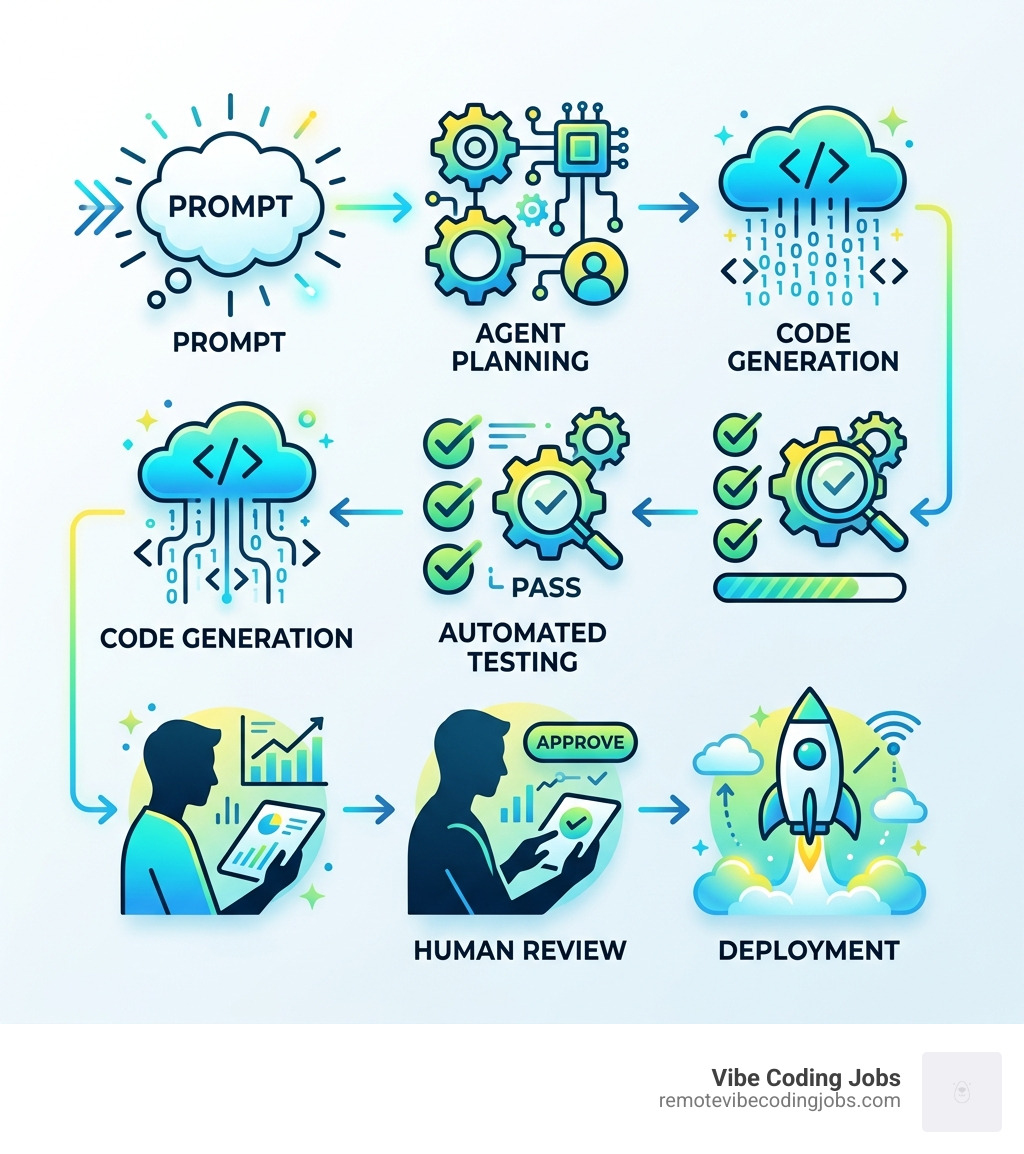
An ai software developer is a software professional who builds, integrates, and orchestrates AI systems — shifting focus from writing code line-by-line to directing autonomous agents, designing system architecture, and ensuring AI-generated output meets real-world business needs.
Here’s a quick snapshot of what defines this role in 2026:
| Area | What It Means for AI Software Developers |
|---|---|
| Core focus | Orchestrating AI agents, system design, prompt engineering |
| Key tools | Cursor, Claude Code, Codex, Devin, GitHub Copilot |
| Top language | Python (plus PyTorch, TensorFlow, RAG frameworks) |
| Median salary (US) | $148,000 total compensation |
| Job growth | 15% projected through 2034 (BLS) |
| Market size | $390B in 2025, projected to reach $3.5T by 2033 |
The profession is changing fast. Some senior engineers now report that 100% of their committed code is AI-written — with their own energy going toward architecture decisions, product thinking, and reviewing pull requests rather than typing syntax.
This isn’t a distant prediction. It’s already happening at scale. A major digital bank, for example, used an AI software engineer to refactor a 6-million-line codebase, achieving an 8x gain in engineering efficiency and 20x cost savings — completing in weeks what would have taken years manually.
The role is also spawning new job titles: Agentic Engineer, AI Pilot, Vibe Coder. Each one signals the same shift — from developer as code typist to developer as technical director of intelligent systems.
This guide covers everything you need to know: what the role actually involves, which skills matter, how to break in, and where the job market is headed.
Written by RVCJ Editorial, the team behind Remote Vibe Coding Jobs, which covers AI-assisted development, remote work trends, and career guidance for engineers building with tools like Cursor, Claude, and Copilot — including the fast-growing niche of the ai software developer. We track these trends daily so you don’t have to.
Defining the AI Software Developer Role
In May 2026, the term “software engineering” is undergoing a massive refactoring. For decades, being a developer meant being a syntax specialist—someone who spent hours debugging semicolons and memory leaks. Today, an ai software developer is more of a high-level architect.
When we talk about this role, we aren’t just talking about someone who uses ChatGPT to write a function. We are talking about a professional who manages “fleets” of agents to handle repository-wide migrations, feature builds, and system maintenance. According to AI Coding Jobs Market Trends, the value of technical expertise hasn’t declined; it has simply shifted upward.
The focus is now on product-mindedness. Since AI can now “one-shot” many coding tasks, the developer’s job is to ensure that what is being built actually solves a user problem. As explored in When AI writes almost all code, what happens to software …, the “cadence of typing” is being replaced by the thrill of high-level creation.
Distinguishing AI Engineering from Traditional Development
To understand the ai software developer, we have to look at how they differ from the traditional software engineer:
- Manual Coding vs. Orchestration: Traditional engineers write logic line-by-line. AI developers use tools like Cursor to index their entire codebase and direct agents to perform complex refactors.
- Syntax vs. System Design: While a traditional dev might spend a day implementing a specific data structure, an AI developer spends that time designing how multiple microservices will interact, letting the AI handle the boilerplate.
- The Abstraction Layer: We are moving toward a “programmable layer of abstraction.” Instead of worrying about specific library versions, we focus on “agent orchestration”—managing how different AI models (like GPT-5.2 or Claude Opus 4.5) collaborate on a project.
Essential Skills and Tools for the Modern AI Software Developer
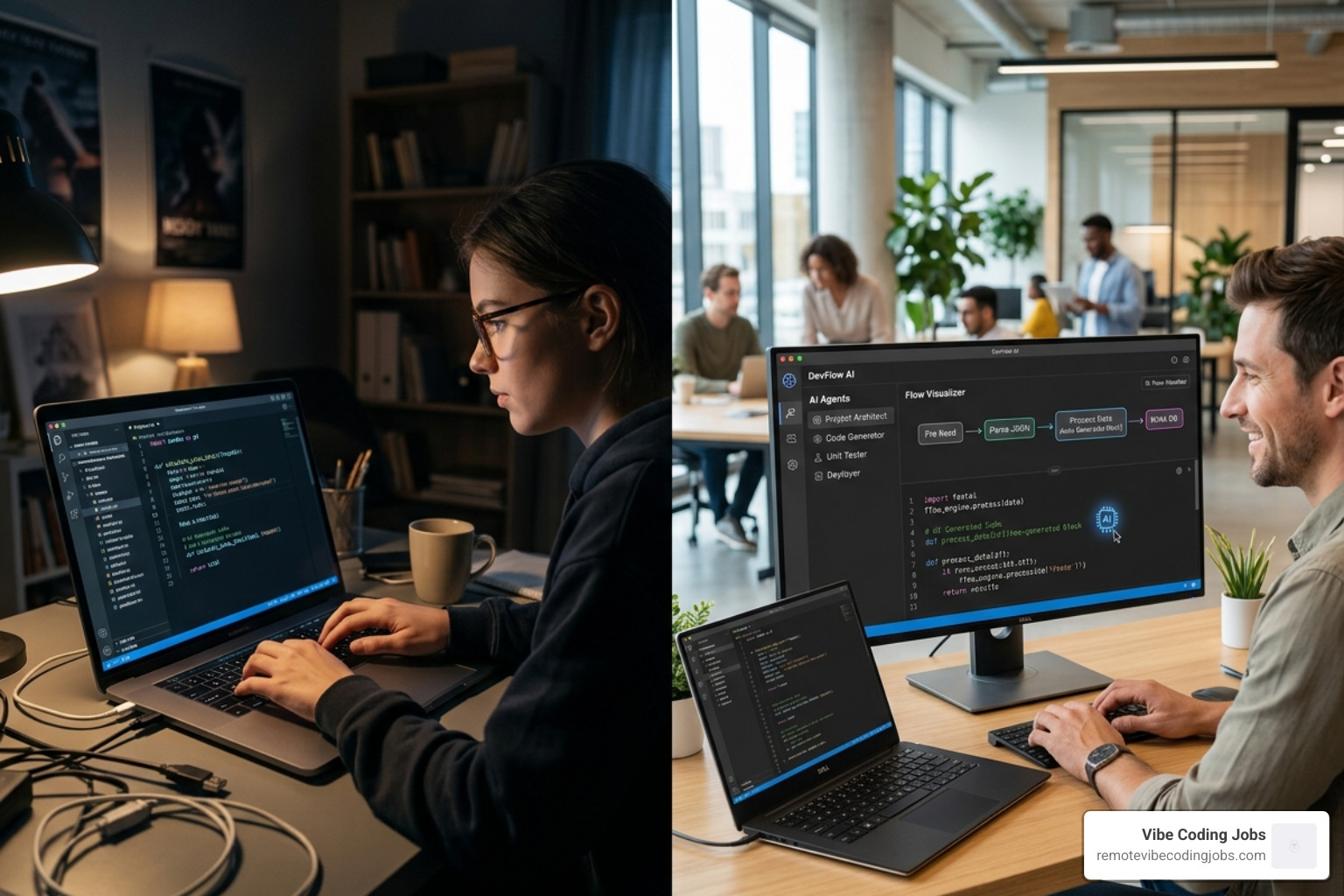
If you want to thrive as an ai software developer, you need a blend of “old school” logic and “new school” AI fluency. It’s no longer enough to just know React or Node.js. You need to understand how to feed context to an LLM so it doesn’t hallucinate your entire backend.
Key skills we see in high demand include:
- RAG Systems (Retrieval-Augmented Generation): Knowing how to connect an AI model to your company’s private data.
- MLOps: Managing the lifecycle of machine learning models in production.
- Vector Databases: Understanding how to store and retrieve data for AI context.
For a deeper dive into how these skills translate to career moves, check out our guide on AI Assisted Development Career Growth Jobs.
The AI Software Developer Tech Stack
The tools of the trade have evolved from simple text editors to autonomous platforms. Here are the heavy hitters in 2026:
- Cursor: The best way to code with AI: An AI-native IDE that understands your entire codebase. It’s the current gold standard for “vibe coding.”
- Codex | AI Coding Partner from OpenAI: An agentic partner that completes tasks end-to-end, from routine PRs to complex migrations.
- Devin | The AI Software Engineer: An autonomous agent that can plan, execute, and debug entire engineering projects with minimal human intervention.
- Lunabase.ai: AI Software Development Tool Powered by 6 Copilots: A platform that uses multiple specialized agents (Architect, QA, DevOps) to ship 10x faster.
- Blitzy: AI-Powered Autonomous Software Development Platform: An enterprise-grade OS for autonomous development that can ingest 100M+ lines of code.
Core Programming and AI Frameworks
While AI writes the code, you still need to understand the foundations to verify it. Python remains the king of the ai software developer stack due to its massive ecosystem of libraries like PyTorch and TensorFlow.
However, we are also seeing a return to basics. Discrete mathematics and statistics are essential for understanding how models actually function. You don’t need a PhD, but you do need to know why a model might be failing. Furthermore, mastering Cursor vs Copilot Developer Jobs Remote requirements often means being a “language polyglot”—since AI can unblock you in any language, your ability to jump between Python, Java, and Rust becomes a major superpower.
Real-World Impact: From Nubank to Autonomous Agents
The impact of the ai software developer isn’t just theoretical. The case study of Nubank, a digital banking giant, has become the “North Star” for the industry. They faced a daunting task: refactoring a 6-million-line ETL monolith.
By employing Devin | The AI Software Engineer, they achieved:
- 8x efficiency gain in engineering hours.
- 20x cost savings on the migration scope.
- Completion in weeks instead of what was projected to be an 18-month manual slog.
This shows that AI agents aren’t just for small prototypes; they are handling the “dreaded” technical debt that used to stall hypergrowth companies for years. For more on how entry-level roles are adapting to this scale, see AI Coding Jobs Entry Level Remote Growth.
Scaling Engineering with Agentic Orchestration
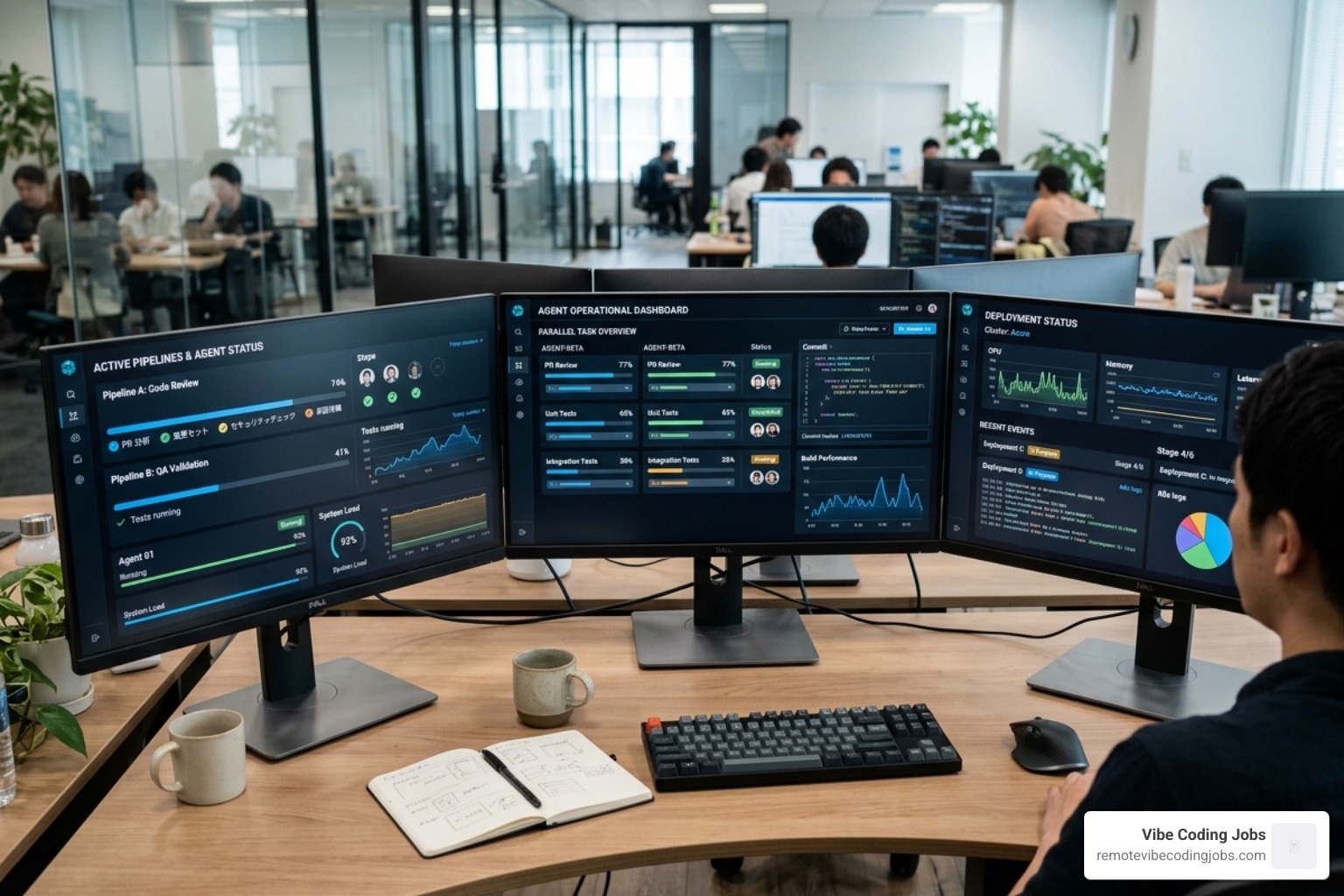
In 2026, we are seeing the rise of “agentic orchestration.” This means an ai software developer doesn’t just work with one AI; they manage a fleet.
| Feature | Manual Migration | AI-Managed Migration (Agentic) |
|---|---|---|
| Speed | Months to Years | Days to Weeks |
| Error Rate | High (Human fatigue) | Low (Consistent validation) |
| Documentation | Often skipped | Auto-generated in real-time |
| Workflow | Sequential | Parallel (Multiple worktrees) |
| Cost | Millions in salary hours | 20x cheaper via automation |
Tools like Codex | AI Coding Partner from OpenAI allow these agents to work in the background, performing “scheduled chores” like daily QA, release notes, and incident triage.
The Transition: How to Become an AI Software Developer
If you are a traditional software engineer, don’t panic. You aren’t being replaced; you are being upgraded. The transition from “writing code” to “directing code” is one of the most exciting pivots you can make.
As discussed in the community thread How to transition from software development to AI engineering?, the key is to “re-discover the wonder of programming.” Many engineers find that once they stop worrying about syntax, they can focus on the “craft” of building great products.
Practical Steps to Pivot:
- Build a Portfolio: Don’t just show code. Show live, clickable products. Use tools like Cursor to build something complex in a weekend.
- Master the Context: Learn how to use
.cursorrulesorSKILL.mdfiles to provide structured context to your agents. - Engage with the Community: Be active on platforms like HuggingFace and Kaggle to stay at the cutting edge of new models.
- Find Entry Points: Look for AI Coding Jobs Entry Level Opportunities that specifically value AI tool fluency over years of manual experience.
Educational Paths and Certifications
While 63% of AI specialists hold a bachelor’s degree, the “skills-first” movement is winning. Certifications from major players can help you stand out to recruiters looking at Best Companies Hiring AI Developers – Remote Positions.
Recommended paths include:
- Microsoft Certified: Azure AI Engineer Associate: Focuses on integrating AI solutions using the Azure stack.
- IBM AI Developer Professional Certificate: A great foundational course available on Coursera.
- Fast.ai: Widely considered the best practical “deep dive” for engineers who want to understand the math without the academic fluff.
The Future of Engineering: Vibe Coding and Agentic Workflows
We cannot talk about the ai software developer without mentioning vibe coding. It started as a meme, but in 2026, it’s a legitimate job category. Vibe coding is the ultimate expression of natural language programming. You describe the “vibe” (the requirements, the look, the logic), and the AI builds it.
As we see on the Vibe Coding Career Path Remote, this isn’t just for beginners. Elite engineers like Andrej Karpathy have championed this approach because it allows them to move 5x faster. Companies are now actively Hiring Vibe Coders (Remote AI Coding) because they prioritize “time-to-market” over “lines-of-code.”
Job Market Outlook and Salary Trends
The demand for the ai software developer is exploding. The global AI market was valued at roughly $390 billion in 2025 and is projected to skyrocket to over $3.5 trillion by 2033.
What does this mean for your wallet?
- Median Salary: $148,000 (total compensation).
- Senior Roles: Can easily exceed $250,000 – $400,000 at top-tier AI-first companies.
- Freelance Rates: Vibe coders are charging anywhere from $75 to $300 per hour for rapid prototyping.
The US Bureau of Labor Statistics projects a 15% job growth for these roles through 2034, which is much faster than the average for other professions. Check out the Best Companies Hiring AI Developers to see who is leading the charge.
Frequently Asked Questions about AI Software Development
What is the difference between an AI developer and an AI engineer?
While the terms are often used interchangeably, an AI developer focuses on building applications and integrating AI models into software (the “last mile”). An AI engineer often focuses on the infrastructure, scaling, and the training/fine-tuning of the models themselves. Think of the developer as the architect and the engineer as the structural specialist.
Do I need a computer science degree to become an AI software developer?
In 2026, the answer is a resounding “No, but it helps.” While many professionals have degrees, companies are increasingly hiring based on AI fluency and portfolios. If you can show that you’ve built and deployed agentic workflows that solve real problems, that often carries more weight than a diploma.
Which programming language is best for AI development in 2026?
Python is still the undisputed champion due to its libraries (PyTorch, TensorFlow, scikit-learn). However, because an ai software developer uses AI to write code, being able to read and debug TypeScript and Rust is increasingly important for full-stack agentic development.
Conclusion
The era of the “code monkey” is over. The era of the ai software developer has begun. Career longevity in this new world depends on one thing: your ability to embrace AI as a partner rather than a threat.
By mastering tools like Cursor, understanding agentic orchestration, and focusing on product design, you aren’t just keeping your job—you are becoming 10x more valuable. The future of software is being written right now, mostly by AI, but it’s being directed by people like you.
Ready to make the jump? At Remote Vibe Coding Jobs, we curate the best daily listings for AI-fluent professionals. Whether you are looking for a role as an Agentic Engineer, an AI Pilot, or a Vibe Coder, we help you find async-first companies that value your modern tech stack.
Find your next role as an AI software developer and start building the future today.