What Defines the “Best” Remote Job in 2026?
When people ask us what the best remote job is, they are usually looking for a single job title. But after analyzing thousands of distributed hiring trends across the tech sector, we know that the “best” remote job isn’t a single title—it is an alignment between your skill set, your desired compensation, and the operational culture of the hiring company.
In 2026, the remote landscape is firmly established. According to recent employment data, 35.1 million Americans (22.6% of the workforce) work remotely for pay. However, the market remains competitive. While 23% of job seekers prioritize fully remote roles, only 6% of total job postings offer complete remote flexibility. This 4:1 supply-demand gap means that fully remote listings attract 300% to 500% more applications than traditional location-based positions, averaging 2.6 times more candidates per open slot.
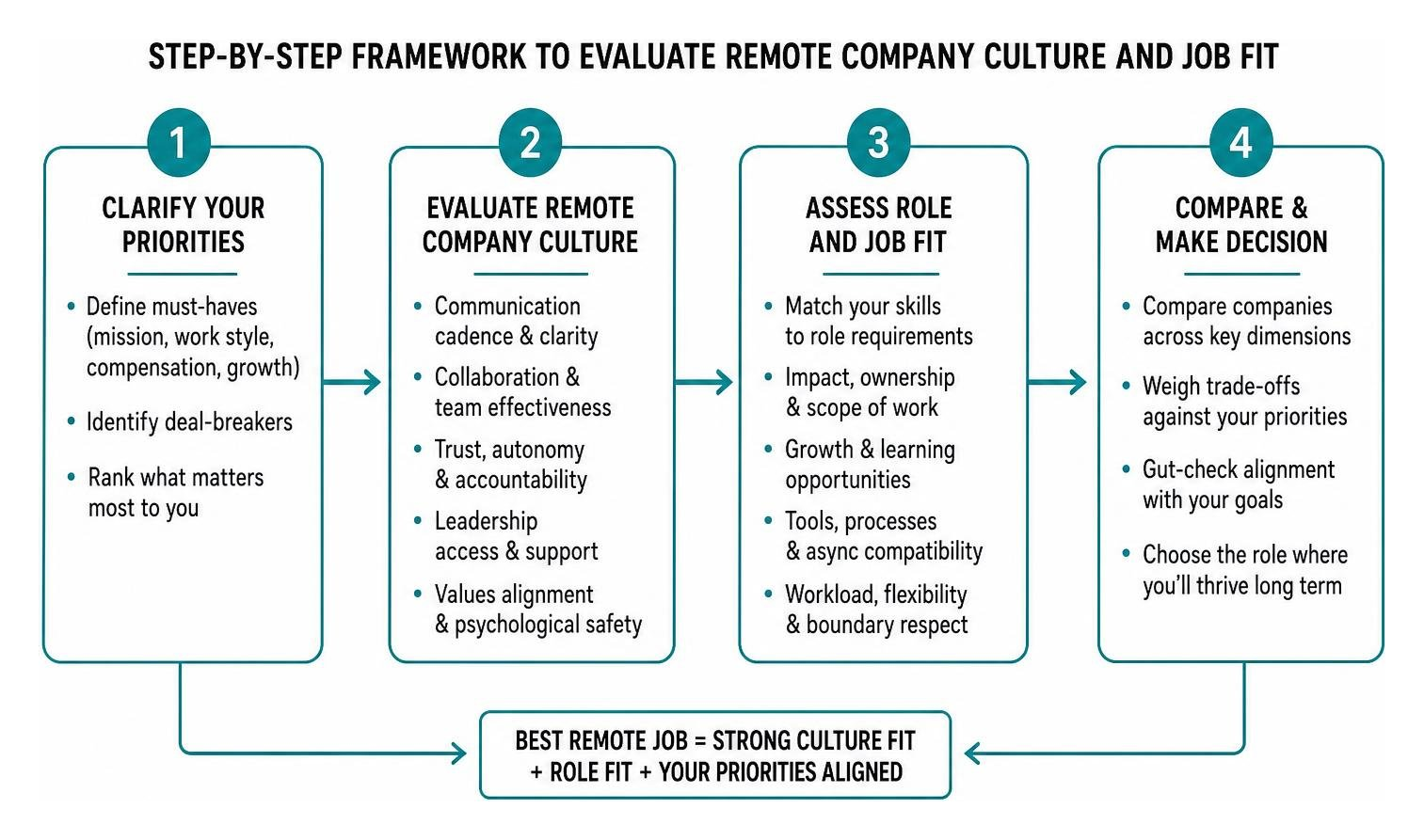
To find the best remote job for your situation, you must evaluate positions across four key dimensions:
- Compensation and Financial Growth: High base salary, performance bonuses, equity, and national or global pay bands that do not penalize you for your geographic location.
- Schedule and Autonomy: True flexibility over your working hours versus rigid tracking software and mandatory virtual presenteeism.
- Async-First Culture: Organizations that rely on transparent written documentation, structured workflows, and deep focus blocks rather than all-day Zoom meetings.
- Career Longevity: Positions in expanding industries—particularly AI development, software engineering, and product strategy—where demand outpaces labor supply.
A major differentiator in 2026 is whether a business is remote-first or remote-tolerant.
- Remote-tolerant companies adopted distributed work out of necessity. They often attempt to replicate an office environment online, relying on micromanagement, heavy synchronous meeting schedules, and location-based pay cuts. In fact, roughly 30% of traditionally structured companies are pushing to require five days a week in-office by the end of 2026, creating friction for their offsite staff.
- Remote-first companies build their operational infrastructure around asynchronous communication, clear metrics, self-direction, and standardized national salary benchmarks.
Before jumping into a job search, it is vital to weigh the broader lifestyle realities. You can explore our deep-dive analysis on Remote Work Pros and Cons 2026 to determine if fully distributed workflows match your personal productivity style, or review general labor market research from the U.S. Bureau of Labor Statistics.
What Are the Top-Paying and Highest-Demand Remote Roles in 2026?
Remote opportunities are not evenly distributed across all sectors. The tech and software development industry continues to lead distributed hiring, representing 40% to 50% of all fully remote roles, followed by digital marketing (30–40%), customer operations (25–35%), finance (20–30%), and digital healthcare (15–25%).
If you are looking for high compensation, strong job security, and high flexibility, specialized roles in technology, sales, and product development yield the highest return on investment. Below is a breakdown of the top-paying remote career paths in 2026:
| Career Path | Median Salary | Compensation Range | Core Required Experience | Time Zone Flexibility |
|---|---|---|---|---|
| Solutions Architect | $170,000 | $140,000 – $280,000 | Cloud architecture, enterprise systems, technical sales | Moderate (requires client calls) |
| Data Scientist / ML Engineer | $155,000 | $125,000 – $300,000+ | Python, machine learning, data pipelines, LLM fine-tuning | High (async data workflows) |
| Software Engineer / Vibe Coder | $145,000 | $120,000 – $280,000 | Full-stack JS/TS, Python, AI-assisted tools (Cursor/Claude) | High (async code reviews) |
| DevOps / Cloud Engineer | $145,000 | $120,000 – $240,000 | CI/CD, AWS/GCP, Kubernetes, infrastructure-as-code | Moderate (on-call rotations) |
| Product Manager | $140,000 | $130,000 – $250,000 | Product roadmap execution, user analytics, agile lead | Moderate (cross-team syncs) |
| Cybersecurity Engineer | $130,000 | $115,000 – $220,000 | Threat detection, IAM, cloud security compliance | Moderate to High |
| Remote Sales (SaaS AE) | $120,000 (Base) | $100,000 – $250,000+ (OTE) | Enterprise outbound sales, demo execution, pipeline management | Low to Moderate (prospect calls) |
| UX / Product Designer | $110,000 | $90,000 – $180,000 | Figma, design systems, user research, prototyping | High (async design reviews) |
For a complete breakdown of technical earnings, equity structures, and salary bands across different experience levels, review our guide on Remote Developer Salaries in 2026: What to Expect.
Why AI Engineering and “Vibe Coding” Are Leading the Remote Tech Market
The definition of a software engineer has evolved rapidly over the past few years. In 2026, the fastest-growing and most lucrative category of remote work centers on AI-native engineering and “vibe coding.”
Vibe coding refers to an intuitive, AI-assisted development workflow where engineers leverage intelligent IDEs like Cursor and advanced models like Claude 3.7 Sonnet to write, test, refactor, and deploy code at unprecedented speeds. Rather than spending hours manually writing boilerplate syntax, vibe coders act as directors—steering AI agents, reviewing code architecture, and shipping features in hours that used to take weeks.
Remote developers use AI tools 40% more frequently than their in-office counterparts. Because distributed teams prioritize output over hours logged, developers who master AI orchestration deliver exponentially higher business value while maintaining total location autonomy.
This shift has created massive demand for developers who understand how to integrate AI tools directly into production applications. Companies are actively competing for technical talent who can bridge the gap between AI tooling and robust system architecture. To learn more about this career trajectory, check out our insights on Vibe Coding Remote Career Path Opportunities and browse top employers in our list of Best Companies Hiring AI Developers Remote Opportunities.
How Can You Stand Out and Get Hired for Remote Roles?

Because remote positions receive hundreds of applications within hours of being posted, traditional application strategies no longer work.
The biggest mistake job seekers make is mass-applying to 50+ remote jobs a week using a generic resume. Data shows that mass application strategies yield a miserable 0.5% interview conversion rate. Conversely, submitting 5 to 10 carefully targeted, highly customized applications per week yields a 20% to 25% conversion rate—a 40x improvement in response rates for the exact same time investment.
To maximize your application conversion funnel, we recommend adhering strictly to the 70% Qualification Match Rule: only apply to positions where you meet at least 70% of the combined required and preferred skills. Applying to roles far outside your experience profile wastes valuable time and contributes to the 75% to 80% automatic rejection rate enforced by Applicant Tracking Systems (ATS).
1. Optimize Your Resume and Profile for ATS Parsers
ATS algorithms scan for direct alignment between your resume and the job description.
- Integrate exact technical stack keywords: Explicitly list digital collaboration tools (e.g., Slack, Notion, Loom, Linear, Jira, GitHub, Cursor).
- Quantify your remote accomplishments: Include metrics that prove self-direction (e.g., “Managed distributed CI/CD pipelines across 3 time zones, improving deployment speed by 35%”).
- Label remote experience clearly: Format past job titles with explicit remote tags (e.g., “Senior Frontend Engineer (Remote)”).
2. Time Your Submissions Strategically
When you submit your application matters just as much as what is in it. Applications submitted Tuesday and Wednesday mornings between 9:00 AM and 11:00 AM in the hiring team’s primary time zone receive 30% to 40% higher response rates compared to those submitted late Friday afternoon or over the weekend, when candidates get buried under fresh Monday inbox traffic.
3. Implement a Strategic Follow-Up Cadence
Cold applications often get lost in corporate volume. Implementing a polite, value-driven follow-up system can increase your interview rates by 25% to 35%.
Five days after applying, reach out on LinkedIn to the hiring manager or engineering lead with a short, personalized message highlighting a specific project of theirs you admire and how your skills address their current team goals. Candidates who secure an internal referral are 5 to 10 times more likely to land an interview than cold applicants.
How Essential Are Asynchronous Communication and Time Zone Alignment?
If there is one silent killer of remote job applications, it is time zone mismatch.
Even fully remote companies typically require 3 to 4 hours of shared working overlap each day for real-time collaboration, team standups, and emergency pairing sessions. Before applying, calculate the overlap between your local time zone and the company’s core hours. If you reside outside their primary operational window, explicitly address how you intend to accommodate those core overlap hours in your cover letter or introductory note.
Furthermore, hiring managers evaluate your written asynchronous communication skills from the very first interaction. In a distributed environment, clear writing replaces physical office conversations. Your application messages, cover notes, and post-interview thank-you emails double as live work samples.
Demonstrate your async mastery by:
- Providing structured, standalone status updates that include full context, clear options, and direct recommendations.
- Mentioning experience creating clear documentation in Notion, GitHub Wiki, or Coda that reduced onboarding friction for previous teams.
- Explaining how you solve technical blockers independently when teammates are offline in different time zones.
To explore why distributed tech companies prioritize async-first developers, read our analysis on Async-First Remote Developer Jobs Benefits.
Where Can You Find Legitimate Remote Opportunities Without Falling for Scams?
Finding the best remote job requires looking in the right places. Mass market aggregators list tens of thousands of postings, but they suffer from a low signal-to-noise ratio: many listings are outdated, location-restricted under fine print, or flooded with thousands of applicants within hours.
To improve your odds, shift your strategy toward curated, niche job platforms and proactive company matching.
Navigating Curated Boards vs. Mass Aggregators
Niche boards filter postings by strict quality standards, pay transparency, and genuine remote work authorization. Curated and vetted platforms eliminate fraudulent posts, while dedicated engineering platforms surface high-paying, async-first software roles directly from fast-growing scale-ups.
Senior professionals should also adopt a company-first strategy rather than relying solely on title searches. Identifying remote-first companies whose culture, growth stage, and tech stack match your experience allows you to build relationships and monitor internal career pages before roles are blasted across public job boards.
How to Spot Remote Job Scams
Because remote work is in high demand, cybercriminals frequently target job seekers with fake remote job listings. Protect yourself by recognizing these common red flags:
- Text-Only Interviews: The entire hiring process takes place over Telegram, WhatsApp, or text-based messaging platforms with no live video interview.
- Unrealistic Pay for Low-Skill Work: Postings advertising $100K+ annual salaries for basic data entry, simple chat support, or zero-experience admin tasks.
- Upfront Hardware or Check Scams: The “employer” sends you a fake check to purchase home office equipment from a specific vendor, asking you to wire back the remaining funds.
- Non-Corporate Domain Emails: Recruiters contacting you from free email domains (e.g.,
@gmail.com,@outlook.com) rather than an official corporate domain.
At RemoteVibeCodingJobs, we eliminate this noise entirely. We aggregate and curate daily remote development listings specifically tailored for AI-native engineers and software developers. Every job on our platform is verified for company legitimacy, tech stack transparency (highlighting tools like Cursor, Claude, and GitHub Copilot), and true async-first culture—ensuring you spend your time applying only to high-quality, high-paying remote roles.
How Should You Prepare for Remote Interviews and Salary Negotiations?

Securing an interview for a remote role requires a distinct approach compared to traditional in-person hiring processes. Hiring managers are assessing not only your core domain skills, but also your home working environment and digital presence.
Technical Setup and Environment Check
Treat your video interview like a professional broadcast. Test your hardware and environment 30 minutes before every call:
- Internet Speed: Ensure a stable connection with at least 50 Mbps download and 10+ Mbps upload speeds.
- Video Quality: Position a 1080p webcam at eye level. Use natural lighting or a desktop key light positioned behind your camera.
- Audio Clarity: Use a dedicated USB microphone or high-quality noise-canceling headset. Background noise destroys communication flow.
- Professional Workspace: Maintain a clean, uncluttered background, or use a subtle blur effect.
Answering Remote-Specific Questions
Expect hiring managers to ask direct questions about your self-management habits. Frame your answers around output, focus blocks, and async execution:
- “Why do you want to work remotely?”
- Wrong Answer: “I love to travel, avoid commuting, and hang out with my family during the workday.”
- Right Answer: “I do my best work in uninterrupted focus blocks. Remote environments allow me to document my workflows clearly, collaborate asynchronously across time zones, and deliver higher quality output faster.”
- “How do you handle being blocked when nobody is online in your time zone?”
- Right Answer: “I document the precise issue clearly in our project management tool, record a short Loom video demonstrating the blocker, notify the owner via Slack, and pivot immediately to my secondary priority item so my velocity stays high.”
For complete preparation blueprints, review our step-by-step guide on how to Ace the Interview: How to Prepare for Remote Developer Interviews.
Navigating Remote Salary Negotiations
When negotiating compensation for a remote position, you will encounter two main corporate pay structures:
- Location-Based Pay: Companies adjust your compensation band based on the local cost-of-living index of your primary residence.
- National / Global Flat Pay: Companies pay a standardized salary rate for the job role regardless of where the employee lives.
Always target companies utilizing national flat pay bands whenever possible. When negotiating, establish your market baseline using national median data for your role rather than your local geographic averages. Negotiate your base compensation first, followed by key remote-specific benefits:
- Home Office Stipends: Upfront allowances ($1,000–$2,500) for ergonomic desks, monitors, and computing hardware.
- Monthly Infrastructure Allowances: Recurring stipends ($100–$300/month) covering high-speed internet, mobile phone bills, and co-working space memberships.
- Learning & Tech Budgets: Annual allowances for software subscriptions, AI tool tokens (e.g., OpenAI/Claude API access), and technical conferences.
What Are the Most Frequently Asked Questions About Remote Jobs?
What is the highest-paying remote job you can get without a computer science degree?
You do not need a traditional computer science degree to land a six-figure remote role. The highest-paying non-degree remote career paths in 2026 are:
- High-Ticket SaaS Sales (Account Executive): Base salaries range from $100,000 to $130,000, with total On-Target Earnings (OTE) exceeding $200,000 to $250,000+ through commissions. Hiring decisions are based entirely on your track record of quota attainment and pipeline closing skills.
- Self-Taught AI Developer / Vibe Coder: Software engineering and AI integration roles regularly pay $120,000 to $180,000+ based on portfolio proof, GitHub contributions, and practical technical assessments rather than academic credentials.
- UX/Product Design: Senior product designers earn $110,000 to $160,000 remotely by demonstrating strong Figma design systems, user research methodologies, and interactive prototypes in their portfolios.
How long does the remote hiring process typically take from application to offer?
For candidates submitting targeted, customized applications, the average remote hiring pipeline takes 6 to 12 weeks from the date of initial application submission to a signed offer letter.
A standard remote interview process consists of 4 distinct stages spread over 3 to 4 weeks:
If you are transitioning into a brand-new technical field or building your portfolio from scratch, expect a total timeline of 6 to 12 months to gain skills and land your first high-paying remote role.
What are the main warning signs that a remote job listing is fake?
The top warning signs of a fraudulent remote job listing include:
- Conducted entirely via text chat or messaging apps without a live video call.
- Unrealistic compensation (e.g., $50+/hour for entry-level data entry).
- Requests to deposit a check and wire money back for “office equipment.”
- Emails originating from generic domains like
@gmail.comor spoofed domain variations. - High-pressure demands to sign contracts or provide sensitive personal banking details immediately without formal interviews.
What Are Your Immediate Next Steps to Start Your Remote Career?
Finding the best remote job in 2026 isn’t about applying to hundreds of random job board listings—it is about positioning your unique technical skills, targeting companies with mature async cultures, and executing a data-backed application strategy.
Here is your immediate action plan:
- Define Your Target Profile: Determine whether your priority is maximum compensation (AI engineering, sales, solutions architecture) or high async flexibility (software development, data engineering, UX design).
- Audit Your Digital Tool Stack: Ensure your resume and LinkedIn profile highlight proficiency with modern remote workflows (Slack, Notion, Loom, Jira) and AI-assisted development tools (Cursor, Claude, GitHub Copilot).
- Adopt Quality Over Volume: Stop mass-applying. Focus on 5 to 10 tailored applications per week where you meet 70%+ of the requirements, submitting on Tuesday or Wednesday mornings.
- Master Async Interviewing: Practice framing your interview responses around written documentation, independent problem-solving, and deep focus execution.
- Use Niche Curated Job Boards: Skip the noisy aggregators and focus on platforms that provide verified listings with transparent compensation and stack details.
At RemoteVibeCodingJobs, we simplify your job search by delivering hand-curated daily remote roles built specifically for AI developers, vibe coders, and software engineers. We filter every listing by company culture, salary transparency, and modern technical stacks—so you can skip the corporate fluff and land a high-paying remote job you love.
Ready to take the next step in your remote career? Explore our latest curated listings today to Find High-Paying Remote AI Engineer Roles.