
What Async Remote Developer Culture Means
An async remote developer culture lets engineers make progress without everyone being online at once. Teams put decisions, code reviews, and updates in shared, searchable places. They set clear response times and judge work by results, not how quickly someone replies. That protects focus time across time zones.
Async-first does not mean no meetings. A live call is still useful for an outage, a hard design problem, or a sensitive conversation. The goal is to make routine work clear enough to move forward without one.
I’m Di Su, a software engineer with over 10 years of experience building web products and improving workflows. My work across engineering and growth shapes how I think about async remote developer culture: clear context, visible decisions, and room to do focused work.
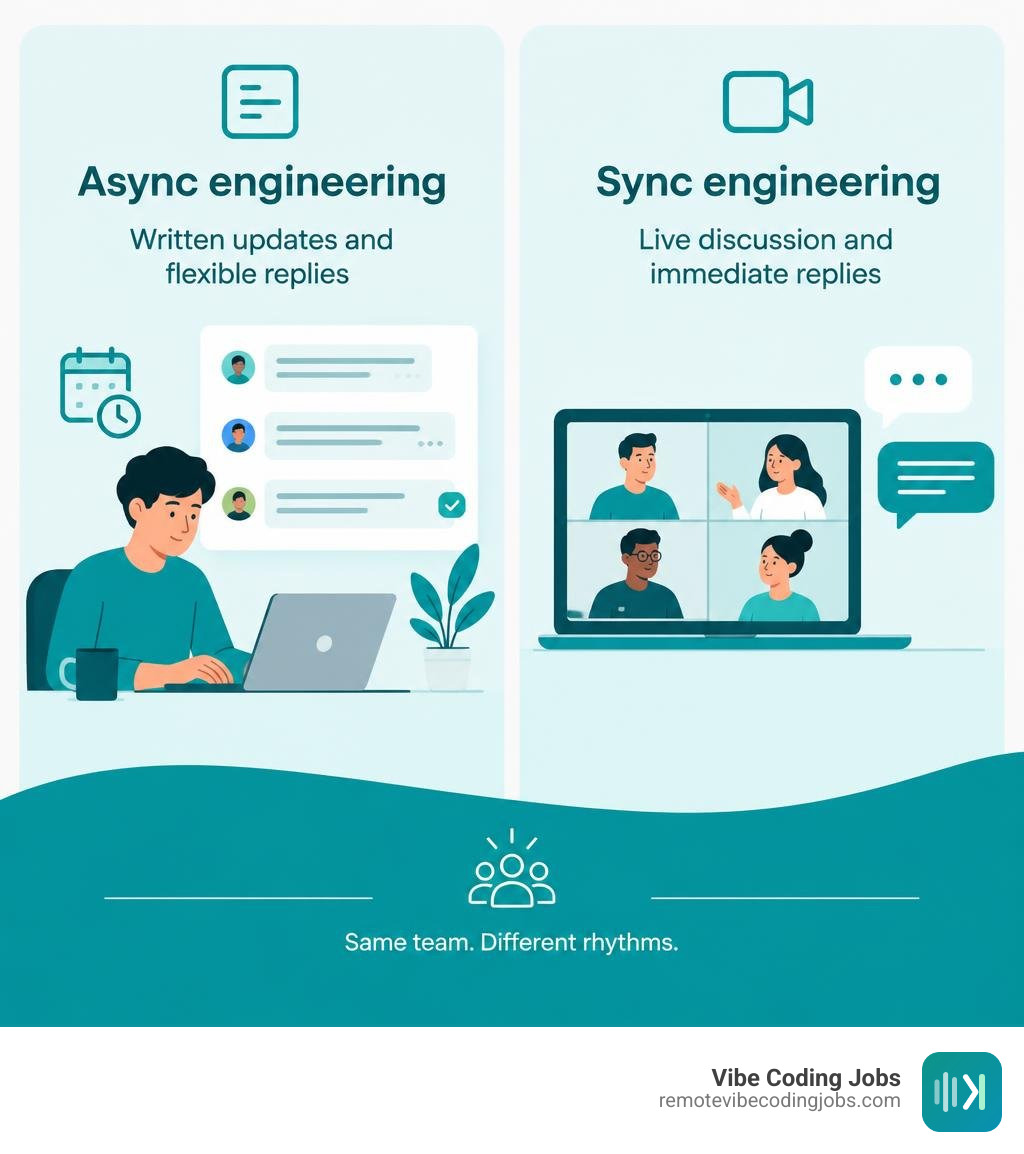
Core Pillars of an Async Remote Developer Culture
Traditional office habits rely on physical presence, immediate verbal confirmation, and constant tap-on-the-shoulder interruptions. Moving those exact habits into Slack or Zoom creates an exhausting digital panopticon. True async engineering flips the script: it treats communication as non-blocking code.
In an async organization, we optimize for uninterrupted cognitive flow. Complex software architecture, debugging tricky race conditions, and writing secure logic require deep concentration. Interruptions break this concentration, and studies show that developers need uninterrupted blocks of two to four hours just to hit a productive stride. When organizations protect deep focus and engineering productivity, developers can schedule their most demanding analytical work around their natural chronotypes—whether that means peak performance happens at 7:00 AM or 10:00 PM.
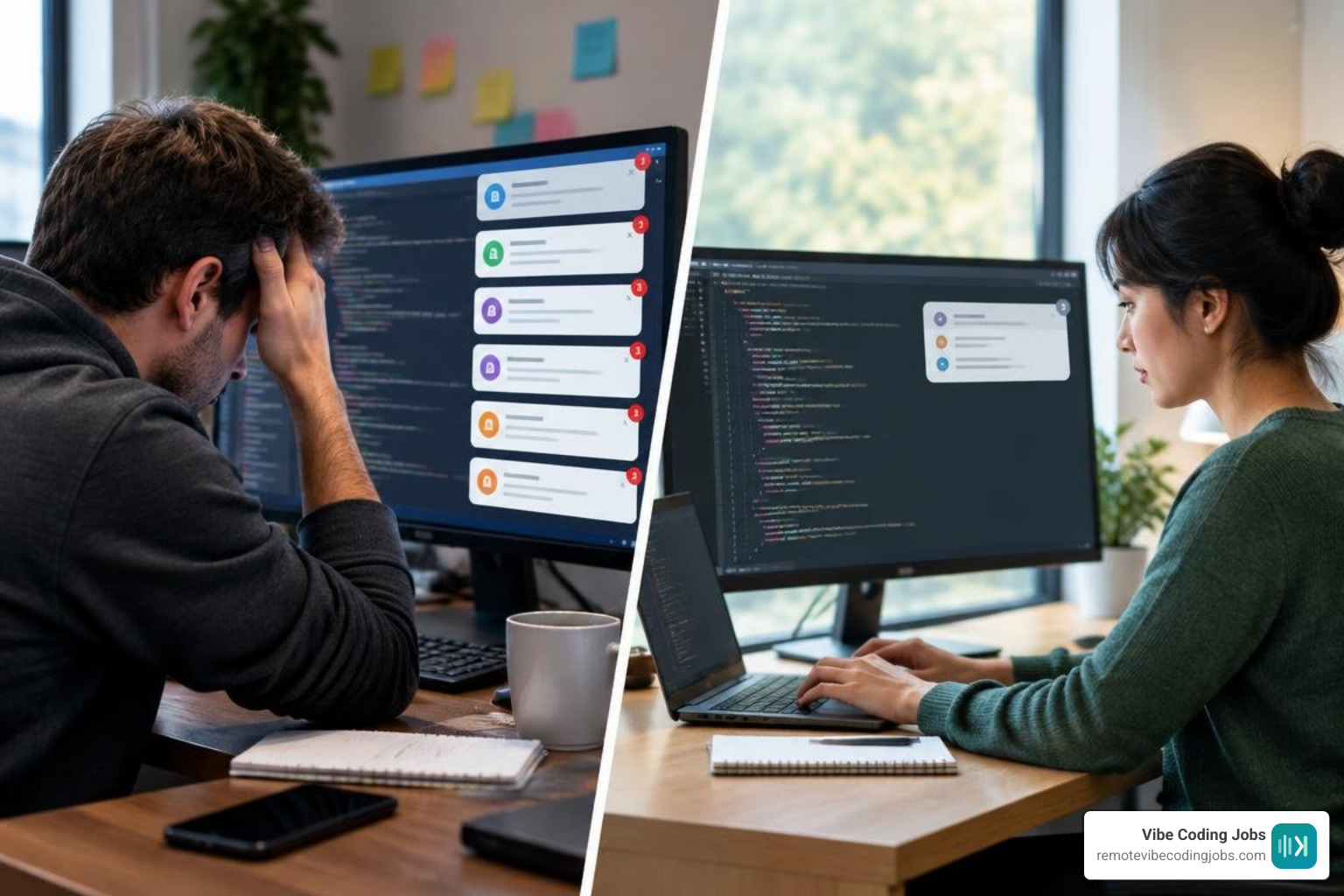
An async culture stands on three essential pillars:
- High Autonomy and Trust: Engineers have the authority to make architectural choices, merge tested code, and resolve technical debt without waiting for real-time managerial rubber stamps.
- Durable Institutional Knowledge: Every technical debate, architectural tradeoff, and roadmap decision is captured in searchable, permanent text rather than lost in an unrecorded video call.
- Outcome-Based Evaluation: Productivity is measured by delivered software, system stability, and business impact—never by hours logged or immediate chat presence.
Defaulting to Asynchronous Communication Over Instant Messaging
When every chat notification requires an instant reply, engineers spend their days context-switching between writing code and babysitting chat channels. Industry research indicates that employees spend up to 57% of their workday navigating communications, while 68% report lacking uninterrupted focus.
Defaulting to asynchronous communication means separating the creation of a message from its consumption. Instead of firing off half-formed thoughts (“Hey, quick question…”), engineers write self-contained messages detailing context, current findings, relevant repository links, and specific questions.
Learning how engineering teams work asynchronously demonstrates that when you remove the expectation of instant replies, developers batch-process their messages twice or three times a day. We establish Service Level Agreements (SLAs) for communication—such as a four-hour response window for normal queries and a 24-hour turnaround for pull request reviews—allowing engineers to dive into deep work without fear of missing out.
Autonomous Ownership and Outcome-Driven Engineering
Async-first development cannot function without strong ownership. When an engineer picks up an issue, they own it from technical exploration to production deployment.
This requires shifting managerial focus away from surveillance and toward outcome-based engineering metrics. Instead of tracking keystrokes or active green status dots, high-performing teams evaluate sprint velocity, mean time to resolution (MTTR), and code quality. High autonomy does not mean leaving developers stranded on an island; it means establishing clear expectations and trusting them to deliver. In leading distributed engineering environments, studying the culture, pace, and autonomy expectations reveals that high compensation and autonomy are paired directly with the expectation that engineers treat ambiguity as a design challenge rather than a blocker.
The Communication Architecture: Balancing Async Workflows with Golden Hours
Operating asynchronously does not mean eliminating human connection or refusing to talk in real time. It means being deliberate about when and why synchronous time is used.
| Communication Channel | Mode | Ideal Use Case | Expected Response SLA |
|---|---|---|---|
| GitHub PRs & Issues | Async | Code reviews, technical implementation, bug tracking | 12 to 24 Business Hours |
| RFC Documents (Notion / GitBook) | Async | Architecture proposals, cross-team specifications | 24 to 48 Business Hours |
| Threaded Chat (Slack / Twist) | Async-Default | Standup summaries, general queries, announcements | 2 to 4 Business Hours |
| Recorded Demos (Loom / Video) | Async | Feature walkthroughs, UX reviews, bug reproduction | Next Business Day |
| Live Huddles / Zoom | Synchronous | Urgent outages, sensitive 1-on-1s, brainstorming | Immediate / Scheduled |
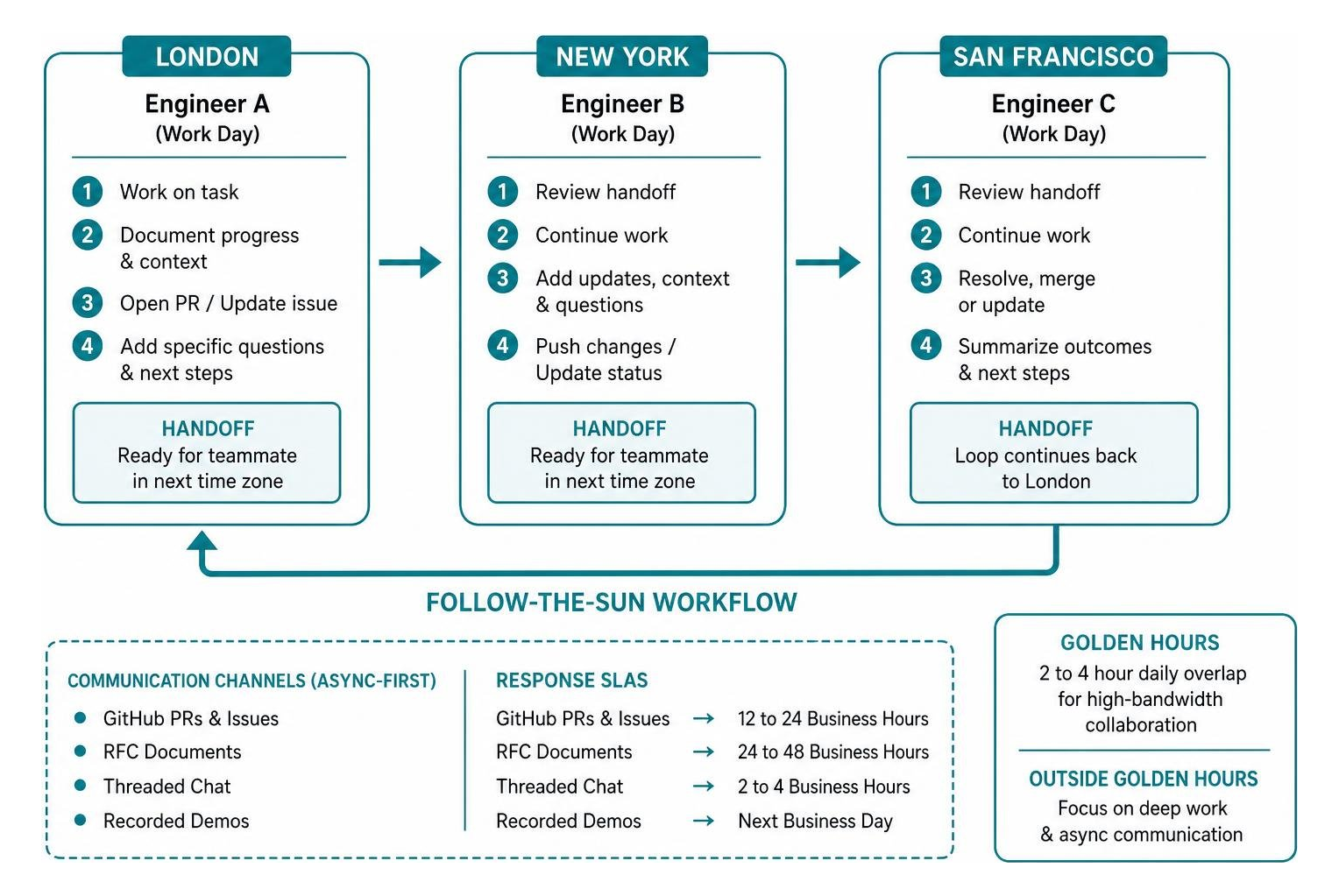
To coordinate across global regions without burning out engineers, distributed organizations lean into follow-the-sun workflows. An engineer in London hands off documented pull requests to a teammate in San Francisco, turning time-zone differences into a 24-hour cycle of continuous progress.
Designing Collaboration Within an Async Remote Developer Culture
To prevent scheduling headaches across time zones, teams establish “Golden Hours”—a shared window of two to four overlapping hours where distributed team members are available for high-bandwidth pairing, live architecture syncs, and virtual social connection.
Preserving this balance depends on practicing flexible communication in distributed teams. Outside of golden hours, the default mode returns to silent focus. Synchronous meetings are held only when they provide high leverage: onboarding new engineers, discussing complex debugging scenarios, or building personal rapport through digital coffee chats.
Replacing Synchronous Standups and Back-to-Back Status Calls
Daily 30-minute status meetings are often a significant drain on distributed team productivity. Consider the numbers: a 10-person team that reclaims just two hours of meeting time per person each week saves 1,040 hours over the year—equivalent to adding half a full-time senior engineer’s output to your team.
From practical lessons from thirteen years remote at GitHub, modern teams replace daily verbal round-robins with automated async check-ins integrated into issue boards. Every morning, engineers or bots post three concise bullet points:
- What shipped yesterday (with linked PRs)
- What is being tackled today
- Blockers that need attention
This shift surfaces blockers in written form where anyone can jump in to assist, all without breaking anyone’s focus.
Engineering Toolchains and AI Integration for Distributed Teams
An async team requires a structured, centralized tool stack. If documentation lives across fragmented documents, private chat direct messages, and local notes, productivity grinds to a halt.

When selecting and evaluating modern remote developer tools, aim for three core properties: deep searchability, persistent URLs for every artifact, and strong version control.
AI-Powered Prototyping and Context Synthesis
The integration of agentic AI coding assistants like Cursor and Claude Code has transformed async workflows. AI tools act as immediate, self-service collaborators, reducing the need for engineers to ping teammates for simple code explanations, boilerplates, or syntax lookups.
Leveraging an AI tools stack integration for remote developers allows engineers to:
- Generate initial boilerplate implementations asynchronously from detailed specifications.
- Summarize long GitHub discussion threads or RFC debates into actionable bullet points.
- Automatically draft clear, context-rich PR descriptions by analyzing git diffs.
By using AI as a front-line research assistant, engineers stay unblocked even when their teammates are asleep halfway across the world.
Standardizing Issue Trackers, Wikis, and Code Repositories
To keep collaboration friction-free, standardize on a clear modern remote developer stack architecture:
- Issue Tracking & Project Management: Linear or GitHub Issues, structured with clear labels, milestones, and explicit assignees.
- Knowledge Bases & Engineering Handbooks: Notion, Confluence, or GitBook, serving as the canonical source of truth for architectural standards, deployment protocols, and team policies.
- Code Collaboration: GitHub or GitLab, treating pull requests as durable documentation rather than just gatekeeping checkpoints.
Documentation, RFCs, and Non-Blocking Decision-Making
In an async environment, writing is a fundamental engineering skill. Undocumented systems accumulate technical debt, and undocumented decisions lead to repeated debates.
By following a comprehensive async-first work guide, teams build a resilient decision engine where every architectural shift is captured with a permanent URL.
The Request for Comments (RFC) Framework
When proposing a substantial architectural change, framework upgrade, or database migration, engineers should avoid booking a 60-minute meeting to pitch the idea. Instead, they author an RFC document.
The RFC outlines:
- Context & Problem Statement: Why the change is needed.
- Proposed Solution: Architectural diagrams, API signatures, and data models.
- Alternatives Considered: Other solutions evaluated and why they were set aside.
- Drawbacks & Risks: Performance implications, operational complexity, or migration overhead.
Once published, the proposal enters an open review window (typically 3 to 5 business days). Stakeholders add inline comments, ask questions, and suggest edits asynchronously. Establishing clear operating systems for open and async development ensures that decisions are thoroughly vetted, transparent, and permanently documented for future team members.
High-Clarity Pull Requests and Code Review Protocols
Code reviews can quickly become a major bottleneck in distributed teams if pull requests are oversized or lack clarity.
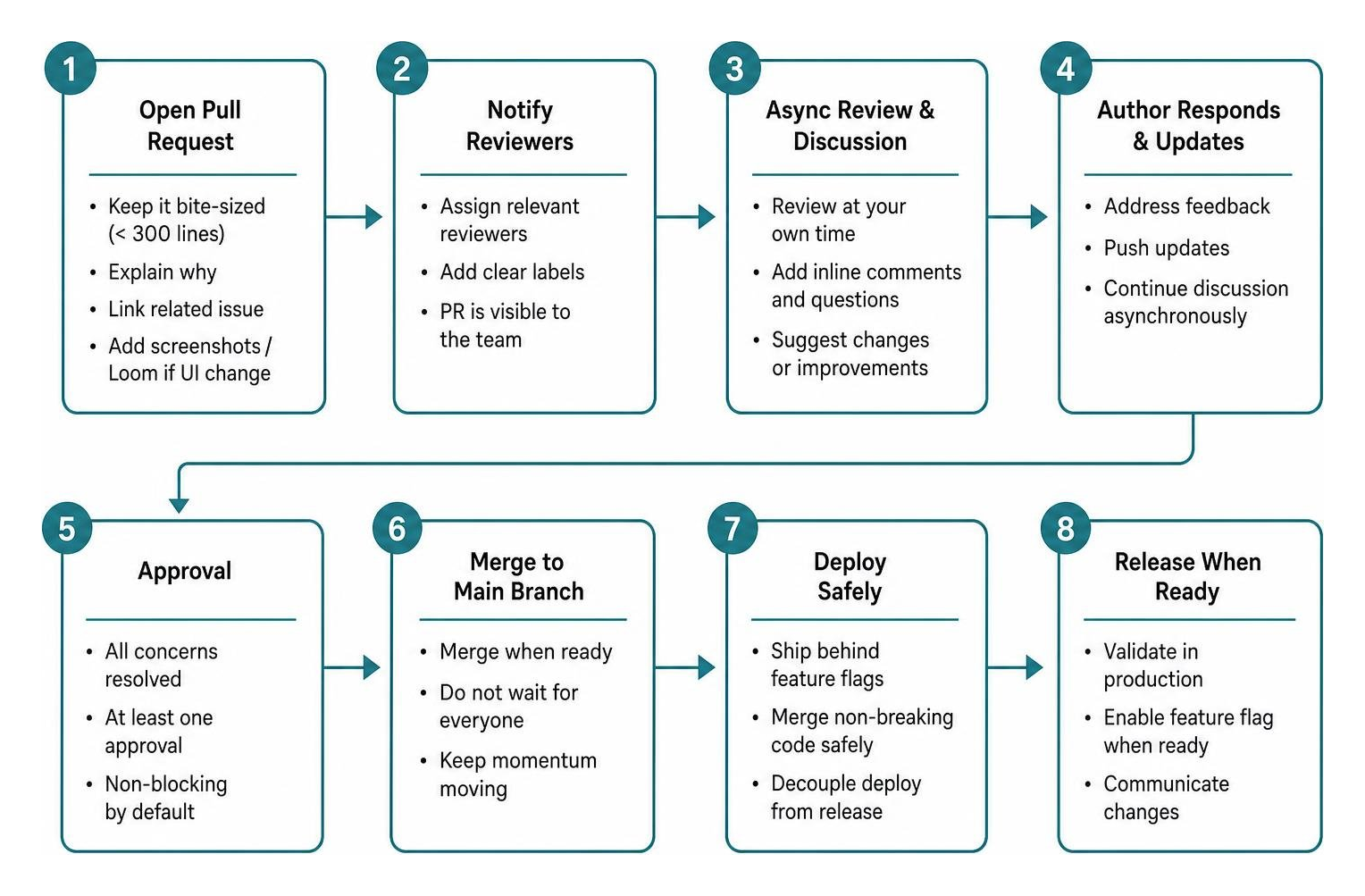
To maintain high development velocity:
- Keep PRs Bite-Sized: Limit diffs to under 300 lines of code so teammates can review them in a single sitting.
- Provide Context in Descriptions: Explain why the change was made, include screenshots or Loom recordings for UI changes, and link relevant tracking tickets.
- Ship Behind Feature Flags: Decouple deployment from release, allowing engineers to merge non-breaking code safely without blocking teammates.
Cultivating Team Cohesion, Leadership, and Sustainable Careers
A common concern with async work is the risk of isolation or transactional relationships. Sustainable distributed teams counter this by building intentional human connections into their routines.
Virtual social rituals—such as automated coffee pairings, dedicated casual channels (covering pets, mechanical keyboards, gaming, or home lab setups), and weekly asynchronous retrospectives—help sustain strong working relationships. Furthermore, leading async companies bring teams together for in-person offsites once or twice a year to build trust, align on roadmaps, and recharge social connections.
Career Growth and Visibility in an Async Remote Developer Culture
In a traditional office, career advancement is often influenced by physical presence and vocal participation in meetings. In an async environment, visibility comes from the quality and clarity of your written contributions.
Exploring the benefits and career progression in async environments highlights how engineers gain recognition through:
- Well-structured RFCs that solve core technical bottlenecks.
- Thorough, constructive code reviews that elevate team quality.
- Maintained documentation and shared playbooks that accelerate onboarding.
These durable written artifacts provide clear, objective evidence of leadership and engineering impact during performance reviews.
Leadership Modeling and Eliminating Async Anti-Patterns
Culture is defined by executive behavior. If engineering leaders schedule last-minute meetings, message developers after hours with “urgent” pings, or reward those who reply immediately late at night, the team will default to an always-on synchronous state.
Leaders must actively model async-first habits:
- Schedule non-urgent messages to arrive during the recipient’s local working hours.
- Openly protect dedicated focus blocks on their own calendars.
- Publicly praise high-quality written RFCs and documentation.
- Avoid treating public Slack channels as live chatrooms for private executive alignment.
Frequently Asked Questions About Async Remote Developer Culture
What is the biggest difference between remote work and an async-first engineering culture?
Remote work simply means working outside a central office, but many remote teams still operate synchronously—relying on mandatory 9-to-5 desk hours, constant instant messaging, and back-to-back video calls. An async-first engineering culture decouples work from real-time presence. It uses written documentation, clear response windows, and autonomous workflows so developers make steady progress without needing everyone online at the exact same moment.
How do async engineering teams handle urgent incidents and outages?
Async teams maintain clear escalation paths for production incidents. Routine communication stays asynchronous, but critical outages trigger automated alerts via tools like PagerDuty or Opsgenie. When an alert fires, on-call engineers spin up a dedicated live incident channel and virtual bridge, resolving the problem in real time before documenting findings in a searchable post-mortem.
Can junior engineers thrive in an asynchronous developer culture?
Yes, provided the team supports them with clear onboarding documentation, assigned engineering mentors, and dedicated pairing windows. An async culture helps junior engineers by giving them time to read documentation, experiment locally, and formulate thoughtful questions without feeling rushed in a live setting.
Conclusion
The future of software engineering belongs to high-autonomy, distributed teams that value clear writing, deep focus, and durable decision-making. Transitioning away from constant meetings and instant notifications unlocks deep work hours, reduces burnout, and allows developers to build better software on sustainable schedules.
At RemoteVibeCodingJobs, we believe engineering talent thrives when given the autonomy and focus to build. If you are ready to reclaim your calendar and work with modern, AI-forward distributed engineering teams, explore verified async remote developer jobs and find your next role today.
— Di Su, Topic Expert & Lead Systems Contributor at RemoteVibeCodingJobs