
Where to Find Remote ER Coding Jobs
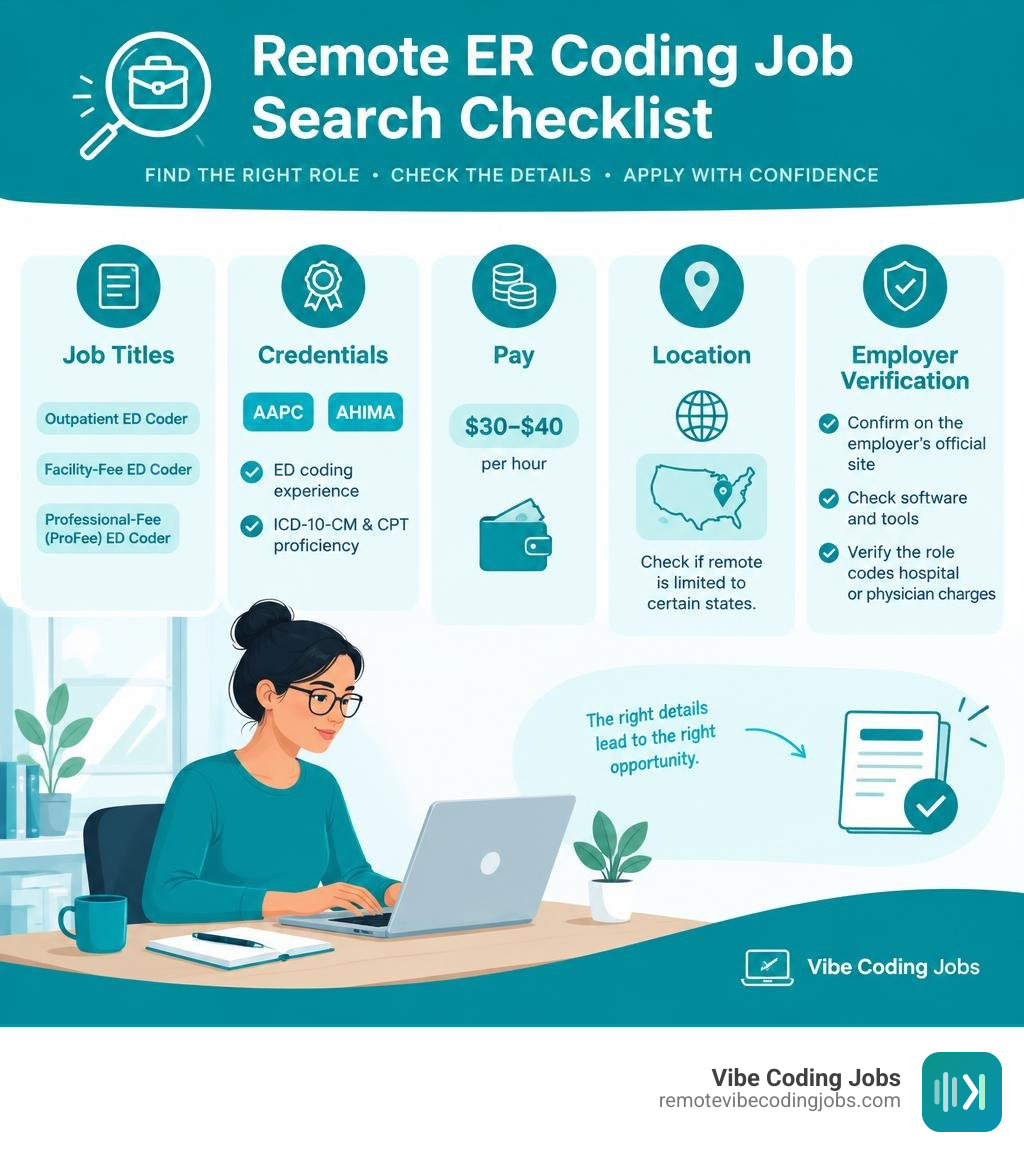
Start with the job titles: outpatient ED coder, facility-fee ED coder, and professional-fee (ProFee) ED coder. Search health system career pages and healthcare staffing sites, then confirm each opening on the employer’s official site before applying. Many roles ask for an AAPC or AHIMA credential, ED coding experience, and skill with ICD-10-CM and CPT. Some listings offer $30-$40 per hour, but pay and remote-location rules vary.
Here’s what to check before you apply: whether the role codes hospital or physician charges, which software it uses, and whether “remote” is limited to certain states.
I’m Di Su, a software engineer with more than 10 years of experience building digital tools and improving online workflows. When I research er remote coding jobs, I use that technical lens to separate healthcare coding requirements from software development skills. For a broader look at how analytical roles are evolving, the U.S. Bureau of Labor Statistics tracks employment and wage data for medical records and health information technicians, including remote coding positions.
Key Career Paths and Types of ER Remote Coding Jobs
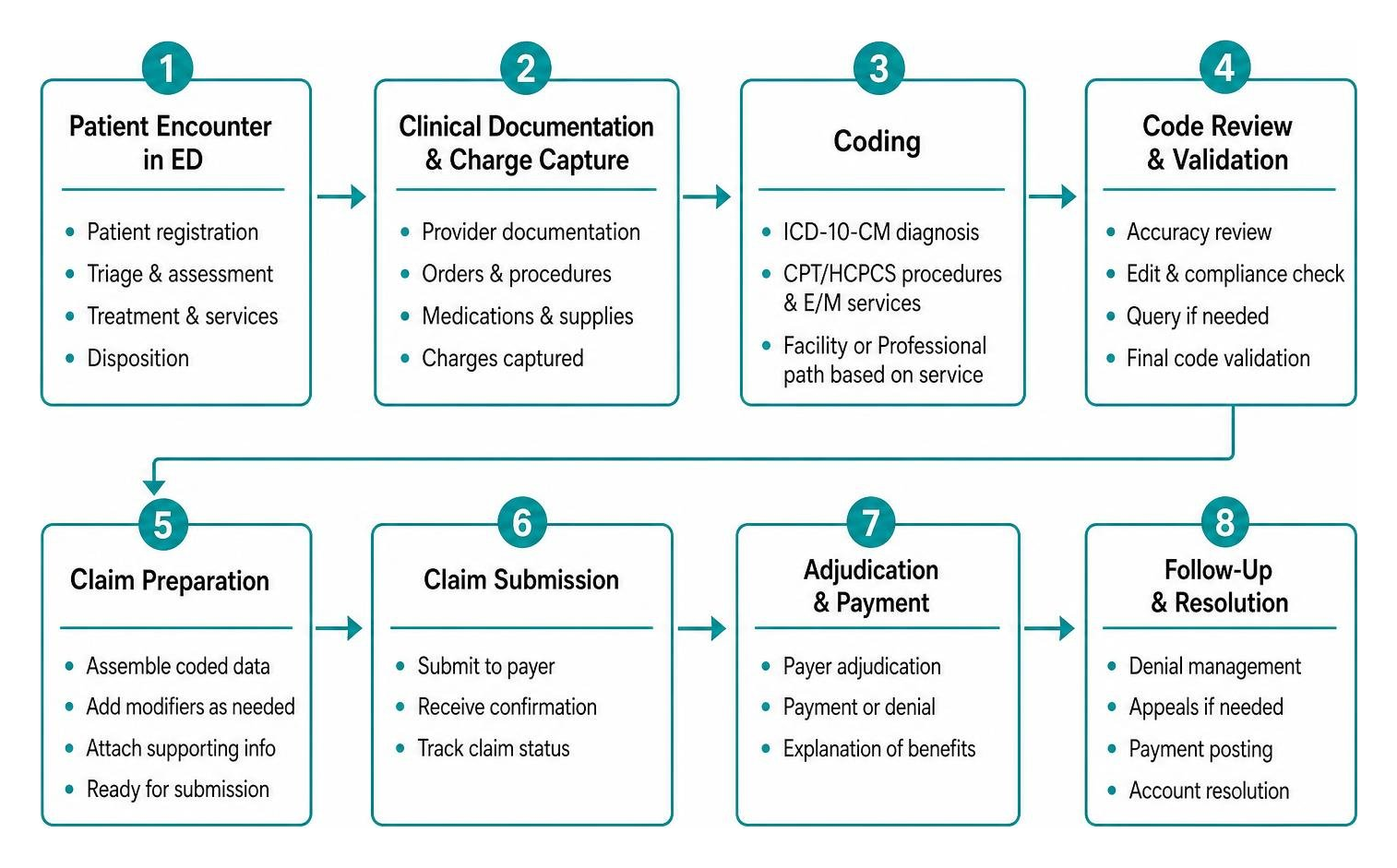
Emergency department coding is not a one-size-fits-all discipline. Because an emergency room visit generates both institutional overhead and professional physician services, healthcare organizations divide coding workflows into specialized tracks. Understanding these tracks helps you target roles that match your background.
| Role Title | Primary Billing Focus | Key Classification Systems | Typical Requirements |
|---|---|---|---|
| Facility-Fee ED Coder | Hospital resources, nursing intensity, room charges | ICD-10-CM, CPT (Facility E/M), HCPCS Level II | 2–5 years outpatient/facility experience, CCS or COC |
| Professional-Fee (ProFee) Coder | Physician decision-making, procedural execution | ICD-10-CM, CPT (Professional E/M, Modifiers) | 1–3 years physician billing experience, CPC or CCS-P |
| Trauma Registrar | Longitudinal trauma registry abstraction, injury scoring | ICD-10, AIS, ISS, Registry software | CSTR, CAISS, or clinical background (EMT/RN) |
| Observation / Outpatient Surgery Coder | Bedded observation hours, same-day surgical conversions | ICD-10-PCS/CM, CPT, APC grouping | 3+ years acute hospital coding experience, CCS or CIC |
Facility-Fee vs. Professional-Fee ED Coding
Facility-fee coders capture the institutional costs of an encounter—including specialized nursing care, medical equipment, pharmaceuticals, and overhead. These roles require deep familiarity with facility-specific Evaluation and Management (E/M) level algorithms, Outpatient Prospective Payment System (OPPS) rules, and Ambulatory Payment Classifications (APCs).
In contrast, professional-fee (ProFee) specialists translate the direct cognitive and procedural labor of the emergency physician or mid-level practitioner into clean claims. ProFee coding requires strict application of the 1995/1997 or revised AMA/CMS E/M documentation guidelines, procedural bundling rules under the National Correct Coding Initiative (NCCI), and exact CPT modifier selection (such as Modifier 25 for significant, separately identifiable evaluation services performed on the same day as a procedure).
Trauma Registry and Specialty Observation Roles
High-acuity emergency centers require dedicated specialists who work alongside operational coders:
- Trauma Registrars: Extract detailed clinical data points from complex trauma charts to feed national and state trauma registries. They calculate Abbreviated Injury Scale (AIS) and Injury Severity Score (ISS) metrics to track patient outcomes and maintain trauma center accreditation.
- Observation and Conversion Coders: Review emergency charts when an acute visit transitions into extended monitoring (Observation status) or triggers emergency outpatient surgery. These coders reconcile the initial emergency workup with surgical and extended-stay documentation.
Essential Qualifications, Certifications, and Experience Needed
Securing a remote post requires demonstrating both clinical literacy and independent execution. Medical review teams expect remote professionals to audit complex charts without direct oversight.

Industry Standard Credentials (AAPC and AHIMA)
Employers require credentials from either the American Academy of Professional Coders (AAPC) or the American Health Information Management Association (AHIMA):
- AAPC Credentials: The Certified Professional Coder (CPC) serves as the industry baseline for physician-side billing, while the Certified Outpatient Coder (COC) is tailored for outpatient hospital and ambulatory surgical facilities.
- AHIMA Credentials: The Certified Coding Specialist (CCS) is widely regarded as the premier credential for complex facility and hospital coding. The Certified Coding Specialist-Physician-based (CCS-P) validates mastery across clinical clinic and physician environments.
Most organizations also look for specialty credentials such as the Certified Inpatient Coder (CIC) or Certified Electronic Health Record Specialist (CEHRS) when filling multi-specialty and observation roles.
Clinical Accuracy Benchmarks and EHR Proficiency
Remote health organizations enforce stringent production benchmarks. Employers typically require:
- Accuracy Thresholds: Maintaining a verified 95% or higher coding accuracy rate across periodic quality audits.
- Experience Windows: A minimum of 6 months to 3 years of hands-on, high-volume emergency department or outpatient coding experience (with senior positions demanding 5+ years of specialized facility work).
- Documentation Literacy: Comprehensive understanding of human anatomy, pathophysiology, and pharmacology to interpret fragmented emergency physician notes and rapid-sequence intubation records.
ER Remote Coding Salary Expectations and Compensation Models
Compensation in remote healthcare data management reflects specialty expertise, production speed, and contract structure.
| Experience Level | Hourly Compensation (W2) | Approximate Annual Salary | Common Employment Structures |
|---|---|---|---|
| Entry / Associate (0–2 Years) | $20.50 – $28.00 / hr | $42,000 – $58,000 | Full-Time W2, Staffing Agency Placement |
| Mid-Level Specialist (2–5 Years) | $28.00 – $35.00 / hr | $58,000 – $72,000 | Direct-Hire Health System, Mid-Term Contracts |
| Senior Facility / Trauma (5+ Years) | $35.00 – $42.50 / hr | $72,000 – $88,000+ | Full-Time Direct Hire, Specialized PRN Consulting |
Hourly Rates vs. Annual Salaries in 2026
For specialized emergency department roles, market rates cluster between $30 and $40 per hour. Annual earnings range from $45,000 to over $84,000 for standard production coders, with senior audit specialists and trauma coordinators reaching up to $135,000 in high-cost-of-living health networks. If you are comparing analytical compensation paths across different digital industries, reviewing remote developer salary expectations by experience level in 2026 offers a helpful look at how technical data compensation models compare.
Contract vs. Full-Time Remote Employment
Remote emergency coders work across several employment models:
- Full-Time Permanent (W2): Provides stable weekly schedules, employer-sponsored healthcare, 401(k) contributions, paid time off, and employer-provided hardware (monitors, thin-client PCs, secure VPNs).
- Short-Term / Project Contracts (W2 or 1099): Staffing firms offer targeted contracts (often 8 to 12 weeks) at premium hourly rates (e.g., $35–$40/hr) to help hospital networks clear billing backlogs or cover system migrations.
- PRN / Per Diem: Part-time, flexible hourly arrangements where experienced coders take on variable chart volumes during peak seasonal spikes in emergency visits.
Technical Ecosystem and Tools for Remote Emergency Coders
Remote coders operate within complex digital infrastructure designed to safeguard protected health information (PHI) while maintaining rapid chart turnaround.

Tools and Technologies Used in ER Remote Coding Jobs
Success in modern remote workflows requires technical proficiency with industry-standard software:
- Electronic Health Record (EHR) Systems: Epic (Hyperspace/Cadence), Cerner (Oracle Health), and MEDITECH manage the clinical documentation, patient tracking, and discharge summaries.
- Encoder and Grouper Engines: Tools like 3M Core Coding Reference Software (3M Encoder), Optum Enterprise CAC, and TruCode guide code assignment, validate Medical Necessity edits, and assign APC groupings.
- Computer-Assisted Coding (CAC): Natural Language Processing (NLP) engines that automatically suggest ICD-10 and CPT codes based on digital chart text, requiring the coder to validate, modify, or reject recommendations.
- Infrastructure Automation: Healthcare networks increasingly use automated data pipelines to route encounters, similar to how engineering teams leverage remote developer jobs using AI tools and automation to optimize data workflows.
Transitioning Clinical Coding Workflows into Async Environments
Remote coding relies heavily on independent execution. Teams maintain high accuracy and productivity by adopting async-first workflow communication methods, using secure messaging channels and structured clinical documentation queries rather than unscheduled phone calls. Managing large daily chart queues independently requires structured pacing, and avoiding burnout in remote analytical jobs remains essential for sustainable long-term performance.
How to Land Remote Healthcare Roles and Build Your Career
Top Health Systems and Organizations Hiring in 2026
Major employers recruiting remote emergency coding specialists include:
- Integrated Health Systems: Large hospital networks such as CommonSpirit Health, Kaiser Permanente, BayCare Health System, and the University of Vermont Health Network regularly post remote coding openings across their regional divisions.
- Revenue Cycle Management (RCM) Firms: Specialized healthcare service providers like CorroHealth, Conifer Health Solutions, and Ensemble Health Management manage outsourced coding contracts for hospital systems nationwide.
- Healthcare Staffing and Consulting Agencies: Placement firms like Leoforce, Pacer Group, and Health Information Alliance recruit certified coders for project-based and permanent remote roles.
How to Find Legitimate ER Remote Coding Jobs and Avoid Scams
Because remote data roles attract high applicant interest, job seekers should watch for common employment scams:
- Verify Employer Portals: Always navigate directly to the official career portal of the hiring hospital or agency to confirm that a job requisition exists before submitting personal details.
- Watch for Interview Red Flags: Legitimate health systems never conduct formal hiring processes exclusively over unsecured chat apps (like Telegram, WhatsApp, or standard SMS) without verifiable video or corporate email correspondence.
- Equipment and Financial Scams: Never accept checks sent to purchase home office hardware from unverified vendors. Legitimate healthcare employers ship encrypted laptops and hardware directly to your address or provide secure virtual desktop infrastructure (VDI) access.
Frequently Asked Questions About ER Remote Coding Jobs
What qualifications are required to secure an entry-level ER coding job?
Most employers require an active credential from AAPC (such as CPC or COC) or AHIMA (such as CCS or CCS-P), alongside proven knowledge of medical terminology, anatomy, and ICD-10/CPT coding guidelines. While high-acuity trauma centers often require 2–3 years of acute-care experience, entry-level candidates can qualify for associate roles by completing comprehensive coding internships, demonstrating high pre-employment assessment scores, or starting in urgent care and general outpatient clinic coding.
How much do remote emergency department coders make per hour?
Remote emergency department coding roles typically pay between $30 and $40 per hour, with broader entry-to-senior ranges spanning $20.50 to $42.50+ per hour depending on geographic differentials, facility type, and credential level. Highly specialized trauma registrars and contract auditors working for major consulting firms can command higher hourly rates on short-term engagements.
Can medical coders transition their analytical skills into tech and AI coding?
Yes. Medical coders possess strong analytical taxonomy skills, deep familiarity with structured logic systems, and experience auditing machine-generated data from natural language processing engines. These skills translate well into adjacent technical disciplines such as healthcare data analytics, clinical informatics, EHR configuration, and AI model evaluation.
Conclusion
Remote emergency department coding offers a rewarding career path for detail-oriented healthcare professionals seeking schedule flexibility and location independence. By securing accredited credentials through AAPC or AHIMA, mastering complex EHR tools like Epic and 3M Encoder, and maintaining strict 95%+ audit accuracy benchmarks, you can build a stable, well-compensated career across top health systems and clinical organizations.
For professionals looking to expand their analytical and programming skills into modern AI-driven development workflows and asynchronous engineering environments, explore curated opportunities on RemoteVibeCodingJobs.
— Di Su