The Claude Engineer Hiring Playbook for Remote Success
The Rise of the AI Claude Remote Engineer
As we navigate April 2026, the tech landscape has shifted from “AI-assisted” to “AI-orchestrated.” The emergence of the ai claude remote engineer isn’t just about using a chatbot to write a function; it’s about a new breed of developer who manages long-horizon tasks and autonomous workflows. With Claude Sonnet 4.5 capable of sustained 30-hour coding sessions, the bottleneck is no longer the typing speed of the human, but the orchestration of the agent.
This shift has birthed “vibe coding”—a style of development that prioritizes high-level architectural “vibes” and flow-state shipping over manual syntax. Companies are no longer looking for someone to sit at a desk for eight hours. They want engineers who can set an agent in motion, provide directional feedback, and ensure the output meets production standards. This requires a deep understanding of the Best AI Tools for Coding and a mastery of human-AI collaboration.
The productivity shift is staggering. Engineers are reporting that they spend up to 30% less time physically at their desks while seeing no loss in output quality. This is made possible by the “untethering” of the developer from the local terminal, a revolution led by Claude’s remote capabilities.
Claude Code Remote Control: Architecture and Workflow
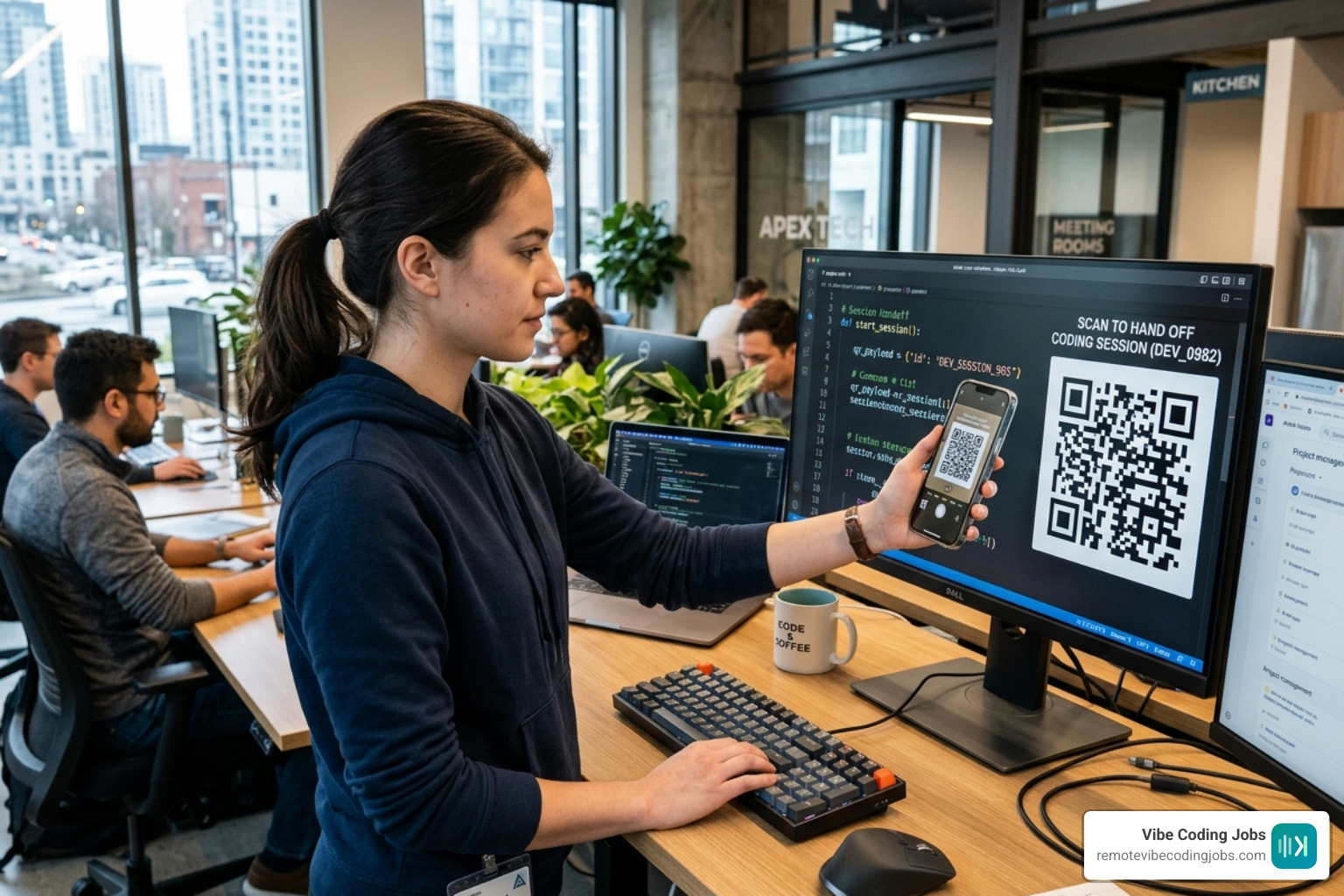
The cornerstone of this remote revolution is the Claude Code Remote Control feature. Historically, Claude Code was a local-first tool, tied to the machine where the code lived. As of early 2026, that tether has been cut.
According to the Claude Code Remote Control: Complete Feature Guide, the architecture is designed for “session mobility.” This allows you to start a complex refactoring task on your workstation and seamlessly hand it off to your phone or tablet.
How Remote Control Works Technically
Unlike traditional remote desktop tools that stream heavy video data, Claude Code Remote Control acts as a “viewport” into a local session.
- Initiation: You run
claude remote-control(or/rc) in your terminal. - Authentication: A QR code appears. Scanning this with the Claude mobile app establishes a secure link.
- Encrypted Bridge: The system uses outbound HTTPS requests to poll the Anthropic API. Because it’s outbound-only, you don’t need to open any dangerous inbound ports on your firewall.
- Handoff: You can now approve tool calls, read terminal output, and provide new instructions from your phone.
The Claude Code Remote Control: Code From Your Phone Now guide highlights that this setup enables “commute check-ins” and “couch coding.” If your laptop goes to sleep, the session persists in the cloud bridge and reconnects automatically when the machine wakes up.
| Feature | Local Claude Code Session | Remote Control Session |
|---|---|---|
| Execution Environment | Local machine / Dev Container | Local machine (Single source of truth) |
| Interface | Terminal / CLI | Web browser or Mobile App |
| Connectivity | N/A (Offline capable) | Requires Internet (TLS 1.3 encrypted) |
| Tool Approvals | Manual keyboard input | Mobile push notifications / Tap to approve |
| Context Retention | Full local filesystem access | Full local access via the remote bridge |
Scaling Remote AI Engineering: Security and Infrastructure
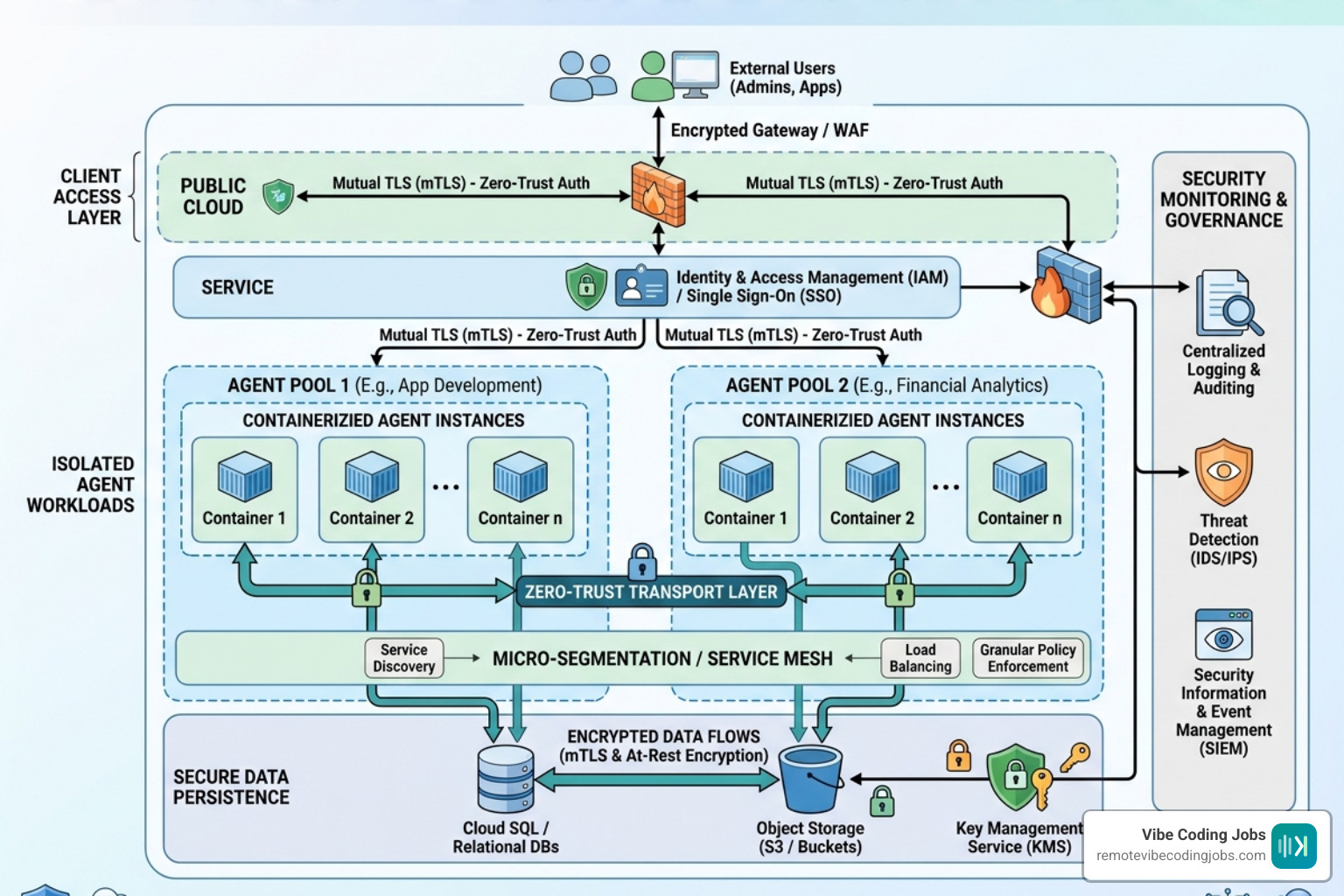
Scaling a team of AI agents brings unique challenges that a single laptop can’t handle. When an ai claude remote engineer runs multiple instances of Claude Code to handle refactoring, CI fixes, and prototyping simultaneously, they often hit “race conditions”—where two agents try to edit the same file at once.
To solve this, leading teams are moving to remote development platforms like Coder or Tactic. As explored in The Architecture Behind Tactic Remote: Building a Distributed Coding Platform, the “lethal traffic model” is essential for security. This model dictates that you should never combine proprietary data access, internet access, and untrusted data in a single agent.
The Resilient Stack
For a professional ai claude remote engineer, the setup usually involves:
- Tailscale: For secure, zero-config networking between remote servers and local devices.
- Mosh (Mobile Shell): Unlike SSH, Mosh handles roaming and network drops gracefully. You can close your laptop in a cafe and open it on a train without losing your connection.
- Tmux: A terminal multiplexer that keeps Claude Code running on the server even if you disconnect.
- Sandboxing: Using the
--sandboxflag to ensure the AI agent cannot access sensitive parts of the OS or network it doesn’t need.
This infrastructure allows for “multi-repo context,” where the environment itself manages the dependencies across dozens of repositories, rather than the engineer doing it manually.
Global Market, Salaries, and Hiring Strategies
The market for an ai claude remote engineer is truly global. Because the work is async-first, companies care more about your “vibe coding” mastery than your physical location.
Hiring is booming. Positions like the Anthropic Prompt Engineer – Claude Code show that even the creators of the models need specialized engineers to bridge the gap between raw LLM power and production-ready interfaces. We also see high-tier roles at the OpenAI Company Page and Netflix, where AI Infrastructure Engineers can command staggering salaries.
Earning Potential for an AI Claude Remote Engineer
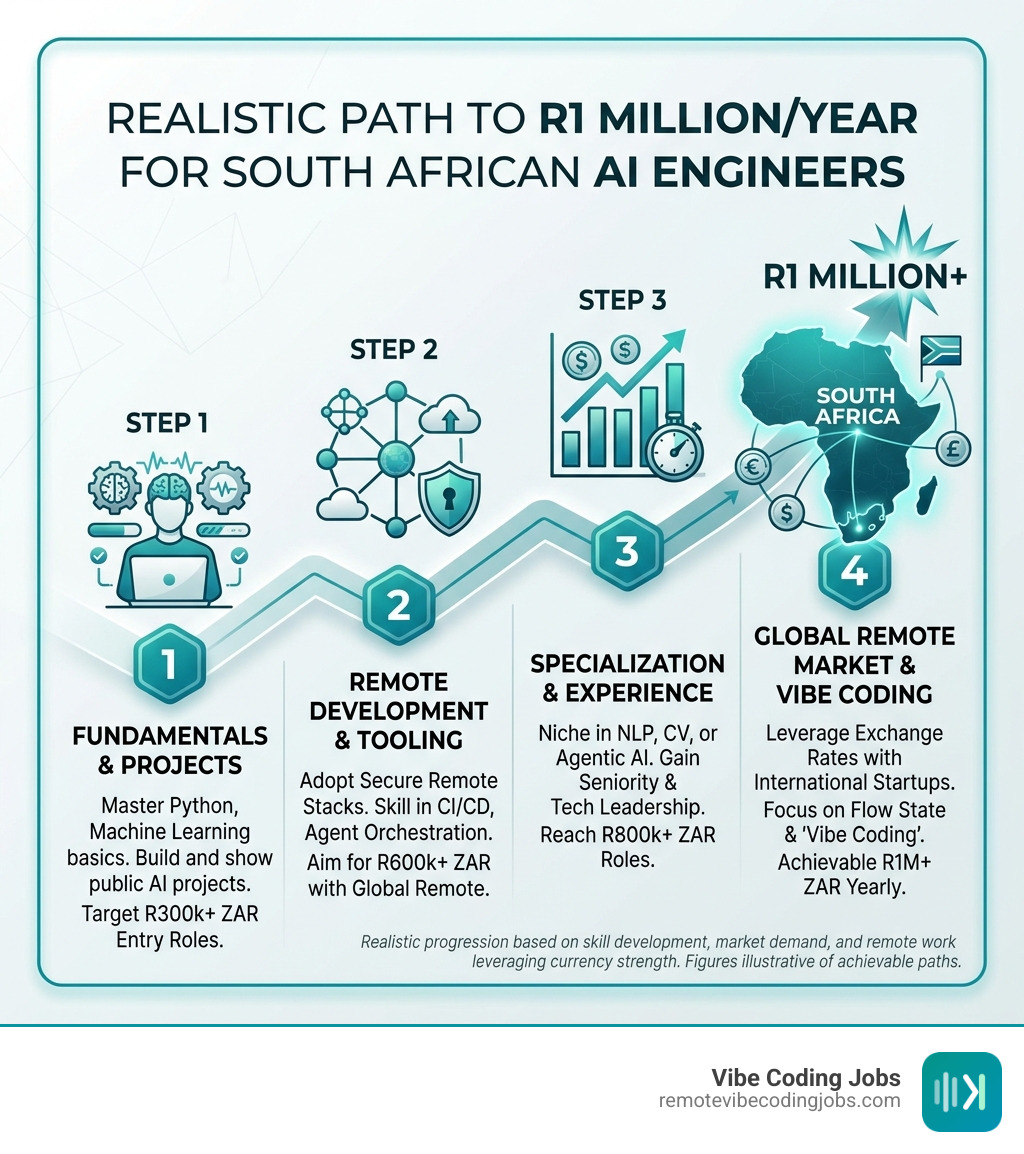
According to our data on AI/ML Engineer Salaries, the earning potential is significant, especially for those in regions with favorable exchange rates like South Africa.
- Senior/Staff Roles: Companies like Netflix and OpenAI pay between $250k and $450k USD. In South African terms (at R18.50/$1), that is a massive R4.6M to R8.3M per year.
- Mid-Level Roles: Typical remote roles at startups (like ContentJet or Jasper) range from $70k to $150k USD (R1.3M to R2.7M ZAR).
- Freelance/Contract: On platforms like Upwork, experts in AI automation can earn $150–$300 per hour.
Essential Skills for the Modern AI Claude Remote Engineer
To succeed in this role, you need more than just “coding” skills. You need:
- Agent Orchestration: Knowing how to break a large project into tasks that Claude can handle autonomously.
- Vibe Coding Mastery: As discussed in our Vibe Coding Blog, this is the ability to use tools like Cursor and Claude to maintain a “flow state” where you spend more time on logic and less on syntax.
- Async Communication: Since most of these roles are remote and distributed, being able to document your agent’s progress and your own decision-making is vital.
- South African Advantage: SA developers are highly sought after for their high English proficiency, strong work ethic, and a time zone (SAST) that perfectly bridges the gap between European mornings and US afternoons.
Frequently Asked Questions about Claude Remote Engineering
How does Claude Code Remote Control differ from the web interface?
The web interface (claude.ai) runs in a sandboxed cloud environment provided by Anthropic. It cannot see your local files or run your local compilers. In contrast, Claude Code Remote Control runs on your machine. It has access to your local filesystem, your custom MCP (Model Context Protocol) servers, and your local terminal. The remote interface is just a “window” that lets you control that local power from anywhere.
Is it secure to control my local machine from a mobile device?
Yes, provided you use the official implementation. Claude Code Remote Control uses outbound HTTPS requests only. It does not “listen” for incoming connections, which means it doesn’t create a hole in your firewall. All traffic is encrypted via TLS 1.3, and the credentials used to link your phone are short-lived and scoped only to that specific session.
What are the system requirements for remote Claude engineering?
To get the most out of this workflow, we recommend:
- Claude Code v2.1.51 or later.
- An Anthropic Max or Pro subscription (Remote Control is currently a research preview for these tiers).
- Terminal Multiplexer: Using
tmuxis highly recommended so your session doesn’t die if you accidentally close your terminal window. - Hardware: While Claude does the heavy lifting, having at least 16GB of RAM locally helps manage the various dev tools and MCP servers that Claude might trigger.
Conclusion
The era of the desk-bound developer is ending. The future belongs to the ai claude remote engineer—a professional who treats AI agents as a force multiplier and the world as their office. Whether you are a senior engineer at a Fortune 500 or a “vibe coder” in Cape Town building the next big startup, the tools are now in place to let you ship code from anywhere, at any time.
Ready to find your next role? We curate the best AI-assisted development positions daily. Visit RemoteVibeCodingJobs to browse the latest openings and start your journey into the future of software engineering.