Top Roles and Salary Benchmarks for Remote Unity3D Jobs
Finding remote unity3d jobs requires understanding where your specific technical strengths fit within the industry’s pay scales. Remote compensation varies significantly depending on whether you are working for an indie game studio, a machine learning startup, or an enterprise real-time 3D simulation firm.
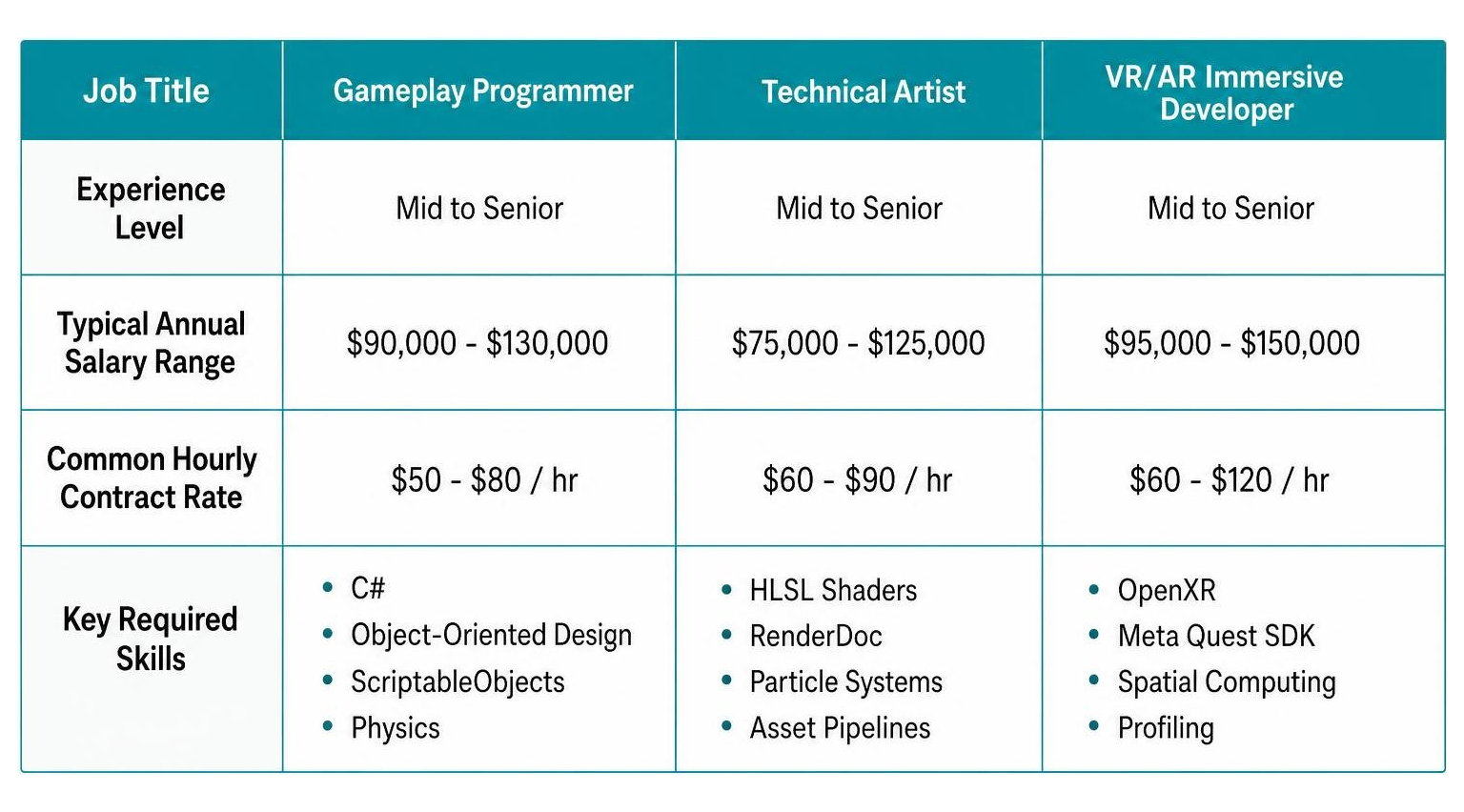
| Job Title | Experience Level | Typical Annual Salary Range | Common Hourly Contract Rate | Key Required Skills |
|---|---|---|---|---|
| Gameplay Programmer | Mid to Senior | $90,000 – $130,000 | $50 – $80 / hr | C#, Object-Oriented Design, ScriptableObjects, Physics |
| Technical Artist | Mid to Senior | $75,000 – $125,000 | $60 – $90 / hr | HLSL Shaders, RenderDoc, Particle Systems, Asset Pipelines |
| VR/AR Immersive Developer | Mid to Senior | $95,000 – $150,000 | $60 – $120 / hr | OpenXR, Meta Quest SDK, Spatial Computing, Profiling |
| Multiplayer / Back-End Unity Engineer | Mid to Senior | $60,000 – $130,000 | $65 – $100 / hr | Photon Fusion 2.1, PlayFab, Socket Networking, C# |
| Web3 / Blockchain Unity Developer | Senior | $90,000 – $228,000 | $80 – $120 / hr | Smart Contracts Interfacing, Wallet Integration, Addressables |
| Founding / Lead Unity Engineer | 5+ Years Experience | $90,000 – $180,000+ | $85 – $130 / hr | System Architecture, Zenject/VContainer, Team Leadership |
| Junior Porting / General Developer | Entry Level / Associate | $6,000 – $60,000 (Part-time/Junior) | $25 – $45 / hr | Basic C# Scripting, UI Setup, Platform Optimization |
Gameplay and Systems Engineers
Gameplay and systems engineers form the backbone of interactive development. These developers design the core mechanics, game feel, UI/UX systems, and architectural loops that players interact with every second. Employers looking for gameplay programmers prioritize clean, modular C# scripting and robust application of SOLID design patterns.
To excel in these roles, candidates must demonstrate complete mastery of Unity-specific architecture tools like ScriptableObjects and the Addressables framework for modular asset management. Higher-level positions, such as senior Unity engineers or lead roles at specialized game studios, demand experience with dependency injection frameworks like Zenject or VContainer. When building long-term live-service features, engineers who can refactor code bases without breaking existing mechanics command top-tier compensation.
Technical Artists and Graphics Developers
Technical artists serve as the essential bridge between creative artists and software engineers. They ensure that complex 3D visual assets look stunning without destroying target frame rates on hardware ranging from low-end mobile phones to high-end VR headsets.
A remote Technical Artist or Graphics Developer works closely with custom render pipelines (URP and HDRP) and writes specialized HLSL shaders (including compute and geometry shaders). Job postings from gaming giants like Light & Wonder highlight the need for technical artists who can perform continuous GPU profiling using tools like RenderDoc, Pix, and NSight. Finding and fixing rendering bottlenecks early in production keeps game projects on schedule.
VR/AR Immersive Solution Developers
Spatial computing and immersive media represent some of the fastest-growing categories in real-time 3D development. Companies hiring remote VR/AR engineers are building everything from entertainment titles to enterprise training applications and industrial digital twins.
Roles in this domain require expertise in OpenXR and platform-specific tools like the Meta Quest SDK. Developers building live-service VR projects—like multiplayer interactive titles—must optimize CPU and memory performance under strict latency constraints. Additionally, non-gaming industries regularly recruit remote Unity developers to construct digital twins for aerospace wargaming, healthcare simulations, and synthetic training systems.
Core Technical Skills and Experience Requirements
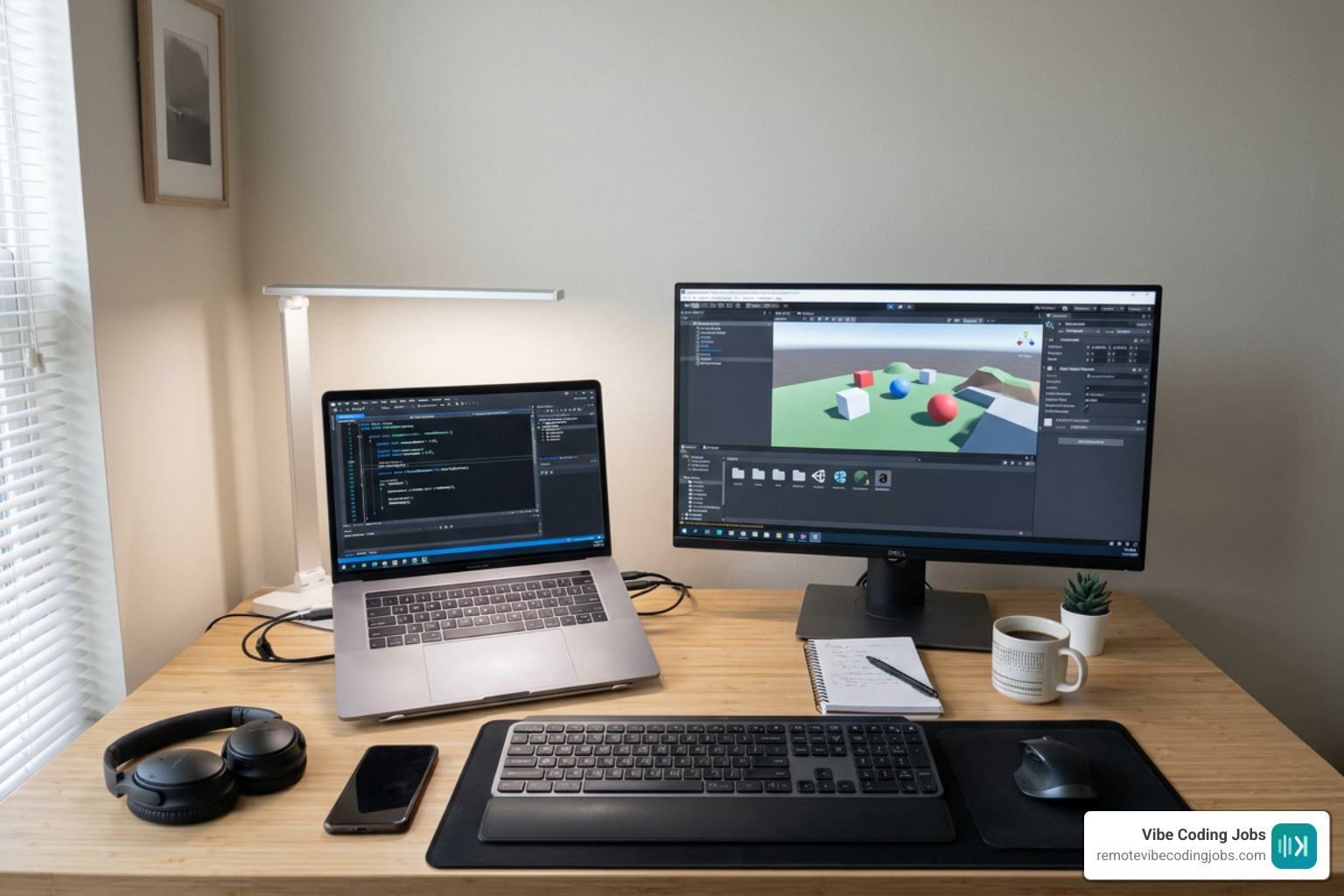
Securing a competitive remote position requires a balance of core programming fundamentals, specialized engine knowledge, and disciplined code hygiene. Because remote teams rely heavily on asynchronous workflows, your code must speak for itself in terms of readability, performance, and stability. For engine-specific expectations, review Unity’s official profiling documentation to understand how professional teams diagnose runtime performance issues.
Core technical expectations for candidate profiles include:
- Advanced C# Scripting: Thorough understanding of Object-Oriented Programming (OOP), memory management, garbage collection minimization, and asynchronous programming (
UniTaskorasync/await). - Performance Optimization: Proven experience using Unity’s Frame Debugger, Profiler, and Memory Profiler to diagnose CPU spikes and memory leaks.
- Asset Management: Deep working knowledge of Addressables, AssetBundles, and data-driven architectures using ScriptableObjects.
- Strict Version Control Hygiene: Hands-on experience with version control tools like PlasticSCM, Git (including Git LFS), or Perforce for large 3D binary projects.
Network Systems and Multiplayer Architecture
As social interactive spaces expand, demand for multiplayer network expertise remains consistently high. Studios look for backend programmers capable of maintaining real-time physics and state synchronization across dozens of simultaneous players.
Engineers specializing in network architecture work with modern networking stacks such as Unity 6.0 paired with Photon Fusion 2.1 (Shared or Server Mode). Additionally, backend integration skills involving services like PlayFab are vital for managing CloudScript, virtual currencies, player inventories, and cross-platform matchmaking. Recent job postings demonstrate how studios prioritize developers who can pair OpenXR setup with stable client-server synchronization.
AI-Assisted Workflows and Modern Development Tools
The game development landscape is undergoing a massive shift as studios incorporate generative AI and modern automation into their daily software pipelines. Remote-first game studios increasingly value engineers who know how to use AI coding tools like Cursor and Claude to write boilerplate scripts, generate unit tests, and accelerate bug fixing.
Some innovative studios even offer monthly AI tool stipends to encourage developers to build custom Unity Editor extensions and leverage automated workflow pipelines. Demonstrating that you can blend traditional C# expertise with AI-assisted software techniques makes your job application stand out to modern engineering leads.
Strategies to Find and Land Remote Unity3D Jobs
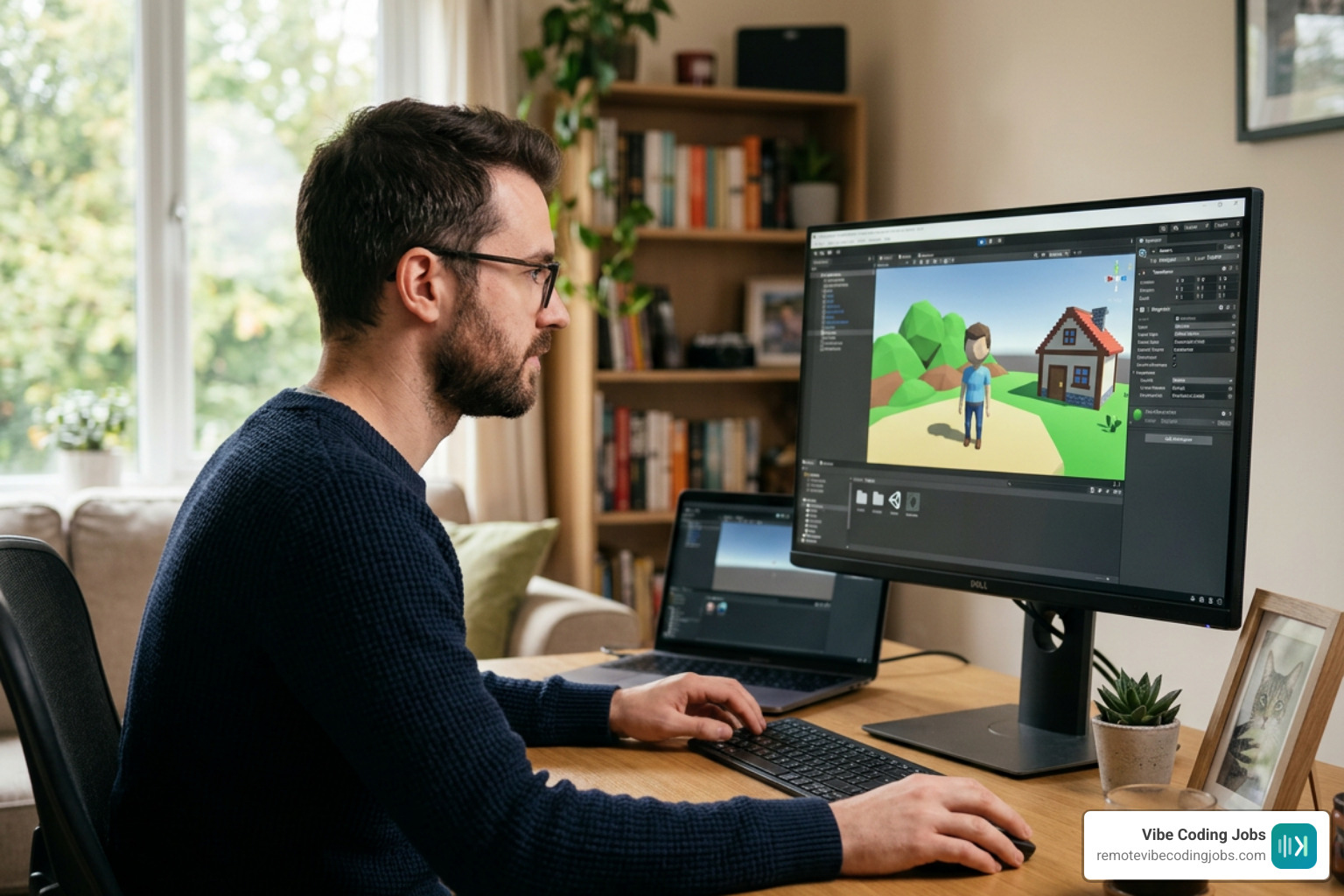
Finding open positions is only half the battle; standing out among hundreds of international applicants requires a clear strategy. Generic job platforms can be noisy, so using targeted job search methods gives you a distinct advantage.
Finding High-Paying Remote Unity3D Jobs
Generic search platforms often dilute search results with unrelated roles. To find targeted opportunities, explore specialized channels designed specifically for game developers, real-time 3D engineers, and remote software specialists:
- Specialty Remote Job Networks: Dedicated remote job platforms allow you to filter roles by remote work model, tech stack, and compensation level.
- Indie and Gaming Communities: Specialized Discord channels, Telegram groups, and developer hubs frequently post exclusive openings from self-funded studios.
- Web3 and Emerging Tech Directories: Dedicated portals list Web3, blockchain, and machine learning simulation vacancies tailored for real-time 3D engineers.
Standing Out When Applying for Remote Unity3D Jobs
Hiring managers at remote game studios care most about execution. When reviewing applicants, engineering leads look for immediate proof that you can ship clean, functional code.
To maximize your interview response rate:
- Provide Playable Demos: Embed executable WebGL links or direct itch.io builds in your resume so hiring leads can test your games directly in their browser.
- Showcase Clean Repositories: Share well-documented GitHub project links that demonstrate modular design patterns, custom Editor tools, and clean C# structure.
- Highlight Shipped Titles: Clearly list commercial games or simulation products you have contributed to on Steam, the App Store, Google Play, or Meta Quest.
- Demonstrate Strong Async Communication: Frame your past experience around self-management, clear written communication, and effective cross-time zone collaboration (such as working within CET or US time zone windows).
Emerging Industry Trends in Remote Unity Development
The reach of the Unity engine extends far beyond conventional video games. As enterprise demand for real-time 3D visualization grows, remote developers are finding exciting career opportunities across diverse technology sectors.
Synthetic Data and Machine Learning Simulations
One of the fastest-growing areas for remote Unity programmers lies in machine learning and computer vision. Machine learning startups build virtual environments in Unity to generate synthetic training datasets for autonomous vehicles, robotics, and neural networks.
Innovative tech companies like CVEDIA hire Unity specialists to work on cutting-edge simulation projects. In these roles, developers construct virtual sensors, write custom rendering shaders, and build realistic environments to train complex AI algorithms before physical deployment.
Web3, Cross-Platform Porting, and Live-Ops Games
Live-service gaming remains a dominant force in the market. Game studios build games designed to run continuously for years, requiring developers to ship weekly live-ops events, push feature patches, and manage community feedback loops.
Concurrently, cross-platform porting—converting mobile titles to console or Web3 ecosystems—has created specialized roles across all experience levels. Job requirements for founding Unity engineers show how studios building extensive game portfolios value engineers who prioritize fast, iterative shipping over over-engineered architecture.
Frequently Asked Questions About Remote Unity3D Jobs
What is the average salary range for a remote Unity3D developer?
Full-time remote unity3d jobs in the United States typically pay between $90,000 and $130,000 per year for mid-to-senior roles. Highly specialized positions—such as Senior Web3 Engineers, Lead VR Developers, or Technical Artists—can offer compensation ranging from $130,000 to $228,000 annually. Contract rates for experienced freelancers generally run between $60 and $120 per hour.
Can junior developers find remote Unity3D positions?
Yes, though competition for entry-level remote positions is tight. Junior roles—such as part-time porting developers or junior UI programmers—often pay between $6,000 and $60,000 annually depending on location and scope. Junior candidates can stand out by creating a polished portfolio, participating in game jams, contributing to open-source C# projects, and posting playable WebGL demos online.
What industries outside of gaming hire remote Unity developers?
Many non-gaming sectors hire remote Unity developers, including:
- Aerospace & Defense: Creating real-time 3D wargaming tools and flight simulators.
- Machine Learning & Robotics: Building synthetic training environments and virtual sensors.
- Healthcare: Designing interactive surgical training software and medical visualizations.
- Automotive & Architecture: Constructing digital twins and interactive 3D product configurators.
Conclusion
The market for remote unity3d jobs offers diverse career paths across gaming, VR/AR, enterprise simulation, and machine learning fields. Success in this evolving market relies on combining fundamental C# programming skills with modern software engineering tools. Developers who embrace AI-assisted workflows, maintain clean code hygiene, and build compelling interactive portfolios will continue to secure rewarding remote positions.
Ready to take the next step in your developer career? Explore curated openings and modern developer playbooks at Remote Vibe Coding Jobs today!