Mastering NYC Remote Collaboration and Time Zone Alignment
Operating a distributed engineering or product team linked to the New York market presents a distinct rhythm. The city’s tech ecosystem moves fast, yet forcing continuous real-time communication leads to endless interruptions, context switching, and developer burnout. Mastering nyc remote collaboration starts with establishing strong boundaries around synchronous communication while building transparent, written documentation routines. To learn more about setting operational standards, read through Make Remote Collaboration Easy.
Synchronous Core Hours in Eastern Time
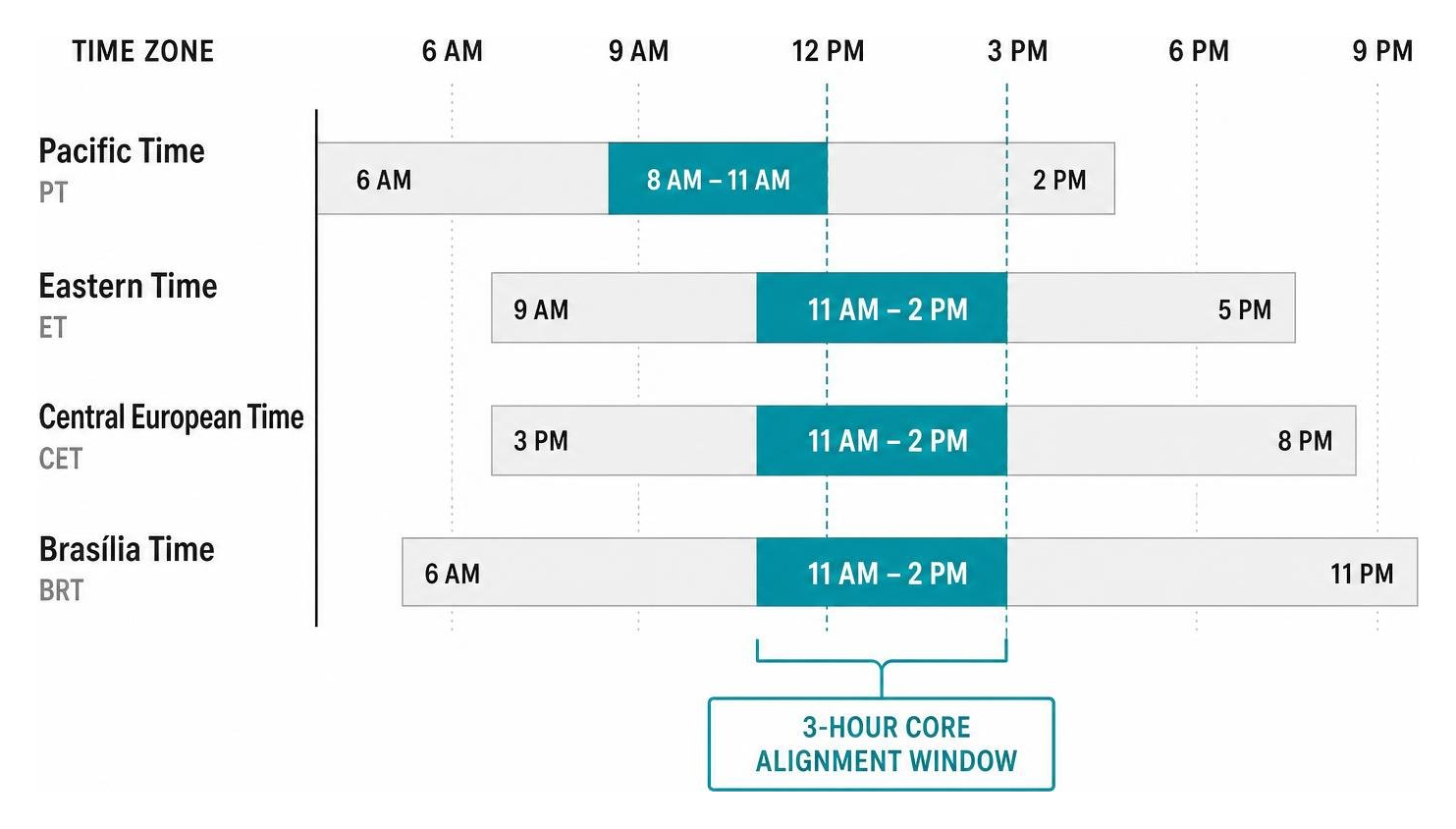
Working across multiple US time zones—or coordinating with developers across Europe and South America—requires intentional schedule design. Rather than expecting availability throughout an entire eight-hour workday, top-performing remote organizations establish a condensed 3-hour window of overlap.
This dedicated daily period (typically between 11:00 AM and 2:00 PM Eastern Time) serves as the primary window for real-time pairing, visual architecture reviews, or resolving critical code blockers. Outside this frame, developers hold uninterrupted calendar blocks reserved exclusively for deep work, allowing them to focus without constant chat pings or pop-up meetings. For a complete breakdown of managing distributed schedules, check out our Async First Remote Work Guide.
Building Async Workflows for NYC Remote Collaboration
Replacing live status meetings with asynchronous routines keeps projects moving without fragmenting concentration. Instead of gathering everyone on a live video stream for a 15-minute daily standup, teams post brief written updates inside structured Slack threads.
Key decisions made in private discussions or pairing sessions are immediately documented in shared wikis or GitHub issue threads. This ensures that teammates working in different time zones can review context, make contributions, and stay fully aligned without waiting for the next live sync. Discover how async habits drive developer output in our post on Async First Remote Developer Jobs Workflow Productivity.
Leveraging NYC Coworking Spaces for Flexible Hybrid Models
While async workflows power day-to-day delivery, physical spaces still play a supporting role in hybrid team structures. Remote engineering leads based in New York often leverage neighborhood workspaces to conduct quarterly planning sessions, host client presentations, or simply break up the monotony of working from a small apartment. State guidelines and hybrid structures are detailed in the Remote Work | Office of Information Technology Services documentation.
Focus Work in Soundproof Pods vs Open Hubs
Not all remote work environments serve the same function. Open-plan coworking spaces can introduce acoustic distractions and social friction, making them less ideal for continuous coding sessions or back-to-back technical interviews.
| Workspace Type | Best Used For | Primary Benefits |
|---|---|---|
| Soundproof Pods | Deep coding, confidential calls, technical interviews | Complete acoustic isolation, total autonomy, distraction-free environment |
| Open Coworking Desks | Casual email triage, lightweight admin, drop-in tasks | High energy, low-cost flexible drop-ins, central locations |
| Private Team Suites | Sprint planning, physical war rooms, investor pitches | Dedicated whiteboards, private infrastructure, team cohesion |
To solve sound issues, specialized options provide soundproof private pods equipped with gigabit internet and ergonomic setups designed specifically for deep focus. Services like Flexible Coworking Space NYC | Private Offices | Premium Amenities offer individual focus pods, while venue networks like Luxury Coworking Space in New York City for Entrepreneurs | The Varo cater to startup founders in Midtown and NoMad.
For maximum flexibility, services like Flexible Workspaces for NYC Remote Workers & Professionals give remote workers hourly drop-in access across neighborhood venues. Teams seeking dedicated meeting rooms near major transportation hubs often use Coworking Space in Nomad District, NYC | Nomadworks 1216 Broadway .
Coliving and Workspace Partnerships Across NYC
The high cost of local real estate has driven modern hybrid models that bundle living quarters with professional desks. Partnerships like SharedEasy e Nomadworks | SharedEasy demonstrate how coliving residences in outer boroughs like Brooklyn can be paired with central Manhattan workspaces.
Separating physical living environments from working desks helps maintain mental boundaries and prevents working late into the night. Additionally, multidisciplinary innovation hubs like Collab | An Integrated Innovation & Execution Studio | Brooklyn, NY give hardware and software engineering teams physical fabrication space alongside digital product resources.
Tool Stacks and AI Integration for High-Speed Engineering Teams
A sprawling tool stack creates confusion about where information lives. To maintain high velocity, remote tech organizations designate specific channel managers who prune redundant applications and maintain standard communication guidelines.
Streamlining Async Code Reviews and Vibe Coding
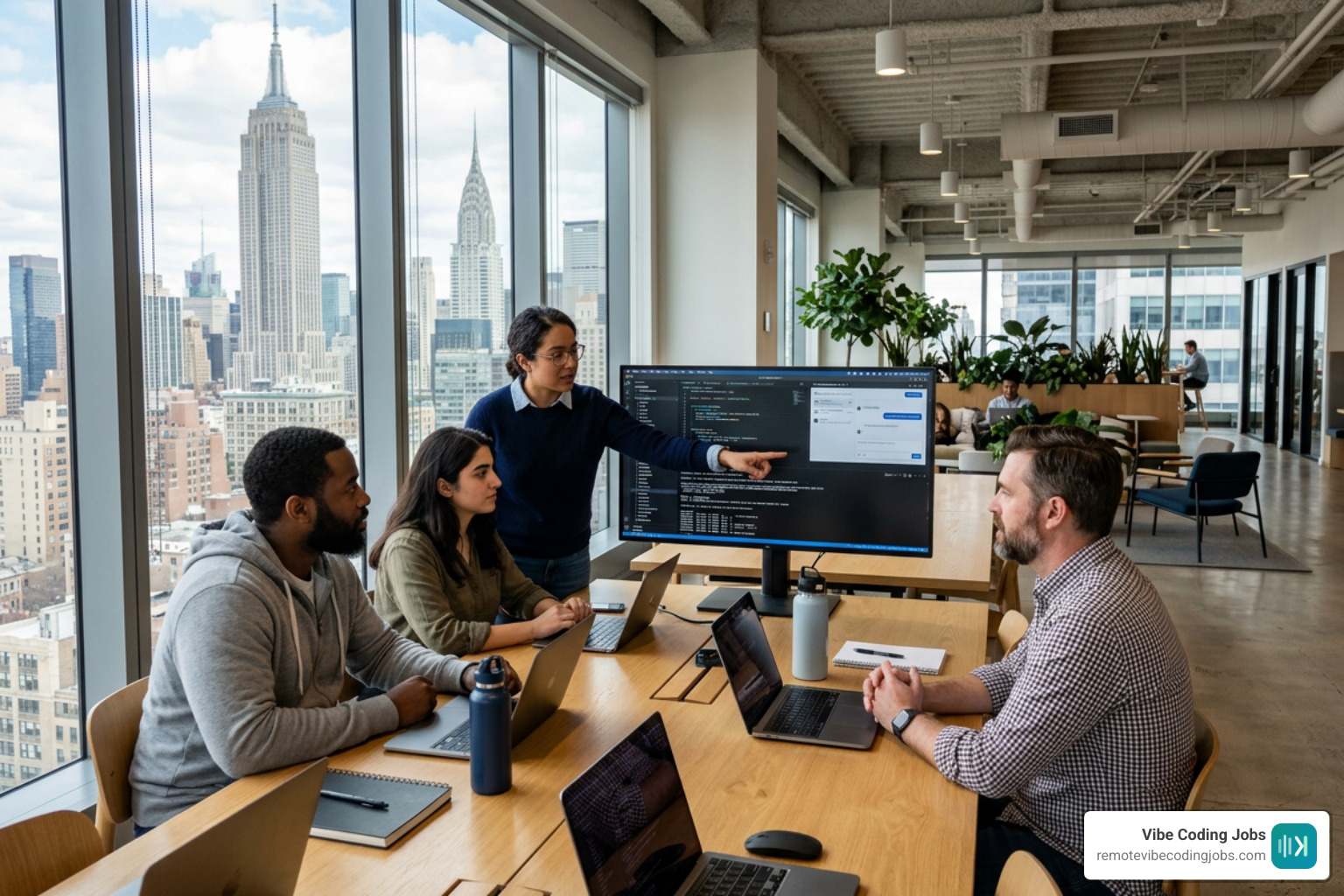
The arrival of AI-assisted software tools—commonly referred to as “vibe coding”—has transformed engineering workflows. Engineers using tools like Cursor, Claude Code, and GitHub Copilot can turn natural language prompts into complete, functional features in hours.
In an async environment, developers feed repository contexts into these AI assistants, generate working prototypes rapidly, and present PRs with detailed AI-generated context summaries. Senior developers review these submissions asynchronously, checking for logic, security, and edge cases without needing a live walk-through call. Explore top technical stacks in our Remote Work Tools for Developers Compared 2026 Guide and learn to protect your cognitive state with our guide on Deep Work Culture Developer Jobs Finding Focus Flow.
Visual Brainstorming and Communication Platforms for NYC Remote Collaboration
Visual tooling bridges the gap when mapping out complex systems, UI flows, or architecture diagrams asynchronously. Platforms like Miro, FigJam, and Trello serve as perpetual digital whiteboards where team members drop ideas, leave feedback comments, and update project boards at their own pace.
- Miro / FigJam: Used for real-time system design reviews, product discovery sessions, and visual retrospectives.
- Trello / Jira: Acts as the single source of truth for task statuses, sprint Backlogs, and ticket assignments.
- Slack / Teams: Handles operational chatter, grouped strictly by project channels with thread-enforced conversations.
Using interactive canvases ensures that remote team members have equal opportunity to contribute to product direction without having to talk over someone on a crowded call. Read more about building structured digital pipelines in Transitioning to Remote Software Engineering A Complete Guide.
Building Inclusive Culture and Eliminating Remote Isolation
Remote productivity should not come at the cost of personal isolation. Sustaining high-performing teams requires intentional effort to build empathy, foster social connections, and maintain strong mental health practices across distributed networks. Dive deeper into maintaining psychological well-being in our analysis on Remote Work Mental Health Developers.

Structured Social Connections and Virtual Coffee Breaks
When coffee machine conversations disappear, teams must deliberately create avenues for informal connection. Integrating automated tools like Donut into team chat applications pairs team members across departments for casual, 15-minute weekly virtual coffee chats.
Another effective approach is hosting “silent working sessions.” Developers join a non-mandatory video channel, mute their microphones, and work independently on their own codebases. This setup reproduces the comforting presence of a physical library, allowing spontaneous questions to be asked in chat without forcing structured meeting overhead.
Equalizing In-Person and Distributed Meetings
Hybrid setups can inadvertently disadvantage fully remote teammates when a subset of the team sits together in a Midtown conference room. To preserve team equity, adopt a strict “one-in-remote, all-in-remote” rule:
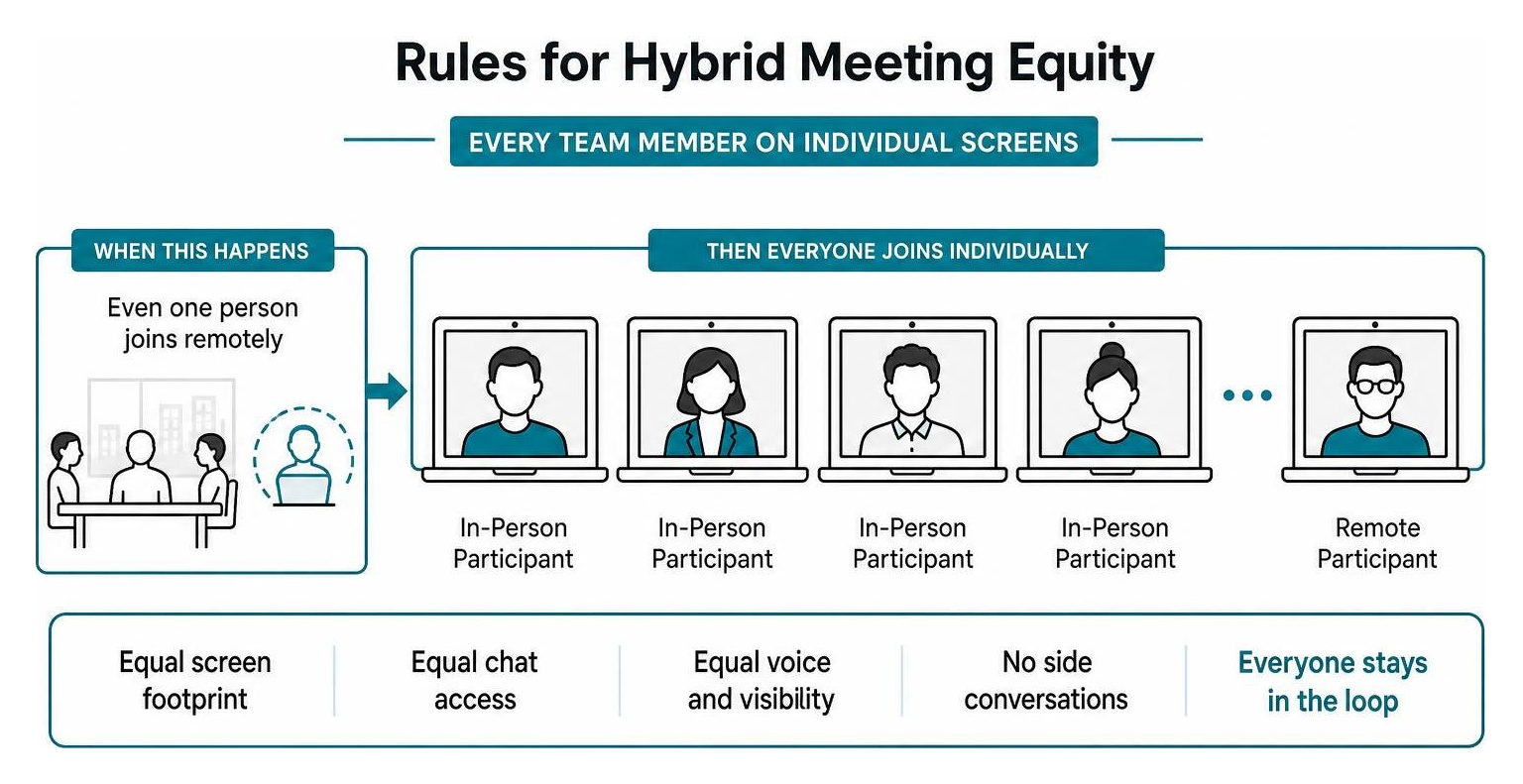
When even a single participant joins remotely, every in-person participant opens their own laptop and logs into the meeting individually. This setup gives everyone an equal screen footprint, equal chat access, and equal visual presence, keeping in-person side conversations from leaving remote colleagues out of the loop.
Frequently Asked Questions About NYC Remote Collaboration
What are the most effective remote collaboration tools for NYC tech teams?
The most effective tool stacks combine real-time communication platforms (Slack), visual whiteboards (Miro or FigJam), visual task trackers (Trello or Jira), and AI-native coding environments (Cursor or Claude Code). Unifying these around clear written documentation prevents tool sprawl and keeps asynchronous workflows clear.
How do NYC coworking spaces support hybrid remote workers?
NYC coworking spaces provide quiet soundproof focus pods, flexible pay-as-you-go day passes, and hourly meeting spaces near key transit hubs like Penn Station and NoMad. They allow remote employees to escape home distractions, take confidential video calls, and host periodic in-person sprint planning sessions.
How can engineering leaders maintain fast code delivery across time zones?
Leaders maintain rapid delivery by establishing a 3-hour daily Eastern Time core overlap, shifting from daily live standups to async Slack updates, maintaining internal wikis, and using AI tools to auto-generate pull request contexts for review.
Conclusion
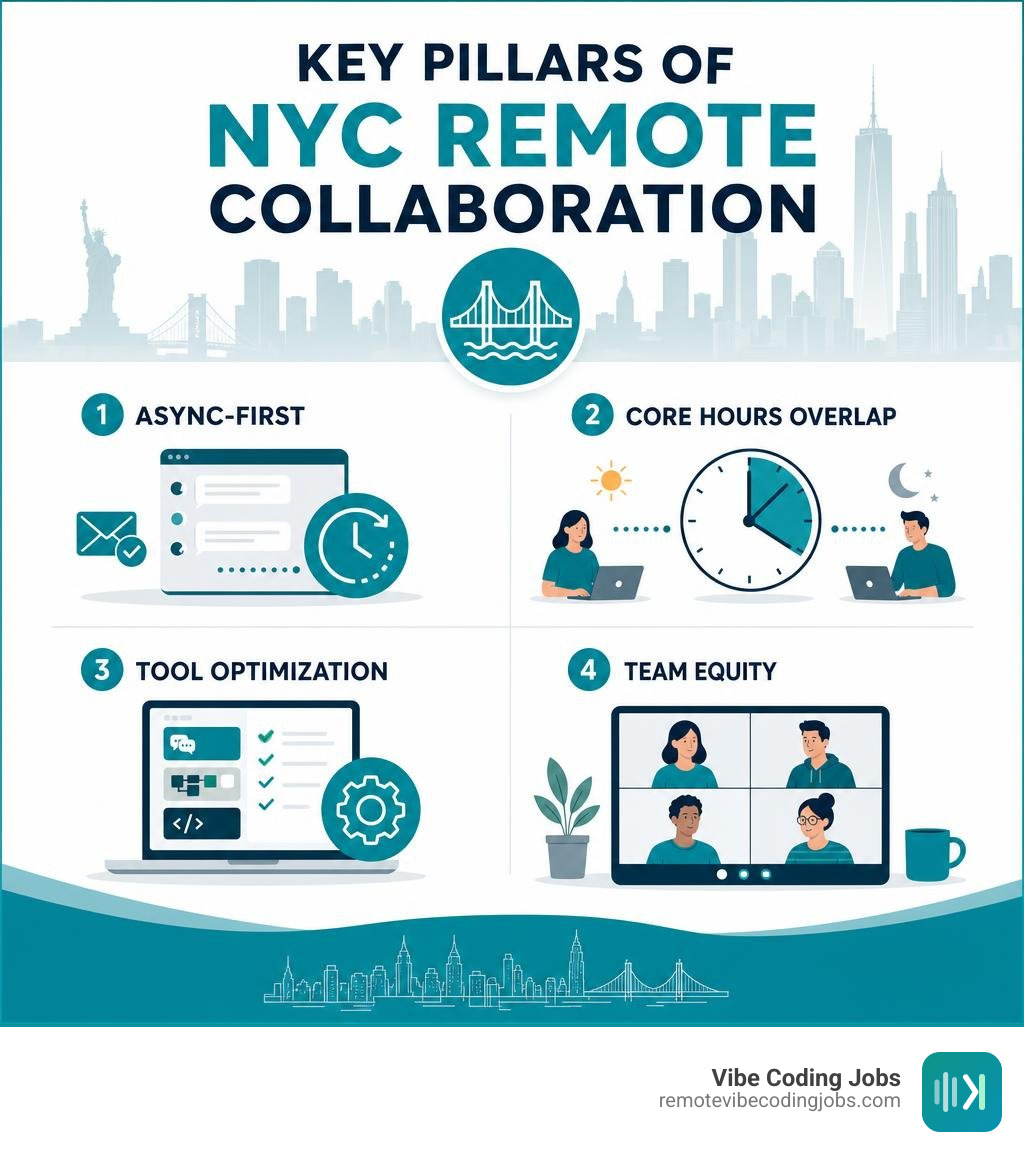
Mastering nyc remote collaboration requires moving away from continuous real-time presence and embracing an async-first mindset. By establishing explicit Eastern Time core hours, leveraging flexible physical spaces across New York when needed, and deploying modern AI development tools, tech teams can achieve high operational speed without burning out their engineers.
At RemoteVibeCodingJobs, we curated remote engineering and product opportunities at companies that value deep focus, modern tooling, and flexible work cultures. If you are ready to join an AI-fluent, async-first software team, explore our latest open roles on RemoteVibeCodingJobs today!