
Understanding Bolt Customer Service Jobs and Ecosystem Roles
When searching for support careers under the “Bolt” banner, the first step is knowing which ecosystem you are entering. The name represents major players in modern technology, ranging from urban mobility to browser-based AI code generation and e-commerce checkout architecture.
The European mobility giant employs thousands of specialists worldwide, managing everything from ride-hailing dispute tickets to automated routing. Its support ecosystem is anchored by dedicated teams featured on the Customer Support team | Bolt Careers portal. These teams handle operations across 50 countries, serving over 200 million riders, eaters, and drivers.
At the same time, the rise of prompt-based software builders has introduced specialized technical roles, such as the Customer Experience Engineer at Bolt.new (powered by WebContainers technology). Distinguishing between these organizations ensures your resume, technical stack, and language proficiencies reach the appropriate hiring manager.
Types of Bolt Customer Service Jobs Available
Support operations at high-growth tech platforms involve specialized functions tailored to distinct user interactions. While front-line agents manage high-volume customer chats, specialized analysts and operations managers work behind the scenes to optimize response workflows.
| Role Title | Primary Function | Typical Tech Stack / Tools | Core Skill Set |
|---|---|---|---|
| Customer Support Specialist | Resolving rider, driver, and partner tickets across channels | Intercom, Zendesk, internal CRM, Google Workspace | Active listening, local language fluency, conflict de-escalation |
| Customer Experience Engineer | Troubleshooting technical builds and in-browser runtime bugs | React, Vite, Tailwind CSS, Chrome DevTools, LLMs | Front-end debugging, prompt optimization, API integrations |
| CS Operations Agent / Analyst | Monitoring queue health, SLA compliance, and escalations | SQL, CRM dashboards, spreadsheet tools | Process mapping, ticket analytics, issue triage |
| Senior CS WFM Manager | Capacity forecasting, scheduling, and multi-language coverage | Workforce management platforms, advanced modeling | Resource planning, headcount forecasting, global logistics |
| Driver Engagement Center Specialist | Providing in-person guidance and partner onboarding | Local hardware/kiosks, partner onboarding portals | Interpersonal empathy, face-to-face service, localized operations |
Mobility Support vs. Bolt.new Customer Experience Engineering
The day-to-day distinction between urban mobility support and browser-based AI support centers on the technical depth required for issue resolution.
In the mobility realm, specialists deal with real-world logistics: fare adjustments, account access issues, delivery tracking, and partner compliance. Speed, clear empathy, and adherence to standard operating procedures dictate success.
In contrast, technical roles like the one detailed in the Job Application for Customer Experience Engineer at Bolt.new focus on software architecture. In this role, you interact directly with software builders, technical founders, and developers who run into in-browser runtime errors, package conflicts, or API authentication barriers. You aren’t just resolving a ticket; you are actively inspecting front-end code, diagnosing why a Vite bundling step failed, and refining prompts so the AI agent outputs clean, production-ready code.
Core Responsibilities and Daily Workflows in Bolt Support
Modern customer support workflows blend automated triage with deep, human-centric troubleshooting. Whether you are managing real-time chat queues or analyzing edge-case build errors, daily tasks emphasize ownership and rapid issue resolution.
Day-to-Day Tasks of a Mobility Support Specialist
A typical shift for a Customer Support Specialist in the mobility ecosystem revolves around balancing speed with service quality. Typical daily tasks include:
- Multichannel Communication: Answering incoming user chats, emails, and partner inquiries regarding trip disputes, app usability, and payment issues.
- Driver Partner Assistance: Supporting courier and driver partners with account verification, vehicle documentation, and earnings clarifications.
- Dispute and Safety Handling: Applying regional guidelines to evaluate safety reports, route deviations, and refund requests objectively.
- Continuous Feedback: Flagging recurring software glitches, map routing bugs, or payment processing errors directly to operations leads.
Day-to-Day Tasks of an AI Customer Experience Engineer
Working inside an AI-assisted development ecosystem shifts your daily routine toward active code debugging and product advocacy:
- In-Browser Code Debugging: Using Chrome DevTools, network tabs, and console logs to replicate and isolate user-reported bugs across React, Vite, and Tailwind setups.
- Prompt and Pipeline Diagnostics: Investigating unexpected AI agent behaviors, syntax generation issues, and token limit interruptions.
- Knowledge Base Expansion: Authoring technical tutorials, reproduction repositories, and self-serve documentation to help non-technical builders launch full-stack applications.
- Engineering Feedback Loops: Working directly with core engineering teams to turn user frustrations into resolved GitHub issues and upcoming platform features.
Candidate Requirements and Skills Breakdown
Landing a support position requires aligning your background with the operational maturity of the role. Entry-level mobility support focuses on clear, empathetic communication and rapid problem solving, while technical engineering support demands direct fluency with modern web stacks.
Key Qualifications for Bolt Customer Service Jobs
Foundational support vacancies typically require a solid track record in customer-facing roles. Hiring teams look for:
- Experience: At least 1–2 years in customer support, technical assistance, or retail client management.
- Communication: Clear, concise writing capabilities, high emotional intelligence, and typing speeds exceeding 35 words per minute.
- Language Proficiency: Fluency in professional English, alongside regional language fluency depending on market allocation (e.g., Twi, Norwegian, Polish, or German).
- Operational Adaptability: Comfort using spreadsheets (Google Sheets, Microsoft Excel) and modern customer conversation suites like Intercom.
Technical Skills for AI-Assisted Support and Engineering Roles
For technical customer experience engineer roles within developer tooling and AI environments, candidates must demonstrate practical web development experience:
- Front-End Architecture: Working knowledge of JavaScript, HTML5, modern CSS (Tailwind), and component-based frameworks like React.
- Build Systems & Runtimes: Understanding how package managers, bundlers (Vite), and WebContainers operate directly within modern web browsers.
- Diagnostic Tooling: Daily comfort utilizing Chrome DevTools, reading stack traces, and intercepting REST/GraphQL API network payloads.
- AI Prompt Literacy: The ability to craft, evaluate, and refine natural-language prompts to generate clean, functional application logic.
Compensation, Remote Work Policies, and Company Culture

Support compensation and working structures vary depending on whether a role is organized around local operational hubs or distributed globally.
Salary Ranges and Benefits Across Departments
- Customer Experience Engineers (AI Tooling): Fully remote positions in this category typically offer base salaries ranging between $90,000 and $110,000 per year, reflecting the engineering-grade troubleshooting required.
- Customer Support Analysts & Specialists: Full-time technical support analysts operating in specific e-commerce or regional mobility markets see base compensation ranging from $64,000 to $74,000 annually, or local gross monthly rates ranging between €2,500 and €4,500 for specialized operations and account management roles.
- Benefits Packages: Comprehensive offerings regularly feature health, dental, and vision coverage, flexible PTO policies, internet reimbursements without complicated reporting, wellness stipends, parental leave, and company equity option programs.
Remote Work Policies, Timezones, and Team Values
While front-line mobility centers often rely on regional offices or hybrid hubs across Europe, Africa, and Asia, technical developer-tool roles operate as remote-first environments. For fully remote technical positions, job listings typically require candidates to reside within Western European or American time zones, often maintaining core overlap hours (such as early Pacific Time mornings).
Both environments operate under high-autonomy operating values:
- Extreme Ownership: Taking complete accountability for an issue from the moment a user submits a ticket until it is permanently resolved.
- Bias for Momentum: Shipping practical solutions quickly instead of getting stuck in theoretical planning.
- Build for Impact: Focusing on process automations and self-service knowledge bases that eliminate repetitive support tickets.
- Win Together: Collaborating seamlessly across support, product management, and platform engineering teams.
Hiring Process and Career Growth Pathways
Securing a support seat follows a structured, multi-stage assessment designed to test both technical skill and communication tone under pressure.
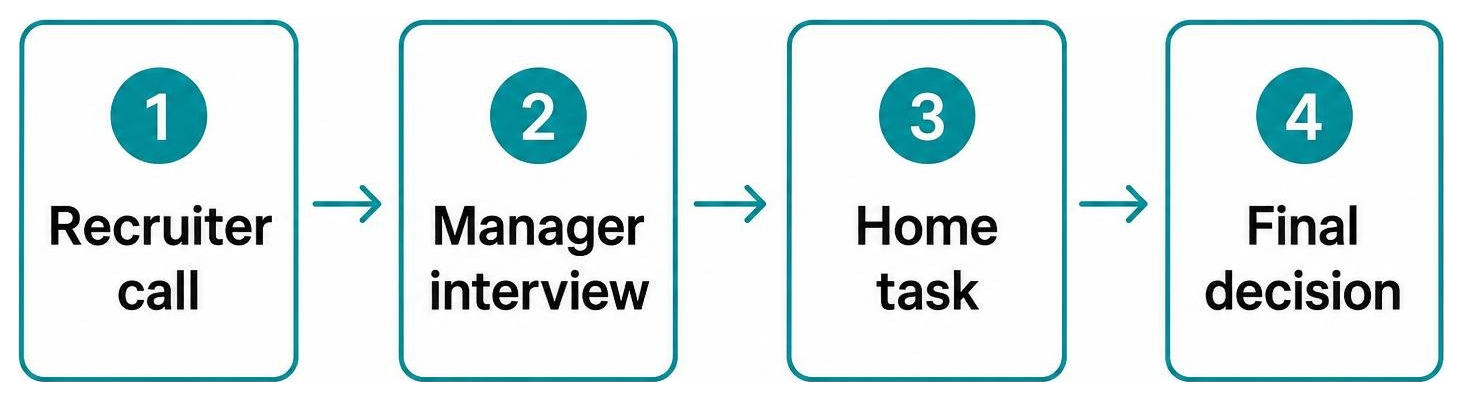
- Recruiter Conversation (30 Mins): An initial screening to discuss your professional background, compensation expectations, language capabilities, and schedule availability.
- Hiring Manager Interview (45 Mins): A deep dive into your situational problem-solving methodologies, de-escalation strategies, and previous team collaborations.
- Practical Exercise or Home Task: Completing a simulated support scenario—such as responding to an escalated user dispute, building a short knowledge base article, or debugging a broken React/Vite front-end build.
- Team & Leadership Conversations: Evaluating cross-functional alignment and cultural values with senior engineers, product managers, or department heads.
- Offer & Onboarding: Successful candidates receive formal compensation details, equipment stipends, and structured onboarding roadmaps.
Within support teams, career growth follows several well-defined tracks. Top performers often move from front-line specialist roles into CS Operations Management, Workforce Management (WFM) Planning, AI Process Automation, or lateral transfers into Product Operations and Full-Stack Engineering.
Frequently Asked Questions About Bolt Support Roles
Are Bolt customer service positions fully remote?
It depends on the specific operating unit. Technical developer support roles (such as Bolt.new Customer Experience Engineers) are remote-first, provided you live in Western European or American time zones. Conversely, mobility platform roles often follow hybrid arrangements tied to regional offices in cities like Tallinn, Warsaw, Kumasi, or Bangkok.
What tools and tech stack do Bolt support teams use?
Front-line customer teams rely on platforms like Intercom, custom CRM suites, and AI-assisted triage models to handle inbound conversations. Technical support engineers work directly with Chrome DevTools, Vite, React, Tailwind CSS, GitHub repositories, and AI-assisted IDE workflows.
How fast is the recruitment and interview process at Bolt?
The recruitment cycle generally spans two to three weeks from initial resume submission to final offer. Transparent hiring teams keep candidates updated after each stage, with home tasks evaluated within several business days.
Conclusion
Support careers in fast-scaling tech companies offer a fast route to developing valuable product, operational, and technical skills. Whether you thrive on resolving high-volume consumer interactions or debugging front-end code for developers building full-stack software, these roles place you directly at the center of modern user experience design.
If you are looking for remote, AI-assisted development and technical support roles, we curate the latest openings to accelerate your career. Explore active, verified opportunities on our remote Bolt jobs directory to find your next career step.