
What Are the Top Recruitment Sites for Finding a Remote Vibe Coder Job?
Finding a high-paying, truly flexible remote developer job in 2026 requires looking beyond legacy job boards. If you want a role where AI assistants like Cursor, Claude Code, Windsurf, and GitHub Copilot are encouraged rather than banned, the top-rated recruitment sites are specialized, AI-native platforms that curate and verify roles specifically for AI-assisted workflows, async-first work cultures, and deep-work environments.
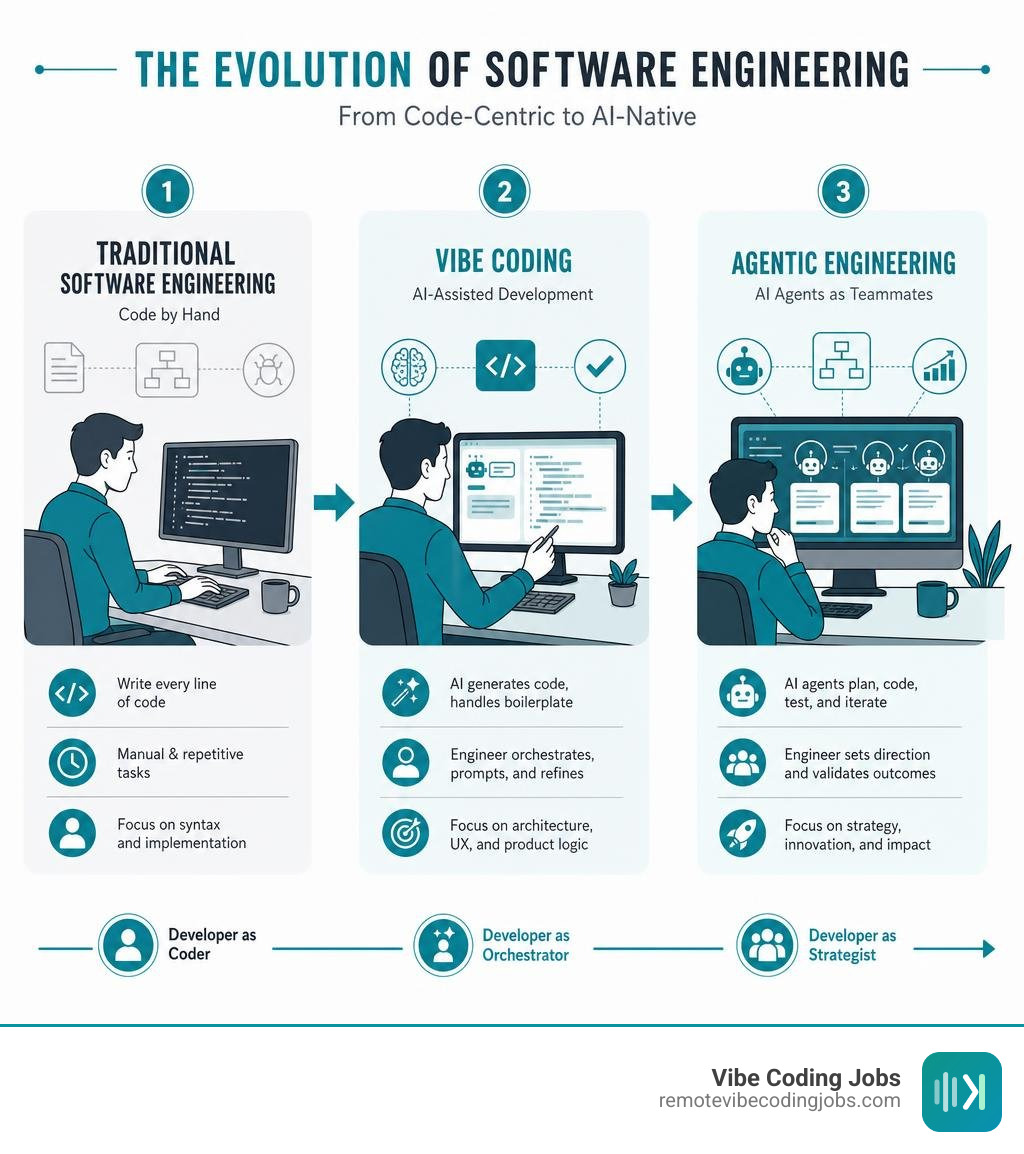
To understand why traditional job search channels fall short for this category, we first need to define what “vibe coding” actually means in today’s software engineering market. Originally coined by computer scientist Andrej Karpathy in early 2025, vibe coding describes a development methodology where engineers guide high-capability AI models to handle code generation, syntax, and boilerplate while humans focus on high-level architecture, user experience, product intuition, and execution speed. Instead of manually writing every line of boilerplate code, vibe coders prompt, review, orchestrate, and refine.
In 2026, vibe coding is no longer a hobbyist trend—it is a recognized, highly compensated job category. According to recent tech workforce studies, demand for AI-assisted development skills expanded by 300% year-over-year, while code generation tools like GitHub Copilot now write an average of 46% of code in active software repositories where they are enabled. Furthermore, 98% of remote tech workers express a preference to maintain remote arrangements, making remote-first AI development the fast lane of modern tech employment.
However, searching for these roles on legacy recruitment channels often leads to frustration. Mass-market career sites remain bloated with outdated job descriptions, misleading “remote-optional” hybrid mandates, and hiring processes reliant on 90-minute Leetcode algorithm tests that bear zero resemblance to modern AI-assisted engineering workflows.
By contrast, dedicated vibe coding job boards eliminate this friction. They aggregate open positions from AI-forward startups, scale-ups, and async teams that actively evaluate candidates on product delivery, AI tool fluency, and architectural judgment.
What Are the Best Specialized Job Boards for Remote Vibe Coders?
When comparing recruitment channels for remote AI-assisted engineering roles, specialized vibe coding platforms outperform broad job aggregators across every critical metric.
| Evaluation Metric | Specialized Vibe Coding Platforms | Traditional Tech Directories | Generic Mass-Market Job Boards |
|---|---|---|---|
| AI Tool Filtering | Direct filtering by Cursor, Claude, Copilot, Windsurf | Rare / Tag search only | Non-existent |
| Remote Verification | 100% verified remote (global / regional) | Mixed (often hybrid or WFH optional) | Heavy presence of return-to-office mandates |
| Culture Transparency | Explicit tags for Async, Deep Work, No-BS | Basic company summaries | Corporate stock descriptions |
| Interview Assessment | Practical AI portfolio & build speed | Mixed algorithmic / system design | Inflexible Leetcode / whiteboard puzzles |
| Salary Display | Upfront ranges on most listings | Inconsistent | Frequently hidden / variable |
At Remote Vibe Coding Jobs, we created the premier dedicated destination for developers looking to build at the speed of AI. Featuring over 1,660 active remote roles across more than 310 vetted companies, our directory updates daily with roles ranging from early-stage stealth projects to established remote scale-ups.
Every position listed on our platform undergoes a dual automated and manual scoring process—what we call our proprietary Vibe Score. This system evaluates whether a company truly supports async communication, minimal meeting overhead, flexible hours, and tool-agnostic AI workflows.
When browsing dedicated vibe coding boards, you will routinely find distinct job titles designed for the AI age:
- AI/ML Engineer: Focused on implementing RAG pipelines, fine-tuning open-weights models, and integrating LLM APIs into core products.
- Product Engineer: Full-stack builders who use AI tools to prototype, ship, and iterate on user-facing features in record time.
- Builder / Creative Technologist: High-leverage generalists hired to take product concepts from zero to one using prompt engineering and automated workflows.
- Prompt & Agentification Engineer: Specialists who construct multi-step agentic workflows, context management rules, and automated testing loops for AI coding agents.
- Full-Stack AI Developer: Software engineers fluent in modern frameworks (React, Next.js, Python, Node) optimized for rapid AI generation.
For a deeper look into how niche aggregators streamline your job search compared to broad channels, check out our analysis on Remote Vibe Coding Jobs vs Traditional Remote Job Boards: Which is Best?. You can also view our live directory of active employers on Companies Hiring Vibe Coders.
Niche AI-Native Platforms
Niche AI platforms are engineered by developers who live and breathe AI-assisted workflows. Unlike legacy platforms that add “AI” as a search keyword filter onto 10-year-old databases, niche AI job boards structure their databases around model stacks, agent frameworks, and AI code editor compatibility.
These platforms utilize automated curation pipelines that scan job specifications for key indicators of modern engineering cultures—such as mentions of Cursor rules, Claude Code integration, or automated CI/CD pipelines—while filtering out legacy organizations that enforce manual line-by-line coding or mandate office attendance. Using niche platforms gives developers direct access to stealth AI startups and founder-led teams seeking force-multiplier engineers.
Specialized Tech Communities and Aggregators
Beyond dedicated job boards, specialized developer communities, open-source repositories, and private Discord/Slack groups serve as valuable secondary channels for finding remote vibe coding work.
Founders building AI tools or agentic software often post opportunities directly in community channels before publishing them on broad corporate careers pages. Joining open-source discussions around AI coding assistants, participating in developer hackathons, and monitoring community showcase boards allow candidates to connect directly with hiring managers, skipping traditional Applicant Tracking Systems (ATS) entirely.
What Essential Features Should You Look For in a Vibe Coding Job Board?
Not all remote job boards are created equal. To avoid wasting time on outdated listings or corporate roles masquerading as modern remote opportunities, look for these essential features when choosing a recruitment site:
1. Granular AI Tooling Tags
A quality vibe coding job board lets you filter listings by the exact software tools you use daily. You should be able to instantly refine your search by editors and assistants such as Cursor, Claude 3.7, GitHub Copilot, Windsurf, or custom terminal agents. To learn more about setting up an optimal environment, read our review of the best AI coding tools for vibe coders in 2026.
2. Verified Work Culture Markers
Vibe coding flourishes in environments built for concentration. Top platforms tag roles with explicit culture indicators, including:
- Async-First Workflows: Teams that communicate via structured written updates (Notion, GitHub Discussions, Loom) rather than constant Slack interruptions or daily standup meetings. Learn more about how async teams operate in our guide on Async First Remote Developer Jobs Communication Workflow.
- Deep Work Protection: Guaranteed blocks of uninterrupted build time with minimal calendar commitments.
- Output Over Hours: Evaluation based on feature velocity, code quality, and shipped solutions rather than hours logged at a desk.
3. Rigorous Remote Verification
“Remote” can mean vastly different things depending on the employer. Dedicated vibe coding boards distinguish between:
- Global Remote: Open to candidates worldwide without strict geographical limitations.
- Regional Remote: Specific time-zone overlap requirements (e.g., US hours or EMEA bounds).
- Filtered Out: Positions claiming to be remote but requiring occasional on-site office days or state-restricted residency.
4. Transparent Compensation Ranges
Upfront salary transparency is non-negotiable for modern tech talent. Quality platforms require employers to list clear salary ranges, equity options, and contract rates right on the job card, preventing wasted effort on underfunded or misaligned positions.
Identifying low-quality or deceptive listings is a critical skill when job hunting online. Avoid roles with common warning signs by reviewing our handbook on Red Flags Remote AI Job Listings.
What Are the Typical Salary Ranges and Required Skills for Remote Vibe Coding Roles?
Driven by high productivity and rapid product delivery, developers skilled in AI-assisted workflows command premium compensation in 2026. While the global baseline median developer salary sits around $63,000, remote senior engineers at AI-forward companies consistently earn 15% to 25% above market median rates.
Salary Breakdown by Experience Level
Junior Vibe Coders ($70,000 – $100,000)
Entry-level vibe coders focus on rapid prototyping, basic prompt precision, and continuous code verification. Because AI tools handle syntax generation, junior developers who master tool orchestration can build complex features that previously required years of manual coding experience.
Mid-Level AI Developers ($120,000 – $180,000)
Mid-level roles require expertise in context management, multi-file editing, custom API integration, and system architecture. At this stage, developers know how to prevent AI hallucination, write effective context rules (such as .cursorrules files), and maintain high code quality standards across growing codebases.
Senior & Staff Agentic Engineers ($200,000 – $300,000+)
Senior builders operate as force multipliers. They design multi-agent workflows, build custom LLM evaluation harnesses, oversee complex cloud backend architectures, and serve as product leads. Their primary skill is directing fleets of AI coding agents to complete complex software initiatives with minimal oversight.
For detailed benchmarks across specific geographic regions and contract types, explore our complete analysis on Vibe Coding Salary Remote.
Core In-Demand Programming Languages & Tools for 2026
While AI models handle syntax generation effortlessly, underlying language fundamentals remain essential for debugging, performance tuning, and architectural design.
To review which languages yield the highest remote return on investment, see our detailed guide on Top Programming Languages Vibe Coding 2026. If you are evaluating which primary assistant to integrate into your stack, check out our comparison on Cursor vs Copilot vs Claude.
How Do AI-First Companies Evaluate Vibe Coders and How Can You Stand Out?
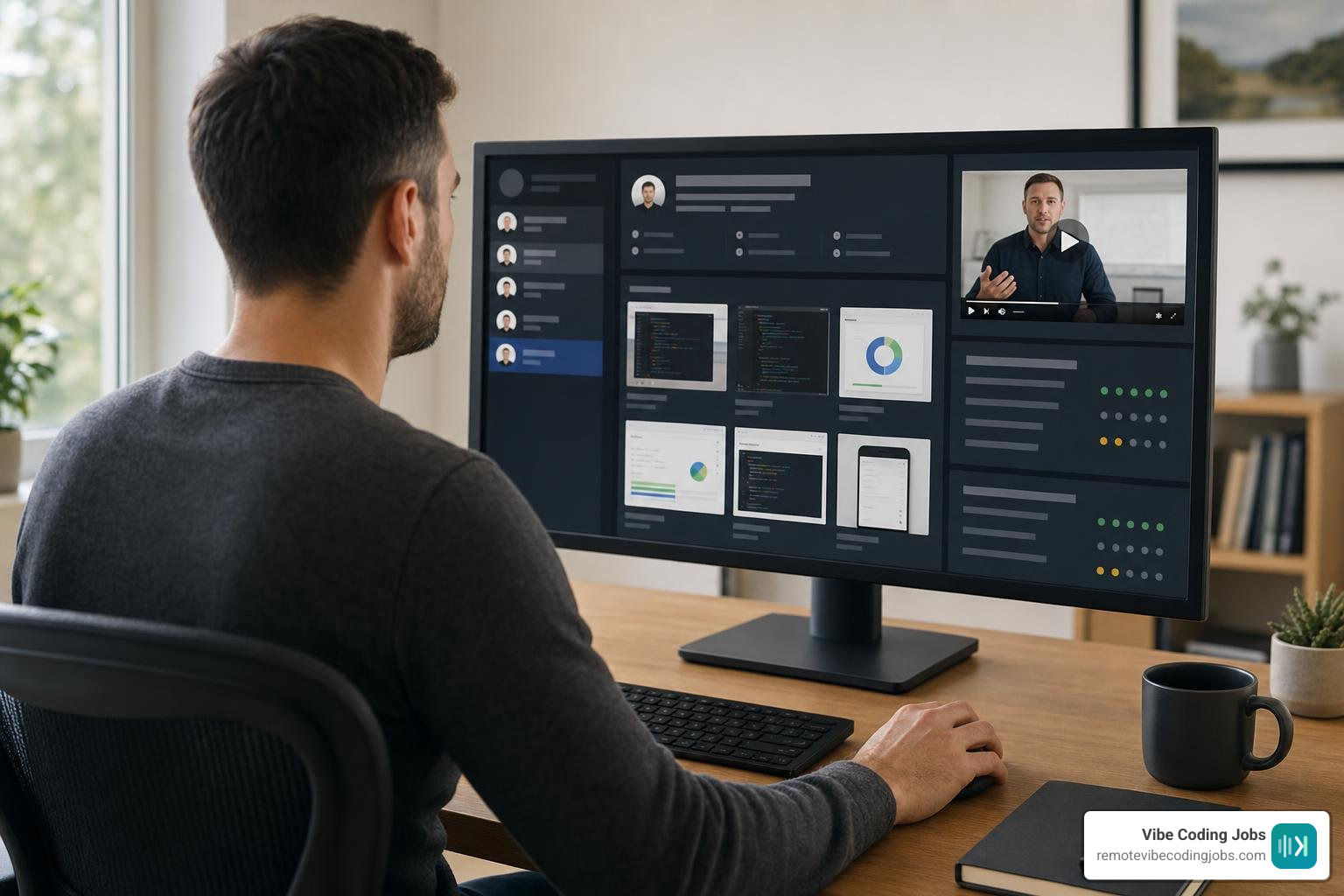
AI-native companies hire differently than traditional enterprise organizations. They recognize that 4-hour whiteboarding sessions and memorized dynamic programming algorithms fail to predict real-world developer effectiveness when AI tools are present.
Instead of testing your ability to manually code a binary tree inversion from scratch, progressive remote teams evaluate five practical capabilities:
- Velocity of Execution: How fast can you turn a product requirement or spec document into a working, deployed feature using AI tools?
- Architectural Soundness: Do you structure applications cleanly so that AI assistants can navigate, edit, and extend the codebase without introducing technical debt?
- Prompt & Context Precision: How efficiently do you feed context, documentation, and constraints to AI models to generate bug-free output on the first try?
- Async Communication Clarity: Can you summarize technical choices, write clear PR descriptions, and document decisions asynchronously?
- Code Review & Verification Skills: Can you quickly spot security vulnerabilities, edge-case bugs, or performance bottlenecks in AI-generated code?
To explore why companies are shifting away from legacy testing methods, read our insights on Remote Coding Jobs No Leetcode Practical Portfolio.
Actionable Strategies to Stand Out in Applications
To secure top-tier remote vibe coder positions, adapt your job application strategy to highlight your leverage and AI fluency:
Build a Live Proof-of-Work Portfolio
A static PDF resume matters far less than deployed, functional applications. Build and ship 2 to 3 full-stack projects built with AI workflows. Include links to the live web applications along with public GitHub repositories containing clear documentation and prompt histories. Learn how to structure your projects with our breakdown on building a Killer Remote Developer Portfolio How to Land Your Dream Job.
Submit Asynchronous Loom Demos
When applying to async-first companies, stand out by attaching a 2-minute video recording. Walk through a live demonstration of a product feature you built using Cursor or Claude Code. Explain your architectural choices, show your prompting approach, and highlight the final output. This immediately proves both technical capability and async communication skill.
Optimize Your Resume for AI-First Employers
Ditch generic bullet points like “Written Clean JavaScript Code” in favor of impact-driven outcomes that showcase your leverage:
For a step-by-step resume rebuild guide, refer to our resource on Developer Resume for AI Native Companies The Ultimate Guide.
Adopt the “Builder Identity”
Position yourself not as a framework specialist tied to a single technology, but as a product builder who uses AI to deliver outcomes across any stack. To understand this mindset shift, explore our article on the Builder Identity Shift.
What Is the Future Outlook for Remote Vibe Coders and Agentic Engineering?
The transition toward AI-assisted development marks a permanent shift in how software is created. As AI capabilities expand from simple code auto-completion to fully autonomous coding agents, the role of the developer is advancing from vibe coder to agentic engineer.
In an agentic engineering workflow, developers manage teams of specialized AI agents assigned to specific sub-tasks: one agent writes unit tests, another refactors database queries, while a third monitors integration endpoints. The engineer acts as orchestrator, system architect, and quality controller.
To see how high-performing teams manage complex pipelines today, read our guide on Multi Agent Workflows How Top Engineers Orchestrate AI Coding Agents.
Key Benefits of Working as a Remote Vibe Coder
- Unmatched Autonomy: Deliver the output of a multi-person team as an individual contributor, allowing for flexible working hours and deep-work independence.
- Global Compensation Growth: Work for top-paying tech hubs regardless of your physical location.
- Rapid Skill Acceleration: Build complex software across full stacks without spend months memorizing framework boilerplates.
Potential Challenges & How to Overcome Them
- Context Window Management: Larger codebases can overflow model context limits. Successful vibe coders organize code modularly and maintain strict documentation files (e.g.,
README.md,ARCHITECTURE.md) to guide AI assistants efficiently. - Unchecked Technical Debt: AI tools generate code quickly, but lazy accepting can lead to bloated files or redundant dependencies. Enforce strict linting rules, automated CI testing, and regular manual code audits.
- Continuous Tool Evolution: The AI tooling landscape updates rapidly. Staying ahead requires continuous experimentation with new model releases and context tools.
To plan your long-term career path in this evolving landscape, review our analysis on AI Assisted Development Career Growth.
Frequently Asked Questions About Finding Remote Vibe Coder Jobs
Is vibe coding a legitimate long-term tech career path?
Yes. Vibe coding is not a temporary shortcut; it is the natural evolution of software abstraction. Just as developers transitioned from assembly language to high-level languages like Python and JavaScript, vibe coding moves engineering abstraction up to system architecture, user experience, and business logic. Engineers who master AI leverage deliver significantly higher business value per hour than those who write every line manually. For a detailed breakdown, see our article on Is Vibe Coding a Real Job.
How can junior developers secure remote vibe coding jobs without years of experience?
Junior developers can stand out by focusing on proof of work rather than traditional tenure. By mastering AI-assisted workflows, a junior builder can design, build, and launch full-stack applications in weeks—demonstrating real-world delivery capabilities that rival traditional senior developers who rely purely on manual coding processes. Learn how junior developers are capitalizing on this advantage in our guide on Why Junior Developers Outperform Seniors AI Age.
Are remote vibe coding roles open to international developers?
Yes. A significant percentage of AI-forward startups operate with borderless hiring strategies, leveraging contractor arrangements, Employer of Record (EOR) services, or global remote policies to hire talented builders worldwide. Understanding the nuances of global hiring models can help you evaluate international offers effectively; explore our guide on Contract vs Full Time Remote Developer Pros Cons Which is Right.
How Can You Get Started Finding Remote Vibe Coding Jobs Today?
Transitioning into a remote vibe coding role is straight-forward if you follow a deliberate execution plan:
- Audit Your AI Stack: Integrate tools like Cursor, Claude Code, and GitHub Copilot into your daily development environment until prompt-driven generation feels second nature.
- Build Your Proof-of-Work: Create and deploy 2 to 3 live projects using AI workflows. Ensure your GitHub repositories include detailed prompt files and architectural notes.
- Refactor Your Professional Profiles: Position your resume and portfolio around building leverage, product delivery speed, and AI tool fluency.
- Target Specialized Platforms: Skip generic, high-noise job boards. Search curated directories designed specifically for AI-assisted engineering roles.
At Remote Vibe Coding Jobs, we make this process seamless. Browse over 1,600+ verified remote AI development roles, filter listings by your preferred AI tooling stack, and apply directly to forward-thinking, async-first companies today.
For additional career strategies, interview prep guides, and tooling benchmarks, explore our complete library of resources on the Vibe Coding Blog. Start your search today and secure your next role building software at the speed of AI.